An English teacher for over 20 years. Huge football fan and a bloke who writes quite a bit. Average husband and tired father to two sometimes wonderful children. Runner, poet, gobshite who laughs far too much at his own jokes.
No challenge should be faced without a little charm and a lot of style.
Sixth Grade is a tough time for any kid. Hormones are starting to fly around, you’re finding your way in life a little more and seeking independence from your parents, while at the same time still seeking solace under their protective ‘wings’. And all the while, you’re forming friendships that are likely to last at least up until adulthood, if not for the rest of your life. Sixth grade might just be the making of a person.
Such is the situation for Max, Lucas and Thor (The self titled Bean Bag Boys and the heroes of Good Boys), three 6th grade friends living in a smart suburb of an unnamed American city as they prepare for their first ‘kissing party’. Sadly though, their preparation doesn’t go smoothly, leading to a series of misadventures that although often bordering on the ridiculous, are highly entertaining.
‘Good Boys’ is a coming of age adventure with a healthy slice of slapstick thrown in for good measure. Having been invited to their first ever ‘kissing party’ by the school cool kid, Soren, the boys set out to do some research. After all, if you’re heading for a kissing party, you’d better know just how to kiss, right? And Max is smitten with classmate Brixlee and desperate to grab a smooch with her.
So, in the name of research and with no thought whatsoever for privacy, the boys borrow an expensive drone from Max’s dad and set out to film a neighbour kissing her boyfriend. So far, so good…nothing to see here! Surely, nothing can go wrong? But the Bean Bag Boys’ drone experiment in fact goes badly – and oh so predictably – wrong and as a result they inadvertently make enemies of their neighbour Hannah (she of the kissing with the boyfriend) and her friend, Lily. Even though the boys eventually get to their kissing party, they are forced to learn some harsh lessons from their mistakes in the days afterwards. This is often to hilarious effect and although at times the humour is near the knuckle and perhaps a bit silly, I found myself laughing along all the way through.
Writers Lee Eisenberg and Gene Stupnitsky, known for their work on The Office, deserve great credit for the words that they put in the mouths of babes here, as it’s often brilliantly incongruous and hilariously – and deliberately – inaccurate. Seth Rogen, one of the producers of the film, has clearly had a chunk of input here too. The boys’ take on various aspects of sex and drugs is a hilarious mix of total myth, complete rubbish and dangerous stereotypes which is guaranteed to raise more than the odd chuckle.
In their quest to replace the expensive drone – which is inevitably destroyed – and avoid their now mortal enemies, Hannah and Lily, the Bean Bag Boys find themselves thrust into several dangerous adventures that are navigated with typical pre-teen innocence so that they can reach an out of town mall. But it’s not just these trials and tribulations that make up the coming of age story and as a result of the kissing party the boys learn some things about friendship and each other that they would have never suspected in their previous lives sitting in their ban bag den playing games.
Good Boys is a great, feel-good film. The comedy here is sharp, the characters well written and if at times the twists and turns of the narrative are nothing short of ridiculously unbelievable, it doesn’t matter. Good Boys is one of those films where you’ll need to suspend your sense of reality and just enjoy the action, however daft it might get. Ultimately you’ll want the boys to get the drone, stay friends and keep the feel-good factor…but once all of their escapades are over, will there be a happy ending for Max, Lucas and Thor?
So, just before the Easter holidays rather than dreaming of chocolate and boxsets, I decided that this two week break would be different. I was going to try for something more goals driven and to help motivate me I wrote a blog about it. The thinking here was that if I formalised it in some way then I might be more tempted to actually work towards said goals. Usually formalising goes about as far as writing a bullet point list down on the back of an envelope, so this was definite progress.
I set myself a manageable number of goals, even though some of them were quite big projects. With two weeks away from work I was confident that I could achieve a lot of what I’d set myself and really, only fatigue or boredom (or my kids) could get in the way.
My first and biggest goal was to decorate the kitchen and paint the kitchen cupboards. After many years our kitchen is in need of a change, but in order to avoid the fuss of people ripping it apart, we’d decided to just update and maybe go for the whole new kitchen thing in Summer or even Autumn. We’d bought primer and paint and I had started a little bit of the sanding a while ago. So Easter was going to be used to transform the place.
Well, there’s good news and bad news with this one. The bad news is that I just didn’t get round to decorating the kitchen. I still intend to, but I simply ran out of time to do it. That and the fact that I lost the will to live too!
However, I did manage to sand down all of the doors, frames, sills on the units, then prime them before finally giving them all a good paint. Have a look! I think it looks great, but then I would say that I suppose!
From wood effect, to sanded and primed and finally, a nice matt grey. Not bad, if I do say so myself!
Two of my other targets were running related and I’m pleased to say that I achieved both. Firstly, I was looking to break in my new running trainers, which I achieved very easily. I mean, some would say that it simply involved wearing said trainers for a couple of runs. And they would be right. That said, the trainers in question are a lot more comfortable now that they have a few more miles on the clock. They’re probably not quite as worn in as I’d like, but that’s just because I keep pulling on my older pair as I’m still very fond of them.
I also decided that part of Easter would be dedicated to improving personal bests at 5k and 10k. In truth, I didn’t manage either, but that was more to do with the fact that within a couple of days of my time off work starting I’d changed the goals a little. I decided that I wanted to try for a 10 mile run instead, as this was something I hadn’t achieved in over a decade. Having got the first weekend out of the way, I achieved this goal on the first Monday of the holidays. I did then attempt to beat my record for running 10k, but instead fell short and ran my second fastest ever. And while I’ll continue to attempt to better my 5k time, when I actually checked again what my PB was I found that it was just under 21 minutes and I’m still mystified about how I achieved that. So, in truth I can’t see that time being broken any time soon!
My other running goal was to research some runs or races that I could enter. The easing of our lockdown rules should mean that Parkrun will begin again quite soon, but I was keen to look for something more road based if possible. Sadly though, time got the better of me and just when it looked like I would happily waste away the last couple of days of my break, a friend got in touch to suggest that a group of us from work might enter the Pontefract 10k and so, presented with an open goal, I signed up. Roll on late June!
Another goal revolved around gardening jobs and, despite some lovely weather, this is where I failed quite miserably. Some jobs have been done – both lawns have been cut, even if I couldn’t quite be bothered to trim the edges or rake moss out as I usually would. Some weeding got done too, but not all of it. Roses were sprayed and my wife even pruned them, but all in all I’m facing up to late April and a garden that is not the best. To make matters worse my garden mad, retired neighbour has gone project crazy and now has railway sleeper lined raised beds in an area of his back garden as well as pristine lawns and many, many blossoming flowers. He also revealed plans for a new workshop style shed in his garden, much to my horror. His shed has always put mine in the shade, so his shed revolution is quite the blow, although you probably have to be of a certain age to understand why! I wrote a poem about it once though, and it’s on the link below.
My worst failure came with my bonsai trees. Sadly, they’re still all in the box that they came in. I sit next to it every day and yet still haven’t managed to find the time or the urge to start their cultivation. Maybe next week, maybe next month, maybe next Easter…
So all in all – and I realise I’m probably being kind to myself here – I think I had a good break in terms of my goals. The whole kitchen thing was a big enough project that it took up a few days and in between running, writing for the blog and just settling down and being a husband and a dad, there wasn’t a lot of time for anything else. Maybe next time I’ll cut down on the ambition.
This is a poem that’s been sat in my notebook for a long time. Months, not years, but a long time all the same. In truth, it’s one that I was a bit unsure of. I didn’t know what to do with it and as such it got a bit lost. Every so often I’d flick through said notebook looking for something else, only to re-discover this forgotten poem. Finally though, after a closer inspection, I’ve decided to give it an airing.
I think the good weather has helped. The poem is about a time when I could exercise a great deal more because for almost the whole time the weather was glorious. Looking out of the window as I write, it’s another glorious evening, much like those of last April and May.
It’s a poem about the pandemic. I don’t know quite when I wrote it, but I know that I took the whole thing deadly seriously once I realised the extent of the devastation that seemed to be going on. I was adamant that I was definitely sticking to lockdown, but determined to take advantage of our daily exercise allowance. And so I did.
The poem is about lockdown in general, but also the fact that I took the opportunity that lockdown presented as a chance to make some changes. I’d have said that I was reasonably fit or even kidded myself about being ‘naturally fit’ when it all started. But as I read more and more reports about coronavirus and took into account my own vulnerability to it, I decided that I was going to have to get much fitter. After all, there was little excuse; I wasn’t at work and all I really had was time. So, as the poem says, I ran.
I ran...

When the danger struck, I ran.
Not away from it, but straight at it,
maybe heroically, possibly naively,
feigning bravery because I didn't know what else to do.
Such is my way with everything.
Don't think, don't plan, act on instinct, 3 in the morning thinking
and possibly a dash of Dutch courage.

And so, when the unseen, yet definitely alien villain headed our way,
sounding dangerously, almost laughably familiar,
I ran.
Decked out like a skinny, pound shop part time superhero,
I somewhat limped into action, exercising evangelically
in an attempt to out-cardio this beefed up cold.

But while others stockpiled toilet rolls and
took another paracetamol from their selfish stash,
I got fitter, leaner, stronger.
My thirst for the fight meant I doused my fear in fresh fruit,
nuts, seeds and an ever present bottle of water,
and I ran.

Thousands perished. Some sought solace in illegal road trips
or standing on doorsteps hypocritically acclaiming those who chose the Hypocratic.
I doused my guilt with physical torture, pushing myself to limits I'd not explored in years,
enjoying the isolation, getting evermore prepared to face what felt inevitable
and hoping that this wasn't all in vain.
I ran.
The effects of lockdown – or lockdowns, plural – can’t be underestimated. I think, more than anything, I benefitted from it, but it was still an awful, scary time. Running got me through the fear. In fact, running quite often dealt with the early mornings, while writing steered me through the late, sleepless nights. So my poem is both about what I did as well as being a direct result of what I did.
I’ve tried to inject a dark humour into parts of this poem. At first, I didn’t really believe the hype about coronavirus. It was the flu, it was a ‘beefed up cold’ and I wasn’t going to lose too much sleep about that. I soon realised the truth though! I’ve attempted a little more dark humour later in the poem too. Although I was fit, I probably didn’t really look it; hence the ‘skinny…superhero’ reference. And let’s face it, not many tall skinny fellas look good in lycra!
The whole pandemic scared me and the best way that I could think of to deal with that fear was just to throw myself into something. Exercise, fitness and in particular, running was that thing. Initially, my thinking was simply that if I was fit, the virus would stand less of a chance against me, so I was exercising in different ways every day. At first the whole family joined in and then, as the world righted itself and people went back to school and work it left me largely on my own in terms of exercising. And this was when the running went into overdrive. I’m guessing that when I wrote the poem I was feeling particularly evangelical about it all!
That’s certainly why there’s the reference to people stockpiling certain products. I think lockdown saw a lot of people showing their true colours and it angered me that while I was doing my best to stay safe there were others just making sure that they didn’t run out of anything, that they weren’t inconvenienced. I’d see social media posts from people about how they’d joined in the ‘Clap for Carers’ knowing that they’d been visiting friends or family when it just wasn’t allowed. The hypocrisy of that support for the NHS really bothered me when all it seemed to be for some people was a chance to pat themselves on the back and look good. And I watched in horror as various high profile people in the UK were caught out visiting family hundreds of miles from their homes, while I couldn’t head out to visit friends and family myself. In fact, at the time of writing, I still haven’t seen my parents, my sister and some of my best friends and it’s been well over a year.
So there you have it. A poem that may take people back in time a little bit, despite the fact that large parts of the world are still in lockdown and that even here in the UK we’re only just beginning to glimpse the light at the end of the tunnel. As ever, I’d love to hear what people think, so please feel free to leave a comment.
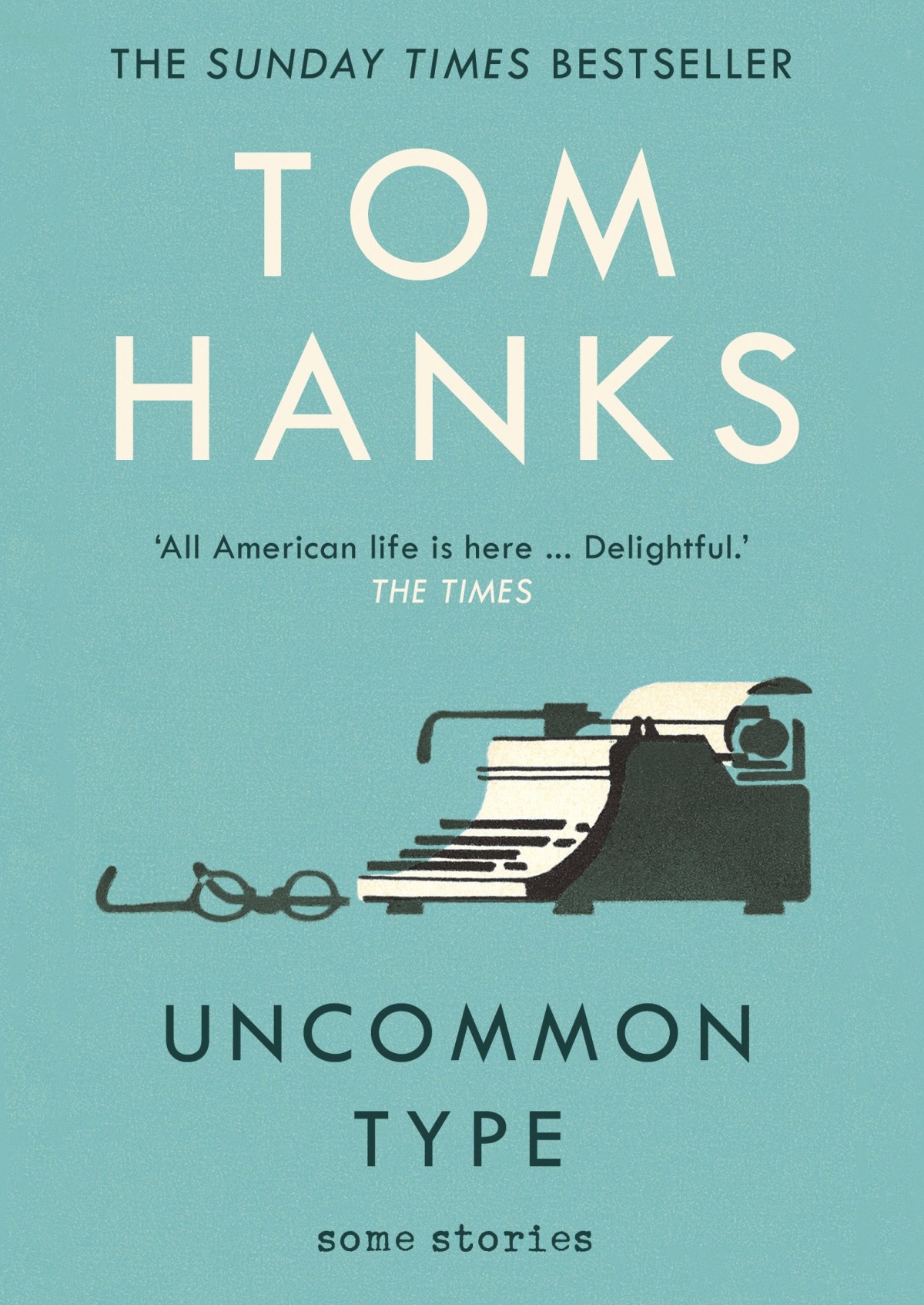
Imagine if you will. it. You’re just about as multi-talented as they come. You once turned into a child at the fun fair, before turning back into an adult with the help of your best mate. Another time, you ran across America, just because you could (and this was after your time in Vietnam and your exploits as a shrimp based entrepreneur). You’ve been a daredevil cowboy, a much-loved television presenter and America’s favourite pilot. Everybody loves you. I mean you even made friends on a desert island once… with a football. You are Tom Hanks.
And then just when we thought there might be a limit to your talents, you went a wrote a collection of short stories.
As a reader, short stories generally aren’t my kind of thing. So a collection of them doesn’t normally work for me. I like the full development of characters and an actual narrative that I feel a novel always brings. But ‘Uncommon Type’ intrigued me when I spotted it on the shelves of my local supermarket. I liked the look of it, but I have to be honest and say that it was Hanks’s name that drew me in and led to me taking the book off the shelves. Yes, I’m that shallow!
Uncommon Type is a collection of seventeen stories, all set in the USA and as the quote on the front of the book says, ‘All American life is here‘. Several of the tales revolve around the same four friends and their various adventures, but then we also have a Word War II veteran facing up to life after active combat, an actor who suddenly and unexpectedly finds ridiculous levels of fame and also the thoughts of a child facing up to his parents’ divorce and the strange ways in which can sometimes move on. So although we’re largely faced with tales of small town America, there’s a great variation in the stories. And one last twist; all of the stories are connected by the presence of a typewriter (hence the title), which while it doesn’t sound a particularly clever or attractive selling point, is carried out brilliantly.
I have to admit, I was hooked from the first page of ‘Uncommon Type’. It turns out that as well as being lauded as an actor and just an all-round nice guy, Hanks can spin a yarn too. He writes beautifully and although there were one or two of the stories that did nothing for me, I couldn’t put the book down for the majority of my time reading it.
As a reader, you’re immersed in the worlds that Hanks places you in, such is his gift for description. Whether it’s small town America or the other side of the moon, Hanks’s prose transports you there convincingly and makes for an excellent read.
As you’d expect from the award winning Hollywood superstar actor, Tom Hanks can write a character! From Anna, an ex-triathlete with a penchant for telling her boyfriend, “Atta baby” through Virgil and Bud, army veterans, both the epitomy of masculinity and typical of their generation and on to American immigrant and stowaway Assan; all are believable and thoroughly engaging. Hanks has created real people that the reader can’t help but care about and ask questions of. And if you’re like me, all the while that you’re in the worlds he creates, watching the characters go about their lives, it’s all being narrated by the man himself! For all seventeen stories Hanks was my reading voice, which, let me tell you, is relaxing to say the least.
I loved ‘Uncommon Type’. It’s subtle eye for detail, charming characters and sense of humour made it a brilliant, engaging read. Although there are one or two perhaps below par tales here, all in all there’s something for everyone. A definite winner that I’d certainly recommend you read.
This is a poem I wrote at the back end of last year after a bit of a setback, careerwise. It’s not important what that was, but it hit me like a train. This was unusual for me, as I don’t brood on things too much – apart from football, stupidly – and always try to take the view that ‘these things happen’ and that as long as I can move on with life, I will.
However, this was different. When I was growing up my own father went through career problems at a similar age and as a kid in his mid-teens, an age when these things tend to leave an impression, I watched him suffer. His situation was far more serious than my own, but career-wise at least, he never recovered. He was out of work for a number of years, having successfully fought his old employer in court, and it all combined to reduce him to someone who was constantly angry and who must have felt that he’d never have hope again. So, faced with the news that I received, it was a worry to say the least.
Here’s the poem.
Crossroads

You are at an unexpected crossroads, bewildered, like your father before you.
Was he older? Younger? The memory vague, but those days branded on to you,
although the details fade. Until now.

Two envelopes, weeks apart, that plunged you not once but twice
to depths you hadn't thought were there anymore.
To questions about your worth, your place, your existence.

Dark thoughts return, like a playground bully, arm round you, sinister smile,
pouring poison in your ear. You've not thought like this in years,
not imagined you'd think like this again. You do not know which way to turn.

The news leaves you like a puppet without a master,
limbs useless and flat, splayed out across a table thinking, like a coward
that perhaps, perhaps, perhaps, they'd be better off without you.

But just as this is not a real option, this is not a real crisis.
You wipe away tears, busy yourself, think, confide in those you trust,
love, value. There is even a small sense of liberation.

Slowly, you crawl out from under your stone and although you feel
that age is cruel and experience no longer valued, this is not the end.
You stop short of full on Gloria Gaynor, but you will, in fact survive.

You find some focus, tell yourself that you are not him and that
you will find not the other side, but an other side, that the confidence,
however painted on it may be, will return.

You are at an unexpected crossroads, bewildered, like your father
and like others, worse off, who felt that their whole world had
collapsed, sometimes even because it had.
But every crossroads has a way home.
The poem is about how bad it all felt. I genuinely felt like I’d let my family down. I felt that I’d completely failed and I felt extremely angry at that. The feelings that the whole situation prompted in me took me by complete surprise and for a short time I couldn’t see the point in anything anymore. As I usually do, I internalised everything and even though I eventually discussed it with my wife and a few trusted friends, the extent of my thoughts and feelings weren’t revealed. Until now, I suppose.
Eventually, after a few weeks of brooding and, dare I say it, feeling sorry for myself, I decided that I wasn’t going to put up with it anymore. I’d regard myself as quite strong, mentally and I could see that what had happened could just be an opportunity.
For me, there’s no point in sulking and I won’t allow setbacks of any size to hold me back for too long. Not that I’m hell-bent on moving too far forward, mind. I know not everyone is like this and I wouldn’t ever criticise or question anyone’s right to feel any way that they want, but as a grown up with a wife and family I made a conscious decision to get back on with life, hence what I hope is an optimistic ending to the poem.
It does worry me that my age is now a barrier. I feel that my experience isn’t particularly valued and that in education there has been a shift in thinking. If it’s not shiny, smiley and youthful, it probably doesn’t have what it takes. Call me a cynic, but often these new approaches from people who’ve had a job for no more than a few years are just approaches that have been done before, but wrapped in nicer paper nowadays. At my age my work feels like a competition to see who can smile the most and shout the loudest. I’m not a very good smiler or shouter either! But, as the poem hopefully shows, I’m not prepared to go under just yet!
I’m definitely at a crossroads in terms of work, age, the way I look, the things I do, the company I keep and much, much more.
With work, I can’t decide whether I want to slow down or head for a new challenge. Or just to keep doing what I’m doing, which is something I love at a place I love. With my age and a notable birthday on the horizon, I need to choose whatever I do carefully; not just in work. In terms of my looks, my hair is greying, my body not quite as responsive as it once was, my face a little more haggered. I won’t be reaching for the Just for Men and won’t resort to some form of cosmetic surgery, but sometimes I catch myself in the mirror and wonder where the fresh-faced 17 year old me went. And I’m always wondering, does my bum look big in this!
But I’ve realised that there’s no point in worrying about it. Just choose a road. Eventually I’ll find the right one. And whichever I choose, I’m lucky enough to have family and friends to rely on.
I hope you liked the poem. As ever, I’d love to hear what people think, so feel free to leave a comment.
So after two training sessions in a week, numerous messages over WhatsApp and several pep talks with my players, we were finally, properly back on the grass today. An actual game with points at stake. Some competition and the adrenalin of a serious game of football, albeit at Under 12 level.
Sunday 11th April marked our return to competitive football and the sun was smiling on the Garforth Junior Football League as teams re-started the season once again. We woke up to an absolutely glorious day, if a little chilly, and frankly perfect conditions for football.
As stated in the first part of this blog, my team restart their season with more than a few worries. We play in Division 7 of 8 and at present are third bottom of the league. It’s safe to say that wins have been hard to come by this season, Indeed one of our wins was actually expunged from the records as the team we beat decided to drop out of the division after lockdown. Not because we beat them, by the way. I think it was down to the availability of players, but it still cost us valuable points.
We were playing the team beneath us in the league and so the importance of the game had been stressed by myself all week. And as we arrived at the venue for the match, I felt confident that we’d give a decent showing of ourselves.
Speaking of the venue, it was the kind of place where I always feel my lads and me might look a bit out of place. We’re a team from Morley, a market town on the outskirts of Leeds and let’s just say that there are areas that we visit for away games where the locals are a bit more refined than ourselves. Sometimes, as we park up outside a row of enormous houses with Range Rovers and Aston Martins in the driveways, I feel like we might be in danger of having our collective collars felt by the local constabulary. It certainly makes me conscious of my Mazda and the scruffy bags that carry the team’s equipment!
Today was one of those days. The area was relatively rural, with some rather plush houses around. We were also playing at a quite splendid private school where they even had a steward to make sure you drove round the car park the right way! The pitches were like bowling greens and the facilities clearly nicer than ours, where only last week two teenagers drove a motorbike over our pitch at speed as we trained. So walking through the grounds of the place made me feel slightly inferior at the very least! We’re the kind of team that my dad would refer to as ‘Raggy Arse Rovers’ and it’s exactly how I felt today.
Once we’d found our pitch we warmed up and went over the basics once again; don’t panic on the ball, don’t just boot it downfield at every opportunity, try to pass and move, use the width of the pitch, take responsibility, encourage each other and anything else that sprung to mind as kick off approached. I was able to take a moment just to have a look around and for a few seconds was mesmerized by the sight before me; the bright green of the pitch and the contrast of those thick, untouched white lines painted in, the bustle of parents, the excitement of the kids taking part in three separate games on the sight and the distinct tension brought about by the fact that we all want a positive outcome this morning. And then, before we knew it we were lining up around the centre circle for a minute’s silence to mark the passing of the Duke of Edinburgh. After that, it was over to the boys on the pitch.
It doesn’t take long to remember how helpless you can feel as a coach. In fact, I’d safely say that in the months of being away from football, it’s something that I’ve not missed at all.
We quickly took hold of the game and yet, for every mistake made or chance missed, my mind was ticking over with questions. Why has he done that? Who told him that was OK? What was he thinking there? As I say, as a coach you feel helpless. You’re screaming inside, yet still trying to find the balance between letting your team think and act for themselves and telling them what to do and what or who to look out for.
I don’t want to take you through each and every kick of the game. That’s not the point here. So, I’ll let you know that we lost in the end, because it helps with explaining the process that you slip into so easily despite the amount of time spent away from doing what you love.
We lost with virtually the last kick of the game, having came back from 3-1 down with about 5 minutes to go, to level it at 3-3. As our opposition re-started the game at 3-3 I was prompted to warn my team, “Don’t do anything silly now!” only to watch on in horror as a series of inexplicable mistakes happened across a timespan of about 10 seconds and we conceded the last goal. While it’s pointless playing the blame game, it was more than difficult to paint on a smile and talk to the ref, the opposition, their players and mine about what a great game it had been. Blame lockdown, blame a lack of fitness, blame me, blame whoever or whatever; we were poor. And yet we still should have won. It’s been like this for a large part of our season and again, it’s not something I feel deprived of by lockdown!
After wards we discussed the need to learn from mistakes and the need to stay calm on the ball. We have another important game next weekend and it’s crucial that we’re better. Talking to parents in the car park afterwards, I was adamant that I wouldn’t have time to put on an extra training session this week, partly due to work commitments and partly down to just feeling ridiculously unhappy with our result! Sometimes, even as an adult it’s hard to hide the disappointment and not react a bit like a child! However, as the afternoon wore on I found myself asking my wife if she’d be alright with me being out for another evening in the week so that I could run an extra session. She was just surprised that I hadn’t already sorted it out!
So, we’re back on the grass and living with all that it brings. The highs, the lows, the surprises and the disappointments. Nine more games to go, until barring further lockdown measures, we finish the season in early June. Already, it’s like we’ve never been away. Training sessions are coming thick and fast and we’ll be counting down the days until our next game this weekend. That love that I have for football is being rewarded once again and I wouldn’t change it for anything.
As grassroots football returns once again and my car becomes a magnet for mud, grass cuttings and various bits of kit, I thought it might be nice to write a couple of blogs about how things went on our return. I’m starting with this one about our first few training sessions and will write Part 2, about our first match, as soon as it happens! I hope you enjoy reading about it all.
Rightly or wrongly, football has always been one of the major loves of my life. Of course family comes first and of course, I see the sheer stupidity of being so obsessed by a game. But it’s a habit I can’t break…and believe me I’ve tried.
However, about four years ago I found myself cajoled into coaching my son’s team and my obsession grew. It’s a brilliant thing to do though and one I’ve written about before, but these last few months – and in fact the stop start nature of the whole of this season – have been a lot to cope with both for us coaches and our players, as well as parents..
At the end of March though, the government began relaxing their Covid restrictions and grassroots football made its latest comeback. Unlike a lot of teams we didn’t jump straight back in though. While other teams at our club were back training on March 29th, the day that the guidelines relaxed, we waited until April 1st until we held our first session.
I have to say that it felt like a bit of an error on my part as I watched those first teams training on the fields at the end of my street! I couldn’t wait to get back and knew – via our WhatsApp group – that parents and players felt the same.
Just being able to be out of the house, mixing with team mates and testing their ability and fitness was going to be one hell of a change from what had happened since January. We’d tried to keep our boys fit by forming a training group on the Strava app with the aim of getting everyone to run a collective 50 miles per week, but it proved to be a difficult thing to do. Initially the group were running the distance every week. In fact in that first week we ran over 110 miles between us. But in recent weeks it had tailed off and while some of the lads were still running and have kept them in good shape, four or five out of a 14 player squad isn’t all that great!
On Thursday 1st April we returned to our pitch and actual football training. It was smiles all round, but just not many of them. For that first session we only had 8 players and one coach as 6 players and my other coach were required to isolate after being in contact with someone who’d tested positive. I split the lads into two groups and while we ran a few drills and did some fitness work, ultimately, given the numbers, we kept it as simple as possible. In the end, we set up some makeshift goals on the pitch, coned an area off and had a game of four-a-side. It was brilliant! Just end to end stuff, lots of goals, a blur of bright orange bibs versus neon yellow shirts and everyone involved with smiles on their faces!
At one point as I looked back up the hill that houses our pitches, we had the local amateur team playing a friendly and everyone from our Under 7s to Under 11s running around on various pitches. You don’t want to get too far ahead of yourself, but it felt like life might be getting back to some kind of normality.
At the end of the session though, I was reminded of something I haven’t missed at all. Parents arrived to pick up their kids and after I’d got the kids to collect cones and poles, I was left entirely alone to first pack it all away and secondly, to haul it all up the hill to my car! As the kit bag full of cones repeatedly banged up against my thigh and I struggled to balance the huge bag of poles so that they wouldn’t tip forward and empty everything out through the hole that’s been worn through, I was vividly reminded of what a pain in the arse being a coach can be! I passed probably 30 or 40 people standing spectating on various sessions and not one asked if I needed a hand!
With a game coming up and having missed months of football, I had a brainwave. Why do one training session in the week leading up to the game when you could do two? I messaged parents just to gauge opinion and availability and was met with a resounding yes. My own son had missed the first session as he was isolating and although he’s made an effort to keep up his fitness (that’s a polite way of saying I’ve been dragging him out for runs with me whenever possible), he’d barely kicked a ball for months. It was the same for many of the squad. So an added training session would do them all the world of good. Or at least tire them out so that they wouldn’t bug their parents so much for a couple of evenings!
Another reason behind this decision was our league position. We’ve actually lost points over the break as a result of a team dropping out of the division we’re in. This has left us 3rd bottom of the division and in real danger of finishing bottom if we don’t do well. So we clearly need to put in the hard yards before we kick off.
The differences between the first session we had held and this second one are marked. Firstly, I’m almost late! It happens on a regular basis. With only myself to organise on the previous Thursday, I was there with lots of time to spare and could set up and be ready as the kids arrived. Tonight though, my son has done his usual trick of being nowehere near ready. He can’t find various items of kit, despite being told to get organised, he’s labouring with his tea, he hasn’t done his water, he can’t find a hat, etc, etc.
The other difference is that we have almost a full squad. We still have one player isolating, but in all there are 13 boys ready to train. Plus the elder brother of one of them, whose team have folded, leaving him at a loose end. He asks to take part and we welcome him and hopefully his calming influence with open arms!
Before the session we have a long chat with the lads about how we’d like to finish the season. We have 10 games still to play and, as I mentioned, the very real possibility of finishing last! I, for one, don’t want that. While I always want my team to enjoy playing and am more than happy to be inclusive and let everyone have their fair share of time on the pitch, regardless of ability, I can’t hide the fact that I’m competitive. So we talk about the idea of the team and backing each other up and about the need to give absolutely everything we have in these final games.
We keep the session relatively simple, dropping plans for a passing drill in favour of a longer game and once the warm ups, jogging and sprinting are complete we run through a drill with the ball before choosing teams, handing out bibs and letting them get on with a game. Again, smiles are the order of the day and there’s no whining and moaning about what’s fair and unfair or who fouled who; just the desire to have a game. They play for half an hour with only a 1-0 scoreline to show for it, so it’s clear that their shooting skills have filtered away over the break, but we can work on that next session. We’re edging closer and closer to a first game in months and hopefully we’ll get a result. But the approach has to be one of complete positivity and encouragement. We all need to be pulling in the same direction.
We return to training two days later for our second session of the week and third since we’ve been allowed back. This time we run through a few more drills with the ball as well as upping the ante with the running, in the hope of adding a little bit of an edge with stamina. We end with a game and this time the goals flow, but sadly that brings out the worst in one or two of our lads. My team are still very young and although the idea of working as a team has been drummed into them time and again, yet the moment things start to go wrong there are those that start blaming others, griping, sniping and failing to take responsibility. It’s something I find very frustrating and once again, something that will have to be addressed before we play on Sunday. It’s vital that we work together and if we can’t, then truthfully, I’d rather not bother.
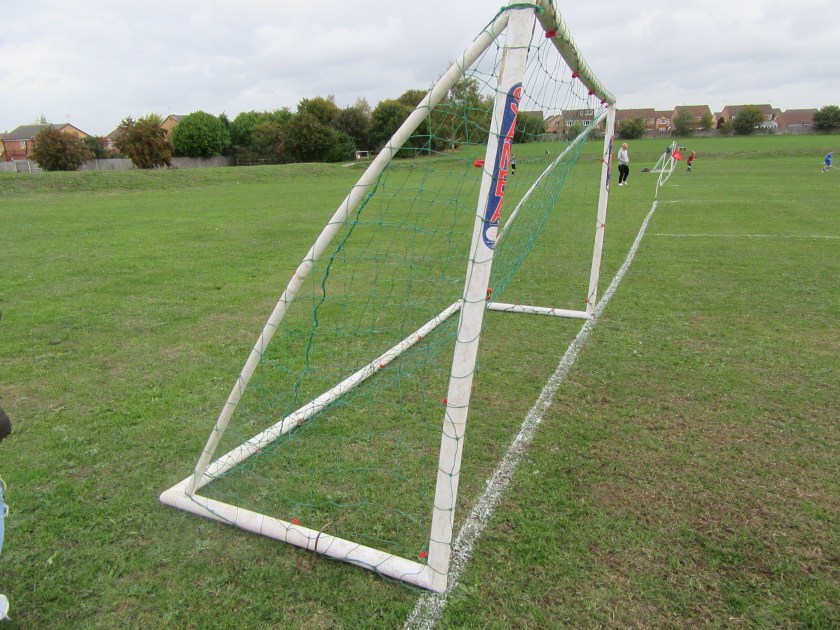
As a side note, another frustration rears its head again tonight. We decide to set up our 9-a-side goals tonight, which means hauling them about a quarter of a mile down the hill to our pitch and then back again afterwards. These aren’t light and they’re cumbersome too. The hope was that our parents would offer a hand in putting them back. Some hope. My arms and shoulders still ache this morning after the sheer struggle of carrying the goals back up the hill, lifting them over a 7 foot fence and then maneuvering them through the car park, while all the while fighting strong winds. I feel like an old man this morning!
So there we have it. Football’s back and within just a few sessions we’ve had a microcosm of the highs, lows, joys and frustrations. Here’s to Sunday, the first game back and a chance to leave over three months of lockdown frustration on a pitch somewhere in West Yorkshire. I’ll let you know how that goes in Part 2 of this blog, which I can hopefully post on Monday. In the meantime, I’d love to know what you think, so feel free to leave a comment.
This is a poem I posted recently in the Lockdown Literature group that I helped set up on Facebook. It was a good way of passing the time during our first period of lockdown and it’s great that people are still posting in it on a fairly regular basis. This was the first poem I’d posted there in a while.
It wasn’t a poem that I was going to post on my blog. I’ve tended to steer clear of anything too personal on here, but having sat down and read through the poem again, I wondered how relevant it would be to others. At the time of posting it in the group it didn’t have a title and I wasn’t sure it was finished. It was about growing up in our house, but on reflection I began to wonder just how normal the things I wrote about were. I grew up in a house where shouting and various kinds of tension felt almost constant and fairly normal. I hated it. When my parents argued I felt like I was waiting for the inevitable to happen and for one of them to announce that they were leaving. Or I worried about whatever other terrible end it might have. It felt like nothing ever got talked about or discussed; everything was a battle. And not just with my parents; with my sister, with my grandmother…wow, especially with my grandmother! But adult life has taught me that maybe it wasn’t all that rare. Maybe that is just how family life can be sometimes.
As I mentioned, it’s not something I really like to write about, or at least post where it’s so visible, but having revised the poem a little bit and revised my thinking about it too, I thought I’d post and see what people think.
Mam and dad fought; to keep food on the table,
to keep a roof above our heads, to stay together.
So maybe there was nothing left in them to fill a home with love.
Maybe being there when they could was enough.

In a lucid moment, in quiet, in solitude
I think I understand that now,
have sort of come to terms with it, am almost at peace with it.
But while it's easy to say let go of the past, it's impossible not to always be reminded of the impact that it's had. The damage that it's done.
Dealing with what it left behind,
picking up the phone more often and enjoying the life you have while it's still there still present a knot to be unpicked by stone cold fingers.
Maybe a nod, a smile, an isolated cuddle and the odd word of encouragement was all the energy they had left. Maybe it works both ways. Maybe we're all just like this.
Maybe there's a lesson to be learned.
A funny one this. I still don’t think it’s finished. I’m still not entirely happy with it and I still think it will be revisited. It’s a slightly different poem to the one that appeared in that Facebook group and definitely one that’s changed in mood with the tweaks that have been made.
The poem still hasn’t got a title. I wondered about calling it ‘Maybe’ but that word was only added in this second draft, so it didn’t quite feel right. Maybe I’ll revisit the subject matter, but not the poem itself. Maybe, like the subject matter, the poem just needs to left. As I said earlier, it’s a funny one.
As ever, feel free to leave a comment as I’m always interested to hear what people think. I’m never entirely sure when it comes to poems, but this one has really stopped me and made me think.
This is a poem I wrote on a whim. It came from boredom, if the truth be told. I’m sure I was suitably inspired by the company I was keeping at the time, but essentially it was the boredom that made me start scrawling on a piece of paper.
My Year 11 class were completing an assessment. I’d done about an hour’s input, fielding questions, giving reminders, making notes and then when the time was write set them off writing. After about 10 minutes of enduring the silence and trying to keep busy I realised that I just wanted to sit down. I couldn’t sit at the computer and do work because the screen that it was linked up to would show everything I was doing and I didn’t want my group getting distracted. So, I kept the title of the assessment on the screen and thought about what I could do.
It was a Thursday afternoon and we’re based in a fairly cramped room on a Thursday, so space and social distancing meant that I couldn’t just wander. I couldn’t really just stand either as the only place to stand would have been by the door and I felt sure that it wouldn’t be long before someone absent-mindedly opened the door and knocked me into next week. Hilarious for my class, I’m sure and not the fault of the door opener, as who would expect someone to be stupid enough to stand right in front of the door. So, a quick scan of the rom told me to sit at the one spare desk available.
After a whole five minutes I was bored, so I grabbed a sheet of paper. Perhaps I could practice my autograph? Instead, having sketched for a few moments – my current favourite is to draw myself as a Charlie Brown character – I found myself thinking about the group. And what started as a few rough lines of a potential poem about an assessment became something of a poem about how much they mean to me.
Assessment

In an unusually silent room the creaking desks are a constant source of annoyance.
Every so often a stare is accompanied by a sigh as another realises that there's nothing to be done about the noise.
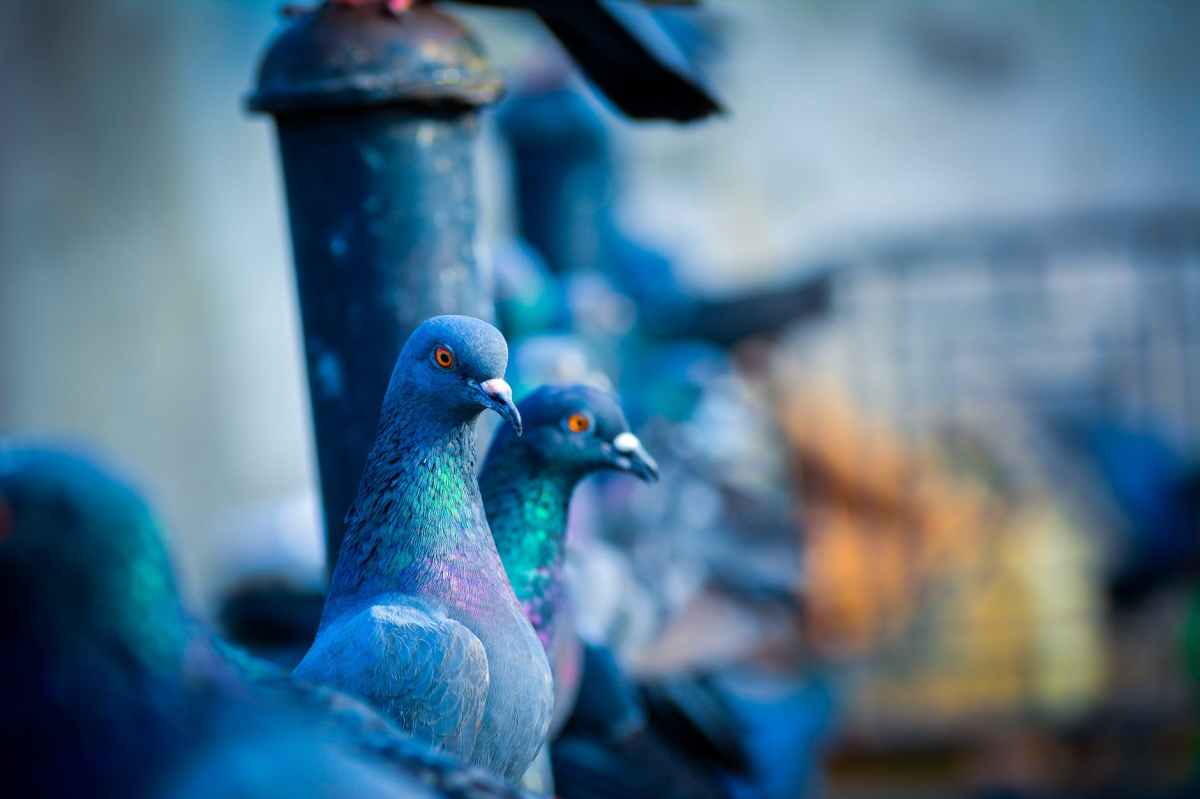
The dimming of the lights adds an eeriness to the tension and I am helpless; the pigeon fancier who opens the loft to the flutter of wings that he can really only hope he'll hear again.
He can only pray they stay safe.
This is our first race. A journey that we have trained for and will repeat again until the future beckons
and I can no longer help, cajole or comfort, but still make time to worry,
despite the reality that I may never see you or hear of you again.
We are left to count down the coming weeks and spread our wings a few last times, turn circles in the air, swoop, arc dive then return to the loft each time until it's time to fly the rest of the journey alone.
I’ve mentiond this group before. I’ve taught many of them for the majority of their school lives. I remember most as fresh faced, quite naughty Year 7s. In short – and not to insult them in any way – they’re a bottom set. My bottom set. Their language skills are at best, weak even at the top end and their knowledge of the world often leaves a lot to be desired. Sample fact to prove this? When I taught them for intervention English in Year 9 it took more than a few minutes of an hour lesson to convince at least one of them that Roald Dahl’s The BFG was not a real person. He wasn’t dead. He wasn’t alive. Roald Dahl had just made him up.
Studying Shakespeare, Dickens etc can be a challenge, both for them and me. But then one of them will offer an opinion or just remember something obtuse about the text and it feels like a huge win for all of us.
The group are currently enduring a series of assessments put in place to enable me to award them a GCSE grade in lieu of not being able to do the real exams due to Covid-19. I never really let on to groups how much I care, but as I sat and watched them write, witnessing every grimace, every pause for thought and every tongue slipped out of the side of the mouth in concentration, I couldn’t help but think about them in previous years throughout their time at our school. Of course I care. I care deeply, especially about my weaker groups and I found that I was just hit by how little I can now do for them. I genuinely worry about what some of them will end up doing once high school is finished and I desperately want them to get some kind of English GCSE to help them along the way.
As for the poem, I’m not really sure where the image of the pigeon fancier came from. But I was struck by how wondrous it is that these pigeons come ‘home’ to their loft after every race.
I was aware of pigeons and their owners from an early age. I was brought up in the North East of England where racing pigeons can attract some quite fanatical people. I have memories of several ‘uncles’ (not real family, probably family friends or neighbours, but always called uncles or aunties) who kept racing pigeons when I lived at home. They’d spend ridiculous amounts of money and time making their birds as comfortable as possible in the hope of winning races and it always held a bit of a fascination for me. On the afternoon of the assessment that was how I felt. Like I’d lavished time and energy on my group and that soon it would be time to let them go. In truth, I don’t want to.
As ever, I hope you enjoyed the poem. I think the subject matter might inspire more in the weeks and months to come! Feel free to let me know what you thought in the comments.
Like most of us, this time last year I’d never heard of Coronavirus or Covid-19. Regardless, it was there and had been around for a while. However, even as news broke left, right and centre and day by day the situation worsened, most of would have never have imagined how bad things would get and how much our world would change. So imagine a situation where it seems like the very same virus wipes out 90% of the world’s population.
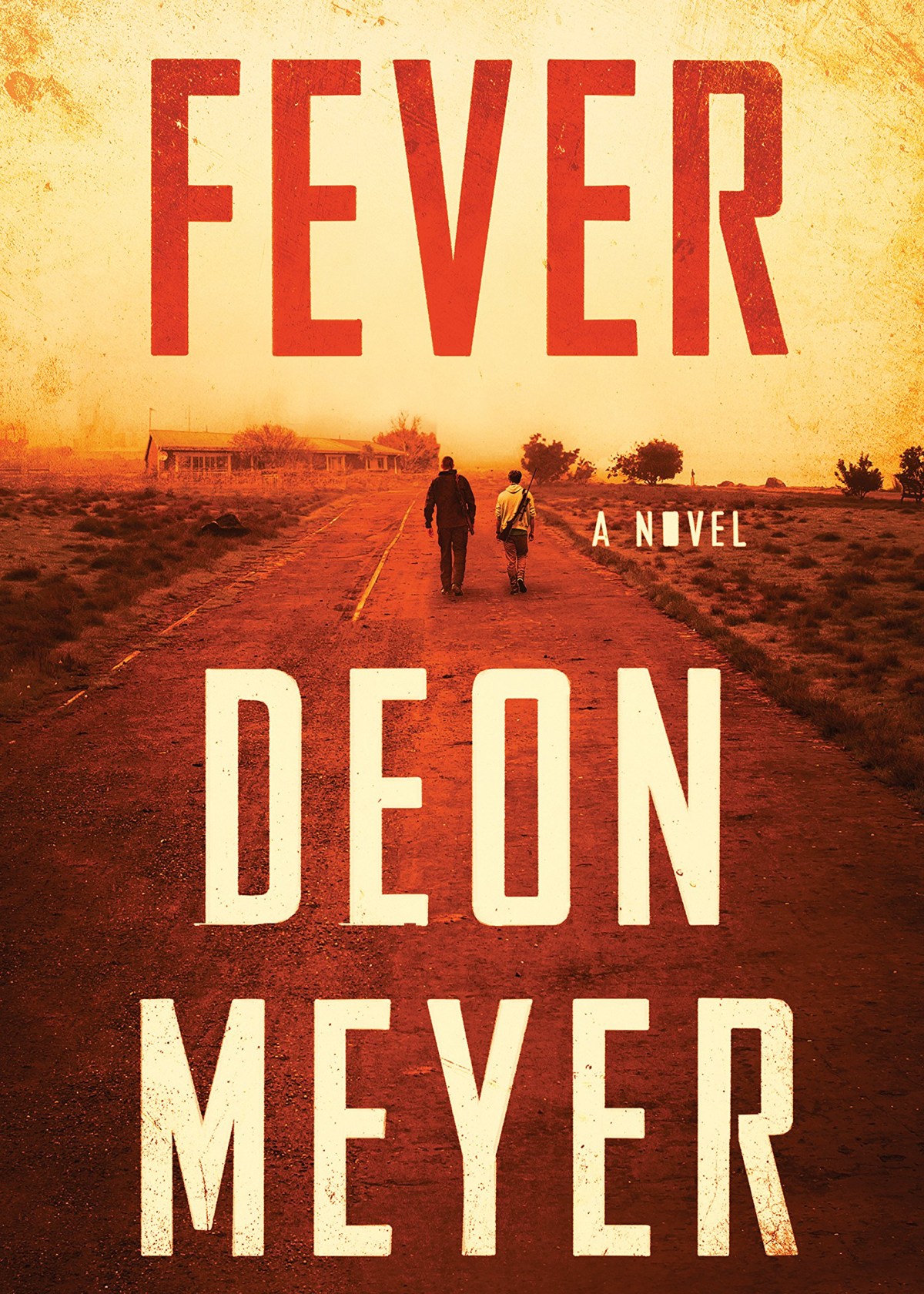
This is the premise of ‘Fever’ by Deon Meyer. Even as a lover of almost anything dystopian, the facts here would have seemed a little far-fetched without the reality of the present-day global pandemic. And while Coronavirus has had nowhere near such a devastating impact, the severity of the damage done to the world of ‘Fever’ made it all the more readable for me.
The novel is set in South Africa and while the rest of the world is rarely referenced, the reader is aware that the entire planet has changed almost beyond recognition. The South Africa inhabited by our protagonists, Willem and Nico Storm is merely a microcosm of what’s going on elsewhere. And there’s a lot going on. ‘The Fever’ has wiped out the majority of human life and those that are left are now battling for survival. Everything that they need to stay alive is either sparse in quantity or heavily in demand and the competition to stay alive is strong. This really is survival of the fittest.
But, in amongst the chaos, Willem Storm has a dream. Having lost everything to the fever, he now wants to create a community that will welcome anyone and be fair to everyone. Willem Storm wants to restore order while at the same time offering hope, even if it is on a relatively small scale.
In my opinion this is dystopian fiction at its best and at its most relevant. The book is around 5 years old so while there was an awareness of coronavirus, Meyer couldn’t have predicted just how quickly it would take hold and just how relevant his novel would eventually be. I must admit though, that for the first few sittings of reading the novel I was fascinated by the coincidence, even though I knew that coronavirus had been a ‘thing’ for a while. So reading the novel when I did, in the midst of our latest lockdown, gave it a definite edge. As the infection rate and the death toll spiked again and again, I couldn’t help but think, ‘what if?’
The novel is written from the point of view of the 13-year-old Nico Storm, looking back on the events of his childhood and the early post-Fever years. South Africa is in a state of emergency and no one is safe as rival gangs roam the country, robbing, killing and trading as they try to stay alive. Think ‘The Road’ but with a better climate. The wildlife poses a problem too and packs of wild dogs are a constant threat. So we have a landscape and society that is very much a cross between something out of Mad Max and The Walking Dead, but with no zombies and more Negans and Whisperers. And in amongst it all, his father Willem, sees a dream of a new society.
The dream becomes reality, but despite the spirit of evolution and the fading of the fever, this was never going to be simple and there’s little chance of a happy ending. The population of Amanzi – Willem’s vision for the future – grows, but so do the problems. And as with any good dystopia – and there’s a paradox if ever there was one – just when you think you’ve overcome the problem, another one appears. And another, and another. ‘Fever’ is very much edge of the seat stuff.
‘Fever’ is a novel of hope. Everything is a struggle, but with that, even the smallest of successes is a victory for the good guys. Within its 500+ pages there are plenty of moments where the reader has to suspend their disbelief, but this isn’t War and Peace; this is the world minus 90% of its population and a book full of drama and edge of the seat thrills. I must admit I didn’t enormously enjoy the twist and ‘big reveal’ of the ending, but it certainly didn’t spoil the read for me either.
If you’re a fan of anything dystopian then you’ll enjoy ‘Fever’. Meyer creates a surprisingly believable world while managing to fill a long story with enough problems to keep you well and truly interested and perched on the edge of your seat. It’s possible that there are too many characters to really focus on, but then again, with the protagonists creating a new world and aiming to accept all who arrive at their gates, we were never going to be able to just stick to the two points of view. And frankly, if you don’t get confused while the world is falling apart around your ears, then is it even falling apart at all?
‘Fever’ plunges us right into the situation that we’ve been living through for the last year…but replaces government sanctioned exercise, closure of shops, face masks, hand sanitiser and social distancing with the fact that it all got a lot worse and nearly everyone died. What more could you want to get your teeth into?






 Middle Age Fanclub