Gallowgate Cult Heroes: Number 5 Barry Venison

It’s still quite rare for a player to cross the divide between black and white and red and white. In my lifetime there haven’t been that many and even if we go right back in time, a player who played for both is usually rare enough to grab a bit of attention. However, it’s even more rare for one of these moves to be deemed a success. Just ask Lee Clark or Michael Chopra!

Arguably one of the biggest successes in playing for both Newcastle and Sunderland would be Barry Venison who was adored during his time at both clubs.

Venison arrived at Newcastle from Liverpool in a £295,000 deal. We were in the second tier of English football, having just escaped relegation to Division 3 at the end of the previous season under Kevin Keegan. King Kev was now assembling a squad for a promotion challenge, with the Premiership (now the Premier League) only a year old. Venners would become a key component in that Championship winning season.

Barry had, of course, started his career at Sunderland in 1981. He would become their captain at just age 20, eventually playing a total of 205 times and becoming the youngest player to captain a side at Wembley when our lovely neighbours lost the 1985 Milk Cup. He would leave for the all conquering Liverpool side of the 80s in 1986 in a £200,000 deal and stay there for 6 years before he joined us.

Venison brought much needed big game experience and guile to a squad that, while it was being overhauled, still contained many of the squad from the previous almost disastrous campaign. The likes of Lee Clark, Robbie Elliot and Steve Howey would learn a lot from Venners and his influence would be felt by incoming future superstars like Rob Lee and Andy Cole too. So while Brian Kilcline would start the season as captain, Venison was very much the power behind the throne and would eventually take the captaincy when Killer was out of the side. A latter day Kieran Trippier, if you will. Just with bigger hair.

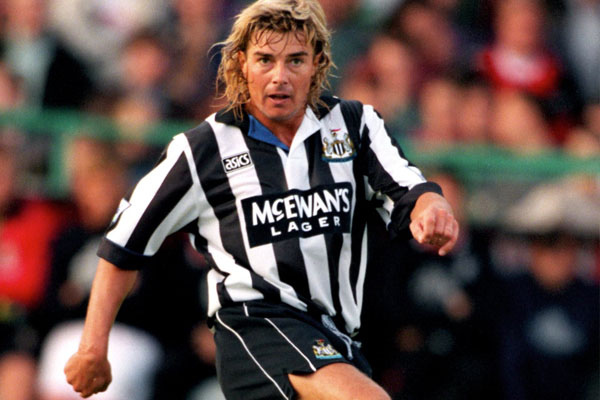
Undoubtedly, part of Venison’s appeal was his sense of ‘style’. He was no ordinary everyday footballer with his long, flowing blonde locks and unique fashion sense. He was the closest thing we’d get to Miami Vice on Tyneside and some of his choices were legendary. He embraced bleached bootcut jeans and at times even paired them with cowboy boots, while on his wedding day he wore a pink suit, looking every inch the Don Johnson lookalike and outshining his bride at the same time!

A tough tackling, hard running overlapping right back he quickly became a firm favourite with our fans. And although he would only ever score one goal for the club, he was always at the front of the queue when celebrating other people’s goals. Barry simply loved the celebrations and could regularly be found piling in on top of those shaking their fists at the crowd!

After winning the Division One championship, Venners continued as a regular at right back in the team that brought European football back to St. James’ Park for the ’94/95 season. However, that would be the season where his partying pushed one too many of Keegan’s buttons and he was stripped of the captaincy. He would also lose his spot in the team at right back after Marc Hottiger was brought in.

However, Venison was then reborn, converted to a holding midfielder by Keegan. He took to the position like a duck to water as well and was called up by England in the same season.

Barry Venison was what we might call a character. Someone who threw himself into life as a footballer and who – in terms of the modern day footballer – it could be argued, very much made the most of his slightly limited ability. He would move on to Galatasaray at the end of the ’94/’95 season but would live long in the memory of many a Mag. A cross between some kind of catalogue model and a slightly effeminate Viking, Barry more than successfully crossed the divide and his red and white background was never held against him.

Gallowgate Cult Heroes; Number 4 Micky Quinn

If you’re a Newcastle United fan, it’s almost certain that you’ll love a number 9. We’ve been brought up on them. For the older generation, we would have been told stories of Jackie Milburn, Hughie Gallagher and Len White. Some of us might even have been lucky enough to watch the great Supermac in the 70s. The younger generation could point to the brilliance of the likes of Cole, Ferdinand, Shearer and even Callum Wilson.

No one can argue that we’ve had a glut of quality strikers to have idolised over the years. Even when you move away from the obvious, you’ll still find some excellent strikers who’ve left their mark on Tyneside. Micky Quinn is definitely one of those names and to this day holds cult status in Newcastle.

Quinn was signed from Portsmouth at a turbulent time for the club. Arriving in July 1989 for £680,000, he was joining a fractured club. Many supporters were boycotting the club and protesting against the board of the time which was led by one of the most unpopular chairmen of my lifetime in Gordon McKeag. So while Quinn jumped at the chance to join the Toon, he certainly wasn’t popular from the off. Quinn himself famously tells a story of seeing the protests as he walked through the city and bearing witness to a banner that asked ‘Who the f**k is Mick Quinn?’

I was well aware of who he was as the kind of geeky kid who always kept track of the top scorers in every division, so Quinny’s signing excited me and was a rare piece of good news at a time when I could feel myself drifting away from the club and its under-ambitious ownership. As well as being a Bob Carolgees lookalike, Quinny was known for being a little on the larger side and in truth wasn’t the perfect physical specimen, but as he’d say later on in his career, he was the fastest you’d find over the first yard!

My cousin was part of the supporter boycott and I was torn between getting a ticket for the first game of the season or standing outside St. James’ Park like he did and trying to persuade people to stay away and put pressure on the board. Thankfully, I went in that day.

Quinny’s debut is the stuff of modern NUFC folklore. In front of just over 24,000 fans, he scored four goals in a 5-2 win against promotion favourites Leeds United. By the end of the game, no one was asking who he was anymore and Quinny quickly became a crowd favourite. Having stood watching the likes of Frank Pingel, Mirandinha and Rob Macdonald struggle to score goals in the previous season, I was thrilled that we had such a number 9 as Micky Quinn and for many others he would become a hero just based on that game alone.

Quinny scored 34 goals in that first season, cementing his place in the history of the club and also in the hearts of many a supporter of a certain age. After 4 on debut he then went on to score in each of the next 4 games and he simply kept on scoring all season. His record for that season – 34 in 53 games has him in 5th place for the most goals scored in a season at NUFC. I was 18 at the time and the partnership between Quinny and Mark McGhee that season remains one of my favourites of all time.

In his second season Quinny scored 20 goals, but the team finished 11th in the old 2nd division and the writing was on the wall for manager Ossie Ardiles. The season that followed was the now infamous and almost disastrous one that ended with Kevin Keegan coming in as manager and somehow managing to save us from the drop. Quinn scored 10 that year but was eclipsed by midfielder Gavin Peacock who got 21 and it would become obvious that the manager didn’t really fancy our cult hero.

During that amazing first season in ’89-’90 I was lucky enough to meet Micky. He was part of a group of Newcastle players who were taking part in a charity cricket match at a local cricket club in Swalwell. Me and a couple of mates went along and skulked around on the boundary, waiting to try and grab a word with our heroes. I was 17 and still very much in awe of these people who I watched week in week out.

Having managed to get an autograph from Kevin Brock, we waited and waited for Quinny and when he was fielding right by the rope we grabbed our opportunity. He signed my old green and yellow striped away top and was just a genuinely nice bloke. He’d taken a flying catch moments before and was full of himself, as you would be!

Another, rather different memory of Quinny would be from a couple of seasons later and the 91-92 season. It was away at Sunderland and the infamous Liam O’Brien over the wall game. Quinny was actually injured and on crutches at the time but I have a vivid memory of him approaching the way fans in the Roker End at the end of the game, wildly waving his crutches around and celebrating. We’d had a few crucial injuries going into the game and so the draw was actually a great result and Micky, like the whole away end, was ecstatic. He knew just what the club meant to the fans!

To those of us who followed Newcastle United around the country in the late 80s and early 90s, Mick Quinn was a legend. When he wasn’t banging in the goals he could invariably be found ‘de-stressing’ in the local nightclubs and was a big fan of the Tuxedo Princess! A lot of that side of things is detailed in his excellent autobiography ‘Who At All The Pies’, which is a must read if Quinny is a new name to you.

In all, Quinny scored 63 goals in 126 appearances for the club and always gave everything. He embraced the weight of that number 9 shirt and did it proud, starting with that incredible debut. He was eventually sold to Coventry City where he would go on to gain cult hero status with their fans too. Newcastle United moved on in style when he was sold, with Kevin Keegan bringing in Andy Cole as we gained promotion. A lot of us fans will never forget Micky Quinn though!

Gallowgate Cult Heroes; Number 3 Imre Varadi

When I first started writing this series, I wondered how far back I’d be able to go. I’m trying to write more about players that I actually saw play, rather than just delving into the history books – and Wikipedia – and providing you with a list of stats. So, in essence I’m restricting myself to going back as far as the late 70s at best and even then, my memory won’t always be reliable.

The third player in the series is one that I only just remember, as well as being one of my first ever black and white heroes.

Imre Varadi was signed, with not a great deal of fanfare from Everton in the summer of 1981. A 22-year-old Londoner, with a Hungarian/Italian background, he was brought in by manager Arthur Cox to help solve what had become a major goalscoring problem. With the previous season’s strikers – the likes of Bobby Shinton, Alan Shoulder, Mick Harford and a young Chris Waddle – struggling to find the net, Varadi faced a challenge. However, he must have felt that he couldn’t really fail, given that the previous season’s top scorer had been Shinton with 7 goals. And so, a memorable, but brief chapter began.

Newcastle were languishing in Division 2 (now the Championship) at the time but in his first season (81/82) Imre scored a commendable 20 goals in 47 appearances. However, it took him a while to actually find the net. When he did eventually did though it was spectacular as he bagged a hat-trick in a 0-4 away win at Cardiff. Suddenly, things were beginning to click into place. In the next game, this time at home to Derby he scored a brace in a 3-0 home win.

Varadi had electric pace, an eye for goal and was more than capable of an eye-catching piece of skill. He was unpredictable and brave, doing the number 9 shirt proud. It was easy to see why a success starved Gallowgate would take to him so quickly. But things were about to change on Tyneside.

In the summer of 1982 Newcastle United grabbed the football world’s attention by signing the England captain Kevin Keegan from Southampton. How we’d managed to sign the twice Ballon D’or winner is anyone’s guess, but we did and he would go on to help change the history of the club. It was the beginning of the end of Varadi though.

The season started well, with Varadi providing the assist for Keegan’s winning goal in the first game of the season at home to QPR. In goalscoring terms though he made a slow start. While strike partner Keegan scored 3 goals in his first three games, Varadi didn’t score until the sixth week of the season.

However, by the end of the season he had scored 22 goals in 43 appearances and was again a roaring success as he finished as top scorer. Keegan himself only made 16 league appearances, scoring 21 goals and was rightly idolised. And this was possibly what would cost Varadi. Newcastle, having finished 5th that season went all out for promotion the next, signing John Ryan for a then club record fee of £250k, David Mills and a 22-year-old called Peter Beardsley in the summer with Imre being sold to Sheffield Wednesday for £180k.

I remember rumours about Varadi’s relationship with Keegan at the time and since then have heard the same type of things mentioned time and again in relation to his departure, but I really wouldn’t know. Whatever the reason, it seemed a strange move to get rid of the top scorer of the previous two seasons. Varadi scored goals and was popular with the fans and yet was still sacrificed to a rival. Mind you, Keegan would do the same himself as manager, years later, with Andy Cole, ending up explaining himself to confused and angry fans on the steps of the Milburn stand.

Imre Varadi was the first number 9 that really captured my imagination. I wasn’t old enough to remember Supermac and there’d been precious little else to grab on to during my fledgling years as a Toon supporter. I remember being enamored by Peter Withe, but even then I was only 6! My other favourite player had been midfielder Micky Burns, but there was nothing that excited me as much as Varadi did when he signed. I knew nothing of him, but that first hat-trick had me hooked! I’d fallen in love with a club that felt like it gave precious little back, but when Varadi got the ball and ran it felt like there was a bit more of a point being there.

With 42 goals in 90 games, Imre Varadi had a decent strike rate and was the kind of striker that excited the fans. But with a young Chris Waddle coming through and Peter Beardsley set to make an amazing impact with Kevin Keegan, maybe letting him go was the correct decision. By the end of his career he’d become very much a journeyman pro, ending up with 17 clubs in all, so perhaps his two years with us was par for the course.

In recent interviews, Varadi has expressed great love for his time with Newcastle and for a couple of years, there were a fair few of us who loved him right back. But cult hero or not, nobody could really compete with King Kev, could they?

Gallowgate Cult Heroes; Number 2 Brian Kilcline

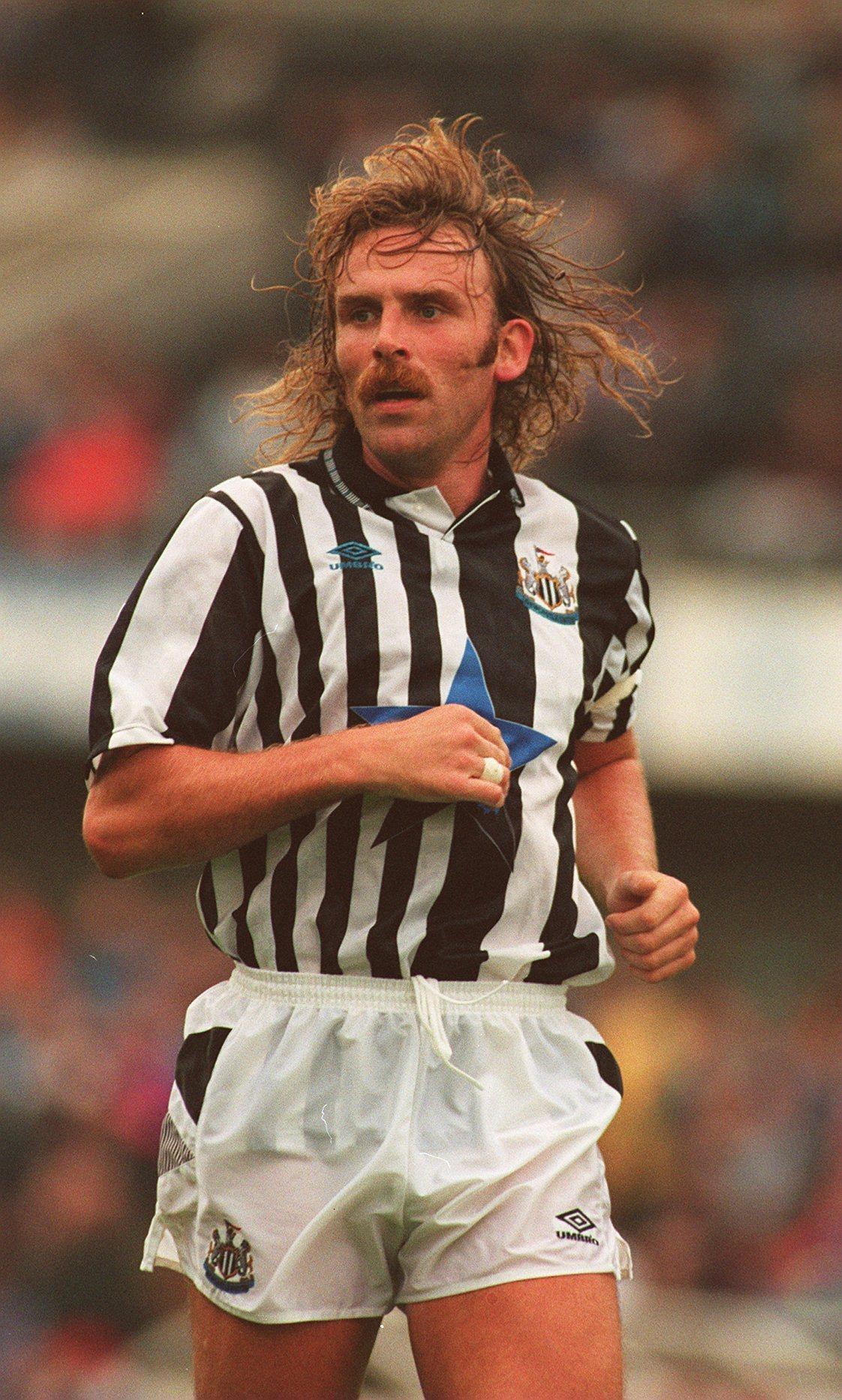
Signing a player who’s better known as ‘Killer’ sounds like the kind of thing you’d only experience via the pages of a 1970s comic. And in many ways, Brian ‘Killer’ Kilcline’s story would go on to feel like pure fiction.

Brian Kilcline was Kevin Keegan’s first signing in his first spell as Newcastle manager. A typical Keegan singing? No, but in many ways Killer was one of the most important signings the club ever made. He gave a team, that had previously cowered at the first scent of a problem, a spine and was one of the major reasons that the club avoided relegation in the season that he joined. Make no doubt about it, Newcastle United were in deep trouble and in grave danger of tumbling into Division 3 (League One now). Brian Kilcline was Keegan’s first port of call in order to make sure that didn’t happen.

Signed from Oldham in 1992, Kilcline was immediately made club captain. Having previously captained Coventry to an FA Cup win in 1987, he had valuable experience to add to a dressing room that was a mixture of underachieving journeymen and raw kids. Killer was 29 when he signed and was charged with the business of giving the squad a sense of belief as well as a metaphorical kick up the backside. At the time our squad included such luminaries as Ray Ranson, Mark Stimson, Peter Garland and Archie Gourlay, but previous manager, Ossie Ardiles, had put all his faith in youth and players such as Lee Clark, Steve Watson, Lee Makel and Robbie Elliot. While we were playing some pretty football, we just weren’t winning games and were sinking fast. I remember week in, week out having that sinking feeling that we couldn’t possibly survive. Then, along came Keegan and Killer!

Brian made his Newcastle debut in a 1-1 home draw against Barnsley, replacing Darren Bradshaw in the starting line up after the team were beaten 3-1 away at Blackburn. Newcastle were stuck in 22nd place in the division at this point. Seven days later, with Killer again in the side, we recorded a 0-1 away victory at Port Vale and moved up to 19th.

From there we’d go on picking up points so that by the time we’d beaten Sunderland 1-0 at home at the end of March we were sitting in 17th place and looking far more comfortable with Killer marshalling the defence.

However, 5 successive defeats followed, with Kilcline sidelined through injury for three of them and Newcastle plunged back into trouble.

Ultimately, the side did enough to stay up with successive victories against Portsmouth and Leicester and Kilcline’s place in history was already assured. Those two games will go down in club history and while the home game v Pompey will always be associated with David Kelly’s late winner, it was Killer’s defence that kept a rare clean sheet that day. Similarly, the game away at Leicester will be remembered mainly for the performances of players like Kelly, again, and Gavin Peacock, as well as a pitch invasion by home fans, but Killer’s influence that day cannot be underestimated as Newcastle held their nerve enough to get over the line in one of the most dramatic games I’ve even witnessed as a Newcastle fan. Forget winning games in the Champions League, this was like the Alamo (it was a battle, look it up, kids).

While Killer will be remembered as the man who Keegan trusted to guide the club to safety during one of the darkest periods in its history, it shouldn’t be forgotten that the very next season he captained the team to promotion. Keegan famously referred to him as “the most important signing I ever made for the club” and instantly secured Killer’s status as a true legend for Newcastle United. However, he was to start only one game for us in the Premier League and moved on to Swindon soon after. There, Killer made 10 appearances in the Premier League, but left for Mansfield Town in 1995 amid suggestions of a falling out with the Swindon manager Steve McMahon.

Later in his career Killer began to explore his more imaginative side, living for a while on a narrow boat, before spending his time travelling the world with wife Lynn once he’d retired. Nowadays, Brian lives in rural Holmfirth in Yorkshire where he spends time managing rental properties and renovating houses. In the recent past he has still turned out for Newcastle legends teams too.

Although he only spent a short amount of time on Tyneside, Killer was undoubtedly a hero for Newcastle. Not only did he help to save the club from a disastrous relegation to League 1, but he led the side to the promised land of the Premier League a year later too. In doing so he had a huge influence, not just on the future of the club itself, but also on a group of young players such as Lee Clark, Steve Watson, Robbie Elliot and Allan Nielson, players who would go on to have a bright future with the club.

Brian Kilcline; looked like a Viking, played with grit, passion and determination, led like a legend.

NUFC: Dan Ashworth and the changing face of the academy.

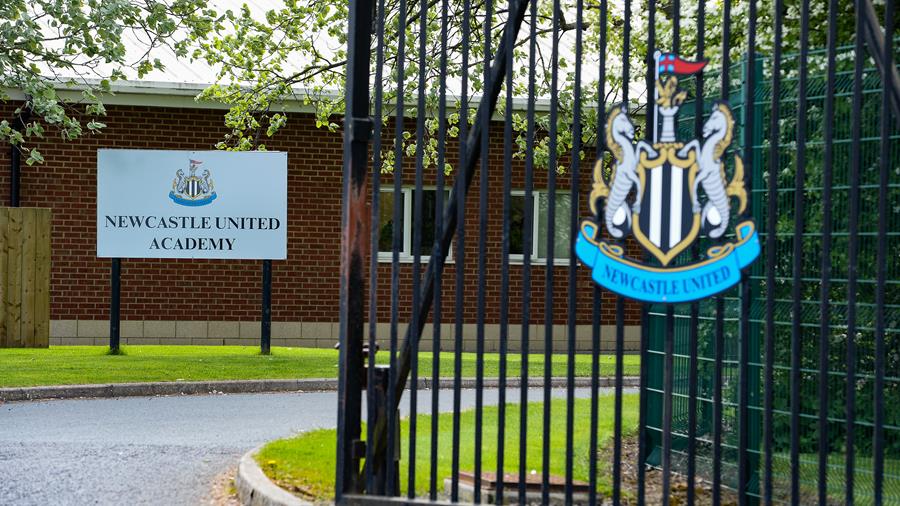
Some months ago, I wrote an article about the state of the Newcastle United academy. It was largely a tale of failure over the years and of neglect, particularly during Mike Ashley’s tenure, with gambling on talent released by other clubs or kids being brought in from non league to compliment the local talent. In short, the academy hadn’t been working, with only a handful of first team players of any quality emerging over the course of far too many years.

However, like Gary Barlow and his band of oiled up and oddly dressed mates once sung, ‘everything changes’ and in the case of our academy there’s now more than a hint of hope again.

So how have things changed then? Well, it would appear to be down to the masterplan of one man; Dan Ashworth, who seems driven to rebuilding our club from the bottom up. And thus, the whole approach to investment in our younger years has begun to take on a bit of a transformation.

As a fan, it’s nice to feel like there’s a plan. As someone who’s followed the club since the late 70s, ever since I was able to understand the concept of youth teams, our system has never felt like it’s the work of a professional football club and we’ve lagged behind names as wide and varied as Manchester United, Liverpool, Crewe Alexandra and even Sunderland. While others have appeared to have had some kind of conveyor belt producing first team ready players, we’ve been metaphorically hunting down the back of the sofa for small change. For every Gazza type of success, there have been dozens of young players released from the club. If anything, it’s felt like a fluke when a young player has actually come through to the first team.

Our new plan appears to be effective in its simplicity. We’re scouting the best young players in all age groups from various countries and attempting to bring them to the club. We’re investing money. I mean, you’d have imagined someone might have thought of it before now, really. Of course, it’s a wider net than just that, but it’s still simple all the same.

It’s the picture closer to home that really interests me though as it seems like we’re delving down the age groups and attempting to cherry pick the best talent from the home nations too. However, where before we seemed to be happy just to take a chance on kids who’d been released from other Premier League clubs – Charlie Wiggett, Rosaire Longelo and Remi Savage spring to mind – now we’re upping our game somewhat.

In the recent past, under Ashley, we did take the odd chance on youth. But it was never an expensive or risky gamble. The signing of Regan Thomson is a case in point as we paid £60k to Queens Park to bring the highly rated 16-year-old to St. James’ in 2020, beating Celtic and Rangers to his signature and then failed to develop his talents. Thomson was released in summer 2022 and as of June this year has been without a club having left East Kilbride back in Scotland. I must confess, I’d forgotten all about him. Similarly, Jake Turner was taken from Bolton after they’d gone into administration but didn’t make the grade here, although he is playing league football with Gillingham now.

Under Dan Ashworth’s guidance lots changed in the youth ranks. While we still have a fair number of local lads battling to follow in the footsteps of Sean Longstaff and Paul Dummett, the focus feels like it’s shifted somewhat and moved up a gear, if you like. The shift began with the signing of Garang Kuol last year, but the pace has stepped up even more since then.

This summer saw Newcastle bring in several highly rated youngsters from various domestic clubs. And we’ve started young too! Firstly, there was a compensation fee paid to Port Vale for 14-year-old midfielder Michael Mills. Then, we shelled out a reported 5 figure fee for 16-year-old striker Kacey Wooster from Southend’s academy.

After that we’ve also signed up a number of highly rated young players for the Academy and Under 21 sides, both of which have underperformed for years. England Under 17 internationals Leo Shahar from Wolves and Travon Sanusi from Birmingham have come in and seem to have made an immediate impact. On top of that we’ve also signed 17-year-old midfielder Travis Hernes from Shrewsbury, a kid who’d already made first team appearances for the League One Shrews.

But the investment in youth didn’t stop on these shores. Of course, we signed Yankuba Minteh (19) from Odense, a player who already look first team ready with his loan exploits at Feyenoord. Add to that the signing of Cathal Heffernan from AC Milan and it’s clear that we’re intent on making our youth set up far more competitive than ever.

Obviously, when investing in youth there’s never a guarantee of success. Year in, year out for instance, there seems to be a ‘highly rated’ striker in the academy set up and yet a breakthrough to the first team is rare. Even Andy Carroll had been played at left back for much of his youth career with the club. In recent years Elias Sorensen, Tom Allan and Tom Heardman were all touted for success after Carroll, but none was able to make the step up.

I’ll confess to knowing little of our new arrivals. Obviously though, Minteh looks to be a real find. I actually watched Hernes play for Shrewsbury against Leeds, but couldn’t say I noticed anything special that night. After that, I’m guessing. Experience tells me that someone with Heffernan’s background might well be a good bet for the first team in the future. And Travon Sanusi comes with a glowing reputation. As for the rest, who knows? Luckily though, the scouting network has been vastly improved in the two years since the takeover and in Dan Ashworth we have someone with a track record that we can trust.

You can be sure that the additions at youth level will continue through the season and year after year from then too. At the time we signed Heffernan there was also a lot of talk about signing his international team mate Kevin Zefi from Inter too. It didn’t come to fruition, but I’d be surprised if moves aren’t still being made. And with scouts working hard across the world, there will be other targets being constantly monitored too.

The professional approach to youth team football is a refreshing change of direction for the club. Newcastle United are now establishing themselves as an attractive proposition and you can be sure that will catch the eye of many talented youngsters who end up with their choice of clubs. With Ashworth at the helm it feels like we can rest assured that we’re now a totally viable option and that hopefully we’ll be regularly producing first team regulars from within our own ranks.

These are much needed exciting times for our academy set up. The future’s bright. The future’s black and white and it appears to be in very good hands!

Gallowgate Cult Heroes – Number 1; John Burridge.

There’s an old saying that always gets trotted out when talking about what we’ll politely call ‘journeymen’ footballers. You know the one, ‘more clubs than Jack Nicklaus’. Funny eh? See what they did there? Anyway, the first player I’m going to look at kind of sums up exactly why that old saying exists as he had more clubs than the pro shop at St. Andrews, let alone Jack Nicklaus! My first Gallowgate Cult Hero is goalkeeper John Burridge.

Universally known as ‘Budgie’, John Burridge signed for Newcastle from Southampton in July 1989, leaving almost 2 years later. To this day, he remains the only player I’ve ever turned up specifically early to watch warm up! But more of that later.

Burridge started his league career with Workington Town in 1969, when they were still a league club, before moving on to Blackpool a couple of years later. He then moved around a lot of clubs including, Aston Villa, Crystal Palace, QPR, Wolves and Sheffield United. By the time he’d signed for us he was 38 years old and had been playing for 20 years and had 10 clubs. Newcastle were in the old 2nd division or the Championship, as it’s now known and Burridge had come in alongside other new signings like Micky Quinn and Mark McGhee. Hopes were high for a possible promotion campaign.

Hopes, however, were ultimately dashed and having failed to gain automatic promotion Newcastle famously crashed out in the semi finals of the play offs to the old enemy, Sunderland. In the first leg of the semi, we played away at the old Roker Park and Burridge had his finest cult hero moments in black and white, diving down to his right to save a late Paul Hardyman penalty. But the drama didn’t end there as Hardyman then ran to where Budgie was lying, clutching the ball, and kicked him square in the head! He was immediately sent off, but Budgie was rightly raging!

Despite skiving school and standing in a very early morning queue, I remember that I couldn’t get tickets for that away leg – you see, ticketing isn’t just a modern day problem! However, we managed to get tickets for a beam back of the game at Whitley Bay Ice Rink of all places. In the hysteria following Budgie’s save, I missed the kick in the head entirely and remember just being delighted at the sending off, but completely in the dark as to why Budgie looked like he wanted to kill someone!

Burridge was a maker of spectacular saves, starting with one in the first minute of his debut against Reading when flew across the goal to tip an early header over the bar. So, a good shot stopper in today’s language. He possessed a confidence like no Newcastle goalkeeper I’d seen before too. But with that confidence came many rushes of blood to the head and while Burridge was a keeper who liked to command his area, there were a few terrible errors in there too.

As I said earlier, I quite liked getting to home games early in Burridge’s time, just to watch his warm ups. I was 17 at the time and had never witnessed anything like it! Burridge, who described himself as “a clean living lad” was a big advocate of being in the best condition, fitness wise. If I remember rightly he practised yoga, which was something I hadn’t even heard of in those days! But his warm ups were something else. While others would just be pinging footballs around the place, Budgie would be like a contortionist, stretching himself into ever more painful looking positions, before walking on his hands, one armed push ups or doing something that just looked like he was dancing really, rather than warming up. Follow the link below and you’ll see what I mean. It’s from his Palace days, but he was still warming up in a similar fashion when he played for us.

https://www.youtube.com/watch?v=BRulE9858eE

Speaking about his fitness and what was needed to play in goal, he once told a reporter, “You’re not a football player, you’re a handball gymnast”. He was a specialist goalkeeping coach at the time and was still making occasional appearances on the bench, despite being 43 by this time.

Another Budgie tale that sticks out for me was when the Toon visited Elland Road to play Leeds in that heartbreaking ’89-’90 season. Leeds would eventually go on to take the title, but we’d beaten them 5-2 on the opening game of the season, so the home team were determined to flex their muscles that day. To that end, as the Toon players walked into Elland Road legend has it that they were greeted by the sight and sound of Vinnie Jones screaming and bench pressing in a weird attempt to intimidate our boys. Budgie’s response was to add 10 kilos to each side of the weights and quickly do ten reps, before telling Jones, “That’s how you do it

By the time Kevin Keegan arrived as manager in 1992 Burridge had departed, heading to Scotland to play for Hibs. He briefly rejoined the club in 1994 as a back up keeper and goalkeeping coach, but despite declaring his loyalty to Keegan in typical Budgie fashion – “I would give the guy my eyes!” – he was soon on the move again.

In all, Burridge had 29 clubs, 19 of which were in the football league. He continued to be a colourful character wherever he went and still holds the record for being the oldest Premier League player of all time. He was 43 years and 162 days old when he played for Manchester City against QPR in May 1995. If my memory serves me rightly, he even played against us in that same season and had an absolute blinder, keeping a clean sheet. Later, whilst player manager of Blyth Spartans Budgie was convicted and fined for selling fake leisure wear and just last year, aged 70, he played in a friendly for Hibs. He even claimed not to be retired in a recent interview.

Perhaps the best Burridge story that I could find though, was the one where Budgie played a whole game for Wolves in a Superman outfit against us in the ’82-’83 season, after making a £100 bet with Kevin Keegan that he’d do it.

Clearly, Budgie was a one off and the type of character that has drifted out of the game in recent years, but it was always a pleasure to watch him play for Newcastle United!

Isaac Hayden; where did it all go wrong?

So Isaac Hayden has left the club for Standard Liege of all places. And while it might only be on loan for the season, it’s clear that his future lies elsewhere and that you possibly wouldn’t expect to see him in the black and white stripes again, even though his contract runs all the way through until June 2026.

Hayden joined Newcastle from Arsenal in July 2016 having spent the previous season on loan at Hull City in the Championship. His experience in the division would prove key to a newly relegated Newcastle team, who at the time were losing quite a few stars who weren’t so keen to drop down a division after we were relegated. He signed a five year contract and quickly became a favourite of both the fans and Rafa himself, who Hayden told one interviewer would wait for him in the car park in order to impart more advice on his game!

Isaac established himself as a defensive midfielder who wasn’t shy in the tackle, was physical, athletic, hard working but also had an eye for a pass. At a time when we were losing considerable talent in the midfield department with players such as Moussa Sisoko and Andros Townsend departing, Hayden felt like a bit of a godsend. As an established England Under 21 player and at a bargain £1.5m, it looked like Rafa had unearthed a gem!

Benitez flagged up Hayden as a player with real potential when he signed for the club and in that Championship winning season, he was a key performer. Making 38 appearances and scoring 2 goals, including a beauty away at Cardiff, Hayden had a strong first season, showing himself to be a leader in the team. In fact, he would make himself at home at the club over the next few years, despite some problems settling at first. It was to his credit though, he knuckled down and stayed and it was this type of determination that made him a bit of a fan favourite.

When Rafa left in 2019 and we ended up with Steve Bruce, even that wasn’t enough to force Hayden to leave! In fact, as he’d played under Bruce at Hull, Hayden continued to improve. In 2020 there would be another Toon highlight for Isaac when he scored a late winner with a header against Chelsea at the Gallowgate end; cue crazy scenes of unbridled joy around the ground!

By 2021 though, Isaac had picked up a serious injury and his Newcastle career wouldn’t ever be the same. When he wasn’t named in the Premier League squad for the second half of the 21/22 season, things looked pretty bleak. Consequently, in June 2022 Isaac joined Norwich on a season long loan, but injuries continued to dog his progress and he only managed 12 appearances.

For me, Hayden represents a bit of a puzzle. I rate him as a player and always enjoyed watching him play in black and white. I genuinely thought he had enough class to continue in the Premier League, but he never quite made his mark.

However, given his athleticism, intelligence and strength I’ve wondered if, given a break, he could have been a classic case of a player that was ripe for what we might refer to as a proper ‘Howeing’. If you look at what Eddie has done with players like Joelinton and Sean Longstaff, you could be forgiven for thinking that Hayden could have been another who would have benefitted from Howe’s coaching. Then again, perhaps Big Joe and Longstaff’s gains have just come at the expense of players like Isaac Hayden. And of course, there’s also the matter of fitness, which Hayden has struggled with for the past couple of seasons.

Furthermore, when you look at the standard of our midfield these days, it’s just very clear that we’ve moved on. So while Hayden was a player that many liked, I suppose we have to ask whether he’d get into our team, having been Howed or not. The short answer is probably no and exactly why he’s on the move. As good as Hayden was on his day, was he a Bruno, Longstaff, Tonali, Joelinton? Again, no and with younger players such as Anderson and Miley coming through, I guess it’s clear to see that Isaac Hayden just couldn’t stay.

Whatever has happened at Newcastle for Isaac Hayden, I think it’s a bit of a shame. However, as we all know only too well, this is a very different Newcastle United to the one that he joined back in 2016 and so there were always going to be casualties of such immense change.

Now 28, Hayden moves to Liege no longer a young player with potential. With almost 200 career appearances, the Belgians are getting an experienced player who could make a real difference to their season if he can stay fit. Let’s hope it works out for him.

Good luck for the rest of the season, Isaac.

‘We Are Newcastle United’; Episode 4 Where Our Lads Belong.

So, after a month worth of episodes, we get to the finale of ‘We Are Newcastle United’. And while we kind of know what happens – it was just last season and the Adidas deal got ‘leaked’ just the other week – it turns out that it’s still well worth a watch.

This one begins with archive footage of that Barcelona game from the Champions League and Tino’s hat-trick, which is timely given the recent Champions League draw. It’s obviously fantastic to watch back, but what occurred to me while I sat watching was what we beat Barca with. So, sure there was Tino, but alongside were the likes of John Dahl Tommason, Temuri Ketsbaia and a 44-year-old John Barnes. OK, that bit’s an exaggeration, but we also had Kenny Dalglish as manager, the bloke responsible for some of the most mind-numbing football I’ve ever watched. Given those facts, maybe our group this year isn’t that ‘deathly’ after all.

As preparations are made for another game, we find ourselves in the posh seats watching the build up to dinner time. As NUFC scran’s version of Eddie Howe reads out the menu, a waitress confesses that she doesn’t know what gazpacho is. Expecting the announcement of a new signing and possible even another twist in the Santiago Munez/Goal saga I shuffled to the edge of my seat only to be deflated almost instantly by the revelation that it is in fact just “cold soup”. Talk about an anti-climax.

Watching the Southampton game again was a strange experience and I sat there feeling just as sick as I did at the time, even though I knew the ending! Amanda Staveley features here too and reveals herself again to be very much a fan, whatever you might think about the PR side of this series. She’s up and down in her seat like a jack-in-the-box and as we watch her at half time it seems she’s just like loads of us are while watching football. But she genuinely doesn’t know whether to watch the second half, feeling that she’ll jinx it, which is certainly akin to my own myriad of superstitions like half time toilet visits, lucky pants, lucky stones (don’t ask) and making sure that I follow the same routine in the build up to any game. Unlike me though, the minute she returns to the inside of the stadium, we score.

Later, we’re treated to another Zoom meeting of the club’s power brokers and not for the first time, it strikes me that the way they all speak feels like the exact antithesis of how it probably used to be. Their knowledge and passion seems clear, whereas a documentary a few seasons ago would have surely just shown Lee Charnley talking through a list of under 23 cast offs we’d taken on trial from other clubs while Mike Ashley sits swigging another can of Carling and picking Doritos crumbs off the front of his latest already grubby George at Asda white shirt. So, if nothing else, the documentary has served as an insight into just how professional the club is these days.

Tonight’s episode is particularly heartwarming with scenes of both Amanda Staveley and Eddie Howe with their kids and Dan Burn paying a visit to his home town and local football club for a Q&A with the youngsters there. All are shown as intense, driven, honest, but also good humoured and fun loving and come across really well. Kieran Trippier also features and when he talks you listen. Again, he’s intense, but what struck me about all four here was how calmly yet passionately they spoke about the club.

And then we’re taken on the journey that we’d all been waiting for. Staveley, Ghoudoussi, Eales et al are off on a seemingly top secret mission and if the broadcaster hadn’t have messed this up a few weeks ago, you can only imagine the excitement at the big reveal. As it is, I’ve decided I’d quite like to work at Adidas HQ, despite the disappointment that their ‘World of Sport’ showed absolutely no sign of Dickie Davies or Big Daddy. But did you see the place? Incredible!

Mind you, despite sealing the biggest deal in the club’s history, I thought the board missed a trick. Now I’m no graduate of Harvard Business School, but I reckon if they’d all turned up clad head to toe in all manner of Adidas clobber and looking like Run DMC, they could well have squeezed a bit more money out of the deal. With that in mind, if anyone at Adidas – purveyors of the coolest trainers on the planet – or NUFC reads this, I’m available for hire. Or a free pair of trainers.

The series closes as we knew it would; with a happy ending. In the midst of it all there’s a shock as Amanda Staveley swears…then cries. Eddie Howe is as humble as ever. And fans and players enjoy one of the greatest nights in the club’s recent history. The message from all is clear: We are Newcastle United…and we might just have a few more happy endings planned too!

In almost closing myself , I do have a few daft observations about tonight’s episode and the series in general.

  1. Tonight, the voiceover has one fan telling us, “We will name our kids after these people”. Now, given my age that won’t be very likely. However, I’m hoping that my future grandchildren Joelinton, Wor Yasir, The Stave, Tripps and Big Dan Burn will take to their names like the champions I expect them to be and won’t get bullied at school.
  2. It was great to see Joe Willock lose himself in the euphoria of the Leicester City game and sing ‘Tell me ma, me ma’ like a fan, but I think he failed his X Factor audition.
  3. Could someone get Dan Ashworth a bigger chair, please?

4. As good as this series was, it would have been even better with 100% more Jacob Murphy.

I’ve enjoyed ‘We Are Newcastle United’ immensely. PR exercise or not, I’ve loved watching it and was glad that we never looked stupid or small time. It’s been reassuring to see how well the club seems to be run and that everyone involved cares. And it’s all been captured very well. At the end we were told that “Something exciting is going to happen”. I hope so, I really hope so!

‘We Are Newcastle United’; Episode 3 Changing The Toon

I must admit to a tiny bit of a crisis of confidence before writing this latest article. I mean, who wants to read my ramblings about a programme they’ve inevitably already watched? But then I remembered that there are shed loads of grown adults out there who video themselves watching live football, swearing their heads off and acting like babies for all the world to see. So with so little to lose, I wrote the article!

If ever there was a collection of images that sums up the change in Newcastle United since October 2021 it’s there for all to see in episode 3. Granted, one side of the images isn’t here, but is undoubtedly etched in the mind of all of us. I talk of course of the players taking ice baths in wheelie bins and paddling pools during Mike Ashley’s reign. In this episode though we see the enormous changes in recovery technology brought to Newcastle by the new regime with a glimpse of the new hydro therapy pool. The difference is massive and the progress is there for all to see. Professional athletes being treated like professional athletes; who knew that this might help?

Later in the episode, while visiting Atlanta ahead of the Premier League Summer Series, Darren Eales refers to Newcastle as ‘a 130 year old start up’ creating a stark image of what the new owners must have found when they first arrived. Graeme Robson of Wor Flags later talks candidly about the fact that the new money can’t be ignored, but really all we wanted was for the club to be run properly. Not very convenient for the narrative touted by a lot of the media, but the truth all the same and a truth that ‘We Are Newcastle United’ needed to convey.

In this episode the players and the fans move more into focus. We start with Alexander Isak’s brace against Forest away and are reminded of the karate kick finish for the first. A hell of a goal and a hell of a start to what I must say has been my favourite episode so far.

As we move on to the build up to the home game against Manchester United it’s hugely positive. For me, the insight into the small touches by Eddie Howe are really interesting. Just things like greeting every player as they arrive at the training ground – ‘How’s that knee, Joe?’ – and then the enthusiasm on the training pitch and the encouragement – ‘Yes Cal…love that Callum’ are just lovely. I’m not naïve enough to think it’s anything special either, but you get the feeling that this is relentless from Howe and his staff. I, for one, would thrive hearing that type of thing every day.

Later in the show, when asked about the Carabao Cup Final defeat, Eddie tells the interviewer that ‘Any defeat you have is always in there, somewhere.’ Again, it’s the attention to detail and the steely determination that we all love, especially when defeats under the last regime were greeted with unwanted days off for the players and impromptu holidays for the manager. Not every time – no one can afford that many holidays – but enough so that every time that Eddie speaks you admire him just a little bit more. Although after a while, I’d have to tell him that my name’s not actually Callum…

Next there’s a focus on the lads and lasses at Wor Flags with an insight into their work and the preparation that went into the huge surfer flag that covered the bottom tier of the Leazes. Firstly, this serves to show the dedication of the fans – from those that donate money to make it all possible to the volunteers who put everything in place and organise the whole thing. Secondly though, it confirms that I’d be absolutely no use to them. While they’re unfolding, hauling and precisely positioning flags that cover almost an entire stand and weigh half a tonne, I still have to have my wife guide me through the folding up of a picnic blanket. I guess there are levels to this kind of thing, but it serves to illustrate the passion and dedication that is felt around Newcastle United.

As episode 3 rolls on to the Manchester United match, it’s hard to imagine the stadium looking any better and while some of the camera work is very much reminiscent of shows like The Apprentice, it’s very much appreciated. St. James’ Park is always an impressive sight and a thing of beauty but the documentary really celebrates the place here. The surfer flag looks incredible, but Wor Flags member Graeme’s excitement and pride is arguably even better.

This was by far the most emotional episode so far for me personally. I know lots of people said that the cup final footage brought them to tears, but not me. However, seeing the scenes in the dressing room both before the Manchester United game and at half time almost makes me crack.

Callum Wilson’s story later on, adds to the raw emotion and gives us an intriguing insight into not just the player, but the man and what makes him tick. The smile is infectious and instant, almost making it hard to imagine what he has gone through to get to this stage. But then key words like ‘turmoil’ and ‘adversity’ dominate during the visit to his old school and for me it serves to show that Callum Wilson found not just a football club, but a home when he joined Newcastle United. Wilson has played a massive part in its upturn, yet even in these more positive times he’s quick to flag up the importance of hunger and anger in achieving his goals. And I think it’s quite a neat parallel to the anger and determination of the fans in almost forcing change a couple of years ago.

And then, alongside some beautiful sweeping shots of the stadium and the odd bridge, we hear from some of the fans about the importance of Newcastle United. Again, there’s a big contrast here. Firstly, a Hindu fan speaks beautifully about the club being ‘the great equaliser in the city’ and how, when the time comes, he wants to be reincarnated as a Newcastle fan. Then we hear from 4 primary age kids, perched on a wall and one of them reflects about his sadness at the season ending soon, but that ‘summer’ll be good…wi’ hot tubs and that’. I’d like to think that they both speak for us all in their own way!

Speaking of speaking for us all, I’m sure I’ll be doing just that when I say that Anthony Gordon’s enquiries about pillows had us all on the edge of our seats. After already packing in quite a bit of drama, Gordon’s sleepy time enquiries promise to ramp it up another notch. Pillowgate turns out to be a bit of a let down though, with no one bar Anthony himself giving a shit. Even Nick Pope’s revelation that he sleeps with a pillow between his legs falls strangely flat. Still, if anyone was ever curious about how many pillows the likes of Gordon and Tripps sleep with, they got their answer.

At the end of the episode we get to re-live the remarkable events of the Spurs game. An extraordinary performance that will live long in the memory of every fan. As the goals flow and a rival is thoroughly humiliated the voiceover states, ‘What a time to be a Newcastle United fan’. I’ll drink to that and look forward to episode 4, but before I do, I have a question.

Has anybody else noticed the woman in the opening credits – and she’s there at the Spurs game too – arms aloft in celebration just shouting ‘No…no’? See, some of us are so wrapped up in the joy of this club that we forget how to celebrate. Newcastle United, that.

‘We Are Newcastle United’; Episode 2 Tell me ma, me ma.

I know that lots will view this programme as mere PR – and they’d have a case too -but I for one, am thoroughly enjoying it. Thus, from the moment the ever engaging Amanda Staveley states that “the city is just alive” I’m invested in episode 2. Call me simple, but I just love watching things I love on the telly!

Episode 2 covers the awkward subject of the Carabao Cup final; its build up and the actual game itself. And while I understand that the focus of the show is on the boardroom – or Alnwick Castle as it’s known in these circles – I think the episode suffered a little bit by not covering slightly more in terms of the fans here. Surely there were more stories to be told given the length of time between out last and latest appearances at Wembley? But perhaps I’m being hyper critical because actually, I think the story that was told, was told very well.

From the moment a Toon fan expertly catapults the wire attached to the giant Newcastle top over the shoulder of the Angel of The North, we’re getting a flavour of what this all means. No other fans mess about with Antony Gormley’s statues in the way that we do! In between various Geordies telling us of their excitement there are sections of board meetings and it displays just how tirelessly Staveley and the gang are working to take the club forward. It made me laugh when Peter Silverstone said that they’ve contacted 1193 companies in their pursuit of a shirt sponsor as I’m guessing that Lee Charnley was working at slightly different levels when he got Fun88 to part with a few million.

As a seasoned telly watcher, I also think that I may have uncovered how the series ends. The key is in Amanda Staveley referring to literally everyone as ‘my angel’. With this in mind, I’m now wondering if the last one will end a la Spartacus, with first Callum Wilson, then Eddie Howe, Miggy, Bruno, the tea lady, several of the ball boys and girls and all of Wor Flags claiming “No, I’m Amanda’s angel” before finally everyone agrees that in actual fact it’s Bruno’s dad that’s Amanda’s angel…and everybody else’s by the looks of things in this episode. Sorry, if that becomes a spoiler, by the way.

Suddenly though, it’s cup final day and we hear what it means to the local lads in the squad. Dan Burn tells us about going to games and worshipping Shearer – I’m Alan’s angel, by the way Dan – before making an impassioned dressing room speech, but it’s not that that impressed me. No, I was more impressed by the slow-mo shot of Big Dan rising to make a defensive header in training, which only needed a bit of David Attenborough over the top of it in order to be awarded a Bafta, in my opinion. I’m not ashamed to say it, but I think it made me fall a little bit in love with Blyth’s finest.

Other highlights included the old lad in the pub who told his mate, “Peter, if it’s 1-0…I wouldn’t be able to to do anything. I’d be pissed out me brains!” I think it summed it up for a lot of us who simply can’t put into words how much some success would mean. Get that lad a statue, I say!

Episode 2 also gave mackems the first chance to play their inevitable game of ‘FTM Bingo’ with one Newcastle fan referring to the Geordie Nation and then some Sam Fender played underneath a section of the show at one point. Still not enough for them to get a line, let alone a full house though, so no doubt they’ll be sat there with their dobbers in hand, salivating again next week…some might say as usual!

Watching the footage of the Carabao Cup final didn’t feel emotional for me and I know that from social media some people have said that they shed a few tears. Sure, it was a tough watch to see various faces going through the emotions and people like Dan Burn just gazing forlornly into the crowd at the end. For me though I thought that the show covered it well and in fact, it just made me think that those lads will remember that feeling, as we all will and we’ll be better next time. And there will be a next time.

After that we were back with the big guns on the board, with Peter Silverstone taking us into the commercial department, which was illuminating about the state the club had been left in. The revelation that we only have about 40 staff charged with bringing in commercial income whereby a club like Arsenal have around 150 is the kind of detail that us ordinary fans probably never think about, but it illustrates perfectly the amount of catching up the club have got to do.

And then we were privvy to a Zoom call where catching up was the whole agenda with the announcement of the Sela deal and the fact that we were finally earning more than just enough to cover Mike Ashley’s crisp budget from our front of shirt sponsor.

The episode ended on a happy note with the victory over Wolves and the season getting back on track. I have a feeling that Miggy was Amanda Staveley’s special angel that day.

So, now we’re set up for episode 3 and an incredible upturn in results and performances, as well as the emergence of Eddie Howe channeling Rab C Nesbitt and swearing like a trooper. It’s safe to say I’m really enjoying the show and actually, even though fans or players aren’t really the stars here, it’s an interesting take on the club. There’s still not enough Jacob Murphy, mind you…