Book Review: ‘The Wild Silence’ by Raynor Winn

For my entire life I’ve been guilty of falling for stuff because of the way it looks. Pebbles and shells on the beach or rivers we paddled in were frequently brought home because I thought they looked lovely and it felt like life would be enhanced by having them with me. When I was younger I worked in a scrap yard and would pocket coins and other interesting trinkets while sorting through random scrap metal. It felt like treasure at the tender age of 14. As I got older I bought records and books based on their covers.

‘The Wild Silence’ is one such item. It came into my possession because I loved the cover. The blurb made it sound quite interesting to me, but I couldn’t put it down because of the cover. It was from one of those trips to the budget book shop. My guard is always down here and I can spend far too long browsing the shelves and then far too much buying the treasure I’ve gathered.

‘The Wild Silence’ is a memoir that tells the tale of Ray (Raynor Winn) and Moth (her husband) who are fighting to keep their heads above water amidst health issues and homelessness. But this isn’t a story set on urban streets. Instead, Ray and Moth find themselves sheltering in a chapel in deepest Cornwall, having walked the South West Coastal Path while homeless, camping in remote spots nightly.

It’s an interesting juxtaposition; the desperation of their homelessness set against their existence surrounded by the raw beauty of nature. Human pain and bewilderment played out in a rugged yet idyllic setting.

Having lost their home and their livelihood – a Welsh farm – Ray and Moth had been left battling the elements as well as financial ruin. However, ‘The Wild Silence’ finds them somewhat settled in the chapel with at least some sort of future ahead of them. Moth is battling against a debilitating condition, but has began a degree course as he hopes to lecture in the near future. Meanwhile Ray is left in a home that’s not hers, worrying about whether Moth will even make it to his lectures, on edge until he checks in, while trying to avoid the people in the village where she lives.

The book is a tale of a vivid struggle with a quiet, yet quite lovely triumph at its end. Moth and Ray have only each other. In the end, their existence and love is a huge win for the human spirit.

Following on from the best selling memoir ‘The Salt Path’, ‘The Wild Silence’ shows us that there is always a glimmer of light in the darkness. It is beautifully written and I found myself easily picturing the various settings for the novel as well as rooting for Ray and Moth throughout. While ‘The Wild Silence’ can be quite a bleak read at times, it is ultimately uplifting. Ray finds a way to regain her confidence and faith in her fellow man, while Moth simply finds a way through strength and sheer bloody mindedness.

I’d thoroughly recommend ‘The Wild Silence’ although I’d tell you to read ‘The Salt Path’ first! I didn’t, but having heard of the first memoir, I kind of understood what was going on after a little while. Winn writes beautifully which means that we’re willing her and Moth to ‘win’ as we read. When they get their first break it’s a blessed relief and even though their struggles are far from over, we’re left with a sense of hope that is fulifilled by the end of the novel.

I give ‘The Wild Silence’

Rating: 5 out of 5.

Book Review: ‘Mad Blood Stirring’ by Simon Mayo

‘Mad Blood Stirring’ was interesting to me for lots of reasons. First of all, as a high school English teacher and long time Shakespeare fan, I recognised the title…although not as quickly as I should have! It took me a little while for that particular penny to drop and it would be the first of many! But, the title is of course a part of a line from Act 3 of Romeo and Juliet and serves as an unheeded warning to Mercutio. It’s a warning that translates well in Mayo’s novel too.

Also of interest to me were the events of the time. The novel is set in 1815, just after the Anglo American war of 1812, which I simply wasn’t aware of. I just assumed everything was done with between the two countries following American Independence. So, the idea of thousands of American prisoners incarcerated on Dartmoor piqued my interest a bit, simply because it was a chunk of history that I had no knowledge of whatsoever.

Mayo, of course is better known for his career as a radio DJ, but he’s been writing novels for a while. I first discovered his writing years ago with his YA novel Itch, which I thoroughly enjoyed. I never did get round to buying the other two in the trilogy though and my next forray into his work was over a decade later with Mad Blood Stirring. It’s safe to say that I waited too long!

Mad Blood Stirring is a many layered story, but it revolves around the comings and goings over a few months in Dartmouth Prison in 1815. The inmates are all American prisoners of war, despite the fact that the war has long since ended. There is still no treaty for their release however and trouble is brewing. As with Romeo and Juliet, there are factions with a grudge and it’s not just between the Americans and the British guards. Ill feeling and prejudice is rife within the prison population and trouble is never too far away.

Mayo has taken the facts of this time and woven together a brilliant narrative, focusing on the lives of two inmates in particular; Habs and Joe, who develop an unlikely friendship and eventually embark upon a perhaps even more unlikely romance. Habs is one of the black inmates, forced into a block of their own by white inmates and their prejudice, while Joe is white and new to Dartmouth and its strange set of rules.

But tension is simmering across all 7 blocks of Dartmouth prison, meaning that the ‘cast’ of the novel grows and grows. The men have been away from home for far too long, conditions inside the jail are abysmal and although talk suggests that peace is close, their freedom still seems a long way off. In actual fact, America has all but abandoned them. Elsewhere, Elizabeth, the Governor’s wife is in love with the prison doctor and the whole of Block 4 are on edge and exhausted after deciding to put on their latest production – Romeo and Juliet – for the other inmates. With the threat of violence around every corner and the whiff of potential freedom occasionally drifting through the air, there’s something happening to keep us on edge all over Dartmouth prison.

And so we have a tale where despite violence and death never being far away, love, comradeship and a yearning for culture somehow manage to blossom in among the choking poison of incarceration, racism and hatred.

Mayo has written an excellent novel, with many strands to the narrative. There is a great deal truth here too, but Mayo manages to somewhat brighten up the darkness of Dartmouth prison with his characters and their dynamics. The violence here is stark – and I guess that’s to be expected – but while the tension and treachery will keep you on edge throughout, characters like Habs, Joe and King Dick (yes, that’s really his name and he’s someone who I imagined as a cross between Brian Blessed and King Ezekiel from The Walking Dead) help to alleviate that ‘edge of your seat’ feeling just enough to make it an enjoyable read. There is interest beyond the obvious hellishness of thousands of men in a remote jail.

A slight criticism might be that there are just too many characters to keep up with at times, but then I guess with over 1000 men in just one block, we were always going to come across quite a large cast. I did sometimes struggle to keep sight of Habs and Joe though, as I read about another twist in the tale or another group of dangerous inmates.

Overall though, this is a cracking read and if you’re a fan of historical fiction you’re sure to enjoy ‘Mad Blood Stirring’. Even if – like me – the genre is not your usual thing, it’s still an enlightening tale and the fates of the characters are sure to keep you hooked. A gripping read packed full of grit and violence, but with a twist of romance and hope.

I give ‘Mad Blood Stirring’

Rating: 4 out of 5.

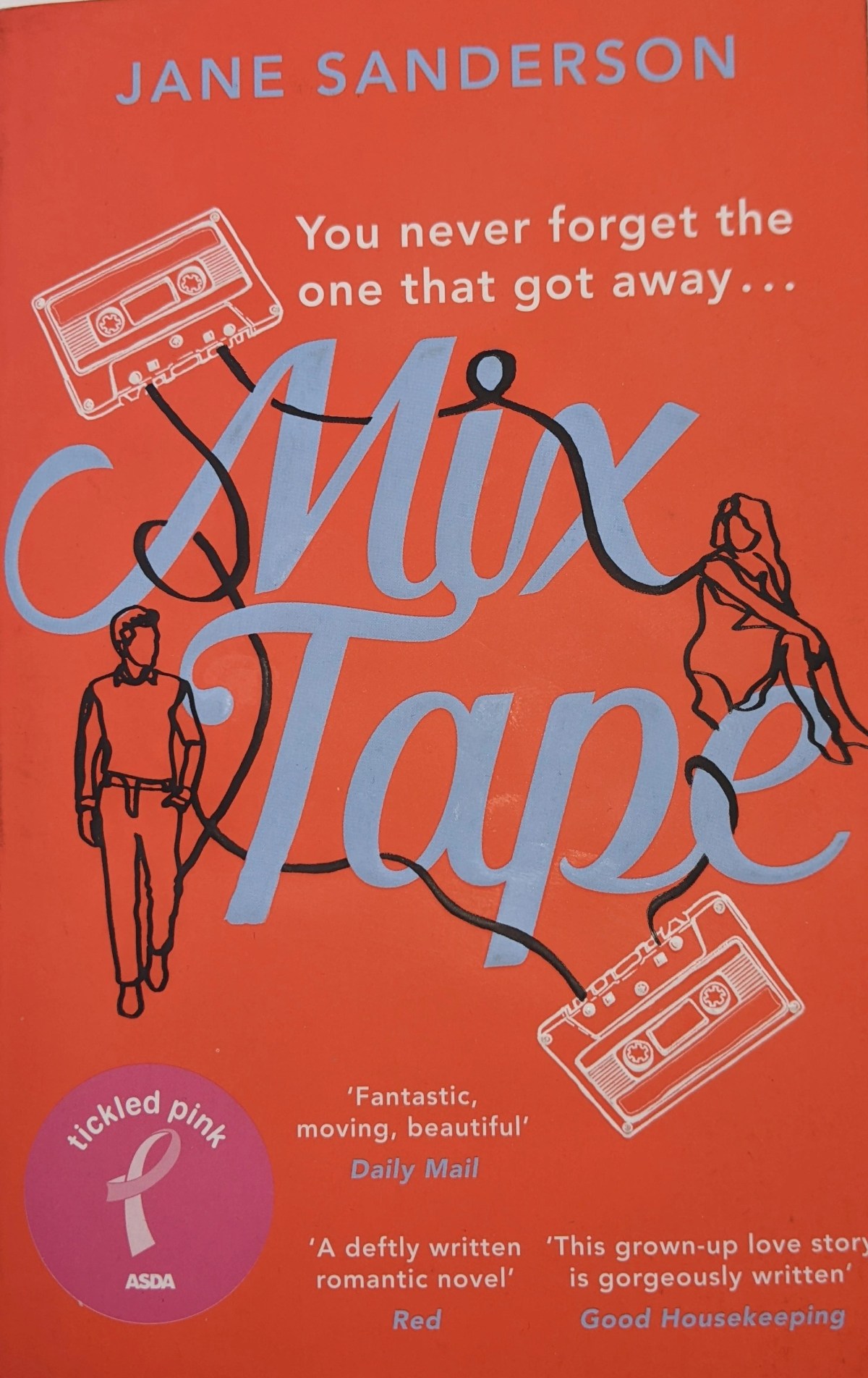
Book Review: ‘Mix Tape’ by Jane Sanderson

They say that you never forget your first love, don’t they? I mean personally, I’d like to wipe the entire thing from my memory, but it’s pretty much impossible due to the nature of that particular car crash of a relationship! But I’m guessing it’s very different for lots and lots of people who manage to cling on to those warm and pleasant vibes for life.

Dan and Alison are two such people. And despite the somewhat life-changing nature of their break up and the fact that they’ve made successful lives separately elsewhere, both retain strong feelings that unbeknownst to them, are just waiting to be dug up.

‘Mix Tape’ is a story that millions of us can relate to. First love, first lust, first dates, first kiss, first fumbles. Whatever romantic firsts they were, they’re all in the back of our mind somewhere just waiting for an image or a film or just a phrase to release them back into our consciousness for even a few minutes. With Dan and Alison it’s music that’s the key to their past as well as their future.

Having fallen headlong into teenage love and discovered a mutual passion for music as well as each other in the 70s, fate intervened and life, however painfully, moved on. Now, many years later and into a new century while living in new countries, social media and music could be about to intervene and spark old feelings back into life.

If you’re a music lover, you’ll love this book. It was the link to music that prompted me to buy it in the first place. I even wrote a blog about mix tapes (link below), having listened to Jane Sanderson being interviewed about the book on BBC Radio 6 Music with Lauren Laverne. But it will appeal to the social media devotee in us all too, as well as those who are just soppy enough to enjoy a good love story.

Whatever Happened to The Mix Tape?

In their younger years together Dan had made mix tapes for Alison as a way of expressing himself, while also introducing her to new music. Years later, via social media their choice of songs will serve to help them get to know each other once more, as well as giving oxygen to a flame that never quite died out, despite the way their time together had ended.

Beginning in 1970s Sheffield, the story jumps from back then to the present day throughout, showing us the various contrasts in the lives of our two protagonists. We learn that after leaving Sheffield, Alison somehow ended up on the other side of the world in Adelaide. She is successful and seems happy. Meanwhile, Dan’s life has changed too and he too has moved away from his home town, now residing in both Edinburgh and London. He has turned his passion into a career and is now a successful writer as well as a music journalist. Both appear to have made good lives for themselves and moved on from their passionate teenage time together. But appearances can be deceptive.

‘Mix Tape’ is a lesson in the power of both music and social media. It shows how one simple click can change lives, both for better and worse. Music is the bond that keeps Dan and Alison together, however far away they might be from each other and so when Dan rediscovers Alison via Twitter and sends her a song as a reminder of the old times, we sense that it won’t stop there. We know that this first love is one that still has unanswered questions. It’s just a case of whether they’ll remain unanswered…

The characters are really relatable and I found myself really liking both Dan and Alison. But away from the characters, the story may test your morals too. But I’ll leave you to discover that for yourself. Sanderson’s brilliant descriptions of sights and sounds also bring her locations to life too. So it was nice to be informed of both a Sheffield that I hadn’t visited – as opposed to the modern day city that I’d say I know quite well – as well as the delights of Adelaide with its flocks of parrots, natural beauty and year round heat.

The use of songs as a narrative device to help Dan and Alison reconnect is brilliant too. Not only does it give us a real sense of what the characters are about and who they really are, but it has an effect on us as readers too. I found myself connecting with the songs that became the playlist for the narrative. Where I already knew the song I’d invariably have a memory connected to it and when I didn’t know the song, I looked it up, so ‘Mix Tape’ has now added some new songs to my playlist.

‘Mix Tape’ is a brilliantly written piece of fiction. The story will keep you engaged throughout and you can’t fail to get involved in Dan and Alison’s journey. The music, social media and geography of the story also give you a lot to get your teeth into as a reader. But, most importantly this is a tory about good people finding each other, despite the barriers that their lives put in place. I’d thoroughly recommend ‘Mix Tape’ – a really well written page turner that you’ll only put down so that you can listen to some of Dan and Alison’s favourite songs!

I give ‘Mix Tape’

Rating: 5 out of 5.

Book Review: ‘The Last One’ by Alexandra Oliva

You know that feeling when you walk into a room and feel that you might just have missed something? Well, Zoo hasn’t just missed something; in a way she’s missed pretty much everything. The world has changed catastrophically, and she’s been focused on other things.

Having met the man of her dreams and set off on a life together with him, Zoo finds that she’s not yet quite satisfied. She yearns for a little taste of her old life. And so, before they start a family together, she feels the need for one last challenge.

‘The Last One’ begins by focusing on Zoo’s participation in the reality show ‘In The Dark’. As such, we learn about how twelve contestants are battling through an unnamed wilderness on a survival challenge that will test them more than they’ve ever been tested before. It’s a real mix of people too; some who possess the kind of skills that will be vital for their survival but mixed in with others who have clearly just been picked for their entertainment value. So, a bit like Love Island meets SAS Who Dares Wins, but with more clothes and less clashes.

As the action unfolds though, it’s clear that all is not well with the world. People are dying and it has no connection with the action on screen. The only snag for Zoo is that she has no idea what’s going on in the wider world. Such is her focus on the competition and all of the drama that it brings that she is blissfully unaware of the apocalyptic goings on in the wider world. So, while Zoo moves closer and closer to her survival goals, a deadly virus is taking hold of the population and wiping them out in huge swathes. Thousands are dying and Zoo has no idea. And while she fights to win the show and get back to the love of her life, we don’t even know if he’s managed to survive.

‘The Last One’ is action packed and full of twists and turns. We enter into reading about a reality game show – the kind of thing we’ll all have watched time and time again – and waiting for the inevitable conflict, before being slowly drawn into a pandemic, that until recent years was completely alien to us. So, what might well have once seemed far-fetched quickly becomes eerily familiar and is all the more exciting and readable as a result.

I enjoyed reading for a few different reasons. Firstly, I love an apocalyptic scenario. I don’t care how ridiculous it might seem; give me the fact that the world might be ending and I’m hooked! And Zoo’s confusion about the reality of her situation makes this particular end of the world all the more intriguing.

I enjoyed the mix of characters in ‘The Last One’ too and it was easy to visualise them, particularly the contestants on the show. And while I guess it’s not that difficult to write such characters given the amount of reality TV out there to ‘enjoy’, they were well written, all the same.

The twist in the plot also made ‘The Last One’ stand out from the crowd. This could have easily become some kind of ‘Hunger Ganes, lite but the story within the story lifts it away from such a fate, in my opinion. And you can see exactly why Zoo wouldn’t take the hints that keep getting dropped about the fate of the continent. Such is her paranoia about what the show’s editors are putting in front of her that she suspects everything is a trap, so even when a desperate virus survivor tries to join up with her, she is determined to ditch him in order to get to the finish line.

‘The Last One’ is an excellent read, chock full of the adventure and excitement of Zoo’s quest to survive the whole game show experience, while retaining the ever present under current of tension brought by a mystery virus. Nothing too high brow, but a gripping tale all the same, so if you want a bit of a page turner, this could be the one to pick up.

I give ‘The Last One’

Rating: 4 out of 5.

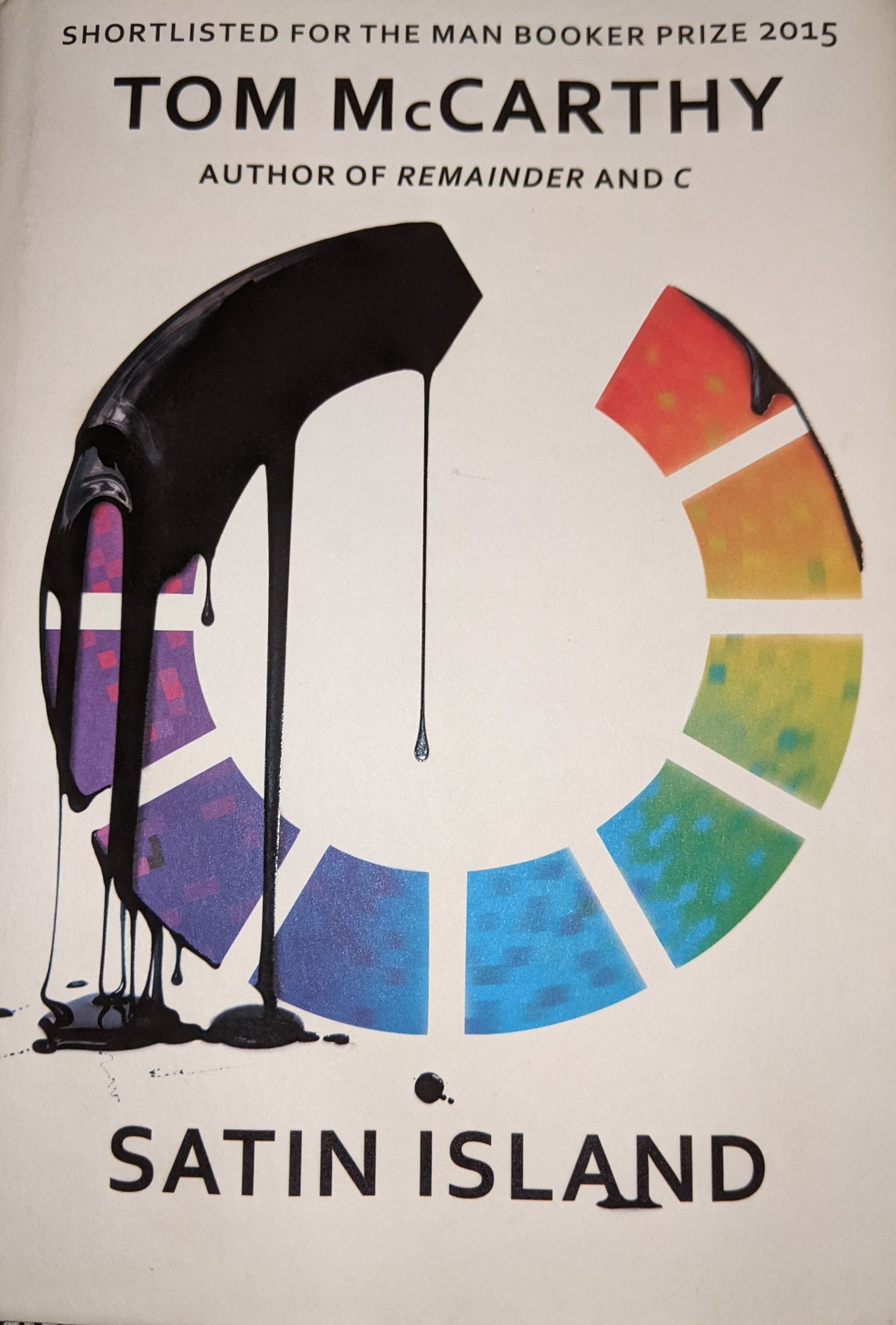
Book Review: ‘Satin Island’ by Tom McCarthy

As an avid, lifelong reader I pretty much always have to finish a book when I’ve started it. Love it or loathe it, I really have to get to the end, even if it feels like I might die of boredom in the process. I consider it a bit of a super power to have the good sense to just give up on a book that you’re clearly not enjoying. But sadly, it’s one of many super powers that I simply don’t have and it’s a real rarity if I put a book down in order to give up on it. Hence the slog to get through what was actually a relatively short book.

Satin Island is by no means a terrible book. In fact, it was shortlisted for the 2015 Booker Prize and so, if you believe in awards, then that’s a decent yardstick of the quality here. Satin Island just wasn’t for me.

The story revolves around anthropologist U (or was it C or K, I genuinely don’t remember. Whatever it is, he hasn’t got a proper name) and the quest that he seems to have found himself on. He’s employed by a company to research stuff…this, that and maybe the other…I was never really entirely sure what he was doing to be fair and the crux of the tale seems to be the findings of his investigation.

The problem – both with the narrative and for me, the book itself – is that U doesn’t seem to ever really do anything that resembles work or the work that we’re led to believe that he should be doing. He’s researching stuff, but it never really seems to have anything to do with what it is he’s actually meant to be working on. Mind you, even the project here is vague. So, while you’re reading about what U’s up to, you’re also wondering why on earth he’s doing it. And for me this meant that the narrative never really took shape and I realised about halfway through the book that I had no idea what was going on.

U investigates the death of parachutists. U starts seeing a girl. U Googles stuff about Staten Island. U reads up on South Pacific cults. U spends lots of time looking into lots of different things producing very little in the way of results. In essence, U spends his days doing the equivalent of you or I disappearing down various YouTube or Facebook holes and while he gets paid to do it, this really added nothing at all to the book. In fact, with each little bit of research or thinking that U did, I would get optimistic that finally we were getting somewhere, only for U to find he’d headed down another dead end and me to find I still didn’t know what was going on.

For me, Satin Island is one to put down to experience. I don’t feel that I can give it a bad review though. Rather, I feel like the book was possibly just a little bit cleverer than me. So yes, nothing seems to have happened, but maybe there’s a hidden meaning and I’m just missing the point. It wouldn’t be the first time that I’ve missed something in a book or a film. Whatever, it was though, I finished it!

Now, in terms of recommendations…well I’ll leave it to you. By all means read it and feel free to let me know what I was missing.

I give Satin Island,

Rating: 2.5 out of 5.

Book Review: Big Game by Dan Smith

How do we measure manliness? What is it that we do that tells the world, ‘yep, he’s a man now’? Different cultures would give different replies and different definitions. Some would say it comes with a certain age, others a certain responsibility. For 13-year-old Oskari, it’s about something very different indeed.

Oskari lives in a rural hunting community in Finland where tradition is king. And today, tradition dictates that in order to be declared a man, he must venture out into the forest and kill a wild animal. When he returns back to the ominously named Place of Skulls with his quarry, then he will be a man. What a way to celebrate your 13th birthday!

From the very start of this novel you get the feeling that this manhood business could be a bit of an uphill struggle for Oskari. He seems like a nice kid (which in itself could be viewed as a bit of a barrier to becoming a man) but the more we read, the more we discover that the odds here are thoroughly stacked against him.

Firstly, Oskari’s dad is pretty much the village hero, having killed a bear when it was his turn to enter manhood. I mean, a bear! How do you follow that? As a man who jumped firmly skyward when a tiny mouse ran over his foot a couple of weeks ago, I think I’d be taking a net and looking for the odd stickleback or butterfly and just accepting that the village didn’t really see me as much of a man! But Oskari – who early on declares himself the best hunter in the village – is determined to live up to his dad’s legacy.

However, when we join him on an ultimately fruitless solo hunt at the start of the novel, it becomes clear that he’s going to struggle. With a deer in his sights and conditions almost perfect, his shooting is so weak that the arrow simply bounces off its prey. Later, he is sniggered at by the other boys at the start of the hunt and then, when he receives the ceremonial bow, he finds that it’s so big that he can’t even fire it properly. Maybe this manhood thing is going to take a little while longer.

Tradition is tradition though and Oskari and his father are determined that he’ll have his day. So, after a faltering start and with little confidence left, he heads out for a night in the forest.

‘Big Game’ tells the tale of Oskari’s night in the forest and his quest to be viewed as a man by his peers and the elders of the village. Starting off at the tradtional meeting place, The Place of Skulls, Oskari ventures off into the trees determined to prove himself. However, he could never have predicted what lies ahead.

Oskaris’ coming of age is dramatic to say the least. And while it’s certainly far-fetched, the story makes for an exciting read as he stumbles over a manhunt and then battles to bring something home that will not only prove that he’s a man, but arguably save the Western world in a quite remarkable twist.

However remarkable and maybe even a bit silly the action is, Dan Smith has written an excellent book. After all, if we can’t drift away into something or somewhere beyond imagination with books and films, then what’s the point? So it would be churlish to quibble about the details here. Better to simply suspend your disbelief, pick up the book and read on.

The action here is fast and fairly extreme as Oskari is charged with not only proving that he’s a man, but saving his rather unusual hunting trophy from the grasp of a group of highly trained, professional killers. But Oskari has the local advantage. This is his territory, his hunting ground, he has decades worth of historical knowledge; better still though, this is his day! Nothing is going to be allowed to get in the way of Oskari becoming a man!

‘Big Game’ is a book that is full of action and packed with twists. Whether you’re of the age that it’s aimed for – tweens and teens – or a fully fledged, should-know-better-than-to-read-this-kind-of-thing adult (which in some people’s opinions I will be) this is a real page turner and in fact, more than anything, it’s just good fun.

I would absolutely recommend ‘Big Game’ to you. Yes, it’s pretty improbable. Yes, some of the characters are almost cartoonish and yes, there’s very little chance of anything like this ever actually happening. But it’s undoubtedly well written, well researched and in Oskari, has the kind of character that you can’t fail to root for!

I give ‘Big Game’

Rating: 4 out of 5.