Poetry Blog: ‘Willow’

It’s the Easter holidays and as I’ve got some time on my hands I decided to sit down and try and write something for the blog. Other commitments have been getting in the way of late and so my blog has been very much neglected.

So, with not a lot in mind to write about, I thought I’d trawl through some notebooks and accompanying scraps of paper in order to see what poetry I have knocking about. It turns out that there are quite a few that have either been started or simply finished and then just left and so, after quite a bit of reading I decided to add this one to the blog. It brings back a lot of memories and I really like it.

Willow

As the spots of rain get heavier
and begin to change the colour of the roads
and pavements around,
you scramble for the familiar shelter
of the giant old weeping willow.

Everyone is out, the house locked up,
but you chose friends, football and
the top of the hill Wembley of a pub car park
over the visit to family,
and now that team mates have chosen bricks and mortar for cover,
solitude in nature is forced upon you.

A mass of leaves and sagging branches provide ample sanctuary,
so you position yourself so not to be seen
from either road or the neighbour's house,
shift your knees up to your chest and enjoy this place
where there is no shouting, no conflict and
no storm of any kind.

The willow tree in question here is the one that we had in the garden of my childhood home. Everyone else regarded it as a nuisance because of its sheer size and mass of leaves that would be shed in autumn and litter the surrounding area, but I loved it.

I’d play in it as a small child, inventing games and characters and swinging on those branches. As I got older it became somewhere to hide and just be on my own, away from what I remember now, rightly or wrongly, as a lot of shouting and anger in our house. Sometimes, as in the poem, it was just a convenient shelter of a different kind as the rain just didn’t seem to get through it. As I got older, I’d often stay at home when my parents went across to see family, but would rarely remember to take a key. These things got forgotten when there was a game of football about to start! And so, I’d end up just sitting under the tree to escape the elements.

In later years, after we had moved out, the tree was cut down. I still kind of miss it to this day.

Poetry Blog: Roots

This one is an autobiographical poem. It’s about a lot of things in my life, but mainly things that have happened, or feelings that I’ve felt since I left home to go to university. It was a long time ago, but due to the upheaval it’s something that I probably still think about every day.

I’m from a city in the North East of England called Newcastle Upon Tyne. If you’re from the U.K no doubt you’ll know of it. If you’re anywhere else, you may still have heard of it and if not, give it a Google; have a look at the bridges and stuff, because it’s a wonderful place. For my money, it’s the greatest city on the planet, but then we’d all make that claim, wouldn’t we? Trust me, I’m right though because it’s a city that seems to make an indelible impact on its people and it certainly did on me.

I lived in Newcastle until I was 19 and can vividly remember, aged 18, telling my Year 13 form tutor that I’d never leave. I genuinely couldn’t envisage a time when I’d leave the place. There just wasn’t going to be a reason to take such drastic action. And then there was, so I left. After 3 years away at university I spent another 5 or 6 months back at home, trying to find a job that never came my way. This was ’90s Newcastle and it felt like I’d never get a break in a city that seemed like it was being cut adrift by a government that had all but destroyed all of our industry. So, I headed south to the Midlands to move in with the girl that later became my wife. We’re still together and nearly 30 years later I still live away from ‘home’, but closer now at least, in Yorkshire.

Roots

Geordie jeans and a head full of dreams
you left your home town, not even suspecting
that you'd never return.
The bridges, the monument, the shops and 
even the river would lose their warm familiarity
and before too long become almost alien,
making you feel strange, yet not a stranger,
displaced, without roots 
and never quite at home, wherever you went.
Every turn presented another stage of 
cultural change and gentrification
while you stood still, a statue without a plinth,
slowly shrinking into yourself 
until you didn't really recognise who or what 
you'd become, functioning behind a mask.
No direction and the wrong turn at every junction,
when the road forked you found the dead end,
falling into a self made trap, again and again
with only glimpses of light to keep you from the dark,
so that even the way ahead was stumbled upon
and even then only chance would keep you from being 
back to square one.
The beacon at your side the only part
of those last ten years,
to stave off the loneliness and put you
back together when,
you'd fallen off the wall again and again,
so that now, still Geordie jeans and a head full of dreams,
there's a reason to face each new day
and a heart to call a home.

The poem is about moving away and then watching the city change. That might have been changing in that I lost my sense of belonging there but also lost the ‘geography’ of the place, if you like so that however often I went back there would be more and more times when I just couldn’t remember my way around or couldn’t place things anymore. Add in the fact that my parents moved from my childhood home to a new village and it all led to me feeling a little alien in and around Newcastle.

The city also grew and was given a bit of a facelift in certain areas, making it far less recognisable and far more difficult to feel at ‘home’ in. Gradually, while I didn’t fall out of love with the city, I began to feel like I just didn’t really know it anymore which was heartbreaking given how attached to the place I had been growing up.

The Geordie jeans bit is about clothing, but heritage as well. There’s jeans and genes in there. The genes are obvious, I suppose. ‘Geordie Jeans’ however was, shall we say, a clothes shop when I was growing up that was a bit ‘budget’, but it was all that my parents could afford. So, I’d be kitted out for home and school in their stuff and very self conscious about it as a teenager.

The latter end of the poem is about all of those feelings coming together to have an adverse effect on my mental health. When we first moved away I knew we wouldn’t stay there, it was just after leaving university too, so there was career uncertainty too. If I’m honest, that’s stayed with me right up until the present day, as much as I love my job and the place where I live.

There’s a little bit of optimism towards the end of the poem. I still retain those dreams, however far away they might seem and as I said earlier, I still have my wife by my side looking after me and giving me strength wherever I go and in whatever I do.

Anyway, I hope you enjoyed the poem. It’s opened up a few ideas along similar lines in my head, so I might write more about those times if I can find the time.

Poetry Blog: Jigsaw

So this is a bit of a strange poem. Maybe I’m going through some kind of arty phase or perhaps just trying something different. Maybe I’m trying too hard…I don’t know. Let me try to explain.

This is a poem that came from a couple of different places. It started with some words that I didn’t really know what to do with. A couple of weeks ago, I was teaching a lesson on creative writing, specifically narrative form. We were looking at the idea of ‘show, don’t tell’ and not being too obvious with description. So rather than saying that your character had laughed, you might write about the smile spreading across their face, their shoulders shaking and so on.

As part of the lesson we watched a clip from ‘The Woman in Black’ as the protagonist enters Eel Marsh House and wanders slowly around. I let the class watch the clip a couple of times as it was only a few minutes long, and then got them to write some snippets of description. While they were doing all of this, I got a scrap of paper and wrote some description myself. Once I’d done, I had a quick read through – I liked it, but had no idea what to do with it. So, I folded it up and put it between pages in my notebook, resolving to have another look at it later and try to work out how to use it. To be honest, I thought I’d just write a poem about walking through an imagined creepy old house.

Later that day, I was checking my emails and saw that I’d had an alert from a company called Ancestry.com who I’d been tracing my family tree with last year. It had been a frustrating process. I’d mainly wanted to find out about my father’s side of the family, as I never really knew my paternal grandparents.

Anyway, the alert told me I’d had a DNA match and so I opened it up quite excitedly. The excitement lasted all of 60 seconds or so as the alert that proclaimed to be about a second cousin turned out to actually be my own grandad on my mother’s side. So, not a second cousin at all and actually someone I knew pretty well as well as being someone that could be found on my family tree…on Ancestry.com. It got me thinking about my mysterious paternal grandparents though.

Later that evening I was watching one of my favourite programmes, American Pickers (one day I’ll write a blog about these programmes because I think it’s quintessential middle aged telly) and they were looking around the home of someone who’d collected antiques all his life. His son now didn’t know what to do with all of this ‘stuff’ after his dad had passed away. In turn, this brought to mind the entirely fictional idea of clearing my wife’s grandmother’s house when she died. And then, this poem clicked into place and it became clear, if a little weird, what I was going to attempt to do with my ‘show don’t tell/Woman in Black’ notes.

So the poem is basically about what I imagined it would be like to go and clear my own grandmother’s house and how, if I’d been able to do it, I might have been able to find out more about her. Hence the jigsaw puzzle reference. I mean, up until about a year ago I didn’t even know her name, so there were a lot of pieces missing. There still are. and I suspect they always will be.

Anyway, here’s what in one corner of head is my pretentious poem. Don’t worry, in another corner of my head – which isn’t actually square before anyone gets worried – I actually quite like the poem and am quite pleased with the whole idea behind it.

Jigsaw

A kaleidoscope of light streams through stained glass
as particles of dust waltz eerily across the room.
This is not what I remember.
Instead, you are fragments of a jigsaw puzzle,
too many pieces missing to ever be complete.
Today may fill in gaps, but I feel I'll never know you.
Perhaps it's because you never wanted to be known.

In my head I'm clearing your house, a house I never knew,
hoping for some of those lost pieces.
A stuffed bird, incongruous, gazes across the room
as an ancient rocking chair teeters back and forth without explanation.
I never imagined you as the type who had time to relax,
all of those children would put pay to that,
but perhaps you're there now, assessing another that you never knew.

My feet pad across a well worn rug, the latest in a long trodden line.
I trace my fingers over the top of a low table, idly making patterns in the dust,
imagining you and chunks of a family, maybe even my father, 
fighting for food and attention.
A wall is littered with portraits that trace my progress around the room.
I wonder who they are, speculating that one might even be you
which prompts a pang off loss for someone I never had.

Snapped back to the here and now, I resist the urge
to uncover any of the unknown items being protected from a lifetime of dust
by dull shrouds, brace myself
and place a tentative toe on the first of the stairs,
not knowing who or what I'll find, but hoping 
for something to fill in the gaps and solve at least some 
of this decades old puzzle.

I’m pleased with the way this poem came together. It’s something completely different for me and very much fictional. I think I surprised myself by being able to use the description I wrote in such a way. With that in mind, I suppose it doesn’t matter whether it’s good or bad. It also pleased me because I have plans for another fictional – but based on true events – poem that I’m trying to write, but from the point of view of someone else entirely. Writing ‘Jigsaw’ makes me believe I can write this other poem, which feels like quite a big step.

I only have one memory of my grandmother and it’s vague to say the least. I remember being taken to a house on the other side of Newcastle by my father and him telling me we were going to visit my grandmother. I couldn’t have been any older than 6 or 7. I remember that it was pouring with rain when we arrived and I was very aware that this was somewhere I’d never been before, despite having a huge family that would’ve lived in and around the area. My dad left me in the car while he ran across the road to knock on the door of a big, imposing old house. I remember thinking that my grandma would come to the door and my dad would just come and get me and in we’d go. Pop and cake would inevitably follow.

I was wrong. Someone came to the door, there was what looked like a tense and brief conversation and then my dad headed back to the car. Seconds later we drove off, my dad telling me we couldn’t go in because grandma was ill. My ancestry research tells me that this was a nursing home and she would have died days later. There would be no pop and cake. The woman at the door wasn’t even my grandma. However, I think the house in the poem is the house I remember.

And that’s it! The fragments of a jigsaw puzzle that I refer to in the poem, well they’re actually one piece, I suppose. I wish I knew more. It’s not a particularly sad thing though. Lots of people have relatives that they never knew and in truth, both of my paternal grandparents just make me curious, really. My curiosity has led me to ask my dad about them, but – and this is the sad bit – he really doesn’t seem to have known them. My grandfather in particular seems to have been a very transient figure and in fact, one of the most frustrating things researching my family tree was the amount of addresses he seemed to have had that were different to the rest of his family! He was either what some people refer to as a free spirit, what others call a rascal or just a bit of a dick. Whatever label I settle on, I’ve made a note to write a poem about him too.

I hope you enjoyed this poem. I hope to God it isn’t too pretentious for words. Woe betide it might seem that I’m disappearing up my own arse! It was just an idea and one that I hope worked. For the record, I think I’m happy with it.

As always, feel free to let me know what you think. I’m always interested to hear what people got out of reading my poetry. Oh, and as always, thanks for reading.

Things My Parents Used To Say

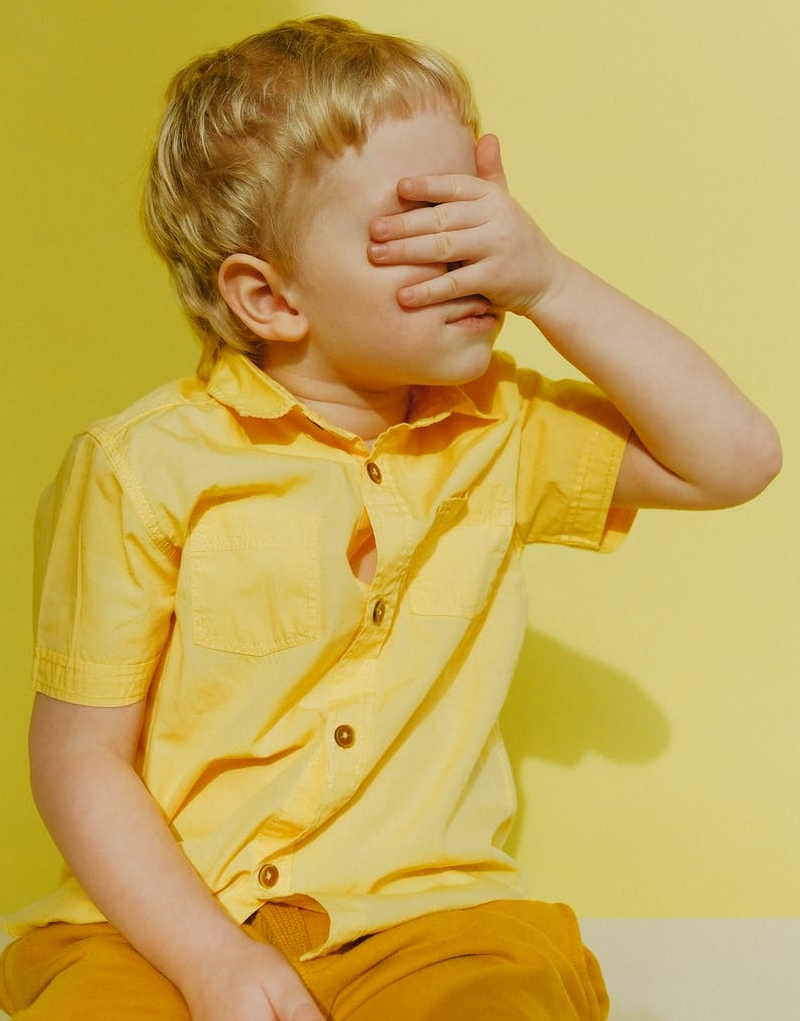
photo of a boy covering his eyes
Photo by Anna Shvets on Pexels.com

I miss my parents. There’s no panic, they’re both still with us and in fact are on the end of the phone should I need them. But the global Coronavirus pandemic and the fact that we’re in lockdown has meant that there’s not a hope of actually seeing them. I can’t visit as I live over 100 miles away and while the frequency of phone calls home has increased over these last few weeks, I still miss them. This is weird because, if I’m honest, the distance between us has always felt quite convenient before now.

The whole situation has made me think about them a lot more than usual. I guess, if I’m being honest, part of that is to do with having so much time on my hands. I certainly don’t normally think so deeply about my parents and for so long. In fact sometimes, with a busy work and family life balance, my parents can seem a bit of an irritation. And while I feel guilty typing that and reading it back, I doubt any of us could look at it and not think the same for at least some of the time. If you’re busy, stressed out, hitting deadlines ad trying to be a good husband and father, checking in with the parents can feel like a bridge too far.

My mam and dad are getting old now. My father is eighty and my mother, despite her dogged attempts to keep the actual number quiet, is in her late seventies. In short, they’re vulnerable to this virus. And so, worrying about them, thinking about them, talking about them and even almost succumbing to random acts of abandon like driving up to stand outside their house and chat to them have come quite naturally of late.

One of the things that I’ve thought about most – and one of the things that automatically makes me smile – has been the kind of things they say or more accurately, said when I was growing up. You see, parents speak a different language. As you grew up they seemed almost alien and even now, in middle age I can say that they still speak a different language. So let’s have a look – in no particular order – at some of their stock phrases and hopefully it won’t be just me who’s transported back in time.

  1. It’s reasonable to assume that every child will frequently ask ‘What’s for tea?’ (or dinner, if you’re posh or just plain wrong). My parents never seemed to tire of not giving me the correct answer. As a pair they seemed to have one stock, prepared answer each; a personal favourite, if you like. Firstly, my mam would regularly reply to said question with ‘Shit, with sugar on’. Often, if he was around my dad would then add to this nonsense by informing, in a posh voice ‘but divinely cooked.’ His own answer, for the times mam wasn’t around or found herself too busy to answer was to tell me that it was Dried bread , jammed in the door.’ Hilariously here, not only was the bread stale, but he was insinuating that the nearest I’d get to jam was to stick it in the door. I didn’t even like jam! It’s safe to say that I was often a confused child around meal times and as a fussy eater, disappointed too.  Why wouldn’t they just tell me the answer? And why, oh why give such a bizarre response. Frankly, if Childline had been around when I was growing up, I think I’d have had more than enough reason to give them a call.
  2. Closely linked to number one is the fact that because my mam didn’t like to swear in front of us (apart from when she was giving a witty answer to the tea question) she’d often substitute words for swear words, especially when exclaiming in frustration or anger. The stupidest I can remember is her habit of saving our delicate ears from foul language by shouting ‘Tish’. It’s a tough one, but can you guess what she was really wanting to say?
  3. A stone cold favourite, possibly in every house up and down the land next. Imagine the scene. You’re out in a shop, possibly you’ve been in many more than just the one. At some point you will have seen something that takes your fancy. Tired out, bored and probably fed up, you forget manners and exclaim ‘I want insert item here’. What were you told? Altogether now, ‘I want never gets!’ Every. Single. Time. And always said with total and utter enthusiasm and smug self satisfaction.
  4. Another that has caused much beffudlement over the years comes from a different source, but a parent all the same. This one comes from my wife’s late grandmother who was as Yorkshire as they come. When I first noticed her using this expression she had got to that age that some people get to where they no longer care what people think of them or what they’re saying and so this expression would come out in all sorts of places, to the amusement and sometimes mock embarrassment of my wife. I never knew what it meant or even, it transpires, what was being said. It was only in thinking about this blog and doing some loose sort of research that my wife explained it. The expression in question was ‘warn o’ my arse’. Warn would have been pronounced waaaaan, by the way. Apparently it means ‘worse than my backside’. So when someone would ask her what she thought of something, Nelly (the grandma in question) would often – just it seems for the fun of it – reply ‘warn o’ my arse’. So, for example a meal might be ‘worse than my arse’. Charming.
  5. A response to the question ‘What’s up?’ was always one that left me frustrated. It showed how desperately uncool my parents were. So to place you at the scene, so to speak, imagine a young lad asking his dad ‘What’s up?’ It may have been a question of concern or just one making a general enquiry. Either way, let’s see it as the intended starter of a conversation, remembering that it’s good to talk. So imagine the mounting teenage angst when the response to my ‘What’s up?’ was regularly, ‘The sky…do you want it down to play with?’ My response of a groan, a thousand yard stare and leaving for another room probably said a lot about my relationship with my dad!
  6. My dad however, provides the final two of the memorable things my parents used to say. This particular one is one I’ve to this day never been able to explain. My dad has explained it but it still makes no sense at all. Let’s try it for size, shall we? If you ever got something wrong and tried to explain your mistake away by saying that ‘I though it was…’ you’d be met with the following. ‘You know what Thought did, don’t you? Followed a shit cart and thought it was a wedding.’ Poor old Thought. Left with so many questions, not least ‘What on God’s green earth is a shit cart?’ And let’s not even think about the wedding in question.
  7. Finally comes a tale of short trousers. And by short trousers, I don’t mean shorts. I mean trousers that are too short. Half masters we call them. A boy on my street was notorious for his short trousers. He just never seemed to have jeans that reached down to his shoes. And so, whenever he walked past the window he was like a magnet for my dad and one of his favourite expressions. Dad never seemed to tire of telling us that Jamie needed to ‘put some jam on his shoes and invite his trousers down for tea.’ Much to the embarrassment of my own kids, I have adopted this particular phrase and still use it to this day.

So there we have it. Parents, especially mine, are a curious breed who at times have a language of their own that appears to be mainly made up of absolute nonsense. Feel free to leave any of your own parent’s sayings in the comments box or let me know via Twitter, where I’m @grahamcrosby and Middle Age Fanclub.