Gallowgate Cult Heroes; Number 9 Craig Bellamy.

To this day, and despite him having a chequered past as far as Newcastle United are concerned, Craig Bellamy remains one of my favourite players ever to wear the shirt. Sure, he left in controversial circumstances and with his reputation in tatters in the eyes of lots of us. But, let’s face it, anyone could have fallen out with Graeme Souness and for the 4 years that he was at the club Bellamy was largely electric to watch. Playing in Bobby Robson’s sides that also featured the likes of Shearer, Speed, Robert, Lee, Dyer and Solano it was Bellamy who got me off my seat more often than not.

Bellamy was signed by Sir Bobby Robson in the summer of 2001 for £6.5m from Coventry City. It was a case of us finally getting our man and also of Craig getting his wish. We’d been looking to sign him the previous summer, but without an agent Craig somewhat bizarelly found himself being talked into the move to Coventry by John Fashanu who had decided to involve himself in the talks after a chance meeting with Bellamy’s financial advisor! Bellers preferred the move to Newcastle, but felt pressured to sign with Coventry and so had to wait until the following season and Coventry’s relegation to get his wish.

Bellamy arrived with a reputation as a bit of a bad egg. I remember reading a story at the time about the senior pros when he was at Norwich locking him in the coach toilet on the way back from an away game just to shut him up! And his time at Newcastle wasn’t short of controversy either. But more of that later.

For me, there are two abiding memories when it comes to performance, with Craig Bellamy. The first came in his first Tyne Wear derby at St. James’ Park in 2001. We’d gone behind to an early Kevin Phillips header and then Bellamy struck. After a bit of a skirmish in central midfield, Lauren Robert emerged with the ball at his feet and looked up before scooping a timely pass forward for Bellamy to run onto. He easily outpaced the defender, nodded the ball down and then finished with a beautiful strike from just inside the area past the mackem keeper. In was in the Gallowgate on Level 7 that day and went suitably mental. They’d call it ‘limbs’ nowadays, no doubt. It was just people celebrating back in 2001! We couldn’t quite get the win that day, but the relief when Bellamy scored was tangible.

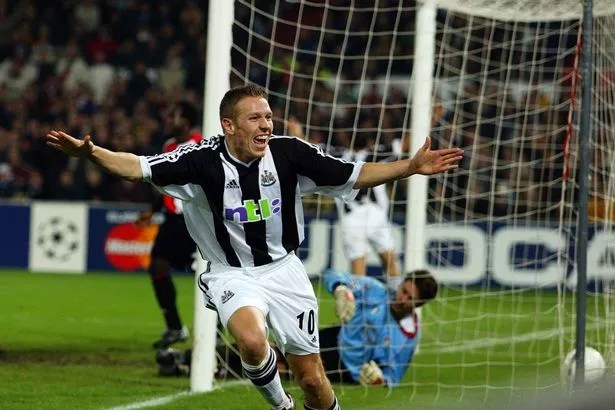
The other lasting on field memory for me would be the last second winner in the Champions League against Feyenoord in 2002. He scored the first in added time in the first half, but the best was yet to come. Having taken a 2-0 lead, we were pegged back late in the game – a typical Newcastle-like collapse. And then, Bellers popped up again, in the 91st minute. Kieron Dyer’s effort was saved and the when the keeper parried the ball wide of the post it looked like the chance had gone. Somehow though, Bellamy got to the rebound and hit it goalwards, the ball going in off the keeper. We’d just become the first team ever to qualify from our group having lost our first three games. Cue bedlam. I wasn’t there that night and watched it on the telly, like a lot of other Mags, but I’ll never forget it!

I loved the way Bellamy played. All pace and raw energy, I don’t think I’d ever seen a forward as quick. He was like a little wasp, always bothering defenders, always involved and always likely to get on the end of a decent through ball. He struck up a useful partnership with Alan Shearer, but also worked well with the likes of Dyer and Robert. But he played on the edge at all times and was generally a yellow card – at least – waiting to happen. In fact, I seem to remember a time when for several games in a row it felt like the whole ground were shushing him in unison as he made his mouth go again to a referee!

Issues off the field would be Bellamy’s downfall at Newcastle. There are loads of stories to choose from. The multitude of red and yellow cards. Throwing a chair at John Carver at Newcastle airport springs to mind. And of course the fall out with Souness when Bellamy refused to play on the left against Arsenal, which eventually led to him leaving the club. The best part of that particular tale, by the way, was Bellamy doing a live interview on Sky after the game and telling them that Souness had ‘gone behind my back and lied to my face’! I mean, which was it, Craig? Personally though, whatever had actually happened, I’d have had Bellers back and got rid of Souness, but there you go!

The best of the negative stories has to be of a fleeting fall out with Sir Bobby Robson though. Apparently, in a team meeting as Bellamy kept complaining at being the first player subbed every game, Bobby eventually snapped, telling him to shut up, before adding, ‘I’ll squash you like an ant.’ But it got better as Robson then asked, ‘Who are you? Ronaldo, Romario, Stoichkov, Hagi, Guardiola, Luis Enrique, Gascoigne? These are the people I deal with. And who are you?’ Bellers could only reply with, ‘He’s got a point!’

In total, Bellamy made 93 appearances over 4 seasons for Newcastle, scoring 28 goals. He left under a bit of a cloud and would come back to haunt us many times later in his career with the likes of Blackburn, Liverpool and Manchester City. However, for the time he spent at the Toon, for many of us he became a real cult hero. As I said earlier, one of my favourite Newcastle players ever.

What are your views of Bellamy’s time at Newcastle? And do you have any stories of his many misdemeanours?

Gallowgate Cult Heroes; Number 4 Micky Quinn

If you’re a Newcastle United fan, it’s almost certain that you’ll love a number 9. We’ve been brought up on them. For the older generation, we would have been told stories of Jackie Milburn, Hughie Gallagher and Len White. Some of us might even have been lucky enough to watch the great Supermac in the 70s. The younger generation could point to the brilliance of the likes of Cole, Ferdinand, Shearer and even Callum Wilson.

No one can argue that we’ve had a glut of quality strikers to have idolised over the years. Even when you move away from the obvious, you’ll still find some excellent strikers who’ve left their mark on Tyneside. Micky Quinn is definitely one of those names and to this day holds cult status in Newcastle.

Quinn was signed from Portsmouth at a turbulent time for the club. Arriving in July 1989 for £680,000, he was joining a fractured club. Many supporters were boycotting the club and protesting against the board of the time which was led by one of the most unpopular chairmen of my lifetime in Gordon McKeag. So while Quinn jumped at the chance to join the Toon, he certainly wasn’t popular from the off. Quinn himself famously tells a story of seeing the protests as he walked through the city and bearing witness to a banner that asked ‘Who the f**k is Mick Quinn?’

I was well aware of who he was as the kind of geeky kid who always kept track of the top scorers in every division, so Quinny’s signing excited me and was a rare piece of good news at a time when I could feel myself drifting away from the club and its under-ambitious ownership. As well as being a Bob Carolgees lookalike, Quinny was known for being a little on the larger side and in truth wasn’t the perfect physical specimen, but as he’d say later on in his career, he was the fastest you’d find over the first yard!

My cousin was part of the supporter boycott and I was torn between getting a ticket for the first game of the season or standing outside St. James’ Park like he did and trying to persuade people to stay away and put pressure on the board. Thankfully, I went in that day.

Quinny’s debut is the stuff of modern NUFC folklore. In front of just over 24,000 fans, he scored four goals in a 5-2 win against promotion favourites Leeds United. By the end of the game, no one was asking who he was anymore and Quinny quickly became a crowd favourite. Having stood watching the likes of Frank Pingel, Mirandinha and Rob Macdonald struggle to score goals in the previous season, I was thrilled that we had such a number 9 as Micky Quinn and for many others he would become a hero just based on that game alone.

Quinny scored 34 goals in that first season, cementing his place in the history of the club and also in the hearts of many a supporter of a certain age. After 4 on debut he then went on to score in each of the next 4 games and he simply kept on scoring all season. His record for that season – 34 in 53 games has him in 5th place for the most goals scored in a season at NUFC. I was 18 at the time and the partnership between Quinny and Mark McGhee that season remains one of my favourites of all time.

In his second season Quinny scored 20 goals, but the team finished 11th in the old 2nd division and the writing was on the wall for manager Ossie Ardiles. The season that followed was the now infamous and almost disastrous one that ended with Kevin Keegan coming in as manager and somehow managing to save us from the drop. Quinn scored 10 that year but was eclipsed by midfielder Gavin Peacock who got 21 and it would become obvious that the manager didn’t really fancy our cult hero.

During that amazing first season in ’89-’90 I was lucky enough to meet Micky. He was part of a group of Newcastle players who were taking part in a charity cricket match at a local cricket club in Swalwell. Me and a couple of mates went along and skulked around on the boundary, waiting to try and grab a word with our heroes. I was 17 and still very much in awe of these people who I watched week in week out.

Having managed to get an autograph from Kevin Brock, we waited and waited for Quinny and when he was fielding right by the rope we grabbed our opportunity. He signed my old green and yellow striped away top and was just a genuinely nice bloke. He’d taken a flying catch moments before and was full of himself, as you would be!

Another, rather different memory of Quinny would be from a couple of seasons later and the 91-92 season. It was away at Sunderland and the infamous Liam O’Brien over the wall game. Quinny was actually injured and on crutches at the time but I have a vivid memory of him approaching the way fans in the Roker End at the end of the game, wildly waving his crutches around and celebrating. We’d had a few crucial injuries going into the game and so the draw was actually a great result and Micky, like the whole away end, was ecstatic. He knew just what the club meant to the fans!

To those of us who followed Newcastle United around the country in the late 80s and early 90s, Mick Quinn was a legend. When he wasn’t banging in the goals he could invariably be found ‘de-stressing’ in the local nightclubs and was a big fan of the Tuxedo Princess! A lot of that side of things is detailed in his excellent autobiography ‘Who At All The Pies’, which is a must read if Quinny is a new name to you.

In all, Quinny scored 63 goals in 126 appearances for the club and always gave everything. He embraced the weight of that number 9 shirt and did it proud, starting with that incredible debut. He was eventually sold to Coventry City where he would go on to gain cult hero status with their fans too. Newcastle United moved on in style when he was sold, with Kevin Keegan bringing in Andy Cole as we gained promotion. A lot of us fans will never forget Micky Quinn though!

Gallowgate Cult Heroes; Number 3 Imre Varadi

When I first started writing this series, I wondered how far back I’d be able to go. I’m trying to write more about players that I actually saw play, rather than just delving into the history books – and Wikipedia – and providing you with a list of stats. So, in essence I’m restricting myself to going back as far as the late 70s at best and even then, my memory won’t always be reliable.

The third player in the series is one that I only just remember, as well as being one of my first ever black and white heroes.

Imre Varadi was signed, with not a great deal of fanfare from Everton in the summer of 1981. A 22-year-old Londoner, with a Hungarian/Italian background, he was brought in by manager Arthur Cox to help solve what had become a major goalscoring problem. With the previous season’s strikers – the likes of Bobby Shinton, Alan Shoulder, Mick Harford and a young Chris Waddle – struggling to find the net, Varadi faced a challenge. However, he must have felt that he couldn’t really fail, given that the previous season’s top scorer had been Shinton with 7 goals. And so, a memorable, but brief chapter began.

Newcastle were languishing in Division 2 (now the Championship) at the time but in his first season (81/82) Imre scored a commendable 20 goals in 47 appearances. However, it took him a while to actually find the net. When he did eventually did though it was spectacular as he bagged a hat-trick in a 0-4 away win at Cardiff. Suddenly, things were beginning to click into place. In the next game, this time at home to Derby he scored a brace in a 3-0 home win.

Varadi had electric pace, an eye for goal and was more than capable of an eye-catching piece of skill. He was unpredictable and brave, doing the number 9 shirt proud. It was easy to see why a success starved Gallowgate would take to him so quickly. But things were about to change on Tyneside.

In the summer of 1982 Newcastle United grabbed the football world’s attention by signing the England captain Kevin Keegan from Southampton. How we’d managed to sign the twice Ballon D’or winner is anyone’s guess, but we did and he would go on to help change the history of the club. It was the beginning of the end of Varadi though.

The season started well, with Varadi providing the assist for Keegan’s winning goal in the first game of the season at home to QPR. In goalscoring terms though he made a slow start. While strike partner Keegan scored 3 goals in his first three games, Varadi didn’t score until the sixth week of the season.

However, by the end of the season he had scored 22 goals in 43 appearances and was again a roaring success as he finished as top scorer. Keegan himself only made 16 league appearances, scoring 21 goals and was rightly idolised. And this was possibly what would cost Varadi. Newcastle, having finished 5th that season went all out for promotion the next, signing John Ryan for a then club record fee of £250k, David Mills and a 22-year-old called Peter Beardsley in the summer with Imre being sold to Sheffield Wednesday for £180k.

I remember rumours about Varadi’s relationship with Keegan at the time and since then have heard the same type of things mentioned time and again in relation to his departure, but I really wouldn’t know. Whatever the reason, it seemed a strange move to get rid of the top scorer of the previous two seasons. Varadi scored goals and was popular with the fans and yet was still sacrificed to a rival. Mind you, Keegan would do the same himself as manager, years later, with Andy Cole, ending up explaining himself to confused and angry fans on the steps of the Milburn stand.

Imre Varadi was the first number 9 that really captured my imagination. I wasn’t old enough to remember Supermac and there’d been precious little else to grab on to during my fledgling years as a Toon supporter. I remember being enamored by Peter Withe, but even then I was only 6! My other favourite player had been midfielder Micky Burns, but there was nothing that excited me as much as Varadi did when he signed. I knew nothing of him, but that first hat-trick had me hooked! I’d fallen in love with a club that felt like it gave precious little back, but when Varadi got the ball and ran it felt like there was a bit more of a point being there.

With 42 goals in 90 games, Imre Varadi had a decent strike rate and was the kind of striker that excited the fans. But with a young Chris Waddle coming through and Peter Beardsley set to make an amazing impact with Kevin Keegan, maybe letting him go was the correct decision. By the end of his career he’d become very much a journeyman pro, ending up with 17 clubs in all, so perhaps his two years with us was par for the course.

In recent interviews, Varadi has expressed great love for his time with Newcastle and for a couple of years, there were a fair few of us who loved him right back. But cult hero or not, nobody could really compete with King Kev, could they?

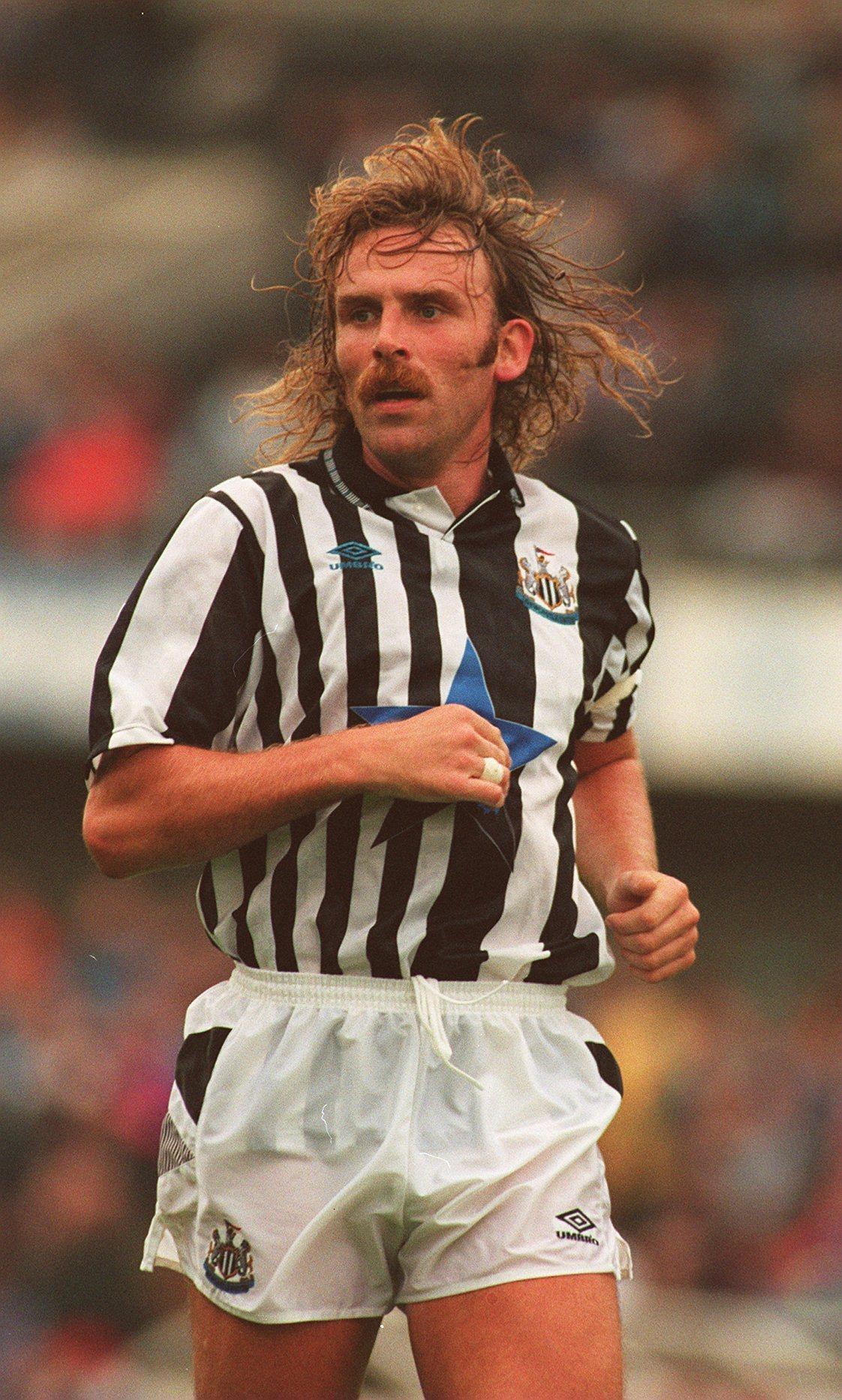
Gallowgate Cult Heroes; Number 2 Brian Kilcline

Signing a player who’s better known as ‘Killer’ sounds like the kind of thing you’d only experience via the pages of a 1970s comic. And in many ways, Brian ‘Killer’ Kilcline’s story would go on to feel like pure fiction.

Brian Kilcline was Kevin Keegan’s first signing in his first spell as Newcastle manager. A typical Keegan singing? No, but in many ways Killer was one of the most important signings the club ever made. He gave a team, that had previously cowered at the first scent of a problem, a spine and was one of the major reasons that the club avoided relegation in the season that he joined. Make no doubt about it, Newcastle United were in deep trouble and in grave danger of tumbling into Division 3 (League One now). Brian Kilcline was Keegan’s first port of call in order to make sure that didn’t happen.

Signed from Oldham in 1992, Kilcline was immediately made club captain. Having previously captained Coventry to an FA Cup win in 1987, he had valuable experience to add to a dressing room that was a mixture of underachieving journeymen and raw kids. Killer was 29 when he signed and was charged with the business of giving the squad a sense of belief as well as a metaphorical kick up the backside. At the time our squad included such luminaries as Ray Ranson, Mark Stimson, Peter Garland and Archie Gourlay, but previous manager, Ossie Ardiles, had put all his faith in youth and players such as Lee Clark, Steve Watson, Lee Makel and Robbie Elliot. While we were playing some pretty football, we just weren’t winning games and were sinking fast. I remember week in, week out having that sinking feeling that we couldn’t possibly survive. Then, along came Keegan and Killer!

Brian made his Newcastle debut in a 1-1 home draw against Barnsley, replacing Darren Bradshaw in the starting line up after the team were beaten 3-1 away at Blackburn. Newcastle were stuck in 22nd place in the division at this point. Seven days later, with Killer again in the side, we recorded a 0-1 away victory at Port Vale and moved up to 19th.

From there we’d go on picking up points so that by the time we’d beaten Sunderland 1-0 at home at the end of March we were sitting in 17th place and looking far more comfortable with Killer marshalling the defence.

However, 5 successive defeats followed, with Kilcline sidelined through injury for three of them and Newcastle plunged back into trouble.

Ultimately, the side did enough to stay up with successive victories against Portsmouth and Leicester and Kilcline’s place in history was already assured. Those two games will go down in club history and while the home game v Pompey will always be associated with David Kelly’s late winner, it was Killer’s defence that kept a rare clean sheet that day. Similarly, the game away at Leicester will be remembered mainly for the performances of players like Kelly, again, and Gavin Peacock, as well as a pitch invasion by home fans, but Killer’s influence that day cannot be underestimated as Newcastle held their nerve enough to get over the line in one of the most dramatic games I’ve even witnessed as a Newcastle fan. Forget winning games in the Champions League, this was like the Alamo (it was a battle, look it up, kids).

While Killer will be remembered as the man who Keegan trusted to guide the club to safety during one of the darkest periods in its history, it shouldn’t be forgotten that the very next season he captained the team to promotion. Keegan famously referred to him as “the most important signing I ever made for the club” and instantly secured Killer’s status as a true legend for Newcastle United. However, he was to start only one game for us in the Premier League and moved on to Swindon soon after. There, Killer made 10 appearances in the Premier League, but left for Mansfield Town in 1995 amid suggestions of a falling out with the Swindon manager Steve McMahon.

Later in his career Killer began to explore his more imaginative side, living for a while on a narrow boat, before spending his time travelling the world with wife Lynn once he’d retired. Nowadays, Brian lives in rural Holmfirth in Yorkshire where he spends time managing rental properties and renovating houses. In the recent past he has still turned out for Newcastle legends teams too.

Although he only spent a short amount of time on Tyneside, Killer was undoubtedly a hero for Newcastle. Not only did he help to save the club from a disastrous relegation to League 1, but he led the side to the promised land of the Premier League a year later too. In doing so he had a huge influence, not just on the future of the club itself, but also on a group of young players such as Lee Clark, Steve Watson, Robbie Elliot and Allan Nielson, players who would go on to have a bright future with the club.

Brian Kilcline; looked like a Viking, played with grit, passion and determination, led like a legend.