Gallowgate Cult Heroes Number 20; Joe Harvey

Time and again it’s said that the word ‘legend’ is overused these days. And it’s right. That bloke down the pub that can stick 6 pickled eggs in his gob at once is not a legend. Reality TV stars are not legends. Put simply, legends are made of sterner stuff and capable of remarkable feats.

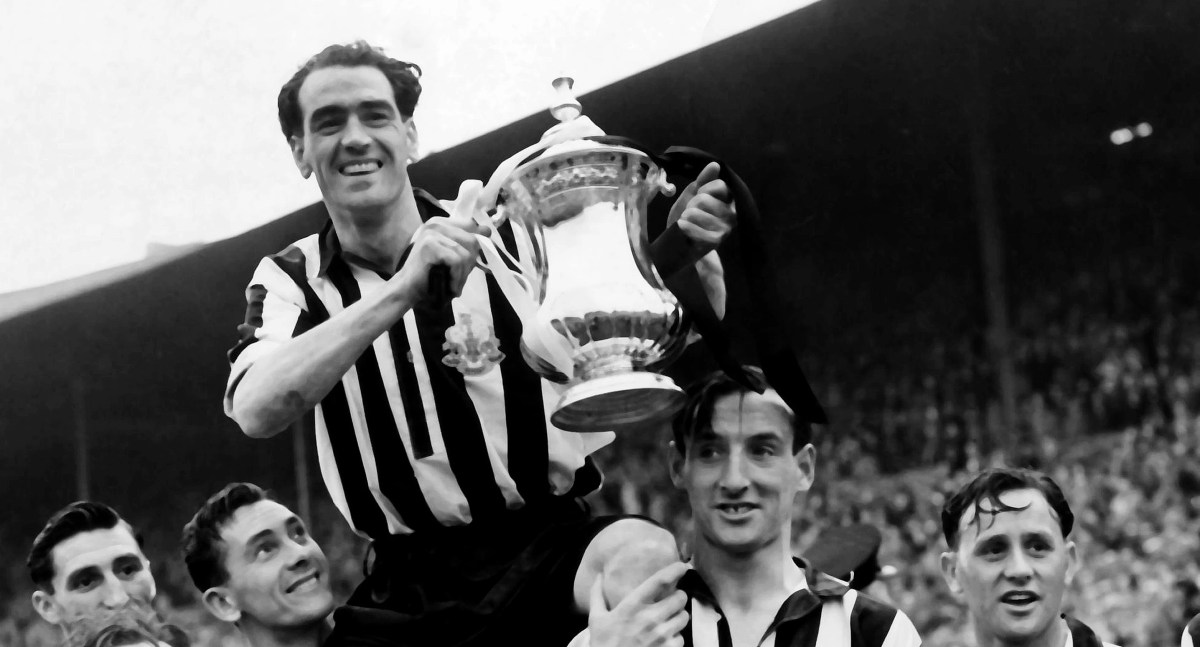
In terms of the history of Newcastle United, Joe Harvey is a legend, of that there can be no doubt. Serving the club as both a successful player and manager, Harvey will do down in the history of our club and be talked about long after we’re all gone.

Joe joined Newcastle in 1946, a year after the end of Word War II which had stalled his football career and restricted him to guest appearances for several clubs around the country. A box to box midfielder, Joe would go on to help us win promotion to Division 1 in 1948.

Three years later began a golden period for not only the club in general, but for Harvey’s career. He was the integral and inspirational captain as Newcastle won back to back FA Cups in 1951 and ’52. The team would also have top 5 finishes in in the ’48/49 and 50/51 seasons. Joe was very much a no nonsense kind of player with exacting standards of those around him. As captain he was revered by the squad, who respected him totally. However, they feared him just as much! None other than Jackie Milburn noted that many of the players were petrified of Harvey and that running into him “was like hitting a bag of iron.”

Joe clocked up an impressive 224 appearances before retiring in 1953. He then went on to spend two years at the club as a trainer, while also learning his trade as a coach. In 1954, while still at Newcastle, Harvey took the job as manager of Crook Town and steered them to victory in the FA Amateur Cup. He would continue to work in the lower leagues at both Barrow and Workington before finally getting the Newcastle job in 1961.

Harvey would remain as Newcastle manager until the end of the ’74/’75 season, resigning after a 15th place finish. However, his years as manager cemented his place as a club legend. While in charge he took Newcastle to the 1974 FA Cup final – our first since 1955 – and also assembled teams that included players like John Tudor, Terry Hibbitt, Terry Mcdermott, Frank Clark, Alan Kennedy, David Craig, Wyn Davies, Irving Nattrass and Malcolm MacDonald; so he knew a player when he saw one. He remains the club’s longest serving manager to this day.

Without doubt Harvey’s greatest achievement as manager was in winning the 1969 Inter City Fairs Cup; the last trophy we would win for over 50 years (unless, in more desperate times, you insisted that the Intertoto Cup was also a triumph! I know I did…). So, until last March, Harvey’s triumph was the last shred of real glory that we all had to cling to – some of us for far longer than others!

Harvey’s half time pep talk in the second leg of the final will go down in Toon folklore. It wasn’t a moment of tactical genius. Nor was it some Churchillian battle cry. No, instead Harvey simply walked into the dressing room with his team 2-0 down and started by questioning the long faces. Then, when it was pointed out that they were losing and had been chasing shadows for the last 45 minutes, he told his boys that it was ok – “All you’ve got to do is get a goal and they’ll collapse. Score a goal and they’ll fold like a pack of cards.” And the rest is history. Despite the doubts among the players, Newcastle would score three second half goals and clinch the trophy with an aggregate score of 6-2.

Harvey was back to help the club out in 1980, taking over for a time as caretaker manager after the sacking of Bill McGarry.

Joe Harvey died in February of 1989, just over a year after Jackie Milburn. A plaque was unveiled in Joe’s honour in 2014. It was cleaned and restored some years later and can now be found at the Gallowgate End of the ground. Maybe not the statue that some had called for, but proof still that Harvey will forever be a legend at Newcastle United.

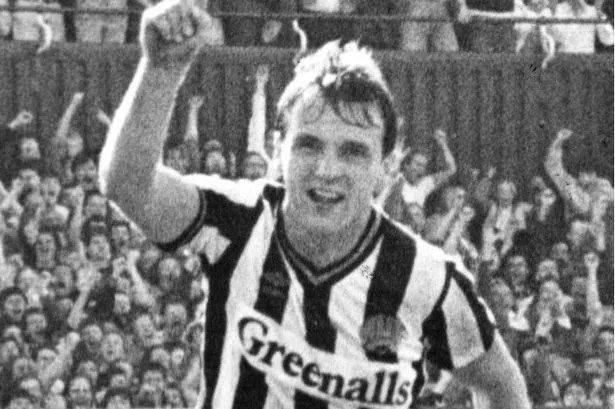
Gallowgate Cult Heroes; Number 18 Paul Goddard

Every once in a while, we make a signing that almost goes under the radar and then creates a pleasant surprise when it comes to how good the player actually turns out to be. One of the best examples of this that I can think of in recent memory would be someone like Yohan Cabaye, who was quite a low profile arrival but went on to have a big impact on the team.

Paul Goddard was also a good example of this particular phenomenon. With almost 250 appearances and 77 goals for QPR and West Ham, he’d seemed settled where he was and was actually quite reluctant to move north. This was the 80s and a time when moving north from London might have felt like moving to the Arctic Circle! And in fact it was this feeling of being unsettled that would plague him during his time on Tyneside and eventually lead to him moving on. But in the two years that he spent here he managed to become a very popular member of what started off as very much a failing side and grew into something far better.

It was October 1986 when Goddard joined the Toon. We were struggling and Goddard came in and gave the side a real boost. He took a little bit of time to find his feet in the team and didn’t score until his fifth game; a 1-1 draw away at Charlton. Bur Sarge, as he was known, had undeniable quality. Despite being relatively small, he was strong and his hold up play was excellent, allowing others to come into play. He was a good finisher too and someone who seemed to play more on instinct than anything else, reading the game well and knowing when to risk a flick or play the tricky pass. His movement was excellent too. Despite his presence though, as 1987 approached Newcastle remained near the bottom of the league and indeed hit rock bottom after a 4-1 away defeat at Old Trafford on New Year’s Day 1987. Goddard had still only scored one goal.

More defeats followed and it wasn’t until February that Paul grabbed his second goal. Newcastle were stuck at the bottom of the league.

And then, as April approached things took a turn for the better. Goddard would go on a scoring streak, notching in the next 7 games as we won 5. Newcastle were up to 17th where we would finish the campaign. Sarge was a huge reason for us staying up.

For season ’87/’88 Goddard was joined by Mirandinha playing up front. The Brazilian would prove to be a constant source of frustration to Sarge though who time after time would take up a position in space awaiting a pass only to see Mira invariably shoot, regardless of the angle. I seem to remember a few stand up rows taking place in the middle of the pitch as Goddard pleaded for a pass! Even then, Paul managed to score ten times in all as we finished 8th in the old Division 1. The team featured Goddard, a Brazilian international in Mira, Peter Jackson and Glenn Roeder at the back and a host of exciting young players like Darren Jackson, Brian Tinnion, Michael O’Neill and of course the one and only Paul Gascoigne. As a Newcastle fan this was a time when you could help but feel a bit of optimism. Also as a Newcastle fan though, our hopes were about to be shattered.

Goddard had been unsettled in Newcastle from more or less the moment he’d arrived. And now he decided that he wanted to leave in order to head back to London. Add to this the devastating departure of Gazza to Spurs and suddenly everything wasn’t so rosy in the Gallowgate garden.

Bizarrely, Goddard would then move on to Derby – not exactly famous for being near London – where he would score 15 goals, staying for just over a year. Later moves would take him to Millwall and then Ipswich where he finished his career.

Had he stayed at Newcastle I think Godard would have really made a name for himself and perhaps been able to help develop players like Michael O’Neill who never really fulfilled his potential. However, for the time he was at the club Goddard did more than enough to be thought of by many who remember him as a bit of a cult hero.

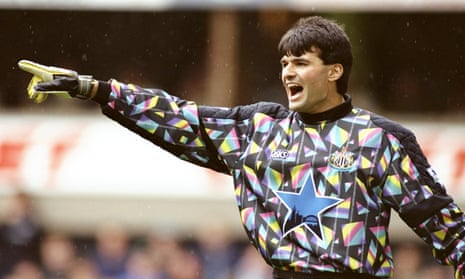
Gallowgate Cult Heroes Number 17; Pavel Srnicek.

Football fans tend to fall in love with certain kinds of players. Goalscorers, obviously. Wingers or maverick attacking midfielders (now christened number 10s by the FIFA generation), anyone with flair or maybe even the player that’s all guts and glory, throwing himself into tackles that have the rest of us wincing. Goalkeepers? Not so much. But you’d have to be a hard hearted soul to not have had even a little bit of love for Pavel Srincek.

If my memory serves me rightly – and it frequently doesn’t – Pavel arrived on trial on Tyneside before being signed on a permanent deal by Jim Smith in 1991 from Czech side Banik Ostrava. He cost a mere £350,000 and would go on to make over 150 appearances, becoming a bit of a legend in the process.

The first Czech player to ever play for the club and the first foreign goalkeeper that I remember us having, the first thing that struck teenage me about Pav was his hair. If ever there was an eastern block haircut it was Pavel’s. Part mullet, part Cossack hat, it seemed to spawn out of the middle of his head and just journey outwards, ending in a fringe that almost covered his eyes. In his later years he’d grown it out, parted it and wore a little headband, looking pretty darned cool, but in 1991 he looked more like he should be in a bad death metal band.

Growing up in communist Czechoslovakia, Pavel only spoke Russian and initially struggled with the language barrier. This and what seemed like a natural instinct to come for every cross that entered the box saw him make a shaky start. Smith, the manager who’d signed him, had also been sacked and so Srincek made his debut in new boss Ossie Ardiles’s notoriously shaky side. He conceded 32 goals in his first 15 games (6 in one game against Tranmere…let that sink in, youngsters) and was subsequently dropped by Ardiles. But there was definitely something about this droopy haired Czech.

Pavel was a great shot stopper and of course would grow into a fine goalkeeper in his time on Tyneside. He became an important part of the squad under Kevin Keegan and in many ways was a pioneer with his willingness to take the ball with his feet and play out from the back. He grew braver as he got used to the league and was always capable of a spectacular save. And I think part of what endeared him to us Geordies was the guts he showed during hard times. Yes, he struggled to settle and adapt to the more physical side of the English game, but he never gave up and never gave anything less than 100% in terms of effort.

Pavel embraced life on Tyneside and revelled in the old terrace chant that told him ‘Pavel is a Geordie’. So when someone had a t-shirt with that very legend printed on the front for him at the end of the promotion season of 1993, he wore it with pride on the lap of honour after we’d hammered Leicester 7-1. Those of us who were there can no doubt close our eyes and see it now.

Pavel returned briefly to Ostrava in 1998, before joining Sheffield Wednesday later that same year. His career would later take him to Italy, with Brescia and Cosenza, before he headed back to the UK for short spells with Portsmouth and West Ham. From there he headed to Portugal, joining Beira Mar and making almost 100 appearances. And then, something truly special happened.

In 2006 Pavel came back to Newcastle as manager Glenn Roeder signed him as cover for Shay Given and Steve Harper. He would only actually make two appearances in his second spell, but the first would illustrate what a hero he was to our fans and would give me one of my favourite Pavel memories. With Shay Given pulling up injured late in the game vs Spurs at home, Pavel was thrust into action. He didn’t have a lot to do as there were literally three or four minutes left in the game and Newcastle led 3-1. But the noise from the standing ovation as he took to the field was spine tingling.

After a 17 year career with almost 350 appearances and 49 caps for Czech Republic, Pavel went into coaching, becoming the goalkeeping coach for Sparta Prague in 2012.

Sadly, as we all know, Pavel died aged only 47 in 2015 having suffered a cardiac arrest while out running in his homeland. A tragic loss, a cult hero and a proud adopted Geordie.

Gallowgate Cult Heroes; Number 16 – Peter Jackson.

As a football fan you sometimes spot players and wonder what it would be like if your team signed them. A bit of imaginary scouting, I suppose. I’ve done it loads over the years and then winced as said players have more often than not signed for other clubs. Peter Jackson was probably the first that I noticed who actually went on to sign for Newcastle.

I was 14 years old when he signed in October of 1986. Costing £250,000 from Bradford, Jacko was a no nonsense centre half that I’d probably seen on the telly and admired, wondering if there was any way we might go out and sign him because he looked, to my young eyes, a great fit for Newcastle and the kind of players that would be appreciated by our fans. Jackson was Bradford’s youngest ever captain and skippered them to the third division title in 1985, the same year as the Bradford Fire disaster.

He could play a little bit and was obviously a bit of a leader, but the best thing about him was the fact that he just got stuck in. He would fly into tackles and blocks and launch himself at headers; one of a dying breed who would stick their head in where plenty others would just shy away and say no thanks.

As someone who has always coveted wingers and strikers it was rare that I loved watching a defender as a kid. But Jacko changed that. When he wasn’t snarling at opposition centre forwards, he did actually play with a smile on his face and from day one it was abundantly evident that Peter felt privileged to play for Newcastle United.

Jacko played in some decent Toon sides that included the likes of Beardsley, Gazza, Roeder, Goddard and Mirandinha; sides that should have achieved more than they did. Mind you, he also played alongside Tony Cunningham, Frank Pingel and Ray Ranson, so maybe he never really stood a chance!

Making 72 appearances and scoring 3 goals, my abiding memory of Jackson was watching him emerge from the midst of a brawl against Portsmouth at home with two of their players – one might have been the loathsome mackem Kevin Dillon – in headlocks. Heroic stuff to a kid in their teens. If my memory serves me rightly he was inevitably sent off at a time when we were struggling in the league, but still, chinning two opposition players? Legend.

Leaving the Toon to return to Bradford in 1988, Jackson would go on to play for Huddersfield and Halifax, while later managing both Bradford and Huddersfield with relative success. He’s still spoken about in glowing terms by Bantams fans that I know and remains one of my favourite players from my formative years as a Newcastle fan to this day.

Gallowgate Cult Heroes Number 15, Wyn Davies.

After he sadly passed away earlier this week aged 83, it felt wrong that I hadn’t recognised Wyn Davies as a Gallowgate Cult Hero, especially given the impact he had on the club and the fans during his time on Tyneside.

Wyn Davies was one of the first hero figures that I was made aware of as a kid. He was before my time, but became part of my education as a budding Toon fan via my dad and my grandad.

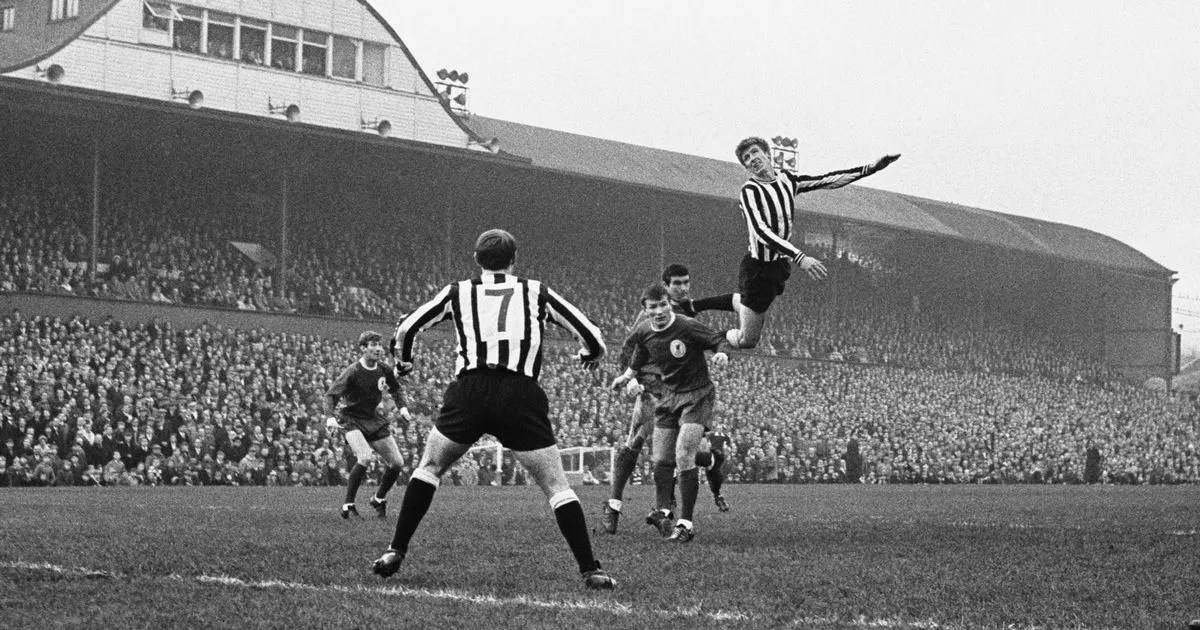
Born Ronald, but known as ‘Wyn’, Davies was signed from Bolton Wanderers in 1966, going on to make 188 appearances before he was sold to Manchester City in 1971. At the time of signing he’d cost a record fee of £85,000 having been the most feared striker in Division 2 at Bolton. At Newcastle he proved to be a great success, scoring 40 goals, but being more well known for his aerial ability and his success in bullying defenders. In those days of teams playing 2 up front Wyn became the big ‘un supporting the more prolific little ‘un that was Pop Robson and the pairing was a great success. And of course, Wyn would be an integral part of that Fairs Cup winning team of 1969.

As a kid I remember hearing tales of his famous leap, his fantastic heading ability and how Davies just seemed to have this ability to hang in the air. My dad still tells stories of the Fairs Cup run in 1969 where Wyn simply bullied European defences. During the run to the final Wyn scored four goals and then in the first leg of the two legged final broke his cheekbone. He still played a week later in the second leg though – no mask, no protection. Imagine that in this day and age! The only restriction on Wyn that day was that the club doctor would only allow him one pint in celebration before he was whisked off to hospital for treatment!

Wyn would continue to have an influence on me as I began to go to games with my mates in the late 80s and early 90s because of the famous song related to his name. During his time at Newcastle fans had adapted the Manfred Mann hit, ‘Quinn the Eskimo'(The Mighty Quinn) to include Wyn’s name and it seemed that some older fans didn’t want to let go. And so, I found myself singing along on the Gallowgate in my early independent years as a Toon fan. Then, within a few years we’d adapt the song again to fit our new hero Micky Quinn. Of course, my dad was only too keen to remind me that it wasn’t really Quinny’s song!

From Newcastle, Wyn went on to have a distinguished career, playing for both Manchester clubs, Blackpool and numerous others before retiring while playing for Cape Town City in 1979.

Wyn the Leap, The Mighty Wyn, a Gallowgate Cult Hero sadly missed. As the song said, ‘You’ll not see nothing like the Mighty Wyn’.

R.I.P Wyn Davies.

Gallowgate Cult Heroes Number 14; Liam O’Brien.

In terms of word association, if I was to mention the phrase ‘over the wall’ many of you would shout back Ryan Taylor’s name. But for older Mags, the original ‘over the wall’ fella was none other than Liam O’Brien.

Signed for £275,000 from Manchester United in November 1998, O’Brien was primarily a central midfielder (a ‘6’ if you play want to sound all clever and modern) who would go on to make 185 appearances, scoring 19 goals. Never the quickest over the ground, his range of passing was to be admired and O’ Brien was what we’d probably best refer to as ‘classy’; a player who always seemed to find just enough time on the ball. He worked hard and could always be relied on for a bit of a killer pass, often dictating the pace of games in the centre of the park. Not a world beater, but good enough to take a game by the scruff of the neck on occasion.

In his first season we were relegated from the old first division, but it was testament to O’Brien that he didn’t immediately jump ship. His loyalty wasn’t particularly rewarded though as we were to stay in Division 2 for three years before getting promoted in that memorable ’92-’93 season under Kevin Keegan. O’Brien had been instrumental in the latter stages of the previous season in helping keep us from the drop into the dreaded third tier.

It was in the promotion season though that Liam O’Brien cemented his place as a cult hero and Newcastle United legend in particular with his free kick against Sunderland at Joker Park.

A Gary Owers own goal had put us ahead before Gordon Armstrong equalised at the Fulwell End in the 70th minute to raise mackem hopes. I remember him going particularly mental as well and rather than celebrate in front of their fans, he seemed to make a beeline more for our fans than anything, screaming his vitriol like a deranged madman. Alas, it would do him no good, the silly mackem…

Just six minutes after the equaliser we won a free kick that was fairly central and just outside the D of the 18-yard-box. A few of the players stood around the ball, but none looked overly likely to take the kick. O’Brien himself just seemed to be stood, casually chatting to Kevin Brock and John Beresford, but as the whistle is blown he simply took a couple of steps forward to plant a beauty over the wall and curling into the near corner. Mackem keeper Tim Carter had been stood on that side of the goal, but was totally powerless as the ball nestled in the bottom corner.

Pandemonium ensued as O’Brien leapt in the air to celebrate with our fans before being swallowed up by the likes of Barry Venison and Ray Ranson. Watch it back now and you’ll see that the Roker End is just a sea of tightly packed in Geordies all going mental at the goal. You’ll also hear Middlesborough manager at the time, Lennie Lawrence call it just before the kick is taken telling the commentator, “I fancy Liam O’Brien over the wall”. Incredible stuff.

O’Brien would have other notable moments in a Toon shirt. He’d scored the equaliser in the previous season at Roker Park with a lovely chip at the same end and I seem to remember a few piledrivers from range across the years. But he will be forever remembered for one of the most nonchalant free kicks in one of the most high pressured games that any of us will ever recall.

Within a couple of years Liam was transferred to Tranmere where he’d spend 5 years before moving back to Ireland with Cork City and his first club, Bohemians where he retired in 2002.

Over the years O’Brien and that goal have been the subject of a much loved terrace song as well as one of the most iconic Newcastle photos you’ll ever see, taken from the camera gantry high above the pitch. A fitting tribute to a true Gallowgate Cult Hero. Liam O’Brien, cult hero and Newcastle United legend.

Gallowgate Cult Heroes number 13 – Santiago Munez and Santiago Munoz.

They say that the truth is stranger than fiction and in the case of Santiago Munez and Santiago Munoz, that couldn’t be more true! For while both have Toon connections and a bit of a cult following for a time, neither actually had any actual impact on the first team. Yet still, both are immediately memorable.

It gets even stranger though. Munez of course is a fictional character and was the young Mexican striker from the film ‘Goal’, signed by Newcastle to then go on and become a bit of a superstar. Munez’s story is brilliant though and it’s actually been mentioned by some signings in terms of being one of the reasons that they knew about Newcastle! Jonas Gutierrez, Massadio Haidara and Papiss Cisse all mentioned the film as helping with their awareness of the team and Callum Wilson said, “…it’s all about Newcastle. It got the little boy in me all excited and you’re thinking, yeah that’s the one for me!”

If you don’t know the film ‘Goal’, Munez is spotted by a scout playing in LA and offered a trial at Newcastle. Despite the odds – his dad nicked his secret stash of money so he couldn’t afford the plane fare, but was saved by his grandma who used her secret stash to buy one for him – Munez arrives on Tyneside and overcomes bullying, asthma (no, really!), the weather and homesickness to eventually strike up a decent partnership up top with Gavin Harris, another cult hero…

Nowadays he’d be scuppered by Shola and a loan to some team in Belgium fighting a relegation battle and we’d never hear from him again, but thankfully his cult status was assured by the magic of Hollywood!

I remember being at matches at the time ‘Goal’ was being made, sitting in Level 7 and spotting people in Toon kit crouched by the pitch, behind the advertising hoardings. At the final whistle they’d run on and celebrate with actual players, with cameras capturing the footage for the film. And I was at the Liverpool match that was used as Munez’s moment of glory when movie magic transformed a Laurent Robert freekick into a last minute winner by the fictional Mexican cult hero. Strange times indeed!

From Newcastle Munez is transferred to Real Madrid where the drama continues. However, despite a troubled time, he eventually turns things round and scores in the Champions League final against Arsenal, which I think proves once and for all that Hollywood doesn’t quite understand football! Apparently the rumour that Mikel Arteta still insists that Arsenal were the best side in the tournament that year isn’t actually true though!

Fast forward some 16 years from the original ‘Goal’ and we actually signed Munez’s near namesake. The subtly different Santiago Munoz was signed on loan from Mexican side Santos Laguna. Sadly, during his 18 months on Tyneside he was only really an academy signing and even then, didn’t make more than a handful of appearances.

For me though, the thing that makes Munoz a cult figure is that his signing was just so typical of Mike Ashley. If ever a signing summed up the Del Boy approach of our former owner, it was this one. A low level of risk, that if it paid off and Munoz was a success, could be milked to the maximum using the comparison between him and the bloke from ‘Goal’! You can almost see and hear Ashley salivating at the prospect of this moment of genius paying dividends! Sadly for Money Mike, Munoz spent most of his time here injured and although he made a substitute appearance in a pre-season game, he was pretty much always destined to return to Mexico. A gamble that was all too typical of Ashley, but one that for a short while captured the imagination of many of Mag!

Of course neither of the Santiagos is really a cult hero. But both, particularly Munez and ‘Goal’, have had an impact on the club and the fanbase. At the time I was fascinated by the fact that we’d be featured in a film and couldn’t wait to see it, especially as I’d been there on occasions when they’d been filming. The film itself will always be synonymous with the city and even now it gets mentioned by players. I could be wrong, but I’m sure it was referenced by Bruno when he signed.

So, Santiagos Munez and Munoz can be classed as Gallowgate Cult Heroes, even if they barely spent more than a few minutes on our pitches!

NUFC: Gallowgate Cult Hero number 12 – Kevin Gallacher.

Sometimes a player doesn’t have to stay a long time or do anything remarkable in order to be remembered. Footballing heroes come in many different varieties, I suppose. We tend to cling on to flair players, gasping at their skill or attacking players with a turn of pace. The same can be said for the type of defender who it feels would throw himself into any challenge and perhaps even die for the cause. The workhorse is rarely remembered though.

Kevin Gallacher was very much a workhorse. That’s not a slight and nor is it meant to say that this quality was all he had. Gallacher had pace, even at the late stage of his career when he played for Newcastle. He also had an eye for goal and the quality to beat his marker too. But I think it’s fair to say that it is his work rate and dedication to the cause that left its mark on Toon supporters.

Kevin was 33 when he signed for Newcastle in from then relegated Blackburn Rovers, for £700,000. He had enjoyed a successful career, scoring 100 goals and taking in spells at Dundee Utd, Coventry and Backburn where he was part of their Premier League winning squad in 1995. He was Bobby Robson’s first signing and although he stayed for 2 seasons, his contribution to the cause at a time when we had very real fears of relegation, was very much appreciated.

At times, Gallacher’s work rate galvanised both his team mates and the fans. When Robson arrived at the club we were bottom of the Premier League and the club was in disarray. Players were disgruntled and disillusioned, given what had gone before under Ruud Gullit. The likes of Shearer, Robert Lee and Gary Speed had been undervalued and the club was going nowhere fast. Gallacher was an unspectacular but shrewd signing though; a senior pro, a proven winner and one who would help bring harmony to the dressing room as well as commitment out on the pitch.

In his time at Newcastle Gallacher only made 39 appearances, scoring just the 4 goals. However, his contribution to the team will long be remembered by those of us who watched him play. Playing mostly on the right wing, he led by example, showing energy and a desire to fight that prompted others to do exactly the same. In turn, his energy fed the fans and alongside the obvious changes inspired by Robson who had begun to get the best out of his ‘blue chip boys’ – Shearer, Speed and Lee – the team slowly began to turn the corner and would escape relegation that year.

From Gallowgate he moved on to Preston in 2001 on a free transfer. From there his career took in brief stints at Sheffield Wednesday and Huddersfield, before he retired. He now works as a pundit for Scottish football.

Kevin Gallacher didn’t leave behind any abiding memories from his time at Newcastle. I’ve sat and tried to think of them and they’re just not there. I even scoured the internet trying to find some of his 4 Toon goals without success. However, just by doing the basics – working hard, chasing lost causes and giving everything he had for the club – he would stick in the memory of many a Toon fan for years to come.

Gallowgate Cult Heroes Number 10: Papiss Cisse

If you were to come up with a check list to define what makes a footballing cult hero then Papiss Cisse would tick a lot of boxes. Great relationship with the fans? Tick. Outrageous technique? Tick. Scorer of screamers? Tick. You could go on, because Cisse had a lot of great attributes that would endear him to the fans.

Signed in January 2012, Cisse was a bit of a mystery for most fans. I’m not even sure I remember the obligatory YouTube showreel of all his best bits! However, by the time he left the Toon, he most definitely had one.

Cisse, a Senegalese international, was signed for £9.3 million from SC Freiburg of the Bundesliga; a lot of money during the Mike Ashley era. He was very much an unknown quantity, albeit one who had behind him a very decent record for scoring goals in both France and Germany. But could he cut the mustard in the Premier League? We didn’t have to wait long to find out.

Cisse, wearing the cherished number 9 shirt, made his debut the following month against Aston Villa, coming on as a substitute for Leon Best. In a fairytale start to his career on Tyneside, Papiss scored an amazing, quite instinctive winner, chesting down a cross from Jonas Gutierrez just inside Villa’s box before lashing it on the half volley into the corner of the net at the Gallowgate. What a start! And Papiss would go on to make a habit of scoring important and spectacular goals!

In 5 seasons in black and white Cisse would score 44 goals, making 131 appearances. In his first season he notched 13 goals in 14 games, an incredible record. But after that injuries and at times a lack of form meant that he never really came close to fulfilling his potential. While he wasn’t exactly prolific – his record roughly equates to a goal every three games – Cisse would regularly light up games for Newcastle and he quickly became a bit of a crowd favourite.

His popularity with the crowd came for a few different reasons. Firstly, we’re well known for our love of a number 9 and not just because they happen to wear that shirt. We love a number 9 that fills the shirt, if you know what I mean. Someone who accepts the responsibility and rises to it. Papiss Cisse did just that. He was one of those players with a bit of flair and personality and it always felt like he just loved playing for the club.

Cisse also brought a certain level of entertainment to a side that, at that time, wasn’t all that entertaining. For me, he brought to mind Andy Cole, albeit being nowhere near as prolific. Consecutive seasons under Pardew, Carver then McClaren were all pretty dull, apart from the one that brought European football back under Pardew, yet Cisse always managed to stand out in what were at times, pretty dull sides.

And then there were the spectacular goals, starting with that first against Aston Villa. Cisse is probably most well known for the screamer scored from what felt like an impossible position out by the touchline away at Chelsea. You know the one; the ball was layed off to him, late in the game and rather than maybe taking a touch and protecting it or heading for the corner to kill time, he just lashed at it, producing a kind of banana shot that curled goalwards, looped over Peter Czech and nestled in the bottom of the net at the back post. A thing of wonder, although I’m sure I read a comment by Cisse somewhere saying that he was just too tired to do anything else than thrash at the ball!

There were others too. For me, his first in that same game against Chelsea was actually a better goal as he took a difficult ball down and then just volleyed it into the back of the net from just outside of the box. In that same season he also scored a beauty against Swansea away; a kind of scooped, curling effort into the far corner as he fell away from the ball off balance. In the following season he scored a peach of a volley from around 25 yards at home against Southampton and I definitely remember a couple of penalties that were just lashed into the top corner to give the keeper no chance.

Having watched all of his goals again in order to help write this, it seems that Cisse was much more a fox-in-the-box type of striker than I remembered though. He had a remarkable ability to find tiny pockets of space in the box and his movement was excellent. Time and time again he would lose his marker in order to finish from somewhere in the box. And at other times he’d be the only attacker there, but still manage to get away from 3 or 4 defenders in order to score.

Papiss Cisse might not have been the greatest striker that we’ve ever had at Newcastle United. He might not even make the top 10 in the last 20 years, come to think of it. However, for a short time, he was absolutely adored by Newcastle fans. Definitely a cult hero!

Gallowgate Cult Heroes: number 7, Hatem Ben Arfa

Every once in a while, whoever you might support, a player arrives at your club and changes everything. The rules are thrown out of the window, the script torn up and the unpredictable becomes a part of your weekly diet. These players are just…different. Mavericks, renegades, geniuses, ballers, call them what you want, we’ve all had at least a couple over the years.

Hatem Ben Arfa was very much a maverick and for a short time he changed what we thought was possible from a player wearing the black and white stripes and gave everyone who watched him a chance to rub their eyes and wonder if what they’d just witnessed had really happened. His time lacked consistency and even a decent ending, but he left us with a ton of amazing memories.

Ben Arfa was signed in August 2010, from Marseille, initially on loan. It became evident quite quickly that we’d signed someone pretty special. There were flashes of inspirational skill, even though it took the player a while to find his feet. But find his feet he did when we played Everton away in the September of that season. As the half was coming to an uneventful close he took a pass to feet from Wayne Routledge. He then ignored the winger’s overlapping run, preferring – shock horror – to keep hold of the ball. At first he seemed unsure of what to do, but then, having turned this way and that, he faced up his marker, swerved to the left and hit an unstoppable shot from about 25 yards into the far corner of the net. A star was born.

Sadly, less than a month later, Ben Arfa’s season was over when he was the victim of a shocking tackle from Nigel de Jong in our game away at Man City. A broken tibia and fibia would mean that we wouldn’t see Hatem in a black and white shirt for another year.

Perhaps understandably after such a massive injury. Ben Arfa’s second season started rather quietly and he failed to really dominate games at first. However, he would really make his mark in January of 2012.

For those in attendance, Ben Arfa’s goal against Blackburn in the FA Cup may well go down as one of the greatest goals we’ll have witnessed live. As he received the ball in midfield there were three defenders in close attendance. But still, he turned and ran at them. It felt like fraction of a second before he was in the box at the Gallowgate end and despite what felt like half of Rover’s defence surrounding him, Ben Arfa continued to wriggle through. Finally, with opposition defenders pretty much surrounding him, he managed to drag the ball back onto his left foot and hammer it high into the net from the edge of the six yard box.

I’d seen plenty of players who could dribble over the years, but Ben Arfa felt different. Yes, he was inconsistent, but at times it felt like he had the ball on a string. The goal against Blackburn was very much one of these occasions.

Ben Arfa briefly lit up the Mike Ashley years. It felt like an un-Ashley type signing when we got him. He came with a reputation as a little bit of a trouble maker and was said to be on strike when we took him from Marseille. Subsequent years and multiple clubs would prove this to be the case. Why else would Marseille be letting him go out on loan? And yet, perhaps with re-sale pound signs in his eyes, Ashley sanctioned the signing and Hatem became an integral part of the team that also contained Coloccini, Cabaye, Tiote, Gutierrez, Cisse and Ba and would go on to finish 5th in the Premier League.

But, having fallen out with teammates and management left, right and centre at both Lyon and Marseille the writing was surely on the wall from the moment he signed.

Hatem was one of those players who created a buzz. Whenever he got the ball there was an expectancy that something was about to happen. It became apparent that Hatem himself didn’t always know what that something was, but he was tremendously exciting and frustrating in equal measure. Often, when he should have passed he went off on some fruitless solo endeavour, but then there were times when, just as it looked like he’d lost possession, he’d somehow create a yard of space and do something breathtakingly brilliant.

For me, he had a little bit of a Jack Grealish quality, in that he was just as likely to slow play down and turn back with the ball than he was to produce a moment of magic. But in his time at the Toon, we lived for that magic!

Ben Arfa though, will always be remembered for one moment; that goal against Bolton. He took the ball from Yohan Cabaye fairly deep in his own half, but what came next took the breath away. An outrageous flick and turn took him past his marker who was left flailing around on the turf. Then it was all about power. Ben Arfa evaded a desperate tackle midway into opposition territory, somehow managing to keep his feet as his ankles were clipped. Then he just ran for goal, running through two half hearted challenges on the edge of the box before poking the ball past the onrushing keeper with the outside of his foot.

The initial turn was balletic, the drive with the ball all about brute power and speed and the finish almost an instinctive flick. If you watch it on YouTube, there’s an angle where he’s running at the camera and when he’s challenged in their half he cries out, as if he’s been hurt and might take a tumble. But it’s in the blink of an eye and rather than go over, before you know it, the ball’s in the Bolton net and the Gallowgate are up in celebration. From receiving the ball to it hitting the net took around 8 seconds and it’s something that won’t be forgotten for a long time for those that were there. What a goal. What a moment. Ben Arfa at his thrilling best.

Sadly, it wasn’t to last. Almost inevitably Hatem would clash with those in charge. Injuries would disrupt the rest of the 2011/2012 season, as well as a lot of the following year. Rumour has it that, like at other clubs, Ben Arfa fell out with his fellow players, with club captain Fabricio Collocini particularly irked by his behaviour. It’s said that Colo even went to the manager and asked for Ben Arfa to be benched for fear of a player rebellion. Once again, the Ben Arfa attitude had led to him finding himself out of favour and on the move.

There were fan protests about Ben Arfa’s absence from the squad – a Che Guevara style banner with Hatem’s face and the word Hope was regularly seen at St. James’ – and his plight become a bit of a focal point for general fan unrest at the Ashley regime and the running of the team by Pardew. He even appeared sitting with the fans for the home game against Cardiff that year. When Ben Arfa was finally loaned to Hull City, his career with the Toon was over. We would never truly see the man at the peak of his powers.

Ben Arfa’s time at Hull was short lived – amazingly he failed to find inspiration under Steve Bruce – and eventually Newcastle terminated his contract, leaving him as a free agent. His story at Newcastle was sadly over. But his story as a footballer would have much more to come with eventful spells at Nice, PSG, Rennes, Valladolid, Bordeaux and Lille following as well as an unexpected recall to the France squad. But at almost every turn, there was controversy and conflict and at present he remains a free agent.

Overall Ben Arfa made 86 appearances for Newcastle scoring 14 goals, and he never really fulfilled his potential. Still though, there can’t be many of us who wouldn’t have a goal from Hatem in their Top 10 Toon goals of all time.

As you’d expect though, there is one final twist in the Ben Arfa tale. What is he doing now? Not content with waiting things out and looking at finding another club, Hatem was last heard of as embarking on a career as a professional padel tennis player and was reported to be ranked in the top 1500 players in the world!

Never a dull moment, eh?