
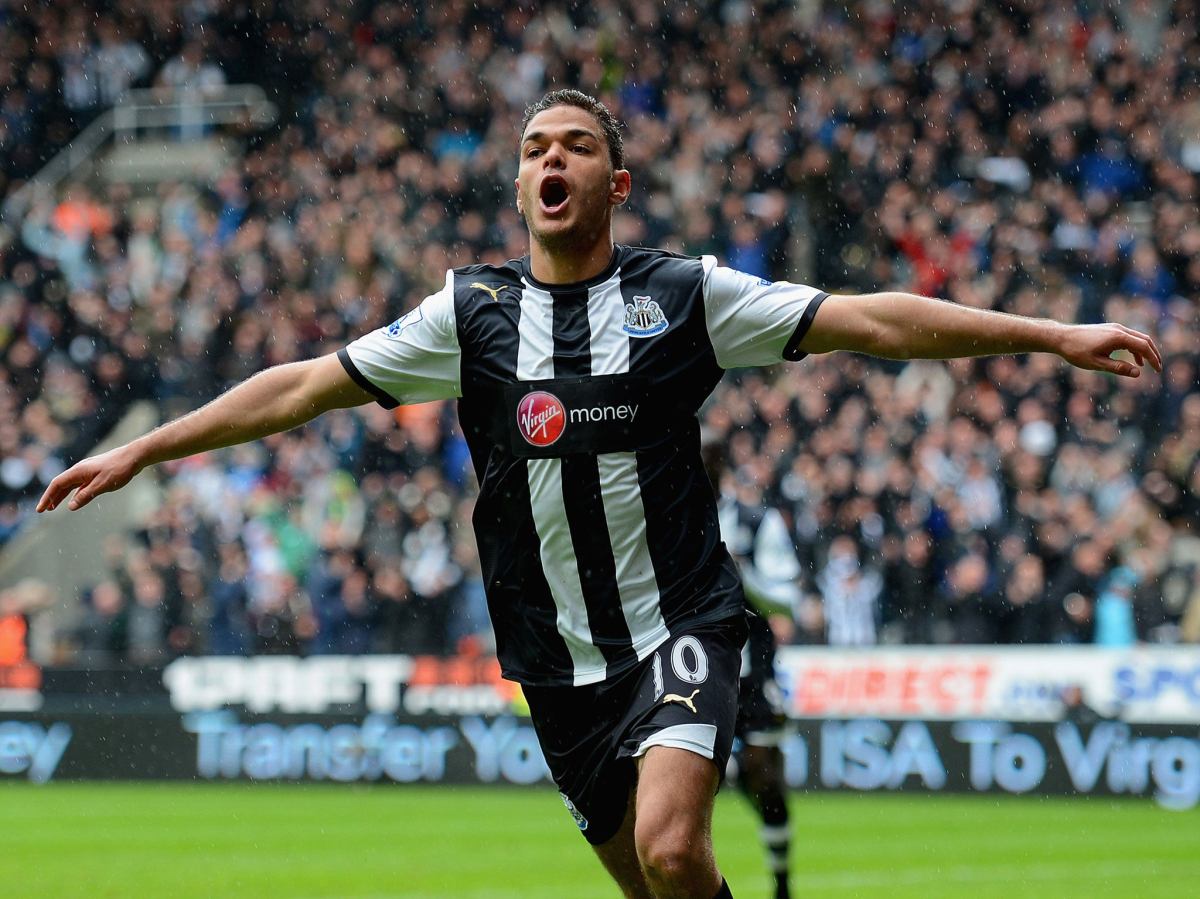
Every once in a while, whoever you might support, a player arrives at your club and changes everything. The rules are thrown out of the window, the script torn up and the unpredictable becomes a part of your weekly diet. These players are just…different. Mavericks, renegades, geniuses, ballers, call them what you want, we’ve all had at least a couple over the years.
Hatem Ben Arfa was very much a maverick and for a short time he changed what we thought was possible from a player wearing the black and white stripes and gave everyone who watched him a chance to rub their eyes and wonder if what they’d just witnessed had really happened. His time lacked consistency and even a decent ending, but he left us with a ton of amazing memories.
Ben Arfa was signed in August 2010, from Marseille, initially on loan. It became evident quite quickly that we’d signed someone pretty special. There were flashes of inspirational skill, even though it took the player a while to find his feet. But find his feet he did when we played Everton away in the September of that season. As the half was coming to an uneventful close he took a pass to feet from Wayne Routledge. He then ignored the winger’s overlapping run, preferring – shock horror – to keep hold of the ball. At first he seemed unsure of what to do, but then, having turned this way and that, he faced up his marker, swerved to the left and hit an unstoppable shot from about 25 yards into the far corner of the net. A star was born.
Sadly, less than a month later, Ben Arfa’s season was over when he was the victim of a shocking tackle from Nigel de Jong in our game away at Man City. A broken tibia and fibia would mean that we wouldn’t see Hatem in a black and white shirt for another year.
Perhaps understandably after such a massive injury. Ben Arfa’s second season started rather quietly and he failed to really dominate games at first. However, he would really make his mark in January of 2012.
For those in attendance, Ben Arfa’s goal against Blackburn in the FA Cup may well go down as one of the greatest goals we’ll have witnessed live. As he received the ball in midfield there were three defenders in close attendance. But still, he turned and ran at them. It felt like fraction of a second before he was in the box at the Gallowgate end and despite what felt like half of Rover’s defence surrounding him, Ben Arfa continued to wriggle through. Finally, with opposition defenders pretty much surrounding him, he managed to drag the ball back onto his left foot and hammer it high into the net from the edge of the six yard box.
I’d seen plenty of players who could dribble over the years, but Ben Arfa felt different. Yes, he was inconsistent, but at times it felt like he had the ball on a string. The goal against Blackburn was very much one of these occasions.
Ben Arfa briefly lit up the Mike Ashley years. It felt like an un-Ashley type signing when we got him. He came with a reputation as a little bit of a trouble maker and was said to be on strike when we took him from Marseille. Subsequent years and multiple clubs would prove this to be the case. Why else would Marseille be letting him go out on loan? And yet, perhaps with re-sale pound signs in his eyes, Ashley sanctioned the signing and Hatem became an integral part of the team that also contained Coloccini, Cabaye, Tiote, Gutierrez, Cisse and Ba and would go on to finish 5th in the Premier League.
But, having fallen out with teammates and management left, right and centre at both Lyon and Marseille the writing was surely on the wall from the moment he signed.
Hatem was one of those players who created a buzz. Whenever he got the ball there was an expectancy that something was about to happen. It became apparent that Hatem himself didn’t always know what that something was, but he was tremendously exciting and frustrating in equal measure. Often, when he should have passed he went off on some fruitless solo endeavour, but then there were times when, just as it looked like he’d lost possession, he’d somehow create a yard of space and do something breathtakingly brilliant.
For me, he had a little bit of a Jack Grealish quality, in that he was just as likely to slow play down and turn back with the ball than he was to produce a moment of magic. But in his time at the Toon, we lived for that magic!
Ben Arfa though, will always be remembered for one moment; that goal against Bolton. He took the ball from Yohan Cabaye fairly deep in his own half, but what came next took the breath away. An outrageous flick and turn took him past his marker who was left flailing around on the turf. Then it was all about power. Ben Arfa evaded a desperate tackle midway into opposition territory, somehow managing to keep his feet as his ankles were clipped. Then he just ran for goal, running through two half hearted challenges on the edge of the box before poking the ball past the onrushing keeper with the outside of his foot.
The initial turn was balletic, the drive with the ball all about brute power and speed and the finish almost an instinctive flick. If you watch it on YouTube, there’s an angle where he’s running at the camera and when he’s challenged in their half he cries out, as if he’s been hurt and might take a tumble. But it’s in the blink of an eye and rather than go over, before you know it, the ball’s in the Bolton net and the Gallowgate are up in celebration. From receiving the ball to it hitting the net took around 8 seconds and it’s something that won’t be forgotten for a long time for those that were there. What a goal. What a moment. Ben Arfa at his thrilling best.
Sadly, it wasn’t to last. Almost inevitably Hatem would clash with those in charge. Injuries would disrupt the rest of the 2011/2012 season, as well as a lot of the following year. Rumour has it that, like at other clubs, Ben Arfa fell out with his fellow players, with club captain Fabricio Collocini particularly irked by his behaviour. It’s said that Colo even went to the manager and asked for Ben Arfa to be benched for fear of a player rebellion. Once again, the Ben Arfa attitude had led to him finding himself out of favour and on the move.
There were fan protests about Ben Arfa’s absence from the squad – a Che Guevara style banner with Hatem’s face and the word Hope was regularly seen at St. James’ – and his plight become a bit of a focal point for general fan unrest at the Ashley regime and the running of the team by Pardew. He even appeared sitting with the fans for the home game against Cardiff that year. When Ben Arfa was finally loaned to Hull City, his career with the Toon was over. We would never truly see the man at the peak of his powers.
Ben Arfa’s time at Hull was short lived – amazingly he failed to find inspiration under Steve Bruce – and eventually Newcastle terminated his contract, leaving him as a free agent. His story at Newcastle was sadly over. But his story as a footballer would have much more to come with eventful spells at Nice, PSG, Rennes, Valladolid, Bordeaux and Lille following as well as an unexpected recall to the France squad. But at almost every turn, there was controversy and conflict and at present he remains a free agent.
Overall Ben Arfa made 86 appearances for Newcastle scoring 14 goals, and he never really fulfilled his potential. Still though, there can’t be many of us who wouldn’t have a goal from Hatem in their Top 10 Toon goals of all time.
As you’d expect though, there is one final twist in the Ben Arfa tale. What is he doing now? Not content with waiting things out and looking at finding another club, Hatem was last heard of as embarking on a career as a professional padel tennis player and was reported to be ranked in the top 1500 players in the world!
Never a dull moment, eh?
 Middle Age Fanclub