Book Review: ‘Mad Blood Stirring’ by Simon Mayo

‘Mad Blood Stirring’ was interesting to me for lots of reasons. First of all, as a high school English teacher and long time Shakespeare fan, I recognised the title…although not as quickly as I should have! It took me a little while for that particular penny to drop and it would be the first of many! But, the title is of course a part of a line from Act 3 of Romeo and Juliet and serves as an unheeded warning to Mercutio. It’s a warning that translates well in Mayo’s novel too.

Also of interest to me were the events of the time. The novel is set in 1815, just after the Anglo American war of 1812, which I simply wasn’t aware of. I just assumed everything was done with between the two countries following American Independence. So, the idea of thousands of American prisoners incarcerated on Dartmoor piqued my interest a bit, simply because it was a chunk of history that I had no knowledge of whatsoever.

Mayo, of course is better known for his career as a radio DJ, but he’s been writing novels for a while. I first discovered his writing years ago with his YA novel Itch, which I thoroughly enjoyed. I never did get round to buying the other two in the trilogy though and my next forray into his work was over a decade later with Mad Blood Stirring. It’s safe to say that I waited too long!

Mad Blood Stirring is a many layered story, but it revolves around the comings and goings over a few months in Dartmouth Prison in 1815. The inmates are all American prisoners of war, despite the fact that the war has long since ended. There is still no treaty for their release however and trouble is brewing. As with Romeo and Juliet, there are factions with a grudge and it’s not just between the Americans and the British guards. Ill feeling and prejudice is rife within the prison population and trouble is never too far away.

Mayo has taken the facts of this time and woven together a brilliant narrative, focusing on the lives of two inmates in particular; Habs and Joe, who develop an unlikely friendship and eventually embark upon a perhaps even more unlikely romance. Habs is one of the black inmates, forced into a block of their own by white inmates and their prejudice, while Joe is white and new to Dartmouth and its strange set of rules.

But tension is simmering across all 7 blocks of Dartmouth prison, meaning that the ‘cast’ of the novel grows and grows. The men have been away from home for far too long, conditions inside the jail are abysmal and although talk suggests that peace is close, their freedom still seems a long way off. In actual fact, America has all but abandoned them. Elsewhere, Elizabeth, the Governor’s wife is in love with the prison doctor and the whole of Block 4 are on edge and exhausted after deciding to put on their latest production – Romeo and Juliet – for the other inmates. With the threat of violence around every corner and the whiff of potential freedom occasionally drifting through the air, there’s something happening to keep us on edge all over Dartmouth prison.

And so we have a tale where despite violence and death never being far away, love, comradeship and a yearning for culture somehow manage to blossom in among the choking poison of incarceration, racism and hatred.

Mayo has written an excellent novel, with many strands to the narrative. There is a great deal truth here too, but Mayo manages to somewhat brighten up the darkness of Dartmouth prison with his characters and their dynamics. The violence here is stark – and I guess that’s to be expected – but while the tension and treachery will keep you on edge throughout, characters like Habs, Joe and King Dick (yes, that’s really his name and he’s someone who I imagined as a cross between Brian Blessed and King Ezekiel from The Walking Dead) help to alleviate that ‘edge of your seat’ feeling just enough to make it an enjoyable read. There is interest beyond the obvious hellishness of thousands of men in a remote jail.

A slight criticism might be that there are just too many characters to keep up with at times, but then I guess with over 1000 men in just one block, we were always going to come across quite a large cast. I did sometimes struggle to keep sight of Habs and Joe though, as I read about another twist in the tale or another group of dangerous inmates.

Overall though, this is a cracking read and if you’re a fan of historical fiction you’re sure to enjoy ‘Mad Blood Stirring’. Even if – like me – the genre is not your usual thing, it’s still an enlightening tale and the fates of the characters are sure to keep you hooked. A gripping read packed full of grit and violence, but with a twist of romance and hope.

I give ‘Mad Blood Stirring’

Rating: 4 out of 5.

Poetry Blog: Horizons

Readers, I’m at a difficult stage in my life. Lots of things have come together to unsettle me somewhat over the last year or so. This is a poem that is closely linked to the questions that have arisen and the feeling of not really knowing what to do.

Firstly, there’s my age. I turned 50 last year, leading to the kind of existential questions you might expect; what have I done with my life, could I have been a lot better at life if I’d tried harder and no, seriously, what have I done with my life? That kind of thing.

Turning 50 also (sort of) focuses your mind on the amount of time you might have left, which wasn’t exactly helped by heart trouble at the back end of last year. Let me tell you, if anything is going to channel your thoughts about mortality, it’s lying in a hospital bed wondering if you might die!

The heart episode also made me look ahead in a more positive way; considering ambitions and achievements and also changes to my lifestyle. In short, it made me focus on retirement and what I need to do to get there a little earlier than I might have been planning.

Horizons

Horizons,
staring back, unflinching,
dead eyed and offering no answers,
intent, impassive
yet begging us to continue with our gaze,
fizzing with promise,
aching with hope,
pulsing with the mystery of what could be
a cliff to drop blindly over,
a plain to explore,
a yellow brick road to dance down
or just a maze to get lost in.
Still, time after time we head in their direction
with no plan in place
and no answers guaranteed,
because this may well be all we have.

I wanted to convey the sense of moving forward and its inevitability, while also stressing that fact that I don’t really know what moving forward looks like at the moment. Hence, conflicting ideas about exploring and getting lost. I don’t think I’m too old to explore or take my life in a different direction, but I’m not sure how to do it. So, while there are decisions to be made and temptations ahead, I really don’t know if they’d make me any happier or comfortable than I am now. So, in essence, my mind is focused on moving forward, but in a way I don’t exactly know how to. I presume we all feel like that now and again though.

I liked the idea of a horizon and the fact that we don’t know what’s just past it. So, we can move forward, but can never quite be sure what’s next. I mean, when I went into hospital I was expecting medication and maybe an overnight stay. I kind of knew I’d get fixed, but I wasn’t ready to be told I needed a pacemaker. Nor was I prepared to feel ill for so long or be away from work for months. But, during all of that time, I moved forward, I guess.

So horizons are exciting in a way, while also holding the potential to be absolutely terrifying. If you think of the horizon at sea, then we know that over the horizon there’s more sea, but not exactly what that might hold for us. It could be a good or a bad thing. I think that’s what I’m trying to say in the poem anyway! As ever, I hope that you liked it.

Poetry Blog: ‘Adjustments’.

When I got ill at the back end of last year, it’s safe to say that it came as a bit of a shock. I should have known really, as I’d been having problems with my heart for around six months. I just didn’t really let anyone know, preferring to keep things to myself in the hope that it would just pass. It’ll come as no surprise to learn that I have no medical qualifications whatsoever…

After having my pacemaker fitted, life changed. I didn’t really realise just how poorly I was. To me, this was just a setback and while I was in hospital where the biggest ask of the day was to avoid the attention of the bloke in the opposite bed, I felt okay.

It was the recovery that would cause me problems. I was constantly tired, unable to do lots of previously routine things and ended up being signed off from work for 4 months.

The poem is about the changes that I felt happening at the time.

Adjustments

The white beard is the most noticeable thing,
and it's salt and pepper by the way, if we're trying to be kind,
but when one side of you doesn't really work
one's vanity is forced to take a back seat.
The worried looks and constant stream of questions
come from both sides; yours because you see what I don't,
mine because I feel what you cannot.
The daily walk in the early morning frost and biting cold
is new; pleasant and frustrating all at the same time,
a conundrum that's vital if I'm to get any better.
The layers help because everything and everywhere is cold 
and channeling my inner Inuit is the only way I know of fighting back
and easily the best way of hiding too.
The fractured sleep and vivid dreams are an irritant, 
but one that I have lots of time to deal with all of a sudden.
The lethargy just isn't me.
not usually,
but then, there's nothing of the usual about this present normality.
Similarly, the new sleep positions are restrictive, 
but then again the lack of choice might just set me free.
Or keep me awake.
As for the guilt and the fear, well there's no positive spin
to be found here; a work in progress is what it is I guess and I have it on the authority of those in cardiology that these things will eventually pass.
Life will move on in time and a new version of me can finally emerge, 
whenever that may be.
For now, I have to make adjustments.

The title was the first that came to me in the writing of this poem, which is unusual as I usually struggle for a title. I was thinking about the way things had changed for me while I was ill. I wasn’t working, my routine was different and even my appearance had changed. Thinking about it all was an unavoidable yet dangerous thing to do though as it never failed to make me feel down. At times not only did it feel like everything had changed, but also that it would never go back to normal.

In short, I came upon the idea of these somewhat traumatic changes being more like adjustments. I was still me…just adjusted in quite a few ways. It didn’t matter if I could shave or wash properly. It didn’t matter that for a while even 10 or 15 minutes of walking left me exhausted and it didn’t matter that I felt frightened or guilty; I had to tell myself that it would pass. And as frustrating as it was that it took so long to feel even vaguely normal, what mattered had to be that one day I’d feel like myself again, even if I’d had to make a few adjustments along the way.

I hope you enjoyed the poem and that anyone who reads regularly isn’t getting bored of me telling them I was poorly once!

P.S. In case you’re wondering, the picture is of an Inuit, as referenced in the poem. It was how I felt out walking in winter in the big coat, hat, gloves, scarf and several layers that were needed to make me feel like I might make it home from a walk and not be half human, half block of ice!

Poetry Blog: ‘A Familiar Face’

This is another poem about being poorly. I’m conscious that I’ve written quite a few poems and articles around this theme since the run of the year, but I’m afraid you’ll have to forgive me for getting a little bit obsessed with the failure of my heart.

Luckily, people are always very complimentary about these poems and I’ve received some incredibly supportive messages as I’ve been recovering, which has been a real help. I keep finding these poems tucked away in notebooks on scrap paper and figure that I might as well put them out as a blog. I’ve said this before, but if I don’t they’re just words on a bit of paper that no one other than me will read. Well, what would be the point of a blog in that case?

A Familiar Face

Amazing how, after all this trouble and time,
the answer could be hiding in plain sight.
The thing you feared the most, yet least expected,
the solution to the mystery you'd never have suspected
has come back to haunt you, bring chaos where there was relative calm.

For some time now, you've sensed its approach,
felt the uncomfortable sensation of its hot breath on your neck.
The thing you wouldn't name, but still recognised,
the terror that you lived with, but couldn't look in the eyes
lands a blow to leave you weak at the knees
and grabbing at thin air for balance.

So now, a new danger from a familiar face,
as you fight against yourself, your own failing,
knowing that whatever you do, whatever changes you make
may not be enough
and while all around you wish you well,
offer love, support, concern,
you have never felt so helpless, so frightened, so alone.

There were question marks, asterisks, scribbles and arrows all over this poem when I found it, which suggests that it was another one written in the early hours. The scribbles tell me that it might have been one I wrote after first deciding to go back to bed, but then sitting back down aware that there was another idea or another line still stuck in my head. I’d have been more sleepy than I realised, hence the mistakes and scribbles.

It’s another poem about being ill. This one focuses on the frustration I felt at the fact that my heart worries had come back to trouble me and the fear I had about just how bad I felt post operation.

When I first got poorly having had an episode of palpitations and dizziness in May of last year, I remember explaining to my wife that it frightened me and that I was determined not to end up back in hospital. A month later I was in hospital having tests on my heart. And then, just the other day I read a Facebook memory about a run I’d done in training for the last 10k race that I ran. It was early October of last year and I’d just done my last training run of about 12k and commented that I’d do anything at all to avoid anymore trips to the cardiologist. Sadly, less than a month on, I’d not only collapsed, but had been admitted to hospital to be told the next day that I’d have to have my pacemaker fitted. Life comes at you fast, as they say!

Fingers firmly crossed, but I feel better than I’ve felt in a while, despite a small setback about a month ago. Here’s to less heart-related poetry!

Poetry Blog: ‘You can’t unring a bell…’

A poem with a message, this one. It’s about not giving up and for me personally, it’s about the health problems I’ve had and the importance to me of not giving in to them. It’s about getting better. If it means something to anyone else or helps in any way, then that’s a rather lovely bonus.

I know that everyone has their problems, their bumps in the road and that some people have it far worse than others; far worse than me. But I’m a big believer in working my way back into the right frame of mind or the right headspace. So this is a poem about the fact that we can’t change a lot of what happens to us. It happened. It will leave a mark. But for me personally, I think it’s important to keep moving. For me, I need to recover and there’s been a lot of telling myself that lately.

You can't unring a bell.
its sound resonates across rooms, miles, borders
and the act that made the sound cannot be changed.
Eventually, the noise will stop, but the memory will always remain.
You can't illuminate the darkness with a permanence
that will mean you never have to stumble down a path again.
What's done is done now though.
Sometimes it will feel like one beating too many,
the volume of the punches thrown
is sure to leave bruises
and you'll feel like you can't get up.
Haul yourself to your knees,
grab someone or something for support,
clear your head and try, as best you can,
to get back up on your feet.
Let your eyes adjust to the darkness.
Let you body stop aching.
Breathe and then feel your way back, however slowly, into the light.

The poem started with just the first line. I heard it somewhere – I don’t remember where – and I really liked it. I didn’t really know what it meant, apart from its literal meaning. So, I wrote it down on a scrap of paper to come back to. When I got back to it, the poem just flowed around the idea of moving on from whatever it is that happens. You can’t unring a bell, but it will getting quieter.

I understand that it’s never just as simple as that and that’s what I was referring to with the metaphor of the bell. Once it’s rung, it’s rung. Once it’s stopped making the noise we will still hear it, still remember what it sounds like. We’ll suffer with the things that happen to us and we perhaps won’t forget them. But it’s hugely important to try and move on.

I hope you liked the poem. It’s a short one, but I hope it means something to more than just me.

Poetry Blog: ‘Reach’.

A couple of weeks ago I posted a poetry blog and a bit of an angry rant of a poem called ‘Simple as that’. That one was a poem about the troubles I’ve had with my heart in the last few months. Well, apologies because I’m writing about the same thing again. I suppose this is inevitable as my health dominates every day at the moment, but I’m sorry if this seems like I’m raking over old ground. You can take it from me though, there’s a lot to talk about on this subject!

This poem is, in a way, the partner poem to ‘Simple as that.’ Where that one was pretty much furious in tone, this one could maybe be viewed as me feeling just sick and tired of it all. It’s one written when I wasn’t sleeping so well, so probably written around 2am one Winter morning and I would have felt like just giving up.

Anyway, have a read.

Reach

You're not quite in any kind of hell, 
and while you're very definitely moving forward
it's sometimes hard to tell,
like trying out the treadmill in diver's boots,
a head full of questions, but no answers
and of other people's made up thoughts and opinions
as the paranoia kicks in and leaves its mark
alongside all of the other scarring.
Suddenly mortality is on the agenda
and you sleepwalk your way through hours, days,
contemplating just how long you might have left.
Every stretch, every reach, every twist is some kind of pain,
the opportunity to hold someone who matter has gone,
replaced by something tentative, mechanical.
Some days are more positive, so you lose yourself in song,
contemplate enjoying things again
and force yourself not to think that you're just glad to be alive,
because that particular platitude feels like nothing more than consolation.
Every piece of good news and every milestone is blighted by doubt.
One day things will be normal again,
your smile not forced, the back of your mind not crowded with clouds.
For now, moving on is just out of reach.

At the time of writing this poem it just felt like I was never getting better. Yes, I’d be able to do a little bit more every day, walk a little further, maybe even do some dishes, but I found it very frustrating. I’d gone from being very fit and capable – for my age – to being very slow and poorly and old! I really didn’t enjoy this at all!

I’d been told not to raise my left arm above my head for at least a week, for fear of dislodging my pacemaker wires, and that this was a process that would be difficult and uncomfortable for 6-8 weeks. Six to eight weeks of having pain when you lift an arm up! It meant that shaving, washing, washing my hair etc were difficult to say the least and I needed help getting in and out of my clothes. I mention mortality in the poem; not because I thought I might be nearing my end though. It was just that I used to be out on my daily walk, knowing that when I got home the day would be more or less at its end as I wouldn’t be able to do a lot more. It felt like I was wasting time and I began to think about that in terms of having already probably lived half of my life. It was just about what I’d be able to fit into what was left, I suppose.

Things have got better. I’m nowhere near where I want to be but know that it’s going to about steady progress with the odd stumbling block. I hope you liked the poem.

Poetry Blog: ‘Simple as that’

When I was ill – think death’s door to ramp up the drama, dear reader – I had numerous sleepless nights and chunks of these solitary hours were taken up by writing poems. Although I talked a lot about what was going on with my weakling heart, there was still a lot left unsaid. You can’t burden people with everything that’s going on in your head, can you?

As I began to get better and slept more, I sort of forgot about these poems. Some were repeatedly drafted, others clearly unfinished; snapshots of how I was feeling. Some were in a notebook, while others were scribbled down onto random bits of paper retrieved from our ‘drawing cupboard’ which still somehow exists, despite both kids being way beyond sitting at the table drawing. All were collected up and thrown together with the vow that I’d revisit them when the time was right. I took a picture of this one complete with scribbling, arrows, asterisks and late night handwriting. Quite a bit to decipher some months later!

This poem is a bit of a rant, to say the least and the more I read it back, the more I’m convinced I was channeling my inner John Cooper Clarke, yet without his gift for words.

'Simple as that.'

This heart of yours is having a laugh; it's as simple as that.
The sole aim of the holiday was just to relax
but your body wouldn't even allow that 
and instead you collapse at the airport, then
practically pass out on a promenade bench in the heat,
before having to call for help weeks later, 
when giving out paper became a bit too much for your health.
False hope in the hospital once again ended
when they then decided that your heart is need of being mended
and you're treated to an operation surely designed for pensioners
that you cannot help but keep on mentioning as
you're put on a ward with people 30 years older than you
and a crazed Slovakian, who laughs in his sleep and howls at the moon.
Consolation is thin on the ground, unlike the tea 
and the biscuits that shouldn't really be allowed,
you another have scar that is ugly and crap and in truth
your chest is beginning to resemble and Ordinance Survey Map.
Back home you discover a penchant for pyjamas that was never there before
style, much like your dignity has now been slung across the floor
and any remaining semblance of cool has been traded in,
there's no doubt about that, without so much as a crossed word,
let alone a fight and now, my friend, you look like a twat.
On top of this, you cannot leave the house without a hat
to keep you warm, cannot get to sleep until it's almost dawn,
cannot wash properly, cannot tie your own fucking laces, 
cannot walk down the street with anything other than shuffling paces,
you cannot run, you cannot dress yourself, cannot rant, cannot rave
and now you look like a tramp because you cannot shave
meaning that, as December looms with its festive banter,
your surprisingly white beard has you turning into Santa
and as life is forced down this prematurely ageing path,
this heart of your is having a fucking laugh.

So clearly I was a bit on the angry side then! And it’s easy to look back now and smile about it all, but believe me it was a horrible time in my life. Around 4 months of being stuck either in hospital or at home, feeling a bit sorry for myself, fending off peoples’ best wishes and enquiries and bein unable to do very much at all. And even before that, we were unable to enjoy a holiday because I collapsed in the airport. I suppose it’s all there in the poem! Apologies for the swearing if that’s offensive, by the way. Just words to me and words that had to be in there in order to capture my feelings, but I know some people don’t like that kind of thing.

I rarely bother with rhyme but in this poem I’ve made a conscious effort to use it. I was determined though that it wouldn’t be a simple rhyming poem. Instead, I opted for mixing up the rhyme so that while for large parts of the poem it’s quite traditional, occasionally I threw in a bit of internal rhyme just to mess with the structure. I wanted to do this just to try and reflect the disorder in my life at the time. I mean, for quite a while I never knew when I was going to simply fall asleep – often in the middle of a conversation – so it was hard to enjoy an ordered, planned day!

I wanted to present the poem as a bit of a rant and so there aren’t many end stops in there. Believe me though, when you’re sat on your own, wide awake at 3am, you can become prone to a bit of a rant, even if they have to be quiet ones!

As ever then, I hope you enjoyed the poem. Feel free to let me know what you thought!

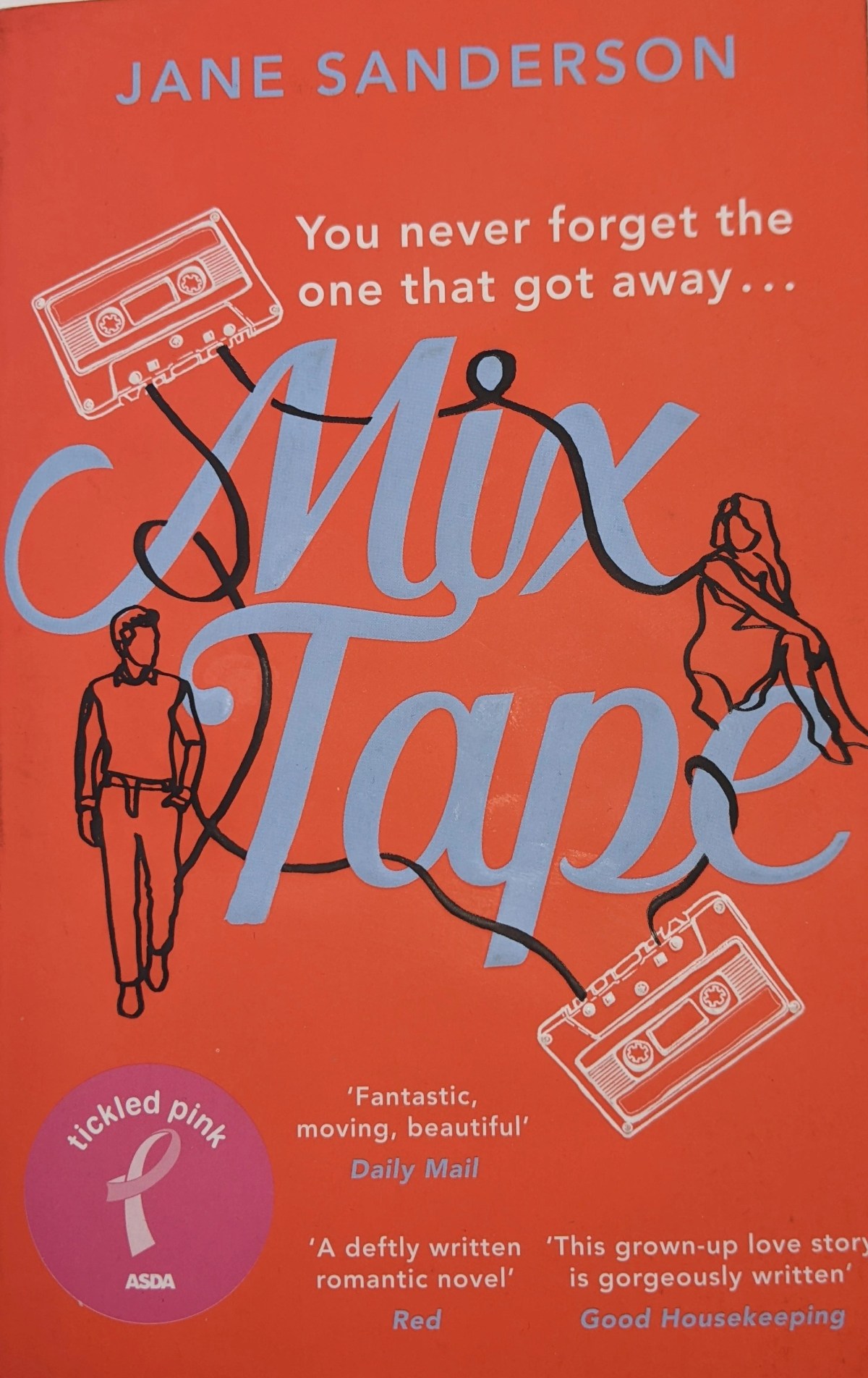
Book Review: ‘Mix Tape’ by Jane Sanderson

They say that you never forget your first love, don’t they? I mean personally, I’d like to wipe the entire thing from my memory, but it’s pretty much impossible due to the nature of that particular car crash of a relationship! But I’m guessing it’s very different for lots and lots of people who manage to cling on to those warm and pleasant vibes for life.

Dan and Alison are two such people. And despite the somewhat life-changing nature of their break up and the fact that they’ve made successful lives separately elsewhere, both retain strong feelings that unbeknownst to them, are just waiting to be dug up.

‘Mix Tape’ is a story that millions of us can relate to. First love, first lust, first dates, first kiss, first fumbles. Whatever romantic firsts they were, they’re all in the back of our mind somewhere just waiting for an image or a film or just a phrase to release them back into our consciousness for even a few minutes. With Dan and Alison it’s music that’s the key to their past as well as their future.

Having fallen headlong into teenage love and discovered a mutual passion for music as well as each other in the 70s, fate intervened and life, however painfully, moved on. Now, many years later and into a new century while living in new countries, social media and music could be about to intervene and spark old feelings back into life.

If you’re a music lover, you’ll love this book. It was the link to music that prompted me to buy it in the first place. I even wrote a blog about mix tapes (link below), having listened to Jane Sanderson being interviewed about the book on BBC Radio 6 Music with Lauren Laverne. But it will appeal to the social media devotee in us all too, as well as those who are just soppy enough to enjoy a good love story.

Whatever Happened to The Mix Tape?

In their younger years together Dan had made mix tapes for Alison as a way of expressing himself, while also introducing her to new music. Years later, via social media their choice of songs will serve to help them get to know each other once more, as well as giving oxygen to a flame that never quite died out, despite the way their time together had ended.

Beginning in 1970s Sheffield, the story jumps from back then to the present day throughout, showing us the various contrasts in the lives of our two protagonists. We learn that after leaving Sheffield, Alison somehow ended up on the other side of the world in Adelaide. She is successful and seems happy. Meanwhile, Dan’s life has changed too and he too has moved away from his home town, now residing in both Edinburgh and London. He has turned his passion into a career and is now a successful writer as well as a music journalist. Both appear to have made good lives for themselves and moved on from their passionate teenage time together. But appearances can be deceptive.

‘Mix Tape’ is a lesson in the power of both music and social media. It shows how one simple click can change lives, both for better and worse. Music is the bond that keeps Dan and Alison together, however far away they might be from each other and so when Dan rediscovers Alison via Twitter and sends her a song as a reminder of the old times, we sense that it won’t stop there. We know that this first love is one that still has unanswered questions. It’s just a case of whether they’ll remain unanswered…

The characters are really relatable and I found myself really liking both Dan and Alison. But away from the characters, the story may test your morals too. But I’ll leave you to discover that for yourself. Sanderson’s brilliant descriptions of sights and sounds also bring her locations to life too. So it was nice to be informed of both a Sheffield that I hadn’t visited – as opposed to the modern day city that I’d say I know quite well – as well as the delights of Adelaide with its flocks of parrots, natural beauty and year round heat.

The use of songs as a narrative device to help Dan and Alison reconnect is brilliant too. Not only does it give us a real sense of what the characters are about and who they really are, but it has an effect on us as readers too. I found myself connecting with the songs that became the playlist for the narrative. Where I already knew the song I’d invariably have a memory connected to it and when I didn’t know the song, I looked it up, so ‘Mix Tape’ has now added some new songs to my playlist.

‘Mix Tape’ is a brilliantly written piece of fiction. The story will keep you engaged throughout and you can’t fail to get involved in Dan and Alison’s journey. The music, social media and geography of the story also give you a lot to get your teeth into as a reader. But, most importantly this is a tory about good people finding each other, despite the barriers that their lives put in place. I’d thoroughly recommend ‘Mix Tape’ – a really well written page turner that you’ll only put down so that you can listen to some of Dan and Alison’s favourite songs!

I give ‘Mix Tape’

Rating: 5 out of 5.

Poetry Blog: Could I Just Apologise…

This is a poem written while I’ve been away from work, poorly. I’ve had a lot of time on my hands – just over 3 months – yet been unable to do a great deal. Sometimes I’ve been restricted to simply sitting around, lacking the concentration span to read or watch anything on telly. And what better to do while sitting around than to think things through?

One of the things I’ve thought a lot about is myself. That’s not because I’m some kind of self obsessed ego maniac, but rather I’ve had a lot of time to be critical. This has been mainly about my tendency to hide my feelings, but I’ve also done a lot of thinking about the kind of person I am. I mean, we all need a little bit of target setting and self evaluation, don’t we?

Anyway, the result was this poem where I pretty much admit to being a bit of a let down!

Could I Just Apologise...

Having played at being an adult for every last one of my adult years,
having bumbled through for longer than I care to remember,
having come to the realisation that I might never make
the fully formed person that perhaps you may have expected me to be,
could I just apologise...
for still chewing my nails or tapping them on my teeth,
for resenting having to bother cleaning said teeth,
for the kitchen ceiling and its unfinished paintwork, stretching 
into however many years it's been incomplete for,
for not understanding Bluetooth, especially in the car and
for the obsession with trainers, books and football.
I should also say sorry for the inability to pick up the phone or ever answer it,
for inhabiting my own little world,
for retaining the need to constantly amuse myself above all others,
and for the tendency to zone out while people talk.
And while I'm at it, I'd best apologise for the for the forgetfulness, 
for the garden,
for leaving plugs switched on,
for never paying the water bill until the final reminder,
for not paying cheques into the bank,
for the terrible wrapping,
for the piles of post, the piles of notes
and the piles of clothes,
and for slowly turning into my dad, but with the thought processes
of an 11-year-old.
Finally, sorry for the fruitless ideas,
for the skinny body with the pot belly,
for never tying that plant up,
for buying too much chocolate and the addiction to crisps, 
for the aversion to vegetables...and fruit
and for the many thousands of things across the years that I can't even 
remember, but have no doubt have happened.
 

If I read that poem back, it feels like it’s addressed to my wife, which would feel appropriate. Even if we discount the last twenty odd years, I feel like I’ve got a lot to apologise for! Having hidden my illness from her for around 6 months, that would make a good place to start.

In terms of being quite an awkward personality and at times maybe a little bit of a pain, I’ve got a lot that needs explaining. The apologising is kind of tongue-in-cheek though. I’m sure I’m not any more of a pain to be around than lots of others. Everyone has their foibles, after all. But I’m aware of my faults and in the end they seemed to be something I could make a light hearted poem out of rather than something to worry too much about.

I hope you enjoyed the poem. As ever, feel free to leave a comment as it’s always interesting to see what people make of my poetry.

Poetry Blog: Getting There

This is a poem I wrote about the early stages of my recovery from having pacemaker fitted. It happened in November – as you might know, if you read regularly – and especially in that first month or so, it was pretty much all I thought about. Still, three months on, it dominates my days.

It’s a simple enough poem, about the kinds of things I would find myself doing in those early days. Things like avoiding using my left hand side or getting used to the sight of another scar on my chest and just staring at it for long periods of time.

I didn’t see many people during that time; the fatigue and the pain and discomfort just made me want to hide away, but I did get a lot of messages from concerned friends. And when they’d ask me how I was I’d just tell them I was ‘getting there’ because I didn’t know what else to say and didn’t think they’d really want chapter and verse about how I really felt. It was also the kind of thing I told myself when I was feeling low or poorly – I must be getting there. Hence, the poem, written during any one of a huge number of sleepless nights, downstairs while every else in the house slept soundly above.

Getting There

Check your watch, swiping left three times,
lie awake, listening as your heart pounds,
strong but more vulnerable than ever now, you feel.
Trace the lumps in your scar all along its length, 
then follow the shape of a matchbox jutting out under your skin
and stare endlessly at these ugly changes in the bathroom mirror,
making sure that when you reach for something
it's on your right, never left.
This is the routine now.
Follow it like a child learning dance steps until it becomes second nature,
losing yourself for God knows how long
in a train of thought that feels like it might never switch off
and then remind yourself of them 
and however bad you feel, tell anyone who asks
that you're getting there.
 

So, since it all happened I’ve never been more aware of my heartbeat. At least nowadays it feels regular, unlike before. And then there’s the scar; a new one to go next to the one I’ve had for over 40 years now from open heart surgery. This new one is only about 3 inches long and at times looks fairly neat and tidy. However, sometimes it turns purple and has lumps in it due to the wires that come out of my pacemaker. Attractive, no?

On top of that there’s the actual pacemaker, which juts out of my chest – not literally – and is fairly visible under the skin. A friend recently explained that his grandad had one – which made me feel great, as you might imagine – and that it looked like someone had put a matchbox under his skin. So, that’s where that line came from.

The last part of the poem and the ‘them’ refers to my family. They’ve had to nurse me through this time, my wife and daughter especially. They were there when I passed out the first time as a result of palpitations and then it was my wife who took me to Accident and Emergency on the afternoon that I was admitted to hospital and her and my daughter who visited during the week I spent on the ward. It was especially difficult to watch how worried my daughter was; too young for all of this. So, when I would feel down about my health I always knew that I couldn’t let them see it and I had to just find a little bit more strength in order to get through the day.

As always, I hope you enjoyed reading the poem. Feel free to let me know what you thought in the comments.