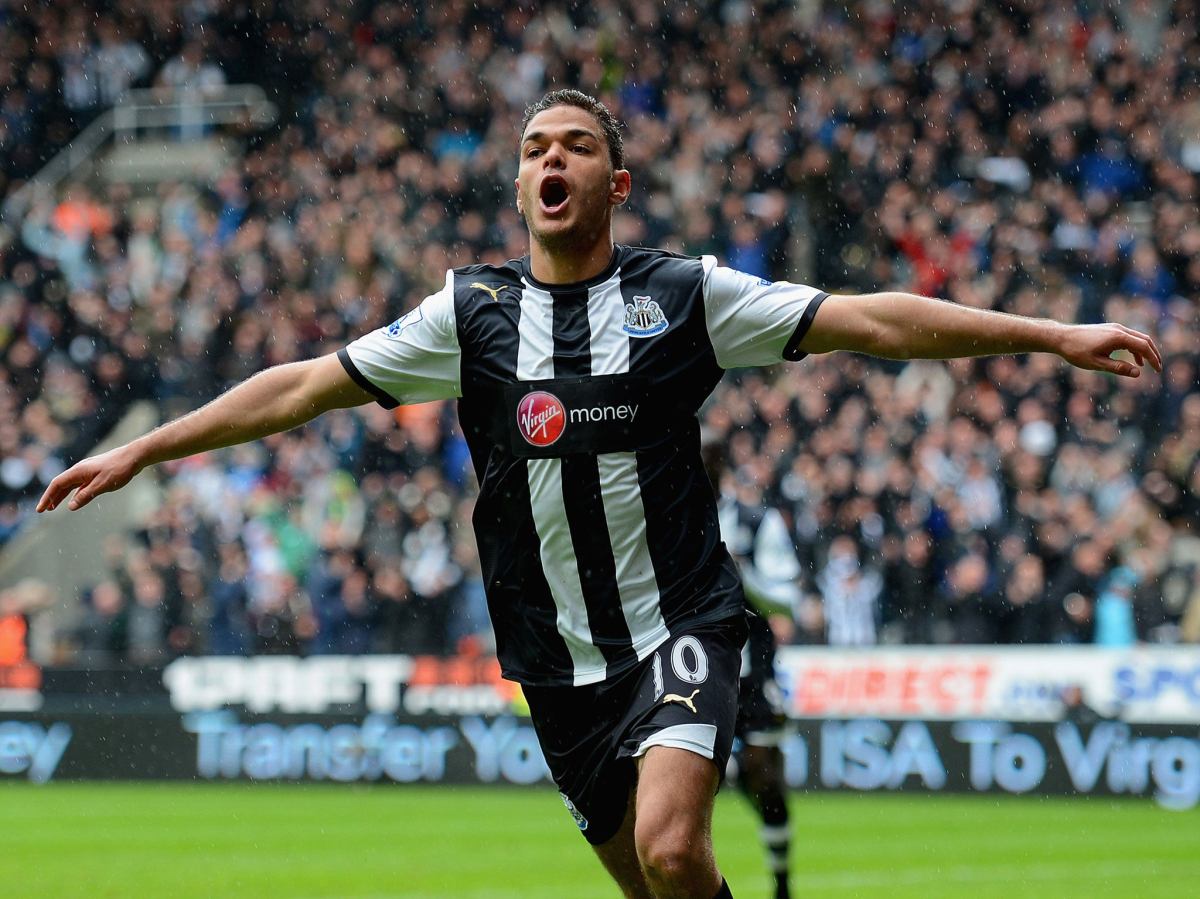
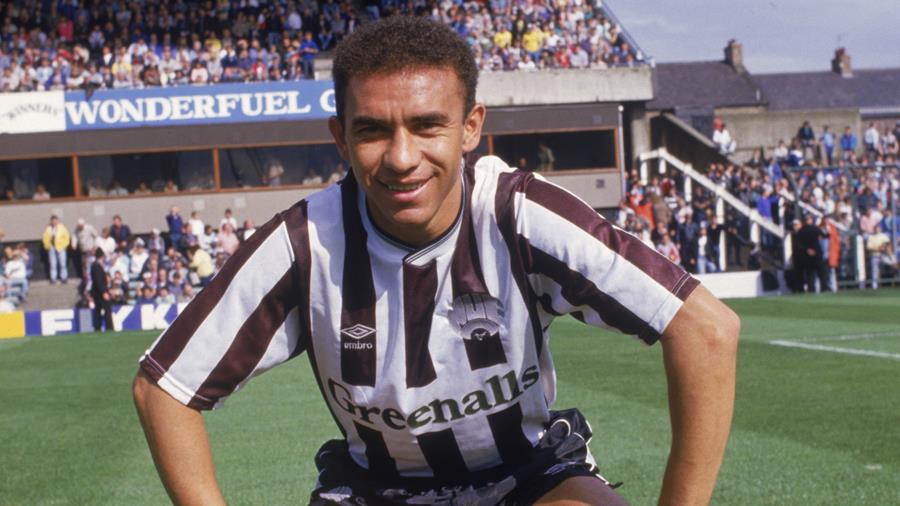
Gallowgate Cult Heroes Number 8: Steve Watson.

At 16 years, 7 months and 9 days old, Steve Watson was our youngest ever debutant. And although he made his debut at home, during a time when I went and watched us play wherever and whenever, I missed it. A big thank you to Happy Shopper cash and carry in Blaydon where I was working at the time, for denying me the afternoon off to go to the match. I missed a bit of NUFC history, but I bet the sweet aisle looked amazing by the end of my shift. So, swings and roundabouts, eh?

A week later Watto would make his full debut – I was there for that one -, starting the home game against Derby, getting Man of The Match and assisting in a 2-0 win. He’d go on to play 24 times in that first season while also playing for 3 different managers as United struggled against relegation to the old third division before saving themselves on the final day.

While primarily playing as a full back, Watson played all over the field for the Toon. He made regular appearances in midfield, but also played up front on occasion too. In fact, on one such occasion after coming on as a sub at Liverpool in a League Cup tie, he grabbed the only goal of the game and still one of the most memorable I’ve ever seen and cemented his place as a cult hero in the eyes of many mags.

As the tie moved towards full time Newcastle broke out of their own box and Peter Beardsley took the ball from midway inside his own half from a headed clearance. Watson spun in behind the two defenders and Beardsley played a through ball that sent him a little right of target, but still heading towards goal. Watson still had a lot to do and little support, but twisting and turning he made his way to the edge of the box before chipping David James for a fantastic solo effort. An inspired moment that possibly no one in the ground would have seen coming and a brilliant goal from a very talented footballer.

Steve had produced an even more outrageous piece of skill years before though. Even as a 16-year-old he had an eye for something different. And so it was that his particular take on throw ins arrived in 1991. Steve had a good throw on him anyway, but little did we know he’d been working on something special; the somersault throw in! He needed a bit of space around the pitch to do it, but on occasion he’d bring out a throw where he would run forwards towards the line before performing a kind of forward flip, ball still in hands, and release it as he got back to a standing position. I’m hard pushed to remember where I saw it first and I can’t recall any particular successes, but it was brave to say the least, from one so young. Entertaining, as well!

Steve played for Newcastle from 1990 until 1998, taking in life in the then 2nd division, but mostly playing in the Premier League. He was a valued member of Kevin Keegan’s Entertainers before playing under Kenny Dalglish too. But then, mere months after a substitute appearance in the 1998 cup final, he was on his way to Aston Villa in a £4m deal.

For me, Watson seemed to suffer because of his versatility. Too often he was kept around to fill in various positions, never quite nailing one down for himself. Injuries didn’t help Steve either, but in all he never quite fulfilled his early promise. He always struck me as a good athlete; quick, agile and strong. He was a good attacking full back and so presumably would have made an excellent wing back in today’s systems. But alas, despite 208 appearances across 8 years at the club it felt like he never really cemented a place in the first team, which given his obvious talent was a real disappointment.

Some Toon fans might be able to draw a parallel between Watson and Elliot Anderson. Both were local lads that excited the fans. Both were skillful and athletic and should have had a bright future at the club, but both ended up leaving to further their careers. In Watson’s case, as the club’s youngest ever debutant, it felt like a real waste. I remember being excited watching his full debut against Derby and it wasn’t long before I was wondering if this was the next player to follow on from the likes of Beardsley and Gazza. Sadly, although an undoubtedly excellent player, Steve didn’t quite hit those heights.

Steve went on to have a long career, playing for Villa, Everton, West Brom and Sheffield Wednesday before retiring in 2009 after a long term injury problem. After that he teamed up with Lee Clark as a coach at Clark’s Huddersfield. Subsequent coaching moves took him to various clubs such as York and Gateshead and Steve is now the manager of Darlington in the National League North.

Another cult hero and another local lad done good!
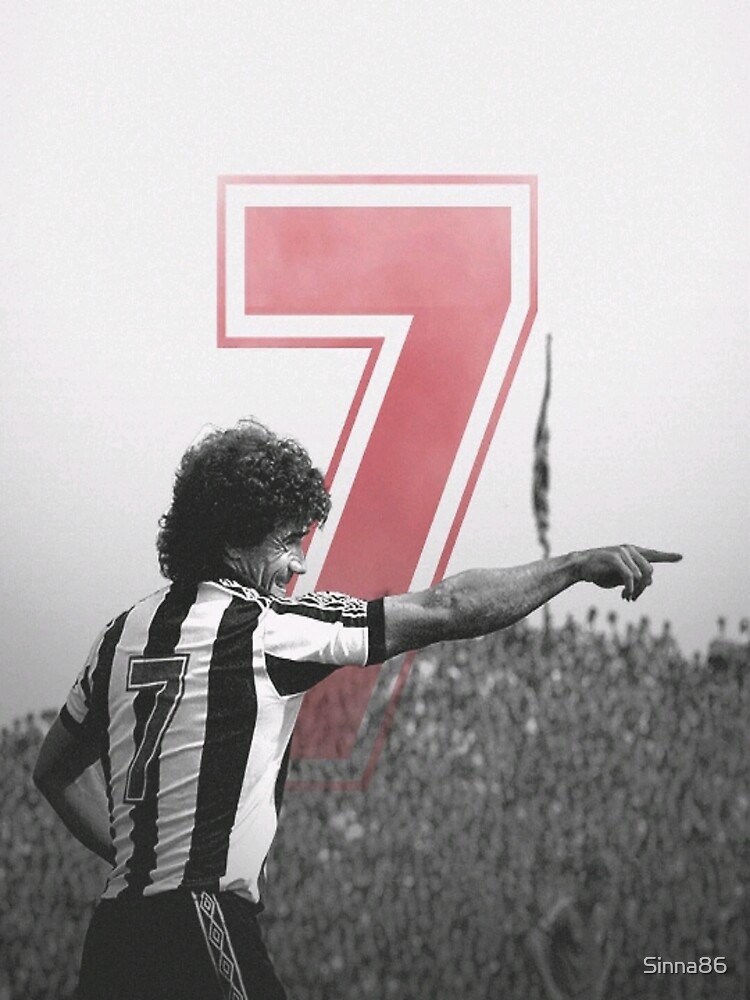
NUFC: The Magnificent 7s

For the whole of the time that I’ve supported Newcastle United I’ve had a bit of a fascination with wingers. From great to good to downright appalling, I’ve always been on their side, always willing them to do well whatever their ability or success rate. Even Wayne Fereday…

Part of this stems from the position I first took up when I started going to games. This was the late 70s and when I was around 6 0r 7 I was lucky enough to get a season ticket. I say lucky enough because of the story surrounding it, rather than being lucky to see a great side. The Newcastle United of this period in time was decidedly average; and that’s me being complimentary.

To cut a long story short, me and my dad got complimentary season tickets because I’d been very poorly and so it was that we took our seats high in the East Stand, where of course wingers came into sharp focus. And so I was sold on them from the start.

I also liked wingers because, like me, they were often slight in their build. Slim, skinny, whatever you want to refer to it as, that was the typical winger’s build. So, because I was built like a lot of them and also played as a winger, they became my favourites.

We’ve had some great wingers in our time. However, despite the likes of Ginola, Robert and Gordon, it’s the right sided players I’ve decided to write about on this occasion. The number 7s. That said, of the ten that I’ve picked out, not all were strictly wingers. They all wore the number 7 shirt with pride though.

I’ve picked out ten number 7s, but will write about five at a time. These are just my choices and I make no claim that they are the best number 7s ever to wear the shirt. However, all of them had something special. Some of them didn’t always play as wingers and also some of them didn’t always wear the number 7. But they were all a Magnificent 7 at some point. Here’s my first five.

Micky Burns. Micky Burns was my first ever favourite player. Yet, it was so long ago that I don’t remember a great deal about him. I can picture him though and what I do remember is that he was small and quick; a busy player who never seemed to stop working for the team. Burns played for us between 1975 and 1978 and scored 39 goals in 145 games. He was actually more of a forward than a winger, but was played – as much as I can remember – on the right hand side, scurrying up and down the flank, pressuring defenders and putting in crosses. A kind of Nobby Solano or Jacob Murphy type figure from the 70s, but without the flair or shithousery. Despite my sketchy memories of Burns, he remains one of my favourites to this day.

Paul Ferris. Paul Ferris was one of those players that should have been the next big thing. And for a moment, he was. But then injury struck and his career was over before it had even properly started. Ferris left Lisburn in Northern Ireland to sign for Newcastle when he was just 16 and became our youngest ever debutant in 1982. Being Irish, the inevitable comparisons to George Best weren’t far away and Ferris was indeed quick, tricky and skillful. His fleeting performances promised much before injury robbed him of a top class career. Ferris only made 14 appearances for us, scoring just the one goal, but for Mags of a certain vintage he’ll always be one who promised so, so much. Paul actually went on to have a successful career as a barrister, as well as working as a physio in our medical department during Kevin Keegan’s tenure and as part of Alan Shearer’s backroom staff. In amongst all of that he’s written books too, including his brilliant biography The Boy on The Shed which I reviewed on the link below.

https://middleagefanclub.wordpress.com/2020/10/19/book-review-the-boy-on-the-shed-by-paul-ferris/

Kevin Keegan. No look at our number 7s would be complete without at least a mention of Kevin Keegan. The then England captain and twice European Footballer of the Year signed for us seemingly out of nowhere in August 1982. I remember it vividly. I was on a beach in Spain on a family holiday and found out the news – in those pre internet days – via the back page of another nearby sun worshipper’s tabloid! It’s safe to say that Wor Kev would go on to transform the club. Keegan was relentless as a player and although he wasn’t a winger, he was a number 7. Despite his advancing years he still had a bit of pace and skill and his know-how would be invaluable in getting us out of Division 2 in 1984. Superstar or not, his work rate was always high and he never shirked a challenge and while Keegan wasn’t a scorer of great goals he was a clinical finisher who made excellent runs and had a happy knack of being in the right place at the right time. King Kev made just 85 appearances in black and white, scoring 49 goals in that time, but his time as a player was transformative. Not only did he give supporters hope, he showed people just what the club could become as well as being a huge influence on future superstars like Chris Waddle and Peter Beardsley. From my own point of view, I don’t think I’ll ever forget Keegan as both a player and a manager. Surely a statue is long overdue?

Kieron Dyer. Dyer was another player who promised much but sadly, delivered on a scattergun basis. Signed from Ipswich by Ruud Gullit in 1999, Kieron was an exciting addition. When he was on form he could be unplayable, but injury and controversy off the field often dogged his career on Tyneside. Personally, I loved watching him play. Dyer had a fantastic turn of pace which was a joy to witness in the same side as the even quicker Craig Bellamy. He was a clever player with an eye for a pass as well as a gift for making runs to get on to through balls. One of my favourite Dyer goals was the one he scored to clinch the win at Everton away in 2000. Alive to a flick on just in his own half he clipped the ball past a defender then surged through towards goal, dinked it over another defender making a last gasp challenge and then just as the keeper came out, Dyer placed a side-footed lob straight over him and into the net. The goal had everything; power, pace, guile, precision and he raced over half the length of the pitch in what felt like about 3 seconds! Being in the away end at Leeds in 2003 as he slammed a close range half volley into the net at the Kop end was a treat too. The lob sums Dyer up, for me though. He just had that cuteness, that eye for something different. His game wasn’t about power; just pace and skill. And then there was the bravery. Dyer was never afraid of getting clattered and while he didn’t necessarily fly into tackles, he never shirked a challenge if it meant moving the ball on for a team mate and then taking a late hit. I think my everlasting memories of Dyer will be firstly his two assists in the Champions League game away at Feyenoord, but probably more famously getting sent off for having a fight with team mate Lee Bowyer on the pitch in the home game v Villa in 2005. I missed the entire incident as my eyes just followed the ball, but it was strange to see the two of them sent off. We’ve all seen the footage since and of course that of Steven Taylor getting sent off in the same game…as a sniper took him out, apparently. If you know, you know.

Len White. Make no mistake about it, Len White is one of the greatest players to ever wear the black and white stripes. A Yorkshireman who was with United from 1953 to 1962, playing 269 times and scoring an amazing 153 goals. He is our third top scorer of all time and yet rarely receives the acclaim that it would seem he deserves. It seems we can list lots of our great goal scorers and not give Len a mention. There’s no statue, little reference around the ground and no spot in the Hall of Fame either, as yet. I never saw White play and have had to rely on my father’s sketchy testimony and a bit of research in order to form an opinion, but by all accounts…what a player. White started as a winger, but would move inside on occasion and notably once Jackie Milburn had retired, to become our striker. I’m told – by my dad – that despite his small frame, White was as brave as a lion as well as being quick, skillful and an expert dribbler. And it doesn’t take a genius to work out that he was a cracking finisher too! With a record of more than a goal every other game, the evidence speaks for itself! White can also lay claim to being one of the last winners of a domestic trophy for Newcastle, winning the FA Cup in 1955 and having a goal disallowed in the final.

So there we have it. My first instalment of our Magnificent 7s with another to come soon. Remember though, these are only my picks and are based around my own opinions and in some cases, some second hand information. That said, who would you add to our Magnificent 7s?

NUFC: Ten Things to Love About Bruno.

As we approach the end of another Premier League season rumours seem to be intesifying about Bruno Guimaraes. Across every type of media there seems to be almost a desperate push for the move. Whether it be Manchester City or Arsenal, PSG or Real Madrid, someone somewhere seems to think that Bruno is better off elsewhere.

We could go on and on about why, but that’s not the point of this piece. Southern based press, conspiracy theories and all that can wait. People seem to think that Bruno needs to leave but I’m guessing the vast majority of Newcastle fans would disagree.

Bruno Guimaraes joined Newcastle in January of 2022 from Lyon at a cost believed to be in the region of £36 million. He wasn’t quite an instant hit as Eddie Howe held him back in order to properly acclimatise to the rigours of the Premier League. Instead, he would come on as a sub in a number of games before finally making his full debut away at Southampton. And what a debut! It was in this game that Bruno scored his first Toon goal – an outrageous back heeled volley from a Dan Burn header across goal, right in front of the travelling fans. A star was born!

It’s fair to say that the love affair started that evening and has moved on at pace ever since. Bruno fell for us and we returned his feelings ten fold. In fact, you could say that we love Bruno almost as much as he loves Joelinton. The bastard (more of that later, if you didn’t understand).

For me, Bruno is easily one of the best central midfielders I’ve seen in over 40 years of supporting Newcastle. I can look back on a lot, but without thinking too deeply would struggle to come up with many to rival Guimaraes. Gazza, Robert Lee, Gary Speed and Yohan Cabaye spring straight to mind, but after that I’m reaching a bit. I mean, when you were raised on a diet of players like Kevin Dillon, John Trewick, Pat Heard and Amdy Faye, midfielders begin to stand out for all the wrong reasons.

But comparisons are not what this is about. Rather than ramble and confirm what we all already know (he’s dead good at football), I thought I’d give you ten reasons why I (and probably a lot of us) love Bruno.

  1. He just strikes me as a cracking lad. Bruno and family just make for a lovely story. His kids are Geordies and his wife seems very happy with the whole set up. Bruno seems to have time for everyone; a ready smile and a willingness to immerse himself in the city and the region.
  2. He’s a current Brazilian international. Ever since I watched the Brazil team in the 1982 World Cup and heard about their 1970 side, I’ve been a little bit in love with their footballers. Apart from Fumaca, of course. He was shite. But the fact that Bruno gets in that side is a hell of a yardstick of his quality and I like that being part of Newcastle United.
  3. His kids are Geordies and Bruno seems to be very proud of that fact and of just being able to be a part of our culture. For a lad to come halfway around the world and be obviously so in tune with this kind of pride is just wonderful. Imagine Mbappe, Ronaldo or many other so called superstars being the same. You can’t, can you?
  4. His nickname/pet name for Joelinton just seems to be ‘bastard’. Much like Mirandinha being taught swearing by Gazza back in the 80s, someone has clearly got to Bruno! And Bruno seems to love it!
  5. His celebrations. For a lot of us fans, football is about passion and joy. Bruno echoes that as a player. Whether he’s climbing on to advertising hoardings, doing little dances, kissing the badge, telling various people he loves them or just hoisting up a corner flag, Bruno seems to have something for every occasion. And he clearly revels in expressing that joy. So much so, in fact that there are occasion where he scores and gives us about 5 different layers of celebration! Remember the knee slide at Southampton away, remember the stripping off against Leicester at home, remember the flag waving at home to Sheffield Utd! There’s lots to love.
  6. His laugh. If you’ve watched him on any of the club’s videos you’ll have heard that high pitched laugh. It always raises a smile and is just another sign of Bruno being a bloke who just loves life.
  7. He’s ridiculously uncoordinated, yet still a brilliant footballer. I’ve seen Bruno play darts and I’m sure I’ve watched a video of him riding a bike or a scooter or a skateboard. He was shocking at all of it! It’s one of those little quirks that we can’t fail to like. Pu a ball at his feet though…different story.
  8. His dad. Never before have I shown such an interest in Dick. The man behind the number 39 has become a part of the whole story of these last two and a bit years. Whether he’s accompanying his son and his family while they get interviewed or joining in with the singing in the pub or on the concourse at an away game, the man has become an unlikely star. None of us would have realised that Bruno’s arrival would lead to us loving Dick too…
  9. His passing. I’m guessing we’re all fans of the outside of the boot pass that Bruno has, especially when it comes off. There was a notable one against Luton at home this year that led to Kieran Trippier’s goal. Bruno also does a nice line in ‘no look’ passes, with a one in to Miggy against Wolves a particular peach. The other one that springs to mind is a pass that I don’t have a name for, possibly because I don’t play FIFA. However, it’s a pass that almost looks like he’s scuffed it, almost a scoop. He seems to pretty much miss hit the ball, like he’s trying to dig it out of the turf and it’s quite a common pass that he makes. Teenagers might tell me it’s a knuckle ball, but I don’t know. Anyway, it’s a passing style that I like in amongst a range that I’m a big admirer of.
  10. VAMOOOOOOOS! None of us are surely going to tire of that any time soon.

For me, it’s essential that we keep Bruno. For all the talk of that £100m clause, he’s worth much more to the club and the team. The goals, the showmanship, the clinical passes, even the run of games he went on this season to avoid that crucial yellow card are all illustrative of just how integral Bruno Guimaraes has become at Newcastle United.

Talk of him leaving feels ridiculous. Release clause or not, there shouldn’t be a valid reason to sell Wor Bruno!

Gallowgate Cult Heroes: number 7, Hatem Ben Arfa

Every once in a while, whoever you might support, a player arrives at your club and changes everything. The rules are thrown out of the window, the script torn up and the unpredictable becomes a part of your weekly diet. These players are just…different. Mavericks, renegades, geniuses, ballers, call them what you want, we’ve all had at least a couple over the years.

Hatem Ben Arfa was very much a maverick and for a short time he changed what we thought was possible from a player wearing the black and white stripes and gave everyone who watched him a chance to rub their eyes and wonder if what they’d just witnessed had really happened. His time lacked consistency and even a decent ending, but he left us with a ton of amazing memories.

Ben Arfa was signed in August 2010, from Marseille, initially on loan. It became evident quite quickly that we’d signed someone pretty special. There were flashes of inspirational skill, even though it took the player a while to find his feet. But find his feet he did when we played Everton away in the September of that season. As the half was coming to an uneventful close he took a pass to feet from Wayne Routledge. He then ignored the winger’s overlapping run, preferring – shock horror – to keep hold of the ball. At first he seemed unsure of what to do, but then, having turned this way and that, he faced up his marker, swerved to the left and hit an unstoppable shot from about 25 yards into the far corner of the net. A star was born.

Sadly, less than a month later, Ben Arfa’s season was over when he was the victim of a shocking tackle from Nigel de Jong in our game away at Man City. A broken tibia and fibia would mean that we wouldn’t see Hatem in a black and white shirt for another year.

Perhaps understandably after such a massive injury. Ben Arfa’s second season started rather quietly and he failed to really dominate games at first. However, he would really make his mark in January of 2012.

For those in attendance, Ben Arfa’s goal against Blackburn in the FA Cup may well go down as one of the greatest goals we’ll have witnessed live. As he received the ball in midfield there were three defenders in close attendance. But still, he turned and ran at them. It felt like fraction of a second before he was in the box at the Gallowgate end and despite what felt like half of Rover’s defence surrounding him, Ben Arfa continued to wriggle through. Finally, with opposition defenders pretty much surrounding him, he managed to drag the ball back onto his left foot and hammer it high into the net from the edge of the six yard box.

I’d seen plenty of players who could dribble over the years, but Ben Arfa felt different. Yes, he was inconsistent, but at times it felt like he had the ball on a string. The goal against Blackburn was very much one of these occasions.

Ben Arfa briefly lit up the Mike Ashley years. It felt like an un-Ashley type signing when we got him. He came with a reputation as a little bit of a trouble maker and was said to be on strike when we took him from Marseille. Subsequent years and multiple clubs would prove this to be the case. Why else would Marseille be letting him go out on loan? And yet, perhaps with re-sale pound signs in his eyes, Ashley sanctioned the signing and Hatem became an integral part of the team that also contained Coloccini, Cabaye, Tiote, Gutierrez, Cisse and Ba and would go on to finish 5th in the Premier League.

But, having fallen out with teammates and management left, right and centre at both Lyon and Marseille the writing was surely on the wall from the moment he signed.

Hatem was one of those players who created a buzz. Whenever he got the ball there was an expectancy that something was about to happen. It became apparent that Hatem himself didn’t always know what that something was, but he was tremendously exciting and frustrating in equal measure. Often, when he should have passed he went off on some fruitless solo endeavour, but then there were times when, just as it looked like he’d lost possession, he’d somehow create a yard of space and do something breathtakingly brilliant.

For me, he had a little bit of a Jack Grealish quality, in that he was just as likely to slow play down and turn back with the ball than he was to produce a moment of magic. But in his time at the Toon, we lived for that magic!

Ben Arfa though, will always be remembered for one moment; that goal against Bolton. He took the ball from Yohan Cabaye fairly deep in his own half, but what came next took the breath away. An outrageous flick and turn took him past his marker who was left flailing around on the turf. Then it was all about power. Ben Arfa evaded a desperate tackle midway into opposition territory, somehow managing to keep his feet as his ankles were clipped. Then he just ran for goal, running through two half hearted challenges on the edge of the box before poking the ball past the onrushing keeper with the outside of his foot.

The initial turn was balletic, the drive with the ball all about brute power and speed and the finish almost an instinctive flick. If you watch it on YouTube, there’s an angle where he’s running at the camera and when he’s challenged in their half he cries out, as if he’s been hurt and might take a tumble. But it’s in the blink of an eye and rather than go over, before you know it, the ball’s in the Bolton net and the Gallowgate are up in celebration. From receiving the ball to it hitting the net took around 8 seconds and it’s something that won’t be forgotten for a long time for those that were there. What a goal. What a moment. Ben Arfa at his thrilling best.

Sadly, it wasn’t to last. Almost inevitably Hatem would clash with those in charge. Injuries would disrupt the rest of the 2011/2012 season, as well as a lot of the following year. Rumour has it that, like at other clubs, Ben Arfa fell out with his fellow players, with club captain Fabricio Collocini particularly irked by his behaviour. It’s said that Colo even went to the manager and asked for Ben Arfa to be benched for fear of a player rebellion. Once again, the Ben Arfa attitude had led to him finding himself out of favour and on the move.

There were fan protests about Ben Arfa’s absence from the squad – a Che Guevara style banner with Hatem’s face and the word Hope was regularly seen at St. James’ – and his plight become a bit of a focal point for general fan unrest at the Ashley regime and the running of the team by Pardew. He even appeared sitting with the fans for the home game against Cardiff that year. When Ben Arfa was finally loaned to Hull City, his career with the Toon was over. We would never truly see the man at the peak of his powers.

Ben Arfa’s time at Hull was short lived – amazingly he failed to find inspiration under Steve Bruce – and eventually Newcastle terminated his contract, leaving him as a free agent. His story at Newcastle was sadly over. But his story as a footballer would have much more to come with eventful spells at Nice, PSG, Rennes, Valladolid, Bordeaux and Lille following as well as an unexpected recall to the France squad. But at almost every turn, there was controversy and conflict and at present he remains a free agent.

Overall Ben Arfa made 86 appearances for Newcastle scoring 14 goals, and he never really fulfilled his potential. Still though, there can’t be many of us who wouldn’t have a goal from Hatem in their Top 10 Toon goals of all time.

As you’d expect though, there is one final twist in the Ben Arfa tale. What is he doing now? Not content with waiting things out and looking at finding another club, Hatem was last heard of as embarking on a career as a professional padel tennis player and was reported to be ranked in the top 1500 players in the world!

Never a dull moment, eh?

Gallowgate Cult Heroes: Number 6 Mirandinha

Have you ever bought something based more on the way it looks on a shelf than for it’s actual quality? Ever rushed in and made an impulse buy without really thinking it through? I definitely have. For some reason with me it’s hats that bring out the impulse buyer, despite my little head. Newcastle United’s weakness in the past hasn’t quite been so specific; just footballers in general.

It’s fair to say that Newcastle United have never been afraid to gamble. We’ve always been fans of causing a bit of a stir. From spoiling Sir Stanley Matthews’ day in Cup Finals, signing Chilean brothers at a time when most Geordies couldn’t have found Chile on a map to…well you could bring it up almost to the present day when you think about it. I mean, after a couple of years of being here no one suspected what we were about to unearth in Joelinton did they?

One such gamble was the 1987 signing of Brazilian international, Mirandinha or to give him his full name, Francisco Ernani Lima da Silva. Signed from Palmeiras for the princely sum of £575,000, Mira had just scored at Wembley for Brazil in a Rouse Cup game against England. So of course, we jumped in two footed to sign the first Brazilian to play in English football as a replacement for Peter Beardsley, who just left to head to Liverpool. Clearly due diligence wasn’t so much of an everyday phrase back then.

Fifteen-year-old me was thrilled through. My logic was that he was Brazilian and so he couldn’t possibly be anything but class. I mean, I’d watched the 1982 World Cup and been gutted when that amazing Brazil team had got knocked out and I’d also seen plenty of footage of that Brazil ’70 side. My young brain imagined that all Brazilian footballers would measure up the same, like there was just something in the water in those parts!

Remember, this was a long time before Fumaca would grace our club, so my thinking wasn’t quite as stupid as it sounds. I mean, Mira was quick and I’d just watched him score at Wembley as well, so what could possibly go wrong?

To be fair to Mirandinha, things didn’t really go immediately wrong. After an introduction to St. James’ Park before a home game versus Nottingham Forest where he decided to wear a white suit, Mira made his debut a few days later at Norwich. Watching the highlights on the Tyne Tees news the following evening, I was impressed. Mainly, this was based around his ability to run really quickly and shoot from around half a mile from goal, but to teenage Graham, this was exciting stuff. Especially when you think I’d spent the few years before this watching the likes of George Reilly, Tony Cunningham and Billy Whitehurst stomp across the turf at St. James’.

It didn’t take long for Mira to gain his own song. Older readers will remember it fondly…perhaps more fondly than you’ll remember the player, in fact. “We’ve got Mirandinha, he’s not from Argentina, he’s from Brazil, he’s f***in’ brill”. Clearly, this one had more the influence of Black Lace than The Smiths, but it was mildly funny and soon caught on. The other chant of just repeating ‘Dinha, Dinha, Dinha’ was stodgy by comparison.

Mira scored his first goals in a 2-2 draw at Old Trafford in the September. The first was a free kick from just outside the box, while the second was a header at the far post from a corner. He quickly struck up a good relationship with the young Paul Gasgoigne with Gazza often supplying the passes for Mira’s runs and Mira ignoring Gazza in favour of having yet another shot when the situation was ever reversed. The same would be said for Mira’s strike partner Paul Goddard who would often be left screaming at the Brazilian in frustration when he’d shot rather than passed to our far better placed number 9.

The unlikely friendship with Gazza also led to some quite strange English lessons and on more than one occasion Mira would answer innocent questions with a tirade of swearing, much to the young Geordie’s amusement.

In his first season Mirandinha was a relative success, even if he was easily the most greedy player I’d seen outside of school. He reminded me of the kid who brought the ball to school and would insist on playing by his rules as a result. Still, he managed to score 13 goals in 32 appearances in that first season and all seemed well. But this is Newcastle United remember…

We sold Gazza before the 88/89 season and frankly, the team fell apart. Mirandinha would only score 11 goals in a fractious season and was sold back to Palmeiras at the end of it, with the club finishing bottom of the league and being relegated back to the old Division 2. He was a more surly, unsettled and moody presence during that second season, making less and less contribution as the season went on.

In fact, my most stand out memory of Mirandinha came after one particular game, rather than during. It was an FA Cup 5th round tie against Wimbledon and I remember suffering with the usual bout of mindless optimism as I got to the ground. We’ve all been there as Toon fans. But this was our year, as far as I was concerned.

We got beat 3-1 and stunk the place out. Now those two teams didn’t like each other and so at full time, frustration got the better of Mira, who first refused to shake Andy Thorn’s hand and then – incredibly and before my very eyes – ran up behind the Don’s keeper, Dave Beasant and launched a flying kick at his arse before sprinting down to hide behind Peter Jackson who was innocently heading towards the temporary changing rooms at the back of the Leazes. To this day I still can’t quite believe what I witnessed, and it remains my abiding memory Mirandinha’s short time at Newcastle and one of my most vivid memories of any game as a Newcastle fan after 40 odd years of support.

You could argue that Mirandinha was just a case of the right club at the wrong time. He arrived at the back end of the McKeag years, not long before Sir John Hall bought the club and brought Kevin Keegan back. Maybe Keegan could have got a better tune out of our first Brazilian.

Undoubtedly, Mira possessed the raw ingredients to be a success and his record of 24 goals in 71 appearances is hardly bad. Remember these were very different times for English football and there were literally no other Brazilians or even Portuguese speakers in the squad. In fact if I remember rightly, when he signed he was the only foreign player on the books. The change of culture alone would have been incredibly difficult to deal with, let alone the difference weather!

As it was though, Mirandinha was an experiment that didn’t quite work and most likely an attempt by the board to bring in a cheap replacement for Beardsley, who had gone to Liverpool for three times as much as Mira cost. Mira was lightening quick, strong and very direct; equal measures edge of the seat excitement and tearing your hair out in frustration. But for a while he was the darling of St. James’ Park. Definitely a bit of a cult hero.

Footnote: While researching this I came across Mirandinha’s managerial record and was so astounded by what I found that I thought I had to share. Having played for 12 clubs, including Palmeiras on 3 separate occasions he would then go on to manage a total of 20 clubs in both his native Brazil but also Saudi Arabia, Malaysia and Sudan. Staggering. From learning English from Gazza to managing a club in the Sudanese Premier League; amazing when you think about it!

Farewell to Dan Ashworth, the Alan Titchmarch of sporting directors.

So, after what has sometimes felt like some kind of drawn out soap opera storyline, it seems like it’s happening. Our sporting director, Dan Ashworth, has seemingly asked to leave in order to take on a similar role at Manchester United. Newcastle have rightly placed him on another spell of gardening leave and rightly so.

But is it really that big a deal and will anything particularly change at Newcastle?

Despite a social media frenzy of good riddances and doubts about his ability in the role, I think it’s clear to see that Ashworth has made some positive changes in his short time in the job and I’m disappointed by his lack of commitment. I wrote about them in another piece last year, so I won’t bang on too much here, but there have been positives. It’s just that we won’t see them bearing fruit for some time to come.

Ashworth was largely responsible for the signing of Yankuba Minteh, who if his early season form for Feyenoord is anything to go by, has the potential to go on and be a real star in the Premier league. On top of that, there have been some notable additions to our academy set up. Some of us have already witnessed a little of what Travis Hernes and Trevan Sanusi can do, but there are others such as the likes of the young Leo Shahar, Kacey Wooster and Michael Mills down the age groups, all brought in under Ashworth’s influence.

Ashworth has also overseen the development of the scouting network, with the club now very well equipped in terms of assigned scouts to various areas of the world. A number of top level appointments have been made over the last 18 months in order to build a network of people working for the club in order to find the next ‘big thing’ in whatever corner of the world they may be plying their trade. On top of that, the appointment of the experienced Marcel Bout as the Head of Global Scouting could well be an excellent move.

However, this is merely 18 months of good work. And it’s not something that will pay immediate dividends. In fact it’s far too soon to judge whether any of it is good at all. It could be argued too that it wouldn’t have taken a footballing genius to walk into Newcastle United and see that we needed more staff in all areas. Mike Ashley’s neglect in these areas has been well documented with the phrase ‘skeleton staff’ being used regularly to describe the whole operation and the phrase ‘Lee Charnley’ often shorthand for skeleton staff.

I don’t feel particularly qualified to accurately judge Ashworth’s work. I’m an English teacher and a football fan; what do I know about the quality of a sporting director’s work? What I do know is agreeing to join the club, talking of your role as a ‘long term project’ and then bailing on said project after 18 months when some friends come calling doesn’t seem particularly professional.

Delve deeper into Ashworth’s actions and it’s easy to start asking questions. I’ve read a lot about his ambition to align the scouting, analysis and medical departments in order to bring success. But the minute we mention the medical department it’s easy to start picking holes in what Ashworth has brought to the club. The Head Physio, Danny Murphy recently left the club and when we look at the amount of injuries and time lost to them at the club this season it’s hard not to put two and two together! A recent report said we’d lost 691 minutes to injury this season. Now, I know that’s not the fault of Dan Ashworth, but he’s the person who’s overseen the appointments of staff.

If we look at the signings that our sporting director has had a hand in, then it could be argued that more cracks appear. The most obvious problem comes with the transfer of Sandro Tonali and his subsequent ban for gambling. I realise that this could never be as cut and dried as we’d like it to be and that Ashworth cannot solely be blamed. Again though, the due diligence and background checks are all his responsibility. And even with the secretive nature of addiction, the fact that it all remained hidden from Ashworth doesn’t look good. I mean, we’re told about his contacts, his research, his analysis etc and yet this was allowed to happen. The buck has to stop somewhere.

Garang Kuol is another signing who has flattered to deceive and another signed on Ashworth’s watch. Yet to make an appearance in black and white, Kuol has been loaned out to Hearts, where he made 8 appearances and then Volendaam in Holland where he’s made 10. While the lad may have all the potential in the world and may even come good at Newcastle eventually, he’s yet to pull up any trees and his lack of progress looks sightly worrying.

Add to these names the likes of Lewis Hall, Jordan Hackett and Harrison Ashby and you might start to wonder about Ashworth’s judgement.

So what of the future without Dan Ashworth? Well, it’s safe to say that Brighton haven’t exactly suffered since he left. In fact, David Weir, the man who replaced Ashworth has gone on to make some excellent signings including Simon Adingra, Facundo Bounanotte – both of whom started in the recent win at Sheff Utd – and Joao Pedro who we failed to sign and has scored 19 goals already this season. Brighton also currently sit one place ahead of us in the table.

Given the size of the project that our owners have planned at Newcastle, it would be a surprise if there wasn’t a whole host of willing takers for the job. Gone are the days of appointing the likes of Joe Kinnear and we should be able to look forward to a top notch replacement. Names have been mentioned, but I’d be lying if I listed them and pretended to be impressed, as I know little or nothing about their work! But I’ll look forward to seeing who it is that we aim for.

Asides from this, our scouting department will have targets lined up, so it’s not as if losing Ashworth will mean that we can’t attract players. Work will have been ongoing for a long time and it’s been interesting to read reports about the fact that Ashworth’s access to our reports and plans has been rescinded while he’s been placed on ‘gardening leave’. It seems only right though.

In terms of the move, it would be wrong of me to say that I can’t see the attraction. Manchester United are one of the biggest clubs in the world and however you view their record over the last decade or so, they remain an attractive proposition for many in the world of football. Just ask their many fans from all corners of the globe! But their commercial activity and revenue is well documented and being at a club who aren’t as impaired by FFP/SPR would undoubtedly have its benefits.

In reality though, Manchester United are still a bit of a mess and it’ll be interesting to see just how much Sir Jim Radcliffe can get away with before the Glazers stick their collective oars in. The self styled biggest club in the world are currently 6th in the league and Champions League football is certainly not assured for next year. And with Ashworth calling the shots, will the fans settle for the sort of signings that on first viewing may not have them licking their lips in anticipation? After all, they’re a club who love a big name and all its associated glamour.

In the meantime, Ashworth finds himself on gardening leave once again, with his loyalty, ego and even his ability being questioned in some quarters. I keep reading about his successes elsewhere, but perhaps what’s happened at Newcastle might suggest that his powers are on the wane? Maybe, in the same way that all good managers have their time, he’s actually yesterday’s man. And maybe this paves the way for a real forward thinking appointment. The terms of his departure will be hugely important for Newcastle and it’s imperative that we get the best deal possible for the club.

I was delighted to read talk of us demanding £15 million in compensation as well as insisting on a long period of gardening leave. We cannot afford to roll over and submit to whatever demands are made of us. Written assurances need to be forthcoming about any further movement between the clubs and access to our transfer and scouting plans too. The hard work that has gone on over the past two years can’t just be undone because one man has moved on and thinks he can cherry pick whatever he wants at our club.

If Manchester United want Dan Ashworth so badly, then they should be made to pay the going rate. Given his statements about our club and fans in the past, perhaps Rio Ferdinand could chip in?

In the meantime, let’s hope that this latest development is simply a bump in the road and that once the idea of paying for what you want kicks in, the deal can be done and Newcastle United can move on.