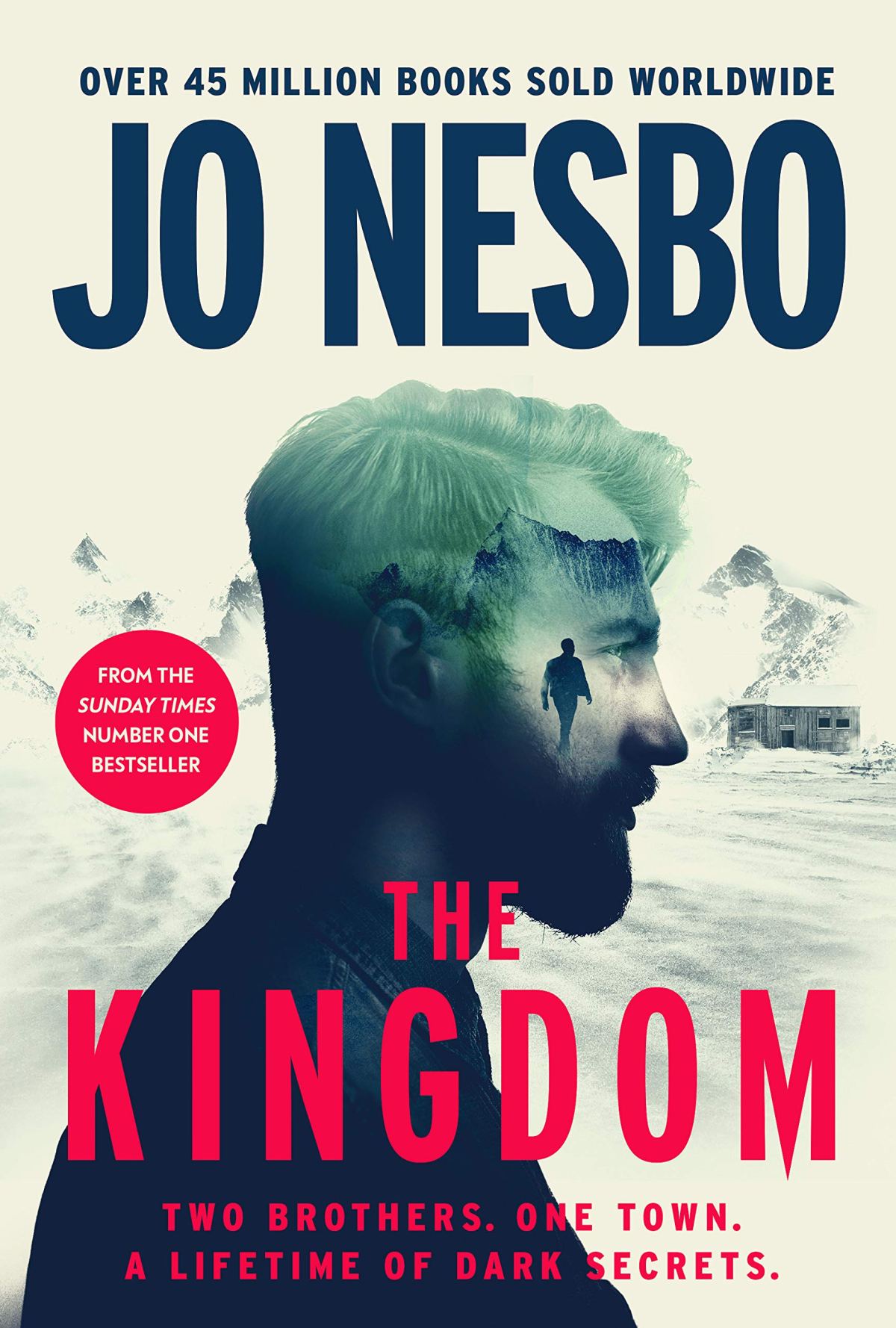
Book Review: The Kingdom by Jo Nesbo.

If you’re into your crime thrillers then you’ll know that there are a number of reliable writers in what has fast become a bit of a saturated market. Jo Nesbo though, with his somewhat dark Scandinavian landscapes is undoubtedly one of the best and one of the world’s biggest selling crime writers.

The Kingdom is the tale of two brothers with a dark, mysterious past and more than a few secrets. Roy, the older brother still lives on the family smallholding in remote Norway while holding down a job in the village that they grew up in. Younger brother Carl has emigrated to Canada to make his fortune and perhaps to escape his past. However, when he returns in a blaze of glory, everything changes and a few skeletons begin to threaten to emerge from the cupboards.

The Kingdom is, as you’d expect from Nesbo, a well written thriller full of grisly death and with more than enough twists to keep the reader guessing as to what might happen next and what fate might hold for the two brothers. Dealing with issues like the intricacies of life in a small, insular town, brotherly love and even child abuse, this is much more than just your average crime thriller. Sure, the body count begins to rack up as the story unfolds. but there’s more than just gory mysterious death to this one.

Nesbo’s characters are, as usual, rather complex. In the case of older sibling Roy it felt like the surprises about his character just kept on coming and I never really felt that I’d got to grips with exactly who he was. Maybe this was to do with the conflict between his fierce loyalty to his younger brother and his growing attraction to his sister-in-law, Shannon. And Shannon herself is a pretty dark horse. But then there’s also the younger brother Carl and a whole host of either villagers or mysterious visitors to keep us on our toes.

Such is the sprawling timeline of the narrative that I never felt like I knew exactly what was coming next. And the unpredictability here acts as both a good thing and a bad thing. There was that delicious feeling that you get when the penny starts to drop about what’s going to happen or the time when something is revealed that you truly weren’t expecting, which can be fantastic, but also the distinct feeling that sometimes there might be one character or detail too many. So while I never really lost track, there were times when I hoped that things would move a little faster.

In the end Nesbo draws all of his strings together well, but the twists and turns just keep on coming, meaning that you’re never quite sure who’s going to survive. All this action, drama, blood and backstabbing in a sleepy mountain village. Who’d have thought?

The Kingdom is an epic tale and a hulking great book, but it’s well worth a chunk of your time. And while it can be a little slow at times, it remains an excellent page turner that’s chock full of surprises.

I give The Kingdom…

Rating: 4 out of 5.

Teaching: Back once again for the renegade (school) master…

So here we are again. Summer now feels like a distant memory as I’ve been back at work and into a new academic year for the last couple of weeks.

It’s my 26th year of teaching and I’ve reached the grand age of 53, so as I’m sure you’ll understand, regardless of holidays I’m permanently knackered. For me there’s no longer that fresh feel to every September. Not only will I still be tired, but I’ll have seen and heard more or less everything that’s going to be thrown at me between now and late July many times before. It’ll just have been given a new trendy name. And be delivered by someone with way more enthusiasm than me…

I wanted to write about a couple of new things though, as well as something that feels like it’s as old and predictable as time.

Neither of the new things are entirely new. One is in the setting that I now work in and the other is an old idea that has now resurfaced with a new name. Both are challenging me in different ways.

As part of our role as teachers, we all get a couple of duties to do per week; supervising on the yard at break, that kind of thing. This year I had to rub my eyes when I saw what my new duties would entail. Even when I looked again, they were still there and a couple of months later when a new rota was sent out, they remained. Let me tell you, I’m not impressed. This year I have toilet duty…twice a week.

Now, I have to say that I’m lucky as our student toilets are in fact very modern. Glass fronted, lots of cubicles, one big hand wash station in the middle and some fancy hand driers off to the side. These boys have never had it so good! But, they’re still toilets. So two of my breaks are now spent managing the queue outside of the toilets, while trying to keep the flow of ‘customers’ going inside and watching out for any suspicious vape activity too.

On my first duty last week I had been there all of 6 seconds when one of the smaller boys was sick near the front of the queue, which really does just typify my luck! While he stood there unable to work out what to do next, the other boys were either pointing it out to me or screaming and squirming about it. Meanwhile, I had to find someone with a radio who could get in touch with a caretaker, while simultaneously getting the boys to not walk straight through the sick as I kept the flow of the queue going! Talk about juggling plates!

It wasn’t long before a caretaker arrived on scene, coned the area off and cleaned everything up, but not before some of the queue had managed to ignore my warnings and walk straight through it all! You could say it was a baptism of puke…

Since then things have been a bit less eventful. Queues are pretty orderly and nothing dramatic has happened. The smell however, well that’s another matter…

Many years ago Year 11 students who we didn’t think had the ability to follow the GCSE English course would do a course called Entry Level Certificate, which concentrated on the basics of written communication and meant that those students would at least leave school with some kind of English qualification. These were kids with complex special educational needs, learning delays and sometimes even those that could barely read or write. It worked really well, doing much for the self esteem of kids who’d never before felt too comfortable with the study of English.

In their wisdom, the education gods took Entry Level away though and so every year we were left with a cohort of students who would really struggle to access the content that they were being given, however it was pitched.

As is the way with education though, it was eventually brought back, revamped and given a new name and now I have a group of Year 10 students who are doing that course, bringing back many happy memories of teaching it before. It’s taking a bit of getting used to and because there’s no existing work for it at our school I’m having to do lots of planning, but I have to say that it’s actually really enjoyable.

One thing that certainly isn’t new is how fussy Year 7 students can be. I’m blessed – sort of – with two Year 7 classes this year, although one is only for one library lesson per week. Regardless, I think I’m already developing a nervous tick.

At time of writing I’m two weeks into the new academic year and so have taught these groups only a handful of times. Still, they are proving to be quite painful! Maybe it’s the grumpy middle aged man in me, but they just seem to be a constant stream of often irrelevant questions, fuss, a lack of listening and a way too much stationary!

Today we did a reading test in a computer room. The instructions were clear as day and repeated by not just me, but our librarian who was running the tests, at least 4 times. And yet still, I found myself drowning under a deluge of the same type of questions – “Sir, what do I do now?”, “Sir, how do I log on?”, “Sir, what do I click on?”. In situations like this I find any kind of professionalism that I may possess being tested to its very limits!

However, the best was saved for later in the lesson, when bored of having to answer questions on the test, one of them asked our librarian “Miss, how many questions are there?” Rather than tell the individual student, she stopped the group and addressed them all, telling them that the programme was measuring their reading age and thus there were no set number of questions; it would end when the program had got a reading age.

Two minutes later came the same question. And again seconds after. And again a few minutes after that.

As we were packing up it was all I could do not to ask the question myself. However, looking at my colleague I decided that I valued my life more than a valued a cheap laugh!

Anyway, only 36 weeks more to go!

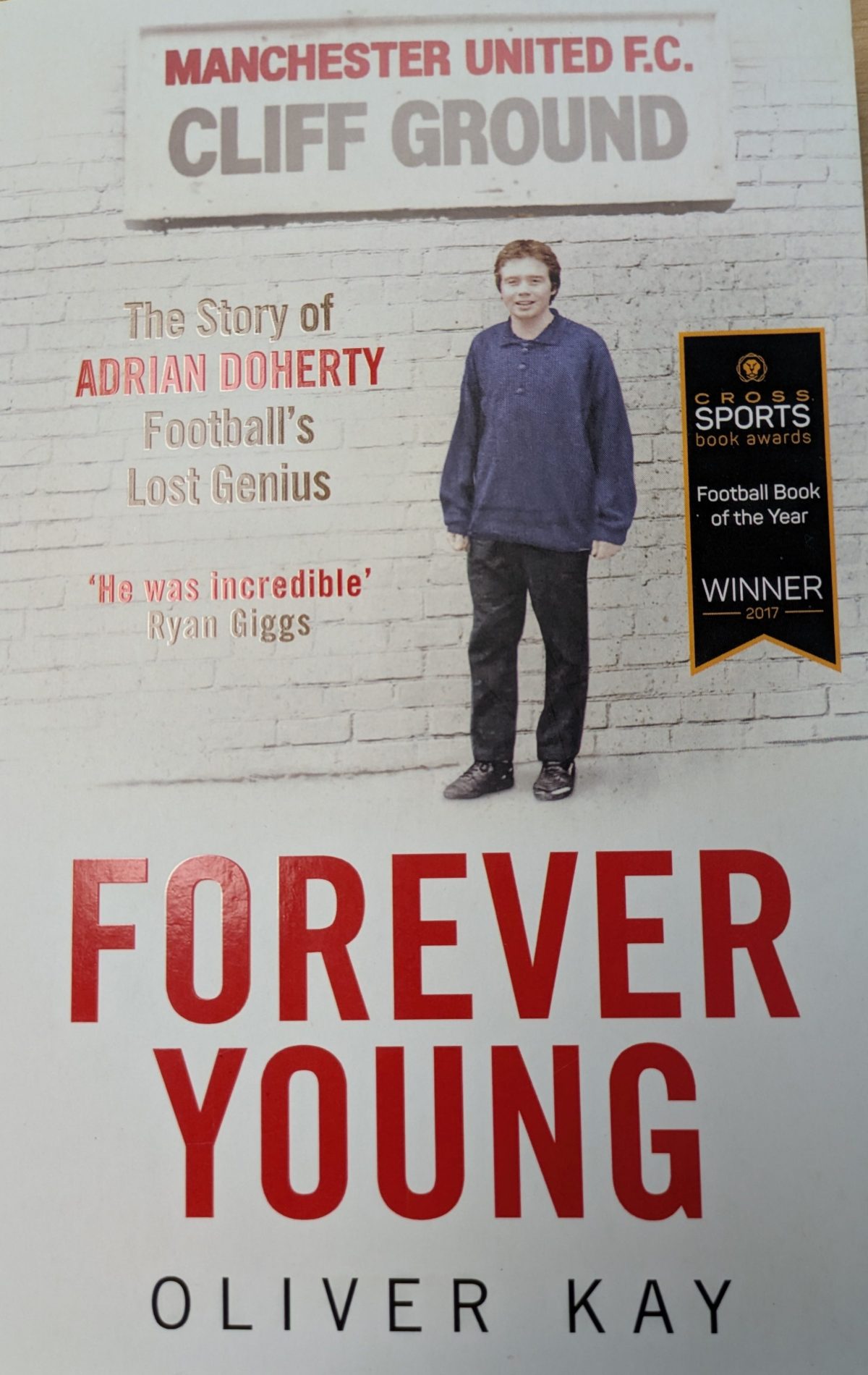
Book Review: Forever Young by Oliver Kay.

As a football fan, one of the things I love about following the game so closely is when you unearth a player that you’d never previously heard of. I’ve followed football since being very young, I read a lot about the game, have played it for years and even coached for a while. So, I like to think I’ve got a bit of knowledge. And then, every so often something or someone enters my consciousness and there’s a mixture of thrills and sadness about finding them. Adrian Doherty was one such player.

Oliver Kay’s book is brilliantly encyclopaedic in its examination of Adrian Doherty. And it’s all the more remarkable because Doherty only ever made three senior appearances as a professional footballer. However, Kay’s book makes it abundantly clear that the game lost out when we lost the opportunity to watch Doherty on a regular basis.

Doherty is referred to in the book as a lost genius; a teenage prodigy blessed with a gift for the game and sadly, a career ruined by serious injury. Here, Kay follows his journey from the streets of Strabane in Northern Ireland and starring for Moorfield Boys’ Club to the bright lights and big time of Manchester United and Old Trafford under Sir Alex Ferguson.

And this is where Adrian Doherty’s story begins to move away from the traditional biography of a footballer. Doherty’s story is at first the stuff of every boys’ dreams, but one that ultimately turns into something else entirely. Always a little different as a kid, Doherty continued to follow very much his own path into his youth. While he excelled on the football pitch, Doherty never allowed the sport to consume him and always had outside interests that would clash jarringly with what was maybe expected of him as a potential professional footballer.

As part of Manchester United’s famous Class of ’92, Doherty played with some of the game’s legendary figures such as Beckham, Giggs and Scholes and it was said that he was better than the lot of them! And yet, even that and the promise of a glittering career just didn’t seem to enough for him.

Doherty was very much a free spirit and football was never the be all and end all for him. And as he grew older, those differences left him more and more isolated in life. This wasn’t a state that bothered him though. Doherty seemed to be living happily with only his poetry and music for company, making his own way in life while somehow forging ahead with a burgeoning football career. And then tragically, injury intervened.

Kay’s book is a remarkable tale that is both tragic and heart warming at the same time. I read it feeling a certain sense of regret that this was a player that I never got to see, regardless of the team that he would have played for. But Kay is careful to convey the fact that Doherty derived a great deal of pleasure and fulfilment out of life and his chosen path. Even when injury ended a promising career, that’s all it was to Doherty; a career and not the only thing that he had in life. The free spirit was able to blossom, roam and pursue things like poetry, writing and music.

‘Forever Young’ is a must read for football fans. But don’t expect the traditional footballers’ tale. This is not a story that ends with riches, glory and the raising of any trophies. This is a story that gives us a completely different take on footballers and as a result is a really interesting read. Having Doherty as a team mate is described as being “like having Bob Dylan in a No 7 shirt”…and if that doesn’t add up to a book that intrigues you then I don’t know what will, especially if you’re a sports fan.

I give ‘Forever Young’…

Rating: 4 out of 5.

Book Review: ‘Outrunning The Demons’ by Phil Hewitt.

Running is one of those subject that can be quite divisive. As runners, we’re sold on its many qualities. It can almost feel like a drug in its addictive nature and despite the pain and the exhaustion, we always come back for more. Worse still, it can also become all that we want to talk about and so, we become ‘running bores’ on top of everything else. Believe me, other people love a running bore!

‘Outrunning The Demons’ is a collection of real-life tales from various runners of all abilities about the reasons why they run and the reasons why running has saved them. There are stories of bereavement, addiction and mental health challenges and all of them highlight the importance of running to those involved. In fact, Hewitt himself turned to running after being mugged and left for dead in 2016, so he’s living proof of the healing qualities of getting out for a run.

Since rediscovering running in my forties I’ve realised its importance in helping me think things through and its values in terms of my mental health. Then, having had a major heart procedure when I hit 50, running has become even more important, giving me at first a recovery goal and since then a lot of the strength needed just to keep going at times.

So ‘Outrunning The Demons’ felt both pertinent and personal to me. There was lots to relate to in these tales, as well as the type of pain and running ‘journeys’ that I couldn’t hope to understand. Among the 34 stories there are elite runners and there are people who only took up running because of the loss of a runner who was close to them. Charlie is a recovering drug addict, Theresa lost her firefighter husband in 9/11 and ran to take his place in a marathon, James an army veteran recovering from trauma in Iraq and Sujan suffers with anxiety brought on by a troubled childhood. All of them looked to running to help them cope again with every day life.

And there are loads more amazing stories to read about here. This is a book that’s as full of inspiration as it is pain. And it’s a book where you can’t fail to care about the people that you read about. So, at times it’s an emotional read. If you’re a fellow runner, you’ll undoubtedly recognise many of the emotions and be able to empathise with the trauma that some of these ordinary folk have endured.

Hewitt’s own tale is startling and perhaps worthy of a book in itself. But instead, he spent time bringing together people from all corners of the globe who have sought out a similar solution when faced with the kind of problems that might otherwise have seen them go under.

‘Outrunning The Demons’ is at times an incredible read. It’s subtitled ‘lives transformed through running’ and is comprehensive in recounting what really are some remarkable transformations. Always interesting and always inspiring, it became hard for me to put down at times. A life affirming read, whether you’re a runner or not.

I give ‘Outrunning The Demons’…

Rating: 5 out of 5.

Book Review: Half a World Away by Mike Gayle

Imagine living with a past that you could never shake off, regardless of how content you might be with life. Imagine living with the kind of secret that you had no idea how to address.

Kerry Hales is a single mum who does everything she can to provide for her young son and make the most of life on a south London estate. Meanwhile, across London her brother Jason lives a successful life with a wife and daughter. Now a top barrister, he knows nothing of the sister that he was once so close to. He’s not Jason anymore either; now he’s Noah. But Kerry has never forgotten him, whatever his name might be these days.

Kerry and Jason were separated as children when their mother admitted defeat in her quest to bring them up and had them taken into care. Kerry was ten and Jason almost two and while Kerry would go on to live through the system with chidlren’s homes and foster care, Jason was quickly adopted by a well to do family who not only saved him from what could well have been a troubled childhood, but change his name to something that they thought more fitting.

‘Half A World Away’ is in part the happy tale of how sister and brother are finally reunited. Sadly though, nothing of this magnitude could ever be simple and so there’s sure to be trouble and sadness along the way. I mean, being contacted by anyone out of the blue after 32 years without a word would be at the very least a little strange. But a sibling that you never knew you had? As Noah himself says, ‘it’s impossible to describe the range of emotions I felt upon reading the letter’.

Despite the fact that at first Noah believes that Kerry’s letter might be a scam of some sort, the two are eventually reunited. But it was never going to be straightforward.

What we end up with though, is just a brilliant story. I’ve read a few Mike Gayle books before but oddly not picked one up for years without really ever knowing how or why that had happened. In fact, this one was found in a box of books that I’d mislaid in the loft. I’m so glad I found it though. Gayle is a brilliant writer when it comes to relatable characters and emotions. And although nothing like this has ever happened to me, I found that not only could I just not put the book down, but that I was quickly invested in the relationships and the characters, which of course is always a good sign.

Covering themes such as love, family, race and class, ‘Half A World Away’ is a real page turner. It’s beautifully written with characters that you’ll instantly care about and feel like you almost know. Equal parts funny and heart warming, this is a story that is also gut-wrenchingly sad, so you might need a pack of tissues. Ultimately though, ‘Half A World Away’ is just a fantastic story and I’d urge you to give it a go.

I give ‘Half A World Away’…

Rating: 5 out of 5.

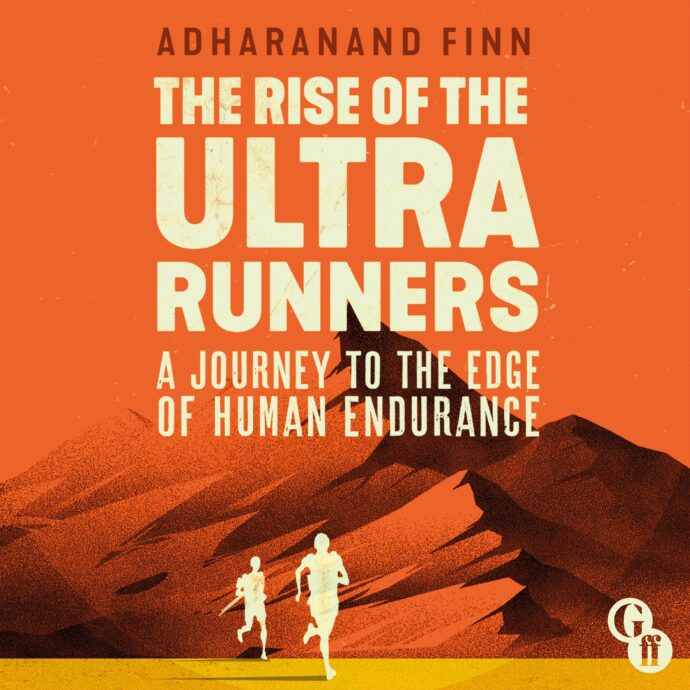
Book Review: ‘The Rise of The Ultra Runners’ by Adharanand Finn

For a while now, ultra running has both appalled and fascinated me. We’re talking ridiculous distances and conditions – running 100 mile races is fairly typical and often involving mountains and other such treacherous terrain. The idea of putting myself through such torture, despite my love of running, appalled me, but the idea that people chose to test themselves to the limits in such events absolutely fascinated me.

‘The Rise of The Ultra Runners’ had been on my ‘to read’ list for a while. It had sat there in one of my book boxes idle, occasionally popping its head up and briefly grabbing my attention before losing out to something shinier. And then one day, I decided that the time was right. It turned out that I really should have picked it up earlier!

The book plots the rise in popularity of ultra running; basically the pursuit of running ridiculous distances over many hours, sometimes days and often in ridiculous conditions. It would seem that there are now plenty of perfectly sane humans getting bored of the shorter distances, you know, like a marathon! For the uninitiated this means that ultra runners are taking on anything from 50k to 160k. In fact, the longest ultra is actually 3100 miles!

As with the last book of his that I read, ‘Running with the Kenyans’, Finn immerses himself in the world of endurance running. In order to write the book, he doesn’t just search out ultra runners, he becomes one and it’s an interesting read. Finn not only runs the races, at one point he even moves in with one of the world’s best ultra runners living in a cabin on a mountain, training with him and generally just trying to absorb everything he can about this world that he’s joined in with.

The adventures of ‘The Rise of the Ultra Runners’ take us all over the world in the pursuit of the ultimate test. Finn talks us through each agonising step in a world where things can change from one minute to the next. It seems that as an ultra runner you never quite know when disaster might strike.

However, these athletes, Finn included, are ridiculously dedicated to their craft. So whether, it’s an injury, the terrain, the weather or just the fact that the climb just doesn’t seem to want to end, these people just don’t seem to ever want to give up. Given that the distances can stretch into the hundreds and sometimes thousands of miles, this is an illuminating read, to say the least. And there was me congratulating myself on keeping going for the final mile of a particularly tough uphill 5k the other night!

‘The Rise of the Ultra Runners’ is a fantastic read whether you’re a runner or not. If you run, it’s about our world, but multiplied by 100 in most cases. If, like me, you often struggle to drag yourself around a 10k then you’ll be amazed at the physical and mental feats described here. The fact that not only can humans push themselves to their physical and mental limits over what feel like obscene distances, but also while they’re literally climbing mountains or battling with ridiculous extremes of temperature will never not fascinate me. But it’s not just that that’s so interesting. With this book, the devil is really in the detail in terms of exactly what we’re capable of.

The further I got through the book, the more fascinated I got. And the more fascinated I got, the more I thought about trying an ultra marathon myself. The reality is that I most likely won’t ever have the time, but it’s an idea that I still can’t shake and I’d love for there to be a time where I was able to train for one and make it happen.

And for me, that’s the genius of the book. It tackles something that will seem utterly ridiculous for the majority of us and yet, we’re still compelled by what we read. This reader, despite the onset of middle age, a pacemaker, asthma and a terrible habit of eating crisps and chocolate and drinking red wine read it and genuinely thought he’d be able to run a 50k race. And let’s not get started on my genuine fascination with a 100 miler in South Africa!

I give ‘The Rise of The Ultra Runners’

Rating: 5 out of 5.

Teaching: The Reading Test.

I wasn’t planning to write anything at all on this topic. Far brighter people than me have written far more incisive commentary about the importance of reading and the struggles that young people have with it. And anyway, this was just a baseline test; a straightforward reading test done in class with (hopefully) minimal stress. But, in teaching sometimes it feels like nothing is ever straightforward.

September and baseline testing for Year 7s go hand in hand. Not always merrily skipping down a corridor, but hand in hand all the same. So, it should be straightforward, right? Read the texts, read the questions, answer the questions using the information from said texts. And as a bonus, take your time doing it as we can use a little chunk of next lesson too. Easy? Well not for all, naturally. But straightforward, surely?

Of course, if you’re a teacher or have ever worked in education, you know the answer to the question above. And of course, the answer is a big fat NO! As I mentioned earlier, nothing ever seems straightforward in education and some days everything can feel like a battle.

Which brings me to my topic. Reading tests. Or rather, the reading test that I’ve just done with my seemingly delightful Year 7 group.

Now previous readers might already know that I’ve recently taken up a new post at an all boys school. Suffice to say, as you might well expect it’s pretty tough at the moment. On top of a shedload of entirely new and sometimes alien systems and routines, all my learners are boys and therefore full of the ‘challenges’ that boys can bring! That said, it’s a very supportive environment and I feel like I’m getting on top of things and coping with anything that gets thrown at me…metaphorically!

In amongst my cohort of somewhat rowdy boys, my Year 7s stick out like the proverbial sore thumb. I’m new, they’re new and we’re in this together. They’re keen to get on and eager to please and of course, full of questions, as we probably all were at that age. They all say a cheery ‘morning, sir’ at the door and many of them tell me to have a ‘good evening’ or even a ‘good weekend’ when they leave, depending on the day.

So, today’s attempt at a baseline reading test was a timely reminder that there are always hitches, irritations and curveballs in teaching. Okay, this one wasn’t the biggest deal, but it reminded me of the need for patience and also the need to always make sure that everyone in the room is sure of what they’re doing.

The problems started as I gave out the texts. One reading booklet with texts to read from and an answer booklet…where you put your answers. First off, I asked my class to fill in the front of the answer booklet with the necessary information. In this case that was first name, middle name, surname, date of birth and school name. I explained what was needed and also that, if they didn’t have a middle name, then they didn’t have to write one. And this was when the questions started.

“Sir, where do you put your name?”

“Sir, what if I haven’t got a middle name?”

“Sir, what if I don’t want to put my middle name?”

“Why do I have to put my middle name?”

“Why do they need my date of birth?”

Eventually, we got there, even adding my own name to the front of their answer booklet just in case it was misplaced. At least someone would know where to find me.

Next came instructions about time. I’d been told that it didn’t matter if the test didn’t get completed in the hour – we could use next lesson too. So, I made it really clear that the boys should take their time, look for accuracy rather than speed and that we’d have this lesson and the next if needed. It wasn’t a race. You can guess what came next…

“How long have we got, sir?”

The first time they asked, I just repeated myself. Same with the next. And, with a slightly more irritated tone, the next too. By the time the same question had been asked about 8 times in 10 minutes or so however, I felt like steam might be coming out of my ears!

Then, it was time to give a bit of guidance. The answers they needed were in the texts that they were going to read, they should read the texts first before attempting the questions, the paper would tell them which text questions were referring to and so on. But before I’d even got halfway through what I was saying, the hands were going up. I asked them to wait; I might answer your question before you get the chance to ask if you wait until I finish. Still, the hands stayed up like this was some kind of endurance test. And then, when I’d finished…

“Where will the answers be, sir?”

“How do I know what text the question is about?”

“How long have we got, sir?” Just kidding with that one; they’d got the point by now!

Once those worries were seen too, again, I gave a final warning. Treat the test like an exam. There should be no talking and while they should ask if they had a question, I couldn’t just give answers and they’d be better off just reading the text again. And with that, I told the class that they could begin writing.

Seconds later, a hand shot up to ask a question, while the boy sat in front of me started reading the first question out loud.

I give up!

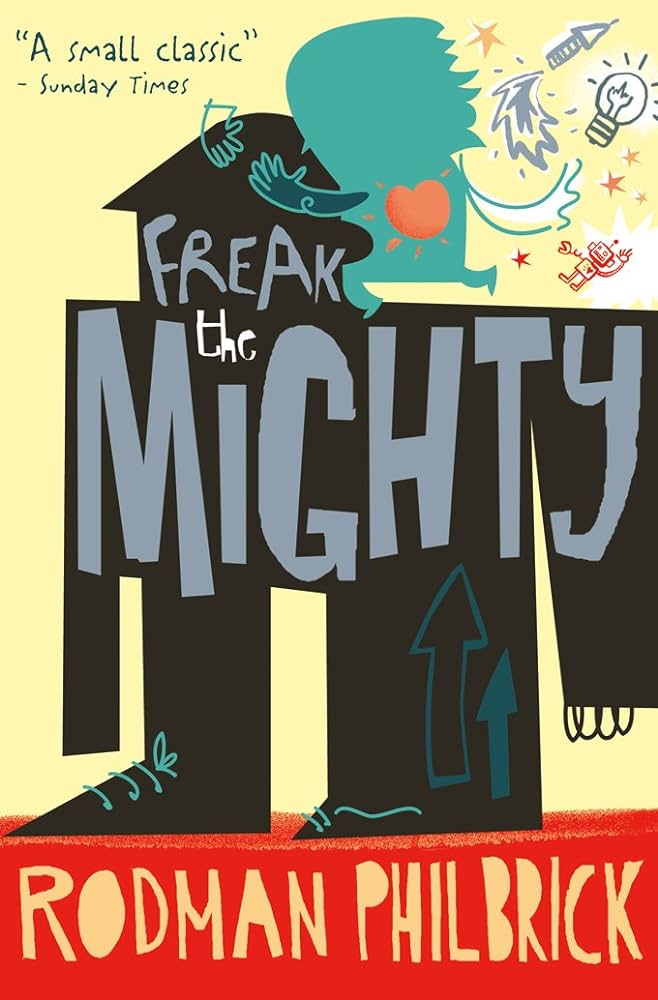
Book Review: ‘Freak the Mighty’ by Rodman Philbrick

Max and Kevin shouldn’t get along. They’ve got nothing in common apart from being outsiders and neither seems to have the personality or simply the willingness to make a friend. In fact, they both seem to have a certain distaste for other people. They’re fine on their own, thank you very much. However, they’ve both got a level of curiosity too and it’s not long before they give in to it. And thank goodness they do.

Max is a loner by choice. Raised by his grandparents, he’s got a reputation with the other kids around school as being mean and prone to violent outbursts, earning him the cruel nickname Mad Max among others. But he’d known Kevin previously at nursery and been fascinated by his crooked legs and braces. So when years later Kevin moves back to town, an uneasy and unlikely friendship is quickly formed and Freak the Mighty is born.

Max (aka The Mighty) lives in his grandparent’s basement and rarely ventures out. He definitely doesn’t have friends around. But it isn’t long before Kevin (aka Freak) – back in the neighbourhood with his mum Gwen – is spending time there. And from this point on a beautiful friendship grows. Max protects Kevin and doesn’t judge him for the way he looks, while Kevin serves to educate Max and doesn’t judge him for the way he talks. It’s not long before adventure is calling.

‘Freak the Mighty’ is an amazing story. It’s actually aimed at Key Stage 3 kids, so ages 11-13, but I have no shame in saying that I loved every page. It was a book that was recommended on social media; the second one that I’ve picked up because a comedian said so! And what a recommendation it turned out to be! The book was also made into a 1998 film – The Mighty – starring Sharon Stone, Gillian Anderson, Harry Dean Stanton, James Gandolfini and Kieran Culkin and that too is well worth your time. But please read the book first! At under 200 pages it won’t take you long and it will make you smile!

At first, the friendship is mostly about childlike adventures. Kevin is carried round by Max on his shoulders, barking orders and encouragement in his ear as they investigate their neighbourhood. For a while, this is a good news story and the friendship feels indestructible. But then, a dark shadow from Max’s past re-enters his life and his world changes overnight.

It begins to seem very likely that Max will be lost to his grandparents. His life will be changed and for once, he won’t be able to force his way out of things. Mad Max seems sure to return. And this is where the beauty in Philbrick’s writing is. As a reader you’ll hate the transformation in Max, having witnessed first hand what friendship can do for even this most lost of lost boys. And now he’s about to become lost once more. However, there’s always a glimmer of light at the end of this particular tunnel. And it comes in the form of a ‘Freak’ named Kevin. Kevin uses every last measure of strength, cunning and intellect to come to the rescue, hatching a brilliant plan to come to the aid of his friend. So, just when it looked like they might be wrenched apart forever, Freak the Mighty are reunited. But can it last?

I would absolutely recommend you read Freak the Mighty. There are drug references and some violence, so be careful in who you share it with in terms of children. For the most part though it’s downright funny, while also being life affirming and then all of a sudden, desperately sad. At a basic level though, it’s just a great story with a lot to offer in terms of lessons in friendship and humanity.

Literature is full of unlikely friendships – George and Lennie in Of Mice and Men, Huck and Tom from The Adventures of Huckleberry Finn and Bruno and Shmuel in The Boy in the Striped Pyjamas and they always make for good reading. Well Max and Kevin might well be one you’re yet to discover. I can only point you in the right direction; read Freak the Mighty!

I give Freak the Mighty…

Rating: 5 out of 5.

Book Review: The Garbage King by Elizabeth Laird

The Garbage King is a story that’s largely aimed at kids, probably from Year 6 upwards. However, a good story is a good story, no matter who it’s aimed at. I stumbled upon it when I was looking for ideas for my reluctant reader son to try and thus, having read only good things about the book, I decided to give it a go myself!

The Garbage King tells the story of street children in Ethiopia and helps us to understand that regardless of their background, children are essentially very vulnerable and that anything can happen to any of them. Such is the case with Dani and Mamo, two kids from opposite ends of the social scale who end up on the street together.

After a harrowing episode in his early life where he’s sold to a rural family as a slave, Dani escapes back to Addis Ababa and begins his life on the streets. So far, life has been brutal and painful for Dani and the streets of Ethiopia’s capital don’t make things any better.

Meanwhile, across town Mamo lives in a lovely house in a quiet, exclusive area. He has the trappings of a wealthy family, but is failing in school and his strict father is not impressed. Fearing his fate when his lack of academic progress is revealed, he decides that there’s only one thing for it; to run away. Before he knows it he too is living on the streets. But while one boy relies on his wits and guile to stay alive, the other is a sitting duck. And then a chance encounter between the two boys changes both of their lives.

The Garbage King is an excellent read. Elizabeth Laird gives the reader a brilliant, and I have to assume authentic view, of life on the streets of Addis Ababa. Certainly, as I was reading I felt like I could easily imagine what it looked like as well as hearing the sounds of the city and even being able to imagine the smell of some of the food being described. It was clearly not the kind of hustle and bustle that would be safe for a child though.

Danger seems to lie at every corner of Laird’s Addis Ababa, making The Garbage King a tense read at times. As a reader, there’s a genuine sense of fear for both of the boys, but especially the naïve Mamo. Luckily though, he has Dani to look out for him, so although life is now distinctly uncomfortable, there’s slightly less immediate danger.

There are twists and turns to The Garbage King, making it a real page turner at times. As poor Mamo lies freezing at night, too terrified to sleep, it made me think of my own son and how frightened I’d be if he happened to find himself in a similar situation. It’s bad enough when he’s out camping!

Laird’s characters are fantastically written. We’re onside with Dani from the very start of the novel. Life is tough for him, but he doesn’t complain. In fact, he shows guts and determination in order to get out of the initial situation that he finds himself in and when he’s finally made safe by the kindness of a stranger, we feel happy for him. He’s bright and likeable and so when fate deals him a losing hand, we’re willing things to get better. And when the various dangers of life on the busy city streets catch up with him, we’re desperate for him to stay safe.

As the novel rolls on the boys find their feet on the streets. As there’s safety in numbers, they fall in with a small gang, but danger and misfortune is still never far away. For now though, life is a lot better than it could have been had they not seen off a few of the predators that lurk in the shadows. Ultimately though, both boys just want life to return to some sort of normality

Will Dani ever see his sister again? Will Mamo be able to return home to his strict father? Well, you’ll have to read and find out!

I give ‘The Garbage King’…

Rating: 4 out of 5.

Book Review: The Runner by Markus Torgeby.

As a young man, Markus Torgeby quickly grew disaffected by a lot of what the world around him had to offer. He knew that society’s expectations were not for him. Despite being a talented runner though, he sensed that pursuing this as any kind of career was not going to work. Too often, injury or just not being in the right mindset got in the way of any kind of competitive edge. As he says himself at the start of the book, “My head was full of dark thoughts. I didn’t know what to do. I had to rethink what it was I really wanted, I had to find a way out of that well.”

What Markus did next – which is documented in the book – seems both astonishing and really quite wonderful.

‘The Runner’ is an international best seller and tells the tale of one man and his quest to find contentment. In short, Torgeby headed up into the Swedish wilderness to live in a tent and dedicate himself to a more simple life, where money didn’t matter, but running most certainly did.

It’s an amazing true life tale, beginning in Jamtland, northern Sweden where the temperature is -22 and Markus is the only person for miles around. This is where he escapes the norms of society, pitching his tent and living among nature complete with enormous amounts of snow, elk and even the threat of bears.

As you’d imagine from the title, running is very much central to Torgeby’s existence. When he vows to run every day, he means it and nothing will stop him, be that extreme weather conditions, injury or mental health issues. Torgeby isn’t just testing his fitness – he’s pitting himself against both the most extreme elements and also just the odds.

Running is where Markus is at peace and I have to say that resonated with me, as I’m sure it would with many runners. The only difference would be – and it’s a seismic difference – that while the majority of us are running around the civilised, normal streets or trails near where we live, Markus Torgeby is running around in one of the most isolated, northernmost territories on the planet! There are threats to life almost with every step he takes. This is not the tale of an everyday runner, despite the fact that he runs every day!

‘The Runner’ is actually really well written and Torgeby rarely shies away from telling us exactly how he’s feeling or what he thinks of the world, even if it can be uncomfortable to read at times. His blunt honesty is one of the most positive features of the book and it’s hard not to be impressed by Torgeby’s principles and way of life.

And then there’s the sheer courage of it all. As someone who rarely takes much in the way of risks, ‘The Runner’ makes for an absolutely fascinating read. Torgeby leaves home to live his life his way when he’s barely much more than a child. And yet, his lifestyle choice is utterly remarkable, especially when you know that he is burdened by the thought of his mother’s suffering, back at home. She suffers with MS and some of the most beautiful passages in the book revolve around her relationship with her son, as he cares for her and helps to make sure that she is still able to experience the wonder of the world around her.

After four years of living in his tent in the wilderness, Markus begins to come to terms with the world around him and the contentment that follows – I won’t spoil what that consists of – gives us a bit of a happy ending.

Part of me felt jealous of Torgeby while reading the book and I questioned some of my early adult decisions in life. It’s funny how something like this can take us back and make us more self critical. Ultimately though, at the age when Markus left home for the wilderness I was probably barely able to cook for myself, let alone live in a tent in some of the most unforgiving territory on the planet, so I was able to give myself a break after all!

Whether you’re a runner, health freak, someone with an adventurous spirit or none of those things, this book is a great read. For me personally, it was interesting to see that I had things in common with the writer and that we shared such a love of running. Ultimately though, if you like an interesting take on life or just enjoy learning about some of the bolder ways to live, then you’ll enjoy this book.

I give ‘The Runner’ by Markus Torgeby

Rating: 5 out of 5.