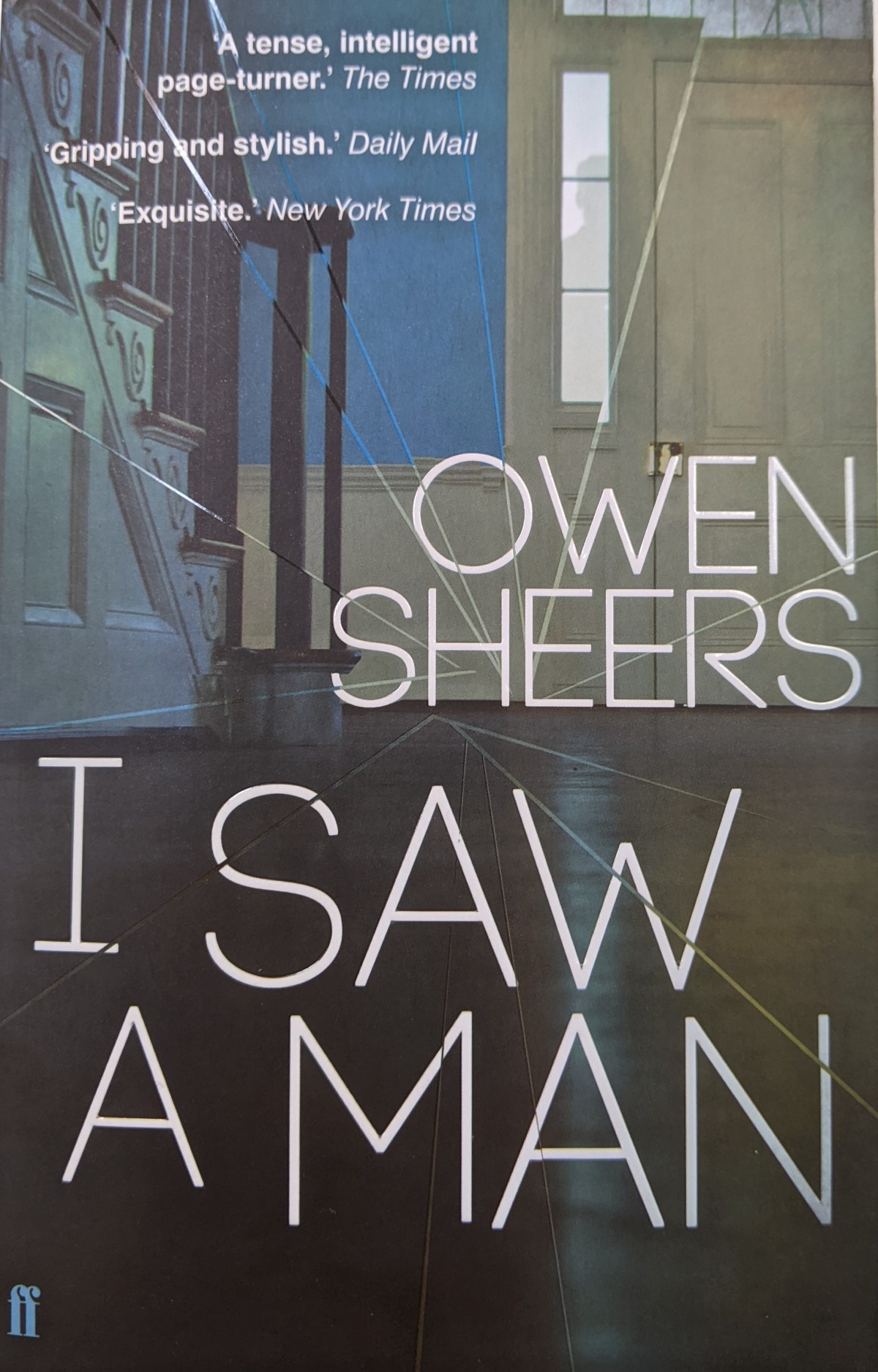
Book Review: ‘I Saw a Man’ by Owen Sheers.

In my job as a teacher there are times when, at a parents’ evening, there is very little to say. I will jokingly tell the parents of a particularly wonderful child that this could be a very short appointment. There are no targets, there are no complaints…their child is a pleasure to teach. Then I try to string this our over at least a few minutes, so that I can truly feel like I’ve done my job for the night and that, for the parents, there was a point in coming out. And it’s a bit like that parents’ evening appointment with this novel. I literally can’t think of a bad word to say about it, but just telling you it was great would make for a terrible review.

I fell in love with ‘I Saw a Man’ from the very first page and my work as an English teacher was immediately at the forefront of my mind as I found myself thinking about how I could use some of the description from the first couple of pages in a lesson. Sometimes, it’s hard to switch off from the job! However, as a reader I found myself lost on the fringes of Hampstead Heath – somewhere I’ve only ever heard scurrilous rumours about – within a couple of pages of Sheers’ prose. In short, I was immediately hooked and then desperate to share this writing with not only friends and colleagues, but my students too.

The story here revolves around Michael, a writer and widower who moves into the neighbourhood in order to make a fresh start. On the surface, it’s all going fairly well. Life has an element of normality and he’s struck up a friendship with a young, professional family – Josh and Samantha Nelson and their children- who live in the house next to his apartment block. However, grief is never far away and it feels like any ‘moving forward’ will be done in glacial inches, rather than at any real pace. He follows a humdrum daily routine, sees his friends often but his writing seems to have stagnated. Michael is existing, but little else.

The narrative here jumps in and out of the present day to the back stories of the three main protagonists, at will. And in actual fact, the primary part of the action unfolds in what feels a little like real time as we inch forward through Michael’s call to his neighbours’ house. No one is home, but something is not quite right and Michael feels that he needs to investigate. He shouldn’t be there. He knows this as well as we do and yet he keeps on creeping through the house, all the while leaving the reader more than a little on edge. He senses that something is wrong and we know that it is, yet when the devastating event that will change all of their lives occurs none of us would have guessed what it was that would actually happen that day.

What happens to Michael is shocking. But it’s what he does next and the dilemma that it leaves him with that produces such a superb thriller. He can’t move on, but he can’t fall any further backwards either. Michael finds himself in a self inflicted purgatory and yet he’s actually done nothing wrong at all. As a reader I found myself constantly changing the advice that I’d give him, the actions that I’d take if I had found myself in his situation. And yet, I never thought I had a solution.

Michael’s story contains elements that we hope we’ll never face ourselves. Not necessarily in the specifics of what happens, but in the kind of dilemmas that you might face while knowing all along that there isn’t really a right decision to be made. And then, just when you suspect that there might be a sliver of light at the end of the tunnel, the old adage of trouble coming in threes is proved right and there’s another terrible twist in the tale.

‘I Saw a Man’ is brilliantly written. The suspense will seep into your thinking and keep you wonderfully hooked; worried for Michael, willing Samantha to find the strength to move on and feeling conflicted by whichever angle you take on Josh. Sheers’ writing is sumptuous and beautiful and there were plenty of times during reading where I just felt compelled to call out to Michael, be it to offer advice or just out of complete frustration. Maybe that’s a sign that I might have got a bit carried away, or maybe it’s just a sign of brilliantly written characters. I prefer to consider it the latter.

Mr. Sheers, we could have made this a very short appointment. Your novel was a pleasure to read.

I give ‘I Saw a Man’

Rating: 5 out of 5.

Book Review: ‘Come Again’ by Robert Webb.

I’ve always been a sucker for a good cover. Be it when choosing a book or, particularly when I was a lot younger, picking up vinyl in a record shop, I was always attracted by an interesting image or simply something colourful that caught my eye. And while this hasn’t always worked out – boy, I’ve bought some absolute turkeys in my time just because they were a bit shiny – it’s often been a decent indication of a potentially brilliant buy. But it wasn’t just the colour or the image that grabbed my attention with ‘Come Again’; the author was of obvious interest too.

If you’re unfamiliar with the name, Robert Webb is best known as a comic actor who was one half of Mitchell and Webb, the pairing responsible for hit shows like ‘Peep Show’ and ‘That Mitchell and Webb Look’. When I picked up ‘Come Again’, I was also fully aware of Webb’s memoir ‘How Not to be A Boy’ and so I was almost duty bound to buy it in the end!

‘Come Again’ tells the tale of Kate Marsden, who’s job in her own words is ‘to re-write history’; she cleans up the internet profiles of prominent people and high profile business types. And now she’s discovered something about a major client that is so morally abhorrent, she simply can’t cover it up. What to do with the information creates a major dilemma. But this isn’t Kate’s biggest problem, by a long, long way.

A year ago, Kate’s husband, Luke died. They’d been together since Fresher’s Week at university; 28 years in all. Unsurprisingly then, and despite the best efforts of friends and family, Kate has not been coping. Time isn’t healing and she’s resorted to drink, which has led her to the point she’s now faced with. Suicide. But not before one last enormous act of vengeance.

‘Come Again’ is a fantastic read. As a story, it’s multi-layered. We have the question of whether Kate will live, alongside whether she’ll do the right, but highly dangerous thing and expose the moral shortcomings a shady billionaire and her boss, Charles. There’s the sub text of the relationship with her mother as well as that with her old university friends, all of whom have spent the year since Luke’s death reaching out to her in an attempt to get her to start living her life again. And then, when you thought there wasn’t room for another layer, there’s the twist in the tale. Now that will really put the cat among the pigeons…or in this case, the middle aged woman among the Freshers.

I’d hugely recommend ‘Come Again’. It’s brilliantly written with a fantastic storyline and believable, but complex characters. Certainly, if you went to university, this book will transport you right back there. But besides that, alongside the subject of grief being tackled with a wonderfully light touch, there’s a wicked sense of humour here too, as you’d expect I suppose from a comic mind like Webb’s. Kate herself is a character whos full of surprises and towards the latter stages of the novel she even becomes a bit of an action hero, so there really is something for everyone in ‘Come Again’. There’s even a happy ending, although even that has quiet a bit of a twist to it and will not be what you were expecting at the halfway point of the novel.

If you like a laugh, a bit of nostalgia, action or romance, ‘Come Again’ is well worth picking up. And it’s got a lovely shiny cover too! What’s not to like?

I’d give ‘Come Again’ by Robert Webb

Rating: 5 out of 5.

Poetry Blog: What next?

About two years ago I started writing poetry. It was something that I’d experimented with before, but never really formally or with any kind of purpose. I must have written poems back in the stone age when I was at school, but would have no written record of such ramblings. And anyway, my school wasn’t the kind of place where a boy wrote poetry, unless he was ordered to by one of the psychotic teachers. Boys did sport, yelled a lot, swore and most likely spat on the ground like their life depended on it. Boys. Did. Not. Write.

Any poetry written in class would be hidden away from prying eyes and mocking tongues. Any hint of a notebook being carried around would provoke instant hatred and could only lead to years of cruel abuse from your peers (and probably even some of your friends).

As a younger adult, I’m sure I’d tried to write poems, but I’m pretty certain that when they existed, it would have been on scarps of paper and that these were long ago confined to the recycling plant.

I’ve never been a confident person. In fact, I’d go as far as to say that I’ve learnt to wear a convincing mask in order to hide what is actually a rather crippling lack of confidence. So, although I felt like I had something to say and that I could write, it was going to take a seismic shift to make me commit ideas to paper in the form of poetry.

It turns out that ‘thing’ was lockdown. I was locked down almost immediately once the decision was made. While colleagues stayed in school and battled to keep some sense of normality in people’s lives, I was told that I was vulnerable and had to stay at home. Couple that with a complete failure in terms of remote learning with my laptop and there were a huge amount of days waiting to be filled.

I’d started my blog by then and so was in the habit of writing. As can be the case with me, I wasn’t really in the habit of sleeping regular hours though. And one night, lying awake with words whirling round my head, I realised that I had the bones of a poem keeping me awake. So, I crept downstairs, opened a notebook and wrote a poem; one draft and what felt like no particular thought needed. I don’t know whether it reads like a one-draft-no-effort poem, but it was done! I thought I’d published that poem as part of the bog, but looking back, it doesn’t seem so.

From there I came up with the idea of a lockdown writers’ group – Lockdown Literature, you can read about it on the link below – where friends and colleagues could publish anything they’d written; whatever it took to stave off the boredom of being isolated like never before. Inspired by others, I was able to write a few more poems.

Lockdown Literature

Our Lockdown Literature group made me think about what to do with my poems. By now I was writing them regularly and so, once I’d decided that a) I had the confidence to share and b) I didn’t feel it was too much of a pretentious thing to do, I started to publish some of my poems as blogs, adding a little bit of explanation about the poem and about my thinking when writing it. They seemed to go down well and it gave me another blogging avenue to explore.

Now though, I want to develop things a bit. It’s lovely that people who read the blog like my poems, but I want to really test myself with it and I must admit that I’m unsure of how to move forward. I’ve considered things like poetry competitions, but from what I can see, a lot of them require entries to be unpublished and I don’t really know if my own blog counts in those terms. However, it’s stopped me entering anything so far. It’s certainly something that I need to look into and if anyone has any advice, I’d gladly listen.

Another route I’ve wondered about with my poems is to attempt to put together an anthology, but it’s an area that I know next to nothing about. I realise that I could self-publish, but without adequate promotion, even an anthology is not going to gain any interest. Is it the kind of thing I can send to publishers? If so, how do I group poems and how do I approach agents or publishers? Again, it’s something I really need some advice on, so if you’re reading this and you have any insight, I’d be really grateful for your help.

The third and final way of developing my poetry terrifies me. In actual fact, I’ve only considered it because a few people have suggested it. One kind soul even invited me along to actually take part. What am I talking about? Performance poetry! This is something that I can’t deny tempts me, but despite my advancing years and the fact that I talk at people for a living, the thought of standing on a stage – makeshift or otherwise – in a room full of people, reading out my poems, makes the hairs on the back of my neck stand up and my tummy feel a little bit poorly!

It’s not actually the thought of an audience that bothers me very much. No, it’s more the thought of exposing something as personal as my poetry to what would likely be an entirely new audience. Every day of every week brings an audience of harsh critics in the form of pupils in a classroom, so speaking in front of people is second nature. And not to play the tortured ‘artist’ here, but the idea of reading so many personal words (does that make sense?) and even considering myself any kind of poet, feels very much beyond me.

Still though, I find myself trying to pluck up the courage and find the time to attend such an evening, not as a performer, but as a punter just to try and see what it’s all about. Maybe once that step is taken, I could find the courage to put myself down for some kind of open mic slot. Even typing the words fills me full of dread though, so it would be one hell of a step to take!

So 2022 has to be the year that I trying and ramp up my poetry game. It reality feels like something that could develop and something that I believe in somewhere at the back of my mind! I just need to work out how.

As ever, feel free to leave a comment, especially if you have any suggestions that might help me!

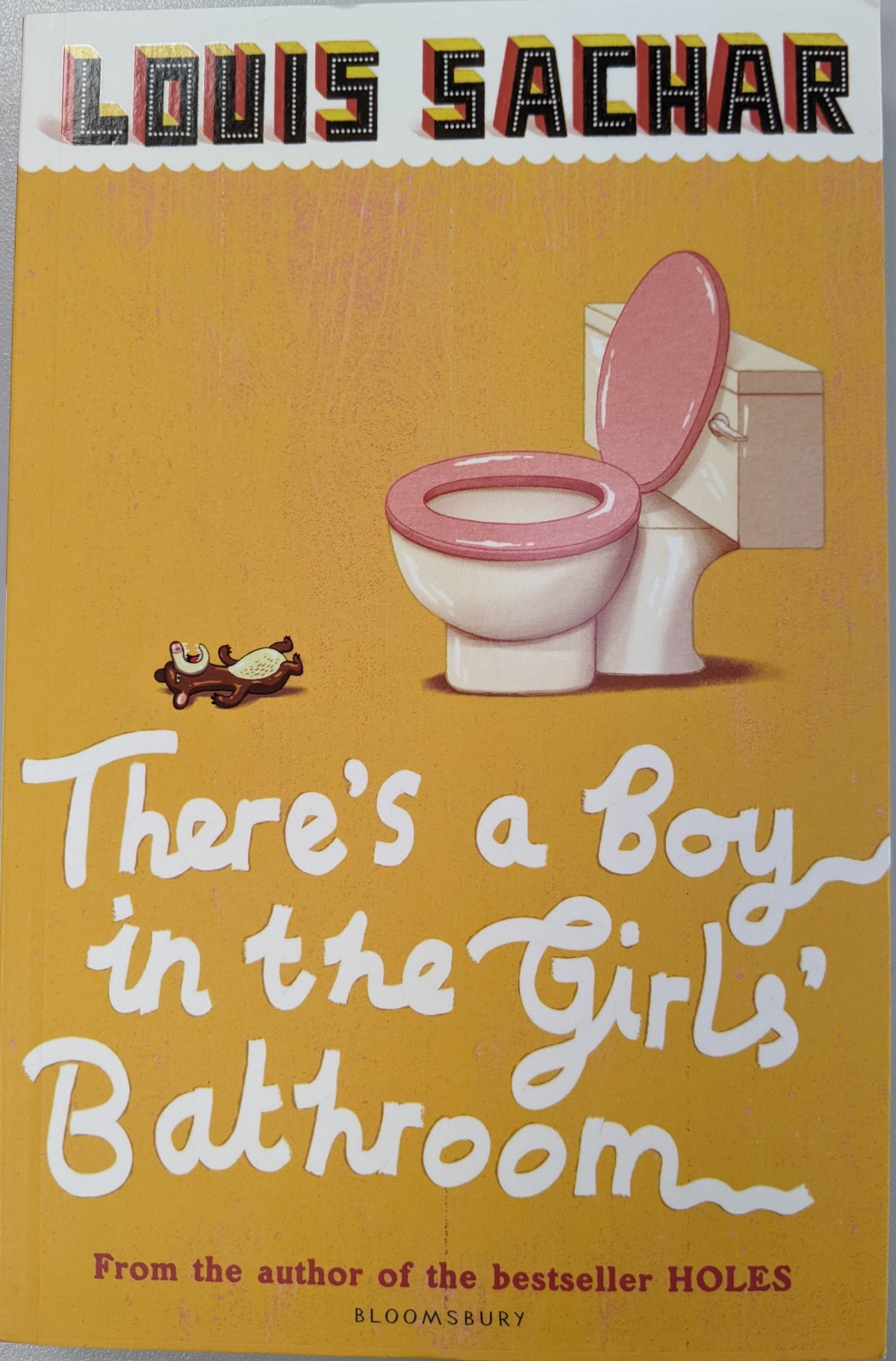
Book Review: ‘There’s a Boy in the Girl’s Bathroom’ by Louis Sachar

For the first few chapters of reading this book I really didn’t like Bradley Chalkers, which felt a bit mean given that he’s a primary school child. But, as a teacher, it felt like everything he did was calculated to disrupt and irritate and that Bradley didn’t want to do anything he was told to do. I’ve known a lot of Bradley Chalkers in my time in the classroom!

Then, the more I read, the more I started to understand him. The more I understood him, the more I felt sorry for him and wanted him to have more to his days than picking on girls, threatening to spit on his classmates and telling lies. But even Bradley’s lies and fantasies are endearing. Away from school he has an army of friends in the form of many of his toys and his conversations with this gang made me fall for him all the more!

I first heard about ‘There’s a Boy in the Girls’ Bathroom’ from Twitter. I think it was a recommendation from a comedian that I follow and the gist of his tweet was that everyone should read the book in order to enjoy the kindness inside. So, I bought the book. Actually, that’s a lie worthy of Bradley Chalkers himself. What happened was that I put the book on an Amazon Wishlist and my wife bought it for me! And what a choice it turned out to be!

Louis Sachar is undoubtedly more famous for his YA novel ‘Holes’ which is itself a wonderful read. I must admit, even though I’ve read a few of his other books I’d never even heard of this one. And while Twitter can be a real snake pit at times, it’s recommendations like this one that make me glad I ever logged on. ‘There’s a Boy in the Girls’ Bathroom’ is a kids’ book but it’s very much accessible to all. Whether you’re of elementary school age or left education a very long time ago it doesn’t matter; everyone should read ‘There’s a Boy in the Girl’s Bathroom’. Literally everyone.

The story follows the fortunes of Bradley Chalkers, an elementary school problem child. Bradley is a loner; at first glance mean, angry and disruptive and it seems like everyone has given up on him. Until he’s given an appointment with the new school councillor, Clara who immediately takes to him, helping to change his life for the better. But this isn’t a simple and formulaic happy ending kind of book. There’s plenty of resistance and self sabotage from Bradley along the way and this makes for a comical, yet often sad read.

This is essentially a good news story though. Despite his protestations and his resistance to change and the help of people around him, Bradley begins to make friends and live what we’d happily term a normal life. But the journey from problem child to golden child is never going to be easy. There are traps and trip hazards along the way and just when you think he’s finally cracked it, Bradley always seems to fall or fail.

‘There’s a Boy in the Girls’ Bathroom is a beautifully written book. Sachar’s characters, particularly Bradley, are wonderful and very easy to imagine. I always like a book where I feel that I can consistently ‘hear’ the characters whenever I pick it up, and this book has that quality in abundance. It’s a lovely, engaging story that will have you smiling, laughing and wincing in equal measure. So what are you waiting for? Get yourself a copy – or just put it on your Wishlist and wait – and fall just a little bit in love with Bradley and his life.

With a great big smile on my face and the realisation that this won’t make a jot of difference to sales of the book, I’d give ‘There’s a Boy in the Girls’ Bathroom’…

Rating: 5 out of 5.

Book Review: ‘Marriage Material’ by Sathnam Sanghera

Every now and again, a newspaper or a magazine that I read will publish a list of some kind of essential reads. It might be an end of year poll or just something that links to a particular time of year, but for as long as I can remember I’ve cut these lists up and stashed the cuttings elsewhere as books that I will mean to get around to buying and reading. ‘Marriage Material’ was published in 2013 and was found on such a list and then, years later, recovered from whatever receptacle it had been stashed in. I finally got round to buying it last year! And I have to say, it’s the kind of book that makes me thankful for my hoarding!

‘Marriage Material’ is a novel that is predominantly about families. From the love and the tenderness through to the irritations, the regrets and the great big falling outs. But it’s about much more than that too. Set largely in the West Midlands from the 1970s and 80s right through to the present day, the novel has culture, prejudice and division at its heart and for those of us who grew up in these times – if not the precise location – it makes for a really interesting read as well as one that brings back times that were a lot darker in their attitudes to anything or anyone that was deemed ‘different’.

The book tells the tale of Arjan Banga and his family with the story being told via a dual narrative taking place some years apart, before the two sides come together in an interesting twist. I loved the narrative style here as it left me not only trying to follow the story but also trying to work out the connection between the two. I think I was a little slow on the uptake, if I’m being honest, as it wasn’t actually that hard to work out, but for the first third of the book I must confess that I didn’t make the connection!

The family are immigrants to UK, so as the story is set in the 1970s and 80s, the book covers the ugly racism prevalent in our country at this time. However, I’d say that Sanghera treats these issues with a light touch and is prepared to write with humour when tackling some of the notable instances of prejudice in the book, such as the geographical inaccuracy of most of the insults hurled his and his familys’ way. It certainly puts the ignorance of his abusers into perspective and Sanghera’s observations made me smile on more than one occasion.

As the two narratives collide the story picks up pace. When his father dies Arjan heads home and immediately feels family pressure to take over the business. But he desperately doesn’t want to slip into the kind of stereotyped life he’s worked so hard all his adult life to avoid. However, seeing his mother again leads to him worrying about her health as well as her ability to run things and he’s is forced into a couple of decisions that will have a huge impact upon his future. One of these decisions is to track down a long lost relative and her impact on all of their lives has mixed, but ultimately positive results.

Rather than returning to his far more cosmopolitan life in London, he opts to stay at home to help run the business, as well as looking after his elderly mother. However, with a fiancé patiently awaiting him back in London and old acquaintances vying for his time in the Midlands, his life just gets more and more complicated. Inevitably, Arjan messes things up!

Marriage Material is a great read. Arjan’s life veers from one catastrophe to the next and as a reader you can’t help feeling sympathy, even when it seems abundantly clear that he must know he’s making a terrible decision. There’s a real humour – often quite dark – to the book and though at times it seems seems like Arjan’s life is spiraling out of control, you can somehow still laugh at his predicament.

In the end it all works out for the family. But not without the kind of scene that wouldn’t look out of place in a Tarantino film near the end. But just when you think it might all end in the kind of tragedy that none of us saw coming, there’s a glimmer of light at the end of the tunnel. A happy ending of sorts and certainly not in the way that you might have predicted when you first picked up the book!

A funny, engaging and just all-round excellent read, I’ll give Marriage Material

Rating: 4.5 out of 5.

Book Review: ‘The Honest Truth’ by Dan Gemeinhart

It might be argued that there’s no more honest truth than the fact that you’re going to die. I mean, I’d like to hope that – inspired by the theme tune to ‘Fame’ – I’m going to live forever, but you can’t escape the honest truth though, can you?

Mark is a young boy who’s facing up to a whole lifetime’s worth of problems, only they’ve appeared in the shape of just the one big problem. And with that problem comes his honest truth. It’s looking pretty much certain that he’s going to die. I mean, that’s a big old problem when you’ve not even made it to high school age . And Mark’s facing this problem…by running away to climb a mountain.

Mark has had cancer for most of his life. He’s battled to stay alive, battled to fight off the cancer and just be a normal child. But however many times he fights it off, it keeps coming back to have another go at him, as is the way with this horrible disease. In running away, he now hopes to just die and end all of the heartache for not just himself, but his parents and his best friend Jess. While he’s at it, he hopes to climb a mountain like his grandfather asked him to just before he himself died. In short, Mark is a boy who has simply had enough of the hand that life has dealt him.

The subject matter of ‘The Honest Truth’ isn’t what you’d call particularly nice. The death of a child, even a child with a terrible illness, is never pleasant. As a parent, having one of my children in hospital for any length of time and for anything at all, is a real nightmare. But Dan Gemeinhart writes about Mark’s situation with a wonderful balance of optimism, humour and of course a tinge of sadness. It all makes for a compelling story and right up until a few pages from the end, you’re never quite sure how things are going to work out for Mark.

‘The Honest Truth’ is probably what we should be referring to as a YA novel. But, even at my age, I still love reading novels from this genre. I have a bit of an excuse, given that I’m a high school English teacher. But regardless of what it is and where we squeeze it in, ‘The Honest Truth’ is an excellent story and at not much over 200 pages, a really quick one to get through too!

The story is intriguing as Mark runs away with the intention of dieing on the mountain, while dodging a missing person’s investigation that has been publicised on every format of media you can think of. As a reader I felt like any second now, he’d be found. I mean you’d imagine people would be on higher alert than usual keeping their eyes out for a little runaway, stricken with cancer. But, with the help of his dog Beau – the kind of amazing, loyal canine companion we’d all dream of having – he seems to stay at least one step ahead of it all, despite becoming increasingly sick and increasingly slow in his ‘escape’ to the mountain.

In all, ‘The Honest Truth’ is a just fantastic read and I was gripped from start to finish, torn between wanting Mark to get his final wish and wanting him to get caught and taken home to his parents and best friend, Jess. Whichever way it ended, it almost wouldn’t have mattered and surely that’s the sign of a truly wonderful story.

I’d give ‘The Honest Truth’

Rating: 5 out of 5.

Book Review: ‘Why Running Matters’ by Ian Mortimer.

For many of us running really matters. It’s been a lifelong interest for me and something I’ve done with varied levels of success, interest and effort since I was very young indeed. As it stands, I think I’m going through what some might call a slightly evangelical phase with my own running and probably boring most of the people I know in singing its praises. So a book on why we run was a very exciting prospect!

Ian Mortimer isn’t a runner, in that it’s not his profession. In fact, where running’s concerned he’s not unlike myself; middle aged, enthusiastic competitive and probably a bit more injury prone that we’d both like. However, while I’m a humble English teacher Mortimer is a historian and the writer of the best selling Time Traveller’s Guides series.

On approaching his 50th birthday, Mortimer made a series of vows or challenges to himself. In amongst them were taking part in 45 Parkruns and 5 half marathons across the year, producing an album of his own music, seeing a Shakespeare play and organising three concerts by world renowned musicians. In amongst it all, he’d write this book. Phew!

So the book itself is one hell of an achievement. Finding time to write it in amongst all that running and other activity is quite something. By coincidence, I am too approaching my 50th birthday and while Mortimer’s challenges prompted similar thoughts of a series of challenges or ambitions, I was glad I’d picked it up in August when it was far too late to attempt as much as Mortimer did!

The book chronicles Mortimer and his running companions’ performances at the Park Runs and the half marathons, while also attempting to contemplate exactly why it is we run. Because clearly, like the title tells us, running matters, but it’s what it actually means to people that is explored here.

A source of irritation throughout the book was that Mortimer is a really decent runner! Mean spirited I know, but reading about his times and placings in various Park Runs left me feeling quite jealous and more than a little bit irked! But I suppose this is part of what the book is about; we run to be competitive. And the book delves into this in great detail because Mortimer seems incredibly competitive and so while his times were irritating – and accompanied with a smile from this reader too – it left me feeling quite a warmth towards the man himself. His determination was inspirational while remaining quite comforting. Every time he went out to run he was looking to improve on times and performance, which is very much my approach. Sadly, I’m not always successful here!

Reading of Mortimer’s running adventures all over the south west of England was really interesting. HIs descriptions of the various courses, weather conditions etc felt comfortingly familiar, even though I haven’t taken part in any of the races. But his thoughts and theories all held weight with me. And the atmosphere of all those Parkruns did too! Mortimer also wrote a lot about running with his sons and while occasionally the dose of schmaltz involved was a bit much, as someone who occasionally runs with his own son, I could empathise his his pride and enjoyment in doing so.

‘Why Running Matters’ is a really interesting and well-informed book. Mortimer knows his stuff. He’s an experienced runner who has thrown himself into races and challenges of varying levels over many a year. It was this that had me nodding along enthusiastically throughout my time reading. And although it would seem to have a bit of a niche target audience, I would argue that there’s something here for a lot more than just those of us who run. Mortimer’s year is undoubtedly inspiring and the discussions on the competitiveness, camaraderie and the at times almost meditative side of running would hold the interest of many a reader, whether they run or not.

If you’re a runner who wants to read about running, then – obviously – this is the book for you and you’ll certainly get a lot out of reading it. However, even as a non runner, if you’re someone looking for inspiration or even just a gentle push towards the door and searching out something to do with your time, you’ll enjoy ‘Why Running Matters’. And if you’re one of those people who watches runners from the comfort of your car as they pass and just wonders why, then the book will at least help explain what on Earth it is we’re thinking when we leave the house to pound the pavements squeezed into all that lycra!

I give ‘Why Running Matters’

Rating: 4 out of 5.

Book Review: The Knot by Mark Watson.

If you’re from the UK, you might well know Mark Watson for his stand up comedy or even his fairly frequent appearances on panel shows. A distinctive looking fella and very funny indeed. What you might not have any knowledge of are his novels. If this is true, I think it’s fair to say that you’ve been missing out.

The Knot is the second of Watson’s books that I’ve read and it’s reminded me that I need to get my hands on the rest.

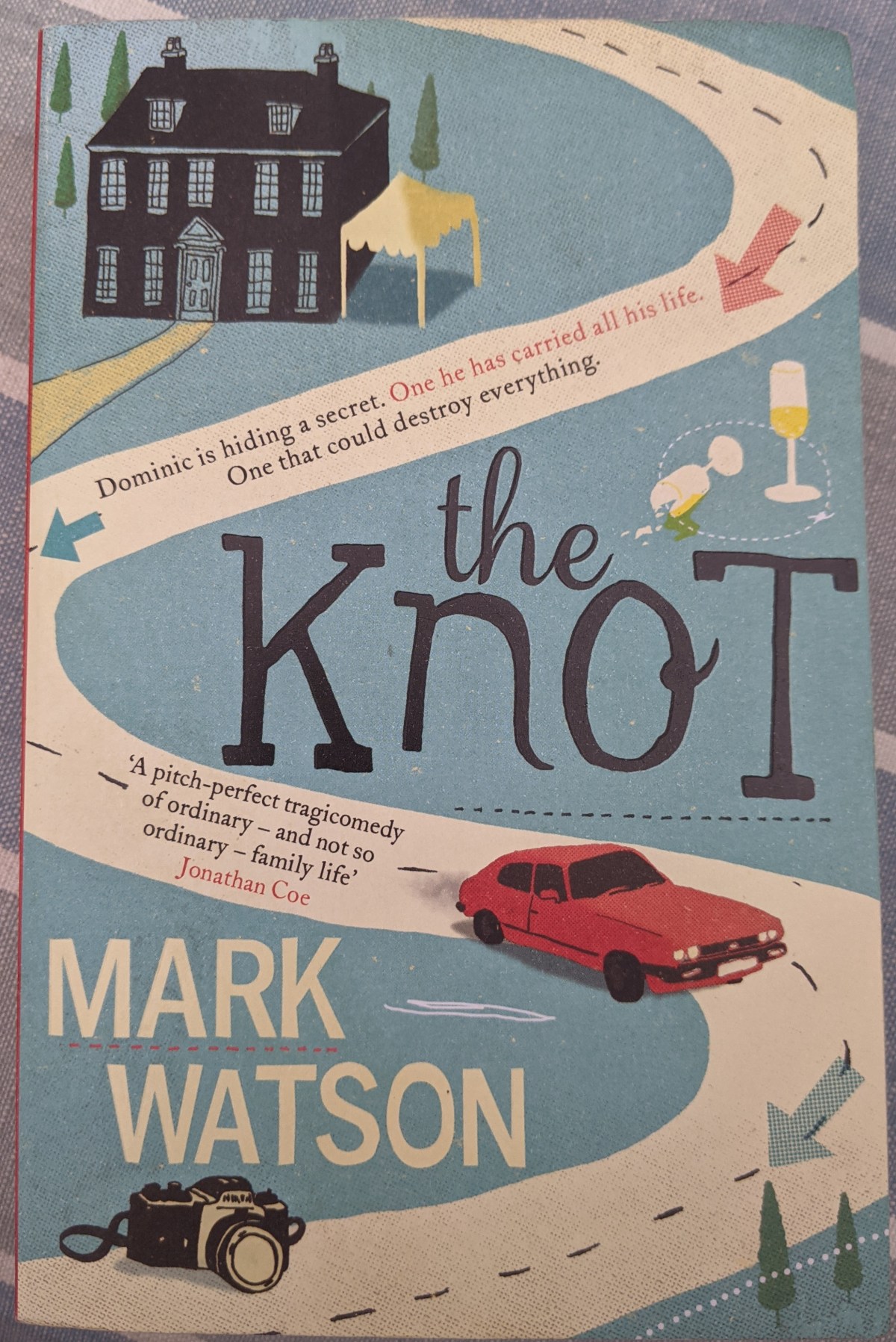
The front cover of The Knot tells readers that Dominic Kitchen is hiding a secret and that it’s one that he has carried all of his life. So you immediately know that there’s something not quite right and that this secret must be something pretty serious. So, in a way, we’re hooked from the off. And believe me, when you find out the secret, it really is the kind of thing that would stop any one of us living a normal life.

The novel is set mainly in the latter decades of the 20th century and Dominic is the youngest of three siblings, brought up in a middle class family in London. Dominic’s older brother, the somewhat domineering Max, graduates from Oxford and goes on to become a successful sports agent while his sister Victoria marries a famous cricketer. Meanwhile, Dominic seems to simply tootle along, never really sure of what he wants to do with his life. He stumbles upon a talent for photography and together with crazy Irishman Daley, makes a living from that. But nothing ever seems simple for Dominic. We find him approaching middle age, but are frequently taken on flashbacks to his earlier formative years. And with this technique, his terrible secret is drip fed to us. I had an inkling of it early on but found myself regularly thinking, ‘no, it can’t be that’. Until it was…

The secret is the cause of the knot, a feeling that plagues almost everything that Dominic does and even though he seems to be managing to live a happy enough life, it is always there in the background, eating away at him. Can he ever really be happy? Will he be able to make his marriage to Lauren and career as a wedding photographer work? And even if he does, will the dreaded secret do the seemingly inevitable and come back to ruin everything? After all, some things just can’t stay hidden.

The Knot really is a good read. The storyline is certainly original and there are moments of jaw-dropping drama as well plenty of the kind of comic moments you’d expect from a writer who doubles up as a stand up comedian. Dominic is a character that I think a lot of us would be able to relate to – not sure of where he wants life to lead, unable to move on in the way that he might really want to because of a lack of confidence and an enormous mistake and just not really coping as an adult. The secret that blights Dominic’s life is really quite shocking and even though it becomes a little more acceptable later on in the story, neither Dominic or ourselves as readers can ever really recover from it. But you will find yourself on Dominic’s side, despite the nature of his mistake.

I’d absolutely recommend The Knot. If you enjoy a good story, well written characters – some you’ll love, others you’ll hate – and life changing dilemmas that you can get your teeth into, then it’s a novel that’s worth picking up.

I’d give The Knot…

Rating: 4 out of 5.

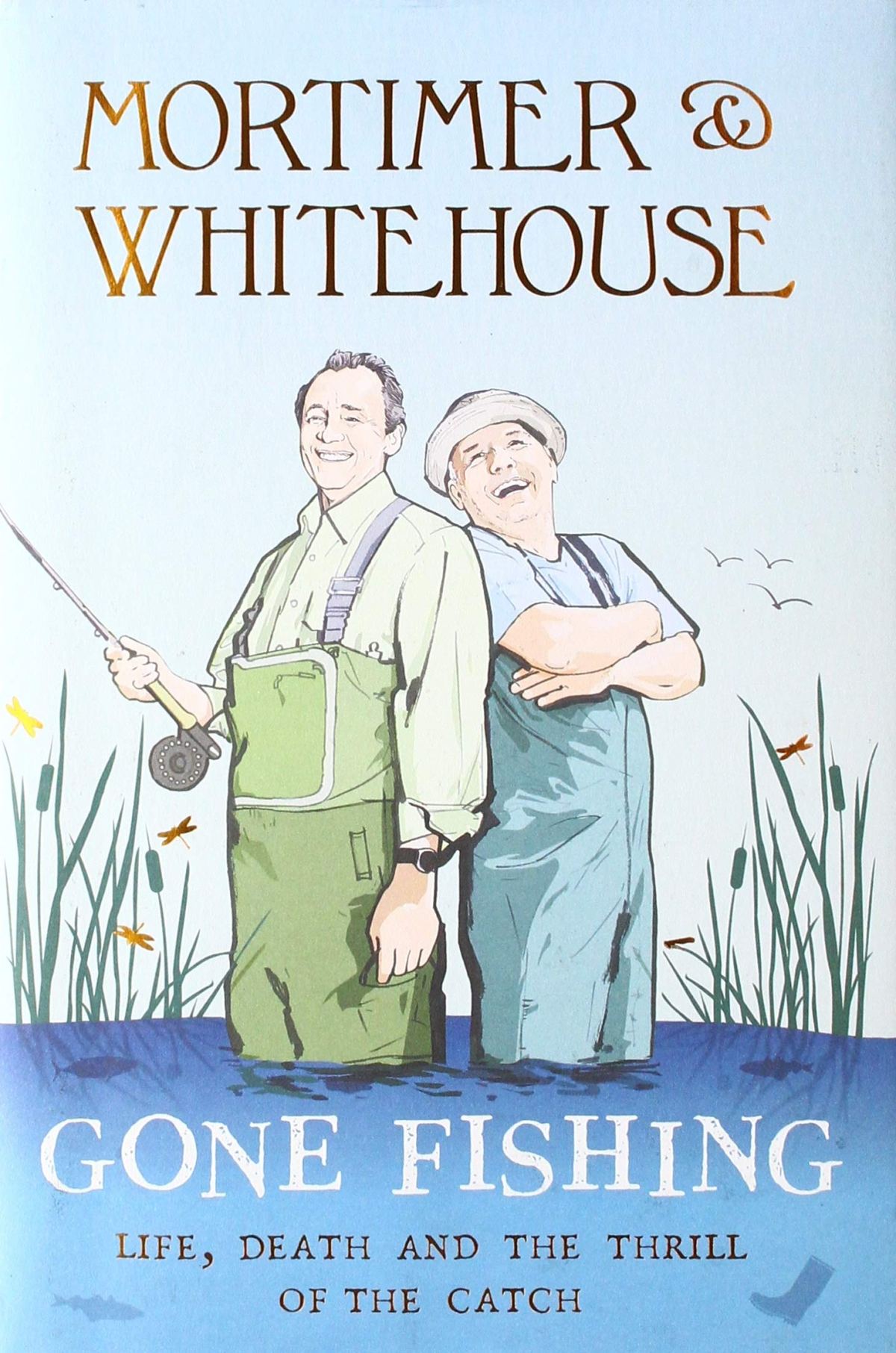
Book Review: ‘Gone Fishing – Life, Death and The Thrill of The Catch.’

Bob Mortimer and Paul Whitehouse have been entertaining the nation for the best part of 30 years. With classic comedy credits like ‘Vic Reeve’s Big Night Out’, ‘Shooting Stars’, ‘The Fast Show’ and ‘Harry Enfield and Chums’ to name but a few, it’s safe to say that the pair are national treasures. Both are people that I admire hugely.

So when they paired up to make a show about fishing, the subject matter…well, it didn’t matter. I was onboard immediately. The result was another cult classic in BBC2’s ‘Gone Fishing’ and the book is borne out of the show.

‘Gone Fishing’ is a great read and as you’d expect from its writers, it’s full of laugh out loud moments. But it’s much more than just a good laugh. The book details the pair’s friendship in a genuinely touching way, while also discussing health, happiness and of course, the art of fishing.

By the far the best parts of the book for me were the sections where Bob and Paul discuss their friendship of over 30 years. For those of you that don’t know, both of them have suffered from heart disease in recent years and both underwent open heart surgery as a result. And when Bob felt he couldn’t go on, it was Paul that reached out, offering to take him fishing. And not long after a TV show was born!

It was the heart health angle that really piqued my interest in the show. Having gone through heart surgery myself a few years back, felt I could empathise a little bit. And so, when this aspect of both mens’ lives was discussed in the book I found myself more than a little choked up.

The book makes quite an emotive start. First we’re introduced to both men, their history with heart problems and then their friendship. The realisation that both could have died felt like quite a revelation for me as a major fan. And the passage when Bob actually discusses the very real thoughts that he had that he was facing up to his own imminent death, makes for a powerful read. It certainly felt like a side of one of my heroes that I’d never witnessed in such detail before. It was discussed on the show, but it felt like the book gave the subject a slightly greater depth.

The book ploughs on; a mixture of humorous anecdotes, explanations of aspects of the show, the locations for the fishing and the episodes as well as some real insight from Paul Whitehouse on how to actually fish. And while this might sound a bit dull to some, I’d say don’t knock it until you try it. Certainly both men have quite an infectious enthusiasm for their hobby and while it didn’t make me want to return to fishing – a hobby I dabbled with as a lad – it did shed light on why grown men stand on riverbanks in all weathers for untold hours on end.

As we move further through the book Paul guides us through some quite encyclopedic knowledge of various species of fish, as well as the more ecological side of the sport. This felt like hard going at times, but it certainly never made me want to put ‘Gone Fishing’ down. By the end, Bob has thrown in some of his favourite recipes for cooking on the riverbank, spattered with his trademark wit and wisdom and in truth, you’ve got all of the knowledge you need to get out there and fish. It’s just a question of working out whether you can handle the early morning starts before getting out and buying the kit.

‘Gone Fishing’ is an optimistic read. Joyous and life-affirming at times, educational at others. If you’re a fan of Bob, Paul, the show or just fishing, it’s well worth a read.

I give ‘Gone Fishing’

Rating: 4 out of 5.

Book Review: Uncommon Type by Tom Hanks

Imagine if you will. it. You’re just about as multi-talented as they come. You once turned into a child at the fun fair, before turning back into an adult with the help of your best mate. Another time, you ran across America, just because you could (and this was after your time in Vietnam and your exploits as a shrimp based entrepreneur). You’ve been a daredevil cowboy, a much-loved television presenter and America’s favourite pilot. Everybody loves you. I mean you even made friends on a desert island once… with a football. You are Tom Hanks.

And then just when we thought there might be a limit to your talents, you went a wrote a collection of short stories.

As a reader, short stories generally aren’t my kind of thing. So a collection of them doesn’t normally work for me. I like the full development of characters and an actual narrative that I feel a novel always brings. But ‘Uncommon Type’ intrigued me when I spotted it on the shelves of my local supermarket. I liked the look of it, but I have to be honest and say that it was Hanks’s name that drew me in and led to me taking the book off the shelves. Yes, I’m that shallow!

Uncommon Type is a collection of seventeen stories, all set in the USA and as the quote on the front of the book says, ‘All American life is here‘. Several of the tales revolve around the same four friends and their various adventures, but then we also have a Word War II veteran facing up to life after active combat, an actor who suddenly and unexpectedly finds ridiculous levels of fame and also the thoughts of a child facing up to his parents’ divorce and the strange ways in which can sometimes move on. So although we’re largely faced with tales of small town America, there’s a great variation in the stories. And one last twist; all of the stories are connected by the presence of a typewriter (hence the title), which while it doesn’t sound a particularly clever or attractive selling point, is carried out brilliantly.

I have to admit, I was hooked from the first page of ‘Uncommon Type’. It turns out that as well as being lauded as an actor and just an all-round nice guy, Hanks can spin a yarn too. He writes beautifully and although there were one or two of the stories that did nothing for me, I couldn’t put the book down for the majority of my time reading it.

As a reader, you’re immersed in the worlds that Hanks places you in, such is his gift for description. Whether it’s small town America or the other side of the moon, Hanks’s prose transports you there convincingly and makes for an excellent read.

As you’d expect from the award winning Hollywood superstar actor, Tom Hanks can write a character! From Anna, an ex-triathlete with a penchant for telling her boyfriend, “Atta baby” through Virgil and Bud, army veterans, both the epitomy of masculinity and typical of their generation and on to American immigrant and stowaway Assan; all are believable and thoroughly engaging. Hanks has created real people that the reader can’t help but care about and ask questions of. And if you’re like me, all the while that you’re in the worlds he creates, watching the characters go about their lives, it’s all being narrated by the man himself! For all seventeen stories Hanks was my reading voice, which, let me tell you, is relaxing to say the least.

I loved ‘Uncommon Type’. It’s subtle eye for detail, charming characters and sense of humour made it a brilliant, engaging read. Although there are one or two perhaps below par tales here, all in all there’s something for everyone. A definite winner that I’d certainly recommend you read.

I give ‘Uncommon Type’ by Tom Hanks

Rating: 5 out of 5.