Close Encounter

Here in the U.K. our first lockdown was quite the experience to go through. It was often eerily quiet with the majority of people unable to work. Large swathes of the population simply stayed indoors and those of us who took our daily exercise allowance found that the streets were often theirs.

Within weeks, people started noticing that in amongst all the quiet, birdsong was prominent. Suddenly, with no traffic noise, the sound of birds singing and chirping became noticeably louder. And I think lots of us found that fantastic. At the time, the weather was great and I can distinctly remember that we would do our Joe Wicks workout from 9am and then afterwards we’d go and do some stretches to warm down in the garden. Listening to the birds at that point become a regular part of our day.

Life has moved on since that point. We’re back in lockdown, but there’s a distinct difference; more people out and about, more cars and less in the way of wildlife as a result. This all changed for a fantastic few minutes for me on a recent Sunday afternoon. The pictures tell the story, but I’ll fill in the gaps. I had been meaning to fill up our bird feeders for a couple of weeks, but just hadn’t got round to it. However, I had a bit of time on this particular Sunday, so I wrapped up and out I went. As soon as I’d done, I felt like I was being watched. And then I heard some beautiful birdsong. Closer inspection of our tree revealed a small bird and when I watched for a further few seconds, I could see it was a robin. What happened next was just lovely and the poem tell the tale for me.

Close Encounter

I hear you before I see you,
a bright chirping preceding your bright feathers,
and then, only feet away, fearless, your red breast makes you known.

The feeders full, you're first to the banquet,
yet it seems you want to pause a while to chat.
I move slowly, but needn't bother as you simply stand and stare,
perfectly relaxed about our meeting despite your vulnerability.

Perhaps you're thanking me for the food.
Perhaps you're just wondering why I'm still here and why this took so long.
I neither know nor care; you've made my day,
brightened a cold and gloomy Sunday afternoon.

Robin. Little bird not even the size of a tennis ball,
yet bold enough to sit within arms length and attempt to hold a conversation,
I could stay here and stare at you for hours.

It doesn’t seem like much happened, but it was just a lovely few minutes. I didn’t even think to write about it until I posted some pictures of the robin on social media and a friend suggested it. Thanks Ruth!

I can’t stress enough just how close this bird got. I think it comes out in the images, but, if it doesn’t it was about three feet away. Close enough to make itself known, but far enough away to show it was still a little wary of me.

At first, as I tried to take pictures, the robin jumped down from the tree and would settle on a branch of a shrub below just long enough for me to see it, and then jump off. It was like it was toying with me. Then, after a minute or so, it just perched on a branch just above head height and started to sing at me, allowing me to click away and take some pictures. Annoyingly, I didn’t think to video it, instead spending a few minutes just watching – and yes, alright, I talked to it as well – before heading back inside, content to leave the robin alone and go and tell my wife about what had just happened.

I’m hoping to see it again and have another chat this weekend. Let me know what you think of the poem in the comments.

Poetry Blog – ‘Early Morning Run’

If you’ve read the blog before or are a regular reader (I don’t know if I actually have regular readers, but there you go…) you might already know that I’m a big fan of running. I’d been a sporadic runner for most of my life until the first period of lockdown when I found the time to really work on my fitness and found myself running on a far more regular basis.

In the past, I’ve dabbled with early morning runs. I’ve always thought they were a good idea and it doesn’t particularly bother me that I have to get out of bed early. I’ve never been one for having a lie in and although I wouldn’t call myself a morning person, I can just about function at that time of day. However, I’ve never taken early morning running this seriously before. In the past I think I’ve just been of the view that getting out of bed and doing a bit is enough. Nowadays – probably because I’ve got myself a lot fitter – I take things more seriously.

So since early November last year I’ve been getting up before 7am every Sunday and heading out for a run. My wife thinks I might be going mad or perhaps having some kind of mid-life crisis, but I’m definitely not! I’m just enjoying running. I don’t think I’ve ever ran this early before, but it’s enabled me to experience quite a lot of brilliant things. I’ve ran along long straight roads with barely a vehicle in sight and watched as the sun comes up. I’ve been able to start my day in absolute solitude, gathering my thoughts and just feeling completely and utterly relaxed. I’m calm while running, rather than panicking about how I’m feeling, whether I’d be able to finish, the pain in a muscle etc. And I’ve had time to think, which has helped me a lot with things that I want to write about. I’ll be taking a dictaphone out with me soon!

With all the solitude, the calm, the energised feelings I’ve had after running, it felt obvious to write a poem about my early morning runs. I’d even been taking photos to help me remember certain things. And so, I sat down and wrote some notes. Sometimes these turn into lines from a poem, other times they just stay as bullet points, until I get the urge to sit and write the actual poem. In the case of this poem, I wrote minimal notes and spent a chunk of one Sunday morning, post run, just writing the poem. There were a few bits scribbled out, I suppose as part of a drafting process, but in the main this was a poem that was written as a first draft. Maybe that says something about my enthusiasm for the subject matter…

Early Morning Run

Although a pre-7am alarm on a Sunday is very much the stuff of nightmares, it’s done now. There’s no going back. I roll from under the covers and stumble like a broken robot across the blackness of the bedroom to halt the alarm, then, after a brief flirtation with the cold tap to awaken my senses, I’m downstairs, my body protesting as I stretch. Finally, when there’s nothing left to delay me, I leave the relative warmth behind.

Outside, a pattering against nearby leaves alerts me to the drizzle. My heart sinks slightly, but I turn and run. As I climb the first hill, the early morning fog rolls down at me. I push on, my bare arms and legs slowly adjusting to the biting cold and by the top, although catching my breath, I’m into my stride.

The centre of town is a place for ghosts, only the gentle pad of my feet on concrete can be heard and there’s only me to be seen. The sun fights a losing battle with the fog as I plod on and the only light to be seen belongs to the occasional cars of shift workers heading for warmth. I afford myself a few quiet words of encouragement, tell myself it won’t be long before I’m in their shoes.

On the outskirts of town I run on the empty road, giving up my territory every so often as early morning haulage thunders past and shakes the pavement. I relax, the only soul for miles around, alone with my thoughts and the constant voice in my head offering platitudes, encouragement, advice. Shoulders back, straighten out, head up, lengthen your stride, keep going.

Further down the road, as I tire, a shiftworker emerges like a high viz beacon and we exchange nods, perhaps each wondering which of us has made the worse decision on this cold Sunday morning. And then, the long downward stretch that signals my way home claws its way from the grasp of the fog and I quicken my pace, as if acting on instinct.

A lone gull lands upon a lampost above my head, like some kind of vulture, but it’s too late. I’m gritting my teeth, summoning last reserves of strength and fighting fatigue; this scavenger will have to wait. I open up my stride as best I can and drive for my finishing line.

Finally, I’m home and fumbling for a key with which to silently open the door in order not to wake my sleeping loved ones. Inside, I move to the kitchen, gulp down water, gorge on fruit and then stretch, thankful to be back, my body aching, but my mind cleansed.

Just a brief explanation of a few things in the poem. The line about stumbling across our bedroom ‘like a broken robot’ is me trying to communicate just how tired I feel when I wake up. There are days when my legs just don’t seem to work and the stiffness means my steps are ragged to say the least. It fascinates me that within about twenty minutes, I’ll be running at pace up a hill! Later on in the stanza I mention that ‘my body protests’ at stretches. I know I should warm up, but I seriously don’t want anyone to get the idea that I’m some kind of ‘proper’ runner!

In the fourth stanza, I mention the voice in my head. that might not be wholly truthful. Often I’m actually talking to myself while out running. While there are times when I thoroughly enjoy it and feel totally strong, there are more when I can’t work out why I’m working out, so to speak. And so, often I’ll have a little chat to myself and tell myself that things aren’t that bad or try to kid myself on that it’s all in my head and that my legs are, in fact, strong.

In the fifth stanza I mention a long downward stretch. I’d like to point out that while it’s long, it is barely downward at all and that some of it means going back uphill. I almost changed the poem at the point as I couldn’t stand people thinking that a huge chunk of my run is down a big, steep hill. It’s not. But it’s downhill enough for me to pick up the pace!

The gull in the sixth stanza genuinely frightened me. At first, out of the corner of my eye, I genuinely believed that it was a bird of prey and that it might just take a swoop at me. Seeing it was a gull was a relief, but I still looked at its massive beak and felt a bit of trepidation!

Let me know what you think in the comments. I hope you enjoyed the poem as much as I frequently tell myself I like my early morning runs!

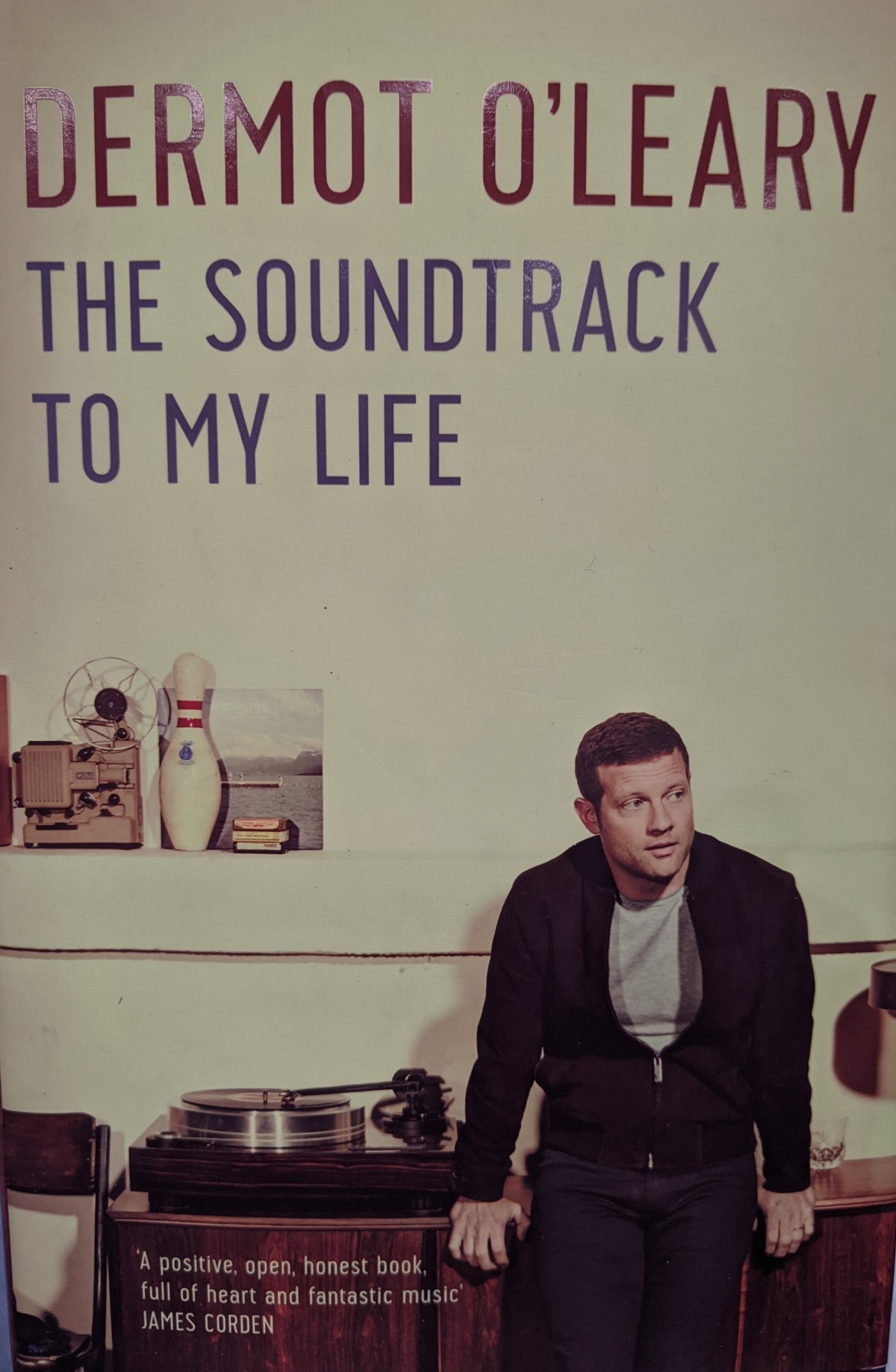
Book Review – The Soundtrack to My Life by Dermot O’ Leary

Dermot O’Leary, for those who don’t know, is the presenter of The X-Factor in the UK. He also hosts a radio show on BBC Radio 2 and appears almost ubiquitously on TV as a presenter, talking head or just as the face or voice of various adverts. In short, you could be forgiven for getting a little irritated by him!

As the presenter of The X-Factor he is quite a divisive character. Not in the same way as say, Simon Cowell, but divisive all the same. There are probably thousands of people who just don’t like him because of his association with the behemoth that is that particular franchise. Whether that’s fair, I don’t know and I daresay, Dermot O’Leary doesn’t particularly care.

For the record, I like Dermot. But then again, we go way back. I remember Dermot as the fresh-faced presenter of a programme called T4 years ago, which for many of us represented perfect hangover TV. As such, I feel like I’ve followed his career a little bit ever since. Personally, I find him funny and quite an engaging presenter and while I might not like watching The X-Factor, I would gladly watch him on other shows or tune in to his radio show simply because he seems like the kind of bloke I’d be friends with (You know, if massive TV fame hadn’t got in the way!).

And this is sort of where the book comes in. It’s part autobiography and part discussion of music. Dermot whisks us through his forty odd years on the planet via the medium of music, linking various anecdotes to many of his favourite songs and artists. So it’s an autobiography with a ‘twist’, which Dermot himself explains in the book. And it’s an understandable twist given his experiences within the world of music, from being a regular gig-goer in his teens and onwards to presenting shows such as T4 and The X-Factor and then his long standing time as host of various radio shows from XFM to BBC Radio 2.

If you’re a music fan, ‘The Soundtrack to My Life’ will most likely prove to be an interesting read. Dermot knows his stuff and certainly has a wide range of tastes and influences. He links infleuential artists, bands and songs alongside key moments and anecdotes from his life to pretty good effect. And if you’re insisting on attaching that X-Factor stigma to him and expecting that his list will simply be chock-full of One Direction and Little Mix, then you may well get a number of pleasant surprises. Sadly though, there’s no mention of Same Difference or Jedward…

Amongst the choices you’ll find some of music’s big hitters – from Springsteen and The Rolling Stones to Amy Winehouse and Beyonce as you’d reasonably expect from a man who’s spent quite a while mixing with some of music’s big hitters. But it’s not at all predictable. In among the star names are other less well know acts like Brendan Shine (a nod to O’Leary’s Irish heritage), Terry Wogan and Beth Orton. Add in tracks by Guns n’ Roses, Wham, Ian Brown and The Killers and we’re being served up a varied musical banquet here.

The soundtrack got all the more special for me when reading about tracks from the bands Elbow and Athlete. For starters O’Leary picks a very early Elbow track – ‘Newborn’ – which just so happens to be one of my favourite ever songs. It’s the band at their most melancholy and vulnerable and in a funny way, it was a nice surprise to find it nestling alongside The Macarena in a book by the bloke who presents one of the most popular shows on British television. It was nice to read mention of Athlete as not only are they a band that I like but one of their tracks – not the one chosen in the book – is a song that I’ll forever associate with the birth of my daughter and the frequent trips to hospital that I would take in those early days of her life.

Overall, the book works. O’Leary’s life story is, to a point, a familiar one. The suburban upbringing, the ordinary school days and the hard work that follows in order to make something of yourself. It just so happens that this ordinary boy went on to become probably one of the most recognisable faces on British television. The inclusion of the songs not only gives us a break from the usual ‘star’ autobiography format of a very dry, unremarkable account of someone’s life, with maybe a few quoteworthy opinions thrown in to grab the odd headline and sell a few more books, but it serves to give us a little more insight into the life of someone who many of us can say we’ve kind of grown up with. Others might find it interesting in terms of how it might change their their X-Factor based opinions.

It’d be easy to criticise people like O’Leary just because of The X-Factor, but as he points out himself, if you’re offered a huge gig in the field that you work in, you’d be silly to turn it down. O’Leary dreamed of working in TV from leaving school, so when the biggest show on the box comes calling, you’d be a mug to turn it down. And while this might reject things like principles, I daresay that showbusiness doesn’t always have time for such things. So while we may frown at The X-Factor, it’d be strange to not accept the fact that a presenter might want to present it.

One small criticism of the book comes with the style of O’Leary’s writing, which did get a little irritating at times. He almost abuses parentheses and at times it was a little troublesome just to follow the narrative. And as a lover of parentheses and the odd tangent myself, I can see the irony in not enjoying reading through so much of it! But sometimes the tales take a few too many turns and it did become a little grating.

Overall though, ‘The Soundtrack of My Life’ is an enjoyable read. It’s an idea that’s been played with before, most notably in Nick Hornby’s ’31 Songs’, but O’Leary’s light hearted tone makes sure that it’s not particularly derivative. This isn’t a taxing read. You’re not going to experience any emotional trauma or find yourself fighting back the tears at the author’s pain. But if what you’re looking for is an autobiography with a bit of ‘quirk’ then this might well be for you. As a fan of music and radio, I enjoyed it and I think you would too.

I give Dermot O’Leary’s ‘Soundtrack To My Life’…

Rating: 4 out of 5.

Poetry Blog: Transition.

This is a poem I wrote a while ago now, late August in fact. It was around that time that we were preparing my son – our youngest child – for the step up to high school. In the U.K. schools had been closed for months, but he had gone back to primary school for the final half term, as the government opened them up again to Year 6 students in a bid to make transition to high school that little bit easier. It didn’t work, but that’s besides the point.

I happened to be looking through some photographs and found one that my wife had taken of our son at the start of primary school, as he headed to his first day of Reception class. She’d stood behind him and having let him walk a few steps further down the path and – no doubt crying – had taken a photo of him as he walked off. Every visible piece of uniform is just too big and his backpack takes up his entire back. He looks tiny and vulnerable and not ready for school at all. Suffice to say that while the image always makes me smile, it still makes me feel sad too.

At the time, we’d briefly debated not sending him to school. We genuinely didn’t feel he was ready for it at all and so we’d even gone as far as tentatively researching moving to Scandinavia where children don’t start school until later. I think (my wife especially) we just didn’t really want to let go. In the end, we relented and sent him. But every time I see that picture I can’t help but feel we made the wrong decision!

As I looked at the photograph last summer it brought the memories flooding back, but it also made me think about how quickly both my children seem to have grown up. Within a few weeks of that moment they would both be high school students and essentially a large chunk of their childhoods were over. And specifically where my son was concerned, my precious little boy was no longer the tiny child in the photograph. With time on my hands, I wrote the poem you’ll find below.

Boy

That picture will stay with me as the summers fade into autumn. You, walking ahead of your mum, in a uniform that you’d grow into eventually and an over sized backpack straining at your shoulders. Your jumper a red light telling us to stop and let you go into a bright new adventure.

We’d thought to avoid this moment by moving somewhere where the monster didn’t want you for another couple of years, but stayed, defeated by normality and a system that we did not like; school became an enemy that we felt we couldn’t fight.

Your mother returned to her car and cried that day, her body inert as the tears tumbled silently down her face, mourning the loss of her sunshine. I spent the day thinking of the three of you – my big, brave boy, his sister there, determined as ever to look after you and your mother; robbed, cheated, bereft. How could I protect you all?

For years from this moment you’d tell us, ‘Did you know?’ tales at the table, your new found knowledge taken, processed, committed to memory, worn like a brand new suit and then shared generously like your cuddles. Parents’ Evenings revealed what we already knew; everybody loved you, fell under your spell, like insects stuck in a web.

Years later, and a day after my heart broke down, I sat weakly watching you perform in your school play, expecting to cry uncontrollably, but instead mesmerised by your voice, your courage, your talent, and as our eyes locked I wondered if my wounded heart might now burst with pride.

Now, you prepare yourself to face new questions, leaving your cocoon to become a magnificent butterfly one day. Your mother has already shed the expected quiet tears, sought solace by burying her head into my chest, while I held her tightly without possession of the balm of words that might soothe.

Before we know it there will be another photograph and it will hurt to look at that too, You, in a new uniform that still won’t fit, walking headlong into the next five years of your future, stoic despite the nerves, wiser and still eager for more ‘did you knows’.

I will fret daily until I know you’re safe, drift off thinking of you and your new experiences and race home nightly to steal a kiss or lie beside you, clutching your shoulder while you let me in on your brave new world.

I have watched, awestruck as you’ve grown, felt my heart ache as you blushed at your achievements, daydreamed about the impact you might have on the world. Now, I urge you, with every ounce of strength I have, to conquer new worlds, open yourself to those new experiences and grasp at all of the future offers that may come your way.

My son didn’t seem ready for high school, unlike my daughter who three years previously had been desperate to move on. I worried about them both though, fretted through minute after minute of my working day, desperate to just walk back through my front door and see them, ask them how it had all been.

Both have had interesting ‘rides’ through high school thus far, as probably any kid does. They’re doing well though and both survived those first days! As did their parents! My son isn’t quite so full of wonder as he had been at primary school and is perhaps finding the transition quite tough. We suspected as much, given that he missed nearly all of the last 6 months of primary school and Year 6 and didn’t get any real transition between the two schools due to Covid-19. So all the worry that is conveyed in the poem wasn’t misplaced.

It’s a very personal poem and although I talked about him heading to high school quite a bit with my wife, my son and some friends, this was my main way of opening up about it all and probably where any actual emotion came out. I think my wife showed enough devastation for both of us at the time, so it felt important that I stayed strong. I can’t remember too much about it all now, but I imagine, writing late at night that I must have shed a tear or two. It’s such an emotive photograph!

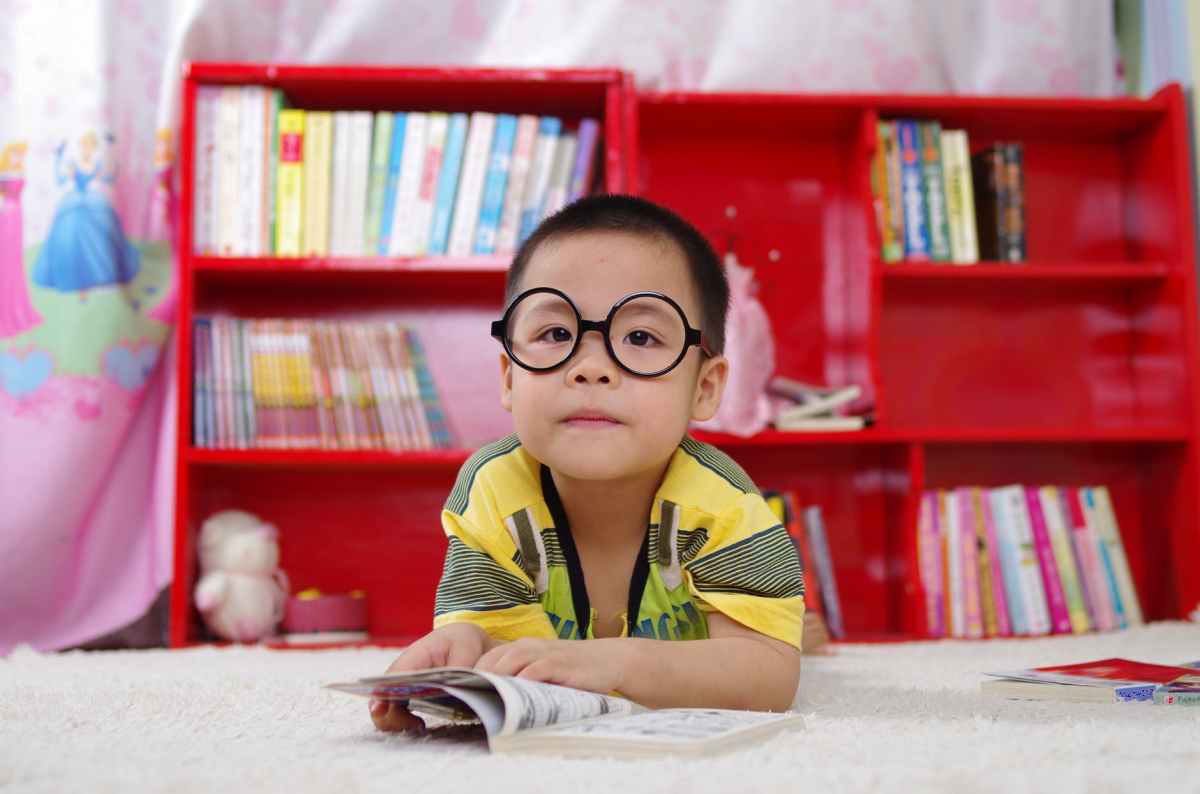
I hope that if and when other parents read it they’ll perhaps recognise their own feelings and experiences in there too. It’s a longer poem, but I’d like to think that’s alright, given the subject matter. I won’t explain any intricacies of the language in there as some of it is personal to both my wife and son and their relationship and it’s probably not my place to share so fully. On a similar note, I’ve not used the photo that I tried to build the poem around, as again I don’t think it’s one that needs to be shared with the world (or the few people who’ll read this!). So the child in the image accompanying the poem isn’t mine! He just looked small enough and vulnerable enough to represent the subject matter!

Most of all, I hope you enjoy the poem. I hope it doesn’t bring back too many traumatic memories in any parents who read! When a child moves up to ‘big school’ it really is quite the event and I felt it was just too much to deal with unless I got it down on paper. Feel free to let me know what you thought in the comments.

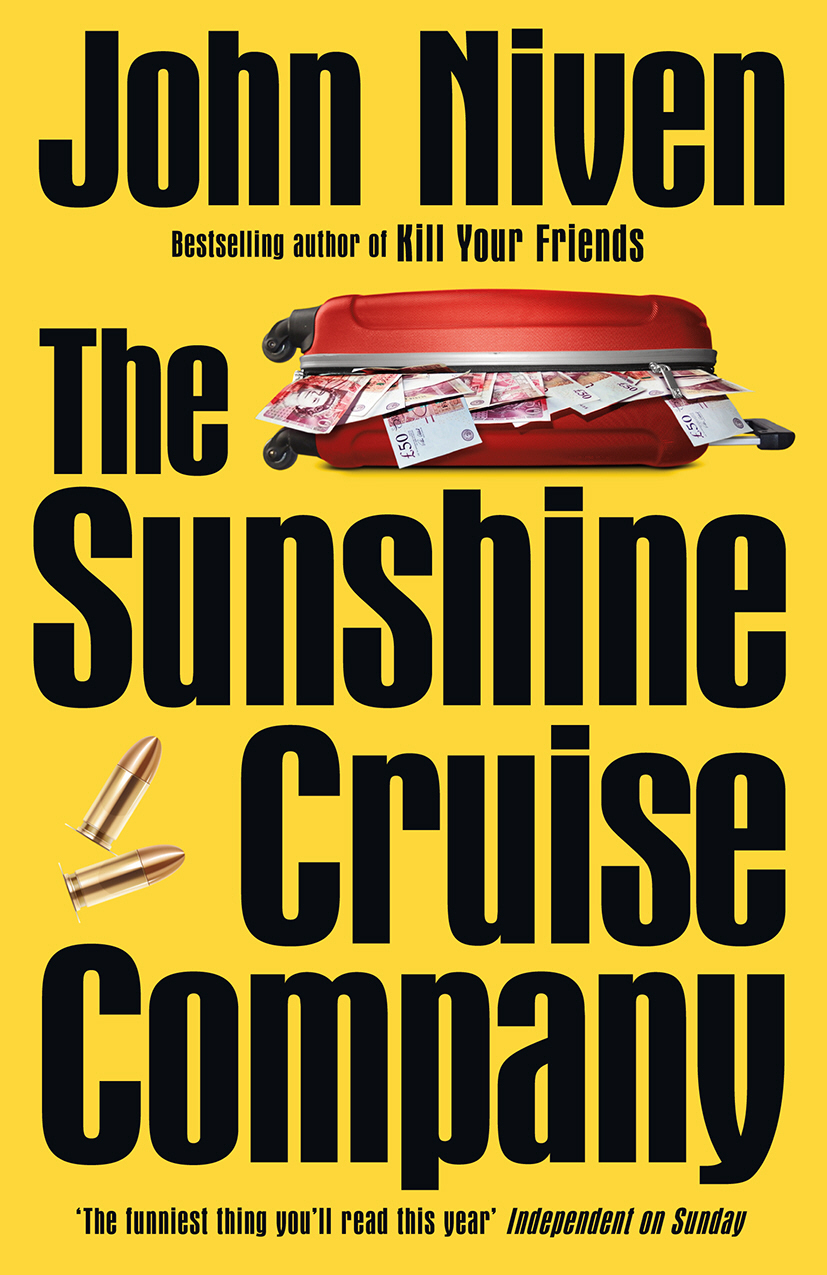
Book Review: The Sunshine Cruise Company by John Niven.

I don’t know about you, but when I think about bank robbers – which admittedly, I don’t do too often – I think about shaven-headed, burly men with gruff cockney accents. Even the ones from the north of the country or even from another country entirely would have gruff cockney accents for me. And without exception, they’d be called something like Big Dave. Or Knuckles. I certainly don’t think of bank robbers as respectable ladies nearing pensionable age. But John Niven did and thank goodness for that.

As one nears sixty years of age, you’d hope to have life sorted. Sussed out. You’d hope that, as retirement beckons you forward, you’d be well prepared for what comes next and in actual fact, looking forward to taking things easy or even maybe taking on new challenges. Susan Frobisher and Julie Wickham fit into this category in many ways. Susan, in particular, is looking forward to the day when her husband retires from his job as an accountant; hangs up the calculator and the spreadsheet, so to speak. Her friend Julie just wants something different from scraping a living working in a care home.

In a way they both get their wishes granted. But this is far from a simple novel with a nice happy ending where two friends wander off into the sunset. No, Susan and Julie are forced to embark on a Thelma and Louise style adventure in order to get anywhere near the kind of ending that they want.

‘The Sunshine Cruise Company’ is an absolute romp of a tale as Susan and Julie (as well as Ethel, Jill and Vanessa) are forced to contemplate a life on the run from not one, but several police forces. And it’s hard not to want them to succeed. After all, it’s all Susan’s husband Barry’s fault. But for his ever-so-slightly different sexual adventures and a bit of taste for the high life, the girls wouldn’t have had to do any of this. So when you look at it like that, robbing a bank (while harming no one) is actually an acceptable course to take. Throw in the fact that some of the loot goes towards saving the life of a child, some of it helps out an old lady in a wheelchair and some of it sets up a young woman for an education that she otherwise wouldn’t have had a hope in Hell of getting, then you’ve got to ignore the amount of criminality here and hope they all make it to freedom.

This really is a brilliant novel. Centred around a group of characters who Niven has made both likeable and funny, it’s a story that works really well, despite its obvious far fetched nature. Far fetched or not, as a reader you’ll find yourself not really caring about that and just wanting them to succeed in their quest to avoid justice. There’s almost a Robin Hood type element to it, as we root for Susan, Julie and the gang while hoping that our Sheriff of Nottingham figure, a hapless detective called Boscombe, falls flat on his face, which he frequently does.

All human life is here. There’s Ethel, a wheelchair bound thrill seeker who is hell bent on living life to the full. Then we have the aforementioned Boscombe, the kind of man that we’ve probably all worked with and probably all did everything we could to avoid; a slob, a sexist, a man who looks down his nose at anything he doesn’t understand or agree with; in short someone who despite being on the side of good in all of this, you’ll laugh at more and more with every successive failure. And then of course there are Susan and Julie, the beautiful and vulnerable Vanessa and organised crime boss Tamalov who brings a tangible sense of menace.

‘The Sunshine Cruise Company’ has more twists than you can keep track of and many that you just won’t see coming. Just when you think that Susan and the gang are safe, they’re not and just when you think they’re finished, something happens to keep their adventure on track. And it’s like this until almost the final page, which means that you simply won’t want to put it down. I loved this book and after it sat in my ‘To Read’ pile for at least a couple of years, I was thrilled to bits when I finally picked it out and joined Susan, Julie, Ethel and even the loathsome Boscombe on the adventure of a lifetime.

I give ‘The Sunshine Cruise Company’

Rating: 4.5 out of 5.

Poetry Blog: Christmas Quiz

There’s nothing overly complex or clever about this poem. Put simply, I wrote it after conducting a Christmas quiz with one of my last classes of the term just gone. It just struck me as such an excellent scene in the classroom – loud, tense, excited, never still. A bunch of children working together in teams and despite the fact that some of them would rather appear anything but excited, the element of competition is absolutely impossible to ignore!

So while acting as the showbiz style quiz master, I realised that this was an atmosphere that was too good to miss out on; so I wrote some notes and then sat down later and threw them together as something a bit more poetic. And here’s the result.

Christmas Quiz

Catching them unawares is the really fun part. In fact, you could argue it’s downhill all the way after that.

As the quiz is announced the air crackles with a tangible excitement that is momentarily pierced by the feigned boredom of the cool kids. It won’t be long though, before they’re animated in glorious technicolour, shouting out, competitive as Olympians and quietly singing the words to Christmas carols in the missing words round.

With each question the tension builds and instead of ‘Lords ‘a leaping’ we have boys ‘a bouncing, girls ‘a screeching in teams competing and by question ten the chatter has become a rabble, has become a riot and we can no longer truly claim that all we have is a quiz.

This, in fact may well be a matter of life and death.

By the end of the quiz we’ve seen and heard it all. The careless calling out of what is very definitely the ‘right’ answer with a wink, the throwing up of arms, the almost audible straining of brains as the tip of the tongue is explored for an answer.

This is the chaos of the circus, the madness of rush hour and the irregular noise of the orchestra warming up all mixed together in the same bowl. This is the Christmas quiz.

If, like me you’re a teacher or you work in some capacity in a school, you’ll no doubt identify with the chaos of the Christmas quiz. If you’re not, then imagine a child’s birthday party, but with questions. The two will have much in common.

With the poem I wanted to capture the chaos and the noise, but also the subtleties – things like boys (and it’s always boys) pretending they’ve called out their right answer just a little too loudly in order to convince a rival team to write it down and thus lose a point. Sat at the front of the class with a blank sheet of A3 paper, I was able to note all of these things down; the attempts to cheat, the confidence even when it’s very clear that you’ve got completely the wrong answer and the looks of concentration on faces when kids search for an answer that they know, but haven’t the slightest hope of committing to paper!

The Christmas quiz has that element of fun that something like a revision quiz doesn’t have, but it still retains the desperate will to win in all who compete. And for that matter, despite the irritation of the rules being completely ignored within seconds, as the excitement kicks in, and all Hell breaking loose by about question three, it’s a whole load of fun. It definitely merits having a poem written about it…maybe not in your book, but very much in mine! I hope you like it and I hope, with some of my younger readers, it’s inspiration enough to join the teaching profession!

Poetry Blog – ‘Distraction’

I couldn’t think of a name for this poem for few days after I’d written it, but ended up settling on ‘Distraction’ because that’s exactly what it was.

I was sat in a lesson at work – I’m a teacher. I wasn’t teaching, but I was observing another member of staff in my role as mentor. The lesson wasn’t dull, so that wasn’t why I got distracted. On the contrary, it was going well, I’d filled in the sections of the observation form and we were at the point where I probably wasn’t going to see anything new. I try not to intervene with behaviour issues while I’m observing, so rather than keep too watchful an eye on the class, I drifted off for a minute and happened to glance out of the window. At the moment our lessons last for 2 hours and 50 minutes – thanks COVID-19 – and so, believe me, there’s plenty of time to drift off and still complete a perfectly good observation!

It was the view that set me off. From my seated vantage point there wasn’t actually a lot to see; mainly the tops of some unremarkable school buildings and the odd bird. But the sky was the main thing that caught both my eye and my imagination. Not to be too much of an old hippy, but it was just a lovely blue colour, which if you’re not familiar with English weather, isn’t that common. I started to scribble down some notes and even took a furtive visit to the window to take in the view properly, before scribbling for a little while longer. Anyway, the result was the poem you’re about to read which I completed from the notes a couple of days later while I was supposed to be teaching a class. Just kidding…

Distraction

From the window, the faint blue of a sky occasionally diluted further by barely there clouds, distracts me. Like the sky crayoned in on a child’s drawing. I take it all in, seeing the blue interrupted where the vapour trails of all too rare planes impose themselves.

Plump, cartoonish gulls congregate on rooves, to take the air, shoot the breeze and socialise. Another nod to a child’s naïve drawing. Even the puddles on the flat rooftops seem to bask in the unexpected sun.

In the distance a church steeple dominates the view, as if reaching upwards like some scarecrow that attempts to scatter the clouds that spoil the sky. The sun sparkles in windows that now seem to smile their approval.

Houses stand suddenly more proud than they have in weeks, a carpet of now inviting green at the front of each and the autumn trees give one last exhibition, their near fallen leaves for now like peacock feathers in the afternoon light.

The noise of a giddy school yard now travels further, no longer softened by the gloom of the fog. Even the brutalist confrontation of the nearby pylons is transformed into something, if not beautiful, then at least more acceptable to the eye.

My workplace is at the top of a big hill and from the classroom that I was sat in, it overlooks quite a lot of countryside, the town of Ossett and parts of Wakefield. The M1 motorway is neatly hidden behind another hill and it’s actually a lovely far reaching view. You can even see a couple of enormous power stations many miles away on a clear day such as the one that I was writing about. Even the power stations take on a certain sense of majesty on days like these. It’s not the first time that this particular view has distracted me.

With this poem I was trying to emphasise just why I’d got distracted in my language choices. I hope it doesn’t come across as being a bit pretentious. Especially if you know the view! But those seagulls really did look like someone had drawn them in and the sky seemed inconsistent in it’s colour, like a child’s drawing when they’ve got tired of colouring and just left bits blank or slightly less blue than other sections. In terms of weather, for me there are few better days than a crisp, bright, blue-skied Autumn day. There’s something about the way the light falls and the subtle tones in the sky and the trees that make them very special and I really wanted to convey that in a better way than just saying how blue and cold it looked.

Distraction in general is a constant feature of my life. It has been since childhood and I would still say that there are portions of every day where I’m in a world of my own, not ignoring people but distracted. It might be thinking of things to get in the supermarket, an upcoming football match, a passing aeroplane…literally anything, I’m that vacant! Alternatively though, I might just have lines in my head for the introduction to a blog or a stanza of a poem. Whatever it is I think it’s the bane of my wife’s life given the amount of instructions she is forced to repeat to me.

Unfortunately I didn’t take a picture. It was bad enough that I drifted off for a few minutes of the lesson. I think reaching for my phone and taking a picture would have been a little too rude. So, I hope the poem does the view and the afternoon justice. By all means let me know what you think in the comments.

Book Review – The Cabin at The End of The World by Paul Tremblay

We’ve surely all imagined the same kind of relaxing, fantasy weekend. While there might be some subtle differences to our individual plans, I’m sure you’d all agree that if that weekend included time spent in a remote cabin set by the side of a beautiful lake in the company of your nearest and dearest, that’d probably just about hit the spot, right?

Well, let me be the first to warn you, when you get this relaxing break, if I guy called Leonard turns up looking all friendly make your excuses, abandon your utopian weekend and run as fast as you can!

Wen is 7 years old and after a tough start in life, seems to have very much found her feet. Wen was adopted as a baby by her now dads, Eric and Andrew and moved halfway across the world from China to a new life full of love in Boston. There have been bumps in the road along the way, but now, as a big girl she’s settled in school, has friends, is making decisions of her own and enjoying quite the fulsome life. These trips to the countryside are common place nowadays and it’s good for her, daddy Eric and daddy Andrew to get away from the stress of city life and spend some quality time exploring the wilds of New Hampshire together. And then, while she’s having a ton of fun catching and naming grasshoppers in the garden in front of the cabin, that guy called Leonard shows up.

Leonard is a giant (not literally), but although she’s a bit unsure, Wen isn’t scared. Despite his size, Leonard is friendly and even helps her find more grasshoppers. He helps her name them too. Stranger danger briefly crosses her mind but before she knows it she’s chatting away to him and discussing school, her hatred of broccoli and her upcoming two birthday parties, like they’ve been friends for years. In fact, after a short while, she decides that she and Leonard now actually are friends. And that’s when, Leonard’s other friends turn up. Three of them, armed with what can only be described as terrifying home made weapons.

From here on in ‘The Cabin at The End of The World’ picks up the pace and never really slows down again. Brilliantly written, this thriller has more than enough twists and turns to keep you guessing until the end. Dystopia, horror, fear, tension and violence; it’s all here and it’s packed into every page.

However, ‘The Cabin at The End of The World’ is much much more than just a bloodfest. In fact, in terms of blood there’s relatively little to go around. The horror and the thrills here are largely psychological and despite the obvious presence of the bad guys, it’s difficult to really dislike any of the characters. While Leonard and his friends are certainly threatening you’ll find yourself listening to their reasons for being there and as certain things happen, maybe even beginning to believe their schtick.

Brilliantly though, every time you lower your guard, Tremblay add a new twist and you’re forced, breathless, to reconsider your view of what’s unfolding in front of you. When you think a safe status quo has been settled upon, Tremblay reminds you that it’s anything but. And when you think that you can definitely see what’s coming next, he throws some metaphorical mud in your eye so that you can’t see for a while longer and by the time you’ve cleared it away, things have changed.

It’s hard to decide whether Leonard and his friends are part of a very sophisticated cult or whether they themselves have actually been duped. Each one of the four carry a subtle menace, while maintaining an air of friendliness, making them both the subject of our suspicion and loathing as well as a group of people that we could see ourselves easily getting along with. It’s a sign that ‘The Cabin at The End of The World’ is a real winner when not only does the reader fall for the charms of the obviously wonderful Wen but they also see possible friends in three of the four bad guys.

‘The Cabin at The End of The World’ is a brilliant read. A real page turner where just when you think you’ve got a handle on what’s going on, the rug is pulled from under you. It doesn’t matter whether you’re a thriller or horror fan at all; this is just a fantastic book. You’re engaged from the very start and you have great characters, a hint of dystopia, elements of horror and the sheer thrill of what will happen next to keep you going. And at the heart of it all there’s just a really good story. I loved reading ‘The Cabin at The End of The Word’ and would give it…

Rating: 5 out of 5.

Poetry Blog – ‘Unused in Pandemic.’

2020 has been one hell of a year. Of course, we can put that down to just the one thing; coronavirus. Like something out of an unbelievable Hollywood blockbuster, a pandemic struck killing well over a million people worldwide. With it, our lives and lifestyles changed almost beyond recognition.

Confined to the house for a lot of the time, I did a lot of writing. The blog posts increased, but I also found myself experimenting with writing poetry. While the subject matter of the poems was often wide and varied I couldn’t help but keep coming back to lockdown and coronavirus.

It occurred to me that there a lot of things that I could no longer do. Simple things like work, see friends and family and attempt to have some kind of interests in life. But it also occurred to me that there a lot of everyday things that were simply off limits during the pandemic. Cash, for instance. Even my window cleaner had us paying by internet banking. I worried that I wouldn’t remember how to fill up the car when the time came for me to do it again and it even concerned me that simple things like shopping in the supermarket would be almost unrecognisable once they went back to normal. Out of all this came a poem about the some of the redundant objects that were now in my life.

Unused in Pandemic

Pandemic itself was a word rarely used round these parts. But to paraphrase a great man, these parts they are a-changin’. These days, as well as bringing death, fear, paranoia and the strange bumping of forearms by way of saying a more hygienic hello, it leaves in its wake a number of redundancies.

I’ve learned to live, for the most part, without a car. In turn, I have rediscovered my feet. I have left lonely shirts hung up, ironed or bundled on a shelf, crumpled and lifeless. Ditto suits and ties. However, in a U turn that any politician would be proud of I have begun to adorn my middle aged frame in undignified, clingy and regularly mismatched leisurewear.

A similar thing has happened in the shoe department where brogue is now rogue, usurped by a much plainer choice of trainer. Eschewing technology for horticulture I have ditched the fucking infuriating laptop and transformed, all too early sadly, into my father via spade, weeding implements, lawn mower and trowel. The planner is no more, replaced by an endless stream of envelope mounted bullet point lists. A laissez faire version of keeping organised and meeting targets.

Some days I don’t even wear socks, just pad around our pad barefoot, like some kind of castaway from society on an unchained island, occasionally seeing a speck on the horizon and imagining it’s my ticket back to normality. But it’s usually just a pebble, dragged in on a trainered foot. How long before I forego clothes altogether and embrace wandering round in the altogether during daylight hours. A second wave? A third?

For now I will continue to gaze in the direction of my passport and hope that should naked days come, I’ll have used it to head for warmer climes and a more continental acceptance of an out of shape, hairy white body.

I hadn’t looked at this poem in a good few months and it turned out to be a little less polished than I’d have liked. Not quite unfinished, but definitely in need of attention. In fact, at the side of the page there was a long note scribbled about my Nectar card, which was itself massively unused in the pandemic. I liked what I’d written but it didn’t fit in the poem when I’ve looked again and so I’m going to sit down with those notes and write another poem…about my Nectar card. Tragic really.

Anyway, the whole poem reminded me of how carefree things were when we were locked down. There was definitely something altogether healing about the whole process despite all of the negatives. I hope this tone came out with the clothing section. It was actually strangely liberating not to have to be ironing work shirts or wearing a suit and tie every day, even though it’s actually something I like being able to do.

For anyone who knows me and is actually feeling a little concerned, don’t worry; I’m fairly certain I’m not going to resort to naturism any time soon. I’m certainly not shy in terms of the human body, but I’m kind enough to realise that it’s not the time to inflict mine on the world! Had lockdown gone on another six months though, well who knows…

As ever, I hope you liked the poem and I’d be interested to hear people’s thoughts, so feel free to leave a comment.

Poetry Blog – ‘Lockdown Museum’

This was a poem I wrote during our first period of lockdown. It was early summer and I sat down outside with an idea for a poem; something to remember lockdown by. Now, when you think about it, we’re not going to need anything to remember lockdown by. I think, for most of us, it’ll be firmly etched on the mind forever. For some of us lockdown brought the heartache of not being able to see family and friends, alongside thoroughly bizarre sights like fleets of empty buses on the roads, pubs and shops remaining closed and the sight of an oncoming family during your daily exercise stint striking fear into your heart as you played a strange game of chicken about who would cross the road first. And then there were the sounds…oh wait, with everyone locked away there were hardly any sounds!

For other people lockdown quickly lost its importance because apparently they weren’t allowed their human rights. Human rights such as being able to get ridiculously drunk in pubs every weekend, being able to walk down supermarket aisles any way they wanted and having to forego their right to ignore people’s personal space in shops. The term Covidiot quickly became a tired label, but it never lost its accuracy. It’s a hard life for some.

I decided – for some unknown reason – that I wanted to use rhyme in this poem, which is something I rarely do. It was a bit of a challenge to come up with rhymes that didn’t feel forced and, as a result, the poem took me a lot longer than usual. Another result, in my opinion, is that it sounds like I wrote it in Year 8. Sadly, I didn’t. So, a glowing reference for the poem from its writer then!

Anyway, here’s the poem, so I’ll let you judge it and its merits. You, dear reader, might just prefer a bit of rhyming…

Lockdown Museum

With 2020 fast being referred to as a hell of a year I’ve come up with my own commemorative idea. A grand exhibition with a pandemic theme, I’ve decided to create a lockdown museum.

With schools closing in early March, some educational artefacts would really look the part. Board markers, a highlighter, some stickers for praise, my own now redundant planner to prove I worked some days, a well worn copy of Shakespeare’s Macbeth, a metaphor for the tragedy, disruption and the stress.

For the NHS and all of the intrepid frontline staff there’s PPE, rubber gloves and the obligatory mask. A child’s painted rainbow and a Thank You sign, pots, pans and applauding hands to represent that time, a video of Captain Tom, later made a knight, a latter day icon to help ease the nation’s plight.

A plethora of lockdown paraphernalia would make up all the rest unusual items that helped every day as the virus put us to the test. A beer pump, idle, to mark that pubs were closed, A ‘No Entry’ sign for supermarket aisles as well as empty roads. A ‘PE with Joe’ T-shirt and trainers for the boom in exercise recordings of Zoom quizzes, Teams meetings and House Parties arranged and on a giant TV screen, those daily briefings play to remind us that everything changed.

And perhaps, if hearsay’s true and this virus means there’s a new normality, our museum will grow and never be complete until a vaccine sets us free.

So there it is. A poem, that now I’ve read it through a few more times, I’m a little more proud of. I hope it captures the tone of those times, although I don’t think it quite cuts it where our second period of lockdown is concerned due to the sort of half baked nature of it all. Clearly, the first lockdown was very different.

I feel that there are some references that might need explaining, as I’m aware that not everyone who reads my stuff is from the U.K. So here we go.

Firstly, let me assure you that the first rhyming couplet works. The words ‘year’ and ‘idea’ clearly rhyme and I’ll have nothing said against it, even though if I read it in my accent it clearly doesn’t rhyme at all!

Then, in the second stanza, the reference to my ‘redundant planner‘ is there because just before schools closed I was sent home as I was classed as vulnerable to the virus. I didn’t work again until this September, spending 6 months attempting to work from home and fighting with a particularly unwilling and rebellious laptop. Thus, my planner was largely left unused. Oh, and I’m a teacher by the way, for those who didn’t realise.

The ‘pots, pans and applauding hands’ refers to our weekly clap for the NHS, performed at 8pm in doorsteps all around the country. To show appreciation for their heroic work people would stand outside their houses and clap for two minutes. This then quickly took on a new dimension as people added bashing pots and pans, bin lids etc to the noise they’d make to show their appreciation. Very, very British if you ask me!

‘Captain Tom’ from the same stanza was a 99 year old, retired soldier who took it upon himself to perform a sponsored walk of laps around his garden in order to raise money for the NHS. His aim was to raise £1000, but as his efforts became bigger and bigger news, he ended up raising £30,000,000 instead and was later knighted by the Queen. Arise Sir Tom and God Bless us all!

The penultimate stanza then references several things that stood out about everyday life in lockdown, my favourite being ‘PE with Joe’ – the fitness expert Joe Wicks would run exercise classes every morning via his YouTube channel and even on a quiet day thirty thousand people would be squatting in unison! What an endearing image! I personally became borderline obsessive about this – exrecise in general, not just squatting – even going as far as writing a poem about my bromance with the man himself. You can read it on the link below.

Poetry Blog – An Ode to Joe Wicks

So there we have it. Hopefully it’s an upbeat poem that brings back some more tolerable and perhaps even happy memories about a remarkable time in all of our lives. I hope you enjoyed it and feel free to leave a comment.