Poetry Blog: ‘English in the Tech room’.

Some of you will already know that, when I’m not writing the type of nonsense that regularly populates these pages, I’m a teacher. I teach English in a high school. So far, so straightforward, right? Well, no. This is the bit where things get a little complicated.

Unless you’ve been time travelling or hiding in a cave for the last year or so, you’ll be aware of Coronavirus or COVID-19. You’ll also be aware that it’s caused quite a lot of disruption to our everyday lives. (Someone get the Understatement of The Year klaxon, quick!). So it’ll come as no surprise to non-teaching readers to learn that life in schools has changed massively.

I wrote about some of the changes in my previous blog about our second lockdown so I won’t bore you with it here and now. However, one thing I didn’t mention is that because of the introduction of Covid-safe year group bubbles in school, our kids stay in the same area for each day and us teachers have to go to them. Oh, the joy of not having a classroom of my own again! Lugging everything you need for a whole day to the other side of school – one of the rooms I have to move to is literally as far away as I could go while still in a school building – and then invariably realising you’ve forgotten something 5 minutes into a lesson, dropping books along the way, forgetting to go via the one way system and finding that nothing IT-wise works when you get there. Yep, it’s been a tonne of fun!

Anyway, two of my lessons are now in Science labs, while another is in a Tech room, as in the kind of room where people make stuff out of wood, metal or plastic using dangerous tools and great big machines. It was here I got the idea for a poem. I mean, this wasn’t really the ideal place to be teaching Priestley or Dickens! Then again, I do love a challenge!

‘English in the Tech Room’

Beneath the desk I’m immediately struck by the presence of a pair of rig boots, loitering. Handy, I think, if I’m carrying the complete works of Shakespeare; such a weighty tome could break these toes currently entombed in just a pair of brogues. Handy too if this pandemic takes a bizarre twist and we move to zero gravity.

My students are perched uncomfortably on stools surrounding wooden work benches adorned by vices, And thus, the reading of any text, from Dickens through Owen to Heaney will inevitably be accompanied by an incongruous metallic jangle as child spins handle, or whatever they call that bit.

Further distraction will come in the form of various examples of heavy machinery. A lathe, several nasty looking drills, an enormous cutting tool… Dickens would spin in his grave as we learn of Scrooge’s redemption surrounded by the collected works of Black and Decker and every kind of saw that man could care to mention.

Warning signs will catch the eye, while shavings of wood and a range of glue assault our nostrils, making concentration a bit of an afterthought. But then a friendly baked rock cake, delivered on a tray from the adjacent cookery room serves to change the teacher’s tune and lighten up this lesson’s mood.

When all said and done, these alien surroundings may not actually matter if we just allow the words to do their work. These benches are our stalls when sharply written literature calls and in these extraordinary times this slight adjustment we must make shouldn’t be a bind. As every English teacher keeps in mind, the words win every time.

So there we are. A poem about sacrifice or just a poem borne out of an old bloke having a bit of a whinge because he’s been told to move from his precious classroom? I’ll leave you to come up with an answer. And whatever the answer might be, I hope you enjoyed reading as much as I’ve enjoyed putting myself to the test against whatever the virus throws at me, workwise. Feel free to leave a comment and if you liked it a lot, having a little click at some of the posts below!

Poetry Blog: Red Kite

Ever since I was a little boy, I’ve loved watching birds. It started when, as a kid, I helped a friend with his birdwatching badge for Cubs and was hooked. We spent a large chunk of an entire summer wandering our local area, spotting birds and recording them in some kind of journal. I didn’t get a birdspotting badge because I wasn’t in the Cubs – too cool for school from an early age, me – but it didn’t matter. I was hooked. As a family we’ve been RSPB members for years and are fairly regular visitors to our two local sanctuaries.

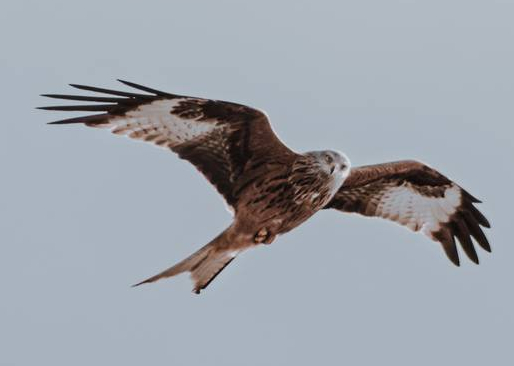
I first noticed ‘our’ red kite a couple of summers ago. I think I first spotted it over our football pitch while taking training with the junior football team that I coach. I didn’t immediately know what it was, but was confident enough to hazard a guess, especially when I saw the red hue of some of its feathers in the light. I looked it up in our RSPB big book of all the birds (not it’s actual name) when I got home and confirmed that it was a red kite.

I then started to see what I assume is the same bird – I don’t imagine we have a gang of them locally – going past our house and it seemed to be around the area on a regular basis. It may go missing every once in a while, but we still see it fairly regularly. It feels like we’re forever chasing it round, in pursuit of the perfect picture, but sadly it seems quite camera shy and always seems to avoid our lenses! On the occasion I’ve written about it flew right above me while I was in my back garden. I ended up writing two poems about it, which I’ll explain later. For now though, here they are.

Red Kite

On a cloudy weekend morning, pegging washing on the line, something catches my eye. A dark shadow drifts and looms above me, dominating the sky. I sense drama, threat, majesty. Looking skyward I am at once transfixed by this giant, dwarfing nearby gulls. The threat remains, intensifies in fact for a moment, as the red kite drops a little in the sky, perhaps spotting me and weighing up his chances. Uninterested though, he drifts on, effortlessly, scanning the land beneath for a moment of opportunity.

I continue to gaze, rapt, in awe as the light above picks out every speck of colour on this enormous wingspan. Looking as if painstakingly painted by the careful brush strokes of an artist they propel him over houses in seconds. Scanning the landscape for something there is no sense of urgency or desperation; only a calm grace that means that although my attention has been grabbed and kept, probably no one else has noticed. No call, no hovering, no swoops or aerobatics – the sky is yours and with one magnificent movement you are propelled forward and out of my sight. The memory, however, will take a little longer to leave.

Red Kite

A cold, wet Saturday morning’s predictability is interrupted joyfully by a shadow overhead. Spotted from the corner of my eye and then focused on fully with an upturned look, the red kite drifts majestically overhead, the king of this sky.

Given the sight, my smile is easy and wonder assured, and yet, it is momentarily replaced by a frozen, fearful gaze. We lock eyes and the hunter briefly drops towards the ground, perhaps spotting some hidden prey, but for an uneasy moment leaving me wondering if I am the dish of the day.

A gentle swat of the giant wingspan and it has passed over my head and onwards. The bird bored by the human; the human still rapt. For a second or two sunlight bursts through clouds and the kite is lit up from above, its vivid rust coloured tail and white feathers in deep contrast to the coal coloured tips of its wings.

All too soon it is gone, leaving behind a sense of loss that will battle with the brief flutter of excitement for the rest of the day.

I ended up writing two poems about the exact same thing. It was only seconds, but it made a real impression on me. Our red kite was possibly the closest I’ve ever witnessed and I got ridiculously excited. How I didn’t drop our clean washing, I’ll never know!

The first poem was written straight from my laptop – a method I don’t usually use. I’d usually scribble ideas down in my notepad first, but this time felt compelled to just write and the laptop was the first thing that came to hand. As a result it was a poem that I came back to and re-drafted a couple of times; again a process that I don’t often bother with. I’m usually happy to scribble out the odd word and leave the poem where it ends. This time though, I made a few visits to the laptop over a period of days to try and get the poem I wanted.

The second poem came as a result of not being sure about the first. So for that one I just scribbled it down in a notepad. I must have felt happier with this one as looking at it now, there are only 5 words crossed out in the entire thing.

Having read both poems back, I’m now puzzled by which I like best or even whether I’m particularly happy with either one! So while I hoped to create something that I was happy with, I’m not sure I succeeded! Anyway, I hope at the very least, I managed to get my excitement and sense of awe across. As ever, I didn’t have a camera or my phone on me so I couldn’t get a picture to remember the moment, so I hope my words do it some justice; especially as there are two attempts at conveying it! I’d be interested to hear what people think.

Poetry blog – ‘This trend for naming storms is fooling no one…’

I’m not particularly sure how it all started, but at some point, somewhere, someone made the decision that we should start referring to storms by name. Human name. It wasn’t really a new thing; we’d been doing it with hurricanes for years, but this was just going to be for high winds and heavy rain. Whichever way I looked at it, it all seemed a bit unnecessary. I mean, if the weather presenter told me that we had to stay indoors because Storm Graham was on the way, I wouldn’t worry at all, which I’m guessing isn’t really the point.

Apparently there is some reasoning behind the naming of storms. The Met Office claim that the naming of storms will aid communication about the storms. Apparently, if it has a name we’ll be better prepared when it comes to keeping property safe! And if you don’t believe me, you can go to the Met Office website and have a read for yourself. Now, I can’t speak for everyone, but if a weather warning was issued and it said that a terrible storm with very high winds was going to hit my area, I’d be fully aware of its potential to cause damage.

Name or no name, the storm was going to do some damage. It wasn’t any more accesible because it had been in some way humanised. I wouldn’t be able to stand in my garden and plead with Gareth, Clive, Grace or even Serenity to not blow my fence down. The naming seemed like a nonsense. Surely, if you’re going to name the very dangerous storm then at least give it a name that did it some justice. Storm Mad Bastard, Storm Angry Nutjob, Storm Violent Fencekiller – surely they’re far more effective in getting the point across? I’d definitely be more wary of Storm I’m Gonna Blow Your House Down, than Storm Terry. Anyway, I wrote my thoughts down in the form of a poem.

This trend for naming storms is fooling no one…

Despite the efforts to make you seem more warm, friendly and cartoonishly cuddly, this trend for naming storms is fooling no one. You’re still a storm after all. You still bring a garrulous reign of terror, like you’ll never, ever shut up. Alphapebtising you and christening you with Disney monikers like Elsa, Mary and Hamish does not lessen your power to disrupt my day. Sleepy, Dopey and Bashful wouldn’t even help as far as that’s concerned.

Bernard still has the potential to severely damage my fence, bringing with him the middle class nightmare of finding a tradesman. Margaret is also no friend to my shrubbery, deflowering as she does the camellia, the hyacinths and God forbid, the showpiece rhododendron. And Theodore, you can be sure, will up-end potted plants, seedling trays and even a half-full water butt, blowing them right across the patio or maybe even as far as the neighbour’s drive, bringing the need for fawning apologies and a false face of shame.

This no doubt, focus group, think tank driven naming ceremony will not lessen your power to keep us indoors for days and, I’ll have you know, something else has already taken care of that so in continuing your path of destruction, with or without a name, frankly you’re taking the piss. It will not help me sleep through a wind that sounds like waves crashing on a shore I hitherto knew nothing of and during the cleaning up process afterwards, it will not allow me to take solace in the fact that it was all caused by a Samantha, a Florence or even an Alice.

I don’t think a great deal of explanation is necessary for this poem. It’s a bit of fun, really. I think the explanation given for the naming of storms is a bit of a nonsense and I hope the poem makes that quite clear while retaining a bit of humour. After all, there are worse things in life that we should be worrying about.

So, as always, I hope you like the poem. I’m sure there’ll be another one along soon. Let me know what you thought in the comments and thanks, as ever, for reading.

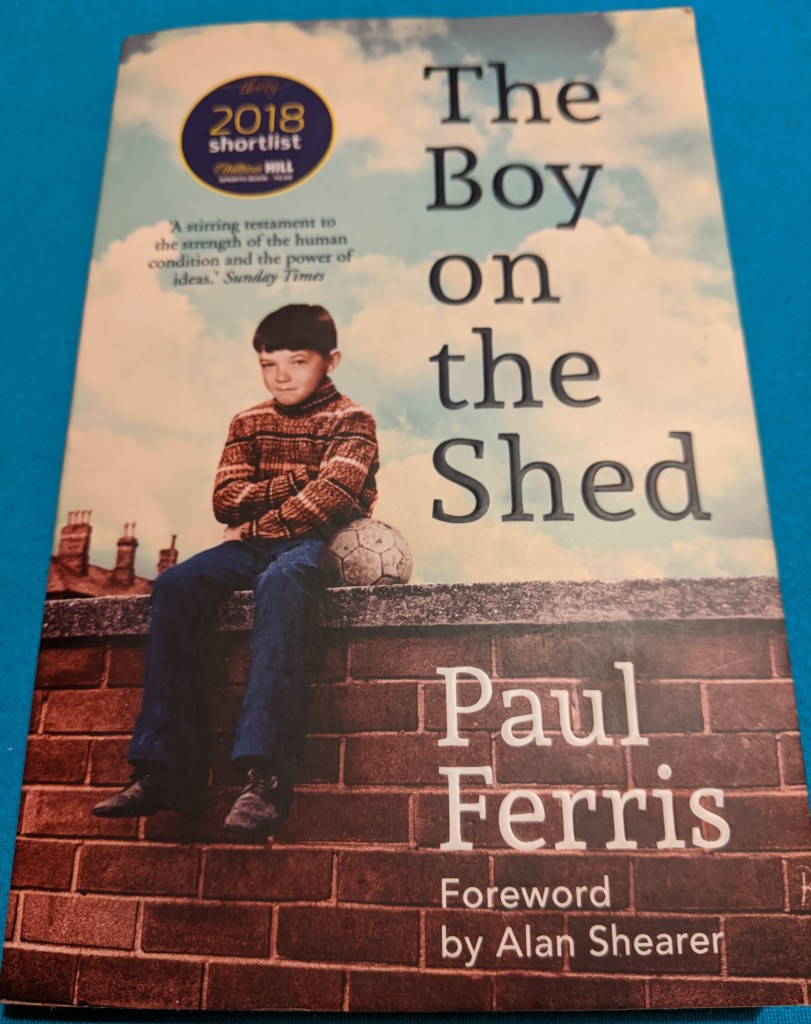
Book Review – The Boy on The Shed by Paul Ferris

Paul Ferris was a young man who had it all. The looks, the intelligence, the talent and the style. Okay, maybe not the style, given that this was the early 1980s where style was confined to the drawer marked ‘Things that the 80s forgot’. None of us had style in the 80s. Put the phrase ’80s style’ into Google Images if you don’t believe me. The results are like those in a ‘Who can mix the worst colours in one outfit’ competition.

But back to Paul Ferris. His autobiography tells the tale of a lad who had it all, only to lose it cruelly on more than one occasion. And while this sounds like quite the heart-breaking read, it actually makes for a brilliantly original book and one that I’d wholly recommend people pick up.

Ferris should have been someone who scaled the same footballing heights as his one time team mate, Paul Gascoigne, a player often described as the most naturally gifted footballer that these islands have ever produced. Such was his talent – and his country of birth, being Northern Ireland – that comparisons were also quickly drawn with the legend that is George Best. He was gifted, dedicated and eager to learn, and so when he was scouted by and eventually signed for Newcastle United, his future looked bright.

Paul’s story was never going to be simple though. Brought up amongst sectarian violence in the city of Lisburn south of Belfast, there seems to have always been an edge to his childhood. Add to that his worries about his sick mother and you’ve already got an engaging story. But, surrounded by love and encouragement, Paul flourished. His natural talent with a ball at his feet soon became clear and suddenly he was faced with a choice – stay at home and pursue his education or risk everything, including the love of his life, and move to England to follow a dream and escape the troubles of his home town.

‘The Boy on The Shed’ is simply brilliant. Undoubtedly a book for football fans, but at the same time the kind of tale that anyone will enjoy. This is so much more than just a sporting autobiography. Ferris seems to have the world at his feet and yet every time he looks like making a big breakthrough – and not only in football – a cruel twist of fate appears to slap him round the chops. Undaunted, he keeps on getting up and fighting on, even when the setbacks seem like they’ll leave him with little or no fight left.

Ultimately, ‘The Boy on The Shed’ is the classic underdog story. And it won’t spoil your enjoyment to hear that there’s a happy ending. But along the way Ferris’s life seems to be blighted by pitfalls, tragedy and simple bad luck. Just when you think he’s going to catch a break another setback appears and he’s back, unfortunately, to whatever you call the bit that comes before square one! In a tale and a career that takes in professional sport, medicine, law and even writing novels, all you want for Ferris as a reader, is to be happy. And at times it seems like he never will be. Delightfully though, he makes it in the end.

‘The Boy on The Shed’ is a joy to read. Brilliantly written with intelligence and good humour and crammed full of the kinds of stories you’d expect from a life spent in and around professional football, it’s a must read. Whether you’re a sports fan or not I’d urge you to pick up this book. It’s the kind of story that has you rooting for the protagonist – and in this case it’s a real life that we’re reading about. Paul Ferris may not be a name that you’ve ever heard of, but he’ll become a person that you end up caring about. A likeable underdog who gets there in the end.

I loved ‘The Boy on The Shed’ so I’m giving it nothing short of…

Rating: 5 out of 5.

Feel free to leave a comment – I’d love to hear what you made of the book if you get around to picking it up.

Poetry Blog – Teams Meeting

This is a new poem about a fairly modern topic – the online meeting. Now, I understand that they’ve been around for a while, but my point is more that they’ve never before been so widely used. As Coronavirus struck and lockdown ensued across the globe, businesses and other organisations were forced to find new ways of keeping in touch with employees and clients who were now being forced to work from home. And thus, words like Teams, Zoom and House Party, among others, all took on a new meaning.

I’m generally left deflated by even the mere mention of a meeting and, probably as a result, I’m inclined to simply drift off. I’ve fallen asleep in more than one. But if people insist in reading entire PowerPoint presentations back to me, word for word, then I reserve the right to get bored.

Lockdown and working from home felt, as much as anything else, like time off from meetings for me. And then someone mentioned Teams and Zoom. And so, as I sat in my first ever Teams meeting I made sure that I was paying attention – they could all see me, after all, but kept a notebook out of site after realising that there could be a poem in this! So here you go – the secondary result of my first couple of Teams meetings.

Teams Meeting

A little blue circle floats and spins, taunting me with my lateness. Usually, said circle is laughed off, commented on with a half-baked witticism, something like, ‘It’s thinking about it’ accompanied by a knowing smile, a raised eyebrow. But not today. Today’s blue circle is a slow death, evoking only many muttered expletives.

After what feels like hours, but is probably only minutes faces emerge, framed in their own rectangle and assembled in front of you like a gameshow panel in a strangely decorated studio. There are welcoming smiles and the possibility of others yet. Who knows amongst an array of webcam settings? A nose here, a chin there, the very top of someone’s head. Who knew that a chair could be sat on in so many ways?

It’s orderly at first. One voice with instructions, an agenda and, worst of all, jobs to delegate. Maybe that explains the top of someone’s head? A cunning attempt at work avoidance that clearly I should have thought of first. I consider sliding down into my chair until I’m sat beneath my table.

Virtual hands are pointed out, to wave at the thought of a question. Mine will therefore be very much more virtual than others. Some things never change. Despite virtual hands, still a tangle of voices ensues as we relax into the familiarity of it all; the agenda temporarily capsizing in these rapids while the meeting floats aimlessly downstream. Familiar voices bring warmth, a smile and I consider something juvenile to get noticed, extend the laughter and take the meeting out of reach and off towards the sea. But order resumes, our professional heads fixed firmly in place as the bullet points are ticked off and a department is run at a distance safe enough for all. Strategies discussed, ideas shared, virtual hands waved and questions asked. After such a long time, even meetings can be enjoyable.

But all too soon it’s over and we settle back in our home ports, perhaps, like me, wondering what the next weeks and months hold and longing, ever so slightly, for just a few moments more.

I thought I’d conquered Teams after dipping my toe – my real one, not virtual – for the first time and being able to use it with ease. The first stanza tells you that I was wrong. Teams took forever to connect for my second meeting and I actually ‘arrived’ late, which in truth is much more like the real me anyway. In this instance though, it was nothing short of torture.

Once I was in attendance I took a look at my colleagues – the ladies I refer to as my big sisters – who I hadn’t seen in months. And while it was great to see faces, it was a veritable puzzle working out why they couldn’t use a webcam! It meant that for a good portion of the meeting I was just puzzled and distracted by the fact that someone was sat with just the top of their head in view, while others were so close to their webcam that I could just see a nose or an eye!

Despite the presence of virtual hands for people to raise when they had a question, our meetings would start in an orderly fashion, before descending ever so slightly into a gaggle of voices talking over each other. As usual in meetings, I kept quiet and observed from the safest distance I’ve ever managed in a meeting. But I realised, after a short while, that just being in the meeting was lovely. These were not just colleagues, but friends with familiar faces and voices that just relaxed me and made me feel quite normal for the first time in the months of lockdown. Even when we got back to the agenda I was enjoying the meeting.

In fact, I’d enjoyed it so much that when it ended and faces began to disappear from the screen, I felt more than a little bit low. And then it was back to isolating and trying to find enough things to do in order to keep myself from going mad.

Feel free to leave a comment about the poem and if you really enjoyed it you might like to click on the links below to have a look at some of my other stuff.

Book Review – ‘Vox’ by Christina Dalcher.

There are lots of things in life that we shouldn’t love anywhere near as much as we do. From trashy reality TV to too many takeaways, we know that they’re doing us no good, but still we dive in on an all too regular basis. Me? I’m no different, although I steer fairly clear of reality TV and takeaways. You can keep your Love Island and your MacDonald’s your curries and your egg fried rice. Give me a good dose of dystopia any time! Thrill me with a society that’s falling apart and appall me with the crimes of those in power and I’m as happy as a toddler in a sandpit. And thus, I couldn’t wait to read ‘Vox’, the gripping dystopian thriller by Christina Dalcher.

Vox tells the tale of Jean McClellan, once a well respected scientist, but now reduced to the role of frustrated housewife and mother; and a largely silent one at that. This is because Jean lives in Dalcher’s fictional version of a modern day America where, thanks to the madness of their fudamentalist Christian leadership, womens’ words are rationed. In this extreme patriachal society, every member of the female population is fitted with a band around their wrist that ensures terrible pain via an electric shock should they speak more then their allocated 100 words in twenty four hours.

Female liberties have been taken away with millions losing jobs and all of their money, while young girls have their right to an education denied. Rather than being taught to read and write, they are now restricted learning whatever skills the patriachy feels will be of use in later life.

And while it seems that many women, including the first lady, have accepted their fate, Jean refuses to do so. She is determined to break free and is encouraged by some of the signs she spots in everyday life. So when a twist of fate sees her thrust back into the scientific limelight, she sees her chance. But is it too good to be true?

Jean embarks on her government mission with an ulterior motive, discovering old friends, allies, unexpected opportunities and even the hint of an underground rebellion along the way. But is everything exactly what it seems? Or will Jean’s dreams of freedom be crushed by an all too powerful and all too watchful state?

‘Vox’ presents the reader with a terrifying yet thought provoking view of the future and what at first glance seems extreme, has genuine parallels in today’s world. You don’t have to look too far to find that people are having their rights infringed all over the planet – dig a little deeper and it’s possible to uncover genuine horror stories that one would have imagined belonged firmly in a work of fiction. And this is the beauty of Vox in a way. What seems absurd is actually, frighteningly quite possible somewhere. So while it seems ridiculous that somewhere in the world – particularly in the developed world – womens’ words may be subject to a cap, you just never know.

On reading ‘Vox’ some might say that it’s a world we’ve seen or read of before. Certainly if you were gripped by the dangerous and rebellious adventures of June in ‘The Handmaid’s Tale’, then ‘Vox’ occupies a similar space. There are also shades of ‘1984’ and ‘The Hunger Games’ here too. But the twists and turns of ‘Vox’ will have you on the edge of whatever it is that you perch yourself on to read. On several occasions it seems that Jean will fail and on others you’ll be suspicious of those that she is around, even her husband. Her eldest son also provides an interesting twist when it appears that he has become seduced by the message of the country’s ruling forces. This constant feeling of being on edge makes ‘Vox’ a real page turner.

Dalcher’s characters are well written too. Jean is someone who we sympathise with and we want to succeed, not only because we believe in her cause, but essentially because we like her, while allies such as Lin and the brooding Lorenzo and Jean’s arch enemy Morgan Lebron hold our interest too. Morgan in particular is the arch villain; brilliantly written so that the reader can’t fail to hate everything about him. We’ve all met a Morgan – smug, arrogant, the kind who takes credit where it really isn’t due and who’s never slow to let people know how important he is; even when he’s not that important. So for the whole time that you’re rooting for Jean, you’ll finding yourself wishing terrible injury and worse upon Morgan.

I absolutely loved ‘Vox’ and was utterly gripped by it from beginning to end. The novel presents us with a horrifying dystopia, but one that seems all too possible in the modern world. And for that reason we’re along for the ride with Jean as she battles to outwit the horrifying restrictions that have been placed upon not only her, but every woman in America. It’s a cause we believe in and care about and Jean is the perfect protagonist, the perfect hero – with a whiff of anti-hero thrown in, just or good measure – the perfect woman for the job.

Without hesitation, I’d give ‘Vox’

Rating: 5 out of 5.

An unlike our female protagonist, I’d shout it from he rooftops as many times as I liked!

Poetry Blog – ‘A list of items that I bought but could not bring myself to properly use.’

This is another poem that was prompted by a sleepless night. I’ve had a lot of those lately. It’ll start off with just being uncomfortable, or too hot and then before I know it, my mind is racing and I know that if I don’t head downstairs and start writing things down, I’ll lose these ideas forever.

This poem came about because I started to think about the amount of things I buy and then don’t really use. Or rather, I use them – I’m not a complete idiot – but either nowhere near as much as I should or nowhere near early enough. I’m prone to getting them and then putting them away and all but forgetting they exist. Perhaps the poem can explain…

A list of items that I bought but could not bring myself to use properly…

Books have been a favourite for years, added to the weekly shop or gifted from an Amazon wishlist where they’d sat, forgotten about, until Christmas or birthdays. From there it would be off to a box in the loft and forgotten again. And while I’ll endeavour to read them deep into retirement, I’m already praying for someone to leave boxes of books to in my will.

Trainers are a similar addiction. My two feet will forever have a choice of pairs that run well into double figures, while not, in fact, running at all. And my two feet will never actually be enough. The thrill is in the chase. The irony is that the chase will not be performed in these under-used trainers.

Although in possession of what I feel is an unusually small head, I am somewhat obsessed with hats. Inevitably though, they will adorn my bonce but once, before embarrassment overcomes me and the charity shops feels the benefit.

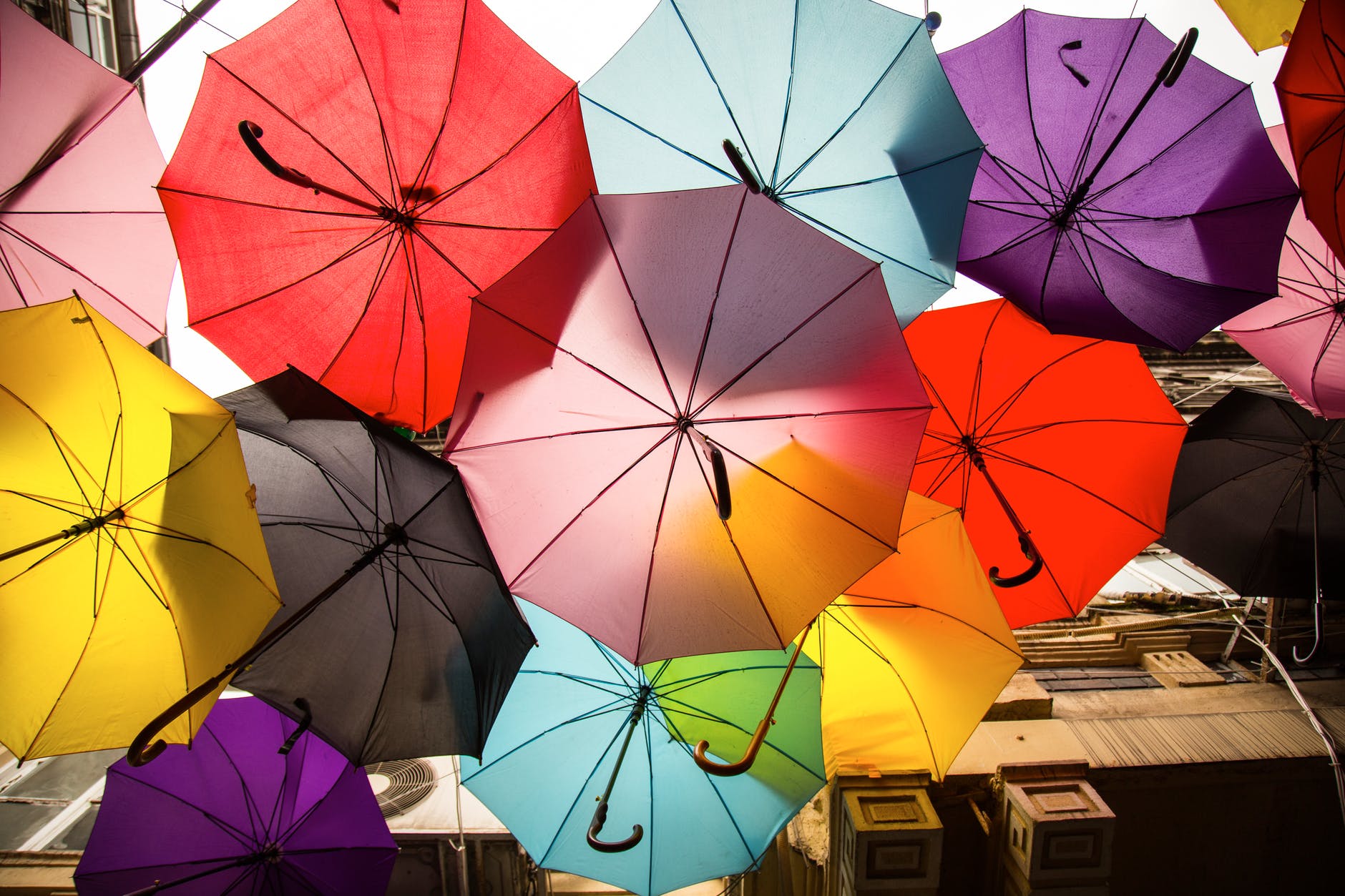
A new jacket, on the other hand, will rarely be left to wait for a rainy day, unlike several fresh umbrellas now resident underneath the passenger seat of my car. Meanwhile, new shoes must stay boxed for as long as I can stand to wear the four other, older pairs in what is a perverse stance taken to kid myself that I’m getting my money’s worth out of said shoes.

Inhalers are collected and stacked, incongruous, in a drink’s cabinet, while I continue to use those that are long out of date, desperate to squeeze more life out of both of us, while stockpiling fresh cures as if saving for a particularly dusty, hazy day. Similarly, the artwork with the quirky quotes will forever fail to inspire or advertise how fun family life can be while they’re in a bag behind an armchair.

Chinos – always a good idea at the time – will remain stashed in a wardrobe, living up to their slim fit billing by squeezing expertly between suits. Occasionally, when I fancy a change, they will lay on the bed to be stared at, before being thrust back into storage as change is given a rest and I slide back into battered jeans.

And then there are the tiny ‘pint’ glasses, stolen from a bar in the good ‘ol U.S of A. Too small to be used, but too cool to be left behind in their rightful place. Or in fact bought.

And finally, let’s spare a thought, for the entire bathroom suite that was once stored upstairs in our house for months, because the trauma of finding a plumber meant it was easier to clamber over a bath taking residence in a back bedroom, than invite a tradesman to our house. For a while we were possibly the only house in Yorkshire with an unplumbed toilet sat on the landing. And maybe that’s a price worth paying for an claim as unique as that.

I think they call it ‘the thrill of the chase’. That feeling of excitement at getting something that then has a strange habit of wearing off once you’ve actually got it. People blame it for everything from the failure of a marriage or relationship to the reason that we all know that a pet is not just for Christmas. And I think partly, that’s what this poem’s about. Not pets, but the thrill of chasing shiny things and then almost instantly losing at least some of your interest. It’s generally attributable to me in our house, but I think we’re all perfectly capable of it too.

In my loft I have boxes of unread books. I have boxes of some of the ones I’ve read as well, that are too precious to pass on to charity or another willing reader, but I box them up and most likely won’t look at them again for years, if at all. The unread ones started as a small pile when I started working after university. And then disposable income happened. It’s a terrible habit and I must have four big boxes full of ‘to-read’ books. There are so many books in there that sometimes, when it’s time to choose my next one, I’ll discover something that I’d forgotten about entirely. And while this is a lovely surprise (although it can also be quite perplexing) it should also tell me that I need to cut down on the number of books I buy.

Some of the things that inspired the poem are things that I really have no use for. Hats are the best example. I don’t suit them as my head is more akin to a peanut and therefore hats swamp me. I mean, when was the last time you saw a peanut wearing a hat outside of a cartoon?

The point with this poem is that it could have been a much bigger poem. An epic poem about the least epic things you can think of. Believe it or not, I have got better at this as I’ve grown older. I used to buy a lot more. I never got full use out of any of it.

I’m quite proud of this poem. It’s a bit more of a rambling effort than usual – who knew that was possible – but I like it. And that isn’t always the case. But this poem brings back happy memories. For instance those stolen glasses mentioned in stanza 7 were purloined on a holiday to Boston and then packed away carefully inside towels and clothes in order to preserve them on the long flight home. We’ve never used them since getting them home, but I can still picture us sitting in the bar with mile wide grins on our faces because they looked so good and we were going to take them with us! Maybe I’ll get them out at home and just gaze at them, like an art installation…

I hope you enjoyed the poem. As always, I’d be interested to know people’s opinions, so feel free to leave a comment.

Sad, lonely shirt…

This is a poem I wrote about an item that I couldn’t avoid as I bumbled round our house during lockdown.
At the start of a working week I usually like to have some shirts ironed and ready to go. I just don’t like having to be ironing during the week. Anyway…
When I had to start isolating from work – several years ago, it feels like – I had one, ironed shirt left, hanging on the wardrobe door, ready for the next day. I would see it every day and it would remind me of what I was missing. The shirt became both a sad reminder that I couldn’t be in work and a comfort in that surely one day I would get to wear it again with a suit and tie. We would chat, me and the shirt. You know, in my head. Because sometimes being in lockdown wasn’t that easy.
I’m really not sure about this poem. I think I like it. It makes me smile and as time has passed I’ve been able to read it without thinking of myself as some kind of attention seeker.

Sad, lonely shirt

Sad, lonely shirt. I pass you every day and you remind me of where I should be, but am kept away from until it’s safe.
I see you and I wonder what you think about all of this.

“I’m still here,” you say and then you ask, “Why am I just hanging here?” And I say, “You wouldn’t understand.”
Quick as a flash you volley it back. “Why? I am a smart shirt.”
And with reasoning like that, coupled with the fact that I’m a soft touch I have no option but to explain.

You listen attentively – you’re hung on the side of the wardrobe, after all – as I try to explain the world amidst a global pandemic and how these days, without work, it’s leisure wear only for me.

You stare at me for a while, wanting to shrug, but unable to because I’m using my shoulders and you’re on a hanger. Then you say,
“Can I make some requests?”
I mull it over and then think, why not, before making it clear that I can’t do ‘just hold me’ because I couldn’t stand the creases and I will have to wear you again one day.

You look a little crestfallen and then say “OK” and then, “Maybe just two then?”
“Go ahead” I say.
You ask, not unreasonably, “Can you get rid of this dust off my shoulders, please? I’ve been here for weeks.”
Shamefaced, I take you down and gently brush it away. “What else?”
“Could you hang me in the wardrobe, next to my friends, please?”
And reasoning that the light grey suit must be your closest pal, I place you near to that.

I think mainly, this is a poem that was borne out of having too much time to think. It’s another one that woke me at night and forced me out of bed and I just wrote it down in my notebook, with not a great deal of thought. The words just seemed to be there. I really did find myself talking to the shirt if I passed it in our bedroom. Never out loud. But there was always a conversation of sorts.

If there’s any kind of intellectual aspect to it – and if you know me, there rarely is – the poem could be about our own self image and maybe the relationship we have with clothes. I love clothes, always have. I get it from my dad, who was quite the stylish young Mod in his pre-chidlren days. However, because I’ve always had a very slight frame, I’ve rarely felt confident in whatever I’ve worn. Body image, while never something that has been debilitating for me, has always been a bit of an issue. However, I always feel good in a suit, shirt and tie and I’m careful in what I choose to put together. This particular sad, lonely shirt is a bit of a favourite. Maybe others would have just got thrown in the wash, but this one stayed out, hung up, essentially reminding me that I still had a purpose.

There are a few lines in there that I’m quite proud of. I like the “I’m a smart shirt” line as it makes me smile when I read it back. Again, I suppose it works with the idea of a shirt having a personality and giving me confidence in the way that certain clothes can do. And then I liked the line about the shirt not being able to shrug. I suppose it might say something about the fact that clothes can’t actually do everything for us, as much as they might add to our confidence.

As an aside, I’m now back at work and I wore the shirt in my first week back. I’d like to think it was a day that we both enjoyed just a little bit more than usual!

Anyway, as ever I’d be interested to know what people think, so feel free to leave something in the comments.

Book Review: The Readers of Broken Wheel Recommend by Katarina Bivald.

When Sara leaves Sweden in search of a new adventure she’s in entirely virgin territory. Sara is 28 years old and has never left her homeland. But she’s not heading for the bright lights of New York or L.A.. Nor is she off to Europe to explore London, Paris or Barcelona. No, Sara is heading for Broken Wheel, Iowa.

Sara has been exchanging letters with fellow book enthusiast, Amy Harris, for quite some time. It seems that they’re kindred spirits and when Sara takes up Amy’s offer of a visit to Broken Wheel it seems that she’s about to start an entirely new chapter in her life. And yes, I really did use that particular book pun. But Sara’s long distance friendship is about to take a rather unpredictable twist. And so, the story begins.

Broken Wheel, Iowa seems to be the archetypal one horse town. It consists of four streets, a handful of residents and a row of shops, a diner and a bar, not all of which are in use. But despite this, Broken Wheel will undoubtedly change Sara’s life. She is welcomed by all, given a chaperone, handed some friends and is refused payment every time she attempts to hand over any cash. Sounds like the ingredients for a great holiday, right? But Sara quickly grows frustrated in this routine. And when she senses that the town is not only down on its luck, but is missing a few much needed elements, she decides to take things a step further and making a far more permanent mark on the town.

‘The Readers of Broken Wheel Recommend’ is a quirky book that is sure to make you smile. Originally written in Swedish and later translated, the novel gets off to a slightly dark and mysterious start, but it isn’t long before said residents – and our heroine, Sara – begin to pique your interest. And here the feelgood factor starts. But that’s not all. The novel is also shrouded in mystery throughout and you’re left with various questions that need an answer all the way through. Each time we meet a new character we’re left at least a little bit intrigued. There’s Sara’s pen pal Amy, well sort of, Grace who’s not actually called Grace (but comes from a family of not really Graces), moody Tom, Andy and his oh so handsome partner Carl who seem far too glamorous and cosmopolitan for Broken Wheel, as well as Caroline, George and the quiet and mysterious John. The characters are the best parts of Broken Wheel and ultimately what keep Sara in town.

However, for me, it was the amount of characters that created a slight problem with the book. I must admit that there were times in reading that I lost track of who everyone was and the way that the narrative can jump around from character to character left me a little puzzled at times. I suppose the counter weight to this was the fact that the action rarely moves from this town in the middle of nowhere and so you never quite lose track! But the interweaving of the towns folk’s narratives with Sara’s own was at times problematic, while also being one of several aspects of the writing that made ‘The Readers of Broken Wheel…’ so interesting. I must admit, that in terms of the outcome of the book, I wasn’t at all sure how things were going to end until almost the final page. And, I suppose that’s got to be a good thing.

‘The Readers of Broken Wheel Recommend’ is anything but predictable! There are twists and turns aplenty and all set somewhat incongruously in this one horse town in middle America where nothing ever seems to happen, yet everything, it seems, is possible. Sara is the spark that ignites the flame and her arrival signals the start of many a mystery. Her interaction with the residents of Broken Wheel, and in turn their curiosity with her, make for an intriguing read. If you’re looking for a thriller with endless twists and turns, then this isn’t the book for you. Broken Wheel isn’t scary and there aren’t any monsters. However, if you want something a little different, where you’re on the side of the many small town figures that you’ll find within its pages, then ‘The Readers of Broken Wheel Recommend’ comes, well…highly recommended.

I’d give ‘The Readers of Broken Wheel Recommend’

Rating: 4 out of 5.

Poetry Blog – ‘No blue lights.’

Photo by Pranidchakan Boonrom on Pexels.com

So a little while ago, during lockdown, I got to thinking about a couple of years ago when I was poorly and got admitted to hospital. Fun times. It led to a couple of poems, the first of which – imaginatively entitled ‘Heart’ – I published on here a few weeks ago. At first I didn’t know what to do with the poems, given their personal nature. but as I’m not one for going back through notebooks and reading my own work, I decided to publish.
I thought I’d share because otherwise – as I said when I shared ‘Heart’ – it’s just words on a page for no one really and they’ve been sat in a notebook for months. This poem was actually the first one of the two.

No blue lights, no ceremony.
Instead, a last meal, rushed to send you on your way into the dark.
A numbness. A thought nagging at the back of your mind, like a job that needs to be done, but feels better ignored.

In the steady opening of a door time accelerates, yet thought slows down.
A world spins, but you watch wondering if you’re still part of it. And for how long?

A sharp scratch jolts you back, a reminder of a TV drama.
This is really happening. So you summon the banality of the everyday to make it go away.
Then a dark hint dropped by a friendly face and before you can utter a sound, formulate a thought, time moves on and you struggle to keep up.

Death is no longer a stranger. Death is the friend that everyone else hates, but no one tells you why.
Death is a temptation, but a step too far, a drug you will not take. An adventure that tempts you, talks to you before something unnamed barges in and stops you.

Dreams. Faces in the dark. One long nightmare.
The morning’s loneliness and thoughts that you’ll never see them again.
Until you do.
And you fight, kick like an Olympian down the back straight until you catch life. And them. Feel their tears, their warmth, their hearts still beating with yours.

Reading it back for the first time in a while, this feels like a really fast version of events. I don’t know why. There was certainly plenty of subject matter to tackle, so maybe subconsciously I wanted to reflect how quickly certain things seemed to happen. I’m not sure it was a deliberate intention though!

The story behind it is having to go to the Emergency department of the hospital when I was having heart palpitations. I drove myself in – I didn’t want any fuss – and fully expected to be given tablets and sent on my way. And maybe this is where the pace of the poem comes from. They were expecting me in A&E and unlike whenever I’ve been there before, I was seen almost immediately. People came into my cubicle in quick succession, each with a more serious expression on their faces! The ‘sharp scratch’ was a canula being inserted into my arm by a male nurse. It was something I’d heard of on TV, notably on things like Casualty, so I knew things were more serious than I first imagined when a canula got mentioned.

The friendly face was a kind looking young nurse. However, as kind looking as she was, I couldn’t help but notice her tine change when I explained that I’d been feeling this way for a few days and nearly didn’t come in at all. For the life of me, I can’t remember her exact words, but it definitely hinted that I was in a bit of a mess!

From that moment everything was a bit of a whirlwind. Doctors and nurses came and went and my wife popped in with an overnight bag, so I had to resume my act that it wasn’t all that serious. Not long after she’d gone I was told that I was headed for a ward, but wouldn’t be allowed to just walk up, so was helped into a wheelchair and taken by a porter. I’ve never felt so helpless in my adult life!

I was terrified that I was going to die. Doctors and nurses kept waking me up in the night when exhaustion and probably prescription drugs meant that all I wanted to do was sleep.

When I woke in the morning I felt massively lonely – as it says in the final stanza – and, although I’d had the fact that I’d be fine but needed an operation explained to me, started to think that I’d never recover.

I did recover though. I kicked ‘like an Olympian’, tried to eat the right things, exercised, rested when I needed to and cherished the people around me like never before.