Poetry Blog: Icebreaker

We had a week’s worth of snow days for our first week of the half term, which meant that despite setting work and trying to get stuff done around the house, I actually had a bit of time on my hands. Struck by inspiration today, I sat and wrote a poem. It’s not in any way serious, although the actual physical acts described did actually happen. Part way through writing something serious I just decided it was too good an opportunity for something silly and so changed the way it was going. I hope you like it.

Icebreaker

After two days trapped in limbo by first, several whole inches of snow
and now an actual coating of not only quite thick but also horribly slippy ice,
action is called for.
And when people call for action you'd like to think it's you they have in mind...

You've already lugged the deadweight of a kid's beach bucket full of grit for miles across this frozen corner of West Yorkshire.
Your back, damp with manly sweat, is already hurty.
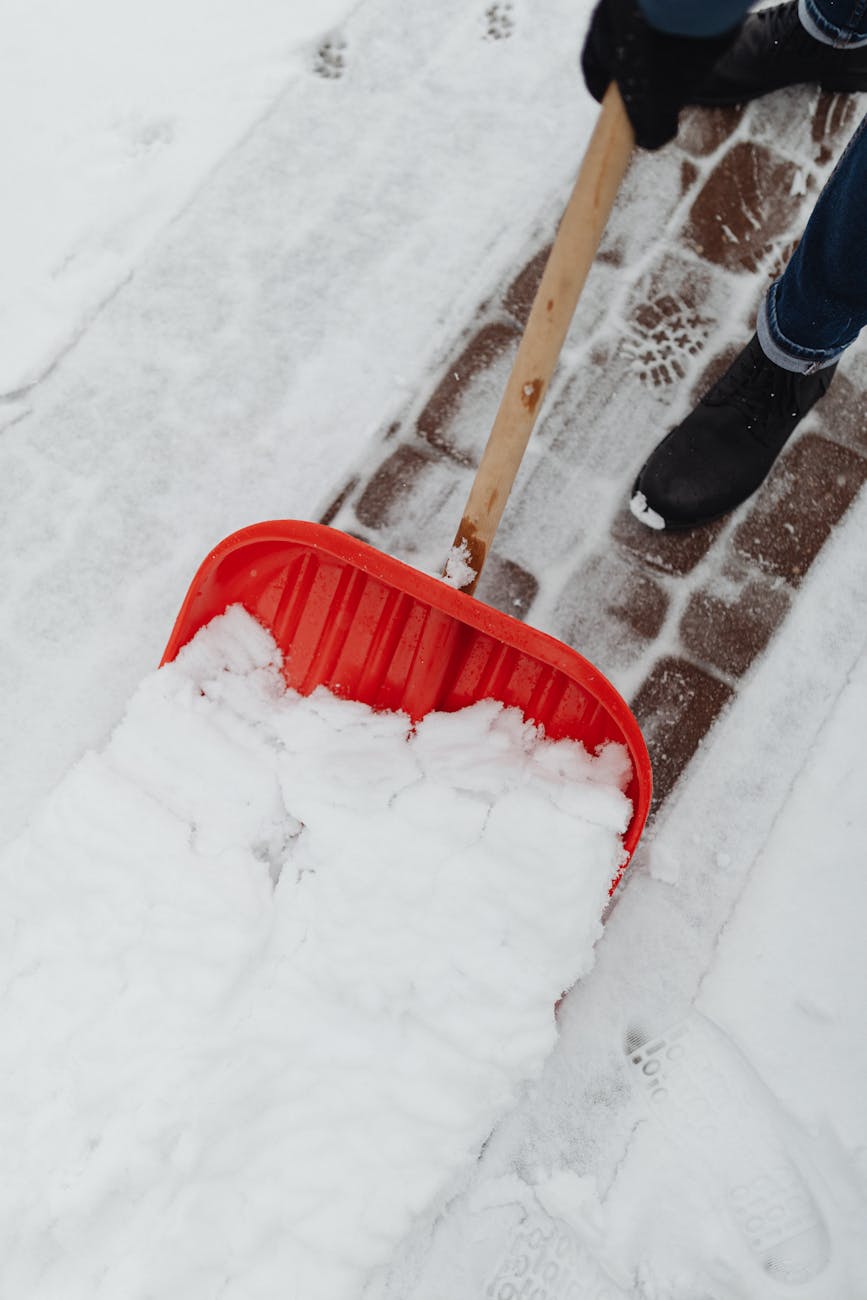
Now, you stand in what is either a power pose or your audition for Drag Race, shovel in hand even though the snow has made it's metal handle really cold and you've forgotten your gloves.
The only bloke in the street brave enough to tackle the ice. Behind their curtains they watch you, rapt, you think.
Frankly, if you're forced to say so yourself, you're a hero.
They will call you Icebreaker. Maybe.

Seizing your tool and raising it high,
you plunge it at the ice.
It rebounds with force but your teeth remain intact.
Oh, for an axe.
Not to be deterred, you plunge once more and a whole whisp of snow
leaps into the air...then lands back on the very ground you were working on.
Nevertheless, your momentarily spirits soar.
You thrust once more, again, again and again, ignoring the cold and mindful, ever mindful of the imaginary fact that the whole street are watching and probably, later on, will take to their doorsteps to clap their appreciation of their hero key worker, only stopping when the last of the snow is gone.

Ten minutes later, wheezing and clutching your back,
you limp back to the house, muttering and licking the bleeding knuckle
that you nicked on your own spade,
having cleared an entire two square feet of treacherous snow and ice.
In your mind you are a gladiator who fears no foe.
In the hallway mirror you look like Albert Steptoe.

So, there you go. Luckily, I’m well practiced at laughing at myself, what with being a bit of a kn**head and all. In my defence it was very cold and the ice was very thick. I went out later and did more as well. And before anyone questions my logic, there’s a bit of a grit shortage so I was keen to use a little bit and then dig the rest of the ice out, saving some grit for later.

I have to say, it was a poem that I really enjoyed writing. I haven’t written or finished one in ages, but this one is more or less a first draft. I wrote it down in my note back with a few arrows pointing to late additions when I changed my mind about its seriousness.

I hope you enjoyed it. Maybe it’ll raise a smile the next time your clearing some ice and snow. If you’re as heroic as me, that is!

Book Review: ‘I Wanna Be Yours’ by John Cooper Clarke

If you know of him, John Cooper Clarke comes under a number of aliases. The Poet Laureate of Punk, the Bard of Salford, the punk poet…he’s even sometimes referred to as Dr. John Cooper Clarke. If you don’t know of him, well it’s best you start with the viewpoint that the man is a star. A poet, a raconteur and an entertainer. And as we find out in ‘I Wanna Be Yours’, he can’t half tell a story!

As such, you’d expect his autobiography to be quite the read. And you wouldn’t be disappointed. Having read it recently in fact, I was actually pleasantly surprised at just how ‘eventful’ his life has been, as the book went way beyond my expectations. I thought I knew a few things about the man who’s considered a bit of a national treasure these days, but on reading the book I found that there are layers upon layers to this fella’s life story. What a treat!

Now aged 75, Cooper Clarke is best known as a poet, although in recent years he’s managed to light up several TV panel shows with his wit, humour and way with words. And it’s his gift for language that makes ‘I Wanna Be Yours’ so eminently readable. The sharp delivery meant that I read the whole thing hearing Cooper Clarke’s voice in my head, which for me made the whole thing all the more memorable.

The book takes us through his early years as a sickly child in Manchester where in fact, a dose of tuberculosis meant that he was moved to the North Wales coast to live with relatives in the hope that the sea air would aid his recovery. Once back in Manchester, we hear of a multitude of adventures as Cooper Clarke grows up and eventually begins to get into clothes and music, slowly honing the look for which he’d become famous in later life.

Eventually, with a bit of luck, a good deal of hard graft and not without one or two setbacks along the way, John finds that he has a gift for entertaining people. And so begins quite the extraordinary tale of a bit of a legend.

This is a brilliant book with any number of twists and turns, a whole host of bizarre and incredible tales and no shortage of surprises. So while I was fully aware of Cooper Clarke’s influence on bands such as The Arctic Monkeys, I certainly wasn’t expecting the likes of Bernard Manning to put in an appearance! And then as I carried on reading and found out about his close associations with the likes of Nico and Linton Kwesi Johnson, I was more than a little bit blown away! But that’s the thing about a life like Cooper Clarke’s and in turn this book; there’s never a page wasted, there’s always something curious or funny or just downright mindblowing around the corner.

A genuinely funny man, with a great turn of phrase, Cooper Clarke’s words will inevitably raise a smile and leave you in fits of laughter at times too. But for all of the light there are many moments of shade and the book – and John’s life – has sad moments too alongside many murky tales of Cooper Clarke’s own drug addictions. But even here, it’s all told with such candour and black humour that I found myself not really batting an eyelid and simply accepting that it had all added to the rich tapestry that I’d been reading about.

In the end, I was left wondering if at times, I’d been had. Surely there are more than a few tall tales and embellishments along the way in the book? However, on reflection I decided that either I didn’t really care – I mean wherever the truth lies, this was an amazing read – or more likely, it was all probably very much true. Because, whether it be looking after somebody’s monkey in Amsterdam and just ducking and diving while looking for your next fix of heroin, it could well have all happened to only one man; John Cooper Clarke.

Whether you know of his legend or not, this is a book I’d thoroughly recommend.

I give ‘I Wanna Be Yours’

Rating: 5 out of 5.

Book Review: I Blame Morrissey by Jamie Jones

Music and sport can do funny things to a person. Those of us who take an interest in either or both can become unhinged, erratic, obsessive and just plain odd because of how they make us feel. In fact, if you’re a fan of both, you may well get to a certain age and look back in wonder, unable to fathom out some of your decisions, while simultaneously still believing that they were right all along. People won’t understand you and you won’t understand what there is to understand, but quietly you’ll be fully aware of just what a weirdo you probably are.

Jamie Jones is one such weirdo and ‘I Blame Morrissey’ is his attempt to explain his obsessions with music and to a lesser extent, football.

Jones grew up in the 90s – like me – and was obsessed by music and football – like me. However, while I made some ridiculous decisions while following bands and Newcastle United, I managed to allow life to get in the way and eventually grew into a reasonably well adjusted adult. Sort of. Jamie Jones – and I can’t disguise some kind of jealousy – got more and more obsessive until he was allowing his life to be dictated by song lyrics. And as crazy as that might sound to some of you, it all makes for some incredible stories.

‘I Blame Morrissey’ tells the tale of a young man growing up and trying to navigate the world around him while also dedicating himself to following music and Peterborough United. And for most of the time, music and Peterborough win out, meaning that relationships are doomed because of perceived messages in songs and important dates and occasions missed because Peterborough have a game in some meaningless competition. I mean, we’ve all been there, right? Right?

Jones’s teenage years were dominated by girls, Peterborough United and musicians like Billy Bragg. But like any good music fan his journey takes on various twists and turns, many of them familiar to me and most likely to some of you too. Thus, if you are of a certain age there will be something here for you; a memory to empathise with or the reminder of a song that brings it all flooding back. There are festivals from a time when it was the music that was the most important thing. There are tales of The Charlatans, Morrissey, Ride, the Britpop years, of loves lost and found and of any number of decisions made in the name of whatever the latest obsession happens to be. There’s even some Teenage Fanclub, which obviously resonated with the bloke who writes this blog.

There’s a lot of this book that I feel like I lived myself. A great deal of the rest of it buzzes with a familiarity and a nostalgia that I simply couldn’t get enough of. And for that reason, everything about the book was a joy for me; like stepping back in time.

If you grew up with posters on your bedroom walls that you sometimes talked to, if you ever bought items of clothing because your idols did, if you ever changed your walk or your body language just to be more like your heroes or if you ever endangered a friendship, relationship or even your own life just to go and see a band, then ‘I Blame Morrissey’ will be right up your street!

I give ‘I Blame Morrissey’…

Rating: 5 out of 5.

Poetry Blog: Pier

This is a poem that, as we near the end of another British summer, just seems appropriate. It’s hopefully one that lots of people can relate to, especially us Brits.

I wrote this after we had headed to Llandudno for a short break in summer last year. We spent time walking along the promenade as well as up into the hills that can be found just a short distance from the sea. We’d spent time relaxing, eating cake and drinking coffee in lovely cafes and of course, we’d spent time in the amusements! This is where the poem came from because the amusements in Llandudno can be found on the pier.

Pier

Your eyes dart everywhere,
as you walk, you're bombarded from above
by a terror that could leave a lasting scar
or worse still, a stain, a smell,
a memory that could ruin coastal towns forevermore
and yet still, you can't quite concentrate on the airborne menace.

Rough boards trodden on for hundreds of years
promise pleasure while hinting at danger
with every glimpse of the waves far beneath.
Children wander aimlessly,
all grabbing hands and voices that match the decibels of those gulls.

Groups of adults attempt to keep them in check,
while flocks of teens loiter with barely disguised intent.
Ice creams and candy floss are wolfed down
for fear of attack from above and the hordes
of ever more bold screeching thieves.

Duck inside an arcade and the senses
are overwhelmed by the kaleidoscope colour
of copycat prizes combined with the sounds of machines
competing busily for attention,
while people push past, eager for a moment of mindless fun.

Copper coins, salvaged from a long cherished jar,
are thrust with military precision into a slot
in the hope of the displacement
that will win tokens to be exchanged for tat,
yet still, it is an Olympic podium style thrill
that's felt as those coins finally crash.

Hours later, as you blink again into the sun
and set foot on more solid ground,
pockets are lighter, nerves shredded,
arms ache and knees creak as you trudge,
wearily away, excitement over, another seaside day almost at an end.

On a previous trip to the one described above I’d actually been divebombed and flown into by a seagull. It sort of clonked me on the head! They’re a menace at most seaside towns these days. However, I’ve never had my food stolen by one or indeed suffered the indignity of being hit by their flying poo!

I’m not really a fan of the amusement arcades, despite being so when I was younger. However, my family love them and so every trip to a coastal town means spending hours in multiple arcades, never really feeling the tension and excitement that they do at the jeopardy of the machines.

Regardless, I was struck by just how much was actually going on when we made this trip and found myself making notes in some downtime, which later would become this poem. I hope you enjoyed it!

Book Review: ‘Freak the Mighty’ by Rodman Philbrick

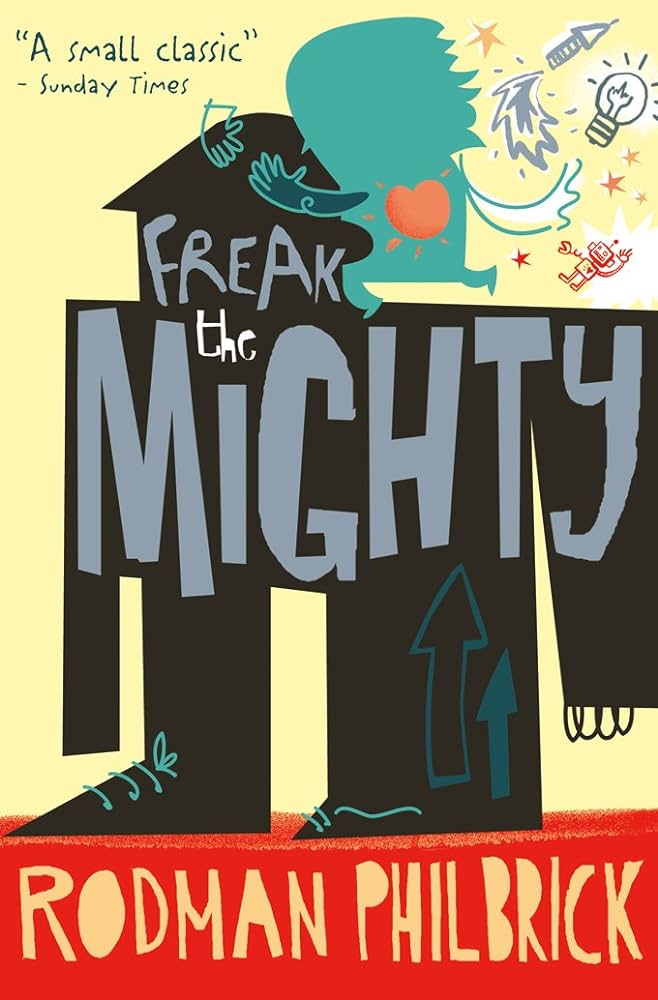
Max and Kevin shouldn’t get along. They’ve got nothing in common apart from being outsiders and neither seems to have the personality or simply the willingness to make a friend. In fact, they both seem to have a certain distaste for other people. They’re fine on their own, thank you very much. However, they’ve both got a level of curiosity too and it’s not long before they give in to it. And thank goodness they do.

Max is a loner by choice. Raised by his grandparents, he’s got a reputation with the other kids around school as being mean and prone to violent outbursts, earning him the cruel nickname Mad Max among others. But he’d known Kevin previously at nursery and been fascinated by his crooked legs and braces. So when years later Kevin moves back to town, an uneasy and unlikely friendship is quickly formed and Freak the Mighty is born.

Max (aka The Mighty) lives in his grandparent’s basement and rarely ventures out. He definitely doesn’t have friends around. But it isn’t long before Kevin (aka Freak) – back in the neighbourhood with his mum Gwen – is spending time there. And from this point on a beautiful friendship grows. Max protects Kevin and doesn’t judge him for the way he looks, while Kevin serves to educate Max and doesn’t judge him for the way he talks. It’s not long before adventure is calling.

‘Freak the Mighty’ is an amazing story. It’s actually aimed at Key Stage 3 kids, so ages 11-13, but I have no shame in saying that I loved every page. It was a book that was recommended on social media; the second one that I’ve picked up because a comedian said so! And what a recommendation it turned out to be! The book was also made into a 1998 film – The Mighty – starring Sharon Stone, Gillian Anderson, Harry Dean Stanton, James Gandolfini and Kieran Culkin and that too is well worth your time. But please read the book first! At under 200 pages it won’t take you long and it will make you smile!

At first, the friendship is mostly about childlike adventures. Kevin is carried round by Max on his shoulders, barking orders and encouragement in his ear as they investigate their neighbourhood. For a while, this is a good news story and the friendship feels indestructible. But then, a dark shadow from Max’s past re-enters his life and his world changes overnight.

It begins to seem very likely that Max will be lost to his grandparents. His life will be changed and for once, he won’t be able to force his way out of things. Mad Max seems sure to return. And this is where the beauty in Philbrick’s writing is. As a reader you’ll hate the transformation in Max, having witnessed first hand what friendship can do for even this most lost of lost boys. And now he’s about to become lost once more. However, there’s always a glimmer of light at the end of this particular tunnel. And it comes in the form of a ‘Freak’ named Kevin. Kevin uses every last measure of strength, cunning and intellect to come to the rescue, hatching a brilliant plan to come to the aid of his friend. So, just when it looked like they might be wrenched apart forever, Freak the Mighty are reunited. But can it last?

I would absolutely recommend you read Freak the Mighty. There are drug references and some violence, so be careful in who you share it with in terms of children. For the most part though it’s downright funny, while also being life affirming and then all of a sudden, desperately sad. At a basic level though, it’s just a great story with a lot to offer in terms of lessons in friendship and humanity.

Literature is full of unlikely friendships – George and Lennie in Of Mice and Men, Huck and Tom from The Adventures of Huckleberry Finn and Bruno and Shmuel in The Boy in the Striped Pyjamas and they always make for good reading. Well Max and Kevin might well be one you’re yet to discover. I can only point you in the right direction; read Freak the Mighty!

I give Freak the Mighty…

Rating: 5 out of 5.

Poetry Blog: ‘A Day at the Lake’

This is a poem about one of our first family holidays, when there was just the three of us. It’s one of those memories that I think will always stick with me and one that I can summon really easily.

The poem is about a tiny bit of a break we had in the Lake District when my daughter was just a toddler. It covers those protective feelings that you have as a parent. A swan nipped my daughter’s finger when she was giving bread to the ducks and it threatened to spoil the day. Later, when she’d calmed down, we moved round the lake a bit, took our shoes and socks off and had a bit of a paddle, or a plodge as we call it where I’m from.

Anyway, have a read.

A Day at the Lake

Earlier that day a rogue swan had nipped at your finger
after you'd steeled yourself and trusted mum enough
to offer it some bread.
You sobbed into her warm, protective arms,
soothed just a little by her calming words,
while nearby I seethed with rage,
fists clenched, tensed,
until common sense reminded me that
you can't punch swans.
They belong to the queen, you know.

Later, plodging in the lake on a different shore
and at a suitable distance from your attacker and his cronies,
your little hands gripped mine and told me
that you didn't much like the numbing cold of the water
on your legs and didn't want to feel the spite of pebbles
digging into your bare feet.
But you clung on, held your own, as you always would.

Later still, as we made our way back,
you ran off across a thigh high meadow
that laughed along with you,
your awkward limbs flailing for speed and distance,
enjoying this rare but heady mix of freedom and terror
and a loosening of the reigns for once,
because, swan now a distant memory, surely lightning could not strike twice
in such a beautiful spot as this.

With the determination that you've clung to for life,
you ran and ran, giggling loudly at your sudden independence,
ignoring the cries of 'not too far'
until it was decided that there was too much rope
and I caught you, scooped you up,
pretending to drop you for another thrill,
then hauled you up, onto my shoulders
as some kind of halfway house between wrapping you in cotton wool
and letting you know that sometimes, it's good to test the limits.

I joke about it in the poem, but I was beyond angry at that swan! And I really had to stop myself from behaving terribly. I guess it was another one of those days when you discover the lengths that you’re prepared to go to as a protective father!

Whenever I think about that day, I can clearly picture my daughter running away from us across the meadow as we headed back to the car. White shorts dungarees, a pink t-shirt and a rainbow belt around her dungarees with her hair in pigtails. She’s always been a little headstrong and I think we saw early signs of it that day, although it remains a really happy memory and it was particularly funny at the time. Like any newish parents though, we were over-protective and so, while we laughed we probably both wanted to just take off across the field and catch her, just to make sure that no more harm came to her! And eventually, we did!

I hope you enjoyed the poem.

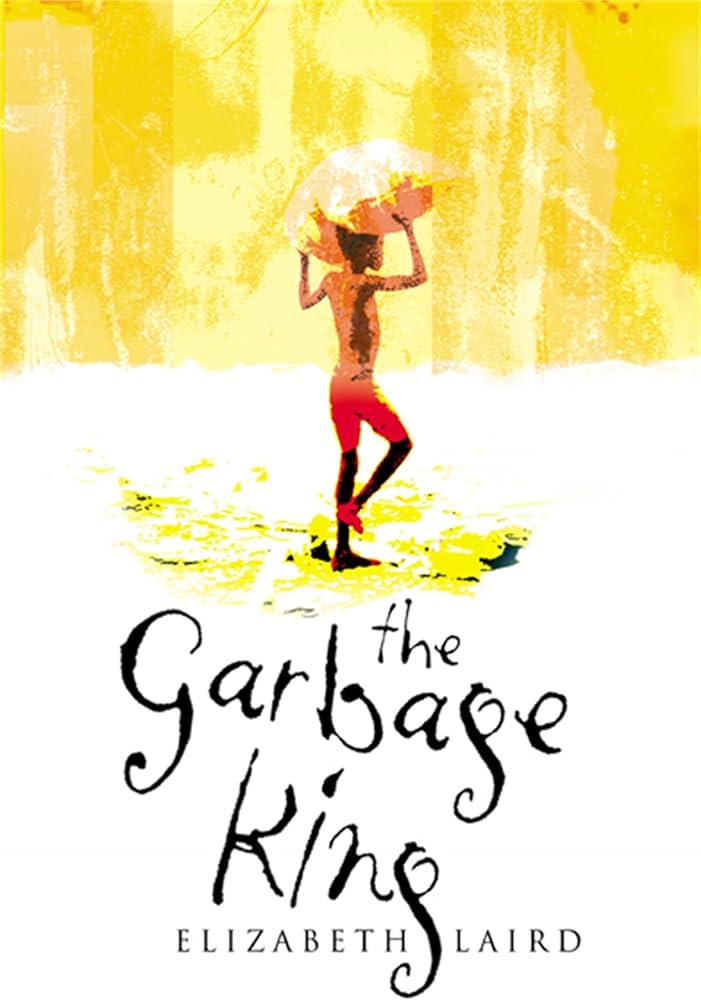
Book Review: The Garbage King by Elizabeth Laird

The Garbage King is a story that’s largely aimed at kids, probably from Year 6 upwards. However, a good story is a good story, no matter who it’s aimed at. I stumbled upon it when I was looking for ideas for my reluctant reader son to try and thus, having read only good things about the book, I decided to give it a go myself!

The Garbage King tells the story of street children in Ethiopia and helps us to understand that regardless of their background, children are essentially very vulnerable and that anything can happen to any of them. Such is the case with Dani and Mamo, two kids from opposite ends of the social scale who end up on the street together.

After a harrowing episode in his early life where he’s sold to a rural family as a slave, Dani escapes back to Addis Ababa and begins his life on the streets. So far, life has been brutal and painful for Dani and the streets of Ethiopia’s capital don’t make things any better.

Meanwhile, across town Mamo lives in a lovely house in a quiet, exclusive area. He has the trappings of a wealthy family, but is failing in school and his strict father is not impressed. Fearing his fate when his lack of academic progress is revealed, he decides that there’s only one thing for it; to run away. Before he knows it he too is living on the streets. But while one boy relies on his wits and guile to stay alive, the other is a sitting duck. And then a chance encounter between the two boys changes both of their lives.

The Garbage King is an excellent read. Elizabeth Laird gives the reader a brilliant, and I have to assume authentic view, of life on the streets of Addis Ababa. Certainly, as I was reading I felt like I could easily imagine what it looked like as well as hearing the sounds of the city and even being able to imagine the smell of some of the food being described. It was clearly not the kind of hustle and bustle that would be safe for a child though.

Danger seems to lie at every corner of Laird’s Addis Ababa, making The Garbage King a tense read at times. As a reader, there’s a genuine sense of fear for both of the boys, but especially the naïve Mamo. Luckily though, he has Dani to look out for him, so although life is now distinctly uncomfortable, there’s slightly less immediate danger.

There are twists and turns to The Garbage King, making it a real page turner at times. As poor Mamo lies freezing at night, too terrified to sleep, it made me think of my own son and how frightened I’d be if he happened to find himself in a similar situation. It’s bad enough when he’s out camping!

Laird’s characters are fantastically written. We’re onside with Dani from the very start of the novel. Life is tough for him, but he doesn’t complain. In fact, he shows guts and determination in order to get out of the initial situation that he finds himself in and when he’s finally made safe by the kindness of a stranger, we feel happy for him. He’s bright and likeable and so when fate deals him a losing hand, we’re willing things to get better. And when the various dangers of life on the busy city streets catch up with him, we’re desperate for him to stay safe.

As the novel rolls on the boys find their feet on the streets. As there’s safety in numbers, they fall in with a small gang, but danger and misfortune is still never far away. For now though, life is a lot better than it could have been had they not seen off a few of the predators that lurk in the shadows. Ultimately though, both boys just want life to return to some sort of normality

Will Dani ever see his sister again? Will Mamo be able to return home to his strict father? Well, you’ll have to read and find out!

I give ‘The Garbage King’…

Rating: 4 out of 5.

Poetry Blog: Blackbirds

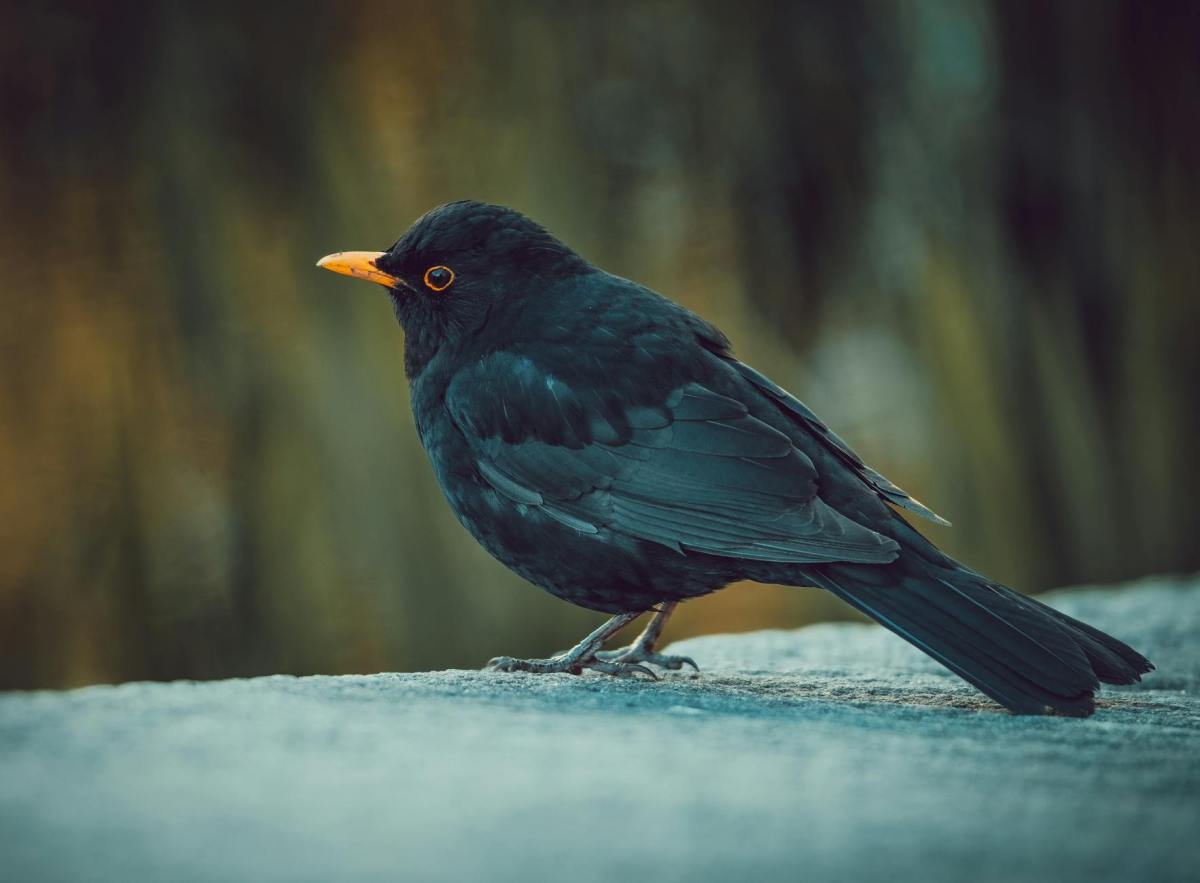
This is a poem I wrote about a scene I watched from my kitchen window while doing the dishes. It was on a recent Spring evening, just as the sun was beginning to dip behind the trees. It had been a sunny day and crucially, I’d just cut the grass earlier that day.

I looked up to see a couple of blackbirds, which on closer inspection I could see were a male and a female. So, channeling my inner Cilla Black (one for older readers there and an old TV matchmaker if you don’t know) I immediately placed them together. Man and wife, if you like. A mam and dad, probably, foraging for food for their newborn Spring chicks. The birds love it when the grass has been cut; I’m not entirely sure why.

The fact that they were at opposite ends of the garden and that their movements were both graceful and jerky, yet obviously on the same wavelength reminded me of dancers in a ballroom. It was something I remembered days later when I had the time to start drafting the poem. Here it is.

Blackbirds

The lights dim and a sultry dance begins
in the garden ballroom,
tentative at first, but gaining pace and rhythm as the minutes pass.
Trees sway and rustle in the evening breeze,
an audience inspired to move,
adding occasional ripples of polite applause
as our pairing settle to a tantalising flirtation,
at first far apart, yet soon together tripping the light fantastic,
their dark figures striking a pose,
drawing ever closer with each beat of the dying sun
and as the light sighs its last
this dance will reach collapse
and these two distant partners,
now nestled close, will return to the humdrum beat
of their something else, their everyday
a life away from this brief, glamorous scene
until time and hunger dictates they should do it all again.

The idea with the poem was to use an extended metaphor of a ballroom and a pair of dancers to describe what was essentially two blackbirds out getting food. It was the way they moved, almost in tandem, that inspired the idea of the ‘sultry dance’ in the ‘garden ballroom’ and then it became a challenge to add as many dance references as I could so that a poem was formed.

It’s the second time I’ve written about blackbirds as I like to watch them in the garden. They can be quite territorial and there have been several occasions when one has flown way too close, squawking at me as if to warn me off. I don’t think they understand the idea of home ownership! Anyway, maybe somehow they’ll sense that I’m writing about them and make me the honorary president of their fanclub!

I quite like this poem. I’d have liked to spend more time drafting, but given time constraints – I’m a busy boy at the minute – I’m quite pleased with how it turned out. Maybe it’s one I’ll return to in time. I hope you like it too though!

Book Review: The Runner by Markus Torgeby.

As a young man, Markus Torgeby quickly grew disaffected by a lot of what the world around him had to offer. He knew that society’s expectations were not for him. Despite being a talented runner though, he sensed that pursuing this as any kind of career was not going to work. Too often, injury or just not being in the right mindset got in the way of any kind of competitive edge. As he says himself at the start of the book, “My head was full of dark thoughts. I didn’t know what to do. I had to rethink what it was I really wanted, I had to find a way out of that well.”

What Markus did next – which is documented in the book – seems both astonishing and really quite wonderful.

‘The Runner’ is an international best seller and tells the tale of one man and his quest to find contentment. In short, Torgeby headed up into the Swedish wilderness to live in a tent and dedicate himself to a more simple life, where money didn’t matter, but running most certainly did.

It’s an amazing true life tale, beginning in Jamtland, northern Sweden where the temperature is -22 and Markus is the only person for miles around. This is where he escapes the norms of society, pitching his tent and living among nature complete with enormous amounts of snow, elk and even the threat of bears.

As you’d imagine from the title, running is very much central to Torgeby’s existence. When he vows to run every day, he means it and nothing will stop him, be that extreme weather conditions, injury or mental health issues. Torgeby isn’t just testing his fitness – he’s pitting himself against both the most extreme elements and also just the odds.

Running is where Markus is at peace and I have to say that resonated with me, as I’m sure it would with many runners. The only difference would be – and it’s a seismic difference – that while the majority of us are running around the civilised, normal streets or trails near where we live, Markus Torgeby is running around in one of the most isolated, northernmost territories on the planet! There are threats to life almost with every step he takes. This is not the tale of an everyday runner, despite the fact that he runs every day!

‘The Runner’ is actually really well written and Torgeby rarely shies away from telling us exactly how he’s feeling or what he thinks of the world, even if it can be uncomfortable to read at times. His blunt honesty is one of the most positive features of the book and it’s hard not to be impressed by Torgeby’s principles and way of life.

And then there’s the sheer courage of it all. As someone who rarely takes much in the way of risks, ‘The Runner’ makes for an absolutely fascinating read. Torgeby leaves home to live his life his way when he’s barely much more than a child. And yet, his lifestyle choice is utterly remarkable, especially when you know that he is burdened by the thought of his mother’s suffering, back at home. She suffers with MS and some of the most beautiful passages in the book revolve around her relationship with her son, as he cares for her and helps to make sure that she is still able to experience the wonder of the world around her.

After four years of living in his tent in the wilderness, Markus begins to come to terms with the world around him and the contentment that follows – I won’t spoil what that consists of – gives us a bit of a happy ending.

Part of me felt jealous of Torgeby while reading the book and I questioned some of my early adult decisions in life. It’s funny how something like this can take us back and make us more self critical. Ultimately though, at the age when Markus left home for the wilderness I was probably barely able to cook for myself, let alone live in a tent in some of the most unforgiving territory on the planet, so I was able to give myself a break after all!

Whether you’re a runner, health freak, someone with an adventurous spirit or none of those things, this book is a great read. For me personally, it was interesting to see that I had things in common with the writer and that we shared such a love of running. Ultimately though, if you like an interesting take on life or just enjoy learning about some of the bolder ways to live, then you’ll enjoy this book.

I give ‘The Runner’ by Markus Torgeby

Rating: 5 out of 5.

Poetry Blog: ‘Willow’

It’s the Easter holidays and as I’ve got some time on my hands I decided to sit down and try and write something for the blog. Other commitments have been getting in the way of late and so my blog has been very much neglected.

So, with not a lot in mind to write about, I thought I’d trawl through some notebooks and accompanying scraps of paper in order to see what poetry I have knocking about. It turns out that there are quite a few that have either been started or simply finished and then just left and so, after quite a bit of reading I decided to add this one to the blog. It brings back a lot of memories and I really like it.

Willow

As the spots of rain get heavier
and begin to change the colour of the roads
and pavements around,
you scramble for the familiar shelter
of the giant old weeping willow.

Everyone is out, the house locked up,
but you chose friends, football and
the top of the hill Wembley of a pub car park
over the visit to family,
and now that team mates have chosen bricks and mortar for cover,
solitude in nature is forced upon you.

A mass of leaves and sagging branches provide ample sanctuary,
so you position yourself so not to be seen
from either road or the neighbour's house,
shift your knees up to your chest and enjoy this place
where there is no shouting, no conflict and
no storm of any kind.

The willow tree in question here is the one that we had in the garden of my childhood home. Everyone else regarded it as a nuisance because of its sheer size and mass of leaves that would be shed in autumn and litter the surrounding area, but I loved it.

I’d play in it as a small child, inventing games and characters and swinging on those branches. As I got older it became somewhere to hide and just be on my own, away from what I remember now, rightly or wrongly, as a lot of shouting and anger in our house. Sometimes, as in the poem, it was just a convenient shelter of a different kind as the rain just didn’t seem to get through it. As I got older, I’d often stay at home when my parents went across to see family, but would rarely remember to take a key. These things got forgotten when there was a game of football about to start! And so, I’d end up just sitting under the tree to escape the elements.

In later years, after we had moved out, the tree was cut down. I still kind of miss it to this day.