Poetry Blog: Pursued

This is a poem that I actually wrote and then briefly forgot about. It was only when reading through a notebook and finding a folded up piece of A4 paper that I discovered it again. I think it was written some time in the last two weeks, but somehow I’d just tucked it away and forgot that I’d written it.

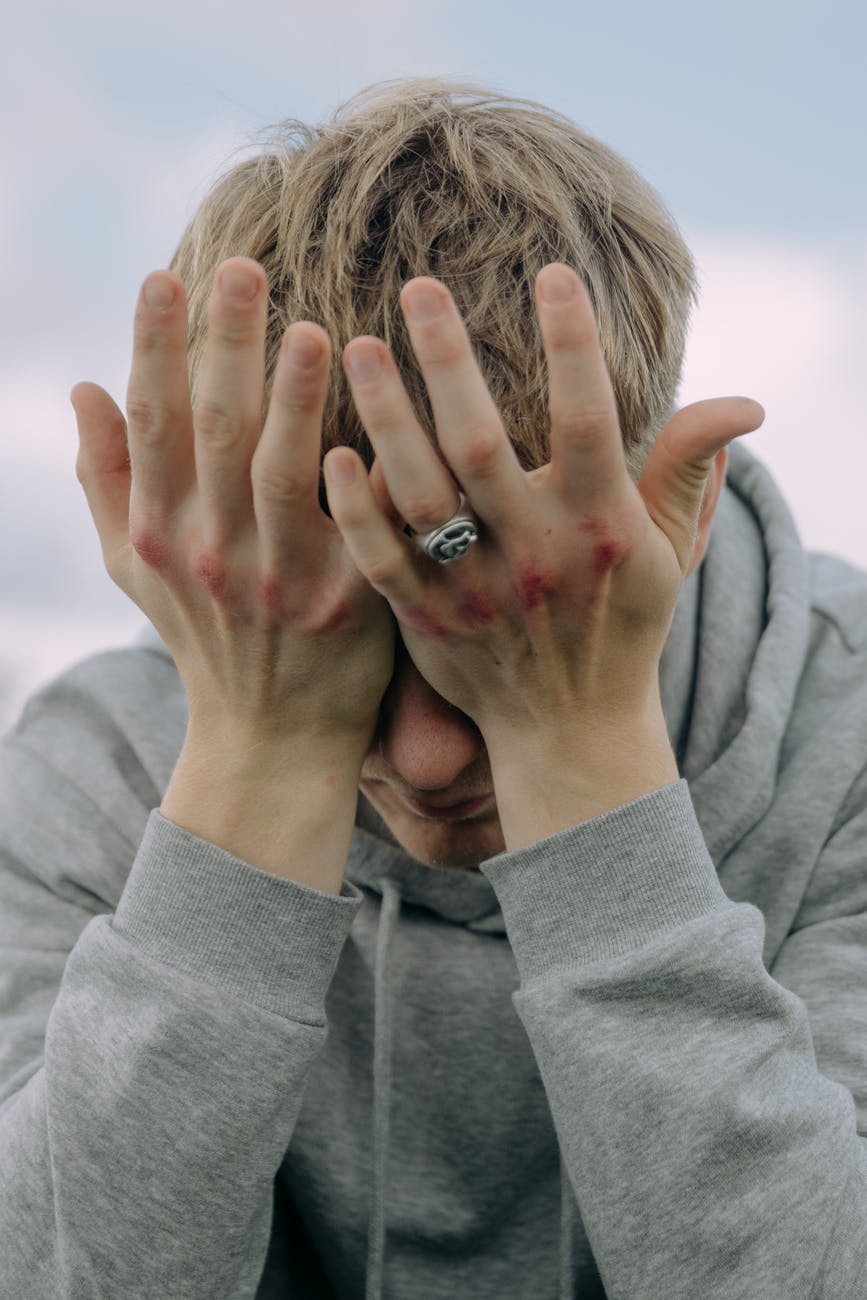
It’s poem that has a couple of different influences. Partly I think it’s about mental health. Not just my mental health, but peoples’ in general. It’s about not being able to get rid of the darker moments, the lower moods, which is something I’ve had to put up with for a short while now, but something that lots of other people have probably struggled with for many years. So, I’m not moaning or feeling sorry for myself; I know others have things much, much worse.

I think the other influence or meaning behind this one is that I’ve been suffering with an injury – it’s been about 7 weeks now – and it just feels like it’s never getting better. So again, something I can’t seem to shake off. (Maybe that’s where I’m going wrong; less shaking, more relaxing?)

Pursued

I feel like you defy description. I don't know how to cope with you 
and words almost fail me.
Every label seems not to stick,
neither adequate nor accurate.
You're definitely not a friend,
but not a stranger all the same
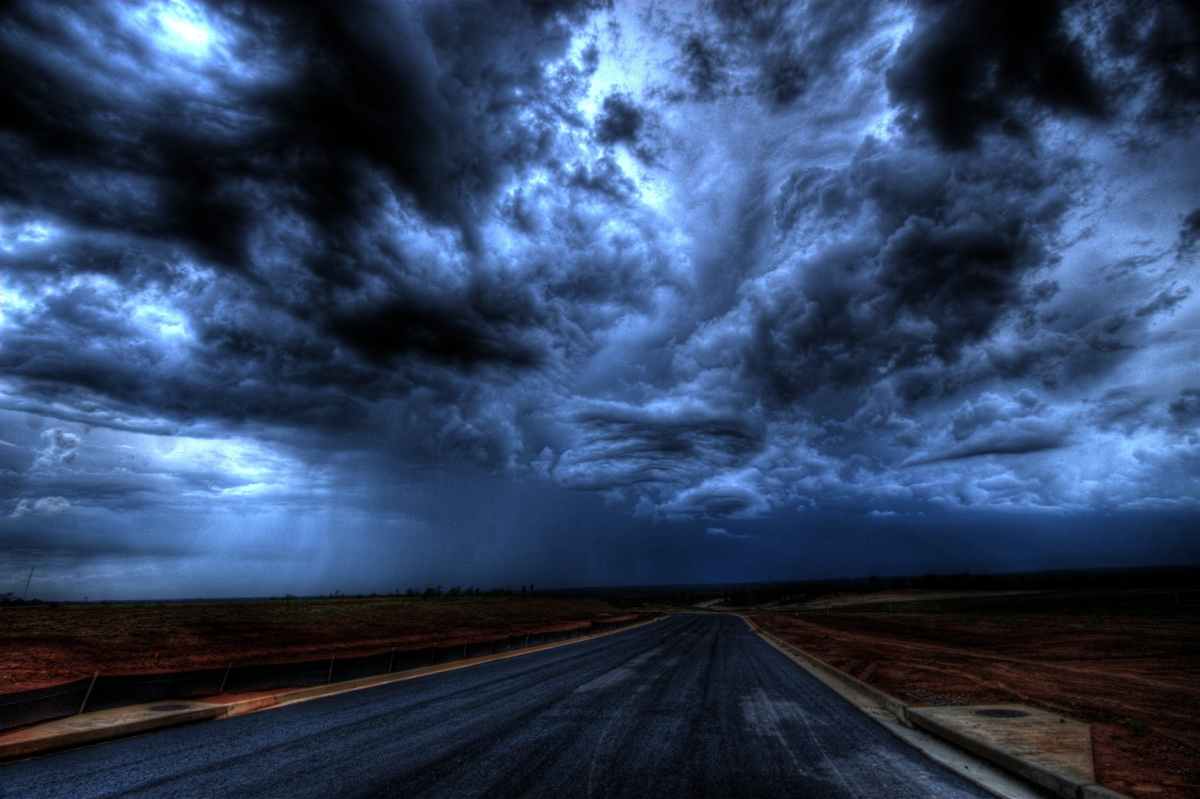
and a cloud hanging over me can actually pass on the wind
before returning, whatever the forecast.
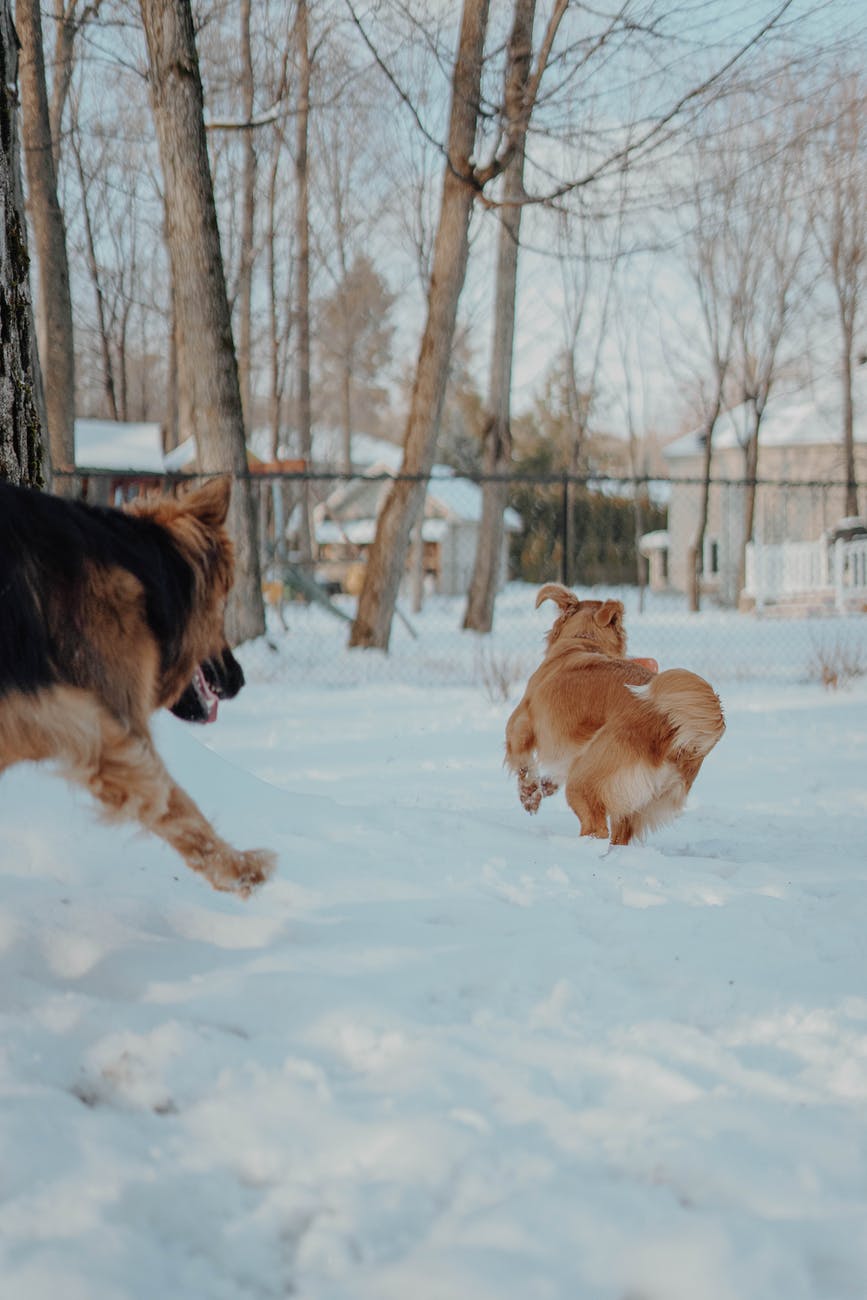
This is a nagging doubt, a feral dog trailing too close at my heels,
craving trust, but up to no good.
An excrutiating headache, pressing down,
a torchlight shone in my eyes or maybe a spotlight exposing me
when I feel the need to hide.
A flare in a clear night sky, marking me out, just as I find sanctuary for the night.
A light that offers no illumination, but lets me know that there's to be no rest,
no safety, nowhere to serve as an escape,
just an uncomfortable reminder that tells me to keep moving,
because at times like these, slowly, tentatively,
like an old man shuffling around the room to find the candles in a power cut,
that's all that I can do.

I don’t know if feeling this way is a legacy of lockdown and all things Covid or simply just another stage in my life; an age thing perhaps. But where before any sense of feeling low was fairly easy to shake off, lately I’ve not been able to. So ‘Pursued’ seemed the perfect title for the poem as it’s absolutely how I’ve felt both mentally and physically and how I imagine lots of people who are struggling feel too.

As ever, feel free to leave a comment below.

Poetry Blog: Pain

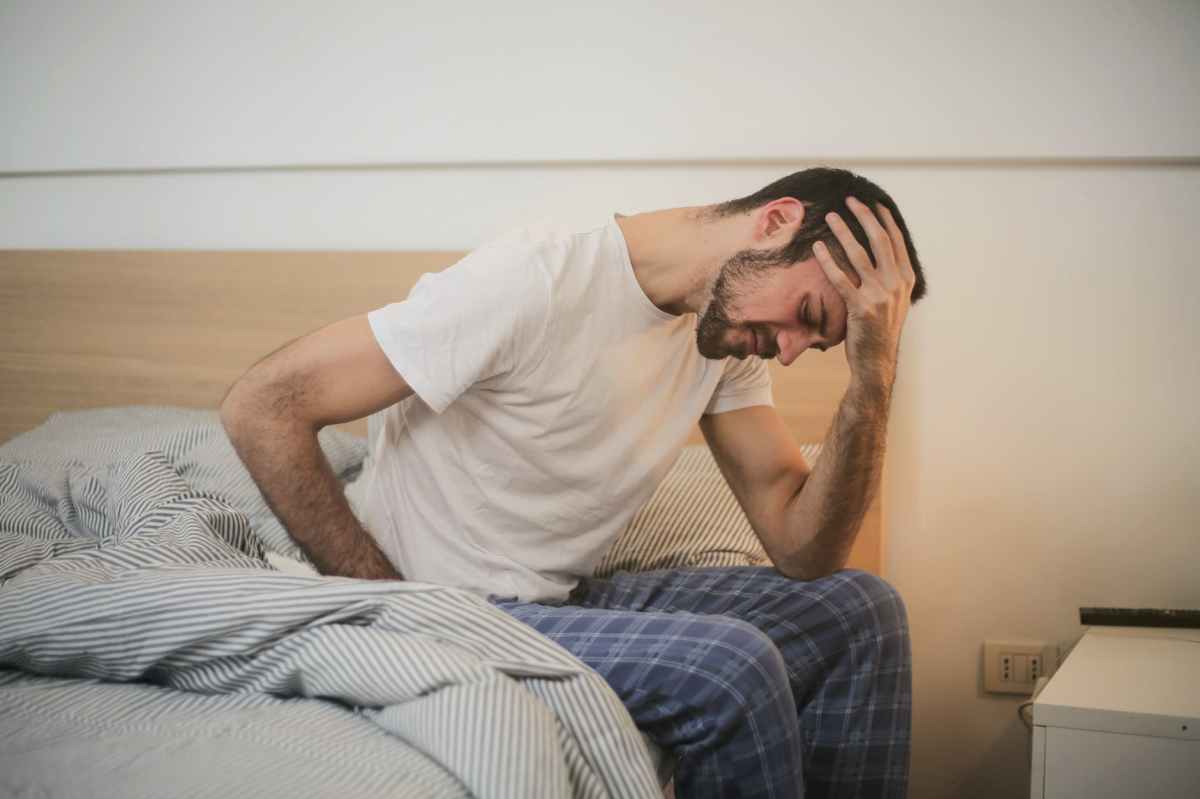
At the risk of repeating myself, this is yet another poem that was borne out of a sleepless(ish) night. I’d found myself clambering out of bed not long after midnight as I couldn’t get to sleep because of the pain in my shoulder and arm after I’d damaged a nerve during a coaching session when I should have known better than to take on goalkeeping duties. I’m 49 for goodness sakes!

So I went downstairs with my book as I find reading takes my mind off things while also never failing to make me feel sleepy, whatever else might be going on

It amazes me how many times it happens that my mind is full of ideas and potential lines from a poem at these times. But it happened again, so I began writing, ending up with two poems; one about making the decision to get out of bed in the middle of the night and this one, about the pain that I was suffering with.

Pain

The voice that tells you not to speak,
the constant nagging doubt,
a sleeping partner tracking your every move,
a shaft of moonlight in a 4am garden giving the illusion of movement,
the urge to run from something unnamed that might not even be there,
a telephone staring intently as you ponder the call you don't want to make, paralysed,
a strangled scream,
a fruitless sneeze,
the date that teeters on your horizon, pulsing ever so slightly,
the message you should have sent,
an unvoiced opinion,
the stinging comeback stopped in its triumphant tracks by a tongue bitten,
the memory that refuses to ever truly leave.

With this poem I just found myself thinking of things that I’d compare pain to and once there were a couple of ideas written down it became a kind of stream of consciousness.

In daylight hours, on next read it became an exercise in editing; sorting the wheat from the chaff so to speak and getting rid of ideas that jarred with others or just anything that reeked of the nonsense that might sound great in the sleepless early hours of the morning. There was also a little bit of repetition where ideas were a little too similar for my liking. I guess that comes with writing when you’re so tired! Thus, this became a relatively short poem.

I hope it translates well enough. I hope there are comparisons in there that you can identify with and that you might recognise as being familiar in terms of being in pain.

As ever, I hope that you enjoyed the poem. It’s always nice to read comments too, so feel free to leave one as I genuinely appreciate the interaction.

Book Review: ‘The Honest Truth’ by Dan Gemeinhart

It might be argued that there’s no more honest truth than the fact that you’re going to die. I mean, I’d like to hope that – inspired by the theme tune to ‘Fame’ – I’m going to live forever, but you can’t escape the honest truth though, can you?

Mark is a young boy who’s facing up to a whole lifetime’s worth of problems, only they’ve appeared in the shape of just the one big problem. And with that problem comes his honest truth. It’s looking pretty much certain that he’s going to die. I mean, that’s a big old problem when you’ve not even made it to high school age . And Mark’s facing this problem…by running away to climb a mountain.

Mark has had cancer for most of his life. He’s battled to stay alive, battled to fight off the cancer and just be a normal child. But however many times he fights it off, it keeps coming back to have another go at him, as is the way with this horrible disease. In running away, he now hopes to just die and end all of the heartache for not just himself, but his parents and his best friend Jess. While he’s at it, he hopes to climb a mountain like his grandfather asked him to just before he himself died. In short, Mark is a boy who has simply had enough of the hand that life has dealt him.

The subject matter of ‘The Honest Truth’ isn’t what you’d call particularly nice. The death of a child, even a child with a terrible illness, is never pleasant. As a parent, having one of my children in hospital for any length of time and for anything at all, is a real nightmare. But Dan Gemeinhart writes about Mark’s situation with a wonderful balance of optimism, humour and of course a tinge of sadness. It all makes for a compelling story and right up until a few pages from the end, you’re never quite sure how things are going to work out for Mark.

‘The Honest Truth’ is probably what we should be referring to as a YA novel. But, even at my age, I still love reading novels from this genre. I have a bit of an excuse, given that I’m a high school English teacher. But regardless of what it is and where we squeeze it in, ‘The Honest Truth’ is an excellent story and at not much over 200 pages, a really quick one to get through too!

The story is intriguing as Mark runs away with the intention of dieing on the mountain, while dodging a missing person’s investigation that has been publicised on every format of media you can think of. As a reader I felt like any second now, he’d be found. I mean you’d imagine people would be on higher alert than usual keeping their eyes out for a little runaway, stricken with cancer. But, with the help of his dog Beau – the kind of amazing, loyal canine companion we’d all dream of having – he seems to stay at least one step ahead of it all, despite becoming increasingly sick and increasingly slow in his ‘escape’ to the mountain.

In all, ‘The Honest Truth’ is a just fantastic read and I was gripped from start to finish, torn between wanting Mark to get his final wish and wanting him to get caught and taken home to his parents and best friend, Jess. Whichever way it ended, it almost wouldn’t have mattered and surely that’s the sign of a truly wonderful story.

I’d give ‘The Honest Truth’

Rating: 5 out of 5.

Poetry Blog: Dad

I wrote this poem fairly recently and although the circumstances have changed for the better since then, the sentiment behind it remains very much the same.

It’s a poem about my dad, who at the time of writing, I hadn’t seen for 18 months. I hadn’t seen my mam either, come to think about it. Because they live together, which is usually the way when you’ve been married for 50 odd years. But it was speaking to my dad that prompted me to write.

Speaking to him shocked me a little bit, despite the fact that I was aware of probably a lot of things about him from the 18 months when I’d not been around him. I was also very much aware of his age and this should have been an indicator of the fact that he was getting old. And yet, speaking to him and hearing what sounded like a very old man on the other end of the phone, gave me a bit of a jolt. He sounded not only old, but frail, perhaps even ill.

It led me to sit, worrying, before then spending time reminiscing for most of the rest of the day. So having thought about my dad a lot afterwards, I sat down and wrote the following.

Dad

The drudgery of another working week done and I'm preparing for the next one
as my phone alerts me to the terror of a voicemail.
You sound urgent, but noticeably frail, more my grandad than my dad.
"When you get this, call. Straight away."

I sit down nervously, to return the call, pre-empt the bad news,
aware of hospital appointments, complaints, tests.
I needn't have bothered as the 'news' is nothing at all,
just a parent checking in. But still you sound different.

I'm reminded that, despite middle age, I'm still 'the bairn'
and continue to be wrapped in cotton wool, drip-fed information
on a 'he doesn't need to know' basis.
I can't trust your reassurance, but can't question it either.

You sound different; where once there was the toughness
of teak, now in its place squats a weakness as the ravages of
age take hold and remind me that you won't be here forever.
You're failing, ever so slightly, when I never thought you would.

That night, I can't escape you as you take root in my head.
The sound of you; segs on concrete, returning home with the paper.
Clearing your throat at 6am, tapping a razor on the sink, 
oblivious to those of us trying to sleep. Later you'd leave the car running
on the drive to warm up, just in case anyone hadn't yet been woken.

I see you emerging from the car after the Cup Final, crestfallen,
unwittingly signalling my own life of sporting misery.
Drunk on New Year's Eve, incongruously dressed in a kilt,
jiving with our neighbour on another package holiday; mesmerising.
Coming through the front door, hands black after another day running the yard.

Later, I feel you chasing me up the stairs, when my smart mouth ran away,
smell the sharp tinge of metal on your work clothes, 
the fug of flatulence as I open our living room door and the smell
seems to slap me in the face.

I smile at the pints we shared, the fish and chips, taste the 
cheese on toast you volunteered me for at the lull in Sportsnight,
hear your laugh, bellowing, a crude comment, a ruffle of my hair,
remember how you reduced me to tears telling your friends of your pride in me,
your son, the clever bugger. I see the picture of you
with your grandson and those tears burn my face again.

We haven't awkwardly hugged in far too long. 
I'm not ready for what inevitably comes next, even if no one will tell me
until the very last minute anyway.

The poem’s about just sitting thinking about my dad and the way I remember him. These are memories from along time ago and it seems obvious that he’d be very different now. So I suppose, it’s a poem about a number of other things too. Growing old, change, personality, perception. Certainly my perception of my dad has been that he’s invincible. While he wasn’t a hero figure growing up, he still just seemed to have a solidity about him. Speaking to him that a few weeks ago, he seemed to have lost that solidity.

I’ve since been able to visit my parents and although it wasn’t an upsetting visit – in fact it was truly lovely just to be able to be in the same room as them again – it was was a bit of a shock. The reality that my dad is now an octogenarian was unavoidable. And while that sounds silly, it was something that I hadn’t given too much thought beforehand. My dad was just my dad.

When I was younger my dad always seemed old. Anyone who’s been your typical teenager will recognise that feeling! So seeing him hit 60, retire and being the age he is now, didn’t feel like a big deal. He was old, just like he’d always been. It’s funny how just the sound of someone’s voice on the phone can shake you to your boots. Writing the poem helped me deal with how it all made me feel.

One last thing; the line about the sound of his ‘segs’ on concrete. That’s one that will mean something or absolutely nothing to readers. To explain, ‘segs’ are/were the little strips of metal that would often be on the soles of shoes and boots, I guess to protect said soles. They made a very satisfying noise when a person walked, a kind of scraping click. I don’t even know if ‘segs’ is the right word for them, but my dad’s shoes and boots always had them on throughout the 70s and 80s.

I hope you enjoyed the poem. Maybe it made you think about your own parents. Hopefully it provoked happy memories. I’d love to hear what you thought.

Book Review: ‘Why Running Matters’ by Ian Mortimer.

For many of us running really matters. It’s been a lifelong interest for me and something I’ve done with varied levels of success, interest and effort since I was very young indeed. As it stands, I think I’m going through what some might call a slightly evangelical phase with my own running and probably boring most of the people I know in singing its praises. So a book on why we run was a very exciting prospect!

Ian Mortimer isn’t a runner, in that it’s not his profession. In fact, where running’s concerned he’s not unlike myself; middle aged, enthusiastic competitive and probably a bit more injury prone that we’d both like. However, while I’m a humble English teacher Mortimer is a historian and the writer of the best selling Time Traveller’s Guides series.

On approaching his 50th birthday, Mortimer made a series of vows or challenges to himself. In amongst them were taking part in 45 Parkruns and 5 half marathons across the year, producing an album of his own music, seeing a Shakespeare play and organising three concerts by world renowned musicians. In amongst it all, he’d write this book. Phew!

So the book itself is one hell of an achievement. Finding time to write it in amongst all that running and other activity is quite something. By coincidence, I am too approaching my 50th birthday and while Mortimer’s challenges prompted similar thoughts of a series of challenges or ambitions, I was glad I’d picked it up in August when it was far too late to attempt as much as Mortimer did!

The book chronicles Mortimer and his running companions’ performances at the Park Runs and the half marathons, while also attempting to contemplate exactly why it is we run. Because clearly, like the title tells us, running matters, but it’s what it actually means to people that is explored here.

A source of irritation throughout the book was that Mortimer is a really decent runner! Mean spirited I know, but reading about his times and placings in various Park Runs left me feeling quite jealous and more than a little bit irked! But I suppose this is part of what the book is about; we run to be competitive. And the book delves into this in great detail because Mortimer seems incredibly competitive and so while his times were irritating – and accompanied with a smile from this reader too – it left me feeling quite a warmth towards the man himself. His determination was inspirational while remaining quite comforting. Every time he went out to run he was looking to improve on times and performance, which is very much my approach. Sadly, I’m not always successful here!

Reading of Mortimer’s running adventures all over the south west of England was really interesting. HIs descriptions of the various courses, weather conditions etc felt comfortingly familiar, even though I haven’t taken part in any of the races. But his thoughts and theories all held weight with me. And the atmosphere of all those Parkruns did too! Mortimer also wrote a lot about running with his sons and while occasionally the dose of schmaltz involved was a bit much, as someone who occasionally runs with his own son, I could empathise his his pride and enjoyment in doing so.

‘Why Running Matters’ is a really interesting and well-informed book. Mortimer knows his stuff. He’s an experienced runner who has thrown himself into races and challenges of varying levels over many a year. It was this that had me nodding along enthusiastically throughout my time reading. And although it would seem to have a bit of a niche target audience, I would argue that there’s something here for a lot more than just those of us who run. Mortimer’s year is undoubtedly inspiring and the discussions on the competitiveness, camaraderie and the at times almost meditative side of running would hold the interest of many a reader, whether they run or not.

If you’re a runner who wants to read about running, then – obviously – this is the book for you and you’ll certainly get a lot out of reading it. However, even as a non runner, if you’re someone looking for inspiration or even just a gentle push towards the door and searching out something to do with your time, you’ll enjoy ‘Why Running Matters’. And if you’re one of those people who watches runners from the comfort of your car as they pass and just wonders why, then the book will at least help explain what on Earth it is we’re thinking when we leave the house to pound the pavements squeezed into all that lycra!

I give ‘Why Running Matters’

Rating: 4 out of 5.

Book Review: The Knot by Mark Watson.

If you’re from the UK, you might well know Mark Watson for his stand up comedy or even his fairly frequent appearances on panel shows. A distinctive looking fella and very funny indeed. What you might not have any knowledge of are his novels. If this is true, I think it’s fair to say that you’ve been missing out.

The Knot is the second of Watson’s books that I’ve read and it’s reminded me that I need to get my hands on the rest.

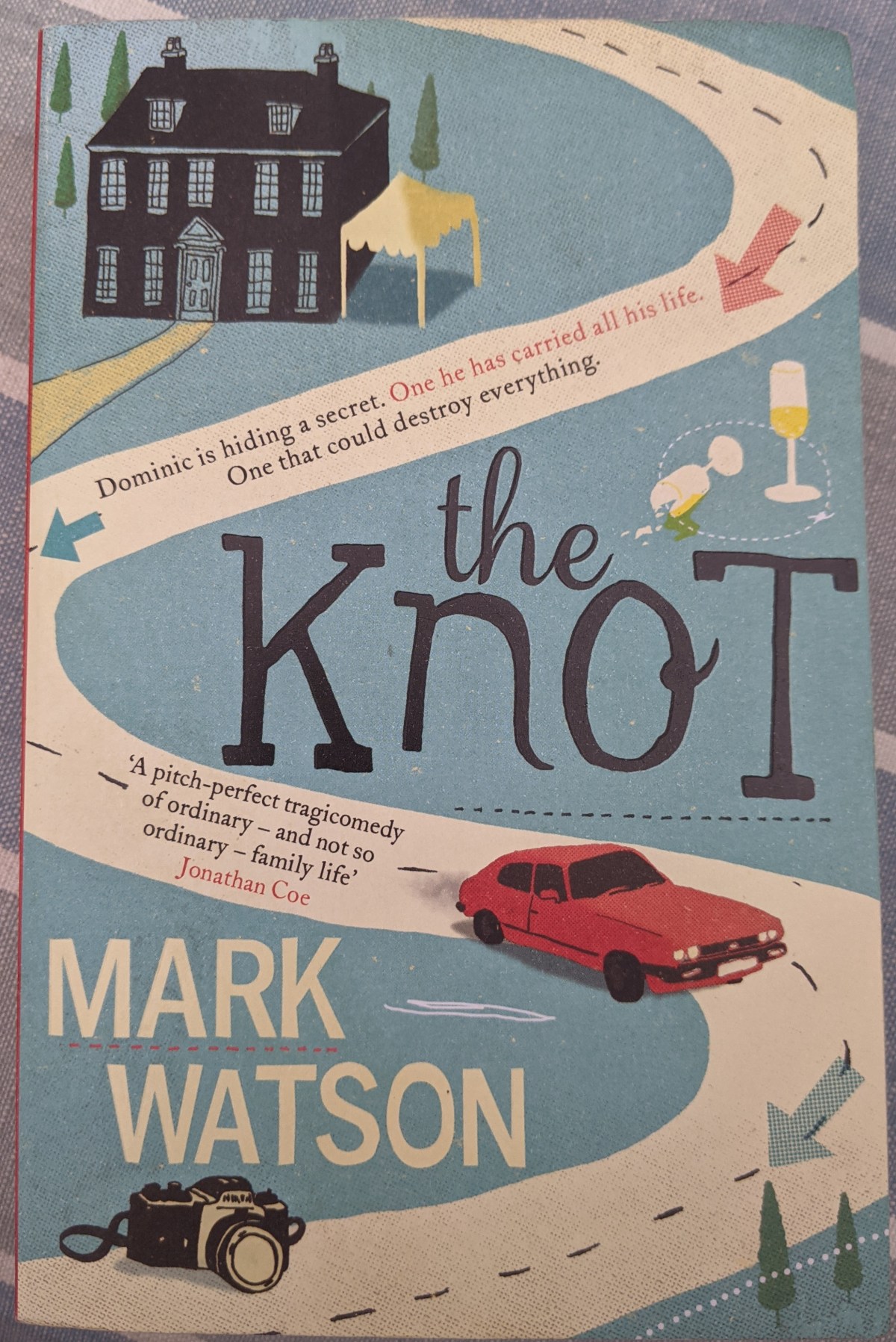
The front cover of The Knot tells readers that Dominic Kitchen is hiding a secret and that it’s one that he has carried all of his life. So you immediately know that there’s something not quite right and that this secret must be something pretty serious. So, in a way, we’re hooked from the off. And believe me, when you find out the secret, it really is the kind of thing that would stop any one of us living a normal life.

The novel is set mainly in the latter decades of the 20th century and Dominic is the youngest of three siblings, brought up in a middle class family in London. Dominic’s older brother, the somewhat domineering Max, graduates from Oxford and goes on to become a successful sports agent while his sister Victoria marries a famous cricketer. Meanwhile, Dominic seems to simply tootle along, never really sure of what he wants to do with his life. He stumbles upon a talent for photography and together with crazy Irishman Daley, makes a living from that. But nothing ever seems simple for Dominic. We find him approaching middle age, but are frequently taken on flashbacks to his earlier formative years. And with this technique, his terrible secret is drip fed to us. I had an inkling of it early on but found myself regularly thinking, ‘no, it can’t be that’. Until it was…

The secret is the cause of the knot, a feeling that plagues almost everything that Dominic does and even though he seems to be managing to live a happy enough life, it is always there in the background, eating away at him. Can he ever really be happy? Will he be able to make his marriage to Lauren and career as a wedding photographer work? And even if he does, will the dreaded secret do the seemingly inevitable and come back to ruin everything? After all, some things just can’t stay hidden.

The Knot really is a good read. The storyline is certainly original and there are moments of jaw-dropping drama as well plenty of the kind of comic moments you’d expect from a writer who doubles up as a stand up comedian. Dominic is a character that I think a lot of us would be able to relate to – not sure of where he wants life to lead, unable to move on in the way that he might really want to because of a lack of confidence and an enormous mistake and just not really coping as an adult. The secret that blights Dominic’s life is really quite shocking and even though it becomes a little more acceptable later on in the story, neither Dominic or ourselves as readers can ever really recover from it. But you will find yourself on Dominic’s side, despite the nature of his mistake.

I’d absolutely recommend The Knot. If you enjoy a good story, well written characters – some you’ll love, others you’ll hate – and life changing dilemmas that you can get your teeth into, then it’s a novel that’s worth picking up.

I’d give The Knot…

Rating: 4 out of 5.

Poetry Blog: Awake

I wrote this poem recently when England was in the grip of a recent heat wave – maybe not by most standards, but believe me, 25 degrees is a heatwave here – that as ever, brought the country to a shuddering halt.

Living in England and I’d guess may parts of northern Europe, we seem to spend a lot of time wishing it was sunnier and hotter, only to find that it’s all too much when we get the weather we wished for! It turns out that we’re not that good at handling the heat and even trips out to the seaside at these times will inevitably just end in some ridiculous traffic jam where lines of people sit and bake in hot car shaped ovens. It’s what we Brits often refer to as ‘Bank Holiday Fun’.

The worst thing for me though is that it affects my sleep. It’s not that major a thing, but I do find that when it’s too hot I’ll be up out of bed and sitting waiting for sleep to come at least once a week. Sometimes that might mean that I just have to spend 20 minutes reading a book, but on other occasions I can be up for hours before crashing out on the settee. It’s never nice waking up the next day and realising that you had three hours sleep!

I wrote this poem on such an occasion recently. It was the second time I’d gotten out of bed that night and in the end I just started writing ideas in a notebook until I had enough for some kind of coherent poem.

Awake

Heat strangles sleep, rendering you a passenger on board a fragile boat adrift in the storm at night.
Mind and body unable to do what is needed, natural,
so instead you prowl in search of some remedy to calm the stomach's churning,
soothe the skin where beads of sweat sheen and shimmer,
bridge these troubled waters and allow you to return once more to a slumber,
less fitful, that will only see you disembark,
blinking across the landing as morning breaks and day calls.
Instead, above, floorboards call out to indicate that you're not alone in this struggle.
So you slump, uncomfortable, yet cooler,
you sense the boat breaking so you cling to driftwood and hope for the best,
undecided if you'll sink or swim.

Having written this poem and the bones of another, I looked at the clock to find that it was just after 3am. For someone who gets up for work at 6am, this was not a nice realisation!

I just felt like a passenger on this particular night. Like I had no control whatsoever over whether I’d get to sleep or not. This came out in the poem as feeling adrift, almost letting the current take you wherever it was going. I knew I wasn’t going to just drop off to sleep, so had to fill my time and the thought about being adrift prompted the whole poem. At one point I heard someone else get up and hoped that I hadn’t disturbed them. It made me try to go to sleep, but again it was unsuccessful!

Thanks for reading. I hope you enjoyed this poem and as ever, if you have any thoughts on it then feel free to leave a comment.

Poetry Blog: End of Term

A hastily written poem this one. I had a few lines running round my head one evening in the final week of term and thought it might be worth seeing what happened if I tried to join the dots.

It’s about…well, let’s not treat people like idiots here, it’s about what it says in the title. As many of you know, I’m a teacher and so this time of year is very special to me – and all teachers, I hope – and it always prompts a great deal of thinking. What will next year be like, how will I get on, what’s kid X going to be like in Year 9, do I think I’ll get along with this class next year, etc. And that’s before you even get to thinking about how tired you are and what you’ll be up to over the 6 blissful weeks of summer.

The last week of the academic year is always quite a strange time. For me personally, it always feels like a week too far and I know that’s silly really. There has to be a final week and, as I’m reminded of regularly by people who clearly never went to school, I have a lot of holidays. On a side note, I’ve never figured out why people who moan about teachers’ holidays don’t just solve the issue by becoming teachers.

The last week generally sees a small dip in the student population, a smattering of unauthorised holidays being taken, sometimes a downturn in behaviour and eventually, a slackening off in the quality of lessons. The weather seems to always be ridiculously hot – relatively so; this is the UK after all so we’re not claiming European levels of scorchio – and so it becomes a case of trying to evade some form of heat exhaustion too, for teachers and students.

So anyway, I wrote a poem about the whole phenomenon.

End of Term

A strange mix of exhaustion, excitement and familiarity drifts around for days.
Every morning is greeted with half closed eyes and a walk that has more than a hint of Marley's Ghost 
You trudge out of the door, drag yourself through each day,
tolerate those you are faced with and smile through gritted teeth,
as if that alone will make the clock go faster.

From Monday through those last five days, classrooms will echo to a familiar refrain;
'Can we watch a film?'
And you brawl with your conscience hourly to stop from caving in.
The minutes fail to fly as you attempt to solve the mystery
of how to craft one more lesson on a text long since finished and tired of.

Outside the sun shines without mercy, turning the classroom into an oven
that bakes until all enthusiasm is burnt and thoroughly dried out,
like last night's re-heated lasagne.
Windows and doors are propped open and you battle with all on the corridor to be heard,
while your voice gives way and your feet grumble dolefully.

After a week that felt like a year you arrive on that final day,
too shattered to appreciate the glee that greets no uniform.
You smile weakly at the fashion show and finally put on a film, while your class complains 
that this one's boring and that the teacher next door brought sweets for her class.
Summer can't come soon enough.

It’s been a very difficult year in schools. Things have been different to say the least. Covid has changed everything and this year has featured a heady mix of room changes, teaching in bubbles, watching on not really knowing how to react when pupils have been taken out of class to be sent home for dreaded periods of isolation, bubble collapses and whole year groups going home, split starting times, dinner times and finishing times, Teams lessons, Teams meetings, school closures and teaching to an empty room, and of course more hand sanitiser than you could ever imagine!

It’s been a year to test the resolve of teaching and non teaching staff as well as students, parents and guardians. As a result, as the final line of the poem says – and with more emphasis than perhaps ever before – Summer can’t come soon enough.

As ever, comments are always more than welcome. Thanks for reading!

Poetry Blog: A future awaits…

I feel I should start this particular blog with an apology. I’ve written another poem with a terrible title, I’m afraid. It’s a common occurrence. A lot of the time for me, writing is instinctive in that I might be thinking about something and a line pops into my head. This is a common starting point and it’ll often see me scrawling in a notebook and finalising a poem fairly rapidly, without a great deal of drafting. However, what it also leaves me without is a decent title. I tried a few, but in the end just plumped for a phrase from the poem. A proper cop out if ever there was one! Sorry.

This poem came about when I was considering a few things to do with my future. It was mainly to do with work and my profession, but I was also thinking about the future in terms of the coaching I do and also my parents, who are both elderly and not in the greatest of health. It led me to considering what the next few years might hold for me. It’s a subject I’ve written about before and one that I’ll think I’ll return to as well. Here’s the terribly titled poem though.

Alien thoughts dominate; an invasive species not indigenous to these shores 
nudges you off an axis you've been comfortably balanced on for years.
Simply what to do is no longer the question,
but what to do with the rest of your life.
How to bring back purpose, like light to a darkened room,
heat to a vacant house.
If this path has run its course, you'll endeavour to have faith
that another will emerge from the undergrowth that currently crowds
your thinking, blocks your way.
A future awaits, not immediately demanding your attention,
but tugging at your sleeve every once in a while, reminding you that it's there,
that you keep it in mind.
Its patient nuisance can wait for now, but won't let you ponder forever.

This one is undoubtedly a poem born of middle age, but I don’t doubt that pondering one’s future is exclusively a middle aged thing. Sometimes, whatever your age, it’s a good thing to ponder what next. I suppose it helps you feel stable, prepared. And that’s part of what this poem is about. There are certain things in my relatively immediate future that I feel are inevitable and that will shake me to my boots when they happen, so to speak. So giving it some thought, although not usually my favoured course of action, is likely to be a wise idea.

As a younger man I imagined that this time in my life would be very different and that I’d have everything straight in my head by now. It’s funny how it all turns out!

I hope you enjoyed the poem. Maybe it prompted a bit of thinking of your own. However you felt, I’d love to hear it, so feel free to leave a comment. Thanks for reading!

Poetry Blog: Tunnel Vision

This is a poem that I drafted very roughly a couple of days ago. I’d just had some bad news and on top of feeling exhausted with work, sore with a running injury, sick and tired of living with Covid restrictions and worried about various other matters in everyday life, I think I’d just had enough. So, rather than simply explode and kick things about the place I scribbled some thoughts down.

I don’t normally suffer with my moods. I tend to manage to live life on the same level most of the time. I’m rarely too bothered by anything and have always told myself that things will work out, whatever happens to be going on. It’s definitely an advantage of being such a simpleton! However, over the last few weeks lots of things seem to have been bothering me and it sees to have all piled up and caused a bit of a bad mood logjam. Not the end of the world and at least it’s meant that I can be creative.

Here’s the poem.

Tunnel Vision

Feral dogs gather, sensing blood, teeth bared
snarling, putting a tentative foot forward,
circling without grace, eyeing you constantly
until they finally snap and leave their mark.

Every ache and pain nags and presents a new question,
crowds the mind, leaving a feeling of fog
until you feel like lashing out with a primal scream
from somewhere deep inside that you've never found before.

Questions, although answered time and again
remain, echoing back and forth, disrupting sleep
to pick away at the scab that they created,
allowing it to spread to unchartered territory.

Tunnel vision is adopted, just to get through seconds, minutes
as something hidden in the shadows threatens to grind you to a halt
like hazard lights on the motorway, just as the urge for freedom and speed 
is at its highest.

Searching for a way to break the cycle and feel a sense 
of achievement, or at least a moment's blessed relief
from the sheer boredom and strangely gargantuan effort
needed to just keep going.

Writing this helped. It’s very easy to sit and moan at anyone who’ll listen, but I much prefer to keep things to myself. It’s a mixture of embarrassment and just the thought that I don’t really want to burden anyone with my troubles. Especially as most of the time I feel like I’m exaggerating in even labelling certain things as ‘troubles’. I know that lots of people have things much, much harder than I do. And as I said earlier, I’m reasonably happy to get through and operate under the assumption that any mood will pass and that things will get better.

In the poem, I’ve tried to describe how I felt; as if the thoughts, the worries were circling me, taking turns at bothering me and bothering me on various levels and with various results. Hence the ‘feral dogs’ line which I felt summed up the fact that I didn’t feel like I had complete control at times and didn’t feel that I could just dismiss things. Those thoughts just kept coming back, biting me.

If it helps, or it’s of any interest, I think I feel better today. I’m just keeping myself busy and it definitely helps that the weather is great, I’ve been able to get out for a run and that the Euro 2020 international football tournament has just started. Like I say, I’m happy to keep things simple.

I hope you liked the poem – ‘enjoyed’ might be a stretch I suppose! Whatever your thoughts, feel free as ever, to let me know in the comments. Thanks for reading.