NUFC: The ones that got away – Hugo Viana.

You would have had to have been either exiled on a remote island or taking some time out in space to not know that Manchester City have been in the news a bit lately. The 115 Premier League and Uefa related charges against them, the success of their challenge to the Premier League or just the fact that they seem to be stumbling a bit and really not maintaining their happy habit of winning football matches, Citeh are never far away from the news. But did many of us notice the appointment of Hugo Viana as their incoming Sporting Director for the 25/26 season?

Now any of you younger readers may be muttering ‘Hugo who’? Well, let me inform you and at the same time remind some of us older Mags of Hugo’s past. Because Hugo really was one that got away from Newcastle United.

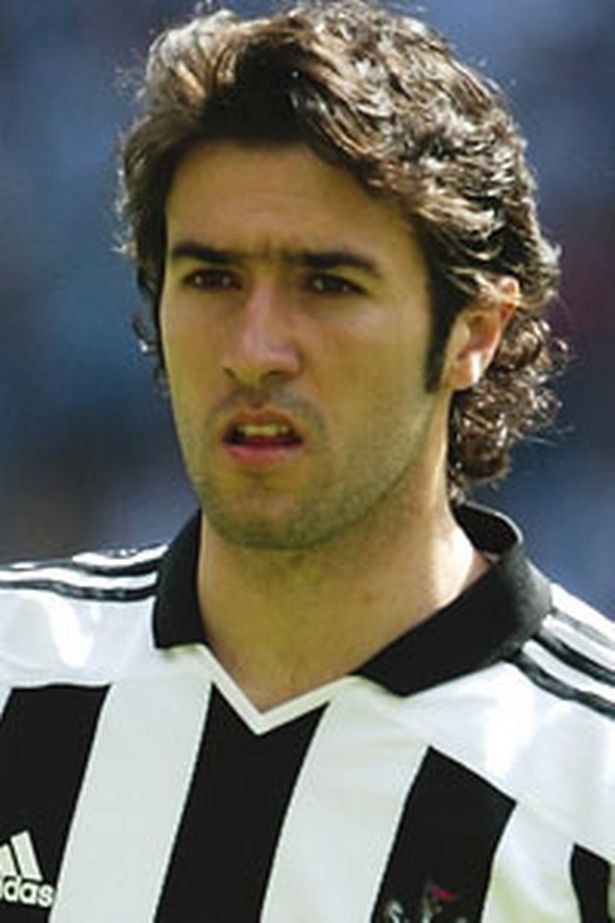
Hugo Viana was signed by Newcastle as a 19-year-old from Sporting Lisbon (or Sporting CP as they seem to be known nowadays). His was a record Toon fee for a teenager at £8.5m and having won the Young European Player of the Year award in his previous season (now the Golden Boy award) he arrived with a lot of expectation. This was undoubtedly an exciting signing. But sadly, it just didn’t work out.

Viana joined us as a hugely gifted footballer. Playing as a left sided central midfielder he was viewed by Bobby Robson as being a natural successor to Gary Speed. And maybe this was part of the problem. Speed was not only a favourite of Robson – one of his ‘blue chip boys’ – but of the fans too. Despite age creeping up on him, he wasn’t slowing down and was still very much a dominant force in our midfield alongside the likes of Kieron Dyer, Jermaine Jenas, Clarence Acuna and Nobby Solano. As a result, Viana’s chances were limited and he never really got the run of games that would have hopefully seen him become a mainstay of the team for years to come.

Viana had an excellent passing range but probably lacked the pace and physicality to succeed in the Premier League. It didn’t make him any less of a player though. Think Yohan Cabaye, but crucially without Cabaye’s experience, aggression and will to win. So it was then, that we only ever really saw glimpses of Viana’s greatness on Tyneside.

There are a few standout memories of Viana’s time at Newcastle for me. Firstly, the goals. Viana didn’t score many, but he was never one for tap ins, either. He scored only 4 goals in 61 appearances, but they were all pretty special. A first time screamer into the near top corner against Chelsea at the Gallowgate springs to mind as well as his strike from the left hand corner of the box against Feyenoord away in the Champions League. The other two were free kicks that he elegantly caressed into the near corner, before running off laughing like this was the easiest thing in the world.

Viana was a player that promised much in flashes. There’d be moments of brilliance where he made the game look simply effortless and in those moments it wasn’t overly hard to understand what the club had seen in order to shell out millions. However, Hugo was obviously very young and as a result – at a time when not too many very young players were joining our league – the move just didn’t work. The league felt too physical for the nuances of his game and he just wasn’t afforded the time on the ball that was perhaps needed for him to flourish. As often with players coming in from the smaller European leagues, he just couldn’t seem to get going at Newcastle.

In the end, it was inevitable that we’d cut our losses and that Hugo would be allowed to move on. I imagine that it came as a relief to the player when he was loaned out to Valencia for the 2005 – 2006 season. However, it was a similar story there as he struggled for game time and consistency and by 2009 he was off to Braga, back in Portugal. Here he was much more successful, making 123 appearances and scoring 16 goals in 4 seasons.

Following a spell playing in Saudi Arabia, Hugo returned to Portugal, eventually taking up the post of sporting director at Sporting Lisbon, where after getting through a number of managers and hugely expanding their scouting network, his success has now led to his recent appointment to the same role at Manchester City. Hopefully, he can be a success in his new role…just as long as it doesn’t harm us!

What do you remember of Viana’s time on Tyneside?

Book Review: ‘I Wanna Be Yours’ by John Cooper Clarke

If you know of him, John Cooper Clarke comes under a number of aliases. The Poet Laureate of Punk, the Bard of Salford, the punk poet…he’s even sometimes referred to as Dr. John Cooper Clarke. If you don’t know of him, well it’s best you start with the viewpoint that the man is a star. A poet, a raconteur and an entertainer. And as we find out in ‘I Wanna Be Yours’, he can’t half tell a story!

As such, you’d expect his autobiography to be quite the read. And you wouldn’t be disappointed. Having read it recently in fact, I was actually pleasantly surprised at just how ‘eventful’ his life has been, as the book went way beyond my expectations. I thought I knew a few things about the man who’s considered a bit of a national treasure these days, but on reading the book I found that there are layers upon layers to this fella’s life story. What a treat!

Now aged 75, Cooper Clarke is best known as a poet, although in recent years he’s managed to light up several TV panel shows with his wit, humour and way with words. And it’s his gift for language that makes ‘I Wanna Be Yours’ so eminently readable. The sharp delivery meant that I read the whole thing hearing Cooper Clarke’s voice in my head, which for me made the whole thing all the more memorable.

The book takes us through his early years as a sickly child in Manchester where in fact, a dose of tuberculosis meant that he was moved to the North Wales coast to live with relatives in the hope that the sea air would aid his recovery. Once back in Manchester, we hear of a multitude of adventures as Cooper Clarke grows up and eventually begins to get into clothes and music, slowly honing the look for which he’d become famous in later life.

Eventually, with a bit of luck, a good deal of hard graft and not without one or two setbacks along the way, John finds that he has a gift for entertaining people. And so begins quite the extraordinary tale of a bit of a legend.

This is a brilliant book with any number of twists and turns, a whole host of bizarre and incredible tales and no shortage of surprises. So while I was fully aware of Cooper Clarke’s influence on bands such as The Arctic Monkeys, I certainly wasn’t expecting the likes of Bernard Manning to put in an appearance! And then as I carried on reading and found out about his close associations with the likes of Nico and Linton Kwesi Johnson, I was more than a little bit blown away! But that’s the thing about a life like Cooper Clarke’s and in turn this book; there’s never a page wasted, there’s always something curious or funny or just downright mindblowing around the corner.

A genuinely funny man, with a great turn of phrase, Cooper Clarke’s words will inevitably raise a smile and leave you in fits of laughter at times too. But for all of the light there are many moments of shade and the book – and John’s life – has sad moments too alongside many murky tales of Cooper Clarke’s own drug addictions. But even here, it’s all told with such candour and black humour that I found myself not really batting an eyelid and simply accepting that it had all added to the rich tapestry that I’d been reading about.

In the end, I was left wondering if at times, I’d been had. Surely there are more than a few tall tales and embellishments along the way in the book? However, on reflection I decided that either I didn’t really care – I mean wherever the truth lies, this was an amazing read – or more likely, it was all probably very much true. Because, whether it be looking after somebody’s monkey in Amsterdam and just ducking and diving while looking for your next fix of heroin, it could well have all happened to only one man; John Cooper Clarke.

Whether you know of his legend or not, this is a book I’d thoroughly recommend.

I give ‘I Wanna Be Yours’

Rating: 5 out of 5.

Book Review: I Blame Morrissey by Jamie Jones

Music and sport can do funny things to a person. Those of us who take an interest in either or both can become unhinged, erratic, obsessive and just plain odd because of how they make us feel. In fact, if you’re a fan of both, you may well get to a certain age and look back in wonder, unable to fathom out some of your decisions, while simultaneously still believing that they were right all along. People won’t understand you and you won’t understand what there is to understand, but quietly you’ll be fully aware of just what a weirdo you probably are.

Jamie Jones is one such weirdo and ‘I Blame Morrissey’ is his attempt to explain his obsessions with music and to a lesser extent, football.

Jones grew up in the 90s – like me – and was obsessed by music and football – like me. However, while I made some ridiculous decisions while following bands and Newcastle United, I managed to allow life to get in the way and eventually grew into a reasonably well adjusted adult. Sort of. Jamie Jones – and I can’t disguise some kind of jealousy – got more and more obsessive until he was allowing his life to be dictated by song lyrics. And as crazy as that might sound to some of you, it all makes for some incredible stories.

‘I Blame Morrissey’ tells the tale of a young man growing up and trying to navigate the world around him while also dedicating himself to following music and Peterborough United. And for most of the time, music and Peterborough win out, meaning that relationships are doomed because of perceived messages in songs and important dates and occasions missed because Peterborough have a game in some meaningless competition. I mean, we’ve all been there, right? Right?

Jones’s teenage years were dominated by girls, Peterborough United and musicians like Billy Bragg. But like any good music fan his journey takes on various twists and turns, many of them familiar to me and most likely to some of you too. Thus, if you are of a certain age there will be something here for you; a memory to empathise with or the reminder of a song that brings it all flooding back. There are festivals from a time when it was the music that was the most important thing. There are tales of The Charlatans, Morrissey, Ride, the Britpop years, of loves lost and found and of any number of decisions made in the name of whatever the latest obsession happens to be. There’s even some Teenage Fanclub, which obviously resonated with the bloke who writes this blog.

There’s a lot of this book that I feel like I lived myself. A great deal of the rest of it buzzes with a familiarity and a nostalgia that I simply couldn’t get enough of. And for that reason, everything about the book was a joy for me; like stepping back in time.

If you grew up with posters on your bedroom walls that you sometimes talked to, if you ever bought items of clothing because your idols did, if you ever changed your walk or your body language just to be more like your heroes or if you ever endangered a friendship, relationship or even your own life just to go and see a band, then ‘I Blame Morrissey’ will be right up your street!

I give ‘I Blame Morrissey’…

Rating: 5 out of 5.

NUFC: The Magnificent Sevens, Part 2.

In the second of this series I’m having a look at another 5 of my favourite number sevens. As I mentioned last time, I’ve always loved watching wingers and so I thought I’d write a couple of blogs about some of the ones I’ve loved watching most. Mind you, as a disclaimer I have to point out that some of our best number 7s haven’t really been wingers at all!

‘Jinky’ Jimmy Smith. Growing up, I’d hear about someone called ‘Jinky’ a lot. It sounded like a daft name, but my dad would regularly bang on about him. Eventually, as I got old enough to understand and old enough to go to games, I started to listen. Sadly for me, ‘Jinky’ had left by the time I was able to watch him play. His skills lived on though, with tales of his genius passed on by my dad and grandad, as I’m sure they were for many of my generation. From what I could gather, Smith was a bit of a maverick; one of those unpredictable players that a crowd might fall in love with while never truly knowing what they’re going to do next. ‘A box of tricks’ is how my dad described him and if you need a modern reference point, then perhaps Hatem Ben Arfa would have been a similar type of player. Jinky – nicknamed so because of his ability to ‘jink’ past an opponent – was a skillful player. Already a Scotland international when he joined the club, he would become a crowd favourite because of his flair and willingness to take on defenders. Making 179 appearances and scoring 16 goals, Jim became a real crowd favourite until tragedy struck and a series of knee injuries forced him into retirement aged just 29.

Darren Jackson. Darren Jackson will always bring back special memories for me. Partly because I just liked him as a player, but mainly because I happened to look quite like him in my late teens and was genuinely mistaken for him on a couple of occasions. Believe me, having someone stop you in the Metrocentre to ask if you’re a footballer will stay with you for a while! Jackson was signed in 1986 from Meadowbank Thistle for the princely sum of £240,000 and while he was never a world beater, he was definitely a player who seemed to be giving everything he had for the club. Slightly built, but quite skillful, Jackson had the ability to take on full backs and – as John Barnes once memorably rapped – get round the back. As such could usually be relied upon for an assist or a decent attacking performance. He was quite a fiery character too and never let himself be intimidated by some of the old Division 1’s more burly defenders. His career on Tyneside lasted just 3 seasons, taking in 69 appearances and 7 goals and I for one was saddened when he was sold to Dundee United for £200,000 in December 1988.

Tony Green. Younger supporters have possibly never even heard of what is likely to be their grandad’s favourite ever player. In fact, there can’t be that many people left who actually saw him play. But to those who did, the mere mention of Tony Green’s name is likely to light up their eyes and bring a smile to their face. Signed for £150,000 – big money in 1971 – Green only made 39 appearances before his career was ended by a knee injury. He was an integral part of Joe Harvey’s rebuilt United, the star of the show in a team that included the legendary Supermac. Green had it all; searing pace, skill, hard work, an eye for a pass and a will to win. Without having seen him play, perhaps the best thing to do is to leave it to those who did. So here’s what Stan Mortensen, Joe Harvey (his mangers at Blackpool and Newcastle) and Harry Crosby (my old man and a bloke who spent many a year in the Leazes end) had to say about Green. Mortensen – “He was never afraid to take on a man…which allied to his enthusiasm, ability, guts, strength and temperament makes him a great player.” Harvey – “After they made Tony Green they threw away the mould. His skills thrilled me in a way that no one else has ever been able to achieve.” My dad (a man of few words, unless he’s regaling you with tales of Aussie Gold Hunters or something!) -“The best player I ever saw. Simple as that.”

Rob Lee. Legend has it that Kevin Keegan persuaded Rob Lee to join Newcastle rather than Middlesborough by telling him that we were technically closer to London because of the airport. Lee wasn’t keen to move so far from his London roots, but I’m sure he’d agree that the potential for home-sickness didn’t last long. Signed from Charlton for a bargain £700,000, Lee is – in my humble opinion – one of the greatest players Newcastle fans have witnessed in the modern era. He started as a right sided wide player, all power, turn of pace and in possession of a neat line in body swerves and as a result was popular from the start of his time. In later years he’d play more as an attacking central midfielder and wherever he played, powerful, driving forward runs were his hallmark. Staying with the club from 1992-2002, Lee had many highpoints in his Toon career. For me though, three stand out; firstly, his ghost ‘goal’ at Brentford in 1993 when he hit a volley from inside his own half following a clearance only for the ref to blow up for a free kick. Then, there was his hat-trick – all headers if I remember rightly – in our first game back in Europe since 1977. I didn’t get to go to the game and there was no TV coverage, so myself and a mate listened on the radio and when Lee scored after only a minute, we went mental! Finally, Rob gave me one of my favourite memories ever when he scored the equaliser at Wembley in the FA Cup semi-final against Chelsea in 2000. If I close my eyes, I can still see him leap and power that header into the back of the net and although it amounted to nothing as we lost, it’s a cherished memory. After surviving the Ruud Gullit era, Lee was eventually sold to Derby in 2002, when truth be told, he was past his best. For those of a certain age and those that remember Keegan’s Entertainers, Robert Lee will always be a favourite and an adopted Geordie.

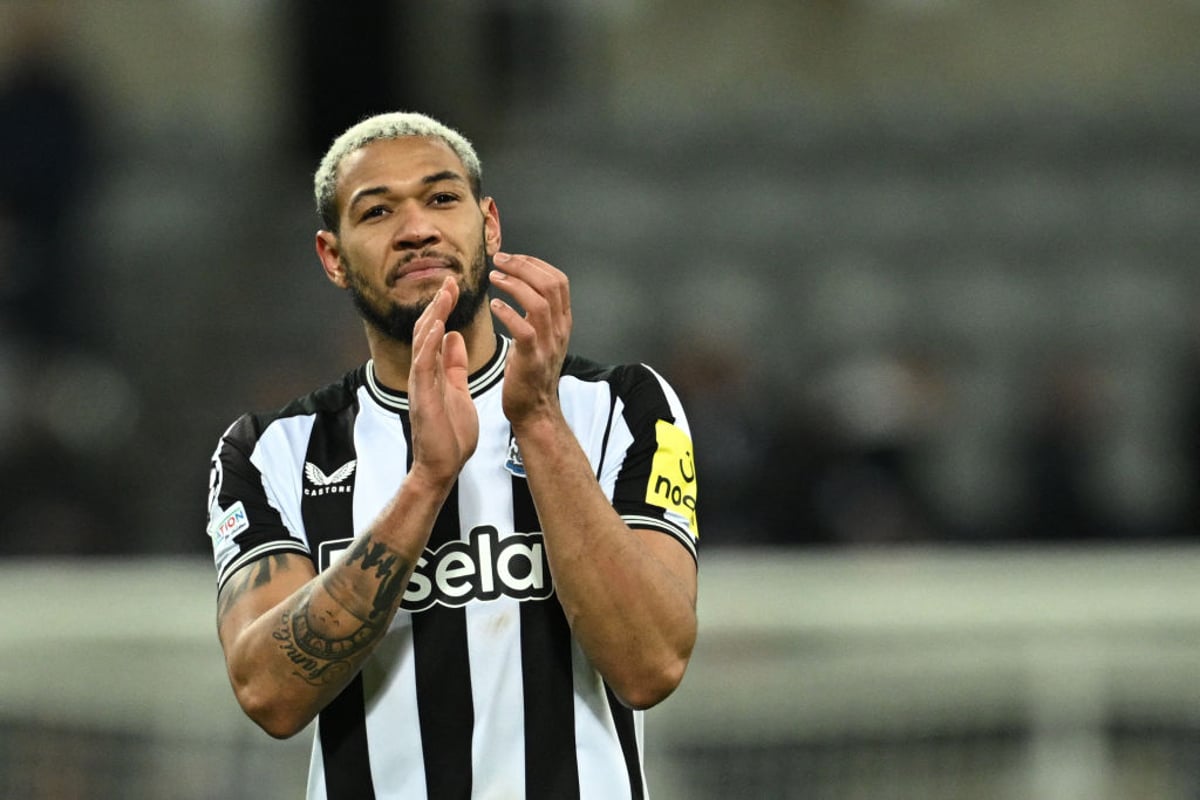
Joelinton. Big Joe, J7, Joey…however you know him, it’s safe to say that none of us could have envisaged the player that Joelinton would become! Joelinton Cassio Apolinario de Lira was signed from Hoffenheim for a record fee of £40m and given the number 9 shirt, and sadly didn’t take long to look like a bit of a waste of money. In truth, he was played out of position, but still, the four goals in his first season was definitely not the return we’d hoped for. And while I always hoped there was a player in there somewhere, when he was struggling against Rochdale or blasting the ball into his own face when it would have been much, much easier to score, I didn’t think we’d still have Joelinton today. But thank goodness we do. Big Joe only took the number 7 shirt when Callum Wilson was signed, but it was Eddie Howe’s arrival and not the change of shirt that made the difference. And what a difference it was! We’re all familiar with the Norwich game and the whole transformation into a powerhouse midfielder, so I’ll save the repetition. However, as we prepare for a new season – Joe’s 6th in black and white – I think we’re all hopeful that he can stay injury free and push us back into Europe. The power, the pace, the attitude and the love of the fans – Joelinton’s turnaround has been remarkable really, seeing him become a vital part of the team as well as a Brazilian international too. In fact Joelinton has become so popular that not only does he have his own song, but a couple of years ago he became the face of a new fashion trend as the bloke who’s face we’d wear on Hawaiian shirts! As the song says, ‘He’s Brazilian’ and ‘we think he’s f***ing brilliant’!

So, there you have it. The second part of my Magnificent Sevens piece and my final five favourite players to wear the shirt. I hope you enjoyed reading about them, whether you agreed with me or not!

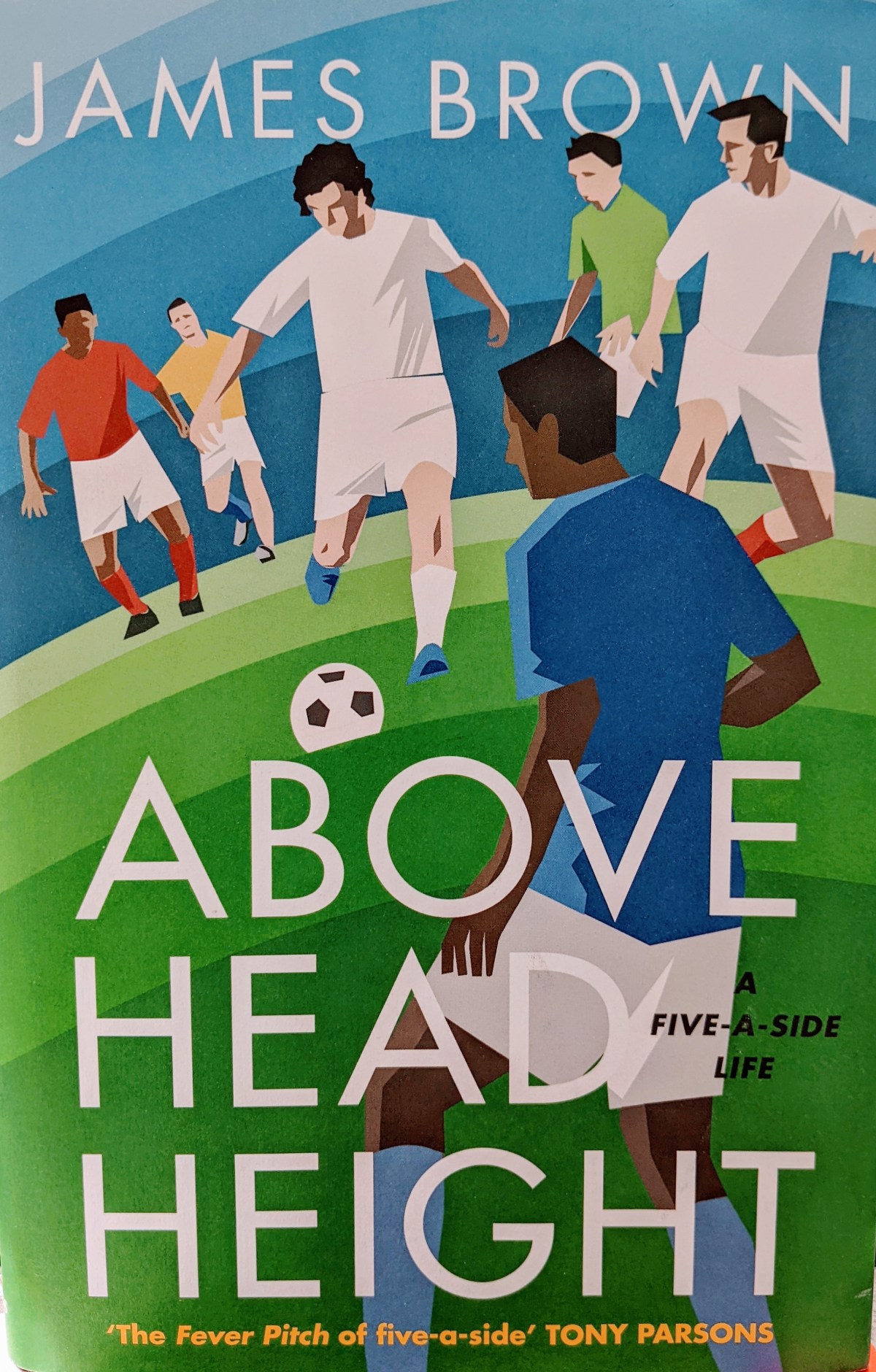
Book Review: ‘Above Head Height’ by James Brown.

Confession time. I had a little bit of a misspent youth. Nothing to panic about. Not committing crimes, not doing a great deal to disrupt others and not going out of my way to be obnoxious. My misspent youth consisted of doing the kinds of things that were important to me for as much as my time as was humanly possible, while neglecting the stuff that seemed boring, but on reflection might have actually done me some good.

My misspent youth largely revolved around football. Naturally, there were girls a bit later too, but I was no Casanova. Mind you, I spent endless hours playing football and I was no Maradona either! But wherever I could and whenever I could, I played football. ‘Above Head Height’ is a book for all of us who have obsessed and continue to obsess about football. ‘Above Head Height’ is what happens when your misspent youth continues through your entire adult life.

If you love football, then ‘Above Head Height’ is a must read. Even if you only have a casual interest in the game it’s still definitely worth a look. Brown – the former editor of the groundbreaking Loaded magazine – takes us through his own personal obsession with football, from days and nights playing any-number-a-side street football right up to his present day situation where he plays football with various social groups about 4 or 5 times a week. It’s an encyclopedic look at the game and why we play it, as well as why we get so obsessed and so for those of you like me and James, it becomes a very interesting read.

Brown’s experience of football as a kid will be familiar to a lot of us and as such, offers a huge slice of nostalgia for simpler football related times. Huge sided, barely organised games in the street, the park or wherever there was space and playing until you were either dragged in by a parent or it was just too dark to see anymore. Sometimes even that wasn’t enough to stop us!

‘Above Head Height’ takes us on Brown’s journey through football in its many guises. It’s a path well trodden for many of us. There are his experiences with school teams, playing with gifted players, playing at college and university, early adult five-a-side leagues and then onto time spent coaching his son’s team (something which a lot of us will have stumbled into inadvertently!).

This is more than just a book about football and a football obsessive. ‘Above Head Height’ starts with the funeral of a fellow player and Brown touching on the fact that, despite having spent years playing with this man, he really didn’t know him. He could pass comment on his playing style and pay tribute to his organisational skills – he was the bloke who organised the league – but what did he really know of the man he’d spent so much time with?

Ultimately, ‘Above Head Height’ is a book about friendship, camaraderie, obsession, health, fitness and the realisation that none of us are getting any younger. Football is just the orange or black and white checkered sun that it all orbits around. Of course, there will be family, careers, births and deaths, but sometimes it will feel like none of it is as serious as our feelings for the beautiful game!

If you remember the Wembley Trophy (or the penny floater if you’re from my neck of the woods), if you’ve ever spent far too long explaining the whys and wherefores of your latest ‘world-class’ goal, if the phrase ‘jumpers for goalposts’ still makes you smile and if you still dream that you might just get the call to play professionally, then ‘Above Head Height’ will be right up your street.

I give ‘Above Head Height’…

Rating: 5 out of 5.

Gallowgate Cult Heroes Number 8: Steve Watson.

At 16 years, 7 months and 9 days old, Steve Watson was our youngest ever debutant. And although he made his debut at home, during a time when I went and watched us play wherever and whenever, I missed it. A big thank you to Happy Shopper cash and carry in Blaydon where I was working at the time, for denying me the afternoon off to go to the match. I missed a bit of NUFC history, but I bet the sweet aisle looked amazing by the end of my shift. So, swings and roundabouts, eh?

A week later Watto would make his full debut – I was there for that one -, starting the home game against Derby, getting Man of The Match and assisting in a 2-0 win. He’d go on to play 24 times in that first season while also playing for 3 different managers as United struggled against relegation to the old third division before saving themselves on the final day.

While primarily playing as a full back, Watson played all over the field for the Toon. He made regular appearances in midfield, but also played up front on occasion too. In fact, on one such occasion after coming on as a sub at Liverpool in a League Cup tie, he grabbed the only goal of the game and still one of the most memorable I’ve ever seen and cemented his place as a cult hero in the eyes of many mags.

As the tie moved towards full time Newcastle broke out of their own box and Peter Beardsley took the ball from midway inside his own half from a headed clearance. Watson spun in behind the two defenders and Beardsley played a through ball that sent him a little right of target, but still heading towards goal. Watson still had a lot to do and little support, but twisting and turning he made his way to the edge of the box before chipping David James for a fantastic solo effort. An inspired moment that possibly no one in the ground would have seen coming and a brilliant goal from a very talented footballer.

Steve had produced an even more outrageous piece of skill years before though. Even as a 16-year-old he had an eye for something different. And so it was that his particular take on throw ins arrived in 1991. Steve had a good throw on him anyway, but little did we know he’d been working on something special; the somersault throw in! He needed a bit of space around the pitch to do it, but on occasion he’d bring out a throw where he would run forwards towards the line before performing a kind of forward flip, ball still in hands, and release it as he got back to a standing position. I’m hard pushed to remember where I saw it first and I can’t recall any particular successes, but it was brave to say the least, from one so young. Entertaining, as well!

Steve played for Newcastle from 1990 until 1998, taking in life in the then 2nd division, but mostly playing in the Premier League. He was a valued member of Kevin Keegan’s Entertainers before playing under Kenny Dalglish too. But then, mere months after a substitute appearance in the 1998 cup final, he was on his way to Aston Villa in a £4m deal.

For me, Watson seemed to suffer because of his versatility. Too often he was kept around to fill in various positions, never quite nailing one down for himself. Injuries didn’t help Steve either, but in all he never quite fulfilled his early promise. He always struck me as a good athlete; quick, agile and strong. He was a good attacking full back and so presumably would have made an excellent wing back in today’s systems. But alas, despite 208 appearances across 8 years at the club it felt like he never really cemented a place in the first team, which given his obvious talent was a real disappointment.

Some Toon fans might be able to draw a parallel between Watson and Elliot Anderson. Both were local lads that excited the fans. Both were skillful and athletic and should have had a bright future at the club, but both ended up leaving to further their careers. In Watson’s case, as the club’s youngest ever debutant, it felt like a real waste. I remember being excited watching his full debut against Derby and it wasn’t long before I was wondering if this was the next player to follow on from the likes of Beardsley and Gazza. Sadly, although an undoubtedly excellent player, Steve didn’t quite hit those heights.

Steve went on to have a long career, playing for Villa, Everton, West Brom and Sheffield Wednesday before retiring in 2009 after a long term injury problem. After that he teamed up with Lee Clark as a coach at Clark’s Huddersfield. Subsequent coaching moves took him to various clubs such as York and Gateshead and Steve is now the manager of Darlington in the National League North.

Another cult hero and another local lad done good!

Poetry Blog: ‘A Day at the Lake’

This is a poem about one of our first family holidays, when there was just the three of us. It’s one of those memories that I think will always stick with me and one that I can summon really easily.

The poem is about a tiny bit of a break we had in the Lake District when my daughter was just a toddler. It covers those protective feelings that you have as a parent. A swan nipped my daughter’s finger when she was giving bread to the ducks and it threatened to spoil the day. Later, when she’d calmed down, we moved round the lake a bit, took our shoes and socks off and had a bit of a paddle, or a plodge as we call it where I’m from.

Anyway, have a read.

A Day at the Lake

Earlier that day a rogue swan had nipped at your finger
after you'd steeled yourself and trusted mum enough
to offer it some bread.
You sobbed into her warm, protective arms,
soothed just a little by her calming words,
while nearby I seethed with rage,
fists clenched, tensed,
until common sense reminded me that
you can't punch swans.
They belong to the queen, you know.

Later, plodging in the lake on a different shore
and at a suitable distance from your attacker and his cronies,
your little hands gripped mine and told me
that you didn't much like the numbing cold of the water
on your legs and didn't want to feel the spite of pebbles
digging into your bare feet.
But you clung on, held your own, as you always would.

Later still, as we made our way back,
you ran off across a thigh high meadow
that laughed along with you,
your awkward limbs flailing for speed and distance,
enjoying this rare but heady mix of freedom and terror
and a loosening of the reigns for once,
because, swan now a distant memory, surely lightning could not strike twice
in such a beautiful spot as this.

With the determination that you've clung to for life,
you ran and ran, giggling loudly at your sudden independence,
ignoring the cries of 'not too far'
until it was decided that there was too much rope
and I caught you, scooped you up,
pretending to drop you for another thrill,
then hauled you up, onto my shoulders
as some kind of halfway house between wrapping you in cotton wool
and letting you know that sometimes, it's good to test the limits.

I joke about it in the poem, but I was beyond angry at that swan! And I really had to stop myself from behaving terribly. I guess it was another one of those days when you discover the lengths that you’re prepared to go to as a protective father!

Whenever I think about that day, I can clearly picture my daughter running away from us across the meadow as we headed back to the car. White shorts dungarees, a pink t-shirt and a rainbow belt around her dungarees with her hair in pigtails. She’s always been a little headstrong and I think we saw early signs of it that day, although it remains a really happy memory and it was particularly funny at the time. Like any newish parents though, we were over-protective and so, while we laughed we probably both wanted to just take off across the field and catch her, just to make sure that no more harm came to her! And eventually, we did!

I hope you enjoyed the poem.

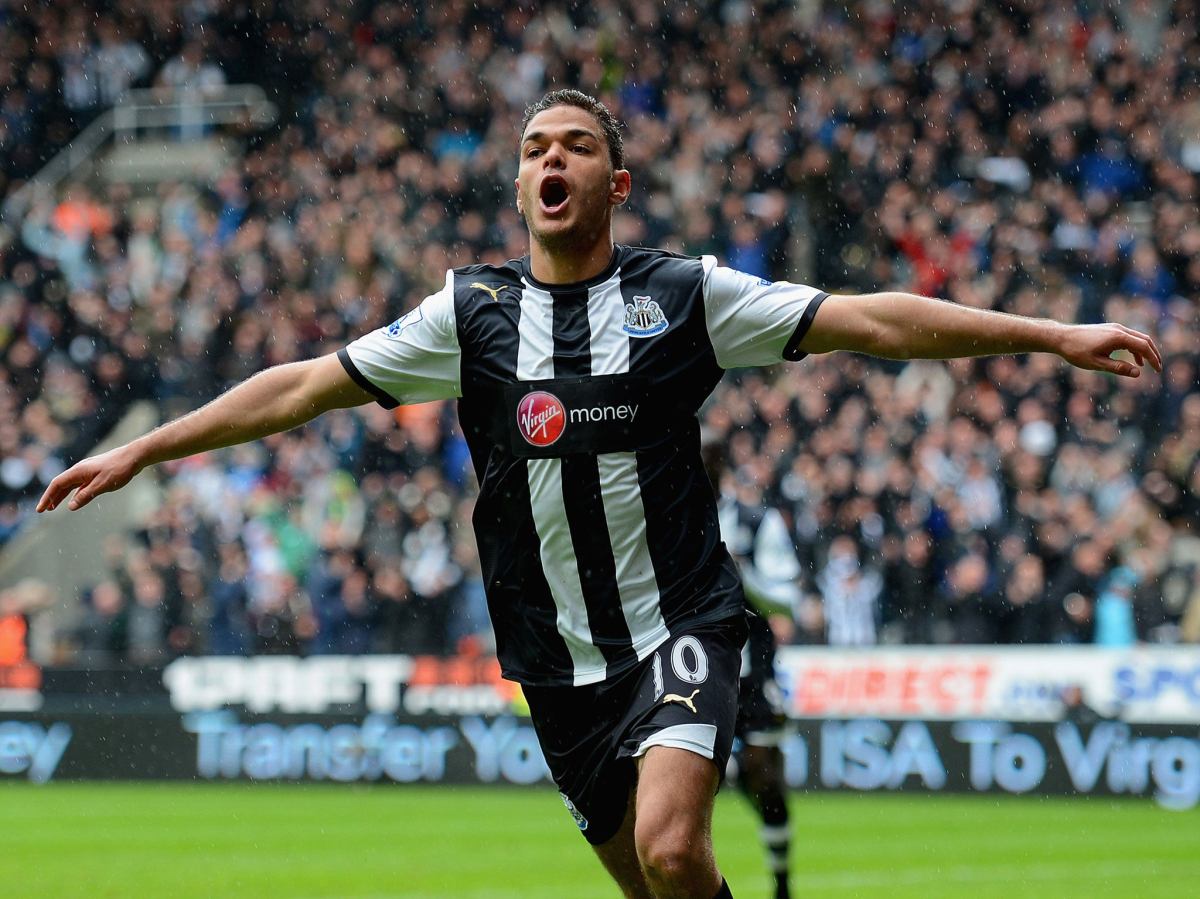
Gallowgate Cult Heroes: number 7, Hatem Ben Arfa

Every once in a while, whoever you might support, a player arrives at your club and changes everything. The rules are thrown out of the window, the script torn up and the unpredictable becomes a part of your weekly diet. These players are just…different. Mavericks, renegades, geniuses, ballers, call them what you want, we’ve all had at least a couple over the years.

Hatem Ben Arfa was very much a maverick and for a short time he changed what we thought was possible from a player wearing the black and white stripes and gave everyone who watched him a chance to rub their eyes and wonder if what they’d just witnessed had really happened. His time lacked consistency and even a decent ending, but he left us with a ton of amazing memories.

Ben Arfa was signed in August 2010, from Marseille, initially on loan. It became evident quite quickly that we’d signed someone pretty special. There were flashes of inspirational skill, even though it took the player a while to find his feet. But find his feet he did when we played Everton away in the September of that season. As the half was coming to an uneventful close he took a pass to feet from Wayne Routledge. He then ignored the winger’s overlapping run, preferring – shock horror – to keep hold of the ball. At first he seemed unsure of what to do, but then, having turned this way and that, he faced up his marker, swerved to the left and hit an unstoppable shot from about 25 yards into the far corner of the net. A star was born.

Sadly, less than a month later, Ben Arfa’s season was over when he was the victim of a shocking tackle from Nigel de Jong in our game away at Man City. A broken tibia and fibia would mean that we wouldn’t see Hatem in a black and white shirt for another year.

Perhaps understandably after such a massive injury. Ben Arfa’s second season started rather quietly and he failed to really dominate games at first. However, he would really make his mark in January of 2012.

For those in attendance, Ben Arfa’s goal against Blackburn in the FA Cup may well go down as one of the greatest goals we’ll have witnessed live. As he received the ball in midfield there were three defenders in close attendance. But still, he turned and ran at them. It felt like fraction of a second before he was in the box at the Gallowgate end and despite what felt like half of Rover’s defence surrounding him, Ben Arfa continued to wriggle through. Finally, with opposition defenders pretty much surrounding him, he managed to drag the ball back onto his left foot and hammer it high into the net from the edge of the six yard box.

I’d seen plenty of players who could dribble over the years, but Ben Arfa felt different. Yes, he was inconsistent, but at times it felt like he had the ball on a string. The goal against Blackburn was very much one of these occasions.

Ben Arfa briefly lit up the Mike Ashley years. It felt like an un-Ashley type signing when we got him. He came with a reputation as a little bit of a trouble maker and was said to be on strike when we took him from Marseille. Subsequent years and multiple clubs would prove this to be the case. Why else would Marseille be letting him go out on loan? And yet, perhaps with re-sale pound signs in his eyes, Ashley sanctioned the signing and Hatem became an integral part of the team that also contained Coloccini, Cabaye, Tiote, Gutierrez, Cisse and Ba and would go on to finish 5th in the Premier League.

But, having fallen out with teammates and management left, right and centre at both Lyon and Marseille the writing was surely on the wall from the moment he signed.

Hatem was one of those players who created a buzz. Whenever he got the ball there was an expectancy that something was about to happen. It became apparent that Hatem himself didn’t always know what that something was, but he was tremendously exciting and frustrating in equal measure. Often, when he should have passed he went off on some fruitless solo endeavour, but then there were times when, just as it looked like he’d lost possession, he’d somehow create a yard of space and do something breathtakingly brilliant.

For me, he had a little bit of a Jack Grealish quality, in that he was just as likely to slow play down and turn back with the ball than he was to produce a moment of magic. But in his time at the Toon, we lived for that magic!

Ben Arfa though, will always be remembered for one moment; that goal against Bolton. He took the ball from Yohan Cabaye fairly deep in his own half, but what came next took the breath away. An outrageous flick and turn took him past his marker who was left flailing around on the turf. Then it was all about power. Ben Arfa evaded a desperate tackle midway into opposition territory, somehow managing to keep his feet as his ankles were clipped. Then he just ran for goal, running through two half hearted challenges on the edge of the box before poking the ball past the onrushing keeper with the outside of his foot.

The initial turn was balletic, the drive with the ball all about brute power and speed and the finish almost an instinctive flick. If you watch it on YouTube, there’s an angle where he’s running at the camera and when he’s challenged in their half he cries out, as if he’s been hurt and might take a tumble. But it’s in the blink of an eye and rather than go over, before you know it, the ball’s in the Bolton net and the Gallowgate are up in celebration. From receiving the ball to it hitting the net took around 8 seconds and it’s something that won’t be forgotten for a long time for those that were there. What a goal. What a moment. Ben Arfa at his thrilling best.

Sadly, it wasn’t to last. Almost inevitably Hatem would clash with those in charge. Injuries would disrupt the rest of the 2011/2012 season, as well as a lot of the following year. Rumour has it that, like at other clubs, Ben Arfa fell out with his fellow players, with club captain Fabricio Collocini particularly irked by his behaviour. It’s said that Colo even went to the manager and asked for Ben Arfa to be benched for fear of a player rebellion. Once again, the Ben Arfa attitude had led to him finding himself out of favour and on the move.

There were fan protests about Ben Arfa’s absence from the squad – a Che Guevara style banner with Hatem’s face and the word Hope was regularly seen at St. James’ – and his plight become a bit of a focal point for general fan unrest at the Ashley regime and the running of the team by Pardew. He even appeared sitting with the fans for the home game against Cardiff that year. When Ben Arfa was finally loaned to Hull City, his career with the Toon was over. We would never truly see the man at the peak of his powers.

Ben Arfa’s time at Hull was short lived – amazingly he failed to find inspiration under Steve Bruce – and eventually Newcastle terminated his contract, leaving him as a free agent. His story at Newcastle was sadly over. But his story as a footballer would have much more to come with eventful spells at Nice, PSG, Rennes, Valladolid, Bordeaux and Lille following as well as an unexpected recall to the France squad. But at almost every turn, there was controversy and conflict and at present he remains a free agent.

Overall Ben Arfa made 86 appearances for Newcastle scoring 14 goals, and he never really fulfilled his potential. Still though, there can’t be many of us who wouldn’t have a goal from Hatem in their Top 10 Toon goals of all time.

As you’d expect though, there is one final twist in the Ben Arfa tale. What is he doing now? Not content with waiting things out and looking at finding another club, Hatem was last heard of as embarking on a career as a professional padel tennis player and was reported to be ranked in the top 1500 players in the world!

Never a dull moment, eh?

Poetry Blog: ‘Willow’

It’s the Easter holidays and as I’ve got some time on my hands I decided to sit down and try and write something for the blog. Other commitments have been getting in the way of late and so my blog has been very much neglected.

So, with not a lot in mind to write about, I thought I’d trawl through some notebooks and accompanying scraps of paper in order to see what poetry I have knocking about. It turns out that there are quite a few that have either been started or simply finished and then just left and so, after quite a bit of reading I decided to add this one to the blog. It brings back a lot of memories and I really like it.

Willow

As the spots of rain get heavier
and begin to change the colour of the roads
and pavements around,
you scramble for the familiar shelter
of the giant old weeping willow.

Everyone is out, the house locked up,
but you chose friends, football and
the top of the hill Wembley of a pub car park
over the visit to family,
and now that team mates have chosen bricks and mortar for cover,
solitude in nature is forced upon you.

A mass of leaves and sagging branches provide ample sanctuary,
so you position yourself so not to be seen
from either road or the neighbour's house,
shift your knees up to your chest and enjoy this place
where there is no shouting, no conflict and
no storm of any kind.

The willow tree in question here is the one that we had in the garden of my childhood home. Everyone else regarded it as a nuisance because of its sheer size and mass of leaves that would be shed in autumn and litter the surrounding area, but I loved it.

I’d play in it as a small child, inventing games and characters and swinging on those branches. As I got older it became somewhere to hide and just be on my own, away from what I remember now, rightly or wrongly, as a lot of shouting and anger in our house. Sometimes, as in the poem, it was just a convenient shelter of a different kind as the rain just didn’t seem to get through it. As I got older, I’d often stay at home when my parents went across to see family, but would rarely remember to take a key. These things got forgotten when there was a game of football about to start! And so, I’d end up just sitting under the tree to escape the elements.

In later years, after we had moved out, the tree was cut down. I still kind of miss it to this day.

Poetry Blog – ‘The old tyrant’

This is a relatively new poem, written about one of my grandfathers. I barely knew him, but a while ago I got one of those DNA kits as a Christmas present and as a result started to research my family tree. At the end of it all, not only was I disappointed to have no sign of any Viking ancestry, but I felt I knew my grandfather even less.

It’s always been something that held an interest to me. Both my mam and dad come from big families and so, growing up, we were surrounded by aunties, uncles and cousins whenever there was some kind of ‘family’ occasion. However, for any number of reasons I never felt that I really knew them that well. Being quite a shy kid probably didn’t help.

We lived in a different part of Newcastle to the rest of the family and so didn’t see them on a day to day basis and then as I got older I was busy with friends and different interests. Going away to university didn’t help my cause either; if anything, it made me stick out like a sore thumb! When I finally moved away from the North East entirely, I pretty much drifted away from all but immediate family.

The relationship with my grandparents on both sides was difficult, to say the least. With this grandad, he died when I was very young and there always seemed to be a reluctance on my parents part for them to take us to see our grandparents. If I’m honest, it doesn’t look like they were at all interested in us and I literally can’t remember ever meeting my grandma. However, I do have one extremely vague recollection of my grandad which is where the poem comes from.

'The old tyrant'

If I close my eyes, I still see him
from exactly the same vantage point, every time.
A dot of a man, his appearance betraying every terrifying snippet
I'd ever heard.
Brown shoes, dark trousers, midnight blue raincoat
and a black trilby hat, shadowing his features,
making those eyes even darker, so that it felt like he looked straight through me
as he crept closer, a shining silver coin grasped in bony fingers.
The childcatcher had come, bearing gifts.
Then, with a pat on the head, he was gone.

Everything else is mystery, legend,
even your name uncertain.
"The old tyrant", my mam would say with just a hint of a smile,
"a villain", but maybe an entertainer, singing and dancing
on the West End stage, if that was to be believed,
the cold, hard presence passing your distance
through the generations,
many leads to your life, but never a final destination,
many strings to your bow,
but barely a finger print of recognition left behind,
the untraceable ghost, continuing to haunt
despite the fact that none ever really knew you at all.

When I was very young my parents ran a business. As part of the business we had a shop and a market stall, I think. My dad would be away buying crockery – plates, cups, bowls etc – in Stoke-on-Trent for the business (that’s what we sold…everyone needs stuff to eat off, right?) and my mam would be running the shops. As I was a poorly child (yes, heart nonsense even at that age!) I’d often find myself in the shop.

One day, when both parents were there, my grandad paid us a visit. I was perched on a stool in a corner of the shop, like some gaunt, pale kind of mascot and he came in, spoke to my parents a little bit as far as I can remember, and then made his way across to me.

As the poem says, he just came over, pressed a coin into my little hand and then left. That was the only interaction that I recall. No talking, no affection. He might have smiled, but I can’t remember.

Growing up, I picked up nothing but negativity around him, which comes out in the poem. Apparently, he wasn’t the greatest dad – although times were very different back then – and was very tough on his children, one of them my dad. When it came to seeing his grandchildren, he just didn’t seem to be interested. Well, not in this one anyway! So, I’d hear the types of descriptions that come up in the poem, labelled at him time and again.

When I came to research my family tree, he was just as big a mystery as ever. I’d been told that he was ‘a dancer and singer’ on stage in London by my dad when I was a kid, but there wasn’t much evidence of that. In fact, what he actually did remained a mystery and I uncovered bits of evidence that he had possibly led a bit of a double life a times. I won’t go into it because it’s obviously quite personal, but also because it left me no closer to knowing a great deal about the man!

So there we go; my grandad, man of mystery and little affection or it might seem, any kind of feeling whatsoever!

I hope you enjoyed the poem.