When I first started writing this series, I wondered how far back I’d be able to go. I’m trying to write more about players that I actually saw play, rather than just delving into the history books – and Wikipedia – and providing you with a list of stats. So, in essence I’m restricting myself to going back as far as the late 70s at best and even then, my memory won’t always be reliable.
The third player in the series is one that I only just remember, as well as being one of my first ever black and white heroes.
Imre Varadi was signed, with not a great deal of fanfare from Everton in the summer of 1981. A 22-year-old Londoner, with a Hungarian/Italian background, he was brought in by manager Arthur Cox to help solve what had become a major goalscoring problem. With the previous season’s strikers – the likes of Bobby Shinton, Alan Shoulder, Mick Harford and a young Chris Waddle – struggling to find the net, Varadi faced a challenge. However, he must have felt that he couldn’t really fail, given that the previous season’s top scorer had been Shinton with 7 goals. And so, a memorable, but brief chapter began.
Newcastle were languishing in Division 2 (now the Championship) at the time but in his first season (81/82) Imre scored a commendable 20 goals in 47 appearances. However, it took him a while to actually find the net. When he did eventually did though it was spectacular as he bagged a hat-trick in a 0-4 away win at Cardiff. Suddenly, things were beginning to click into place. In the next game, this time at home to Derby he scored a brace in a 3-0 home win.
Varadi had electric pace, an eye for goal and was more than capable of an eye-catching piece of skill. He was unpredictable and brave, doing the number 9 shirt proud. It was easy to see why a success starved Gallowgate would take to him so quickly. But things were about to change on Tyneside.
In the summer of 1982 Newcastle United grabbed the football world’s attention by signing the England captain Kevin Keegan from Southampton. How we’d managed to sign the twice Ballon D’or winner is anyone’s guess, but we did and he would go on to help change the history of the club. It was the beginning of the end of Varadi though.
The season started well, with Varadi providing the assist for Keegan’s winning goal in the first game of the season at home to QPR. In goalscoring terms though he made a slow start. While strike partner Keegan scored 3 goals in his first three games, Varadi didn’t score until the sixth week of the season.
However, by the end of the season he had scored 22 goals in 43 appearances and was again a roaring success as he finished as top scorer. Keegan himself only made 16 league appearances, scoring 21 goals and was rightly idolised. And this was possibly what would cost Varadi. Newcastle, having finished 5th that season went all out for promotion the next, signing John Ryan for a then club record fee of £250k, David Mills and a 22-year-old called Peter Beardsley in the summer with Imre being sold to Sheffield Wednesday for £180k.
I remember rumours about Varadi’s relationship with Keegan at the time and since then have heard the same type of things mentioned time and again in relation to his departure, but I really wouldn’t know. Whatever the reason, it seemed a strange move to get rid of the top scorer of the previous two seasons. Varadi scored goals and was popular with the fans and yet was still sacrificed to a rival. Mind you, Keegan would do the same himself as manager, years later, with Andy Cole, ending up explaining himself to confused and angry fans on the steps of the Milburn stand.
Imre Varadi was the first number 9 that really captured my imagination. I wasn’t old enough to remember Supermac and there’d been precious little else to grab on to during my fledgling years as a Toon supporter. I remember being enamored by Peter Withe, but even then I was only 6! My other favourite player had been midfielder Micky Burns, but there was nothing that excited me as much as Varadi did when he signed. I knew nothing of him, but that first hat-trick had me hooked! I’d fallen in love with a club that felt like it gave precious little back, but when Varadi got the ball and ran it felt like there was a bit more of a point being there.
With 42 goals in 90 games, Imre Varadi had a decent strike rate and was the kind of striker that excited the fans. But with a young Chris Waddle coming through and Peter Beardsley set to make an amazing impact with Kevin Keegan, maybe letting him go was the correct decision. By the end of his career he’d become very much a journeyman pro, ending up with 17 clubs in all, so perhaps his two years with us was par for the course.
In recent interviews, Varadi has expressed great love for his time with Newcastle and for a couple of years, there were a fair few of us who loved him right back. But cult hero or not, nobody could really compete with King Kev, could they?
I’ve always loved the seaside. Newcastle, where I was brought up, is close to some of the best coastline that the UK has to offer, so there was always an easy access day trip whenever one was needed. We’d spend entre days there as kids during the summer holidays. Further to that, being born into a family that placed a high value on the power of a bracing walk meant that windy beaches were our regular stomping grounds. In fact, we went every year on New Year’s Day as a family tradition!
So, it was a pleasure to read this book, as well as a nice trip down memory lane. John Osborne’s ‘Don’t Need The Sunshine’ is a celebration of the charms of the British seaside and when I caught sight of the cover and two primary school aged kids in decidedly 70s clothing eating ice creams at the beach, I was always going to buy it. And it proved to be money well spent.
While working in Scarborough for a summer, Osborne is struck by a feeling of nostalgia for the traditions of the British seaside. And so begins an often rainy odyssey of trips to a variety of UK seaside spots.
John’s trips begin in Scarborough, which if you aren’t aware, is a classic British seaside town. A long, sweeping sandy beach, a harbour, gift shops, amusement arcades and various bars and pubs dominate a town where thousands flock in summer in search of seaside fun and entertainment. These days it’s slightly run down, although still a great destination for a few days at the beach, but Osborne finds much evidence to support the fact that the nostalgic activities he remembers from childhood are still very much in play in Scarbs.
From Scarborough, Osborne journeys down and around the country taking in a variety of seaside destinations. I was really disappointed that none of my old North East haunts were visited, but with such subject matter you’re never going to please all of the people all of the time, given the sheer amount of coastline that we have on our little island. That said, a chapter on Whitley Bay or Tynemouth would have been much appreciated!
There are various tales here though. From historical tales of Skegness to the arcades in East Anglia, following the suicide watch at Beachy Head right through to the ‘ultimate’ sandcastle competition and a remote western lighthouse. The British seaside provides Osborne with a wonderful collection of experiences to immerse himself and the readers in, as well as a selection of wonderful people to spend time with.
The result is a fascinating read. It might be quite a niche subject and possibly of much more appeal to us Brits than anyone else, but I’d still thoroughly recommend it.
‘Don’t Need The Sunshine’ provides a wonderful dose of nostalgia about a slightly faded British institution. Millions of us grew up looking forward to days out at the seaside; some of us still do. But the typical British seaside town has changed immeasurably from what we’d see in their heyday. The rise of first the package holiday in the 60s and 70s and then budget airlines in the early 2000s signalled a death knell for many of our resorts. However, the popularity of ‘staycations’ mean that they are making something of a comeback. Still, most of what Osborne finds just isn’t the same.
That said, he finds joy and hope in most of the places that he visits. Sometimes, it’s nostalgia based, sometimes it’s fleeting, but it’s joy all the same. And that’s the thing about the British seaside; there’s always at least a sliver of joy to be had. It’s just that sometimes you have to take a little more time to look.
Osborne’s writing is excellent. As he describes the people and places that he finds on his trips, you’re transported there with him. He’s sympathetic to the plight of our seaside towns so that everything has a positive outlook and while it doesn’t serve as some sort of propaganda, the work that’s going on is highlighted and praised appropriately. The resorts are treated with a genuine affection as Osborne reveals that when you scratch beneath the surface there’s a lot going on in our seaside towns. He clearly loves them, like a lot of us Brits still do. And that’s what makes ‘Don’t Need The Sunshine’ such a great read. Osborne’s subject matter has something for everyone; whether your ‘of a certain age’ like me and looking for a trip back in time to a different age and time or you just live a long way from the seaside and only take trips there ever so occasionally.
It would have been easy to write a book that was sniggering, cynical and sarcastic about the UK’s seaside towns. But thankfully that hasn’t happened here. Instead, ‘Don’t Need The Sunshine’ emphasises the positives and the diversity that you’ll find, touching also on the glamour of the past. And I for one absolutely loved it!
A few weeks ago now, I passed through another milestone as a father. I didn’t do anything special and there was no great effort on my part. In fact, I did nothing at all. What happened was that my daughter left high school.
Now if you’re sitting reading this as a non-parent or a parent of a much younger child, then you won’t bat an eyelid, as they say. It won’t seem like much and describing it as a milestone may seem strange. If you have younger children, you might acknowledge this landmark moment, but feel safe in the knowledge that for you personally, this is ages away. Well, don’t. Because it isn’t. It happened to me and I almost didn’t see it coming.
My daughter was born at home in our bed. She’s part of the reason that we still have the same bed, as my wife can’t bear to get rid of it. It’s a good solid bed as well though. We’ve always been reluctant to move house for the same reason. But the fact that she was born in our house makes her a particular kind of special too.
If I close my eyes I can still still see her clear as day, in those first few minutes and hours of life. Tiny and while not quite fighting for life, not quite ready for it either. The pregnancy was full term and yet she had to have premature baby clothes as she was so small. Back in those moments nothing seemed at all certain and the idea of her growing up to be the smart, capable cookie that she would be at sixteen would never have crossed my mind.
What I do remember is that very early on in her life I worked out how old I would be at certain landmarks in her life. Thus, I knew that I’d be 50 by the time that my daughter turned 16. So, given that my 50th birthday was earlier this year I should have seen this one coming. But I guess it seemed so very far away when she was so young.
I won’t lie and paint a picture of my daughter as a bundle of joy her whole life. Even though she’s an amazing kid and I’m extremely proud of her, she hasn’t always been so nice. In fact, there have been some pretty awful times along the road to sixteen. But then again, I won’t lie about my opinion on myself as a dad either. I’m better now, but like many I’d say I struggled with things like patience and probably all of the other skills needed to be a dad. For years I just felt like I wasn’t making a very good job of it all. And yet, here we are; the school leaver and her father, with what I’d describe as a lovely relationship.
As a teacher, I’m well aware of how quickly year 11 seems to pass. I tell my students all the time that before they know it the final exams will be upon them and their time at high school will be almost over. So it’s an odd thing that until a couple of weeks before her final exams, I hadn’t really given the actual fact of her leaving school much of a thought. I’d fretted about exams and her revision, kept everything crossed for every exam, attempted to boost her confidence and helped with revision, but the end product of it all (or at least one of them), that she’d leave the cocoon of high school on the verge of adulthood, hadn’t really fully established itself in my head.
And now, weeks later, I’m left still somewhat reeling at it all. There’s no more watching her squeal with delight at simple things, no more being cool dad by letting her walk through streams in her wellies or holding her hand while she walks on the top of ‘high’ walls and no more slinging her up on to my shoulders when we’re off on a walk. My little girl is, in many ways, no more.
Of course, I subscribe to the dad friendly logic that she’ll always be daddy’s little girl. But deep down, now that she’s left high school and is taking those first tentative steps into a much greater independence afforded by the much more adult way of life that further education brings, I know that she’s not that little girl anymore. And it all feels like it happened in a heart beat.
I’m sure these next few years will bring fresh adventures and exciting experiences, as well as the kind of traumas that us parents don’t want to face up to. There’s already a boyfriend and although he seems like a lovely lad, I’m watching like a hawk! Whatever other new experiences we get to go through though, they’ll be different to ones we’ve had before.
So, if you’re a parent reading this I’d say savour every last moment that you get with your kids when they’re little. Before you know it…well, they’re not anymore.
I’ve written about sleep and sleeplessness quite a few times before. It’s a topic that I keep returning to because every once in a while I’ll find my sleep pattern disturbed and often for a few nights in a row I’ll find myself either lying awake and unable to focus on sleep because my mind is racing or just out of bed, sitting downstairs in our house, wide awake.
This is a poem that focuses on the former of those two scenarios, although as a result of my mind racing, I eventually got out of bed and wrote the poem. It was a night where, if I’m honest, I’m not sure whether I was awake or sleeping fitfully and suffering with nightmares. One thing’s for sure; it wasn’t a pleasant night’s sleep and there was a lot that disturbed me. You think that nightmares are things you left behind in childhood, but then get reminded that you’re sadly mistaken!
The cold does not embrace you
yet, for a short time its shiver soothes your skin
like a smooth palm comforting you through illness, fear.
An uneasy dream shifts and your thoughts are strangers
caught in the void between the fevered images of disturbed sleep
and the disquieting thud of your heart as you realise you're awake again.
Without warning, the rough skin of working hands grabs at your jaw,
takes hold, clutches.
A strangers eyes stare out from a familiar face,
gripped by a mood you know all too well,
before one last squeeze,
then the calloused hand, shoves your face away viciously,
like an imperfect toy on a production line, rejected
not good enough to be loved.
You blink to try and wake only to find another face now,
her hot breath invading your nostrils,
her gibberish bringing spittle to your skin,
her disapproval at the runt of the litter writ large
in neon across unloving eyes and twisted expression
informing you again of what feels like their hatred,
before words are put in your mouth and you flounder,
helpless against a place you don't belong,
a jigsaw you don't fit.
Shaking free, you brace yourself,
turn your collar against the piercing winter and stumble forward,
in search of somewhere warm.
And while these ghosts will always haunt you
with their chill,
every once in a while the winter sun will warm your skin.
It feels like there are two antagonists in this poem. The first I’m not sure of and it would be unkind to speculate. However, the second is definitely my grandmother, who was someone that I had a fractious relationship with, at best. She was a woman who never seemed to display any warmth whatsoever to me, which as a child was quite perplexing. In company with my many cousins, I remember she’d frequently refer to me as ‘this one’ while everyone else got called by their name. Let’s just say that it was clear I wasn’t her favourite! I can’t say that her treatment of me didn’t bother me, as it did. But as I got old enough to make my own choices, I just decided to avoid being in the same room as her. Even now though, there are occasions when she comes to mind and it’s never pleasant. Hence, the words in the latter half of the poem.
I tried to end the poem on a more positive note, just explaining what I’ve just mentioned, really. Childhood memories will always be there and will always crop up and affect your day. But there’s always a positive to be found.
I hope you enjoyed the poem or at least it had some kind of effect on you as a reader. The memories I’ve written about were incredibly vivid and I hope that feeling is conveyed by what I’ve written. As ever, feel free to leave a comment.
Imagine if you will. it. You’re just about as multi-talented as they come. You once turned into a child at the fun fair, before turning back into an adult with the help of your best mate. Another time, you ran across America, just because you could (and this was after your time in Vietnam and your exploits as a shrimp based entrepreneur). You’ve been a daredevil cowboy, a much-loved television presenter and America’s favourite pilot. Everybody loves you. I mean you even made friends on a desert island once… with a football. You are Tom Hanks.
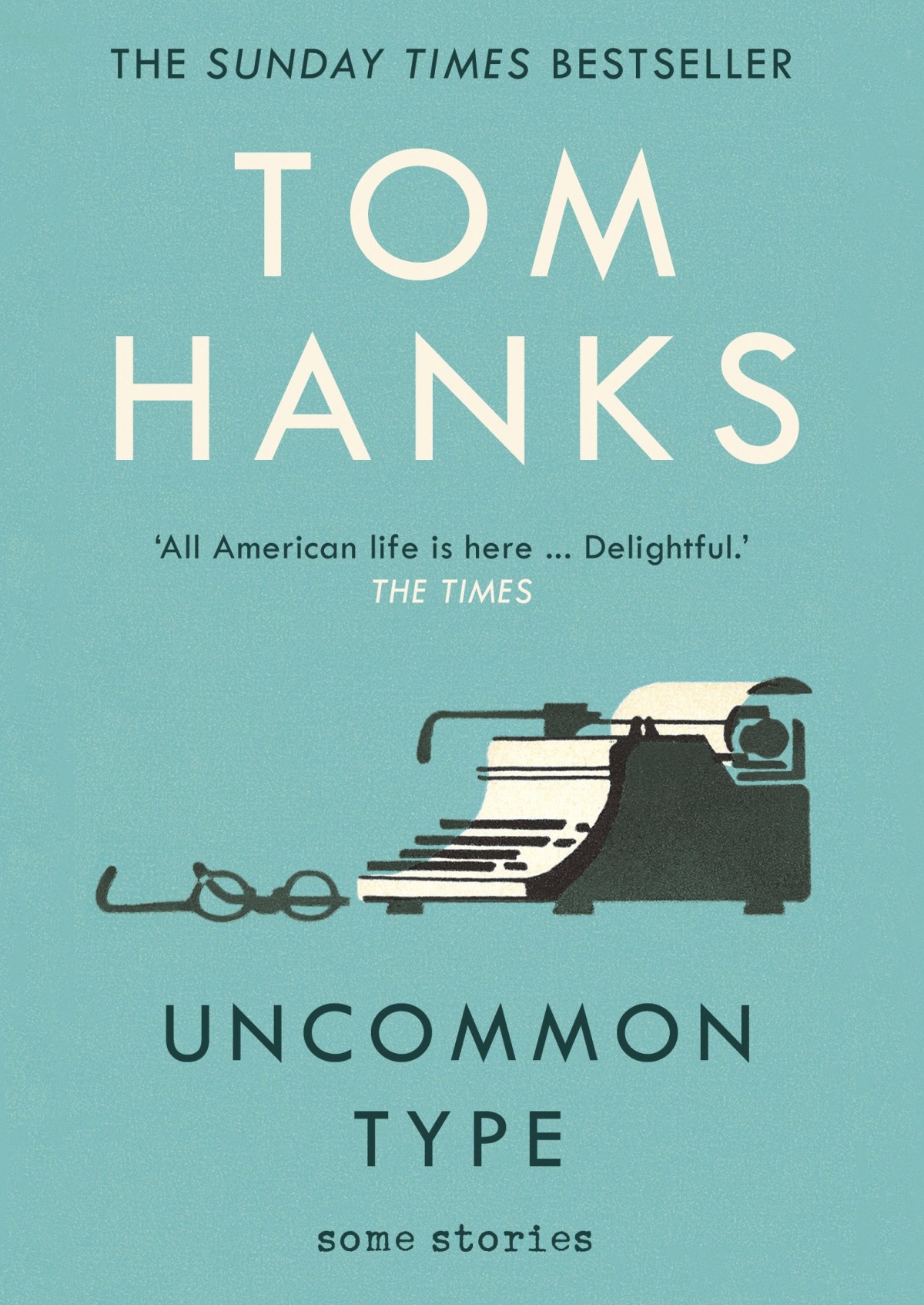
And then just when we thought there might be a limit to your talents, you went a wrote a collection of short stories.
As a reader, short stories generally aren’t my kind of thing. So a collection of them doesn’t normally work for me. I like the full development of characters and an actual narrative that I feel a novel always brings. But ‘Uncommon Type’ intrigued me when I spotted it on the shelves of my local supermarket. I liked the look of it, but I have to be honest and say that it was Hanks’s name that drew me in and led to me taking the book off the shelves. Yes, I’m that shallow!
Uncommon Type is a collection of seventeen stories, all set in the USA and as the quote on the front of the book says, ‘All American life is here‘. Several of the tales revolve around the same four friends and their various adventures, but then we also have a Word War II veteran facing up to life after active combat, an actor who suddenly and unexpectedly finds ridiculous levels of fame and also the thoughts of a child facing up to his parents’ divorce and the strange ways in which can sometimes move on. So although we’re largely faced with tales of small town America, there’s a great variation in the stories. And one last twist; all of the stories are connected by the presence of a typewriter (hence the title), which while it doesn’t sound a particularly clever or attractive selling point, is carried out brilliantly.
I have to admit, I was hooked from the first page of ‘Uncommon Type’. It turns out that as well as being lauded as an actor and just an all-round nice guy, Hanks can spin a yarn too. He writes beautifully and although there were one or two of the stories that did nothing for me, I couldn’t put the book down for the majority of my time reading it.
As a reader, you’re immersed in the worlds that Hanks places you in, such is his gift for description. Whether it’s small town America or the other side of the moon, Hanks’s prose transports you there convincingly and makes for an excellent read.
As you’d expect from the award winning Hollywood superstar actor, Tom Hanks can write a character! From Anna, an ex-triathlete with a penchant for telling her boyfriend, “Atta baby” through Virgil and Bud, army veterans, both the epitomy of masculinity and typical of their generation and on to American immigrant and stowaway Assan; all are believable and thoroughly engaging. Hanks has created real people that the reader can’t help but care about and ask questions of. And if you’re like me, all the while that you’re in the worlds he creates, watching the characters go about their lives, it’s all being narrated by the man himself! For all seventeen stories Hanks was my reading voice, which, let me tell you, is relaxing to say the least.
I loved ‘Uncommon Type’. It’s subtle eye for detail, charming characters and sense of humour made it a brilliant, engaging read. Although there are one or two perhaps below par tales here, all in all there’s something for everyone. A definite winner that I’d certainly recommend you read.
The mix tape. In a sense, a history lesson needs to be given before this piece can really get going. So here goes…
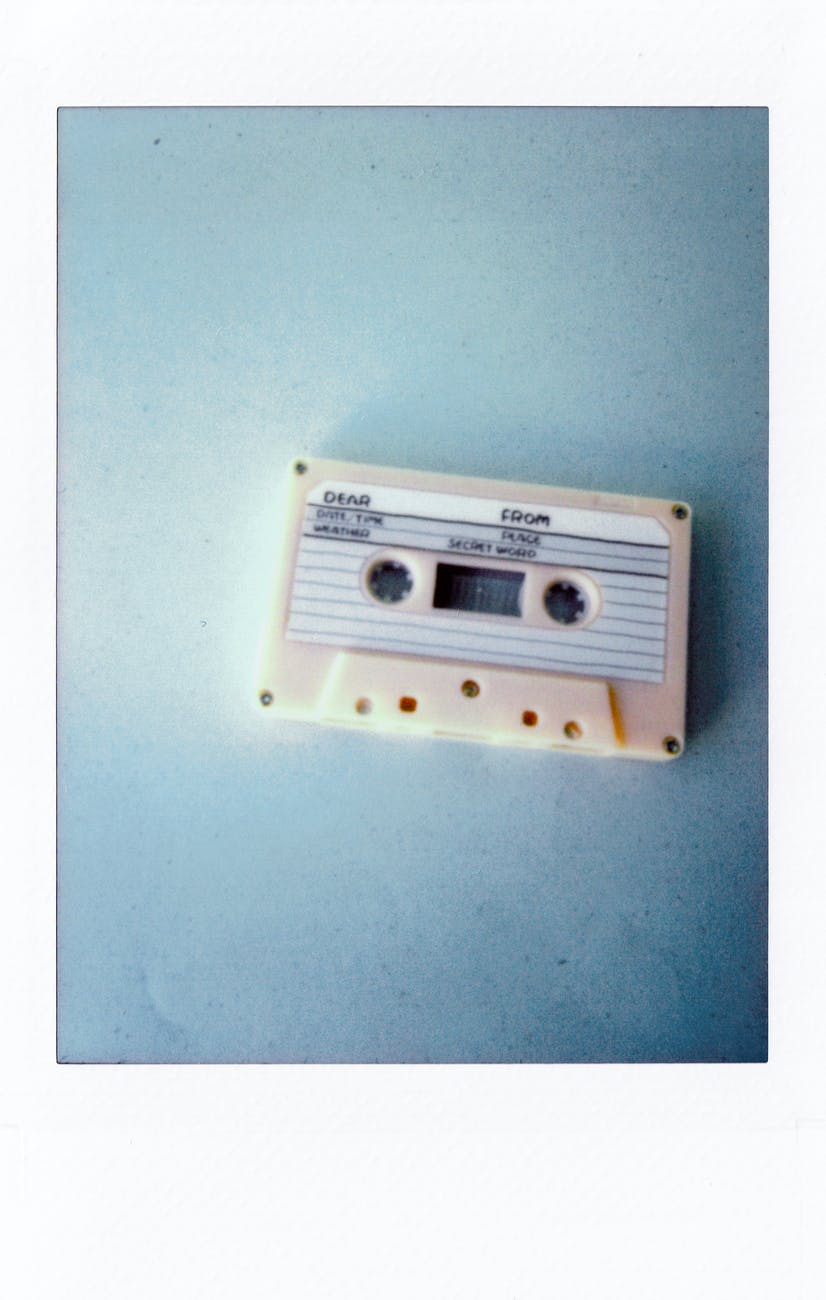
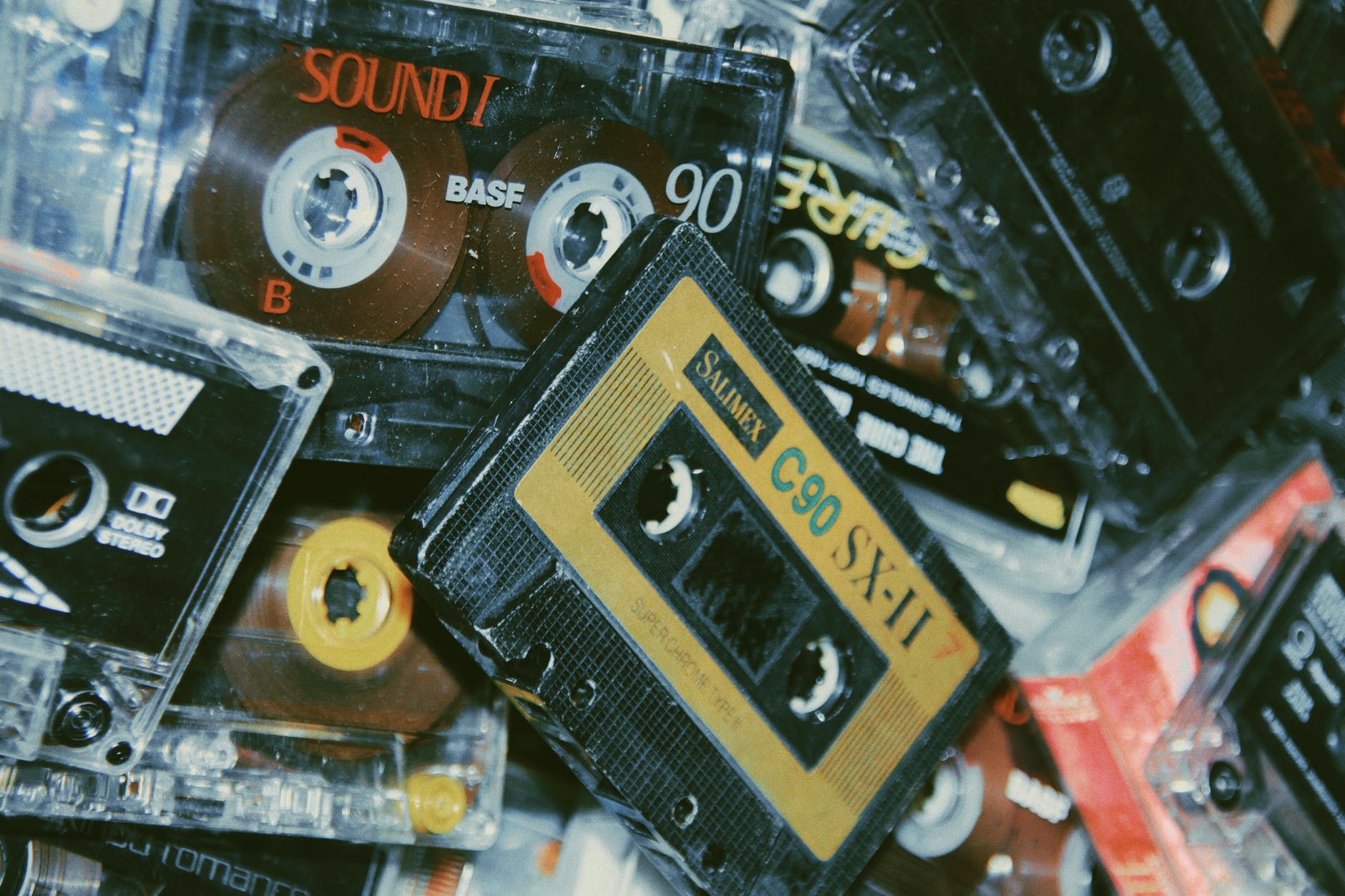
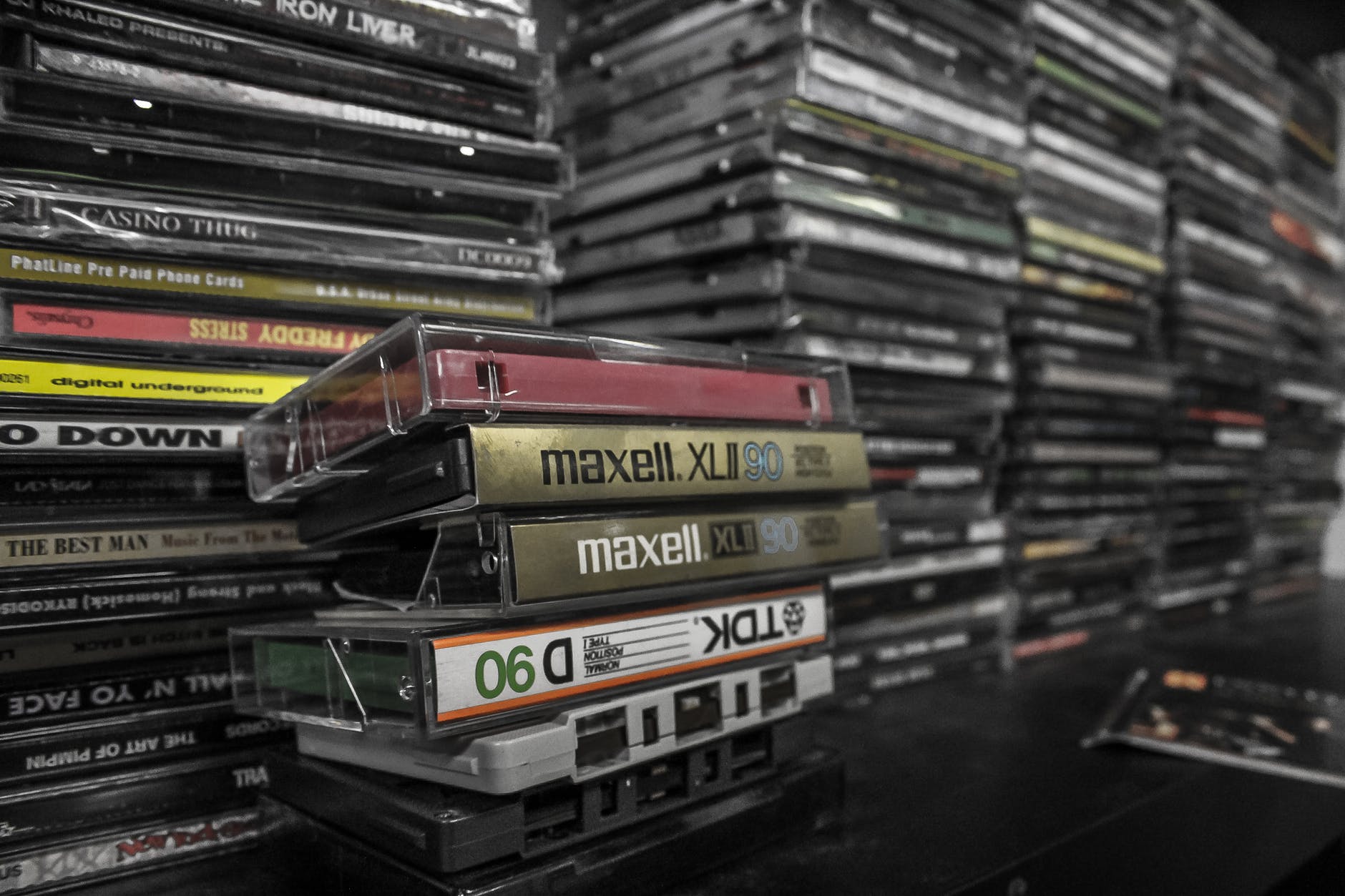
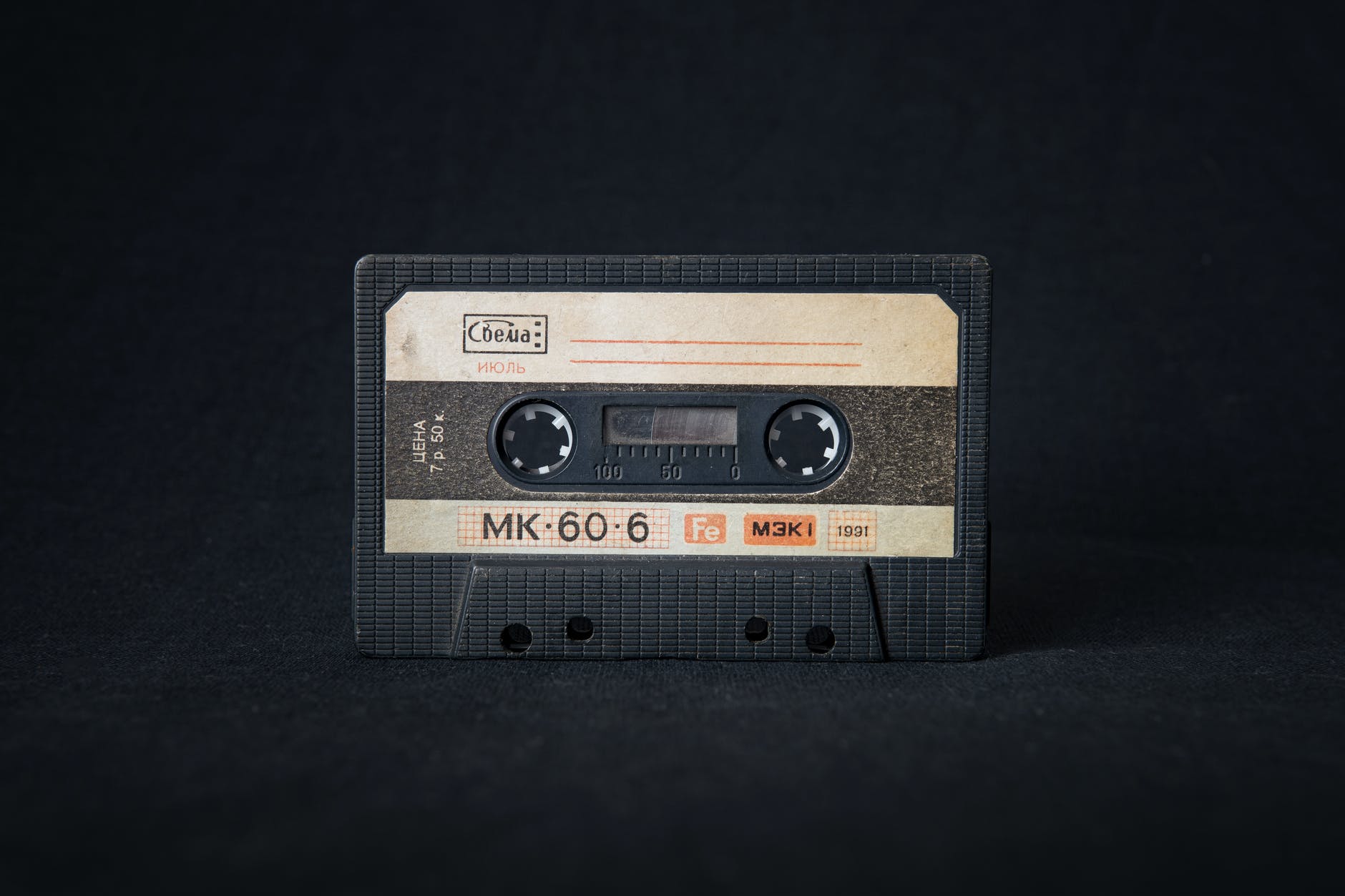
For the younger reader – I’m talking late teens to adults in their twenties and onwards, not toddlers – the mix tape was a thing of beauty. It was literally a blank cassette tape, often known as a C45 or a C-60, and then you’d record some of your favourite songs onto said tape, for a variety of reasons which we can go into later. A cassette, by the way, was actual tape that recorded the sound, on two spools encased a a plastic rectangle. Like this one below; glamorous, huh?
Us older people would make mix tapes by playing music from another source – maybe the radio, another cassette or vinyl – and then recording the tracks straight on to the tape. In many ways we were pioneers, early superstar DJs, as long as you ignored the quality. And the superstar bit.
This blog was prompted by a BBC 6Music programme that I listened to one weekday morning, a while ago now. It was Lauren Laverne’s mid morning show and she was talking to a guest, the writer Jane Sanderson. Jane had written a book called ‘The Mix Tape’ and so the interview concentrated partly on the book (which sounds great, by the way) and partly on the idea of mix tapes, while also getting Jane to contribute a mix of songs that she herself would put on a mix tape. I scribbled down some of the ones I liked, but as I was working during a free period, it made it difficult to keep up! I’ll include the list at the end of the blog for you though, dear reader, and perhaps you might want to check them out.
Of course, the interview got me thinking about the days of mix tapes and my own experiences. For me, mix tapes had a dual purpose, as I suspect they did for many others. At first I’d share them with friends as we discovered new music. Usually this would be either purchased from our local record shop – Music Box in Blaydon – or borrowed from the library. Both places were like a kind of Mecca to me in my formative years and I’d happily spend hours in either, perusing what there was on offer, searching for new sounds that I’d read about or maybe even taking a gamble that would invariably not pay off, by rooting round the bargain bin! And while this makes me sound like a very lonely individual, I wasn’t. I had genuine friends. No, honestly, I did. Real, tangible human ones, not just voices in my head or shadowy figures at the bottom of our garden!
Anyway, once sourced I’d tape this new music, adding it to what I laughingly referred to as a ‘mix’, on yet another blank cassette, even though there was no mixing; just the end of the track and the clunk of the stop or pause button, followed by a similar clunk and a hiss as I started recording the next track.
Part of the idea with mix tapes was to offer a taste of new music to the recipient. Us mix tapers somewhat automatically set ourselves up as experts and svengalis who would open the minds of our devotees with the startling choices we made; the musical gems we unearthed. Often the idea would be to try and outdo each other, in a kind of ‘I’ll take your lo-fi garage band mix and raise you my underground East coast hip hop.’ And we would outdo each other with music that we loved, not simply something that we hated, but knew that the other person wouldn’t have ever heard of. In many ways we were a bit sad, but not that sad! Sometimes though it was a simple case of hearing something that you loved and knowing that the person on the receiving end of the mix tape would love it too.
Mix tapes would also be a good way of communicating with the latest object of our affections too. Music was something that I knew quite a bit about and something that I soaked up as much as I could. So it was a subject that I could talk about with at least a bit of authority and hopefully not sound too dull. And a good job too, because my other area of expertise, football, was not of much interest to the girls of 1980s Newcastle. But as quite a shy boy, who inhabited a world of self-doubt, the mix tape was an in with girls. Don’t get me wrong, I wasn’t some kind of predator; often it was just a good way for a girl to get a free cassette and that was where our interaction ended, but on some occasions it actually worked! On one occasion the girl I fancied payed back my gift of a mix tape full of songs I thought she might be interested in, with a copy of Pretty Woman on VHS, leaving me puzzled as where she saw our potential relationship going. It turned out that she simply loved the film and seeing my enthusiasm for the music, thought she’d reply with something she also loved. And despite our obvious unsuitability, a brief romance ensued. It didn’t end very well, but it definitely started! And all because of a mix tape!
My approach to mix tapes became more sophisticated as I got older. As well as developing my musical tastes, I also developed the look of my mix tapes and started to design front covers for them rather than just presenting them to the recipient with an inlay card containing names of tracks and artists. When I say ‘designed’ it would often amount to cutting pictures from a magazine that might fit with the general feel of the mix tape and manipulating them into the cassette case as neatly as I could. Sometimes though, when my confidence was at its medium level best, I might do a sketch and use that as the front cover. So in some ways I was trying to create some kind of art, I suppose. And until now I’d thought that I hadn’t been remotely pretentious in my teenage years!
However, I suppose what my ‘artsy’ period shows is exactly how seriously we all took mix tapes. Not only did people spend hours carefully selecting not just the tracks to go on the tape, but also what order they would go in to have the best impact on the recipient. Then on top of those hours we’d also add more, collecting images that might look good in a cassette case and even more going through said images in search of exactly the right one for whatever mix tape we were creating at the time. But it wasn’t in any way a laborious process. I’m sure I speak for many of us who ‘curated’ such tapes when I say that it was massively enjoyable. Mix tapes were that important that at times they took over our lives and would often consume entire days. And all in the hope of some kind of connection being made.
As I listened to the interview that prompted this blog, once I’d got past being nostalgic, I began to think about who I might send a mix tape nowadays and what tracks I’d want to include. The whole process would be undoubtedly made easier now because of the internet and things like Alexa. Our playlists are there permanently and waiting to be explored and even a Luddite like me can navigate them.
My obvious recipient would be my wife, but the snag here is that we share a lot of the same musical taste and, having been together for such a long time, there’s very little that we don’t know about each other’s playlists and tastes. Although only very recently she surpised me by being wholly unaware of the song Super Freak by Rick James, preferring to believe that it was MC Hammer who was playing on the radio. For the same reason I’d have to rule out some of my friends. I think I’d still exchange mix tapes with those that I’d class as proper music fans though – David, Andy, Pricey, Emma, Kath, to name but a few. And I’m sure I could put something of meaning together for my wife as well.
After a bit of thinking though, I think the first person I’d want to send a mix tape would be my sister. We’re two very different characters and not the closest of siblings. But I’d like her to know how much of an influence she had on some of my tastes while we both still lived at home together and I’d like to try and bring a bit of sunshine to her life with a few decent tunes. I don’t have an entire mix tape planned out but some of the tracks I’d definitely include would be ‘White Lines’ by Grandmaster Flash, which she introduced me to as a teenager and I’d hope would remind her of better times. Now if you know the song, that might seem like a bad one for a teenager in the 1980s to be aware of, but I can assure you I had no idea what they were rapping about; I just loved the song! Then there’d be ‘Loaded’ by Primal Scream, because I’d bet she’s never heard it and that’s a crying shame (plus I think it might be the kind of track she could do with listening to at the end of every day) and ‘One Big Family’ by Embrace because I think sometimes we need a reminder that we’re actually brother and sister. After that, I could add all sorts of interesting tracks for her to give a listen to. Because of course, that’s the beauty of a mix tape.
In her interview, Jane Sanderson was asked to give 6music a mix tape of her own. Of course, it wasn’t via cassette, but it was a great mix of songs. Unfortunately for me, I was listening during a free period at work and so, had to tune out when it came to teaching again. However, if you’re interested – and you should be as there are some ace tracks – the tracks that I made a note of were, Northern Sky by Nick Drake, I Close My Eyes by Dusty Springfield, Thinking About You by Frank Ocean and I Didn’t See It Coming by Belle and Sebastian. Maybe they’ll be the first four on my first foray back into the world of the mix tape?
Listening to Lauren Laverne and Jane Sanderson got me thinking about the possibility of a cassette revival. After all, we’ve witnessed it with vinyl where after 12 continuous years of rising sales, over 4 million LPs were sold in the UK in 2019. Similar digging for figures revealed that there was a 103% increase in sales of music cassettes in the first 6 months of 2020 with 65,000 cassettes purchased in the first 6 months of the year. Clearly, people are buying cassettes again. Could we see the return of the mix tape? I hope so. How long before I can start sending them out again? Surely it’s only a matter of time! Ladies and gentlemen, we could be witnessing the rebirth of a veritable cultural phenomenon!
As ever, let me know in the comments what you thought of the post. I’d be really interested to know about other people’s experiences of mix tapes too. I’m sure there are some brilliant stories out there!




 Middle Age Fanclub