Poetry Blog: ‘I ran’

This is a poem that’s been sat in my notebook for a long time. Months, not years, but a long time all the same. In truth, it’s one that I was a bit unsure of. I didn’t know what to do with it and as such it got a bit lost. Every so often I’d flick through said notebook looking for something else, only to re-discover this forgotten poem. Finally though, after a closer inspection, I’ve decided to give it an airing.

I think the good weather has helped. The poem is about a time when I could exercise a great deal more because for almost the whole time the weather was glorious. Looking out of the window as I write, it’s another glorious evening, much like those of last April and May.

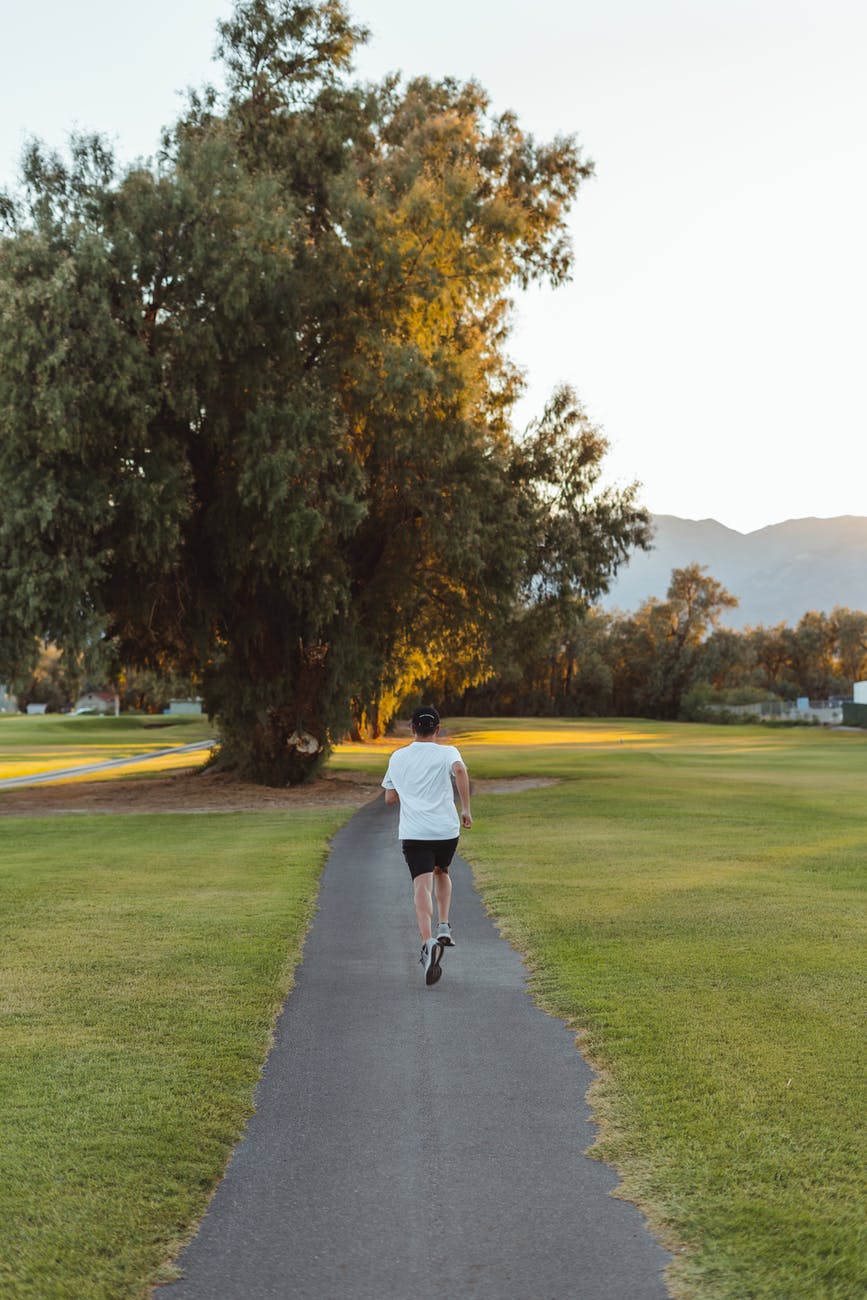
It’s a poem about the pandemic. I don’t know quite when I wrote it, but I know that I took the whole thing deadly seriously once I realised the extent of the devastation that seemed to be going on. I was adamant that I was definitely sticking to lockdown, but determined to take advantage of our daily exercise allowance. And so I did.

The poem is about lockdown in general, but also the fact that I took the opportunity that lockdown presented as a chance to make some changes. I’d have said that I was reasonably fit or even kidded myself about being ‘naturally fit’ when it all started. But as I read more and more reports about coronavirus and took into account my own vulnerability to it, I decided that I was going to have to get much fitter. After all, there was little excuse; I wasn’t at work and all I really had was time. So, as the poem says, I ran.

I ran...

When the danger struck, I ran.
Not away from it, but straight at it,
maybe heroically, possibly naively, 
feigning bravery because I didn't know what else to do.
Such is my way with everything.
Don't think, don't plan, act on instinct, 3 in the morning thinking
and possibly a dash of Dutch courage.

And so, when the unseen, yet definitely alien villain headed our way,
sounding dangerously, almost laughably familiar,
I ran.
Decked out like a skinny, pound shop part time superhero,
I somewhat limped into action, exercising evangelically
in an attempt to out-cardio this beefed up cold.

But while others stockpiled toilet rolls and 
took another paracetamol from their selfish stash,
I got fitter, leaner, stronger.
My thirst for the fight meant I doused my fear in fresh fruit, 
nuts, seeds and an ever present bottle of water,
and I ran.

Thousands perished. Some sought solace in illegal road trips
or standing on doorsteps hypocritically acclaiming those who chose the Hypocratic.
I doused my guilt with physical torture, pushing myself to limits I'd not explored in years,
enjoying the isolation, getting evermore prepared to face what felt inevitable
and hoping that this wasn't all in vain.
I ran.

The effects of lockdown – or lockdowns, plural – can’t be underestimated. I think, more than anything, I benefitted from it, but it was still an awful, scary time. Running got me through the fear. In fact, running quite often dealt with the early mornings, while writing steered me through the late, sleepless nights. So my poem is both about what I did as well as being a direct result of what I did.

I’ve tried to inject a dark humour into parts of this poem. At first, I didn’t really believe the hype about coronavirus. It was the flu, it was a ‘beefed up cold’ and I wasn’t going to lose too much sleep about that. I soon realised the truth though! I’ve attempted a little more dark humour later in the poem too. Although I was fit, I probably didn’t really look it; hence the ‘skinny…superhero’ reference. And let’s face it, not many tall skinny fellas look good in lycra!

The whole pandemic scared me and the best way that I could think of to deal with that fear was just to throw myself into something. Exercise, fitness and in particular, running was that thing. Initially, my thinking was simply that if I was fit, the virus would stand less of a chance against me, so I was exercising in different ways every day. At first the whole family joined in and then, as the world righted itself and people went back to school and work it left me largely on my own in terms of exercising. And this was when the running went into overdrive. I’m guessing that when I wrote the poem I was feeling particularly evangelical about it all!

That’s certainly why there’s the reference to people stockpiling certain products. I think lockdown saw a lot of people showing their true colours and it angered me that while I was doing my best to stay safe there were others just making sure that they didn’t run out of anything, that they weren’t inconvenienced. I’d see social media posts from people about how they’d joined in the ‘Clap for Carers’ knowing that they’d been visiting friends or family when it just wasn’t allowed. The hypocrisy of that support for the NHS really bothered me when all it seemed to be for some people was a chance to pat themselves on the back and look good. And I watched in horror as various high profile people in the UK were caught out visiting family hundreds of miles from their homes, while I couldn’t head out to visit friends and family myself. In fact, at the time of writing, I still haven’t seen my parents, my sister and some of my best friends and it’s been well over a year.

So there you have it. A poem that may take people back in time a little bit, despite the fact that large parts of the world are still in lockdown and that even here in the UK we’re only just beginning to glimpse the light at the end of the tunnel. As ever, I’d love to hear what people think, so please feel free to leave a comment.

Poetry Blog: ‘Crossroads’.

This is a poem I wrote at the back end of last year after a bit of a setback, careerwise. It’s not important what that was, but it hit me like a train. This was unusual for me, as I don’t brood on things too much – apart from football, stupidly – and always try to take the view that ‘these things happen’ and that as long as I can move on with life, I will.

However, this was different. When I was growing up my own father went through career problems at a similar age and as a kid in his mid-teens, an age when these things tend to leave an impression, I watched him suffer. His situation was far more serious than my own, but career-wise at least, he never recovered. He was out of work for a number of years, having successfully fought his old employer in court, and it all combined to reduce him to someone who was constantly angry and who must have felt that he’d never have hope again. So, faced with the news that I received, it was a worry to say the least.

Here’s the poem.

Crossroads

You are at an unexpected crossroads, bewildered, like your father before you.
Was he older? Younger? The memory vague, but those days branded on to you,
although the details fade. Until now.

Two envelopes, weeks apart, that plunged you not once but twice
to depths you hadn't thought were there anymore.
To questions about your worth, your place, your existence.

Dark thoughts return, like a playground bully, arm round you, sinister smile,
pouring poison in your ear. You've not thought like this in years, 
not imagined you'd think like this again. You do not know which way to turn.

The news leaves you like a puppet without a master,
limbs useless and flat, splayed out across a table thinking, like a coward
that perhaps, perhaps, perhaps, they'd be better off without you.

But just as this is not a real option, this is not a real crisis.
You wipe away tears, busy yourself, think, confide in those you trust,
love, value. There is even a small sense of liberation.

Slowly, you crawl out from under your stone and although you feel
that age is cruel and experience no longer valued, this is not the end.
You stop short of full on Gloria Gaynor, but you will, in fact survive.

You find some focus, tell yourself that you are not him and that
you will find not the other side, but an other side, that the confidence,
however painted on it may be, will return.

You are at an unexpected crossroads, bewildered, like your father
and like others, worse off, who felt that their whole world had
collapsed, sometimes even because it had.
But every crossroads has a way home.

The poem is about how bad it all felt. I genuinely felt like I’d let my family down. I felt that I’d completely failed and I felt extremely angry at that. The feelings that the whole situation prompted in me took me by complete surprise and for a short time I couldn’t see the point in anything anymore. As I usually do, I internalised everything and even though I eventually discussed it with my wife and a few trusted friends, the extent of my thoughts and feelings weren’t revealed. Until now, I suppose.

Eventually, after a few weeks of brooding and, dare I say it, feeling sorry for myself, I decided that I wasn’t going to put up with it anymore. I’d regard myself as quite strong, mentally and I could see that what had happened could just be an opportunity.

For me, there’s no point in sulking and I won’t allow setbacks of any size to hold me back for too long. Not that I’m hell-bent on moving too far forward, mind. I know not everyone is like this and I wouldn’t ever criticise or question anyone’s right to feel any way that they want, but as a grown up with a wife and family I made a conscious decision to get back on with life, hence what I hope is an optimistic ending to the poem.

It does worry me that my age is now a barrier. I feel that my experience isn’t particularly valued and that in education there has been a shift in thinking. If it’s not shiny, smiley and youthful, it probably doesn’t have what it takes. Call me a cynic, but often these new approaches from people who’ve had a job for no more than a few years are just approaches that have been done before, but wrapped in nicer paper nowadays. At my age my work feels like a competition to see who can smile the most and shout the loudest. I’m not a very good smiler or shouter either! But, as the poem hopefully shows, I’m not prepared to go under just yet!

I’m definitely at a crossroads in terms of work, age, the way I look, the things I do, the company I keep and much, much more.

With work, I can’t decide whether I want to slow down or head for a new challenge. Or just to keep doing what I’m doing, which is something I love at a place I love. With my age and a notable birthday on the horizon, I need to choose whatever I do carefully; not just in work. In terms of my looks, my hair is greying, my body not quite as responsive as it once was, my face a little more haggered. I won’t be reaching for the Just for Men and won’t resort to some form of cosmetic surgery, but sometimes I catch myself in the mirror and wonder where the fresh-faced 17 year old me went. And I’m always wondering, does my bum look big in this!

But I’ve realised that there’s no point in worrying about it. Just choose a road. Eventually I’ll find the right one. And whichever I choose, I’m lucky enough to have family and friends to rely on.

I hope you liked the poem. As ever, I’d love to hear what people think, so feel free to leave a comment.

Poetry Blog: As yet, still untitled…

This is a poem I posted recently in the Lockdown Literature group that I helped set up on Facebook. It was a good way of passing the time during our first period of lockdown and it’s great that people are still posting in it on a fairly regular basis. This was the first poem I’d posted there in a while.

It wasn’t a poem that I was going to post on my blog. I’ve tended to steer clear of anything too personal on here, but having sat down and read through the poem again, I wondered how relevant it would be to others. At the time of posting it in the group it didn’t have a title and I wasn’t sure it was finished. It was about growing up in our house, but on reflection I began to wonder just how normal the things I wrote about were. I grew up in a house where shouting and various kinds of tension felt almost constant and fairly normal. I hated it. When my parents argued I felt like I was waiting for the inevitable to happen and for one of them to announce that they were leaving. Or I worried about whatever other terrible end it might have. It felt like nothing ever got talked about or discussed; everything was a battle. And not just with my parents; with my sister, with my grandmother…wow, especially with my grandmother! But adult life has taught me that maybe it wasn’t all that rare. Maybe that is just how family life can be sometimes.

As I mentioned, it’s not something I really like to write about, or at least post where it’s so visible, but having revised the poem a little bit and revised my thinking about it too, I thought I’d post and see what people think.

Mam and dad fought; to keep food on the table,
to keep a roof above our heads, to stay together.
So maybe there was nothing left in them to fill a home with love.
Maybe being there when they could was enough.

In a lucid moment, in quiet, in solitude
I think I understand that now,
have sort of come to terms with it, am almost at peace with it.
But while it's easy to say let go of the past, it's impossible not to always be reminded of the impact that it's had. The damage that it's done.
Dealing with what it left behind, 
picking up the phone more often and enjoying the life you have while it's still there still present a knot to be unpicked by stone cold fingers.
Maybe a nod, a smile, an isolated cuddle and the odd word of encouragement was all the energy they had left. Maybe it works both ways. Maybe we're all just like this.
Maybe there's a lesson to be learned.

A funny one this. I still don’t think it’s finished. I’m still not entirely happy with it and I still think it will be revisited. It’s a slightly different poem to the one that appeared in that Facebook group and definitely one that’s changed in mood with the tweaks that have been made.

The poem still hasn’t got a title. I wondered about calling it ‘Maybe’ but that word was only added in this second draft, so it didn’t quite feel right. Maybe I’ll revisit the subject matter, but not the poem itself. Maybe, like the subject matter, the poem just needs to left. As I said earlier, it’s a funny one.

As ever, feel free to leave a comment as I’m always interested to hear what people think. I’m never entirely sure when it comes to poems, but this one has really stopped me and made me think.

Poetry Blog: Assessment

This is a poem I wrote on a whim. It came from boredom, if the truth be told. I’m sure I was suitably inspired by the company I was keeping at the time, but essentially it was the boredom that made me start scrawling on a piece of paper.

My Year 11 class were completing an assessment. I’d done about an hour’s input, fielding questions, giving reminders, making notes and then when the time was write set them off writing. After about 10 minutes of enduring the silence and trying to keep busy I realised that I just wanted to sit down. I couldn’t sit at the computer and do work because the screen that it was linked up to would show everything I was doing and I didn’t want my group getting distracted. So, I kept the title of the assessment on the screen and thought about what I could do.

It was a Thursday afternoon and we’re based in a fairly cramped room on a Thursday, so space and social distancing meant that I couldn’t just wander. I couldn’t really just stand either as the only place to stand would have been by the door and I felt sure that it wouldn’t be long before someone absent-mindedly opened the door and knocked me into next week. Hilarious for my class, I’m sure and not the fault of the door opener, as who would expect someone to be stupid enough to stand right in front of the door. So, a quick scan of the rom told me to sit at the one spare desk available.

After a whole five minutes I was bored, so I grabbed a sheet of paper. Perhaps I could practice my autograph? Instead, having sketched for a few moments – my current favourite is to draw myself as a Charlie Brown character – I found myself thinking about the group. And what started as a few rough lines of a potential poem about an assessment became something of a poem about how much they mean to me.

Assessment

In an unusually silent room the creaking desks are a constant source of annoyance.
Every so often a stare is accompanied by a sigh as another realises that there's nothing to be done about the noise.
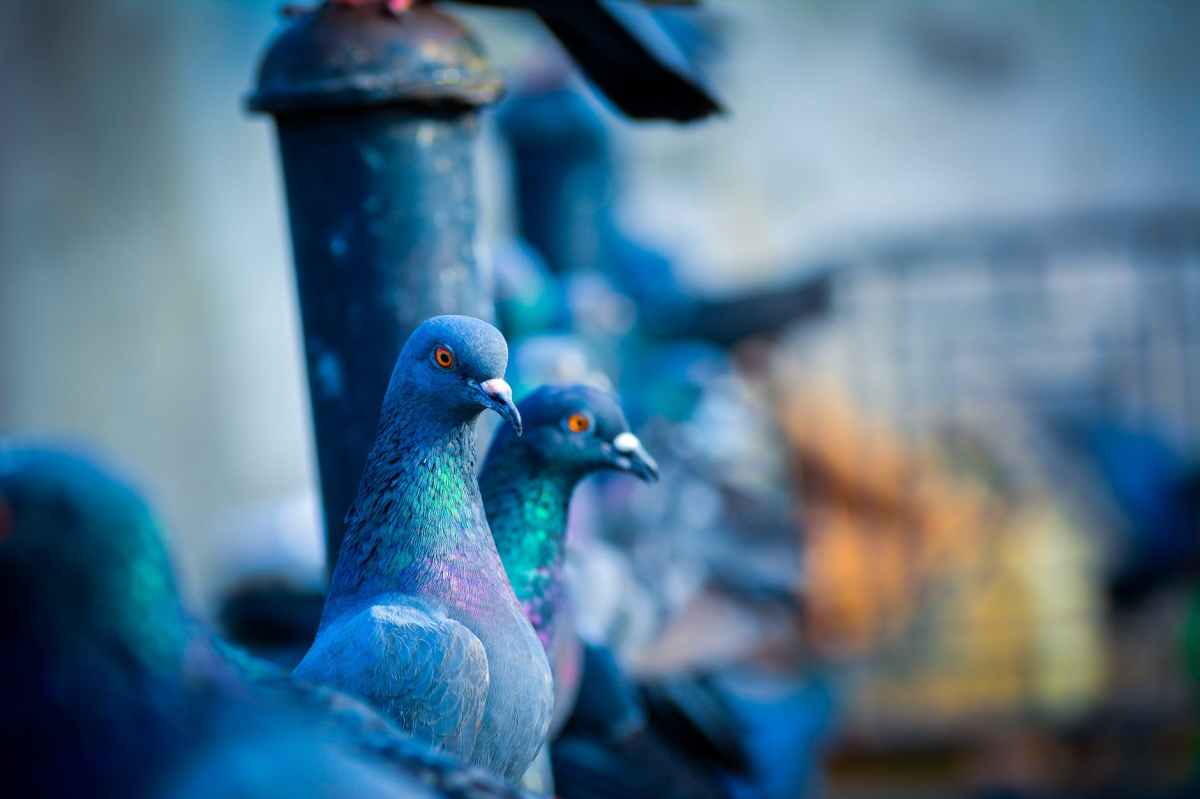
The dimming of the lights adds an eeriness to the tension and I am helpless; the pigeon fancier who opens the loft to the flutter of wings that he can really only hope he'll hear again.
He can only pray they stay safe.
This is our first race. A journey that we have trained for and will repeat again until the future beckons
and I can no longer help, cajole or comfort, but still make time to worry, 
despite the reality that I may never see you or hear of you again.
We are left to count down the coming weeks and spread our wings a few last times, turn circles in the air, swoop, arc dive then return to the loft each time until it's time to fly the rest of the journey alone.

I’ve mentiond this group before. I’ve taught many of them for the majority of their school lives. I remember most as fresh faced, quite naughty Year 7s. In short – and not to insult them in any way – they’re a bottom set. My bottom set. Their language skills are at best, weak even at the top end and their knowledge of the world often leaves a lot to be desired. Sample fact to prove this? When I taught them for intervention English in Year 9 it took more than a few minutes of an hour lesson to convince at least one of them that Roald Dahl’s The BFG was not a real person. He wasn’t dead. He wasn’t alive. Roald Dahl had just made him up.

Studying Shakespeare, Dickens etc can be a challenge, both for them and me. But then one of them will offer an opinion or just remember something obtuse about the text and it feels like a huge win for all of us.

The group are currently enduring a series of assessments put in place to enable me to award them a GCSE grade in lieu of not being able to do the real exams due to Covid-19. I never really let on to groups how much I care, but as I sat and watched them write, witnessing every grimace, every pause for thought and every tongue slipped out of the side of the mouth in concentration, I couldn’t help but think about them in previous years throughout their time at our school. Of course I care. I care deeply, especially about my weaker groups and I found that I was just hit by how little I can now do for them. I genuinely worry about what some of them will end up doing once high school is finished and I desperately want them to get some kind of English GCSE to help them along the way.

As for the poem, I’m not really sure where the image of the pigeon fancier came from. But I was struck by how wondrous it is that these pigeons come ‘home’ to their loft after every race.

I was aware of pigeons and their owners from an early age. I was brought up in the North East of England where racing pigeons can attract some quite fanatical people. I have memories of several ‘uncles’ (not real family, probably family friends or neighbours, but always called uncles or aunties) who kept racing pigeons when I lived at home. They’d spend ridiculous amounts of money and time making their birds as comfortable as possible in the hope of winning races and it always held a bit of a fascination for me. On the afternoon of the assessment that was how I felt. Like I’d lavished time and energy on my group and that soon it would be time to let them go. In truth, I don’t want to.

As ever, I hope you enjoyed the poem. I think the subject matter might inspire more in the weeks and months to come! Feel free to let me know what you thought in the comments.

Poetry Blog: Ghosts

This is a poem about loss. It’s not about loss in the traditional sense of losing someone who died though. This is about the loss of friends and friendships, which seems to be something has has afflicted me a lot over the years.

It’s a poem about losing touch and if I’m honest, probably losing interest. It’s about the transitory nature of friendships and how they grow, but also about how we can grow or move away from them, or them from us. I hope that makes sense. I suppose it’s about how they grow and how they fade.

It is, for me a type of loss though. I genuinely find staying in touch with people really difficult. This is partly because life is just so busy that if I’m immersed in my daily work routine or taking care of the everyday adventures of family life, I just get a bit lost. It makes me feel like an incomplete person, someone who’s clearly not a proper adult. Even while writing this I’m aware of the fact that I was meant to get in touch with my sister two days ago, as she’s unwell, but I haven’t done it.

My sister is an interesting ‘ghost’. I use the excuse that I’m six years younger than her and that we don’t have a lot in common – apart from parents and upbringing – but that’s all it is; an excuse. I really should keep in touch more than I do. And I get that these things are a two way street – she doesn’t call or text regularly either – but I need to be a better brother.

It’s a form of loss that really bothers me. I probably think about friends I’ve lost touch with most days, which would probably surprise some of those friends. Not all of them at once, but individuals will regularly pop into my head and it can make me tremendously sad to think that they’re only a call away, or an email or text and yet they might as well be on a different planet. Yet, something still stops me. Whether it’s the embarrassment, in some cases, that I haven’t spoken to someone in years and therefore I fear some kind of rejection from them, I don’t know. But I can easily envisage someone seeing my name coming up on their phone and just rejecting the call. It doesn’t give me a crippling sense of loss in the same way that a bereavement would, but it’s something that makes me feel a horrible sense of loneliness and guilt at times.

To my knowledge I’ve never lost a friend by actually falling out with them. I would say that in that sense, I’m a good friend. I do, however, seem to be cursed with becoming friends with people who then move away! Maybe they’re trying to tell me something. This has caused an awful sense of loss in some cases as well though. I desperately miss the friendship of someone who was only local to me for two years before they emigrated to another continent (I won’t name names, but they may well read this!) This was just someone that I clicked with completely and his loss did have an effect on me at the time that was akin to that of a bereavement. There are others too, that although I keep in touch with them and I’ve known them for most of my life, their absence from my every day life genuinely hurts. Texts and Facebook messages just aren’t the same.

Ghosts

I think of you often; ghosts.
Either re-living past glories or indulging in imaginary conversations
in the comfort of my head.
Keep in touch, we said.

Sometimes you re-appear from the past
and I blame myself, wonder why I went silent.
The girl who got the job, became the boss is just a miracle really.
The ghost who came back to life and helped to show you just how friendship works.

Other ghosts are far too many to mention, without a crippling guilt taking its toll.
I'll never know if it was me that drove you away,
but I'll always ask the question.
Keep in touch we said, 
and I disappeared like the dead.

The one who vanished, perhaps hiding the shame of a break-up.
I'll never know if I could have done more.
Those who had the audacity to carry on living lives without me,
some forever extending their hand,
while I make excuses, ignore the calls, hide in these four walls,
without ever really knowing why.

Those who, like paper aeroplanes, were taken away by the breeze,
and may float close by again,
tantalising like the promise of a meet up in the sign off of a text
until they fly so far that you'll never reach them again.
Keep in touch we said,
the embers now a dying red.

Then the ones that saw you at your worst.
These ghosts? You're forever in their debt.
The one who scraped you off the floor, mended the first real heartbreak,
talked you down, walked you round, held your hand,
now relegated to the occasional like on social media.

And don't forget the girl who looked out for you when work became almost too much,
boosted your confidence, while simultaneously kicking you up the arse
and telling you bluntly, to polish your shoes.
She who mothered you, but when she left called you her big brother,
still cast adrift years later without a reason why.

Those ghosts we lost along the way,
are no longer just there on the other end of a phone,
but leave a million shades of regret, of things you never said, of sleepless nights, 
and the ever-present pain in the gut that reminds you that you could have done more, 
should have done more...

Keep in touch we said
but all that's left is in your head.

I feel that some of these ‘ghosts’ must think that I’m a pretty terrible person who just doesn’t care. I do care. I’m just awful at showing it and at keeping up appearances. Even when I get in touch with people I imagine them thinking, ‘what does he want?’ This feeling probably isn’t helped by people like my dad who regularly answers the phone with such witticisms as, ‘We thought you’d died’. Hilarious. Funnier still given that my parents rarely ring.

I know there’s a saying that the best friends are those you don’t have to talk to every day to know that they’re still friends (or something like that) and I definitely have friends like that. But I wish I spoke to them more. And maybe this confessional will make me step up my friendship game (as no one said, ever) or maybe one of them will read this and check in on me (please no U ok hun? type things though). Anything would be good in these times of not being able to meet up.

I hope you enjoyed the poem. And at the risk of sounding like I just ate a whole block of cheese, if it resonated in any way, maybe you could call that friend you’ve been thinking of lately? Cheeseball or not, I know I’ve got some reaching out to do.

As ever, feel free to let me know what you thought in the comments.

Poetry Blog: ‘On teaching those that aren’t really listening…’

I wrote this poem after a particularly trying lesson with one of my lower ability English groups. Please don’t get me wrong when you read the poem – I love teaching these groups and I certainly don’t mean to be disparaging in any way. It’s the students that are struggling, the ones who’ve been in and out of trouble for years, the ones that can’t stand the subject and the ones that want to push your buttons, that I enjoy teaching the most.

I seem to have become a bit of a specialist in this area of my job and I’ve lost count of the number of bottom set GCSE groups I’ve been handed over the years. It’s definitely an aquired taste, but I wouldn’t have it any other way.

So here’s my poem

On teaching those that aren't really listening...

On teaching those that aren't really listening,
the disengaged and disenfranchised and those who would, quite frankly, rather be anywhere but here 
you must make like a boy scout; be prepared.

Because, make no mistake; no task is ever simple.

Although each lesson will start the same for hundreds in a row, your simple instruction - 'Date, Title, Learning Purpose'
will still be met by at least one motionless student who may well imagine that the pen will write itself.
There will also be at least another who will ask, "Do we write the date?" and another who simply ignores what's on
not one board, but two to ask, "What's the title?"
You're allowed to sigh. It's fine to indulge in some eye-rolling. But.
Stay calm. Your sarcasm will fly through the nearest window, so be prepared to repeat
or at the very least, to point it out again.
Even your request to write even a bullet point list will be questioned.
"Do I need to use bullet points?" or "Can I do a Spider Diagram?"
Then, when you've spent the best part of an hour prepping them with every detail of every feature of how to write A REPORT,
showed them an example, got them to label the features and look for language examples, told them how to start,
told them how to finish and showed them the types of things to write in between, given them example sentences, 
and done everything you could apart from write the actual thing yourself...
you walk around the room, peeping over shoulders to see one will not start because, in their words, "Eh, what we supposed to be doing?" 
and, I'm not exaggerating, when I say that
32 out of the 14 in the class will not have written anywhere near enough
and that still half of the class are writing A F***ING LETTER. 
 

I’ve taught many of the members of this particular group for a number of years now. Some of them for every year of their high school careers. So it’s safe to say that I know what to expect and that nothing at all will come as a surprise. But I have to admit that the lesson that inspired this poem was a particularly trying one. Any copying out was met with at least one, ‘Do we copy that?’, any task was met with at least one, ‘So are we (and then they’d either repeat the task back at you or just ask if we were writing a letter!) and almost every period of silence was punctuated by a silly noise and a fit of giggles.

It didn’t make me angry at all. Well, not particularly. I’d like to think I have some patience in these scenarios. I certainly should do as I’ve taught these groups for over twenty years now. But the fact that it still left me a bit exasperated gave me the idea for the poem.

It was an unusual process for me in terms of how I wrote the poem in that I just sat down at the computer and wrote. Or typed. Where usually I’ll sit and write notes and maybe even the odd few lines that might pop into my head and then knit them all together later, this was pretty much a stream of consciousness. There were one or two bits of re-ordering made, but this poem was pretty much just written as I thought of it (and I’m not very sure of it as a result.)

As ever, I’m genuinely interested in opinions, so let me know what you think in the comments.

Poetry Blog: Sixth on the list (behind key workers and various degrees of old people.)

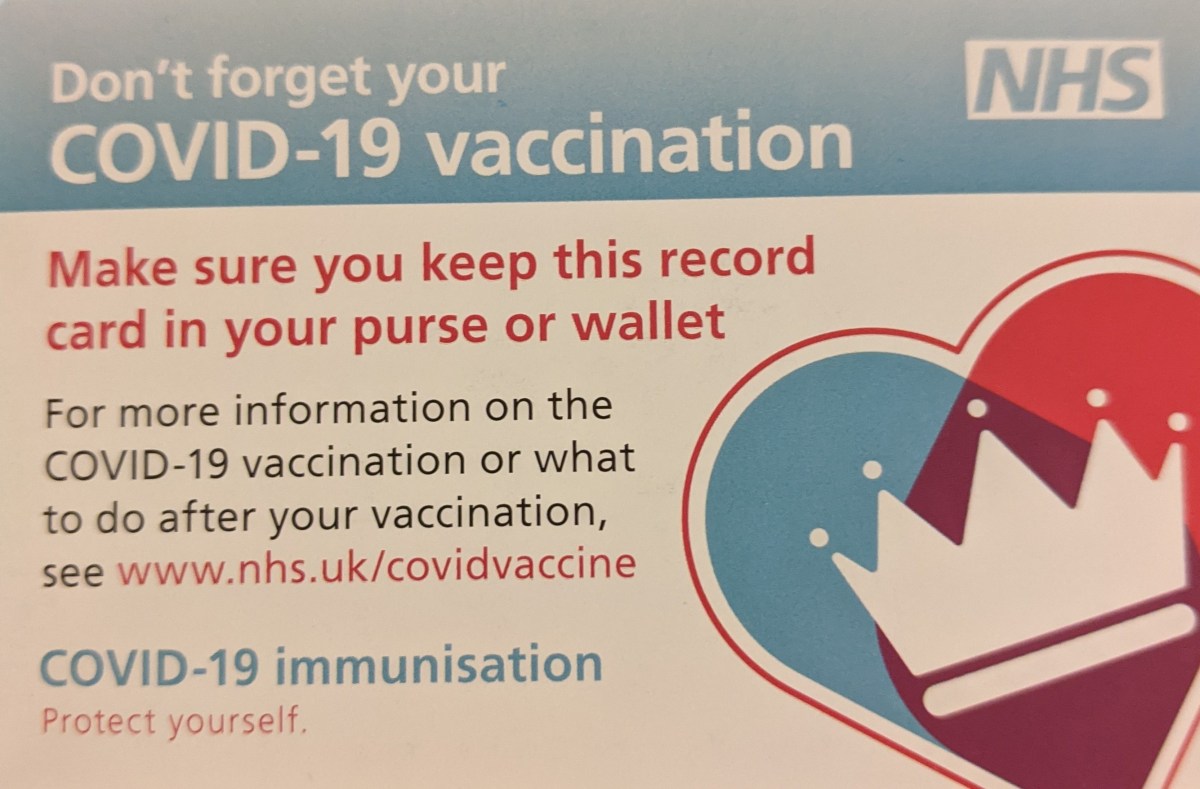
I had my first dose of the Covid vaccine last weekend and it’s safe to say that it felt like quite a momentous occasion. As someone regarded as being vulnerable to the virus, it was something I’d kind of looked forward to since news of a vaccine first broke. Not in the same way as I might look forward to some beer and cake, a new Grandaddy record or Christmas, but I was looking forward to it.

It was done early on Saturday morning and I was in and out within about 20 minutes, including having to queue outside for around 10 minutes. Everything was well organised, the staff were friendly and helpful and it was a generally positive experience. Definitely something worth writing a poem about. And it would have been a bright and breezy, optimistic poem as well. But then the side effects hit on Saturday afternoon…

Anyway, here’s my poem about having the vaccine.

'Sixth on the list (behind key workers and various degrees of old people.)'

On a misty Spring morning the air fizzes with an optimism and good humour
that I can't remember feeling in a long while.
March gently attempts to wrestle February to one side 
and it's almost twelve months since the fear began.

Within minutes a smiling volunteer injects some fight into my
'at risk' body that signals hope, a way forward, a route home.
As I walk back, the town is waking up and as their day breaks
I feel I have a secret that I'd like to share with all.

I bury my bare hands deep inside the pockets of a jacket,
turn my collar to fight the chill and resist the urge to skip 
down the hill to my front door, safe in the knowledge that
I have at least half of the weapons needed for the rest of the fight.

The rest is a canyon sized unknown; I will suffer to feel good,
wait in the dark to feel better and then go through
it all again before I am able to even think about 
casting aside the unwanted cloud of our restrictions.

Over sixteen hours later, having grumbled my way through
discomfort, nausea, shivers, fatigue and pain, 
having shouted myself hoarse at a curse of Magpies, I will sit alone,
at the kitchen table, as the house sleeps around me.

I will try to find the words to make it all sound like a proper
opera, praying silently for sleep and the chance to shut down
the hell and then feel well again, but fail as all the while 
one inane thought gnaws away at my brain:

I didn't even get a sticker.

On the whole, I have to say that the whole vaccine thing was a positive experience. It wasn’t stressful at all, mainly because of the way it was organised and the staff, but my worries about the after effects would come true and then some!

For the first few hours, all I suffered with was a bit of a sore arm, but then gradually more and more went wrong. I was fatigued, felt sick, was dizzy, everywhere ached and I just felt incredibly rough, as mentioned in the poem. Strangely though, when it came to heading off to bed, I was wide awake and ended up back downstairs, where I proceeded to open a notebook and write this poem!

I managed some sleep that night, eventually, but didn’t really feel a great deal better on the Sunday. It doesn’t matter though. The fact that I’m safer now means the world and the fact that I may be able to see my family and friends again relatively soon, makes it all worth while.

As for the poem, it’s all quite straightforward, although there’s maybe a couple of lines in the sixth and seventh stanzas that are probably best explained. Despite feeling worse than I’ve felt for a long time, I was fully aware that my football team, Newcastle United were playing that evening, live on Sky Sports. There was no way that I was missing it, as long as I could keep my eyes open. Hence then the line about shouting myself hoarse at a curse of magpies, as if you don’t know, we play in black and white stripes and are known as the magpies. It’s safe to say that my croaky voice next morning had nothing at all to do with the vaccine. The other line that I wanted to explain was the bit about making it sound like a ‘proper opera’. That’s me laughing at myself as I wrote the poem. The opera reference, be it soap or the more theatrical version is me looking back and just wondering if I’ve made a bit of a big deal about it all! In my defence, it was particularly horrible though…

As always, I hope you enjoyed the poem and I’d be interested to hear any feedback you might have, so feel free to leave a comment.

Poetry Blog: Circle

This is a poem I wrote about a month ago and as such, it was based more on what I knew was going to happen, rather than actually watching it happen.

It’s a poem about watching the year pass, I suppose. It came about because where I sit at our dining table gives me a lovely view of our garden. So if I’m working there, I might well drift off to watching what’s happening, or in the morning I’ll quite often gaze out of the window if I’m waiting for the kettle to boil or the toast to pop up. So obviously, I see a lot of change during the year.

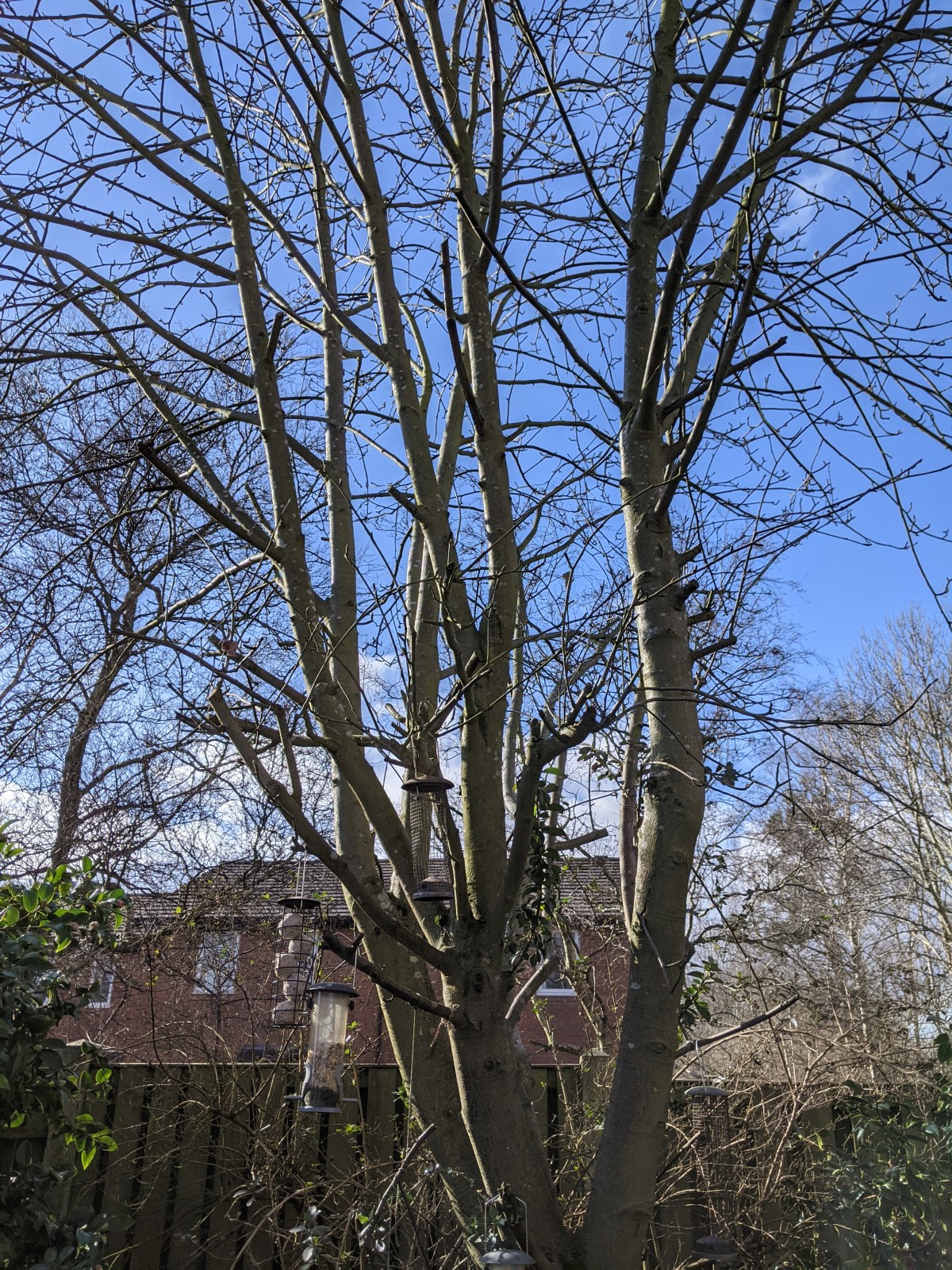
The poem came about because I was looking at a particular tree and reminding myself that it needs to be pruned. This is a thought I have from around January every year, as this particular tree can block out quite a bit of sunlight. So every year I vow that it’s going to get cut back. And every year I fail.

The poem starts in Spring. I love Spring. It’s the season that gives that suggestion of new life, year in year out. And with this tree, it’s the season where I either admit defeat or spring – no pun intended – into life and manage to cut back a few branches before getting overwhelmed by the amount of foliage I’ll have to compost or the amount of insect life that ends up in my hair, eyes and mouth.

I find that I’ve got through Winter, with it’s freezing cold walks and runs, its snow days and its lack of daylight and that everything starts to feel better with Spring. There are the obvious signs, like the shoots of plants emerging from previously frozen soil, blossom on the trees and that sort of thing. The weather gets better too. Usually, here in England, it gets better to the point where you begin to kid yourself that we’ll get a scorching hot summer, which as we all know, is never the case! But Spring is definitely a time for optimism.

So while the poem is about change, it’s more about one of the trees in my back garden and I guess, (if we’re going to try and intellectualise things!) the relationship that we have.

Circle

Every Spring you burst into life, disappointing me with leaves that will become back ache later in the year.
Your foliage, however, quickly becomes something more captivating than irritating,
teeming with life and becoming a canvas to admire, like a masterpiece in some far away gallery.

Your enthusiasm for life kickstarts mine and accompanied  by the sun, I am far more diligent in filling
up the feeders that bring birds to your branches, like day trippers to a Bank Holiday beach.
It will stay this way for months, as greedy beaks plunder your hospitality and we sit, camera at the ready,
awaiting a prompt for creativity.

Slowly at first, your metamorphosis begins, picking up the pace as the visits of the sun decrease.
And as they do, my own footsteps slow too. The birds too become a burden if it means a visit to a cold, wet garden.
Like an ageing film star your beauty fades with time and I turn my attention elsewhere,
knowing that before too long your leaves will demand it again.

And then, as the wind howls and the rain has nothing of yours left to spatter against, I am forced out to you
repeatedly in order to clean up your fallen grace.
When eventually my grudging enthusiasm withers, mutters and dies, a carpet of leaf mulch will form,
turning green to browns and blacks, but giving a squirrel a somewhat less than glamorous pantry.

While the light hours of my days are spent elsewhere you slowly spring to life once more as the circle turns.
As buds appear, I sense a missed opportunity and might even, in a frenzied quarter hour, cut away the odd branch
left at arm's length or those that a daredevil few moments on a step ladder may allow me to stretch to,
before nerves and a fear of falling get the better of me and I decide you look just fine.

But every year you escape to grow back those curls, welcome back an abundance of life and steal the light
away from late afternoons, sat in a favourite chair.
And with every passing year I will concede to another defeat and sit back, relax
and stare at all you bring to life.

There’s not much to add here. Not much to try and explain, as I think it’s a fairly simple and straightforward poem.

I called the poem ‘Circle’ because it’s quite a cyclical poem. It’s about the seasons; about a life cycle, I suppose. So, I arrived at ‘Circle’ because of that, but also because I begun to realise that I’m terrible at naming my poems. I’m also terrible at headlines for my articles and book reviews too. At first I called the poem ‘The Problem with Spring’ but then changed my mind when I re-read it and found that it wasn’t just about Spring after all. In my notebook it’s simply called ‘Tree’, but then I thought about trying to get people to read it and the tweet that would go out telling the world, ‘I wrote a poem about a tree’ and wondering why even less people than usual were reading! ‘Seasons Change’ was taken from a Buffalo Tom song, so I ditched that to avoid plagiarism. ‘Seasons’ was almost as bad as ‘Tree’ and ‘Cycle’ gave the entirely wrong impression, so I went with ‘Circle’. It’s still not great and I’m still not happy, but it’s done now!

The tree isn’t a particularly interesting tree. I’ve lived in the house for 23 years and I still couldn’t tell you what kind of tree it is, in fact! It’s not particularly striking or lovely. And yet, there are times, when the sun is streaming through the leaves and birds are hopping between branches, that it really is beautiful. In fact, it was probably one of these moments that led me to write the poem.

As ever, I’d love to know what people think of the poem. And the name, of course!

Poetry Blog: ‘Snow Day’

This was a poem I wrote after a couple of days recently where it snowed heavily. On both occasions our school closed and we reverted to remote learning from home. Sadly, I only stayed away from work on one of them. But more of that later.

I wanted to write about the sensation of a snowy day, rather than just pointing out lots of things that would be happening. I think there’s something still very special and almost magical about waking up to discover that there’s been snow and better still, it’s still there. Even as an adult, I still find it quite a captivating time and it definitely makes the place look a lot better, if only usually for about 24 hours. There can never be enough snowy landscape photos!

So, when you think about how beautiful the snow can make a place look, add in the anticipation as you notice that the sky is ‘full’ – because we’re all weather experts when it looks like it’ll snow – the sensation of the cold of a snow day – I always find it’s a different kind of cold when it’s snowed – it all makes for something very poetic. It was only right that I attempted something.

I found as I got part of the way through, that the notes I was writing from seemed to have a mixture of ideas; some about being a kid and others about being an adult in the snow. Two very different things! As a kid you just want to be out there without a care in the world, not feeling the cold or worrying about having any kind of accident. As an adult, I’m often completely on edge about the journey to work and getting stuck! So, I adapted as I wrote and ended up with a poem that contrasts those experiences instead of the one that I set out to write!

So here’s what I ended up with.

Snow Day

An eerie light creeps from outside.
It seeps under the blinds and reaches out, grabs you attention. The first hint.
Then through an opened window the glorious realisation, 
still the same rush as when you were a child.
Snow.

Today, you could be a child again.
The yelping toddler and the carefree teenager all rolled into one glorious experience
for an hour or a day. It doesn't matter.
A blanket of white wraps round you and keeps you safe and secure, 
blocking out the strain of the everyday, of adulthood.

Instead, you brace yourself, take crunching baby steps down the path,
clear the joints bwween doors and doorframes, the freezing of a finger in vain
as a sliver of snow slides onto the diver's seat.
The first part of a treacherous journey will be spent fighting the cold from every angle 
so you pray to someone's god and just keep moving.

You should be sledging, with the rush of a chill wind on your crimson cheeks,
the daring of your youth flooding back as you race down the snow covered hill,
clinging on for dear life, unable to control the smile and the happy noise that escapes.
For a moment, you don't care about what happens between here
and the well trodden flat at the bottom.

Back in the real world you hunch over the wheel
unable to take in the beauty of a landscape turned white by feathery flakes.
Adrenalin coarses as you slide to the side and you let out a sigh at every stop.
A warning light alerts you to approaching danger as you here an engine's struggles
and set you sights on simply cresting the next wave.

You wish it was possible to go back to the fearless child, 
whooping down that bank again, taking the shorter route left in a moment of doubt
or, more likely, tackling the whole run, head on, all the way 
down the hill on a sheet of plastic bag, spinning, out of control
until you stop, trudge back, delirious and dice with death time and time again.

But, in the furroughed brow of the here and now,
fun seems an eternity away as you fight against the same roads as every other day
your heart beating, like someone pressed a button that
changed the level on the video game and every bend and hill mus be aproached with 
a caution never seen before. That front door will never look so good again.

This was a very different poem to write. In terms of how it looked on the page of my notebook, it was like something I do at work. Lots of snippets of lines, bullet points, snatches of poem written wherever I could fit them and arrows joining some if not all of it together.

As I wrote it I changed my mind on what it was going to be and as I stated above, I included some stanzas about adulthood. However, I only had two half formed ‘adult’ experiences down at that point so had to write more and try and form a logical kind of ‘narrative’ as I wrote. In that way, it was a really tricky poem to write. I hope it doesn’t sound too cobbled together!

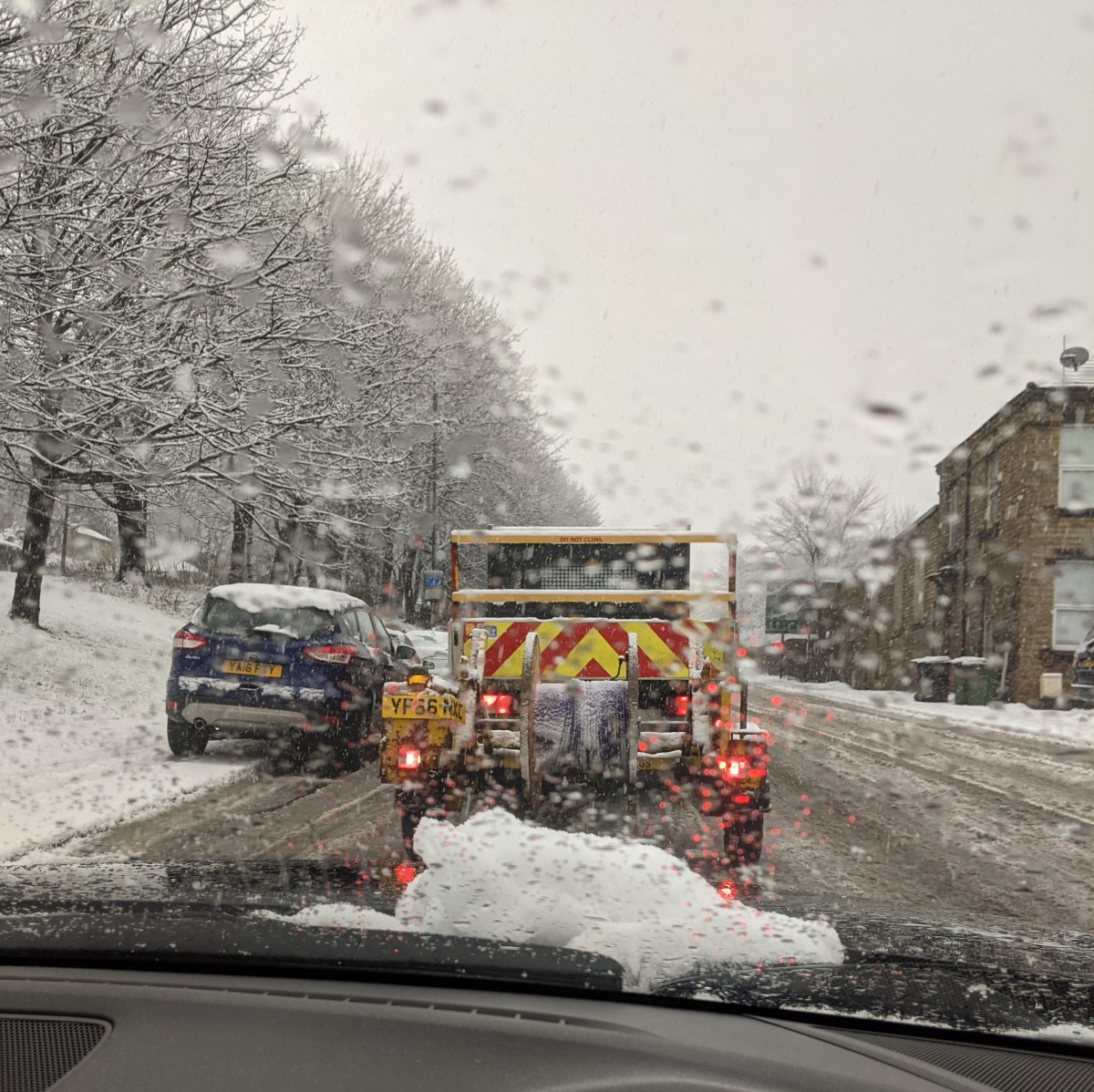
The whole adult experience with snow was summed up in January this year when one journey home from work in the snow ended up taking over six hours. So, I suppose it’s a good thing that the poem reflects this side of things too and the dread that snow can bring nowadays.

One other thing to point out is that I deliberately tried to include lots of sibilance and enjambment in there. The sibilance was there to try and replicate the sounds of sledging (there I go again!), the hissing and swishing of the plastic against the snow. The enjambment was there to pick up pace as I wanted to get across the recklessness of sledging as a child and the speed that you would pick up as you went down a hill. I hope that doesn’t sound too pretentious, but I wanted to at least explain what I was trying to do!

As ever, I’d love to hear what people thought, so feel free to let me know in the comments.

Poetry Blog: Big Garden Birdwatch.

Ornithology. Birding. Twitching. Whichever way you look at it, it amounts to the same thing. Bird-watching. And whichever way you look at it, it’s what’s led me to this. The RSPB’s Big Garden Birdwatch; an annual event where those who take part log the birds they spot in their garden across an hour of one of three days in January. What is the world’s biggest bird survey, is something that we’ve taken part in, as a family, for several years now and it never gets any less tense. What should be a bit of fun, counting and identifying the birds in the garden, can actually play havoc with one’s heart rate and blood pressure. Surely, I’m doing it wrong?

While we’ve done it for quite a few years now, we’ve rarely had a really successful one. And by successful, of course I mean dramatic exciting, like an emu leaping the fence and having a go on the trampoline. (Well somebody needs to; ours is reduced to garden sculpture status these days). However, some would say that you’re missing the point if you’re only in it for the drama. The whole point is just to log what you see, however big or small the numbers or birds because that’s what helps the RSPB out. But as with anything, it’s always nice to stand out a little bit.

We have had some more remarkable birds in our garden in the past, but never on the day of the Big Garden Birdwatch. We’ve had a kestrel perch on our fence right next to the window as we were eating dinner at the table. I think we once, briefly, had a sparrowhawk, but its identity was shrouded somewhat by a huge camelia at the back of the garden (get me with my subtle garden based bragging!) and a heron landed on a neighbour’s roof one day. We sporadically have a Great Spotted Woodpecker that visits too. But we’re ‘reduced’ to our regulars more often than not on the day of the BGB. And rightly or wrongly, I’m always a little disappointed.

However, it’s always a bit of a thrill to take part and this year I felt inspired enough to write a poem.

Big Garden Birdwatch

Drawing the curtains, more in hope than anything else,
I'm bouoyed by a blackbird, rallied by a robin.
We plant the feet, scan the immediate horizon and stay as still as we can.
Away we go. A tense hour awaits and maybe this will be all we see.

Armed with a poster to confirm our bird spots and two pairs of binoculars at hand
we scope every inch of the  garden for more.
Every so often something flits across our line of vision, but it's difficult to tell
if it's in our trees or those in the fields behind. This struggle is real.

But then, the pulse rate quickens at the sight of something on a feeder.
We struggle to focus our sights, finding it, but losing it just as quickly. 
And then. There's yellow, no mustard, a black marking...
We check the poster to confirm a coal tit. I was hoping for a vulture.

A period of silence then ensues and we exploit this, taking turns to make breakfast,
keeping one eye, at least, on the prize at all times.
Within minutes, a burst of activity scatters toast and brings a clutch of sparrows,
but no sparrow hawk, a lone blue tit, but no blue macaw or kingfisher.

Suddenly they seem to be everywhere; sparrows scattered around the branches
Only everywhere's a slight exaggeration, but we almost have a five bar gate.
Close, but no cigar. Near, but still a bit too distant.
We mark them on our poster and frown, underwhelmed by our visitors so far.

We scan the garden for anything we've missed. Minutes tick by with nothing but hope.
And then one of our ubiquitous woodpigeons thunks on to a branch gaining our attention.
As I go to make a note a flash of red pulls me back.
A focused gaze shows not only red, but yellow and black - we've struck gold...finch.

These two have strayed from nearer the estate's equator to the frozen North of our silver birch
Never once seen before and probably never to be witnessed again.
From that mighty high, it's all downhill from here.
Typically, a magpie lands and no other species dares enter our birdwatch for the remainder of the hour.

We pack away our equipment and return to the more uniform duties of the day,
the birdwatch over for another year, but a moderate cause for celebration.
No doubt now an eagle will land, perhaps a dodo even,
But outside of our golden hour, although a thrill, none of them would count.

Hopefully, that gives an idea of not just our experience, but the large majority of Big Garden Birdwatch experiences. I imagine lots of us set out hoping for something that we deem ‘exciting’ to happen and in a way, miss the point of the whole thing. It doesn’t matter; I still I’ll always retain that approach!

I think in many ways, that’s what made the appearance of the two goldfinches so good. As I mention in the poem, if I head further down the hill on our estate (south towards the ‘Equator’ if you will) there are certain places where you’ll see them in the trees. But we’ve literally never had them in our garden before. So what a time for them to arrive.

A few notes, if you like, about the poem by way of explanation (or perhaps I’m just trying to sound like a proper poet). I deliberately used alliteration in the second line to convey the sense of excitement in our house at that moment. Myself and my son were first downstairs and we knew we’d be doing the birdwatch, but having done it before and spent an hour seeing two or three birds enter the garden, it was a genuine thrill to see two within a second! So I thought the alliteration there was apt.

The line, ‘The struggle is real’ is sarcastic. I’m laughing at myself a bit there as I do get a bit carried away with BGB day and actually, I shouldn’t be quite so serious as to be surveying the entire family as to whether or not ‘that bird’ is in our tree or another that’s beyond our fence. It’s a dig at my seriousness as much as my eyesight! Middle age means that I can’t accurately see which branches belong where nowadays! A little later on, the lines about a vulture, macaw and kingfisher are the same; me gently mocking myself (and possibly lots of us who do the BGB) and my hopes that something rare will suddenly decide that it needs to visit my particular corner of the planet so it can get ticked off on a survey. I don’t know if I think I’ll achieve some kind of fame and notoriety by being the bloke who spotted the particular bird that no one else saw!

Two other things to explain: the ‘five bar gate’ in the 5th stanza is just a way of keeping score. Four marks on a page and then when you get to a fifth, you cross the four to make a gate. The other thing was the ‘thunk’ of the woodpigeon. This is the noise I like to imagine these ‘thick set’ birds make. I know it’s not as they’re actually quite graceful in real life.

So, I hope you enjoy the poem and I hope that if you are someone who participates in The Big Garden Birdwatch year after year, you can recognise certain things in it. And I don’t just mean birds. Hopefully, the excitement and element of competition is not just to be found in our house!