Poetry Blog: Sixth on the list (behind key workers and various degrees of old people.)

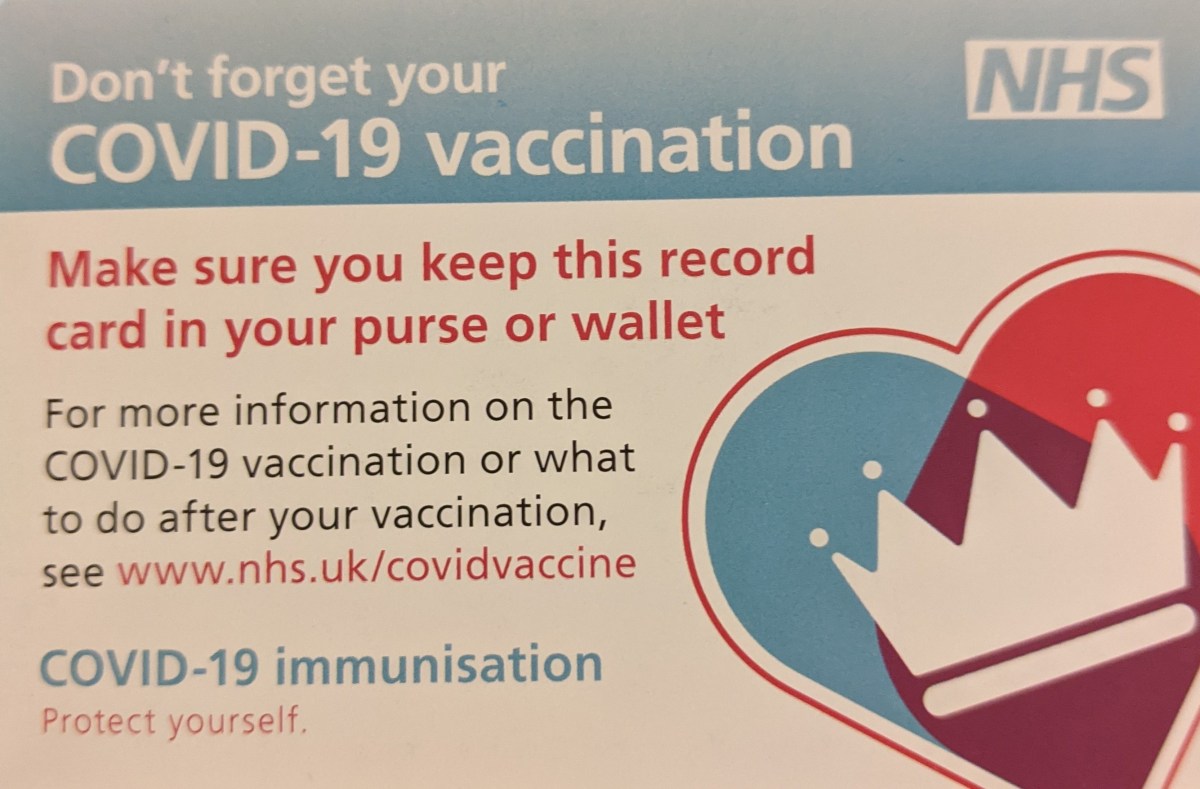
I had my first dose of the Covid vaccine last weekend and it’s safe to say that it felt like quite a momentous occasion. As someone regarded as being vulnerable to the virus, it was something I’d kind of looked forward to since news of a vaccine first broke. Not in the same way as I might look forward to some beer and cake, a new Grandaddy record or Christmas, but I was looking forward to it.

It was done early on Saturday morning and I was in and out within about 20 minutes, including having to queue outside for around 10 minutes. Everything was well organised, the staff were friendly and helpful and it was a generally positive experience. Definitely something worth writing a poem about. And it would have been a bright and breezy, optimistic poem as well. But then the side effects hit on Saturday afternoon…

Anyway, here’s my poem about having the vaccine.

'Sixth on the list (behind key workers and various degrees of old people.)'

On a misty Spring morning the air fizzes with an optimism and good humour
that I can't remember feeling in a long while.
March gently attempts to wrestle February to one side 
and it's almost twelve months since the fear began.

Within minutes a smiling volunteer injects some fight into my
'at risk' body that signals hope, a way forward, a route home.
As I walk back, the town is waking up and as their day breaks
I feel I have a secret that I'd like to share with all.

I bury my bare hands deep inside the pockets of a jacket,
turn my collar to fight the chill and resist the urge to skip 
down the hill to my front door, safe in the knowledge that
I have at least half of the weapons needed for the rest of the fight.

The rest is a canyon sized unknown; I will suffer to feel good,
wait in the dark to feel better and then go through
it all again before I am able to even think about 
casting aside the unwanted cloud of our restrictions.

Over sixteen hours later, having grumbled my way through
discomfort, nausea, shivers, fatigue and pain, 
having shouted myself hoarse at a curse of Magpies, I will sit alone,
at the kitchen table, as the house sleeps around me.

I will try to find the words to make it all sound like a proper
opera, praying silently for sleep and the chance to shut down
the hell and then feel well again, but fail as all the while 
one inane thought gnaws away at my brain:

I didn't even get a sticker.

On the whole, I have to say that the whole vaccine thing was a positive experience. It wasn’t stressful at all, mainly because of the way it was organised and the staff, but my worries about the after effects would come true and then some!

For the first few hours, all I suffered with was a bit of a sore arm, but then gradually more and more went wrong. I was fatigued, felt sick, was dizzy, everywhere ached and I just felt incredibly rough, as mentioned in the poem. Strangely though, when it came to heading off to bed, I was wide awake and ended up back downstairs, where I proceeded to open a notebook and write this poem!

I managed some sleep that night, eventually, but didn’t really feel a great deal better on the Sunday. It doesn’t matter though. The fact that I’m safer now means the world and the fact that I may be able to see my family and friends again relatively soon, makes it all worth while.

As for the poem, it’s all quite straightforward, although there’s maybe a couple of lines in the sixth and seventh stanzas that are probably best explained. Despite feeling worse than I’ve felt for a long time, I was fully aware that my football team, Newcastle United were playing that evening, live on Sky Sports. There was no way that I was missing it, as long as I could keep my eyes open. Hence then the line about shouting myself hoarse at a curse of magpies, as if you don’t know, we play in black and white stripes and are known as the magpies. It’s safe to say that my croaky voice next morning had nothing at all to do with the vaccine. The other line that I wanted to explain was the bit about making it sound like a ‘proper opera’. That’s me laughing at myself as I wrote the poem. The opera reference, be it soap or the more theatrical version is me looking back and just wondering if I’ve made a bit of a big deal about it all! In my defence, it was particularly horrible though…

As always, I hope you enjoyed the poem and I’d be interested to hear any feedback you might have, so feel free to leave a comment.

Poetry Blog: Circle

This is a poem I wrote about a month ago and as such, it was based more on what I knew was going to happen, rather than actually watching it happen.

It’s a poem about watching the year pass, I suppose. It came about because where I sit at our dining table gives me a lovely view of our garden. So if I’m working there, I might well drift off to watching what’s happening, or in the morning I’ll quite often gaze out of the window if I’m waiting for the kettle to boil or the toast to pop up. So obviously, I see a lot of change during the year.

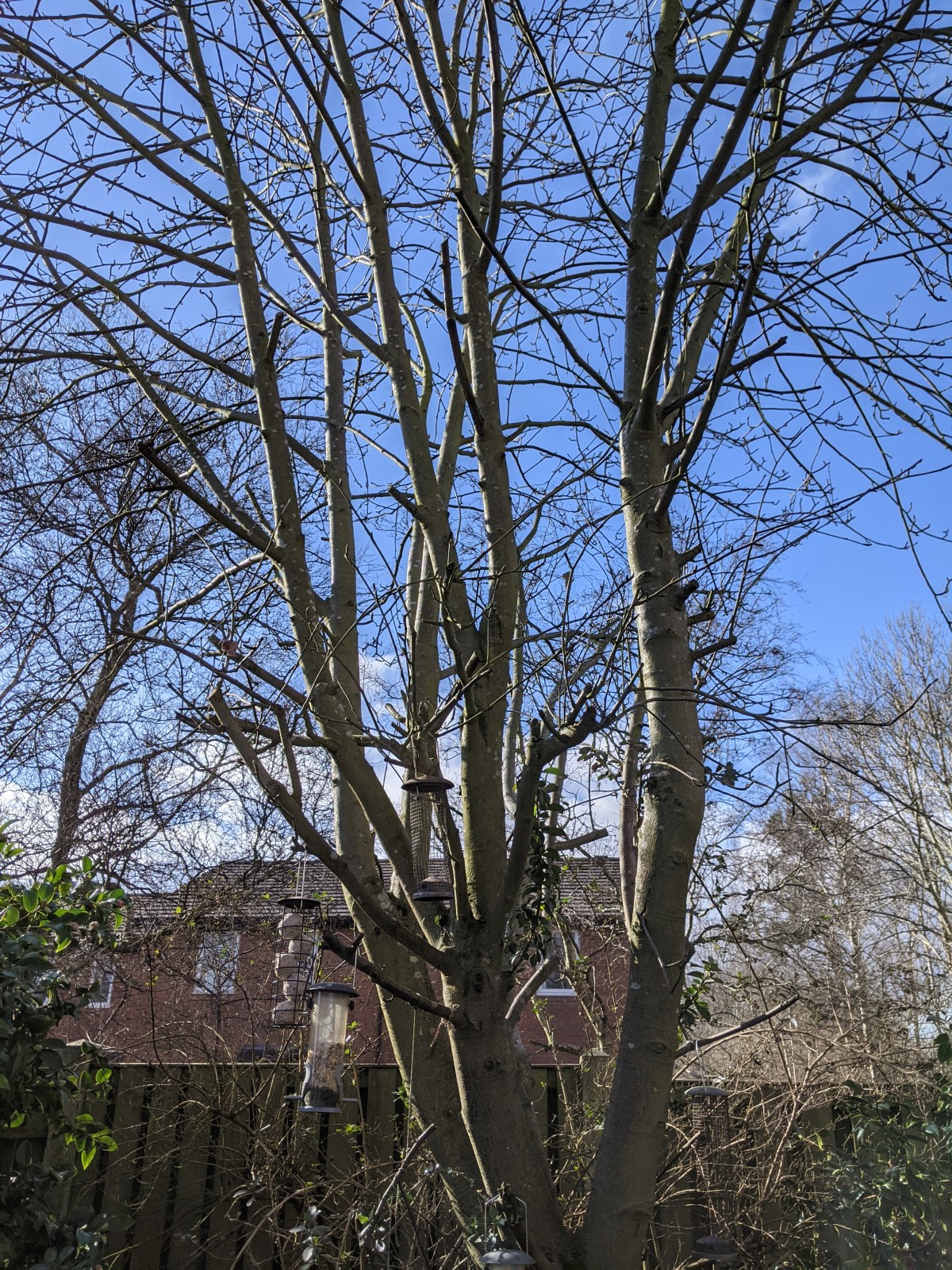
The poem came about because I was looking at a particular tree and reminding myself that it needs to be pruned. This is a thought I have from around January every year, as this particular tree can block out quite a bit of sunlight. So every year I vow that it’s going to get cut back. And every year I fail.

The poem starts in Spring. I love Spring. It’s the season that gives that suggestion of new life, year in year out. And with this tree, it’s the season where I either admit defeat or spring – no pun intended – into life and manage to cut back a few branches before getting overwhelmed by the amount of foliage I’ll have to compost or the amount of insect life that ends up in my hair, eyes and mouth.

I find that I’ve got through Winter, with it’s freezing cold walks and runs, its snow days and its lack of daylight and that everything starts to feel better with Spring. There are the obvious signs, like the shoots of plants emerging from previously frozen soil, blossom on the trees and that sort of thing. The weather gets better too. Usually, here in England, it gets better to the point where you begin to kid yourself that we’ll get a scorching hot summer, which as we all know, is never the case! But Spring is definitely a time for optimism.

So while the poem is about change, it’s more about one of the trees in my back garden and I guess, (if we’re going to try and intellectualise things!) the relationship that we have.

Circle

Every Spring you burst into life, disappointing me with leaves that will become back ache later in the year.
Your foliage, however, quickly becomes something more captivating than irritating,
teeming with life and becoming a canvas to admire, like a masterpiece in some far away gallery.

Your enthusiasm for life kickstarts mine and accompanied  by the sun, I am far more diligent in filling
up the feeders that bring birds to your branches, like day trippers to a Bank Holiday beach.
It will stay this way for months, as greedy beaks plunder your hospitality and we sit, camera at the ready,
awaiting a prompt for creativity.

Slowly at first, your metamorphosis begins, picking up the pace as the visits of the sun decrease.
And as they do, my own footsteps slow too. The birds too become a burden if it means a visit to a cold, wet garden.
Like an ageing film star your beauty fades with time and I turn my attention elsewhere,
knowing that before too long your leaves will demand it again.

And then, as the wind howls and the rain has nothing of yours left to spatter against, I am forced out to you
repeatedly in order to clean up your fallen grace.
When eventually my grudging enthusiasm withers, mutters and dies, a carpet of leaf mulch will form,
turning green to browns and blacks, but giving a squirrel a somewhat less than glamorous pantry.

While the light hours of my days are spent elsewhere you slowly spring to life once more as the circle turns.
As buds appear, I sense a missed opportunity and might even, in a frenzied quarter hour, cut away the odd branch
left at arm's length or those that a daredevil few moments on a step ladder may allow me to stretch to,
before nerves and a fear of falling get the better of me and I decide you look just fine.

But every year you escape to grow back those curls, welcome back an abundance of life and steal the light
away from late afternoons, sat in a favourite chair.
And with every passing year I will concede to another defeat and sit back, relax
and stare at all you bring to life.

There’s not much to add here. Not much to try and explain, as I think it’s a fairly simple and straightforward poem.

I called the poem ‘Circle’ because it’s quite a cyclical poem. It’s about the seasons; about a life cycle, I suppose. So, I arrived at ‘Circle’ because of that, but also because I begun to realise that I’m terrible at naming my poems. I’m also terrible at headlines for my articles and book reviews too. At first I called the poem ‘The Problem with Spring’ but then changed my mind when I re-read it and found that it wasn’t just about Spring after all. In my notebook it’s simply called ‘Tree’, but then I thought about trying to get people to read it and the tweet that would go out telling the world, ‘I wrote a poem about a tree’ and wondering why even less people than usual were reading! ‘Seasons Change’ was taken from a Buffalo Tom song, so I ditched that to avoid plagiarism. ‘Seasons’ was almost as bad as ‘Tree’ and ‘Cycle’ gave the entirely wrong impression, so I went with ‘Circle’. It’s still not great and I’m still not happy, but it’s done now!

The tree isn’t a particularly interesting tree. I’ve lived in the house for 23 years and I still couldn’t tell you what kind of tree it is, in fact! It’s not particularly striking or lovely. And yet, there are times, when the sun is streaming through the leaves and birds are hopping between branches, that it really is beautiful. In fact, it was probably one of these moments that led me to write the poem.

As ever, I’d love to know what people think of the poem. And the name, of course!

Book Review: Anti Social by Nick Pettigrew

I thought I knew what an Anti-Social Behaviour Officer was before I read this book. I had them pegged as being akin to a Community Support Officer in the police and so I imagined this would be the book version of shows like ‘999 What’s Your Emergency?’ The odd fight, neighbours who play their music too loud and a lot of time wasters. And then I read the book.

Nick Pettigrew fell into a career as an Anti-Social Behaviour Officer in the way that many of us have fallen into a career. He came out of university with the kind of degree that doesn’t have an obvious next step (bloody English!) and before he knew it, was taking a job that he didn’t know a great deal about. Lots of us have done it. I did it. Over two decades after leaving university I’m still in a job that I once told my wife I’d “probably give a couple of years”. Fortunately, I love what I do, so although I can’t help but wonder what might have been if I’d have had an actual plan, there are no regrets. But then, my job doesn’t involve regularly dealing with problems ranging from noise nuisance to crack addicts.

‘Anti-Social’ is Pettigrew’s memoir of his time in what sounds like a tremendously testing and frequently unrewarding job as an Anti-Social Behaviour Officer in a local authority in London. A job he fell into and then gave his all to for over a decade before finding that he could no longer cope with the conditions in which he worked every day. And these weren’t what some of us might call ‘testing’ conditions, like having to sit on an uncomfortable chair or huffing and puffing about the fact that the stationary order was taking a bit long in arriving. No, Pettigrew worked with and represented some of the most vulnerable members of society in one of the busiest cities in the world.

So while some days were dominated by what Pettigrew might call routine investigations, inspecting flats and collecting evidence of noise nuisance, many others were spent trying to help the neighbours of drug dealers or battling to save the tenancies of incredibly vulnerable people with appalling mental health problems. Put simply, Pettigrew often gave every ounce of his energy and time helping those that wouldn’t admit they needed help or those who simply couldn’t help themselves. In fact, his diary tells us that his working days were often spent in vain, trying to help people who were a dangerous combination of both.

‘Anti-Social’ is a book that should shock you. In fact, if you think you have problems with every day life, then this book might just provide the antidote. While I probably spend too long moaning about life’s smaller problems, some of the cases that Pettigrew documents here left me in tears. Some of the powerlessness and some of the blatant exploitation of society’s most vulnerable is truly haunting. And all the while Pettigrew struggled with his own mental health, as documented at the start of every monthly chapter when he indicates to the reader his own current medication, accompanied by his newly changed and usually deeply ironic password.

The book is brilliantly written. Obviously the real life nature of it lends itself beautifully to an ever more engaging narrative, but what makes ‘Anti-Social’ stand out is its dark sense of humour. Often, the same tale is likely to have you tearing your hair out and close to tears while at the same time laughing at the way it’s told. There’s a certain dark irony in a lot of the problems that are discussed that makes the book both addictive and alarming in equal measure. And while ‘Anti-Social’ will introduce you to a dark side of society that you were perhaps unaware of, it will also expose human stupidity at its most hilarious with a deadpan tone that will help you to smile or laugh your way through the horror that is often unfolding on its pages.

If you enjoyed ‘This is Going to Hurt’ by Adam Kay then ‘Anti-Social’ is a logical next step. Similarly funny, maddeningly frustrating, but also fantastically engaging. The kind of book where what you’re being told makes you want to put it down, yet not put it down at all.

In what some all too often refer to as dark, desperate times, ‘Anti-Social’ should be a wake-up call to all of us. Yes, a series of lockdowns caused by a ham-fisted reaction to a global pandemic has made the last year or so undoubtedly tough. But if you’ve still got a job, can get out for a walk every so often, can afford to just sit and watch television for any length of time or you just still have your health in some semblance of working order, then you probably don’t know you’re born. Reading ‘Anti-Social’ might just help you stop feeling so sorry for yourself. Thank Christ for people like Pettigrew!

I’d give ‘Anti-Social’ by Nick Pettigrew

Rating: 5 out of 5.

Poetry Blog: ‘Snow Day’

This was a poem I wrote after a couple of days recently where it snowed heavily. On both occasions our school closed and we reverted to remote learning from home. Sadly, I only stayed away from work on one of them. But more of that later.

I wanted to write about the sensation of a snowy day, rather than just pointing out lots of things that would be happening. I think there’s something still very special and almost magical about waking up to discover that there’s been snow and better still, it’s still there. Even as an adult, I still find it quite a captivating time and it definitely makes the place look a lot better, if only usually for about 24 hours. There can never be enough snowy landscape photos!

So, when you think about how beautiful the snow can make a place look, add in the anticipation as you notice that the sky is ‘full’ – because we’re all weather experts when it looks like it’ll snow – the sensation of the cold of a snow day – I always find it’s a different kind of cold when it’s snowed – it all makes for something very poetic. It was only right that I attempted something.

I found as I got part of the way through, that the notes I was writing from seemed to have a mixture of ideas; some about being a kid and others about being an adult in the snow. Two very different things! As a kid you just want to be out there without a care in the world, not feeling the cold or worrying about having any kind of accident. As an adult, I’m often completely on edge about the journey to work and getting stuck! So, I adapted as I wrote and ended up with a poem that contrasts those experiences instead of the one that I set out to write!

So here’s what I ended up with.

Snow Day

An eerie light creeps from outside.
It seeps under the blinds and reaches out, grabs you attention. The first hint.
Then through an opened window the glorious realisation, 
still the same rush as when you were a child.
Snow.

Today, you could be a child again.
The yelping toddler and the carefree teenager all rolled into one glorious experience
for an hour or a day. It doesn't matter.
A blanket of white wraps round you and keeps you safe and secure, 
blocking out the strain of the everyday, of adulthood.

Instead, you brace yourself, take crunching baby steps down the path,
clear the joints bwween doors and doorframes, the freezing of a finger in vain
as a sliver of snow slides onto the diver's seat.
The first part of a treacherous journey will be spent fighting the cold from every angle 
so you pray to someone's god and just keep moving.

You should be sledging, with the rush of a chill wind on your crimson cheeks,
the daring of your youth flooding back as you race down the snow covered hill,
clinging on for dear life, unable to control the smile and the happy noise that escapes.
For a moment, you don't care about what happens between here
and the well trodden flat at the bottom.

Back in the real world you hunch over the wheel
unable to take in the beauty of a landscape turned white by feathery flakes.
Adrenalin coarses as you slide to the side and you let out a sigh at every stop.
A warning light alerts you to approaching danger as you here an engine's struggles
and set you sights on simply cresting the next wave.

You wish it was possible to go back to the fearless child, 
whooping down that bank again, taking the shorter route left in a moment of doubt
or, more likely, tackling the whole run, head on, all the way 
down the hill on a sheet of plastic bag, spinning, out of control
until you stop, trudge back, delirious and dice with death time and time again.

But, in the furroughed brow of the here and now,
fun seems an eternity away as you fight against the same roads as every other day
your heart beating, like someone pressed a button that
changed the level on the video game and every bend and hill mus be aproached with 
a caution never seen before. That front door will never look so good again.

This was a very different poem to write. In terms of how it looked on the page of my notebook, it was like something I do at work. Lots of snippets of lines, bullet points, snatches of poem written wherever I could fit them and arrows joining some if not all of it together.

As I wrote it I changed my mind on what it was going to be and as I stated above, I included some stanzas about adulthood. However, I only had two half formed ‘adult’ experiences down at that point so had to write more and try and form a logical kind of ‘narrative’ as I wrote. In that way, it was a really tricky poem to write. I hope it doesn’t sound too cobbled together!

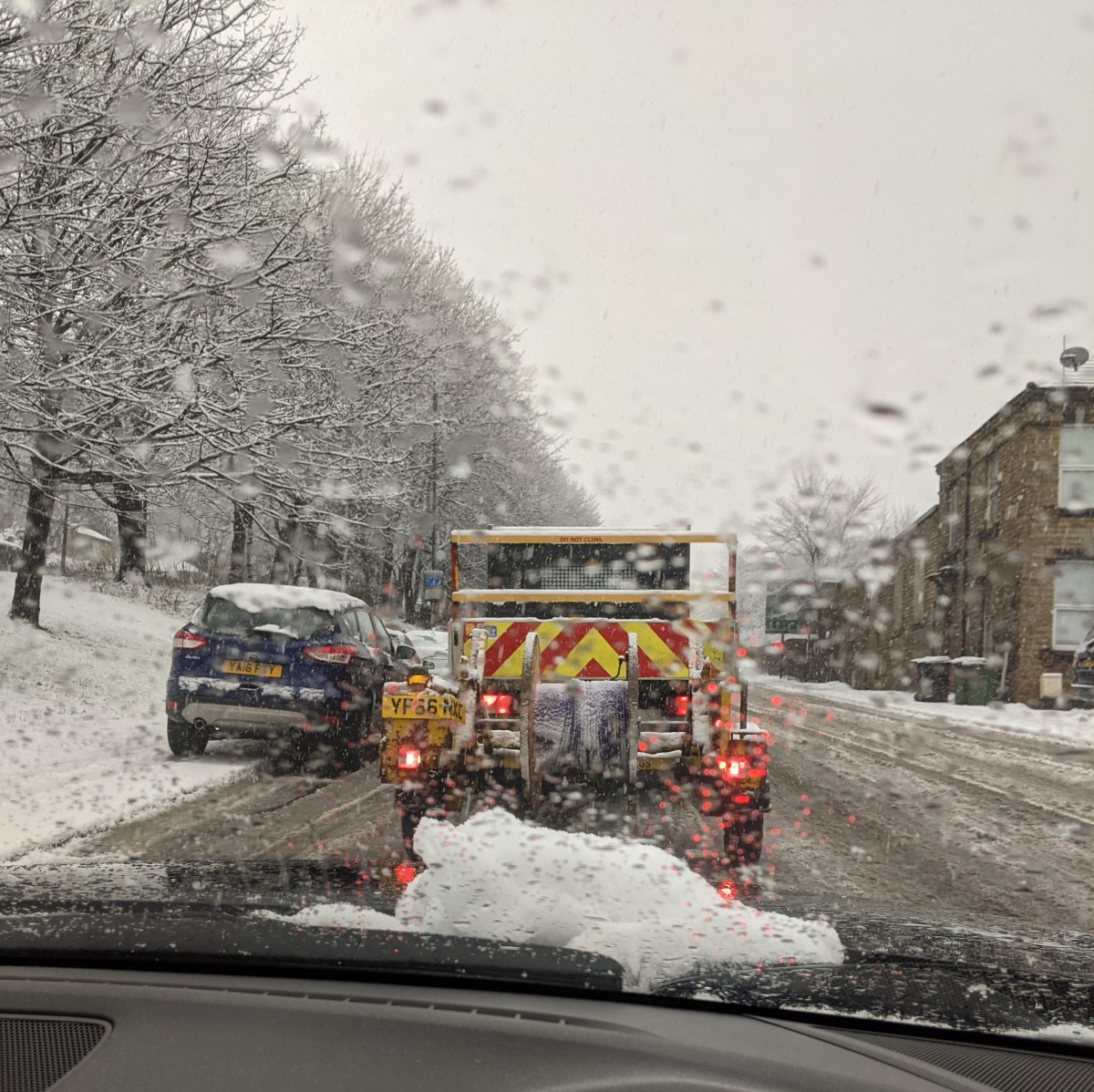
The whole adult experience with snow was summed up in January this year when one journey home from work in the snow ended up taking over six hours. So, I suppose it’s a good thing that the poem reflects this side of things too and the dread that snow can bring nowadays.

One other thing to point out is that I deliberately tried to include lots of sibilance and enjambment in there. The sibilance was there to try and replicate the sounds of sledging (there I go again!), the hissing and swishing of the plastic against the snow. The enjambment was there to pick up pace as I wanted to get across the recklessness of sledging as a child and the speed that you would pick up as you went down a hill. I hope that doesn’t sound too pretentious, but I wanted to at least explain what I was trying to do!

As ever, I’d love to hear what people thought, so feel free to let me know in the comments.

Poetry Blog: Big Garden Birdwatch.

Ornithology. Birding. Twitching. Whichever way you look at it, it amounts to the same thing. Bird-watching. And whichever way you look at it, it’s what’s led me to this. The RSPB’s Big Garden Birdwatch; an annual event where those who take part log the birds they spot in their garden across an hour of one of three days in January. What is the world’s biggest bird survey, is something that we’ve taken part in, as a family, for several years now and it never gets any less tense. What should be a bit of fun, counting and identifying the birds in the garden, can actually play havoc with one’s heart rate and blood pressure. Surely, I’m doing it wrong?

While we’ve done it for quite a few years now, we’ve rarely had a really successful one. And by successful, of course I mean dramatic exciting, like an emu leaping the fence and having a go on the trampoline. (Well somebody needs to; ours is reduced to garden sculpture status these days). However, some would say that you’re missing the point if you’re only in it for the drama. The whole point is just to log what you see, however big or small the numbers or birds because that’s what helps the RSPB out. But as with anything, it’s always nice to stand out a little bit.

We have had some more remarkable birds in our garden in the past, but never on the day of the Big Garden Birdwatch. We’ve had a kestrel perch on our fence right next to the window as we were eating dinner at the table. I think we once, briefly, had a sparrowhawk, but its identity was shrouded somewhat by a huge camelia at the back of the garden (get me with my subtle garden based bragging!) and a heron landed on a neighbour’s roof one day. We sporadically have a Great Spotted Woodpecker that visits too. But we’re ‘reduced’ to our regulars more often than not on the day of the BGB. And rightly or wrongly, I’m always a little disappointed.

However, it’s always a bit of a thrill to take part and this year I felt inspired enough to write a poem.

Big Garden Birdwatch

Drawing the curtains, more in hope than anything else,
I'm bouoyed by a blackbird, rallied by a robin.
We plant the feet, scan the immediate horizon and stay as still as we can.
Away we go. A tense hour awaits and maybe this will be all we see.

Armed with a poster to confirm our bird spots and two pairs of binoculars at hand
we scope every inch of the  garden for more.
Every so often something flits across our line of vision, but it's difficult to tell
if it's in our trees or those in the fields behind. This struggle is real.

But then, the pulse rate quickens at the sight of something on a feeder.
We struggle to focus our sights, finding it, but losing it just as quickly. 
And then. There's yellow, no mustard, a black marking...
We check the poster to confirm a coal tit. I was hoping for a vulture.

A period of silence then ensues and we exploit this, taking turns to make breakfast,
keeping one eye, at least, on the prize at all times.
Within minutes, a burst of activity scatters toast and brings a clutch of sparrows,
but no sparrow hawk, a lone blue tit, but no blue macaw or kingfisher.

Suddenly they seem to be everywhere; sparrows scattered around the branches
Only everywhere's a slight exaggeration, but we almost have a five bar gate.
Close, but no cigar. Near, but still a bit too distant.
We mark them on our poster and frown, underwhelmed by our visitors so far.

We scan the garden for anything we've missed. Minutes tick by with nothing but hope.
And then one of our ubiquitous woodpigeons thunks on to a branch gaining our attention.
As I go to make a note a flash of red pulls me back.
A focused gaze shows not only red, but yellow and black - we've struck gold...finch.

These two have strayed from nearer the estate's equator to the frozen North of our silver birch
Never once seen before and probably never to be witnessed again.
From that mighty high, it's all downhill from here.
Typically, a magpie lands and no other species dares enter our birdwatch for the remainder of the hour.

We pack away our equipment and return to the more uniform duties of the day,
the birdwatch over for another year, but a moderate cause for celebration.
No doubt now an eagle will land, perhaps a dodo even,
But outside of our golden hour, although a thrill, none of them would count.

Hopefully, that gives an idea of not just our experience, but the large majority of Big Garden Birdwatch experiences. I imagine lots of us set out hoping for something that we deem ‘exciting’ to happen and in a way, miss the point of the whole thing. It doesn’t matter; I still I’ll always retain that approach!

I think in many ways, that’s what made the appearance of the two goldfinches so good. As I mention in the poem, if I head further down the hill on our estate (south towards the ‘Equator’ if you will) there are certain places where you’ll see them in the trees. But we’ve literally never had them in our garden before. So what a time for them to arrive.

A few notes, if you like, about the poem by way of explanation (or perhaps I’m just trying to sound like a proper poet). I deliberately used alliteration in the second line to convey the sense of excitement in our house at that moment. Myself and my son were first downstairs and we knew we’d be doing the birdwatch, but having done it before and spent an hour seeing two or three birds enter the garden, it was a genuine thrill to see two within a second! So I thought the alliteration there was apt.

The line, ‘The struggle is real’ is sarcastic. I’m laughing at myself a bit there as I do get a bit carried away with BGB day and actually, I shouldn’t be quite so serious as to be surveying the entire family as to whether or not ‘that bird’ is in our tree or another that’s beyond our fence. It’s a dig at my seriousness as much as my eyesight! Middle age means that I can’t accurately see which branches belong where nowadays! A little later on, the lines about a vulture, macaw and kingfisher are the same; me gently mocking myself (and possibly lots of us who do the BGB) and my hopes that something rare will suddenly decide that it needs to visit my particular corner of the planet so it can get ticked off on a survey. I don’t know if I think I’ll achieve some kind of fame and notoriety by being the bloke who spotted the particular bird that no one else saw!

Two other things to explain: the ‘five bar gate’ in the 5th stanza is just a way of keeping score. Four marks on a page and then when you get to a fifth, you cross the four to make a gate. The other thing was the ‘thunk’ of the woodpigeon. This is the noise I like to imagine these ‘thick set’ birds make. I know it’s not as they’re actually quite graceful in real life.

So, I hope you enjoy the poem and I hope that if you are someone who participates in The Big Garden Birdwatch year after year, you can recognise certain things in it. And I don’t just mean birds. Hopefully, the excitement and element of competition is not just to be found in our house!

Book Review: Midnight Sun by Jo Nesbo

They say that everybody makes mistakes. I only have to think of a few haircuts from my twenties and several outfits from the 90s to realise that it’s likely to be a fact. Come on, we’ve all done it. From one night stands to long term relationships and choosing Betamax over VHS, we’ve all made mistakes. And while the consequences range in levels of seriousness, it’s rare that our life is put in serious danger.

In ‘Midnight Sun’, Jo Nesbos’ hapless hitman, Jon has made a big mistake. In fact, to paraphrase Julia Roberts’ Vivian in Pretty Woman, it’s not just a big mistake, it’s “Big. Huge.” But unlike Vivian, he won’t get to go shopping. You se, Jon has double crossed Oslo’s biggest gangster, The Fisherman. When his trigger finger didn’t want to work, Jon agreed a deal with a small time criminal in debt to the Fisherman and like most hastily arranged plans, it didn’t work out. Like I said, big mistake. Big. Huge.

‘Midnight Sun’ is set in the remote, icy wastelands of Finnmark in the north of Norway. The title refers to the fact that for certain months of the year, the entire place has continuous daylight, 24 hours a day. This is the most northerly part of mainland Europe; perfect if you’re thinking of running away, have a high boredom threshold and don’t mind the cold. Surely even a man with the reputation of the Fisherman can’t find you here? Although, let’s face it, that continuous daylight thing isn’t exactly going to help.

Midnight Sun is something a bit different for Nesbo. No multiple gratuitous murders, not so much of the ultra violence that we might find in some of his other novels, no particularly complex criminals and not even a hint of his infamous hero, Harry Hole. Sure it’s pretty heavy on the underworld and the seedy side of Scandinavian culture, but it’s a lot more of a simple tale than we’re used to. A cut and dried thrill of the chase kind of novel with a man on the run and the ever present threat of the bad guy hunting him down. And despite the fact that Jon runs to the middle of nowhere, you’re always aware of the fact that he can run…but he can’t hide.

There are the usual quirky characters as well as a girl for our hero to fall in love with. Both seemingly staples of Nesbo’s writing. Because the novel is set in the Finnmark region we find a clutch of Sami people – the indigenous people of the area – although the main character does seem a bit of a caricature, despite my lack of knowledge of the Sami. We also find Lea, a beautiful, mysterious and, it would seem, decidely off limits woman, being as she is, married to the local gangster. So not only does our hero Jon appear to have someone hunting him down, he also has to switch off his feelings for the woman that he inevitably falls for.

It’s sub-plots like this that always make Nesbo’s writing a little more interesting. While reading you’re always waiting for an explosion of action or violence, for a character to make the wrong decision or to be somehow outwitted. And it’s this type of thing that makes Midnight Sun such a good read. The main character is flawed – a hitman who can’t bring himself to ‘hit’ and who has messed with the wrong people. His back story reveals a motivation for the path that he took and so, as a reader, we can live with his mistakes. It seems inevitable that he will pay the price for his mistakes, but Jon is human enough for us to be on his side, despite his flaws and you’ll find yourself willing him to live, despite the inexorable nature of his fate.

Midnight Sun has everything you want in a thriller while retaining something a little bit different. There aren’t bodies everywhere, but there’s just enough jeopardy to keep you on the edge of your reading seat. And when violence does rear its head, it’s shocking, yet believable; Nesbo doing what Nesbo does best. The setting isn’t somewhere that the vast majority of us will be familiar with, but Nesbo captures the area’s stark beauty brilliantly and during my reading, I could easily envisage the town and the wilderness where Jon sets up camp. The ever-present sun lends the whole place an eerie quality that simply adds to the danger that our hero finds himself. He’s a sitting duck, resigned to his fate. But can he escape a fate that he seems perfectly willing to accept?

I give Midnight Sun…

Rating: 4 out of 5.

Close Encounter

Here in the U.K. our first lockdown was quite the experience to go through. It was often eerily quiet with the majority of people unable to work. Large swathes of the population simply stayed indoors and those of us who took our daily exercise allowance found that the streets were often theirs.

Within weeks, people started noticing that in amongst all the quiet, birdsong was prominent. Suddenly, with no traffic noise, the sound of birds singing and chirping became noticeably louder. And I think lots of us found that fantastic. At the time, the weather was great and I can distinctly remember that we would do our Joe Wicks workout from 9am and then afterwards we’d go and do some stretches to warm down in the garden. Listening to the birds at that point become a regular part of our day.

Life has moved on since that point. We’re back in lockdown, but there’s a distinct difference; more people out and about, more cars and less in the way of wildlife as a result. This all changed for a fantastic few minutes for me on a recent Sunday afternoon. The pictures tell the story, but I’ll fill in the gaps. I had been meaning to fill up our bird feeders for a couple of weeks, but just hadn’t got round to it. However, I had a bit of time on this particular Sunday, so I wrapped up and out I went. As soon as I’d done, I felt like I was being watched. And then I heard some beautiful birdsong. Closer inspection of our tree revealed a small bird and when I watched for a further few seconds, I could see it was a robin. What happened next was just lovely and the poem tell the tale for me.

Close Encounter

I hear you before I see you,
a bright chirping preceding your bright feathers,
and then, only feet away, fearless, your red breast makes you known.

The feeders full, you're first to the banquet,
yet it seems you want to pause a while to chat.
I move slowly, but needn't bother as you simply stand and stare,
perfectly relaxed about our meeting despite your vulnerability.

Perhaps you're thanking me for the food.
Perhaps you're just wondering why I'm still here and why this took so long.
I neither know nor care; you've made my day,
brightened a cold and gloomy Sunday afternoon.

Robin. Little bird not even the size of a tennis ball,
yet bold enough to sit within arms length and attempt to hold a conversation,
I could stay here and stare at you for hours.

It doesn’t seem like much happened, but it was just a lovely few minutes. I didn’t even think to write about it until I posted some pictures of the robin on social media and a friend suggested it. Thanks Ruth!

I can’t stress enough just how close this bird got. I think it comes out in the images, but, if it doesn’t it was about three feet away. Close enough to make itself known, but far enough away to show it was still a little wary of me.

At first, as I tried to take pictures, the robin jumped down from the tree and would settle on a branch of a shrub below just long enough for me to see it, and then jump off. It was like it was toying with me. Then, after a minute or so, it just perched on a branch just above head height and started to sing at me, allowing me to click away and take some pictures. Annoyingly, I didn’t think to video it, instead spending a few minutes just watching – and yes, alright, I talked to it as well – before heading back inside, content to leave the robin alone and go and tell my wife about what had just happened.

I’m hoping to see it again and have another chat this weekend. Let me know what you think of the poem in the comments.

Poetry Blog – ‘Early Morning Run’

If you’ve read the blog before or are a regular reader (I don’t know if I actually have regular readers, but there you go…) you might already know that I’m a big fan of running. I’d been a sporadic runner for most of my life until the first period of lockdown when I found the time to really work on my fitness and found myself running on a far more regular basis.

In the past, I’ve dabbled with early morning runs. I’ve always thought they were a good idea and it doesn’t particularly bother me that I have to get out of bed early. I’ve never been one for having a lie in and although I wouldn’t call myself a morning person, I can just about function at that time of day. However, I’ve never taken early morning running this seriously before. In the past I think I’ve just been of the view that getting out of bed and doing a bit is enough. Nowadays – probably because I’ve got myself a lot fitter – I take things more seriously.

So since early November last year I’ve been getting up before 7am every Sunday and heading out for a run. My wife thinks I might be going mad or perhaps having some kind of mid-life crisis, but I’m definitely not! I’m just enjoying running. I don’t think I’ve ever ran this early before, but it’s enabled me to experience quite a lot of brilliant things. I’ve ran along long straight roads with barely a vehicle in sight and watched as the sun comes up. I’ve been able to start my day in absolute solitude, gathering my thoughts and just feeling completely and utterly relaxed. I’m calm while running, rather than panicking about how I’m feeling, whether I’d be able to finish, the pain in a muscle etc. And I’ve had time to think, which has helped me a lot with things that I want to write about. I’ll be taking a dictaphone out with me soon!

With all the solitude, the calm, the energised feelings I’ve had after running, it felt obvious to write a poem about my early morning runs. I’d even been taking photos to help me remember certain things. And so, I sat down and wrote some notes. Sometimes these turn into lines from a poem, other times they just stay as bullet points, until I get the urge to sit and write the actual poem. In the case of this poem, I wrote minimal notes and spent a chunk of one Sunday morning, post run, just writing the poem. There were a few bits scribbled out, I suppose as part of a drafting process, but in the main this was a poem that was written as a first draft. Maybe that says something about my enthusiasm for the subject matter…

Early Morning Run

Although a pre-7am alarm on a Sunday is very much the stuff of nightmares, it’s done now. There’s no going back. I roll from under the covers and stumble like a broken robot across the blackness of the bedroom to halt the alarm, then, after a brief flirtation with the cold tap to awaken my senses, I’m downstairs, my body protesting as I stretch. Finally, when there’s nothing left to delay me, I leave the relative warmth behind.

Outside, a pattering against nearby leaves alerts me to the drizzle. My heart sinks slightly, but I turn and run. As I climb the first hill, the early morning fog rolls down at me. I push on, my bare arms and legs slowly adjusting to the biting cold and by the top, although catching my breath, I’m into my stride.

The centre of town is a place for ghosts, only the gentle pad of my feet on concrete can be heard and there’s only me to be seen. The sun fights a losing battle with the fog as I plod on and the only light to be seen belongs to the occasional cars of shift workers heading for warmth. I afford myself a few quiet words of encouragement, tell myself it won’t be long before I’m in their shoes.

On the outskirts of town I run on the empty road, giving up my territory every so often as early morning haulage thunders past and shakes the pavement. I relax, the only soul for miles around, alone with my thoughts and the constant voice in my head offering platitudes, encouragement, advice. Shoulders back, straighten out, head up, lengthen your stride, keep going.

Further down the road, as I tire, a shiftworker emerges like a high viz beacon and we exchange nods, perhaps each wondering which of us has made the worse decision on this cold Sunday morning. And then, the long downward stretch that signals my way home claws its way from the grasp of the fog and I quicken my pace, as if acting on instinct.

A lone gull lands upon a lampost above my head, like some kind of vulture, but it’s too late. I’m gritting my teeth, summoning last reserves of strength and fighting fatigue; this scavenger will have to wait. I open up my stride as best I can and drive for my finishing line.

Finally, I’m home and fumbling for a key with which to silently open the door in order not to wake my sleeping loved ones. Inside, I move to the kitchen, gulp down water, gorge on fruit and then stretch, thankful to be back, my body aching, but my mind cleansed.

Just a brief explanation of a few things in the poem. The line about stumbling across our bedroom ‘like a broken robot’ is me trying to communicate just how tired I feel when I wake up. There are days when my legs just don’t seem to work and the stiffness means my steps are ragged to say the least. It fascinates me that within about twenty minutes, I’ll be running at pace up a hill! Later on in the stanza I mention that ‘my body protests’ at stretches. I know I should warm up, but I seriously don’t want anyone to get the idea that I’m some kind of ‘proper’ runner!

In the fourth stanza, I mention the voice in my head. that might not be wholly truthful. Often I’m actually talking to myself while out running. While there are times when I thoroughly enjoy it and feel totally strong, there are more when I can’t work out why I’m working out, so to speak. And so, often I’ll have a little chat to myself and tell myself that things aren’t that bad or try to kid myself on that it’s all in my head and that my legs are, in fact, strong.

In the fifth stanza I mention a long downward stretch. I’d like to point out that while it’s long, it is barely downward at all and that some of it means going back uphill. I almost changed the poem at the point as I couldn’t stand people thinking that a huge chunk of my run is down a big, steep hill. It’s not. But it’s downhill enough for me to pick up the pace!

The gull in the sixth stanza genuinely frightened me. At first, out of the corner of my eye, I genuinely believed that it was a bird of prey and that it might just take a swoop at me. Seeing it was a gull was a relief, but I still looked at its massive beak and felt a bit of trepidation!

Let me know what you think in the comments. I hope you enjoyed the poem as much as I frequently tell myself I like my early morning runs!
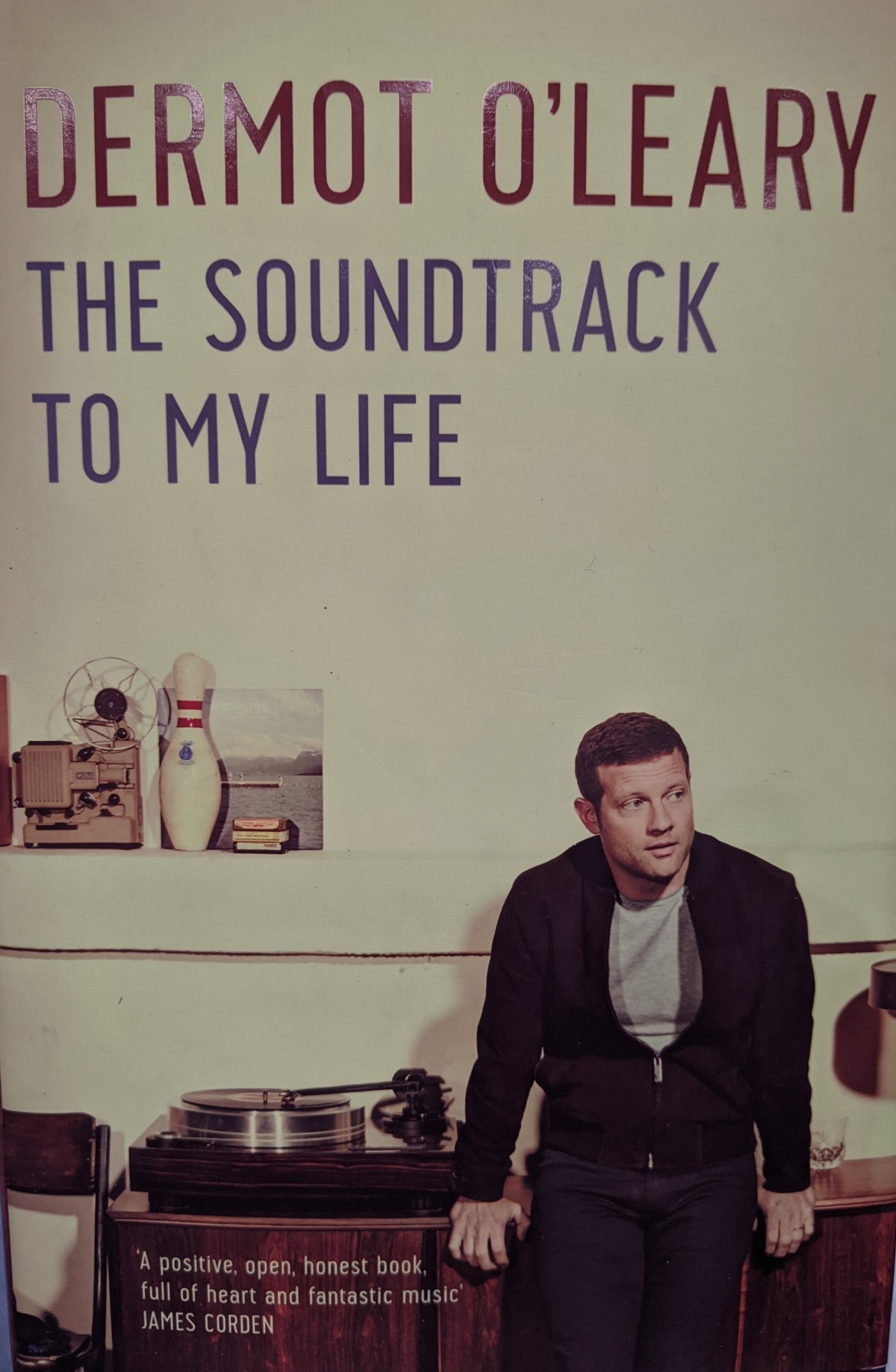
Book Review – The Soundtrack to My Life by Dermot O’ Leary

Dermot O’Leary, for those who don’t know, is the presenter of The X-Factor in the UK. He also hosts a radio show on BBC Radio 2 and appears almost ubiquitously on TV as a presenter, talking head or just as the face or voice of various adverts. In short, you could be forgiven for getting a little irritated by him!

As the presenter of The X-Factor he is quite a divisive character. Not in the same way as say, Simon Cowell, but divisive all the same. There are probably thousands of people who just don’t like him because of his association with the behemoth that is that particular franchise. Whether that’s fair, I don’t know and I daresay, Dermot O’Leary doesn’t particularly care.

For the record, I like Dermot. But then again, we go way back. I remember Dermot as the fresh-faced presenter of a programme called T4 years ago, which for many of us represented perfect hangover TV. As such, I feel like I’ve followed his career a little bit ever since. Personally, I find him funny and quite an engaging presenter and while I might not like watching The X-Factor, I would gladly watch him on other shows or tune in to his radio show simply because he seems like the kind of bloke I’d be friends with (You know, if massive TV fame hadn’t got in the way!).

And this is sort of where the book comes in. It’s part autobiography and part discussion of music. Dermot whisks us through his forty odd years on the planet via the medium of music, linking various anecdotes to many of his favourite songs and artists. So it’s an autobiography with a ‘twist’, which Dermot himself explains in the book. And it’s an understandable twist given his experiences within the world of music, from being a regular gig-goer in his teens and onwards to presenting shows such as T4 and The X-Factor and then his long standing time as host of various radio shows from XFM to BBC Radio 2.

If you’re a music fan, ‘The Soundtrack to My Life’ will most likely prove to be an interesting read. Dermot knows his stuff and certainly has a wide range of tastes and influences. He links infleuential artists, bands and songs alongside key moments and anecdotes from his life to pretty good effect. And if you’re insisting on attaching that X-Factor stigma to him and expecting that his list will simply be chock-full of One Direction and Little Mix, then you may well get a number of pleasant surprises. Sadly though, there’s no mention of Same Difference or Jedward…

Amongst the choices you’ll find some of music’s big hitters – from Springsteen and The Rolling Stones to Amy Winehouse and Beyonce as you’d reasonably expect from a man who’s spent quite a while mixing with some of music’s big hitters. But it’s not at all predictable. In among the star names are other less well know acts like Brendan Shine (a nod to O’Leary’s Irish heritage), Terry Wogan and Beth Orton. Add in tracks by Guns n’ Roses, Wham, Ian Brown and The Killers and we’re being served up a varied musical banquet here.

The soundtrack got all the more special for me when reading about tracks from the bands Elbow and Athlete. For starters O’Leary picks a very early Elbow track – ‘Newborn’ – which just so happens to be one of my favourite ever songs. It’s the band at their most melancholy and vulnerable and in a funny way, it was a nice surprise to find it nestling alongside The Macarena in a book by the bloke who presents one of the most popular shows on British television. It was nice to read mention of Athlete as not only are they a band that I like but one of their tracks – not the one chosen in the book – is a song that I’ll forever associate with the birth of my daughter and the frequent trips to hospital that I would take in those early days of her life.

Overall, the book works. O’Leary’s life story is, to a point, a familiar one. The suburban upbringing, the ordinary school days and the hard work that follows in order to make something of yourself. It just so happens that this ordinary boy went on to become probably one of the most recognisable faces on British television. The inclusion of the songs not only gives us a break from the usual ‘star’ autobiography format of a very dry, unremarkable account of someone’s life, with maybe a few quoteworthy opinions thrown in to grab the odd headline and sell a few more books, but it serves to give us a little more insight into the life of someone who many of us can say we’ve kind of grown up with. Others might find it interesting in terms of how it might change their their X-Factor based opinions.

It’d be easy to criticise people like O’Leary just because of The X-Factor, but as he points out himself, if you’re offered a huge gig in the field that you work in, you’d be silly to turn it down. O’Leary dreamed of working in TV from leaving school, so when the biggest show on the box comes calling, you’d be a mug to turn it down. And while this might reject things like principles, I daresay that showbusiness doesn’t always have time for such things. So while we may frown at The X-Factor, it’d be strange to not accept the fact that a presenter might want to present it.

One small criticism of the book comes with the style of O’Leary’s writing, which did get a little irritating at times. He almost abuses parentheses and at times it was a little troublesome just to follow the narrative. And as a lover of parentheses and the odd tangent myself, I can see the irony in not enjoying reading through so much of it! But sometimes the tales take a few too many turns and it did become a little grating.

Overall though, ‘The Soundtrack of My Life’ is an enjoyable read. It’s an idea that’s been played with before, most notably in Nick Hornby’s ’31 Songs’, but O’Leary’s light hearted tone makes sure that it’s not particularly derivative. This isn’t a taxing read. You’re not going to experience any emotional trauma or find yourself fighting back the tears at the author’s pain. But if what you’re looking for is an autobiography with a bit of ‘quirk’ then this might well be for you. As a fan of music and radio, I enjoyed it and I think you would too.

I give Dermot O’Leary’s ‘Soundtrack To My Life’…

Rating: 4 out of 5.

Poetry Blog: Transition.

This is a poem I wrote a while ago now, late August in fact. It was around that time that we were preparing my son – our youngest child – for the step up to high school. In the U.K. schools had been closed for months, but he had gone back to primary school for the final half term, as the government opened them up again to Year 6 students in a bid to make transition to high school that little bit easier. It didn’t work, but that’s besides the point.

I happened to be looking through some photographs and found one that my wife had taken of our son at the start of primary school, as he headed to his first day of Reception class. She’d stood behind him and having let him walk a few steps further down the path and – no doubt crying – had taken a photo of him as he walked off. Every visible piece of uniform is just too big and his backpack takes up his entire back. He looks tiny and vulnerable and not ready for school at all. Suffice to say that while the image always makes me smile, it still makes me feel sad too.

At the time, we’d briefly debated not sending him to school. We genuinely didn’t feel he was ready for it at all and so we’d even gone as far as tentatively researching moving to Scandinavia where children don’t start school until later. I think (my wife especially) we just didn’t really want to let go. In the end, we relented and sent him. But every time I see that picture I can’t help but feel we made the wrong decision!

As I looked at the photograph last summer it brought the memories flooding back, but it also made me think about how quickly both my children seem to have grown up. Within a few weeks of that moment they would both be high school students and essentially a large chunk of their childhoods were over. And specifically where my son was concerned, my precious little boy was no longer the tiny child in the photograph. With time on my hands, I wrote the poem you’ll find below.

Boy

That picture will stay with me as the summers fade into autumn. You, walking ahead of your mum, in a uniform that you’d grow into eventually and an over sized backpack straining at your shoulders. Your jumper a red light telling us to stop and let you go into a bright new adventure.

We’d thought to avoid this moment by moving somewhere where the monster didn’t want you for another couple of years, but stayed, defeated by normality and a system that we did not like; school became an enemy that we felt we couldn’t fight.

Your mother returned to her car and cried that day, her body inert as the tears tumbled silently down her face, mourning the loss of her sunshine. I spent the day thinking of the three of you – my big, brave boy, his sister there, determined as ever to look after you and your mother; robbed, cheated, bereft. How could I protect you all?

For years from this moment you’d tell us, ‘Did you know?’ tales at the table, your new found knowledge taken, processed, committed to memory, worn like a brand new suit and then shared generously like your cuddles. Parents’ Evenings revealed what we already knew; everybody loved you, fell under your spell, like insects stuck in a web.

Years later, and a day after my heart broke down, I sat weakly watching you perform in your school play, expecting to cry uncontrollably, but instead mesmerised by your voice, your courage, your talent, and as our eyes locked I wondered if my wounded heart might now burst with pride.

Now, you prepare yourself to face new questions, leaving your cocoon to become a magnificent butterfly one day. Your mother has already shed the expected quiet tears, sought solace by burying her head into my chest, while I held her tightly without possession of the balm of words that might soothe.

Before we know it there will be another photograph and it will hurt to look at that too, You, in a new uniform that still won’t fit, walking headlong into the next five years of your future, stoic despite the nerves, wiser and still eager for more ‘did you knows’.

I will fret daily until I know you’re safe, drift off thinking of you and your new experiences and race home nightly to steal a kiss or lie beside you, clutching your shoulder while you let me in on your brave new world.

I have watched, awestruck as you’ve grown, felt my heart ache as you blushed at your achievements, daydreamed about the impact you might have on the world. Now, I urge you, with every ounce of strength I have, to conquer new worlds, open yourself to those new experiences and grasp at all of the future offers that may come your way.

My son didn’t seem ready for high school, unlike my daughter who three years previously had been desperate to move on. I worried about them both though, fretted through minute after minute of my working day, desperate to just walk back through my front door and see them, ask them how it had all been.

Both have had interesting ‘rides’ through high school thus far, as probably any kid does. They’re doing well though and both survived those first days! As did their parents! My son isn’t quite so full of wonder as he had been at primary school and is perhaps finding the transition quite tough. We suspected as much, given that he missed nearly all of the last 6 months of primary school and Year 6 and didn’t get any real transition between the two schools due to Covid-19. So all the worry that is conveyed in the poem wasn’t misplaced.

It’s a very personal poem and although I talked about him heading to high school quite a bit with my wife, my son and some friends, this was my main way of opening up about it all and probably where any actual emotion came out. I think my wife showed enough devastation for both of us at the time, so it felt important that I stayed strong. I can’t remember too much about it all now, but I imagine, writing late at night that I must have shed a tear or two. It’s such an emotive photograph!

I hope that if and when other parents read it they’ll perhaps recognise their own feelings and experiences in there too. It’s a longer poem, but I’d like to think that’s alright, given the subject matter. I won’t explain any intricacies of the language in there as some of it is personal to both my wife and son and their relationship and it’s probably not my place to share so fully. On a similar note, I’ve not used the photo that I tried to build the poem around, as again I don’t think it’s one that needs to be shared with the world (or the few people who’ll read this!). So the child in the image accompanying the poem isn’t mine! He just looked small enough and vulnerable enough to represent the subject matter!

Most of all, I hope you enjoy the poem. I hope it doesn’t bring back too many traumatic memories in any parents who read! When a child moves up to ‘big school’ it really is quite the event and I felt it was just too much to deal with unless I got it down on paper. Feel free to let me know what you thought in the comments.