Poetry Blog: End of Term

A hastily written poem this one. I had a few lines running round my head one evening in the final week of term and thought it might be worth seeing what happened if I tried to join the dots.

It’s about…well, let’s not treat people like idiots here, it’s about what it says in the title. As many of you know, I’m a teacher and so this time of year is very special to me – and all teachers, I hope – and it always prompts a great deal of thinking. What will next year be like, how will I get on, what’s kid X going to be like in Year 9, do I think I’ll get along with this class next year, etc. And that’s before you even get to thinking about how tired you are and what you’ll be up to over the 6 blissful weeks of summer.

The last week of the academic year is always quite a strange time. For me personally, it always feels like a week too far and I know that’s silly really. There has to be a final week and, as I’m reminded of regularly by people who clearly never went to school, I have a lot of holidays. On a side note, I’ve never figured out why people who moan about teachers’ holidays don’t just solve the issue by becoming teachers.

The last week generally sees a small dip in the student population, a smattering of unauthorised holidays being taken, sometimes a downturn in behaviour and eventually, a slackening off in the quality of lessons. The weather seems to always be ridiculously hot – relatively so; this is the UK after all so we’re not claiming European levels of scorchio – and so it becomes a case of trying to evade some form of heat exhaustion too, for teachers and students.

So anyway, I wrote a poem about the whole phenomenon.

End of Term

A strange mix of exhaustion, excitement and familiarity drifts around for days.
Every morning is greeted with half closed eyes and a walk that has more than a hint of Marley's Ghost 
You trudge out of the door, drag yourself through each day,
tolerate those you are faced with and smile through gritted teeth,
as if that alone will make the clock go faster.

From Monday through those last five days, classrooms will echo to a familiar refrain;
'Can we watch a film?'
And you brawl with your conscience hourly to stop from caving in.
The minutes fail to fly as you attempt to solve the mystery
of how to craft one more lesson on a text long since finished and tired of.

Outside the sun shines without mercy, turning the classroom into an oven
that bakes until all enthusiasm is burnt and thoroughly dried out,
like last night's re-heated lasagne.
Windows and doors are propped open and you battle with all on the corridor to be heard,
while your voice gives way and your feet grumble dolefully.

After a week that felt like a year you arrive on that final day,
too shattered to appreciate the glee that greets no uniform.
You smile weakly at the fashion show and finally put on a film, while your class complains 
that this one's boring and that the teacher next door brought sweets for her class.
Summer can't come soon enough.

It’s been a very difficult year in schools. Things have been different to say the least. Covid has changed everything and this year has featured a heady mix of room changes, teaching in bubbles, watching on not really knowing how to react when pupils have been taken out of class to be sent home for dreaded periods of isolation, bubble collapses and whole year groups going home, split starting times, dinner times and finishing times, Teams lessons, Teams meetings, school closures and teaching to an empty room, and of course more hand sanitiser than you could ever imagine!

It’s been a year to test the resolve of teaching and non teaching staff as well as students, parents and guardians. As a result, as the final line of the poem says – and with more emphasis than perhaps ever before – Summer can’t come soon enough.

As ever, comments are always more than welcome. Thanks for reading!

Poetry Blog: A future awaits…

I feel I should start this particular blog with an apology. I’ve written another poem with a terrible title, I’m afraid. It’s a common occurrence. A lot of the time for me, writing is instinctive in that I might be thinking about something and a line pops into my head. This is a common starting point and it’ll often see me scrawling in a notebook and finalising a poem fairly rapidly, without a great deal of drafting. However, what it also leaves me without is a decent title. I tried a few, but in the end just plumped for a phrase from the poem. A proper cop out if ever there was one! Sorry.

This poem came about when I was considering a few things to do with my future. It was mainly to do with work and my profession, but I was also thinking about the future in terms of the coaching I do and also my parents, who are both elderly and not in the greatest of health. It led me to considering what the next few years might hold for me. It’s a subject I’ve written about before and one that I’ll think I’ll return to as well. Here’s the terribly titled poem though.

Alien thoughts dominate; an invasive species not indigenous to these shores 
nudges you off an axis you've been comfortably balanced on for years.
Simply what to do is no longer the question,
but what to do with the rest of your life.
How to bring back purpose, like light to a darkened room,
heat to a vacant house.
If this path has run its course, you'll endeavour to have faith
that another will emerge from the undergrowth that currently crowds
your thinking, blocks your way.
A future awaits, not immediately demanding your attention,
but tugging at your sleeve every once in a while, reminding you that it's there,
that you keep it in mind.
Its patient nuisance can wait for now, but won't let you ponder forever.

This one is undoubtedly a poem born of middle age, but I don’t doubt that pondering one’s future is exclusively a middle aged thing. Sometimes, whatever your age, it’s a good thing to ponder what next. I suppose it helps you feel stable, prepared. And that’s part of what this poem is about. There are certain things in my relatively immediate future that I feel are inevitable and that will shake me to my boots when they happen, so to speak. So giving it some thought, although not usually my favoured course of action, is likely to be a wise idea.

As a younger man I imagined that this time in my life would be very different and that I’d have everything straight in my head by now. It’s funny how it all turns out!

I hope you enjoyed the poem. Maybe it prompted a bit of thinking of your own. However you felt, I’d love to hear it, so feel free to leave a comment. Thanks for reading!

Poetry Blog: Tunnel Vision

This is a poem that I drafted very roughly a couple of days ago. I’d just had some bad news and on top of feeling exhausted with work, sore with a running injury, sick and tired of living with Covid restrictions and worried about various other matters in everyday life, I think I’d just had enough. So, rather than simply explode and kick things about the place I scribbled some thoughts down.

I don’t normally suffer with my moods. I tend to manage to live life on the same level most of the time. I’m rarely too bothered by anything and have always told myself that things will work out, whatever happens to be going on. It’s definitely an advantage of being such a simpleton! However, over the last few weeks lots of things seem to have been bothering me and it sees to have all piled up and caused a bit of a bad mood logjam. Not the end of the world and at least it’s meant that I can be creative.

Here’s the poem.

Tunnel Vision

Feral dogs gather, sensing blood, teeth bared
snarling, putting a tentative foot forward,
circling without grace, eyeing you constantly
until they finally snap and leave their mark.

Every ache and pain nags and presents a new question,
crowds the mind, leaving a feeling of fog
until you feel like lashing out with a primal scream
from somewhere deep inside that you've never found before.

Questions, although answered time and again
remain, echoing back and forth, disrupting sleep
to pick away at the scab that they created,
allowing it to spread to unchartered territory.

Tunnel vision is adopted, just to get through seconds, minutes
as something hidden in the shadows threatens to grind you to a halt
like hazard lights on the motorway, just as the urge for freedom and speed 
is at its highest.

Searching for a way to break the cycle and feel a sense 
of achievement, or at least a moment's blessed relief
from the sheer boredom and strangely gargantuan effort
needed to just keep going.

Writing this helped. It’s very easy to sit and moan at anyone who’ll listen, but I much prefer to keep things to myself. It’s a mixture of embarrassment and just the thought that I don’t really want to burden anyone with my troubles. Especially as most of the time I feel like I’m exaggerating in even labelling certain things as ‘troubles’. I know that lots of people have things much, much harder than I do. And as I said earlier, I’m reasonably happy to get through and operate under the assumption that any mood will pass and that things will get better.

In the poem, I’ve tried to describe how I felt; as if the thoughts, the worries were circling me, taking turns at bothering me and bothering me on various levels and with various results. Hence the ‘feral dogs’ line which I felt summed up the fact that I didn’t feel like I had complete control at times and didn’t feel that I could just dismiss things. Those thoughts just kept coming back, biting me.

If it helps, or it’s of any interest, I think I feel better today. I’m just keeping myself busy and it definitely helps that the weather is great, I’ve been able to get out for a run and that the Euro 2020 international football tournament has just started. Like I say, I’m happy to keep things simple.

I hope you liked the poem – ‘enjoyed’ might be a stretch I suppose! Whatever your thoughts, feel free as ever, to let me know in the comments. Thanks for reading.

Poetry Blog: ‘Distance.’

This is a poem that I rediscovered while going through a notebook recently. It’s about my sister and our relationship. I wouldn’t say that we’ve had a difficult relationship, but it’s not one that’s been particularly straighforward. It’s not that we don’t get on; it’s just that we’re quite different characters. I’m sure lots of siblings are exactly the same.

There’s a six year age gap between us and so, at times growing up it felt like we had little in common other than parents. It was just too much of a difficult age gap. There was and still is no shortage of love, but we just turned out very different and I think that meant that the bond wasn’t all that it could have been. I got thinking about it recently when I heard that my sister was ill and it led to me writing the poem and in a way reassessing how we are with each other and also realising how lucky I am to have her and how important she’s always been for me.

Distance

From the line where we started there was always a distance.
You were independent, strong, theirs long before me.
Later, when fate made me weak, doctors kept us apart and the distance grew.
You closed the gap as we got to know each other better,
looked after me, a fierce lioness to my runt of the litter.
Teenage kicks widened the gap again to a chasm 
and you were out more often than in.
Your influence remained even when you weren't around
as your music became mine, throwing me those White Lines
and an everlasting Motown lifeline.

Around this time you revealed to us your terrible taste in men
as a series of terrible choices took you away some more
and made you seem like a stranger.
No longer the apple of anyone's eye, especially not mine,
who, worldly wise at the grand old age of twelve was the perfect judge;
a pre-teen with a puritanical moral compass.
How that would change as we grew and underwent a role reversal.
At twenty one the bad choices still hung around as you set off, 
no more than a child, to become an adult,
from Miss to Mrs in the blink of an eye, my fierce, happy lioness just gone.
You were there, but not really...

My own growth widened the gap some more; a Grand Canyon of taste, 
culture, views and choices. And despite your own bad record, 
you were there to pick up the pieces when I made the wrong choice myself.
And, when I was too young to cope with loss you scooped me up, held me so tightly that it physically hurt yet emotionally helped and I endured the pain just to feel safe again.
Eventually it was geography that would create another mystery; the one that says
you cannot close a gap when neither of you will pick up the phone.
It's one we're still trying lazily to unravel.

Now the first knock on a particular door, the one that we were scolded just for mentioning when we were kids, brings the news that we had always expected with age and I'm a kid again,
grasping for words, gasping for air, unable to cope and looking to you for comfort me,
unfailingly, predictably.
The realisation that those gaps need to be closed hits me like a sledgehammer.
Forget the choices, forget the gaps, move on from the past and hope
that we can make the best of whatever future might remain.

I’m not sure there’s much else I can say about this poem. It feels like quite an emotive thing to write about and as such, I’m not sure how I feel about it. I’m not sure it really matters whether I think it’s good or bad, but I hope it does my sister and our relationship justice and I think it’ll be a subject matter that I’ll return to.

I’d love – as always – to know what people think, so feel free to leave a comment.

Poetry Blog: Jigsaw

So this is a bit of a strange poem. Maybe I’m going through some kind of arty phase or perhaps just trying something different. Maybe I’m trying too hard…I don’t know. Let me try to explain.

This is a poem that came from a couple of different places. It started with some words that I didn’t really know what to do with. A couple of weeks ago, I was teaching a lesson on creative writing, specifically narrative form. We were looking at the idea of ‘show, don’t tell’ and not being too obvious with description. So rather than saying that your character had laughed, you might write about the smile spreading across their face, their shoulders shaking and so on.

As part of the lesson we watched a clip from ‘The Woman in Black’ as the protagonist enters Eel Marsh House and wanders slowly around. I let the class watch the clip a couple of times as it was only a few minutes long, and then got them to write some snippets of description. While they were doing all of this, I got a scrap of paper and wrote some description myself. Once I’d done, I had a quick read through – I liked it, but had no idea what to do with it. So, I folded it up and put it between pages in my notebook, resolving to have another look at it later and try to work out how to use it. To be honest, I thought I’d just write a poem about walking through an imagined creepy old house.

Later that day, I was checking my emails and saw that I’d had an alert from a company called Ancestry.com who I’d been tracing my family tree with last year. It had been a frustrating process. I’d mainly wanted to find out about my father’s side of the family, as I never really knew my paternal grandparents.

Anyway, the alert told me I’d had a DNA match and so I opened it up quite excitedly. The excitement lasted all of 60 seconds or so as the alert that proclaimed to be about a second cousin turned out to actually be my own grandad on my mother’s side. So, not a second cousin at all and actually someone I knew pretty well as well as being someone that could be found on my family tree…on Ancestry.com. It got me thinking about my mysterious paternal grandparents though.

Later that evening I was watching one of my favourite programmes, American Pickers (one day I’ll write a blog about these programmes because I think it’s quintessential middle aged telly) and they were looking around the home of someone who’d collected antiques all his life. His son now didn’t know what to do with all of this ‘stuff’ after his dad had passed away. In turn, this brought to mind the entirely fictional idea of clearing my wife’s grandmother’s house when she died. And then, this poem clicked into place and it became clear, if a little weird, what I was going to attempt to do with my ‘show don’t tell/Woman in Black’ notes.

So the poem is basically about what I imagined it would be like to go and clear my own grandmother’s house and how, if I’d been able to do it, I might have been able to find out more about her. Hence the jigsaw puzzle reference. I mean, up until about a year ago I didn’t even know her name, so there were a lot of pieces missing. There still are. and I suspect they always will be.

Anyway, here’s what in one corner of head is my pretentious poem. Don’t worry, in another corner of my head – which isn’t actually square before anyone gets worried – I actually quite like the poem and am quite pleased with the whole idea behind it.

Jigsaw

A kaleidoscope of light streams through stained glass
as particles of dust waltz eerily across the room.
This is not what I remember.
Instead, you are fragments of a jigsaw puzzle,
too many pieces missing to ever be complete.
Today may fill in gaps, but I feel I'll never know you.
Perhaps it's because you never wanted to be known.

In my head I'm clearing your house, a house I never knew,
hoping for some of those lost pieces.
A stuffed bird, incongruous, gazes across the room
as an ancient rocking chair teeters back and forth without explanation.
I never imagined you as the type who had time to relax,
all of those children would put pay to that,
but perhaps you're there now, assessing another that you never knew.

My feet pad across a well worn rug, the latest in a long trodden line.
I trace my fingers over the top of a low table, idly making patterns in the dust,
imagining you and chunks of a family, maybe even my father, 
fighting for food and attention.
A wall is littered with portraits that trace my progress around the room.
I wonder who they are, speculating that one might even be you
which prompts a pang off loss for someone I never had.

Snapped back to the here and now, I resist the urge
to uncover any of the unknown items being protected from a lifetime of dust
by dull shrouds, brace myself
and place a tentative toe on the first of the stairs,
not knowing who or what I'll find, but hoping 
for something to fill in the gaps and solve at least some 
of this decades old puzzle.

I’m pleased with the way this poem came together. It’s something completely different for me and very much fictional. I think I surprised myself by being able to use the description I wrote in such a way. With that in mind, I suppose it doesn’t matter whether it’s good or bad. It also pleased me because I have plans for another fictional – but based on true events – poem that I’m trying to write, but from the point of view of someone else entirely. Writing ‘Jigsaw’ makes me believe I can write this other poem, which feels like quite a big step.

I only have one memory of my grandmother and it’s vague to say the least. I remember being taken to a house on the other side of Newcastle by my father and him telling me we were going to visit my grandmother. I couldn’t have been any older than 6 or 7. I remember that it was pouring with rain when we arrived and I was very aware that this was somewhere I’d never been before, despite having a huge family that would’ve lived in and around the area. My dad left me in the car while he ran across the road to knock on the door of a big, imposing old house. I remember thinking that my grandma would come to the door and my dad would just come and get me and in we’d go. Pop and cake would inevitably follow.

I was wrong. Someone came to the door, there was what looked like a tense and brief conversation and then my dad headed back to the car. Seconds later we drove off, my dad telling me we couldn’t go in because grandma was ill. My ancestry research tells me that this was a nursing home and she would have died days later. There would be no pop and cake. The woman at the door wasn’t even my grandma. However, I think the house in the poem is the house I remember.

And that’s it! The fragments of a jigsaw puzzle that I refer to in the poem, well they’re actually one piece, I suppose. I wish I knew more. It’s not a particularly sad thing though. Lots of people have relatives that they never knew and in truth, both of my paternal grandparents just make me curious, really. My curiosity has led me to ask my dad about them, but – and this is the sad bit – he really doesn’t seem to have known them. My grandfather in particular seems to have been a very transient figure and in fact, one of the most frustrating things researching my family tree was the amount of addresses he seemed to have had that were different to the rest of his family! He was either what some people refer to as a free spirit, what others call a rascal or just a bit of a dick. Whatever label I settle on, I’ve made a note to write a poem about him too.

I hope you enjoyed this poem. I hope to God it isn’t too pretentious for words. Woe betide it might seem that I’m disappearing up my own arse! It was just an idea and one that I hope worked. For the record, I think I’m happy with it.

As always, feel free to let me know what you think. I’m always interested to hear what people got out of reading my poetry. Oh, and as always, thanks for reading.

Poetry Blog: Isolation

Welcome along to another poetry blog. I won’t bang on too long about this one, because I’ve blogged a few times recently about the fact that we’ve been isolating for ten days after my son and wife tested positive for Covid-19. And this is where these poems have come from. Simple enough.

What’s safe to say though is that this post is very much a first for me. This post contains three poems, something that I’ve never done before in a single blog. I had intended to try and write a poem a day for the time that we were isolating, but quickly realised that what I’d end up with was probably two poems that I liked and 8 absolute duffers.

I ended up writing three poems, all connected to our isolation period. My first one came about for a combination of reasons. Firstly, I was feeling quite shocked about the two positive tests that had happened in our house and while spending the first couple of days largely on my own, had a lot of time to think. Secondly, the Facebook group I formed last April called Lockdown Literature, was somewhere where I hadn’t posted anything in a long time, so when I wrote the first poem quite quickly as a one draft piece, I wanted to post it there as a way of informing friends of what was going on. Only when I wrote the second one did I have the idea for the blog. The third one? Well, that was the result of a head full of ideas and the need for one more poem to complete the hat-trick!

Here’s the first poem, written shortly after we’d found out about the two positive tests.

Ten Days

We've done this so many times before
that I perform a cartoonish double take
as those two lines appear where there should be one.
And although one is barely there, it's still a second stripe, an alarm that stops rather than starts.

A moment stretches out in front of me 
as I struggle to react, to comprehend, before the
adult in me reaches up, takes over and my mind
begins to crunch reluctantly through the gears
that will help me protect you.

More tests are booked, the coming days organised, rest is ordered, distance
kept.

Ten days to get through. Ten days to check on you both as you sleep. Ten days to worry on the inside, but paint a calm picture on the out.

The second poem is about watching my wife through our dining room window as she sat outside in the fresh air and what we laughingly refer to as sun in West Yorkshire at this time of year. It was a few days into our period of isolation and a relief to see that she had the energy to go out, a relief to see that she was smiling once more. It had only been a matter of days that she’d been ill for and it would last a short while longer, but given the death toll and the horror stories that we’ve seen and heard throughout the pandemic, it was a lovely moment.

Fresh Air

It's funny how, despite the myriad cures and treatments 
prescribed by those who know best,
we still insist that fresh air is the cure for all that ails.

I watch you both, furtively through the window,
part concern, part inquisitive and
partly just because it makes me smile.

Despite the late afternoon sun dappling the table
you're wrapped up for winter, for a moment comical,
with your hood up. But then your vulnerability 
returns in sharp focus and I'm stopped in my tracks.

Fresh air won't loosen this deadly grip,
won't work any kind of magic. And so, I monitor,
shoulder the burden, cook beige teas and hoover to stay busy,
keep my mind from wandering too far down darkened streets,
watching from a window as you shiver but smile.

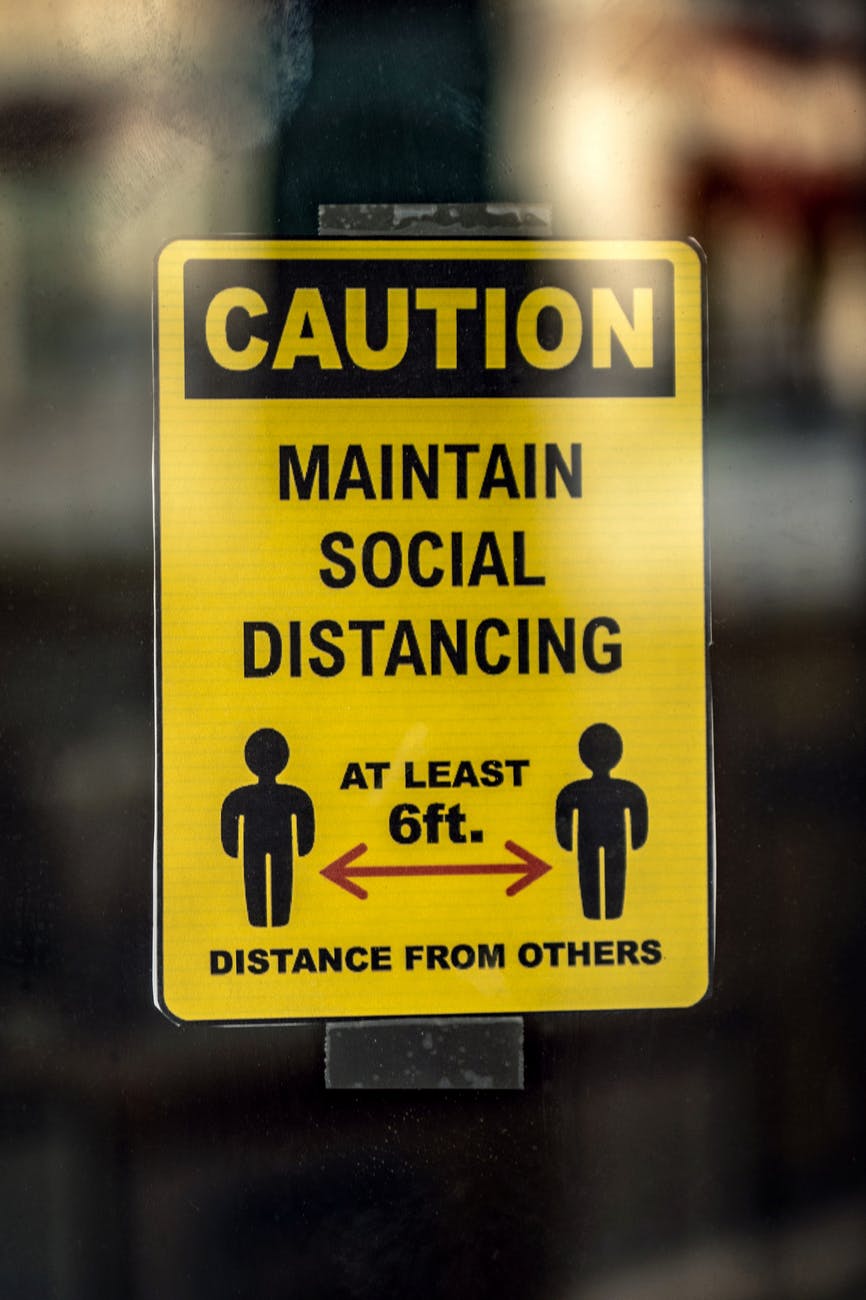
My final isolation poem is one that I fear may come across as pretentious. That’s definitely not the intention though. It was born out of the fact that we’ve had to work hard to avoid each other over the last ten or 12 days. There have been lots of moments where we pause and indicate ‘after you’ or just make eye contact in order to tell the other person which direction we’re headed. It’s been a kind of family friendly isolation and it just occurred to me that it’s been a bit like one long dance. This has mainly involved myself and my wife and it’s been never more apparent than last thing at night when we clean our teeth. We have a small bathroom and so have had to move around carefully in order to keep a safe distance from each other – a kind of cross between an amateur ballet and something out of a fight scene from The Matrix. I suppose we could have just brushed our teeth at different times, but then I couldn’t have written my pretentious poem. Anyway, here it is.

An Isolation Ballet

Little do we know it, but we've performed some kind of ballet this last week.
Two parts grace, one part paranoia, several parts a combination of
fatigue and sleepwalking.
We've picked a path around each room and each other carefully, reluctantly,
traversed two metres apart performing the every day 
routines and collapsed in synergy, separately
at the end of each day.

The discipline has been exhausting as we plie and pirouette 
our way through each hour of a ten day performance of avoidance
in search of some kind of security on our sanitised stage.
There are strange frozen moments, essential for safety, adding
to the drama and prompting the odd grin or burst of laughter at the 
sheer ridiculousness of it all.

Sometimes we don't even need to look as we move,
cautiously yet gracefully navigating space, just sensing the other 
and squeezing ourselves into a safe space.
This is not truly a ballet, a thing of beauty, but what we deem
necessary, vital as we dance apart, to stay together,
to remain safe.

So there you have it. The end to a difficult period of time in our house, although I think in terms of actual health it’ll take weeks, perhaps even months to adjust properly. The positive tests came at a time when I thought the threat had probably passed. I wasn’t ready for them. Not that I think I ever would have been, but at least when we were in the eye of the storm of Covid, say in the period between May last year and January of this, I had at least primed myself to expect the worst. Lately, as things have returned to being quite close to some sort of normality again, I had allowed myself the luxury of thinking that perhaps we’d got away with it. And of course we hadn’t.

I hope the poems haven’t seemed too indulgent or exploitative of the people involved or the situation. I think I just had to communicate what was going on somehow and writing it down is good when you’re being kept away from everyone else.

I hope you enjoyed what you’ve read. As ever, feel free to let me know what you thought in the comments. Thanks for reading.

Poetry Blog: ‘In a Perfect World’

This is another poem inspired by my Year 11 group, who are definitely one of my favourite teaching groups in years. So, I suppose that helps explain why I end up writing about them so much.

They’re a lower ability set and are currently going through the exams and assessments that will form their GCSE grades after more Coronavirus disruption meant that this would be based around teacher assessment for this cohort. And I’m desperate for them to do well, in relative terms that is, as we’ve reached the stage of the year where there’s only so much that we can do for them now, which makes me feel almost helpless.

I wrote the poem after our latest assessment. I was reflecting on the hour long input lesson that I’d done with them beforehand. After that I had to let a number of them go off to other rooms to sit their assessment due to access arrangements, like students being given extra time or being allowed to work in a room on their own. It’s safe to say that they weren’t on their best behaviour and it was something that I couldn’t shake when I was driving home. So I wrote the following.

In a perfect world...

In a perfect world you'd be ready.
Focused, a look of steely eyed determination spread across your face.
Knowledge embedded and itching to read and write.
But, it's not a perfect world, as I have learnt many times before
and you will discover on too many occasions that are yet to come.
Instead today, you are giddy and focus is replaced by noises,
bad mannered interruptions and nervous giggles that make me fret,
not just for now and the next hour, but for what is to come in the years that will follow.
I want to do whatever it takes to let you know the positives I want for you,
how I'd love for you to breeze through this,
just to give yourself a leg up, a boost, a chance at a start in life.
And despite the mood, the lack of focus and the approach of a toddler at soft play,
I will attempt to ignore the signs and stand,
fingers crossed in hope while you write, dreading what seems almost unstoppable
in its inevitability.
In the corner of the room, a poster that should probably be front and centre
declares that you should 'Dream Big' and 'Always Challenge Yourself'.
Maybe not today.

As soon as I got home I grabbed my notebook and wrote my thoughts down. I’d stewed on their behaviour in the hour before the assessment. It’s a small group but about 8 out of the 13 of them were just behaving ridiculously – making stupid noises, rudely calling out and interrupting, complaining about what we were doing and so on.

It’s one of the worst things about my job when I feel that I’m working far, far harder than the students in my room. I imagine lots of teachers feel the same. But that’s just how I felt for that hour. We’d spoken about this assessment for weeks, prepared for it intensely both during school and after, but here were my class acting like it didn’t matter a jot.

I wish I could show them how hard life can be. I wish I could show them the awful flats I’ve lived in and the terrible jobs I’ve had to do while working my way up in life and still feeling that I’m doing a bang average job of it all. I wish I could wave a magic wand and make sure that they get that pass in English that gets them some kind of start. But, of course I can’t. And standing there invigilating for the few I had left in the room made me feel completely helpless and incredibly frustrated.

As many of us know, it’s not a perfect world. I just wish I could enlighten these students to that fact a little more!

I hope you enjoyed the poem and I hope that the fact that it’s the same subject matter as another one I wrote fairly recently, doesn’t put you off. Whatever way it makes you feel – even if it makes you feel nothing at all – I’d love to hear what you think, so as ever, feel free to leave a comment.

Poetry Blog: ‘I ran’

This is a poem that’s been sat in my notebook for a long time. Months, not years, but a long time all the same. In truth, it’s one that I was a bit unsure of. I didn’t know what to do with it and as such it got a bit lost. Every so often I’d flick through said notebook looking for something else, only to re-discover this forgotten poem. Finally though, after a closer inspection, I’ve decided to give it an airing.

I think the good weather has helped. The poem is about a time when I could exercise a great deal more because for almost the whole time the weather was glorious. Looking out of the window as I write, it’s another glorious evening, much like those of last April and May.

It’s a poem about the pandemic. I don’t know quite when I wrote it, but I know that I took the whole thing deadly seriously once I realised the extent of the devastation that seemed to be going on. I was adamant that I was definitely sticking to lockdown, but determined to take advantage of our daily exercise allowance. And so I did.

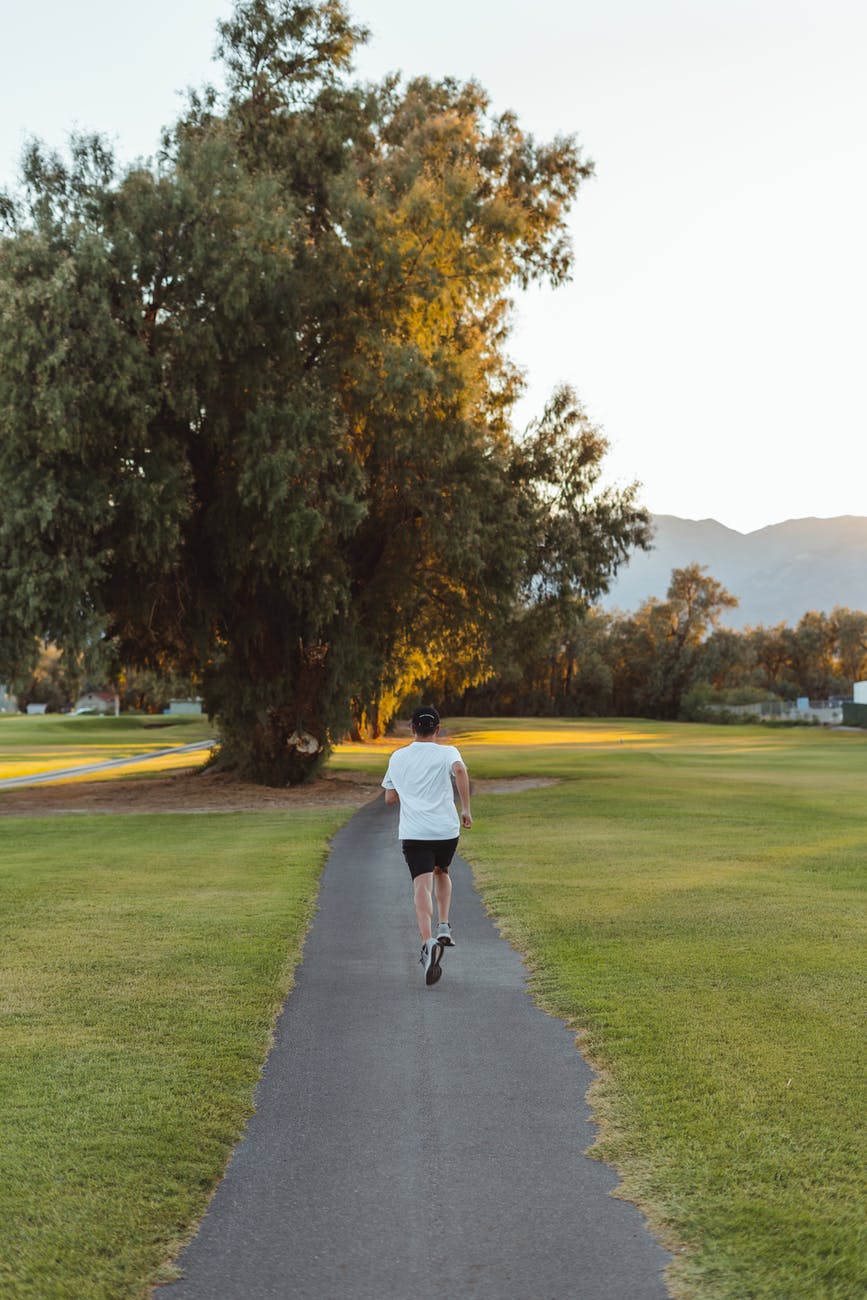
The poem is about lockdown in general, but also the fact that I took the opportunity that lockdown presented as a chance to make some changes. I’d have said that I was reasonably fit or even kidded myself about being ‘naturally fit’ when it all started. But as I read more and more reports about coronavirus and took into account my own vulnerability to it, I decided that I was going to have to get much fitter. After all, there was little excuse; I wasn’t at work and all I really had was time. So, as the poem says, I ran.

I ran...

When the danger struck, I ran.
Not away from it, but straight at it,
maybe heroically, possibly naively, 
feigning bravery because I didn't know what else to do.
Such is my way with everything.
Don't think, don't plan, act on instinct, 3 in the morning thinking
and possibly a dash of Dutch courage.

And so, when the unseen, yet definitely alien villain headed our way,
sounding dangerously, almost laughably familiar,
I ran.
Decked out like a skinny, pound shop part time superhero,
I somewhat limped into action, exercising evangelically
in an attempt to out-cardio this beefed up cold.

But while others stockpiled toilet rolls and 
took another paracetamol from their selfish stash,
I got fitter, leaner, stronger.
My thirst for the fight meant I doused my fear in fresh fruit, 
nuts, seeds and an ever present bottle of water,
and I ran.

Thousands perished. Some sought solace in illegal road trips
or standing on doorsteps hypocritically acclaiming those who chose the Hypocratic.
I doused my guilt with physical torture, pushing myself to limits I'd not explored in years,
enjoying the isolation, getting evermore prepared to face what felt inevitable
and hoping that this wasn't all in vain.
I ran.

The effects of lockdown – or lockdowns, plural – can’t be underestimated. I think, more than anything, I benefitted from it, but it was still an awful, scary time. Running got me through the fear. In fact, running quite often dealt with the early mornings, while writing steered me through the late, sleepless nights. So my poem is both about what I did as well as being a direct result of what I did.

I’ve tried to inject a dark humour into parts of this poem. At first, I didn’t really believe the hype about coronavirus. It was the flu, it was a ‘beefed up cold’ and I wasn’t going to lose too much sleep about that. I soon realised the truth though! I’ve attempted a little more dark humour later in the poem too. Although I was fit, I probably didn’t really look it; hence the ‘skinny…superhero’ reference. And let’s face it, not many tall skinny fellas look good in lycra!

The whole pandemic scared me and the best way that I could think of to deal with that fear was just to throw myself into something. Exercise, fitness and in particular, running was that thing. Initially, my thinking was simply that if I was fit, the virus would stand less of a chance against me, so I was exercising in different ways every day. At first the whole family joined in and then, as the world righted itself and people went back to school and work it left me largely on my own in terms of exercising. And this was when the running went into overdrive. I’m guessing that when I wrote the poem I was feeling particularly evangelical about it all!

That’s certainly why there’s the reference to people stockpiling certain products. I think lockdown saw a lot of people showing their true colours and it angered me that while I was doing my best to stay safe there were others just making sure that they didn’t run out of anything, that they weren’t inconvenienced. I’d see social media posts from people about how they’d joined in the ‘Clap for Carers’ knowing that they’d been visiting friends or family when it just wasn’t allowed. The hypocrisy of that support for the NHS really bothered me when all it seemed to be for some people was a chance to pat themselves on the back and look good. And I watched in horror as various high profile people in the UK were caught out visiting family hundreds of miles from their homes, while I couldn’t head out to visit friends and family myself. In fact, at the time of writing, I still haven’t seen my parents, my sister and some of my best friends and it’s been well over a year.

So there you have it. A poem that may take people back in time a little bit, despite the fact that large parts of the world are still in lockdown and that even here in the UK we’re only just beginning to glimpse the light at the end of the tunnel. As ever, I’d love to hear what people think, so please feel free to leave a comment.

Poetry Blog: As yet, still untitled…

This is a poem I posted recently in the Lockdown Literature group that I helped set up on Facebook. It was a good way of passing the time during our first period of lockdown and it’s great that people are still posting in it on a fairly regular basis. This was the first poem I’d posted there in a while.

It wasn’t a poem that I was going to post on my blog. I’ve tended to steer clear of anything too personal on here, but having sat down and read through the poem again, I wondered how relevant it would be to others. At the time of posting it in the group it didn’t have a title and I wasn’t sure it was finished. It was about growing up in our house, but on reflection I began to wonder just how normal the things I wrote about were. I grew up in a house where shouting and various kinds of tension felt almost constant and fairly normal. I hated it. When my parents argued I felt like I was waiting for the inevitable to happen and for one of them to announce that they were leaving. Or I worried about whatever other terrible end it might have. It felt like nothing ever got talked about or discussed; everything was a battle. And not just with my parents; with my sister, with my grandmother…wow, especially with my grandmother! But adult life has taught me that maybe it wasn’t all that rare. Maybe that is just how family life can be sometimes.

As I mentioned, it’s not something I really like to write about, or at least post where it’s so visible, but having revised the poem a little bit and revised my thinking about it too, I thought I’d post and see what people think.

Mam and dad fought; to keep food on the table,
to keep a roof above our heads, to stay together.
So maybe there was nothing left in them to fill a home with love.
Maybe being there when they could was enough.

In a lucid moment, in quiet, in solitude
I think I understand that now,
have sort of come to terms with it, am almost at peace with it.
But while it's easy to say let go of the past, it's impossible not to always be reminded of the impact that it's had. The damage that it's done.
Dealing with what it left behind, 
picking up the phone more often and enjoying the life you have while it's still there still present a knot to be unpicked by stone cold fingers.
Maybe a nod, a smile, an isolated cuddle and the odd word of encouragement was all the energy they had left. Maybe it works both ways. Maybe we're all just like this.
Maybe there's a lesson to be learned.

A funny one this. I still don’t think it’s finished. I’m still not entirely happy with it and I still think it will be revisited. It’s a slightly different poem to the one that appeared in that Facebook group and definitely one that’s changed in mood with the tweaks that have been made.

The poem still hasn’t got a title. I wondered about calling it ‘Maybe’ but that word was only added in this second draft, so it didn’t quite feel right. Maybe I’ll revisit the subject matter, but not the poem itself. Maybe, like the subject matter, the poem just needs to left. As I said earlier, it’s a funny one.

As ever, feel free to leave a comment as I’m always interested to hear what people think. I’m never entirely sure when it comes to poems, but this one has really stopped me and made me think.

Poetry Blog: Assessment

This is a poem I wrote on a whim. It came from boredom, if the truth be told. I’m sure I was suitably inspired by the company I was keeping at the time, but essentially it was the boredom that made me start scrawling on a piece of paper.

My Year 11 class were completing an assessment. I’d done about an hour’s input, fielding questions, giving reminders, making notes and then when the time was write set them off writing. After about 10 minutes of enduring the silence and trying to keep busy I realised that I just wanted to sit down. I couldn’t sit at the computer and do work because the screen that it was linked up to would show everything I was doing and I didn’t want my group getting distracted. So, I kept the title of the assessment on the screen and thought about what I could do.

It was a Thursday afternoon and we’re based in a fairly cramped room on a Thursday, so space and social distancing meant that I couldn’t just wander. I couldn’t really just stand either as the only place to stand would have been by the door and I felt sure that it wouldn’t be long before someone absent-mindedly opened the door and knocked me into next week. Hilarious for my class, I’m sure and not the fault of the door opener, as who would expect someone to be stupid enough to stand right in front of the door. So, a quick scan of the rom told me to sit at the one spare desk available.

After a whole five minutes I was bored, so I grabbed a sheet of paper. Perhaps I could practice my autograph? Instead, having sketched for a few moments – my current favourite is to draw myself as a Charlie Brown character – I found myself thinking about the group. And what started as a few rough lines of a potential poem about an assessment became something of a poem about how much they mean to me.

Assessment

In an unusually silent room the creaking desks are a constant source of annoyance.
Every so often a stare is accompanied by a sigh as another realises that there's nothing to be done about the noise.
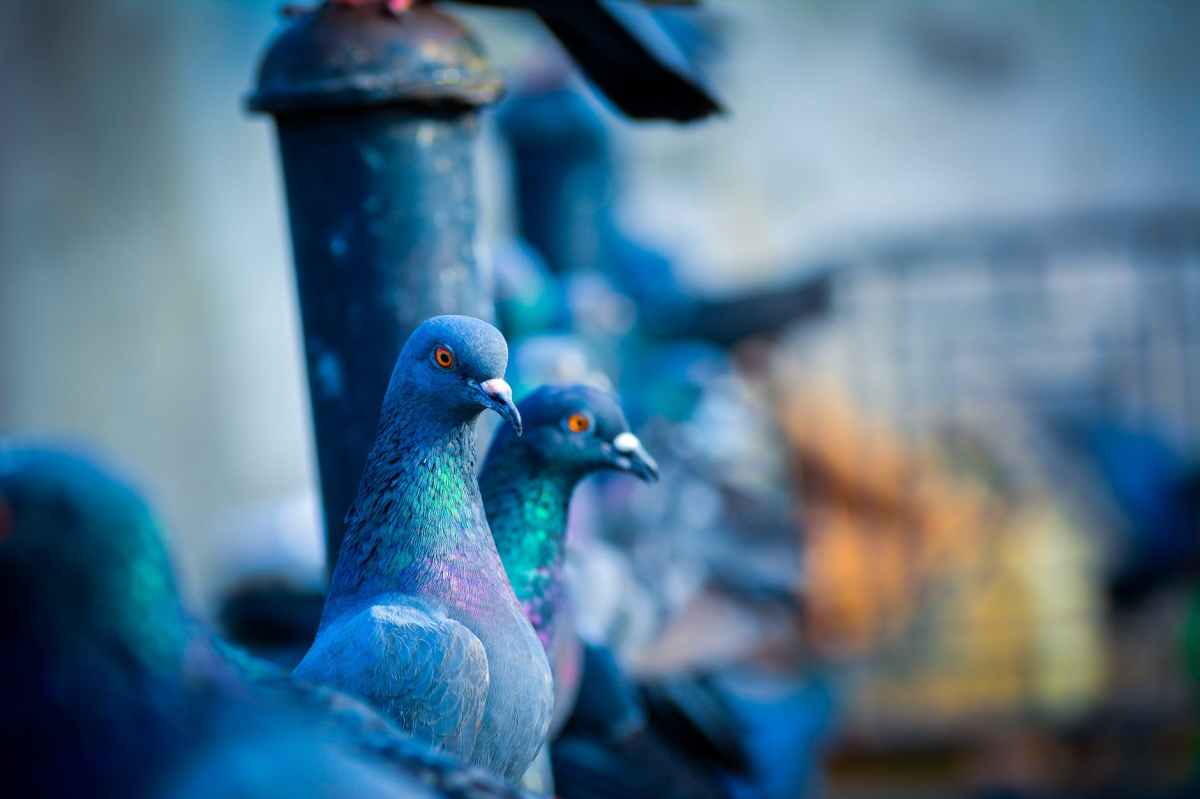
The dimming of the lights adds an eeriness to the tension and I am helpless; the pigeon fancier who opens the loft to the flutter of wings that he can really only hope he'll hear again.
He can only pray they stay safe.
This is our first race. A journey that we have trained for and will repeat again until the future beckons
and I can no longer help, cajole or comfort, but still make time to worry, 
despite the reality that I may never see you or hear of you again.
We are left to count down the coming weeks and spread our wings a few last times, turn circles in the air, swoop, arc dive then return to the loft each time until it's time to fly the rest of the journey alone.

I’ve mentiond this group before. I’ve taught many of them for the majority of their school lives. I remember most as fresh faced, quite naughty Year 7s. In short – and not to insult them in any way – they’re a bottom set. My bottom set. Their language skills are at best, weak even at the top end and their knowledge of the world often leaves a lot to be desired. Sample fact to prove this? When I taught them for intervention English in Year 9 it took more than a few minutes of an hour lesson to convince at least one of them that Roald Dahl’s The BFG was not a real person. He wasn’t dead. He wasn’t alive. Roald Dahl had just made him up.

Studying Shakespeare, Dickens etc can be a challenge, both for them and me. But then one of them will offer an opinion or just remember something obtuse about the text and it feels like a huge win for all of us.

The group are currently enduring a series of assessments put in place to enable me to award them a GCSE grade in lieu of not being able to do the real exams due to Covid-19. I never really let on to groups how much I care, but as I sat and watched them write, witnessing every grimace, every pause for thought and every tongue slipped out of the side of the mouth in concentration, I couldn’t help but think about them in previous years throughout their time at our school. Of course I care. I care deeply, especially about my weaker groups and I found that I was just hit by how little I can now do for them. I genuinely worry about what some of them will end up doing once high school is finished and I desperately want them to get some kind of English GCSE to help them along the way.

As for the poem, I’m not really sure where the image of the pigeon fancier came from. But I was struck by how wondrous it is that these pigeons come ‘home’ to their loft after every race.

I was aware of pigeons and their owners from an early age. I was brought up in the North East of England where racing pigeons can attract some quite fanatical people. I have memories of several ‘uncles’ (not real family, probably family friends or neighbours, but always called uncles or aunties) who kept racing pigeons when I lived at home. They’d spend ridiculous amounts of money and time making their birds as comfortable as possible in the hope of winning races and it always held a bit of a fascination for me. On the afternoon of the assessment that was how I felt. Like I’d lavished time and energy on my group and that soon it would be time to let them go. In truth, I don’t want to.

As ever, I hope you enjoyed the poem. I think the subject matter might inspire more in the weeks and months to come! Feel free to let me know what you thought in the comments.