Poetry Blog: ‘As he fell…’

As someone who lives away from their home town and family home, I find it difficult to keep in touch. Sometimes that’s down to having quite a busy life. Family life can take over at times and then there’s work; having a job that is regularly the wrong side of hectic can mean that it’s tough to find time for a moment to relax, let alone time to think about who I need to get in touch with.

Sometimes though, I have to admit that my lack of phone calls home is just down to sheer laziness. When I finally get the chance to slump on the settee in front of some mindless television the last thing that I want to do is pick up the phone and make the inevitable and somewhat awkward small talk with my dad, asking and responding to the same questions that we always ask each other. A lot of our chats are just us counting down the minutes until we can tick a box marked ‘Chatted with dad/Graham’ and pass on the baton on to my mam.

A recent phone call got me thinking about the relationship I have with my dad though. Although I don’t think I’d ever describe us as being very close, my dad has always been a bit of a hero to me and always been someone that I’ve wanted to impress. My dad has always seemed invincible to me as nothing ever seems to really stop him in his tracks. He’s a typical Northern bloke, not given to outbursts of affection or praise and so it’s always felt like I haven’t really impressed him very much. That’s not me reaching for sympathy, it’s just the way things have been. I can’t say it’s ever stopped me from getting on with life.

There have been sporadic moments of affection and expressions of pride along the way but I think it’s best not to be greedy or needy. I’ve learnt to be happy with myself or proud of my own achievements and my relationship with my dad has been largely based around chatting about the football, something that I don’t imagine it’s unusual to build a father son relationship on!

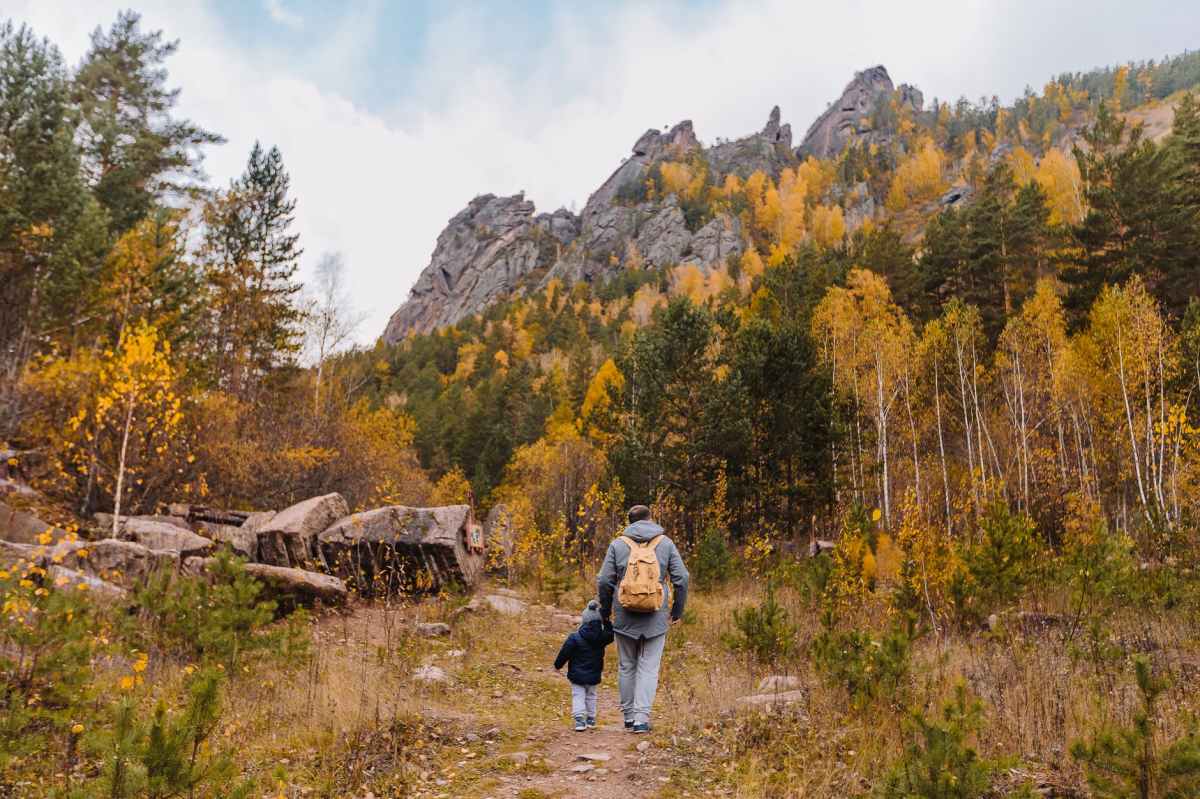
A recent phone call led to my dad revealing that he’d fallen off a ladder and hurt himself quite badly. It was almost a throwaway conversation for him. No fuss, no need for sympathy, just very matter of fact. But it shattered my thoughts of him as being somehow invincible. He’d managed to hurt himself quite badly and had to go to hospital – of course he’d driven himself there – to get stitches in a leg wound and everything else checked over. He’s in his eighties now though and the incident and the way he reported it in our phone call made me think about him and I suppose his life expectancy a lot. And so, I wrote about it.

As he fell...

As he fell it was nothing that flashed before his eyes
and after the whump of the ground
and the surge of air that left him
all that remained was one, over ripe question mark.
Lying voiceless, his only thought formed as slowly 
as a child colouring carefully to avoid breaching the lines;
if this is how it all ends, was there ever really any point?

Flat on his back, doing whatever it is
one does when you cannot even manage to gasp,
he relaxed, rather than gave way to panic,
revelled almost in the moment that told him to do nothing,
prone in the hinterland somewhere between life and death,
looking serenely skyward while the now fallen ladder
balanced awkwardly across his chest
and wondered what was meant to happen next.

A faceless nothing seemed to silently gaze, take him in,
measure him up and contemplate his place in the world
before deciding that the time was not yet right
and placing him back carefully, like one would a
freshly unhooked trout spared the pan
and allowed to feel a freedom that would for now
be marked by the pain that besets the old fool
who overreached and fell from the ladder.

Breath returned, he gathered his thoughts,
dusted down his creaking bones
and swam tentatively back through the lake 
in search of not just sympathy and the inevitable scorn,
but a familiar face who would narrow her eyes 
and pass her shaken headed judgement ,before gently tending his wounds
and share not just his tale of woe and bloodied laundry,
but everything that life had, could and would throw at them
for their eternity together, and now for at least another day.

In order to write this poem I tried to imagine how my dad must have felt. All he really told me was that when it happened he lay there for a while to kind of gather himself before getting up and making his way slowly home. So for a bit of an uncomfortable while I had to try and inhabit my dad’s mind and think about what he’d have done, how he’d have felt and kind of join the dots about what had actually happened, because he’s very much an octogenarian of few words. Has been since he was about 40, I think!

He was actually in his allotment pruning a hedge and overreached. Subsequently, he lost balance and over he went. But given his time of life I imagined that he’d have felt quite bewildered by it all and having fallen from quite high up on the ladder I thought it might have knocked the stuffing out of him and left him not only in pain, but groggy, confused and possibly…possibly, even as a big tough, gruff Geordie, a bit scared.

Speaking to my dad that day he was resigned to more or less giving up on his allotment, admitting that it had gotten too much for him. He’s 82 after all! But there was a definite sadness in him about that as it’s something he’s toiled away at for probably well over 20 years now, since they moved from the family home to where they live now.

I ended the poem with a little bit about my mam. They’ve been married for around 60 years and it’s always funny to watch them together. For every small tender moment there seem to be a thousand gripes and snipes and they argue like, well like an old married couple. But I know that she worries about him and as an ex nurse, I know that she’ll have tried to clean him up and get him to just sit down and take it easy. There wouldn’t have been a great deal of explicit sympathy, but I think she’d have been scared by it all too. He actually managed to slice his leg open and only noticed a while later when his leg felt damp and he thought he’d had another kind of accident altogether.

I hope I’ve done them both justice with this poem. I wondered what must have gone through his mind as things failed him again. He’s always been so strong and just tough, so I think this latest age episode must have been strange for him.

As ever, I hope you enjoyed the poem. Feel free to leave a comment. It’s always good to read people’s thoughts, particularly when what I write is as personal as this poem.
Poetry Blog: Lost

This is the latest in a long list of poems that I’ve written and then forgotten about. It was one of about half a dozen that I discovered in a notebook a couple of weeks ago.

Sometimes, it’s difficult to place these type of poems simply because firstly they’d been forgotten and secondly because often I write a poem and don’t give it a title. In the case of this poem the title was just a question mark, which didn’t seem very helpful at first!

Once I’d read through the poem the subject matter became a little clearer. For the record this is a poem about my state of mind at a certain time. I still feel this way at times now and it’s been a feeling I’ve had throughout my life. I think it affects lots of us though. Having read this poem through a few times and had a bit of a think I think it’s about just everyday life and the sense that this might be all there is. Certainly, I look at what I’ve achieved in life and often wonder if it’s enough. I suppose it’s a sense of slight dissatisfaction at how things are. There are lots of reasons for it as well. It might just be wanting to impress people, like your parents or it might be linked to the dreams you had as a kid. There are definitely references to self esteem in there too.

Whatever the reasoning this is a poem about a moment in time. It’s about looking back and regretting decisions, but it’s also about simply wondering whether you’re satisfied with your lot. I guess that in my case, it’s about getting to the verge of a milestone birthday and just reflecting back or having a good old think about things. I think when I wrote the poem I felt quite down about a lot of things, but mainly about me and my worth as a person.

Lost

Imagine not knowing how you got here.
The feeling of a half life, 
the wondering behind a thousand what ifs
and the nagging feeling that it all somehow won't matter.

Imagine the lack of identity.
The uncertainty of what you are
and who you are and whether you matter
tugging at your sleeves, like restless children.

Imagine the sense of loss.
The statelessness, the weightlessness,
the sense that however hard you swim, the tide has 
other ideas, a plan for you more powerful than dreams.

Imagine that this is all there is
and not understanding how that feels.
That the child lost among a crowd of unfriendly faces
is you, for the rest of whatever this is.

There’s also a sense of not really feeling like an adult here. When I was a kid and I’d hear adults saying how they still felt like they were 18 in their heads, I’d roll my eyes and think the worst of them. Now I’m very much an adult, well I often don’t feel like one! When I’m joining in training with the team that I coach, I still feel like a kid. My body is quick to remind me that I’m not, but I still feel that way. It can be the same in my job, teaching in a high school. Sometimes it’s all too easy to get off topic and just resort to making jokes, which was all too often my problem as a pupil in school!

Finally, the poem is about growing old. Lately I’ve been thinking about the future and I guess what we’d call the next stage of my life. I’m tentatively planning for retirement or possibly a change in work or working hours and I think all of these thoughts and ideas are in the poem too.

I hope this is a poem that people can relate to. It feels like a much broader topic than just me worrying about me, that’s for sure. As ever, feel free to leave any comments about the poem as I always enjoy a bi of feedback.

Thanks for reading.

Welcome to The Writers’ Room.

As part of my performance management at work I’ve decided to get creative. I’m setting up an extra curricular writing club called the Writers’ Room. I thought I’d write a post about it just to try out some of my ideas as well as feeling hopeful that those who read might have a few ideas and tips of their own. Maybe writing a post about it might just make sure I keep up the momentum with the idea as well!

A writing club is something I’ve done before, but I have to admit, it’s never been particularly successful as a long term thing. In the short term I’ve got kids together to write poetry for competitions and it’s been really successful, producing some work of excellent quality. However, I’ve never really followed it up and kept a club going for any length of time. I’ve found that kids don’t stick with it either and that’s probably got a lot to do with my own lack of commitment and ideas in the past.

So the aim has to revolve around just that. I set up a group and keep giving them reasons to turn up and just enjoy writing. I’m keen not to get too far ahead of myself and want to just take simple baby steps, so that my students can enjoy what they’re doing, feel that their work is valued and realise that writing things and working through their ideas can be viewed as a far longer term process than it is in a lesson. I’d like students just to come to the club, relax and play around with words and ideas, regardless of how long it might take to complete a piece of work. I think sometimes English as a subject suffers from the fact that we’re pressed for time and writing for a particular all class purpose, so maybe if a group of students realise that they can write simply for pleasure, it might just work.

I have some ideas, both short term and long term. The first thing I’d like to do is give my students a note book and just stress the importance of always having it with them. I’d like them to get used to just writing things down. That might be thoughts, lines for a poem, observations about things around them, ideas for stories, poems etc or even just doodles. I have mine in my work bag, but sometimes, if I’m in class, I might just grab a scrap of paper and jot lines and ideas down. So my notebook is full of ideas, poems and stuff on its actual pages, but also full of scraps of paper, clippings from magazines and drawings I’ve done. I suppose I’ll have to stress to them that they can’t just whip notebooks out in lessons though. I don’t want them getting into trouble!

I’m keeping my eye out for interesting source material – objects that might make my students think or interesting stories from magazines and newspapers. I wrote a poem recently based around the story of Japanese women who were repatriated to Korea many years ago and it would never have entered my mind had I not read about them in a magazine.

I’m also on the lookout for images of landscapes, people and maybe just the types of things that they don’t often see to put together on a wall as some sort of collage, again just for some source of inspiration. I’ll be encouraging them to do the same and make collages that might just help inspire them. It’s an idea I’ve stolen and adapted from my daughter who’s currently working towards her Art GCSE and has lots of collages thrown together in her sketch books. Sometimes we’ll sit and talk through ideas for images to use and – this has only just occurred to me – it could be something I use for inspiration too.

I’ve put together a folder of writing prompts and ideas I’ve come up with and some gathered from the internet and other after school writing clubs too. I’m likely to focus on poetry but I’d like to see if we can write some short stories too. It’s not something I know a great deal about, but I’m hoping that some of my writers will.

I think my main goal – apart from longevity – is to create a place where kids want to be and where they feel comfortable writing and trying out ideas. I’m not looking to go full on modern teacher – you know the type; ‘Hey guys, just call me Graham in here. Mr. Crosby goes home at 2.45…’ – but I definitely want to have the emphasis on the idea of this being a club, rather than an after school lesson. Ideally, I’d love to get to a point where the students just come in and work on whatever it is they’ve been working on, rather than me prompting them and taking control week after week.

The Writers’ Room is something I’ve wanted to make a success of for years, but I’ve always found that teaching gets in the way. Now though, as a very experienced teacher, I feel like I have the time to make it work. And because of my experiences of writing my blog, especially with poetry, I feel like I know what I’m doing a little bit more.

The goal is to have the club up and running within the next month or so and by the end of the year I hope that we’ll be able to publish some sort of anthology so that the work produced can be celebrated in some way. I have to say, I’m really excited about how this could could go. For now though, I’ll try to keep you updated on our progress and hope to have some positive tales to tell. In the meantime, if you have any experience of this type of thing and any tips or ideas to share, I’d welcome the input so feel free to drop me a line in the Comments section below!

Poetry Blog: Age of Innocence

This is a poem that I had the idea for while teaching my Year 7 English group. I decided to publish it as it is, but am thinking about turning it into something about that age group in general and the state of their education over the last couple of Covid blighted years. It’s certainly something I’ve been able to witness first hand.

I wrote part of the poem while my class were working silently. It was just their approach that struck me; their diligence and their keenness, dare I say it for fear of cursing myself and finding that we come back after half term and they’ve turned into monsters, a real desire for knowledge. The more I thought about it the more I thought about the fact that this group of people have had their education disrupted terribly by Covid and that maybe, their energy and enthusiasm was just a direct reaction to all of the disruption.

I have a son who’s a year older than my group and I know that various lockdowns, school closures and enforced periods of isolation have affected his attitude and approach towards his education quite noticeably. He’s definitely not the same kid that started Year 6, just before the news began to filter out of China about this terrible virus. It seems that as much as we tried to keep him engaged through lockdown and a combination of home-schooling and online lessons, he’s changed into someone who simply gets things done as quickly as possible in order to open up more ‘leisurely’ opportunities. There’s still a diligence about him, but we just don’t see the same thirst for knowledge that he always had at primary school anymore.

Teaching this particular Year 7 group has been really refreshing for me. They’ve responded to me and the curriculum and tasks put before them in a way that I haven’t seen in a group for a good while. Their enthusiasm seems boundless, but their general niceness is also very welcomed. So here’s the poem.

Age of Innocence

Circulating around the room leads me to ponder.
How wonderful you are at this age on this stage.
Earnest, diligent, keen,
still without the air of cool detachment that will inevitably spoil you for a while.
At this moment in time though, I'll enjoy the patter of the rain on the roof
as you work on in an un-asked-for silence that is only 
broken by peppered questions from one or two from time to time.
The brows crinkled in concentration,
the eyes narrowed as you sit in the middle of an epic quest
to find just the right word
and the tongues allowed to escape from the corner of the mouth
as you perfect the curve of a capital letter, the wording of a sentence,
or the shading of a heading.
But for now, amidst the hum of the air conditioning
and time ticking on
it seems like nothing could divert you from this task.

My group will change after half term as we set them more accurately using data gained over these past seven weeks. I’ve already had sneak preview of my class and this glance told me that there aren’t many of my original group left. Fingers crossed that things aren’t going to change too much. As an experienced, grizzled teacher of over twenty years, it’s felt nice not to have to deal with the deliberate disruption that some classes seem to revel in. Let’s see how things are panning out in about three weeks time. There could be a very different poem ion the way by then!

Poetry Blog: Forbidden

This feels like an ambitious poem. For me, that is. I doubt actual poets would feel anything like as intimidated by it as I did. In fact, such was the level of ambition and intimidation, it was a poem that I almost didn’t even take on. But in the end, it was a subject matter that interested me so much that I just thought I’d like to write a poem about it.

So the poem is about the mass repatriation of Zainichi Koreans who were (and still are) ethnic Koreans living in Japan. Between 1959 and 1984 93,000 ethnic Koreans living in Japan were repatriated to North Korea, despite the fact that lots of them were of South Korean origin. Furthermore, among the 93,000 were over 1800 Japanese women who had married Korean men. Many of these women had previously faced the opposition and disapporval of their families, such was the ill feeling towards Korean immigrants in Japan at that time. Now they faced an uncertain future in a land where they knew nothing about.

The repatriation was disastrous for many as the promise of a new life and the optimism that brought just didn’t work out in a North Korea that was heavily damaged by war. Later, as North Korea became more and more closed off to the outside world, the women were denied the chance to visit family and ‘home’ in Japan. My poem is written from the point of view of one of these ‘trapped’ women.

Forbidden

When we married, we dreamed of a future together in our home, 
like everybody does, I suppose. Something modest.
Having fought for just each other, we didn't need the world.
But it took only months to leave those dreams behind
and look towards others on another shore that we imagined as home.

Too young to know better, to argue, to question
we boarded a ferry to our brave new world.
Promised the dream of paradise, we told ourselves that we weren't being forced,
that this was our decision, that our nerves would give way
to delight at what our future could, would become.

But our future wasn't bright at all. Instead it was the sombre
tones of mines and factories where we made our lives,
as had been their plan all along. Our utopia disappeared,
in time becoming nothing but a prison where we shed
tears for our loss, tears for our betrayal, tears for our home.

I clung, steadfast, to memories, allowed my senses to take me home,
closed my eyes to reality in order to see the acacia in full Spring bloom,
allow the smell to envelop me, stay there for a time bathing in the warm air.
In my mind I would walk pavements in parks with him,
cherry blossom breaking over us like gentle April waves.

But none of it would be real life anymore.
When we were forbidden from visiting our parents' graves
sadness turned to loathing. Those who frowned upon our youthful choices
were now just ghosts of the past and we could not mourn
the loss of our very beginning.

Instead we were forced to mourn the loss of our very freedom, our existence,
our souls, culture, identity
and, given no reason why this should be we could only feel more detached
than ever before, disillusionment disintegrating into numbness.
We were driftwood, pushed along by the sea, forgotten by the land.

Now, it feels like I have spent my life staring blind from this window
scouring the landscape for the past that I can no longer see,
searching through the coastal mist for a home no longer on the horizon,
imagining one last glimpse, one last memory, one last conversation,
while knowing all senses are lost like our identity.

We are widows.
Abandoned, forgotten, homeless, but never hopeless,
yet cast adrift, a life not lived,
forever seeking the answers to how and why.

I hope I’ve managed to do this topic justice. As I said earlier, it was something that I read about – and have read more about since – that just gripped me. For want of a much better way of putting it, I just felt such sympathy for the women that I read about. Some of them talked about how they married their Korean partner, despite pressure from their families and how despite not regretting their choices, they were forced to live with the eventual reality that they would never see their parents again. The stubbornness of youth leading a lifetime of feeling incomplete.

The stories possibly resonated with me because at the time of reading, in the middle of the Covid crisis, I had begun to wonder if I’d ever see my parents again. Their age combined with their vulnerability to the virus made for some very difficult times and although I wouldn’t dream of thinking I’d had it as bad as the Japanese women I read about it piqued my interest in their story.

I think I quite like what I’ve managed to write. I found it difficult to write as someone else, but I’m fairly sure I haven’t made a complete mess of it. I hope you like what I’ve written too. As ever, please feel free to leave a comment.

Poetry Blog: Pursued

This is a poem that I actually wrote and then briefly forgot about. It was only when reading through a notebook and finding a folded up piece of A4 paper that I discovered it again. I think it was written some time in the last two weeks, but somehow I’d just tucked it away and forgot that I’d written it.

It’s poem that has a couple of different influences. Partly I think it’s about mental health. Not just my mental health, but peoples’ in general. It’s about not being able to get rid of the darker moments, the lower moods, which is something I’ve had to put up with for a short while now, but something that lots of other people have probably struggled with for many years. So, I’m not moaning or feeling sorry for myself; I know others have things much, much worse.

I think the other influence or meaning behind this one is that I’ve been suffering with an injury – it’s been about 7 weeks now – and it just feels like it’s never getting better. So again, something I can’t seem to shake off. (Maybe that’s where I’m going wrong; less shaking, more relaxing?)

Pursued

I feel like you defy description. I don't know how to cope with you 
and words almost fail me.
Every label seems not to stick,
neither adequate nor accurate.
You're definitely not a friend,
but not a stranger all the same
and a cloud hanging over me can actually pass on the wind
before returning, whatever the forecast.
This is a nagging doubt, a feral dog trailing too close at my heels,
craving trust, but up to no good.
An excrutiating headache, pressing down,
a torchlight shone in my eyes or maybe a spotlight exposing me
when I feel the need to hide.
A flare in a clear night sky, marking me out, just as I find sanctuary for the night.
A light that offers no illumination, but lets me know that there's to be no rest,
no safety, nowhere to serve as an escape,
just an uncomfortable reminder that tells me to keep moving,
because at times like these, slowly, tentatively,
like an old man shuffling around the room to find the candles in a power cut,
that's all that I can do.

I don’t know if feeling this way is a legacy of lockdown and all things Covid or simply just another stage in my life; an age thing perhaps. But where before any sense of feeling low was fairly easy to shake off, lately I’ve not been able to. So ‘Pursued’ seemed the perfect title for the poem as it’s absolutely how I’ve felt both mentally and physically and how I imagine lots of people who are struggling feel too.

As ever, feel free to leave a comment below.

Poetry Blog: Farewell Mike Ashley.

This is a post that’s been a long time in the making. It’s a poem about one of the greatest loves of my life, Newcastle United. And if that seems like a bit of a pathetic sentence, then you should probably stop reading. But the football team that I support have been a constant in my life for well over 40 years now and let’s face it, around the globe there are plenty of us that fall in love with their chosen sports team. The club is something that I blog about sporadically as I like to write about lots of different things, but I couldn’t resist this one.

The poem itself was written in June 2019, when I’d finally allowed myself to think that Mr. Ashley, the owner of my football club, was actually leaving. For those who don’t know, Ashley has owned the club for 14 years and it’s been an incredible low point in our history; lacking in investment, lacking in ambition, lacking in hope and a time where balancing the books has been deemed way more important than success or even excitement and hope on the field.

When I wrote the poem a Saudi Arabian investment group seemed on the verge of buying the club, meaning that hopes and dreams could return. And then, to cut a long story short, it didn’t happen.

Fast forward 18 months or so from when the news of our takeover first broke and following high profile legal action, and almost at the drop of a hat, the club has been sold. So, here’s my poem.

Farewell Mike Ashley

When you first pitched up you were greeted optimistically.                                                                                                                                 A sportswear billionaire set to change the Toon fiscally.                                                                                                                                        But then, a reason to doubt your intelligence                                                                                                                                            when you sloppily disregarded your due diligence. 
But, your black and white shirt in the away end provided a distraction,
the drinks are on Mike, no need for (Sports) Direct action.
Then you brought back King Kev, a masterstroke,
yet the way that you treated was nowt short of a joke.
Wise and Jiminez, your plan to bring the good times back,
followed by Gonzalez and Xisco; two straws to break the camel's back.
Keegan gone and relegation drawing near,
your answer? Joe f***ing Kinnear.
A sleeping giant in an idiot's grip,
you were seemingly determined to sink this ship.
But you didn't reckon with Kinnear's heart
which inadvertently gave us a brand new start,
Shearer tempted, a legend returning
but his hands were tied, the ship still burning.
Relegation and Shearer left waiting for your call,
but you chose to ignore the greatest scorer of them all
Against the odds Hughton took us straight back up,
but still the chequebook remained shut.
In time you brought in Pardew and a Director of Football...
Kinnear again though; pissed and capable of f*** all
Years passed and we made it to the Europa League
but with little investment we fell away, fatigued.
As Pardew stuttered you committed the cardinal sin
out with SJP, the Sports Direct Arena in,
terrible and sinking with Pardew's palava
as he blamed the grass, the science, the fans, then left us with Carver.
Still there was time for you to behave like a wanker
by blanking poor Jonas, stricken with cancer, 
and oh the sweet irony when he came to the rescue,
yet still you got rid like a cockney Ceausescu.
And then more alarm bells as you gave us MaClaren, 
a hair island, no idea and his tactics board barren.
Even Benitez couldn't save us from our fate,
another reason for more Geordie hate.
But Rafa rebelled, he was made for these fans,
but your silence said you had other plans,
but the tide was turning, a truth became clear,
we were nothing but right not to want you here,
we didn't want Charnley and we didn't want Bruce
whatever you did there would be no truce.
Transfer windows where nothing was spent
anyone could see it was time that you went.
Protest groups, boycotts, banners and the Trust gave hope
now finally, deal done, get out of our club you fat dope.

The future looks incredibly bright for Newcastle United and it’s been a bit of a ridiculous few days. I’ve watched the celebrations in the city from afar, just wishing I could be part of it. Making do with social media footage and various reports on the telly has had to be enough, but it’s still been amazing to watch. Then you read the media reports and the quotes from Amanda Staveley and others involved in this new dawn and it’s been as bewildering as it’s been exciting.

There are other, darker issues to address with this takeover but for now I’m happy to just wallow in what it could mean from a footballing point of view and try to forget the last 14 years of penny pinching and constant disappointment under Mike Ashley. As someone who first sat in the East Stand aged 6 and has been in love with the club ever since, I’d resigned myself to the fact that we probably wouldn’t win anything in my lifetime. As someone who walked away from attending games 13 years ago as I realised what Ashley represented, that feeling was utterly miserable. But it’s time to look to the future, because the future’s bright; the future’s black and white.

I hope you enjoyed the poem. Feel free to leave a comment.

Poetry Blog: Rain on the roof

There’s no great mystery about this poem. Quite simply, it was prompted by rainfall on my classroom roof. It’s quite a cool noise I suppose and I think the sight of it and the relief I felt at being indoors and being able to just sit and watch and listen to it, was quite inspirational.

I have what I think is referred to as an outdoor classroom. It’s not actually outdoors, but it’s a stand alone building away from the main buildings of school. Maybe they’re trying to tell me something. My classroom is actually known as the ecopod; I think it’s supposed to be eco-friendly, but I’ve never really worked out why. The structure is covered with wood and we have skylights and also movement activated lighting, so I suppose there’s something in the name. That said, because it’s wooden, early on in its school life my room was also widely known as Nandos…

It was the skylights that partly influenced the poem, which is basically about the sound and the sight of the rain during a particularly heavy downpour about a week ago. My class were working and the rain just got me thinking, so I scribbled some lines down on a bit of paper and went back to it later to finish what I’d started.

Rain on the roof

Incessant, unrelenting and blended into almost one wonderful noise,
you set the tone, make me feel glad of these four walls
and the roof above, reluctant to leave and glad of my warm, dry room.
Through the window a filter of unedifying grey
blights the green of fields and trees, makes fools of the eyes,
blurring houses, factories, towns on the horizon.
The vague hope of home is lost in the mist
as the rain plays its song on the skylight.
This will pass before I venture out once more,
but its footprint will remain for hours yet.

The effect of rain on the roof of my classroom always raises a smile. It will always prompt at least 50% of the group to stop working. Next we might get an incredulous ‘Woah’ before finally eyes turn to the windows in order to watch the downpour. It’s as if the rain couldn’t actually be happening if all they could do was hear it! And given that we live in the north of England, where rain is fairly frequent, it never fails to amaze me that my students can be so captivated by something as simple as this and that they see on such a regular basis. That was kind of what I meant in the last line as you can always guarantee that your class will struggle to behave if it’s raining. Throw some wind into the equation and you’ve got a battle on your hands!

From my classroom windows I can see in the direction that I live and am able to spot certain places that I’ll pass on the journey home. It can be a bit of a comfort when I’m having a bad day. And so, when it’s misty and cloudy all of that disappears; hence the line about the ‘vague hope of home’. Strange how such a simple thing can spark so much into happening!

As always, I hope you enjoyed the poem. Feel free to leave a comment.

Poetry Blog: Pain

At the risk of repeating myself, this is yet another poem that was borne out of a sleepless(ish) night. I’d found myself clambering out of bed not long after midnight as I couldn’t get to sleep because of the pain in my shoulder and arm after I’d damaged a nerve during a coaching session when I should have known better than to take on goalkeeping duties. I’m 49 for goodness sakes!

So I went downstairs with my book as I find reading takes my mind off things while also never failing to make me feel sleepy, whatever else might be going on

It amazes me how many times it happens that my mind is full of ideas and potential lines from a poem at these times. But it happened again, so I began writing, ending up with two poems; one about making the decision to get out of bed in the middle of the night and this one, about the pain that I was suffering with.

Pain

The voice that tells you not to speak,
the constant nagging doubt,
a sleeping partner tracking your every move,
a shaft of moonlight in a 4am garden giving the illusion of movement,
the urge to run from something unnamed that might not even be there,
a telephone staring intently as you ponder the call you don't want to make, paralysed,
a strangled scream,
a fruitless sneeze,
the date that teeters on your horizon, pulsing ever so slightly,
the message you should have sent,
an unvoiced opinion,
the stinging comeback stopped in its triumphant tracks by a tongue bitten,
the memory that refuses to ever truly leave.

With this poem I just found myself thinking of things that I’d compare pain to and once there were a couple of ideas written down it became a kind of stream of consciousness.

In daylight hours, on next read it became an exercise in editing; sorting the wheat from the chaff so to speak and getting rid of ideas that jarred with others or just anything that reeked of the nonsense that might sound great in the sleepless early hours of the morning. There was also a little bit of repetition where ideas were a little too similar for my liking. I guess that comes with writing when you’re so tired! Thus, this became a relatively short poem.

I hope it translates well enough. I hope there are comparisons in there that you can identify with and that you might recognise as being familiar in terms of being in pain.

As ever, I hope that you enjoyed the poem. It’s always nice to read comments too, so feel free to leave one as I genuinely appreciate the interaction.

Poetry Blog: Dad

I wrote this poem fairly recently and although the circumstances have changed for the better since then, the sentiment behind it remains very much the same.

It’s a poem about my dad, who at the time of writing, I hadn’t seen for 18 months. I hadn’t seen my mam either, come to think about it. Because they live together, which is usually the way when you’ve been married for 50 odd years. But it was speaking to my dad that prompted me to write.

Speaking to him shocked me a little bit, despite the fact that I was aware of probably a lot of things about him from the 18 months when I’d not been around him. I was also very much aware of his age and this should have been an indicator of the fact that he was getting old. And yet, speaking to him and hearing what sounded like a very old man on the other end of the phone, gave me a bit of a jolt. He sounded not only old, but frail, perhaps even ill.

It led me to sit, worrying, before then spending time reminiscing for most of the rest of the day. So having thought about my dad a lot afterwards, I sat down and wrote the following.

Dad

The drudgery of another working week done and I'm preparing for the next one
as my phone alerts me to the terror of a voicemail.
You sound urgent, but noticeably frail, more my grandad than my dad.
"When you get this, call. Straight away."

I sit down nervously, to return the call, pre-empt the bad news,
aware of hospital appointments, complaints, tests.
I needn't have bothered as the 'news' is nothing at all,
just a parent checking in. But still you sound different.

I'm reminded that, despite middle age, I'm still 'the bairn'
and continue to be wrapped in cotton wool, drip-fed information
on a 'he doesn't need to know' basis.
I can't trust your reassurance, but can't question it either.

You sound different; where once there was the toughness
of teak, now in its place squats a weakness as the ravages of
age take hold and remind me that you won't be here forever.
You're failing, ever so slightly, when I never thought you would.

That night, I can't escape you as you take root in my head.
The sound of you; segs on concrete, returning home with the paper.
Clearing your throat at 6am, tapping a razor on the sink, 
oblivious to those of us trying to sleep. Later you'd leave the car running
on the drive to warm up, just in case anyone hadn't yet been woken.

I see you emerging from the car after the Cup Final, crestfallen,
unwittingly signalling my own life of sporting misery.
Drunk on New Year's Eve, incongruously dressed in a kilt,
jiving with our neighbour on another package holiday; mesmerising.
Coming through the front door, hands black after another day running the yard.

Later, I feel you chasing me up the stairs, when my smart mouth ran away,
smell the sharp tinge of metal on your work clothes, 
the fug of flatulence as I open our living room door and the smell
seems to slap me in the face.

I smile at the pints we shared, the fish and chips, taste the 
cheese on toast you volunteered me for at the lull in Sportsnight,
hear your laugh, bellowing, a crude comment, a ruffle of my hair,
remember how you reduced me to tears telling your friends of your pride in me,
your son, the clever bugger. I see the picture of you
with your grandson and those tears burn my face again.

We haven't awkwardly hugged in far too long. 
I'm not ready for what inevitably comes next, even if no one will tell me
until the very last minute anyway.

The poem’s about just sitting thinking about my dad and the way I remember him. These are memories from along time ago and it seems obvious that he’d be very different now. So I suppose, it’s a poem about a number of other things too. Growing old, change, personality, perception. Certainly my perception of my dad has been that he’s invincible. While he wasn’t a hero figure growing up, he still just seemed to have a solidity about him. Speaking to him that a few weeks ago, he seemed to have lost that solidity.

I’ve since been able to visit my parents and although it wasn’t an upsetting visit – in fact it was truly lovely just to be able to be in the same room as them again – it was was a bit of a shock. The reality that my dad is now an octogenarian was unavoidable. And while that sounds silly, it was something that I hadn’t given too much thought beforehand. My dad was just my dad.

When I was younger my dad always seemed old. Anyone who’s been your typical teenager will recognise that feeling! So seeing him hit 60, retire and being the age he is now, didn’t feel like a big deal. He was old, just like he’d always been. It’s funny how just the sound of someone’s voice on the phone can shake you to your boots. Writing the poem helped me deal with how it all made me feel.

One last thing; the line about the sound of his ‘segs’ on concrete. That’s one that will mean something or absolutely nothing to readers. To explain, ‘segs’ are/were the little strips of metal that would often be on the soles of shoes and boots, I guess to protect said soles. They made a very satisfying noise when a person walked, a kind of scraping click. I don’t even know if ‘segs’ is the right word for them, but my dad’s shoes and boots always had them on throughout the 70s and 80s.

I hope you enjoyed the poem. Maybe it made you think about your own parents. Hopefully it provoked happy memories. I’d love to hear what you thought.