Book Review: The Ritual by Adam Nevill

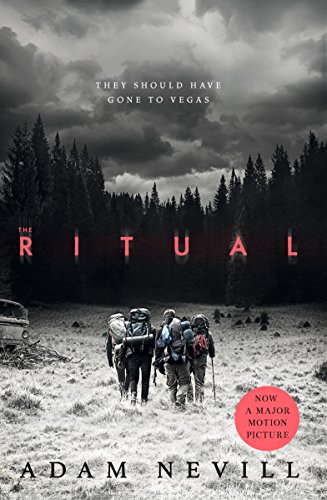
If, like me, you’re about to meet up with a mate or two for a bit of a reunion maybe you shouldn’t read The Ritual just yet. Especially so, if you’re off on some kind of outdoor pursuit. You might get a little bit put off! Once you’re done though, I’d definitely recommend it.

The Ritual follows four university friends who, since graduation, have vowed to keep in touch by meeting up at least once a year to have some kind of break. This year, Luke, Phil, Dom and Hutch have decided to head into the Arctic Circle for a bit of an adventure. Because, when you’re approaching middle age and fancy a bit of a change, the unforgiving conditions of northern most Sweden are the first things to spring to mind! Like the tagline says, they should have gone to Vegas!

While the premise of the novel – which was also made into a 2017 film starring Rafe Spall – might suggest some kind of farcical comedy, it’s not long at all before nobody’s laughing. The weather is far worse than the friends had prepared for and within 24 hours everyone is soaked to the skin and it doesn’t feel like they’ll ever dry out. And this being the Arctic Circle, it’s beyond cold too. Throw in the fact that two of the group are what we might politely call ‘past their best’ fitness wise and this is really not the fun reunion that they’d planned. But then, deciding that a short cut is the best option, they get lost.

In theory, I’m a big fan of exploring the wilderness. I dream of trekking through isolated far off places and striding into the unknown, exploring landscapes that I’ve only ever seen on the television before. In reality though, I’d be pretty rubbish at it. We once encountered a rattlesnake in the Grand Canyon and I was beyond terrified! So, I can fully sympathise with the friends in the book and the injuries & lack of preparation that hinder their progress. I can’t begin to imagine the horrors that they’re about to face though.

Once they get lost they take more wrong turns and encounter a couple of eerie places that suggest that the forest not only has a dark history, but also that it may well be harbouring the kind of predator that no one wants to encounter. Have they been being watched all this time?

The Ritual sets out to scare us. And in parts, it succeeds brilliantly. As the predator hunts them down I could almost feel its presence. What it actually is remains a mystery as Nevill restricts his characters and us, the reader to glimpses in the dark and the frightened, snatched reports of those that have had some kind of mysterious encounter. And what’s more scary than the thing that you can’t even see, but just know is there?

When the friends are at their weakest, it strikes, deepening the fear for everyone concerned and as a reader you’re left trying to work out exactly what’s happening, but also if anyone will actually manage to survive. Gaining only glimpses and hints of the predator’s presence leaves us as confused as this gang of friends, but undoubtedly adds to the tension and horror that Nevill is trying to create.

Throughout their journey through this dense forest we learn snippets about pagan sacrifice and old Scandinavian culture – two of the gang have done their research – and as a reader yo begin to get the feeling that what is stalking the men is more than something as straightforward as say a pack of wolves or some kind of bear. And so, the story becomes more than just a horror piece, but also a historical piece too where we learn snippets about a place, history and culture that aside from stereotypes based around nudity and IKEA, we probably don’t know a great deal about.

I was fascinated to read about the fact that large parts of the landscape where the characters trekked would have been untouched by humans for hundreds of years. But then, when you think about it and how far north on the planet it is, this stands to reason. It adds to the feeling that ‘they should have gone to Vegas’ though!

The Ritual becomes more than a tale of four friends being hunted by a predator in a remote landscape with a brilliant, yet slightly absurd twist near the end. I can’t ruin it for you, but what seems like a rescue turns bad very quickly sit and it turns out that a sacrifice will be made. And it’s from as unlikely a source as you could imagine.

Nevill writes brilliantly, subtly building tension, throwing in more problems when we least expect them and also when the friends could very much do without them while presenting us with a group of characters that are both relatable and realistic. This is much more than just a thriller.

If you like thrillers, horror or a bit of a mystery, The Ritual might be the kind of book for you. I’d certainly recommend it! I’d give The Ritual…

Rating: 4 out of 5.

Book Review: ‘Don’t Need The Sunshine’ by John Osborne

I’ve always loved the seaside. Newcastle, where I was brought up, is close to some of the best coastline that the UK has to offer, so there was always an easy access day trip whenever one was needed. We’d spend entre days there as kids during the summer holidays. Further to that, being born into a family that placed a high value on the power of a bracing walk meant that windy beaches were our regular stomping grounds. In fact, we went every year on New Year’s Day as a family tradition!

So, it was a pleasure to read this book, as well as a nice trip down memory lane. John Osborne’s ‘Don’t Need The Sunshine’ is a celebration of the charms of the British seaside and when I caught sight of the cover and two primary school aged kids in decidedly 70s clothing eating ice creams at the beach, I was always going to buy it. And it proved to be money well spent.

While working in Scarborough for a summer, Osborne is struck by a feeling of nostalgia for the traditions of the British seaside. And so begins an often rainy odyssey of trips to a variety of UK seaside spots.

John’s trips begin in Scarborough, which if you aren’t aware, is a classic British seaside town. A long, sweeping sandy beach, a harbour, gift shops, amusement arcades and various bars and pubs dominate a town where thousands flock in summer in search of seaside fun and entertainment. These days it’s slightly run down, although still a great destination for a few days at the beach, but Osborne finds much evidence to support the fact that the nostalgic activities he remembers from childhood are still very much in play in Scarbs.

From Scarborough, Osborne journeys down and around the country taking in a variety of seaside destinations. I was really disappointed that none of my old North East haunts were visited, but with such subject matter you’re never going to please all of the people all of the time, given the sheer amount of coastline that we have on our little island. That said, a chapter on Whitley Bay or Tynemouth would have been much appreciated!

There are various tales here though. From historical tales of Skegness to the arcades in East Anglia, following the suicide watch at Beachy Head right through to the ‘ultimate’ sandcastle competition and a remote western lighthouse. The British seaside provides Osborne with a wonderful collection of experiences to immerse himself and the readers in, as well as a selection of wonderful people to spend time with.

The result is a fascinating read. It might be quite a niche subject and possibly of much more appeal to us Brits than anyone else, but I’d still thoroughly recommend it.

‘Don’t Need The Sunshine’ provides a wonderful dose of nostalgia about a slightly faded British institution. Millions of us grew up looking forward to days out at the seaside; some of us still do. But the typical British seaside town has changed immeasurably from what we’d see in their heyday. The rise of first the package holiday in the 60s and 70s and then budget airlines in the early 2000s signalled a death knell for many of our resorts. However, the popularity of ‘staycations’ mean that they are making something of a comeback. Still, most of what Osborne finds just isn’t the same.

That said, he finds joy and hope in most of the places that he visits. Sometimes, it’s nostalgia based, sometimes it’s fleeting, but it’s joy all the same. And that’s the thing about the British seaside; there’s always at least a sliver of joy to be had. It’s just that sometimes you have to take a little more time to look.

Osborne’s writing is excellent. As he describes the people and places that he finds on his trips, you’re transported there with him. He’s sympathetic to the plight of our seaside towns so that everything has a positive outlook and while it doesn’t serve as some sort of propaganda, the work that’s going on is highlighted and praised appropriately. The resorts are treated with a genuine affection as Osborne reveals that when you scratch beneath the surface there’s a lot going on in our seaside towns. He clearly loves them, like a lot of us Brits still do. And that’s what makes ‘Don’t Need The Sunshine’ such a great read. Osborne’s subject matter has something for everyone; whether your ‘of a certain age’ like me and looking for a trip back in time to a different age and time or you just live a long way from the seaside and only take trips there ever so occasionally.

It would have been easy to write a book that was sniggering, cynical and sarcastic about the UK’s seaside towns. But thankfully that hasn’t happened here. Instead, ‘Don’t Need The Sunshine’ emphasises the positives and the diversity that you’ll find, touching also on the glamour of the past. And I for one absolutely loved it!

I give ‘Don’t Need The Sunshine’

Rating: 4 out of 5.

Book Review: ‘Tick Tock’ by Simon Mayo

There’s a dedication in the front of this book that reads, ‘It’s another page turner, Mary!’ and it’s not wrong. Put simply, this is just a great read; the kind of novel that you just don’t want to put down.

‘Tick Tock’ is the latest novel from Simon Mayo, best known as a radio DJ in the UK. It’s what I suppose you might call pandemic literature, inspired as it undoubtedly is by what we the kinds of things went through with Coronavirus. This time though, the mystery virus seems to be a rare strain of tinnitus and as such, pretty harmless. But soon and with information being drip fed from various angles, we learn that this is something far more serious and life threatening.

Kit Chaplin is the head of English at a small and fairly exclusive high school in central London. Rose, his daughter goes to the same school and Kit’s presence there is an irritation to say the least and Kit knows it. Lilly, a vaccinologist, is Kit’s partner and her daughter Jess also goes to the school, meaning that there’s yet more workplace awkwardness. Little do they know that soon life at the school will provide a great deal more to think about than whether or not they might bump into each other in a corridor during the change over of lessons. Life as they know it, is about to change in a big way.

‘Tick Tock’ tells a tale that in a way, we all kind of already know. The tale of a pandemic, of ignorance, pain, misinformation and more. And it’s the more that makes this well, more than just a pandemic story. Suddenly, in among the science, there’s also an espionage shaped twist as ‘Tick Tock’ takes us in a direction that we might not have seen coming and it’s a race against time to try to save lives.

I remember reading my first Simon Mayo book, the YA novel ‘Itch’, and for what seemed like hours of reading thinking, ‘Oh, I didn’t see that coming’ as I hung on for dear life. ‘Tick Tock’ has the same thrilling qualities. It’s really well researched too, so as I reader I found myself wanting to read on in order to find out more about the burgeoning pandemic, the possibility of a vaccine and the research behind it. It all adds up to – as I said at the top of the page – a real page turner.

Mayo’s characters are excellently written too and I found myself empathising with English teacher Kit, as someone who does the same job with the same loves and frustrations. Being the father of two teenagers I felt familiar with his home situation too and found myself smiling at every rolled eye and worrying for him when he and Rose were caught up in the hysteria of the pandemic. The stress of the pandemic is obviously all too familiar given our situation a few years back and yet the narrative still feels compelling and original.

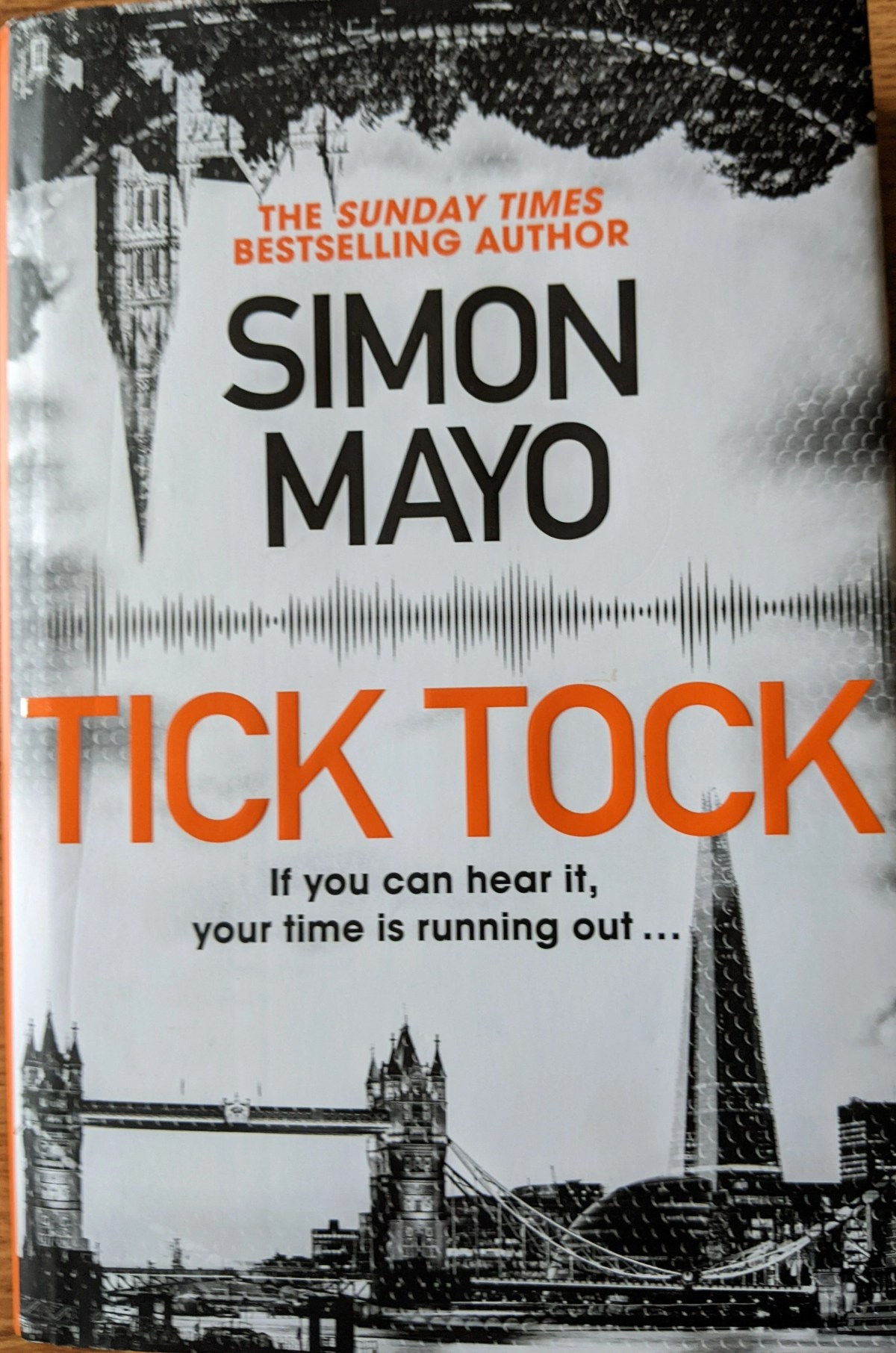
The virus moves at a fast pace, as does the narrative and you’ll find yourself feeling desperate to know what’s going to happen next, what fresh twists might be taken and perhaps more importantly, who will make it through. Tick Tock’s cover tells us ‘your time is running out’ and with the somewhat breathless pace of the book, it really does feel that way at times, as you immerse yourself in the increasing sense of panic that is gripping the nation.

‘Tick Tock’ is a brilliant read and another triumph for Mayo. Not only is it an excellent thriller, it’s one to keep you thinking too. So, while you’re trying to figure out who might die, you’re also left with a number of underlying sub plots, wondering how it all fits together. But fit together it does, brilliantly, constantly making you ask questions; the kind of narrative that might just keep you awake at night!

If you love a thriller, give ‘Tick Tock’ a read. However, if you simply enjoy a good yarn, I’d say give it a go too. Complex at times, worrying at others, but a fantastic novel every step of the way.

I give ‘Tick Tock’

Rating: 5 out of 5.

Book Review: ‘The Wild Silence’ by Raynor Winn

For my entire life I’ve been guilty of falling for stuff because of the way it looks. Pebbles and shells on the beach or rivers we paddled in were frequently brought home because I thought they looked lovely and it felt like life would be enhanced by having them with me. When I was younger I worked in a scrap yard and would pocket coins and other interesting trinkets while sorting through random scrap metal. It felt like treasure at the tender age of 14. As I got older I bought records and books based on their covers.

‘The Wild Silence’ is one such item. It came into my possession because I loved the cover. The blurb made it sound quite interesting to me, but I couldn’t put it down because of the cover. It was from one of those trips to the budget book shop. My guard is always down here and I can spend far too long browsing the shelves and then far too much buying the treasure I’ve gathered.

‘The Wild Silence’ is a memoir that tells the tale of Ray (Raynor Winn) and Moth (her husband) who are fighting to keep their heads above water amidst health issues and homelessness. But this isn’t a story set on urban streets. Instead, Ray and Moth find themselves sheltering in a chapel in deepest Cornwall, having walked the South West Coastal Path while homeless, camping in remote spots nightly.

It’s an interesting juxtaposition; the desperation of their homelessness set against their existence surrounded by the raw beauty of nature. Human pain and bewilderment played out in a rugged yet idyllic setting.

Having lost their home and their livelihood – a Welsh farm – Ray and Moth had been left battling the elements as well as financial ruin. However, ‘The Wild Silence’ finds them somewhat settled in the chapel with at least some sort of future ahead of them. Moth is battling against a debilitating condition, but has began a degree course as he hopes to lecture in the near future. Meanwhile Ray is left in a home that’s not hers, worrying about whether Moth will even make it to his lectures, on edge until he checks in, while trying to avoid the people in the village where she lives.

The book is a tale of a vivid struggle with a quiet, yet quite lovely triumph at its end. Moth and Ray have only each other. In the end, their existence and love is a huge win for the human spirit.

Following on from the best selling memoir ‘The Salt Path’, ‘The Wild Silence’ shows us that there is always a glimmer of light in the darkness. It is beautifully written and I found myself easily picturing the various settings for the novel as well as rooting for Ray and Moth throughout. While ‘The Wild Silence’ can be quite a bleak read at times, it is ultimately uplifting. Ray finds a way to regain her confidence and faith in her fellow man, while Moth simply finds a way through strength and sheer bloody mindedness.

I’d thoroughly recommend ‘The Wild Silence’ although I’d tell you to read ‘The Salt Path’ first! I didn’t, but having heard of the first memoir, I kind of understood what was going on after a little while. Winn writes beautifully which means that we’re willing her and Moth to ‘win’ as we read. When they get their first break it’s a blessed relief and even though their struggles are far from over, we’re left with a sense of hope that is fulifilled by the end of the novel.

I give ‘The Wild Silence’

Rating: 5 out of 5.

Book Review: ‘Mad Blood Stirring’ by Simon Mayo

‘Mad Blood Stirring’ was interesting to me for lots of reasons. First of all, as a high school English teacher and long time Shakespeare fan, I recognised the title…although not as quickly as I should have! It took me a little while for that particular penny to drop and it would be the first of many! But, the title is of course a part of a line from Act 3 of Romeo and Juliet and serves as an unheeded warning to Mercutio. It’s a warning that translates well in Mayo’s novel too.

Also of interest to me were the events of the time. The novel is set in 1815, just after the Anglo American war of 1812, which I simply wasn’t aware of. I just assumed everything was done with between the two countries following American Independence. So, the idea of thousands of American prisoners incarcerated on Dartmoor piqued my interest a bit, simply because it was a chunk of history that I had no knowledge of whatsoever.

Mayo, of course is better known for his career as a radio DJ, but he’s been writing novels for a while. I first discovered his writing years ago with his YA novel Itch, which I thoroughly enjoyed. I never did get round to buying the other two in the trilogy though and my next forray into his work was over a decade later with Mad Blood Stirring. It’s safe to say that I waited too long!

Mad Blood Stirring is a many layered story, but it revolves around the comings and goings over a few months in Dartmouth Prison in 1815. The inmates are all American prisoners of war, despite the fact that the war has long since ended. There is still no treaty for their release however and trouble is brewing. As with Romeo and Juliet, there are factions with a grudge and it’s not just between the Americans and the British guards. Ill feeling and prejudice is rife within the prison population and trouble is never too far away.

Mayo has taken the facts of this time and woven together a brilliant narrative, focusing on the lives of two inmates in particular; Habs and Joe, who develop an unlikely friendship and eventually embark upon a perhaps even more unlikely romance. Habs is one of the black inmates, forced into a block of their own by white inmates and their prejudice, while Joe is white and new to Dartmouth and its strange set of rules.

But tension is simmering across all 7 blocks of Dartmouth prison, meaning that the ‘cast’ of the novel grows and grows. The men have been away from home for far too long, conditions inside the jail are abysmal and although talk suggests that peace is close, their freedom still seems a long way off. In actual fact, America has all but abandoned them. Elsewhere, Elizabeth, the Governor’s wife is in love with the prison doctor and the whole of Block 4 are on edge and exhausted after deciding to put on their latest production – Romeo and Juliet – for the other inmates. With the threat of violence around every corner and the whiff of potential freedom occasionally drifting through the air, there’s something happening to keep us on edge all over Dartmouth prison.

And so we have a tale where despite violence and death never being far away, love, comradeship and a yearning for culture somehow manage to blossom in among the choking poison of incarceration, racism and hatred.

Mayo has written an excellent novel, with many strands to the narrative. There is a great deal truth here too, but Mayo manages to somewhat brighten up the darkness of Dartmouth prison with his characters and their dynamics. The violence here is stark – and I guess that’s to be expected – but while the tension and treachery will keep you on edge throughout, characters like Habs, Joe and King Dick (yes, that’s really his name and he’s someone who I imagined as a cross between Brian Blessed and King Ezekiel from The Walking Dead) help to alleviate that ‘edge of your seat’ feeling just enough to make it an enjoyable read. There is interest beyond the obvious hellishness of thousands of men in a remote jail.

A slight criticism might be that there are just too many characters to keep up with at times, but then I guess with over 1000 men in just one block, we were always going to come across quite a large cast. I did sometimes struggle to keep sight of Habs and Joe though, as I read about another twist in the tale or another group of dangerous inmates.

Overall though, this is a cracking read and if you’re a fan of historical fiction you’re sure to enjoy ‘Mad Blood Stirring’. Even if – like me – the genre is not your usual thing, it’s still an enlightening tale and the fates of the characters are sure to keep you hooked. A gripping read packed full of grit and violence, but with a twist of romance and hope.

I give ‘Mad Blood Stirring’

Rating: 4 out of 5.

Book Review: ‘Mix Tape’ by Jane Sanderson

They say that you never forget your first love, don’t they? I mean personally, I’d like to wipe the entire thing from my memory, but it’s pretty much impossible due to the nature of that particular car crash of a relationship! But I’m guessing it’s very different for lots and lots of people who manage to cling on to those warm and pleasant vibes for life.

Dan and Alison are two such people. And despite the somewhat life-changing nature of their break up and the fact that they’ve made successful lives separately elsewhere, both retain strong feelings that unbeknownst to them, are just waiting to be dug up.

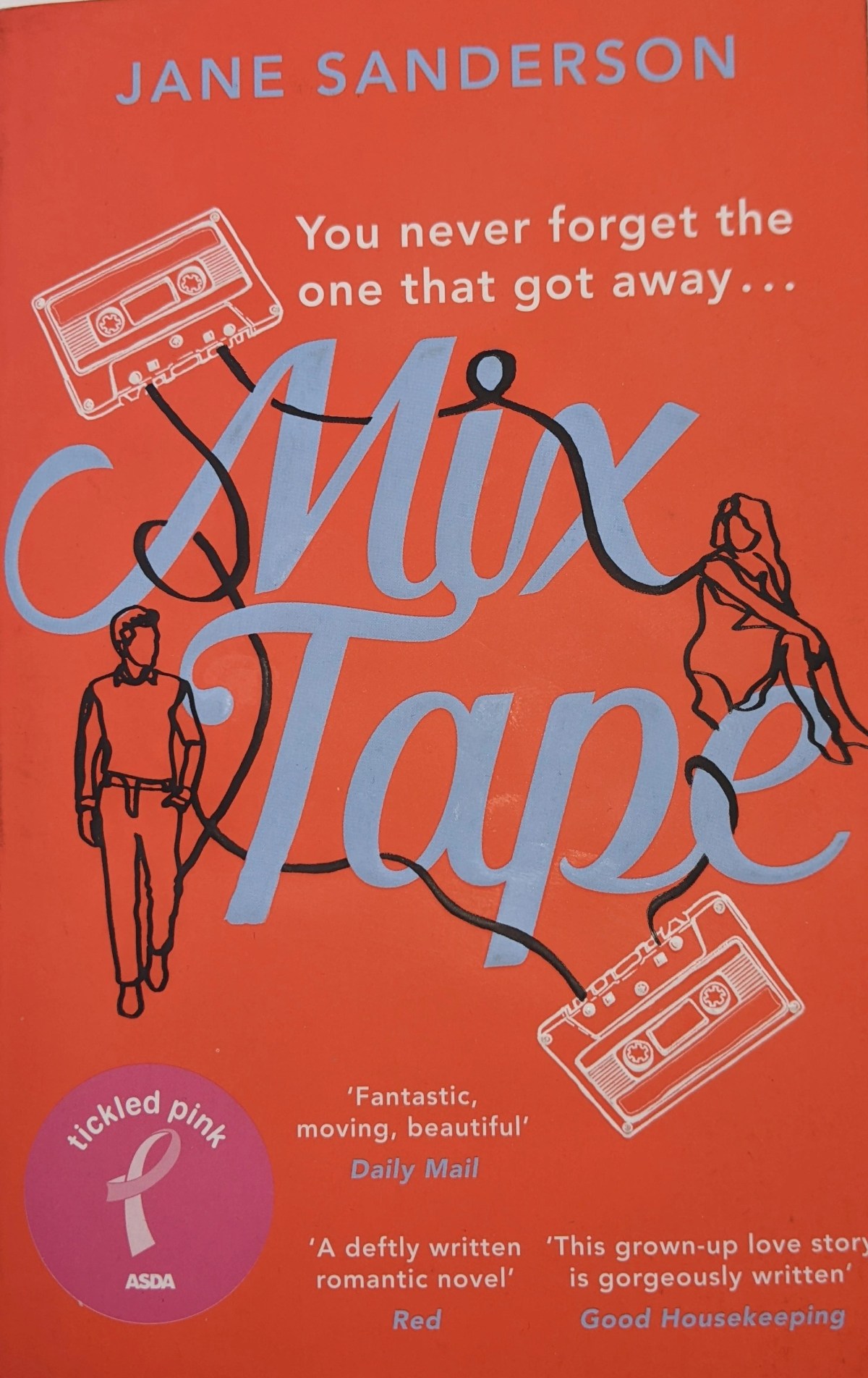
‘Mix Tape’ is a story that millions of us can relate to. First love, first lust, first dates, first kiss, first fumbles. Whatever romantic firsts they were, they’re all in the back of our mind somewhere just waiting for an image or a film or just a phrase to release them back into our consciousness for even a few minutes. With Dan and Alison it’s music that’s the key to their past as well as their future.

Having fallen headlong into teenage love and discovered a mutual passion for music as well as each other in the 70s, fate intervened and life, however painfully, moved on. Now, many years later and into a new century while living in new countries, social media and music could be about to intervene and spark old feelings back into life.

If you’re a music lover, you’ll love this book. It was the link to music that prompted me to buy it in the first place. I even wrote a blog about mix tapes (link below), having listened to Jane Sanderson being interviewed about the book on BBC Radio 6 Music with Lauren Laverne. But it will appeal to the social media devotee in us all too, as well as those who are just soppy enough to enjoy a good love story.

Whatever Happened to The Mix Tape?

In their younger years together Dan had made mix tapes for Alison as a way of expressing himself, while also introducing her to new music. Years later, via social media their choice of songs will serve to help them get to know each other once more, as well as giving oxygen to a flame that never quite died out, despite the way their time together had ended.

Beginning in 1970s Sheffield, the story jumps from back then to the present day throughout, showing us the various contrasts in the lives of our two protagonists. We learn that after leaving Sheffield, Alison somehow ended up on the other side of the world in Adelaide. She is successful and seems happy. Meanwhile, Dan’s life has changed too and he too has moved away from his home town, now residing in both Edinburgh and London. He has turned his passion into a career and is now a successful writer as well as a music journalist. Both appear to have made good lives for themselves and moved on from their passionate teenage time together. But appearances can be deceptive.

‘Mix Tape’ is a lesson in the power of both music and social media. It shows how one simple click can change lives, both for better and worse. Music is the bond that keeps Dan and Alison together, however far away they might be from each other and so when Dan rediscovers Alison via Twitter and sends her a song as a reminder of the old times, we sense that it won’t stop there. We know that this first love is one that still has unanswered questions. It’s just a case of whether they’ll remain unanswered…

The characters are really relatable and I found myself really liking both Dan and Alison. But away from the characters, the story may test your morals too. But I’ll leave you to discover that for yourself. Sanderson’s brilliant descriptions of sights and sounds also bring her locations to life too. So it was nice to be informed of both a Sheffield that I hadn’t visited – as opposed to the modern day city that I’d say I know quite well – as well as the delights of Adelaide with its flocks of parrots, natural beauty and year round heat.

The use of songs as a narrative device to help Dan and Alison reconnect is brilliant too. Not only does it give us a real sense of what the characters are about and who they really are, but it has an effect on us as readers too. I found myself connecting with the songs that became the playlist for the narrative. Where I already knew the song I’d invariably have a memory connected to it and when I didn’t know the song, I looked it up, so ‘Mix Tape’ has now added some new songs to my playlist.

‘Mix Tape’ is a brilliantly written piece of fiction. The story will keep you engaged throughout and you can’t fail to get involved in Dan and Alison’s journey. The music, social media and geography of the story also give you a lot to get your teeth into as a reader. But, most importantly this is a tory about good people finding each other, despite the barriers that their lives put in place. I’d thoroughly recommend ‘Mix Tape’ – a really well written page turner that you’ll only put down so that you can listen to some of Dan and Alison’s favourite songs!

I give ‘Mix Tape’

Rating: 5 out of 5.

Book Review: Big Game by Dan Smith

How do we measure manliness? What is it that we do that tells the world, ‘yep, he’s a man now’? Different cultures would give different replies and different definitions. Some would say it comes with a certain age, others a certain responsibility. For 13-year-old Oskari, it’s about something very different indeed.

Oskari lives in a rural hunting community in Finland where tradition is king. And today, tradition dictates that in order to be declared a man, he must venture out into the forest and kill a wild animal. When he returns back to the ominously named Place of Skulls with his quarry, then he will be a man. What a way to celebrate your 13th birthday!

From the very start of this novel you get the feeling that this manhood business could be a bit of an uphill struggle for Oskari. He seems like a nice kid (which in itself could be viewed as a bit of a barrier to becoming a man) but the more we read, the more we discover that the odds here are thoroughly stacked against him.

Firstly, Oskari’s dad is pretty much the village hero, having killed a bear when it was his turn to enter manhood. I mean, a bear! How do you follow that? As a man who jumped firmly skyward when a tiny mouse ran over his foot a couple of weeks ago, I think I’d be taking a net and looking for the odd stickleback or butterfly and just accepting that the village didn’t really see me as much of a man! But Oskari – who early on declares himself the best hunter in the village – is determined to live up to his dad’s legacy.

However, when we join him on an ultimately fruitless solo hunt at the start of the novel, it becomes clear that he’s going to struggle. With a deer in his sights and conditions almost perfect, his shooting is so weak that the arrow simply bounces off its prey. Later, he is sniggered at by the other boys at the start of the hunt and then, when he receives the ceremonial bow, he finds that it’s so big that he can’t even fire it properly. Maybe this manhood thing is going to take a little while longer.

Tradition is tradition though and Oskari and his father are determined that he’ll have his day. So, after a faltering start and with little confidence left, he heads out for a night in the forest.

‘Big Game’ tells the tale of Oskari’s night in the forest and his quest to be viewed as a man by his peers and the elders of the village. Starting off at the tradtional meeting place, The Place of Skulls, Oskari ventures off into the trees determined to prove himself. However, he could never have predicted what lies ahead.

Oskaris’ coming of age is dramatic to say the least. And while it’s certainly far-fetched, the story makes for an exciting read as he stumbles over a manhunt and then battles to bring something home that will not only prove that he’s a man, but arguably save the Western world in a quite remarkable twist.

However remarkable and maybe even a bit silly the action is, Dan Smith has written an excellent book. After all, if we can’t drift away into something or somewhere beyond imagination with books and films, then what’s the point? So it would be churlish to quibble about the details here. Better to simply suspend your disbelief, pick up the book and read on.

The action here is fast and fairly extreme as Oskari is charged with not only proving that he’s a man, but saving his rather unusual hunting trophy from the grasp of a group of highly trained, professional killers. But Oskari has the local advantage. This is his territory, his hunting ground, he has decades worth of historical knowledge; better still though, this is his day! Nothing is going to be allowed to get in the way of Oskari becoming a man!

‘Big Game’ is a book that is full of action and packed with twists. Whether you’re of the age that it’s aimed for – tweens and teens – or a fully fledged, should-know-better-than-to-read-this-kind-of-thing adult (which in some people’s opinions I will be) this is a real page turner and in fact, more than anything, it’s just good fun.

I would absolutely recommend ‘Big Game’ to you. Yes, it’s pretty improbable. Yes, some of the characters are almost cartoonish and yes, there’s very little chance of anything like this ever actually happening. But it’s undoubtedly well written, well researched and in Oskari, has the kind of character that you can’t fail to root for!

I give ‘Big Game’

Rating: 4 out of 5.

Poetry Blog: What next?

About two years ago I started writing poetry. It was something that I’d experimented with before, but never really formally or with any kind of purpose. I must have written poems back in the stone age when I was at school, but would have no written record of such ramblings. And anyway, my school wasn’t the kind of place where a boy wrote poetry, unless he was ordered to by one of the psychotic teachers. Boys did sport, yelled a lot, swore and most likely spat on the ground like their life depended on it. Boys. Did. Not. Write.

Any poetry written in class would be hidden away from prying eyes and mocking tongues. Any hint of a notebook being carried around would provoke instant hatred and could only lead to years of cruel abuse from your peers (and probably even some of your friends).

As a younger adult, I’m sure I’d tried to write poems, but I’m pretty certain that when they existed, it would have been on scarps of paper and that these were long ago confined to the recycling plant.

I’ve never been a confident person. In fact, I’d go as far as to say that I’ve learnt to wear a convincing mask in order to hide what is actually a rather crippling lack of confidence. So, although I felt like I had something to say and that I could write, it was going to take a seismic shift to make me commit ideas to paper in the form of poetry.

It turns out that ‘thing’ was lockdown. I was locked down almost immediately once the decision was made. While colleagues stayed in school and battled to keep some sense of normality in people’s lives, I was told that I was vulnerable and had to stay at home. Couple that with a complete failure in terms of remote learning with my laptop and there were a huge amount of days waiting to be filled.

I’d started my blog by then and so was in the habit of writing. As can be the case with me, I wasn’t really in the habit of sleeping regular hours though. And one night, lying awake with words whirling round my head, I realised that I had the bones of a poem keeping me awake. So, I crept downstairs, opened a notebook and wrote a poem; one draft and what felt like no particular thought needed. I don’t know whether it reads like a one-draft-no-effort poem, but it was done! I thought I’d published that poem as part of the bog, but looking back, it doesn’t seem so.

From there I came up with the idea of a lockdown writers’ group – Lockdown Literature, you can read about it on the link below – where friends and colleagues could publish anything they’d written; whatever it took to stave off the boredom of being isolated like never before. Inspired by others, I was able to write a few more poems.

Lockdown Literature

Our Lockdown Literature group made me think about what to do with my poems. By now I was writing them regularly and so, once I’d decided that a) I had the confidence to share and b) I didn’t feel it was too much of a pretentious thing to do, I started to publish some of my poems as blogs, adding a little bit of explanation about the poem and about my thinking when writing it. They seemed to go down well and it gave me another blogging avenue to explore.

Now though, I want to develop things a bit. It’s lovely that people who read the blog like my poems, but I want to really test myself with it and I must admit that I’m unsure of how to move forward. I’ve considered things like poetry competitions, but from what I can see, a lot of them require entries to be unpublished and I don’t really know if my own blog counts in those terms. However, it’s stopped me entering anything so far. It’s certainly something that I need to look into and if anyone has any advice, I’d gladly listen.

Another route I’ve wondered about with my poems is to attempt to put together an anthology, but it’s an area that I know next to nothing about. I realise that I could self-publish, but without adequate promotion, even an anthology is not going to gain any interest. Is it the kind of thing I can send to publishers? If so, how do I group poems and how do I approach agents or publishers? Again, it’s something I really need some advice on, so if you’re reading this and you have any insight, I’d be really grateful for your help.

The third and final way of developing my poetry terrifies me. In actual fact, I’ve only considered it because a few people have suggested it. One kind soul even invited me along to actually take part. What am I talking about? Performance poetry! This is something that I can’t deny tempts me, but despite my advancing years and the fact that I talk at people for a living, the thought of standing on a stage – makeshift or otherwise – in a room full of people, reading out my poems, makes the hairs on the back of my neck stand up and my tummy feel a little bit poorly!

It’s not actually the thought of an audience that bothers me very much. No, it’s more the thought of exposing something as personal as my poetry to what would likely be an entirely new audience. Every day of every week brings an audience of harsh critics in the form of pupils in a classroom, so speaking in front of people is second nature. And not to play the tortured ‘artist’ here, but the idea of reading so many personal words (does that make sense?) and even considering myself any kind of poet, feels very much beyond me.

Still though, I find myself trying to pluck up the courage and find the time to attend such an evening, not as a performer, but as a punter just to try and see what it’s all about. Maybe once that step is taken, I could find the courage to put myself down for some kind of open mic slot. Even typing the words fills me full of dread though, so it would be one hell of a step to take!

So 2022 has to be the year that I trying and ramp up my poetry game. It reality feels like something that could develop and something that I believe in somewhere at the back of my mind! I just need to work out how.

As ever, feel free to leave a comment, especially if you have any suggestions that might help me!

Book Review: ‘There’s a Boy in the Girl’s Bathroom’ by Louis Sachar

For the first few chapters of reading this book I really didn’t like Bradley Chalkers, which felt a bit mean given that he’s a primary school child. But, as a teacher, it felt like everything he did was calculated to disrupt and irritate and that Bradley didn’t want to do anything he was told to do. I’ve known a lot of Bradley Chalkers in my time in the classroom!

Then, the more I read, the more I started to understand him. The more I understood him, the more I felt sorry for him and wanted him to have more to his days than picking on girls, threatening to spit on his classmates and telling lies. But even Bradley’s lies and fantasies are endearing. Away from school he has an army of friends in the form of many of his toys and his conversations with this gang made me fall for him all the more!

I first heard about ‘There’s a Boy in the Girls’ Bathroom’ from Twitter. I think it was a recommendation from a comedian that I follow and the gist of his tweet was that everyone should read the book in order to enjoy the kindness inside. So, I bought the book. Actually, that’s a lie worthy of Bradley Chalkers himself. What happened was that I put the book on an Amazon Wishlist and my wife bought it for me! And what a choice it turned out to be!

Louis Sachar is undoubtedly more famous for his YA novel ‘Holes’ which is itself a wonderful read. I must admit, even though I’ve read a few of his other books I’d never even heard of this one. And while Twitter can be a real snake pit at times, it’s recommendations like this one that make me glad I ever logged on. ‘There’s a Boy in the Girls’ Bathroom’ is a kids’ book but it’s very much accessible to all. Whether you’re of elementary school age or left education a very long time ago it doesn’t matter; everyone should read ‘There’s a Boy in the Girl’s Bathroom’. Literally everyone.

The story follows the fortunes of Bradley Chalkers, an elementary school problem child. Bradley is a loner; at first glance mean, angry and disruptive and it seems like everyone has given up on him. Until he’s given an appointment with the new school councillor, Clara who immediately takes to him, helping to change his life for the better. But this isn’t a simple and formulaic happy ending kind of book. There’s plenty of resistance and self sabotage from Bradley along the way and this makes for a comical, yet often sad read.

This is essentially a good news story though. Despite his protestations and his resistance to change and the help of people around him, Bradley begins to make friends and live what we’d happily term a normal life. But the journey from problem child to golden child is never going to be easy. There are traps and trip hazards along the way and just when you think he’s finally cracked it, Bradley always seems to fall or fail.

‘There’s a Boy in the Girls’ Bathroom is a beautifully written book. Sachar’s characters, particularly Bradley, are wonderful and very easy to imagine. I always like a book where I feel that I can consistently ‘hear’ the characters whenever I pick it up, and this book has that quality in abundance. It’s a lovely, engaging story that will have you smiling, laughing and wincing in equal measure. So what are you waiting for? Get yourself a copy – or just put it on your Wishlist and wait – and fall just a little bit in love with Bradley and his life.

With a great big smile on my face and the realisation that this won’t make a jot of difference to sales of the book, I’d give ‘There’s a Boy in the Girls’ Bathroom’…

Rating: 5 out of 5.

Book Review: ‘Marriage Material’ by Sathnam Sanghera

Every now and again, a newspaper or a magazine that I read will publish a list of some kind of essential reads. It might be an end of year poll or just something that links to a particular time of year, but for as long as I can remember I’ve cut these lists up and stashed the cuttings elsewhere as books that I will mean to get around to buying and reading. ‘Marriage Material’ was published in 2013 and was found on such a list and then, years later, recovered from whatever receptacle it had been stashed in. I finally got round to buying it last year! And I have to say, it’s the kind of book that makes me thankful for my hoarding!

‘Marriage Material’ is a novel that is predominantly about families. From the love and the tenderness through to the irritations, the regrets and the great big falling outs. But it’s about much more than that too. Set largely in the West Midlands from the 1970s and 80s right through to the present day, the novel has culture, prejudice and division at its heart and for those of us who grew up in these times – if not the precise location – it makes for a really interesting read as well as one that brings back times that were a lot darker in their attitudes to anything or anyone that was deemed ‘different’.

The book tells the tale of Arjan Banga and his family with the story being told via a dual narrative taking place some years apart, before the two sides come together in an interesting twist. I loved the narrative style here as it left me not only trying to follow the story but also trying to work out the connection between the two. I think I was a little slow on the uptake, if I’m being honest, as it wasn’t actually that hard to work out, but for the first third of the book I must confess that I didn’t make the connection!

The family are immigrants to UK, so as the story is set in the 1970s and 80s, the book covers the ugly racism prevalent in our country at this time. However, I’d say that Sanghera treats these issues with a light touch and is prepared to write with humour when tackling some of the notable instances of prejudice in the book, such as the geographical inaccuracy of most of the insults hurled his and his familys’ way. It certainly puts the ignorance of his abusers into perspective and Sanghera’s observations made me smile on more than one occasion.

As the two narratives collide the story picks up pace. When his father dies Arjan heads home and immediately feels family pressure to take over the business. But he desperately doesn’t want to slip into the kind of stereotyped life he’s worked so hard all his adult life to avoid. However, seeing his mother again leads to him worrying about her health as well as her ability to run things and he’s is forced into a couple of decisions that will have a huge impact upon his future. One of these decisions is to track down a long lost relative and her impact on all of their lives has mixed, but ultimately positive results.

Rather than returning to his far more cosmopolitan life in London, he opts to stay at home to help run the business, as well as looking after his elderly mother. However, with a fiancé patiently awaiting him back in London and old acquaintances vying for his time in the Midlands, his life just gets more and more complicated. Inevitably, Arjan messes things up!

Marriage Material is a great read. Arjan’s life veers from one catastrophe to the next and as a reader you can’t help feeling sympathy, even when it seems abundantly clear that he must know he’s making a terrible decision. There’s a real humour – often quite dark – to the book and though at times it seems seems like Arjan’s life is spiraling out of control, you can somehow still laugh at his predicament.

In the end it all works out for the family. But not without the kind of scene that wouldn’t look out of place in a Tarantino film near the end. But just when you think it might all end in the kind of tragedy that none of us saw coming, there’s a glimmer of light at the end of the tunnel. A happy ending of sorts and certainly not in the way that you might have predicted when you first picked up the book!

A funny, engaging and just all-round excellent read, I’ll give Marriage Material

Rating: 4.5 out of 5.