Book Review: The Ritual by Adam Nevill

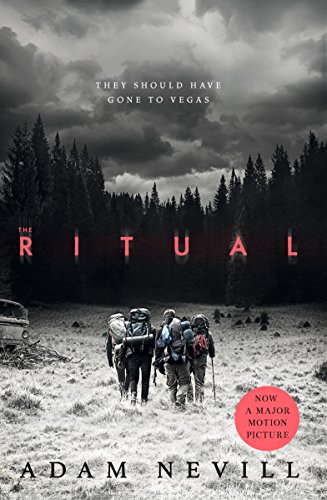
If, like me, you’re about to meet up with a mate or two for a bit of a reunion maybe you shouldn’t read The Ritual just yet. Especially so, if you’re off on some kind of outdoor pursuit. You might get a little bit put off! Once you’re done though, I’d definitely recommend it.

The Ritual follows four university friends who, since graduation, have vowed to keep in touch by meeting up at least once a year to have some kind of break. This year, Luke, Phil, Dom and Hutch have decided to head into the Arctic Circle for a bit of an adventure. Because, when you’re approaching middle age and fancy a bit of a change, the unforgiving conditions of northern most Sweden are the first things to spring to mind! Like the tagline says, they should have gone to Vegas!

While the premise of the novel – which was also made into a 2017 film starring Rafe Spall – might suggest some kind of farcical comedy, it’s not long at all before nobody’s laughing. The weather is far worse than the friends had prepared for and within 24 hours everyone is soaked to the skin and it doesn’t feel like they’ll ever dry out. And this being the Arctic Circle, it’s beyond cold too. Throw in the fact that two of the group are what we might politely call ‘past their best’ fitness wise and this is really not the fun reunion that they’d planned. But then, deciding that a short cut is the best option, they get lost.

In theory, I’m a big fan of exploring the wilderness. I dream of trekking through isolated far off places and striding into the unknown, exploring landscapes that I’ve only ever seen on the television before. In reality though, I’d be pretty rubbish at it. We once encountered a rattlesnake in the Grand Canyon and I was beyond terrified! So, I can fully sympathise with the friends in the book and the injuries & lack of preparation that hinder their progress. I can’t begin to imagine the horrors that they’re about to face though.

Once they get lost they take more wrong turns and encounter a couple of eerie places that suggest that the forest not only has a dark history, but also that it may well be harbouring the kind of predator that no one wants to encounter. Have they been being watched all this time?

The Ritual sets out to scare us. And in parts, it succeeds brilliantly. As the predator hunts them down I could almost feel its presence. What it actually is remains a mystery as Nevill restricts his characters and us, the reader to glimpses in the dark and the frightened, snatched reports of those that have had some kind of mysterious encounter. And what’s more scary than the thing that you can’t even see, but just know is there?

When the friends are at their weakest, it strikes, deepening the fear for everyone concerned and as a reader you’re left trying to work out exactly what’s happening, but also if anyone will actually manage to survive. Gaining only glimpses and hints of the predator’s presence leaves us as confused as this gang of friends, but undoubtedly adds to the tension and horror that Nevill is trying to create.

Throughout their journey through this dense forest we learn snippets about pagan sacrifice and old Scandinavian culture – two of the gang have done their research – and as a reader yo begin to get the feeling that what is stalking the men is more than something as straightforward as say a pack of wolves or some kind of bear. And so, the story becomes more than just a horror piece, but also a historical piece too where we learn snippets about a place, history and culture that aside from stereotypes based around nudity and IKEA, we probably don’t know a great deal about.

I was fascinated to read about the fact that large parts of the landscape where the characters trekked would have been untouched by humans for hundreds of years. But then, when you think about it and how far north on the planet it is, this stands to reason. It adds to the feeling that ‘they should have gone to Vegas’ though!

The Ritual becomes more than a tale of four friends being hunted by a predator in a remote landscape with a brilliant, yet slightly absurd twist near the end. I can’t ruin it for you, but what seems like a rescue turns bad very quickly sit and it turns out that a sacrifice will be made. And it’s from as unlikely a source as you could imagine.

Nevill writes brilliantly, subtly building tension, throwing in more problems when we least expect them and also when the friends could very much do without them while presenting us with a group of characters that are both relatable and realistic. This is much more than just a thriller.

If you like thrillers, horror or a bit of a mystery, The Ritual might be the kind of book for you. I’d certainly recommend it! I’d give The Ritual…

Rating: 4 out of 5.

Poetry Blog – ‘The old tyrant’

This is a relatively new poem, written about one of my grandfathers. I barely knew him, but a while ago I got one of those DNA kits as a Christmas present and as a result started to research my family tree. At the end of it all, not only was I disappointed to have no sign of any Viking ancestry, but I felt I knew my grandfather even less.

It’s always been something that held an interest to me. Both my mam and dad come from big families and so, growing up, we were surrounded by aunties, uncles and cousins whenever there was some kind of ‘family’ occasion. However, for any number of reasons I never felt that I really knew them that well. Being quite a shy kid probably didn’t help.

We lived in a different part of Newcastle to the rest of the family and so didn’t see them on a day to day basis and then as I got older I was busy with friends and different interests. Going away to university didn’t help my cause either; if anything, it made me stick out like a sore thumb! When I finally moved away from the North East entirely, I pretty much drifted away from all but immediate family.

The relationship with my grandparents on both sides was difficult, to say the least. With this grandad, he died when I was very young and there always seemed to be a reluctance on my parents part for them to take us to see our grandparents. If I’m honest, it doesn’t look like they were at all interested in us and I literally can’t remember ever meeting my grandma. However, I do have one extremely vague recollection of my grandad which is where the poem comes from.

'The old tyrant'

If I close my eyes, I still see him
from exactly the same vantage point, every time.
A dot of a man, his appearance betraying every terrifying snippet
I'd ever heard.
Brown shoes, dark trousers, midnight blue raincoat
and a black trilby hat, shadowing his features,
making those eyes even darker, so that it felt like he looked straight through me
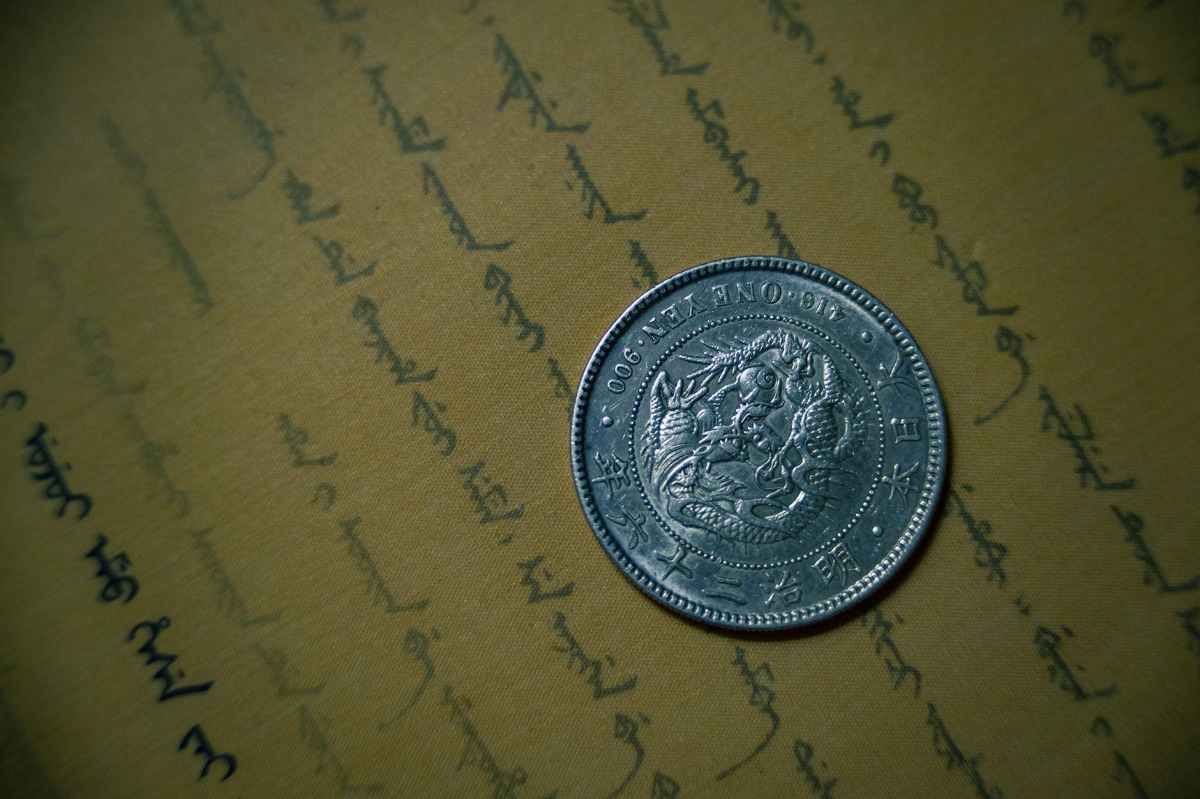
as he crept closer, a shining silver coin grasped in bony fingers.
The childcatcher had come, bearing gifts.
Then, with a pat on the head, he was gone.

Everything else is mystery, legend,
even your name uncertain.
"The old tyrant", my mam would say with just a hint of a smile,
"a villain", but maybe an entertainer, singing and dancing
on the West End stage, if that was to be believed,
the cold, hard presence passing your distance
through the generations,
many leads to your life, but never a final destination,
many strings to your bow,
but barely a finger print of recognition left behind,
the untraceable ghost, continuing to haunt
despite the fact that none ever really knew you at all.

When I was very young my parents ran a business. As part of the business we had a shop and a market stall, I think. My dad would be away buying crockery – plates, cups, bowls etc – in Stoke-on-Trent for the business (that’s what we sold…everyone needs stuff to eat off, right?) and my mam would be running the shops. As I was a poorly child (yes, heart nonsense even at that age!) I’d often find myself in the shop.

One day, when both parents were there, my grandad paid us a visit. I was perched on a stool in a corner of the shop, like some gaunt, pale kind of mascot and he came in, spoke to my parents a little bit as far as I can remember, and then made his way across to me.

As the poem says, he just came over, pressed a coin into my little hand and then left. That was the only interaction that I recall. No talking, no affection. He might have smiled, but I can’t remember.

Growing up, I picked up nothing but negativity around him, which comes out in the poem. Apparently, he wasn’t the greatest dad – although times were very different back then – and was very tough on his children, one of them my dad. When it came to seeing his grandchildren, he just didn’t seem to be interested. Well, not in this one anyway! So, I’d hear the types of descriptions that come up in the poem, labelled at him time and again.

When I came to research my family tree, he was just as big a mystery as ever. I’d been told that he was ‘a dancer and singer’ on stage in London by my dad when I was a kid, but there wasn’t much evidence of that. In fact, what he actually did remained a mystery and I uncovered bits of evidence that he had possibly led a bit of a double life a times. I won’t go into it because it’s obviously quite personal, but also because it left me no closer to knowing a great deal about the man!

So there we go; my grandad, man of mystery and little affection or it might seem, any kind of feeling whatsoever!

I hope you enjoyed the poem.

Book Review: ‘Don’t Need The Sunshine’ by John Osborne

I’ve always loved the seaside. Newcastle, where I was brought up, is close to some of the best coastline that the UK has to offer, so there was always an easy access day trip whenever one was needed. We’d spend entre days there as kids during the summer holidays. Further to that, being born into a family that placed a high value on the power of a bracing walk meant that windy beaches were our regular stomping grounds. In fact, we went every year on New Year’s Day as a family tradition!

So, it was a pleasure to read this book, as well as a nice trip down memory lane. John Osborne’s ‘Don’t Need The Sunshine’ is a celebration of the charms of the British seaside and when I caught sight of the cover and two primary school aged kids in decidedly 70s clothing eating ice creams at the beach, I was always going to buy it. And it proved to be money well spent.

While working in Scarborough for a summer, Osborne is struck by a feeling of nostalgia for the traditions of the British seaside. And so begins an often rainy odyssey of trips to a variety of UK seaside spots.

John’s trips begin in Scarborough, which if you aren’t aware, is a classic British seaside town. A long, sweeping sandy beach, a harbour, gift shops, amusement arcades and various bars and pubs dominate a town where thousands flock in summer in search of seaside fun and entertainment. These days it’s slightly run down, although still a great destination for a few days at the beach, but Osborne finds much evidence to support the fact that the nostalgic activities he remembers from childhood are still very much in play in Scarbs.

From Scarborough, Osborne journeys down and around the country taking in a variety of seaside destinations. I was really disappointed that none of my old North East haunts were visited, but with such subject matter you’re never going to please all of the people all of the time, given the sheer amount of coastline that we have on our little island. That said, a chapter on Whitley Bay or Tynemouth would have been much appreciated!

There are various tales here though. From historical tales of Skegness to the arcades in East Anglia, following the suicide watch at Beachy Head right through to the ‘ultimate’ sandcastle competition and a remote western lighthouse. The British seaside provides Osborne with a wonderful collection of experiences to immerse himself and the readers in, as well as a selection of wonderful people to spend time with.

The result is a fascinating read. It might be quite a niche subject and possibly of much more appeal to us Brits than anyone else, but I’d still thoroughly recommend it.

‘Don’t Need The Sunshine’ provides a wonderful dose of nostalgia about a slightly faded British institution. Millions of us grew up looking forward to days out at the seaside; some of us still do. But the typical British seaside town has changed immeasurably from what we’d see in their heyday. The rise of first the package holiday in the 60s and 70s and then budget airlines in the early 2000s signalled a death knell for many of our resorts. However, the popularity of ‘staycations’ mean that they are making something of a comeback. Still, most of what Osborne finds just isn’t the same.

That said, he finds joy and hope in most of the places that he visits. Sometimes, it’s nostalgia based, sometimes it’s fleeting, but it’s joy all the same. And that’s the thing about the British seaside; there’s always at least a sliver of joy to be had. It’s just that sometimes you have to take a little more time to look.

Osborne’s writing is excellent. As he describes the people and places that he finds on his trips, you’re transported there with him. He’s sympathetic to the plight of our seaside towns so that everything has a positive outlook and while it doesn’t serve as some sort of propaganda, the work that’s going on is highlighted and praised appropriately. The resorts are treated with a genuine affection as Osborne reveals that when you scratch beneath the surface there’s a lot going on in our seaside towns. He clearly loves them, like a lot of us Brits still do. And that’s what makes ‘Don’t Need The Sunshine’ such a great read. Osborne’s subject matter has something for everyone; whether your ‘of a certain age’ like me and looking for a trip back in time to a different age and time or you just live a long way from the seaside and only take trips there ever so occasionally.

It would have been easy to write a book that was sniggering, cynical and sarcastic about the UK’s seaside towns. But thankfully that hasn’t happened here. Instead, ‘Don’t Need The Sunshine’ emphasises the positives and the diversity that you’ll find, touching also on the glamour of the past. And I for one absolutely loved it!

I give ‘Don’t Need The Sunshine’

Rating: 4 out of 5.

Poetry Blog: Leaves on the grass

A poem about Autumn, this one. It’s the kind of thing I’d usually write and then forget about, only to discover it sometime later and add it on here…in Spring. Not this time though! This time, I’m unusually on the ball!

‘Leaves on the grass’ was written after a particularly strenuous weekend of clearing leaves from our back garden. I felt rather pleased with myself for doing it, if I’m honest, as it’s the kind of job that is usually left to wait by me. Then, I end up having to do it in the freezing cold of late November or early December when the ground is wet and I end up filthy and soaked. This year though, it was a spur of the moment decision on a particularly sunny weekend when I felt a bit more energetic than usual. And so, old clothes on and gardening gloves firmly in place, I dragged our brown bin onto the lawn and got cracking.

The resultant poem came after when I felt thoroughly work out by my exertions. Here you go.

Leaves on the grass.

First, it's leaves on the grass,
suddenly noticeable,
a dozen at most
but added to daily
and then, months after shedding blossom,
small brown, red, green eye shapes
decorate the edges of the tarmac on the driveway,
escaping in the coming days onto the car, the road 
and when you look again
the falling Autumn rain
seems to gradually erase all colour,
like a life slowly sliding away,
too weak to fight, too old to care anymore,
too afraid of losing all dignity 
to heave on anything too bright,
visible again by scrolling through images on a phone,
a reminder of a distant rousing prime,
gone, but not quite forgotten,
stirred occasionally by the thrilling glee
of a fresh bright morning
when the fountain of youth seems to flow
without fear and we stride out 
and marvel at the amber and gold
before it leaves us again
and we brace ourselves, steeled
for the cold and the dark of what comes next.

There is a more thoughtful side to the poem. It’s not just about Autumn in that I’ve tried to add something about ageing and life in there too. I think a nod to Gillian Clarke’s poem ‘October’ must be given here as I’ve tried to look at similar themes, if only briefly.

I tried to capture the sense of getting older here – perhaps after feeling so bloody tired once I’d finished doing the leaves – as well as the feelings I regularly have about being so tired out by things that wouldn’t have normally had such a great effect on me. So, there’s a brief few lines about getting older (Autumn being late in the year) and catching sight of your younger self in photographs. This was after my wife sent me a photo of me at my son’s nursery sports day, some time ago. It shocked me to see just how young I looked and made me think about maybe feeling slightly self conscious (or just even more self conscious) I’ve become after a health scare.

Hopefully, the poem ends on a cheerful, hopeful note. There are lines about going out for a walk in the bright, bracing cold of an Autumn day and enjoying the vivid colours of the season and I think that’s me being about as optimistic as I ever get.

Anyway, I hope you enjoyed the poem. Feel free to leave some feedback as I always enjoy reading people’s comments.

Poetry Blog: Halloween

So, I’ve given myself a simple brief for this one. I’d wanted to sit down and give this poem some thought, but for a number of reasons I’ve found myself more than a bit pushed for time. Thus, I decided to write a Halloween poem within a time limit. So, I gave myself an hour to have it written.

I cheated a little bit because I’d started thinking about it a couple of days ago and this morning I wrote a few things down; just ideas, rather than fully formed lines.

Anyway, below is the finished and imaginatively titled poem.

Halloween

The smell of premature bonfires and fireworks drifts across town,
but nothing can distract you from the sounds,
those early shrieks and delighted screams
that despite daylight, still cling on stubbornly to 
sound the alarm of this special night.

You hear them before you see them,
their delight announcing their arrival,
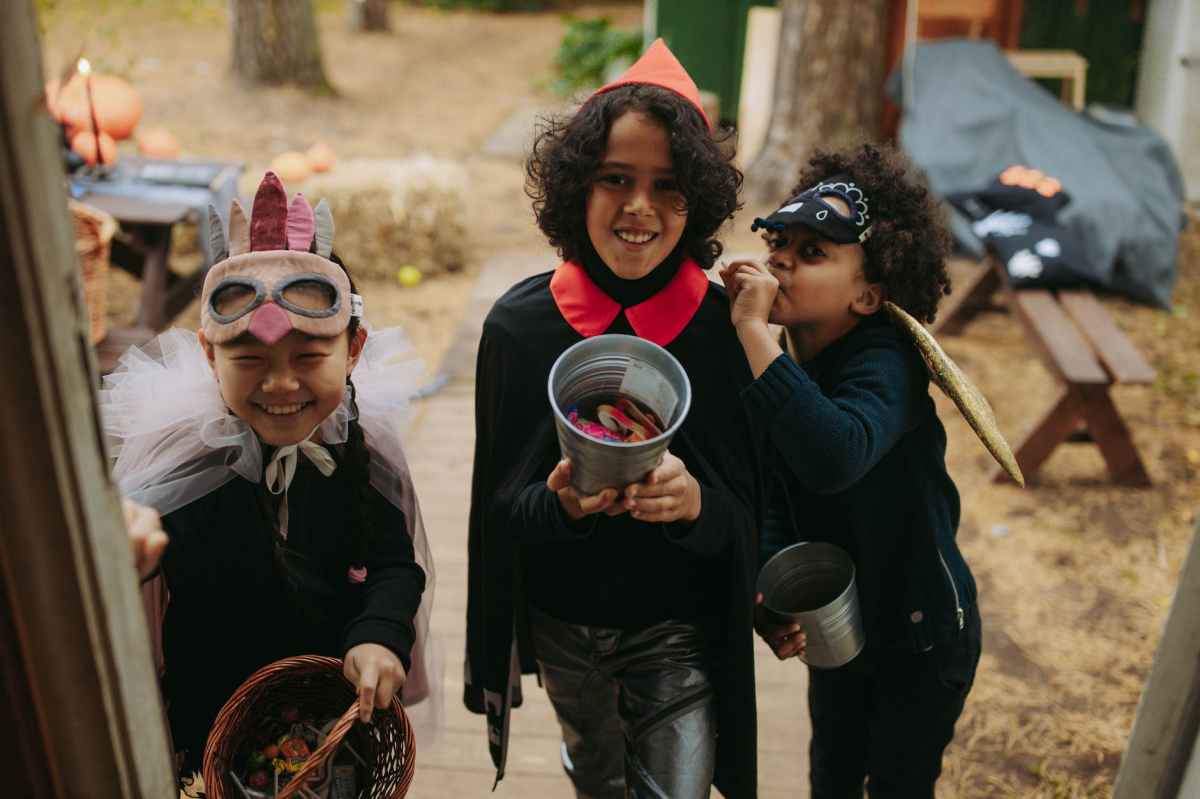
those miniature ghosts, zombies and monsters,
with every so often a rogue Disney Princess,
knocking at a door to tempt someone to part with treats
based upon their cuteness alone.

As night falls, more sinister sights and sounds sidle along,
changing the atmosphere and making even the most cynical eye
dart everywhere...just in case.
The ghosts, monsters and zombies more convincing now,
casting doubt in the minds of anyone approaching from a distance.

Houses, now haunted, promise a bounty of sugar
for those who are brave enough to venture up the path,
creeping past the plastic graves, skeletons and cackling witches,
but the rewards are plenty when you reach the pumpkins
and before too long pockets and bags are under strain
as greedy teens take on just one last door.

Later, as quickly as they filled up,
the streets are deserted and the dead of night swallows up
that short lived sense of fun and adventure.
Tucked away indoors, stomachs are full and parents cling to the hope
that weary legs will soon win out over the sugar rush.

I hope this one captures that sense of Halloween, especially given the time limits! I tried to add as many things as I could remember from trick or treating now that my children are too hold to bother with it anymore. I’m a bit out of practice though!

As ever, feel free to leave a comment! Happy Halloween!

Poetry Blog: A Poem for National Poetry Day

I’ve taken a different direction for this latest poetry blog. Where usually I’d have already written a poem and just dug it out from a notebook, today I’ve written a short poem especially for National Poetry Day. I gave myself a deadline before writing some of it down. Any changes or additions were then made when I typed this whole thing up. I hope you like it.

I only gave myself a short time to think and after trying to write something about Autumn, I abandoned it in favour of writing something about why I write poetry. So, here you go.

The words I'd never say

Usually, it's the words I'd never say,
too self conscious to just let them fly
and only too aware of the stutter, the nerves 
and the glowing cheeks that would greet
the rush of blood telling me that it was safe to speak.

Sometimes, I'm lost in thought,
my own little world and things I'd rather not share out loud.
Futile really. Probably not even anything that
anybody else would need to know,
but it has to come out somewhere, somehow.

Scrawled inky lines crawling across the page,
filled with scribbles, arrows and asterisk
allow the expression that otherwise would stay silent
it could be the birds in the park or fears about health,
or just about a day out that might have left its mark,
this shy boy can still have his say.

I was never a one for writing poetry. There had been the odd one or two over the years, but they were never kept. And then lockdown happened and the words just began to flow. Now there are multiple notebooks with poems in various stages around out house. Hopefully, the poem fills you in a little bit as to why that is.

Poetry Blog: Roots

This one is an autobiographical poem. It’s about a lot of things in my life, but mainly things that have happened, or feelings that I’ve felt since I left home to go to university. It was a long time ago, but due to the upheaval it’s something that I probably still think about every day.

I’m from a city in the North East of England called Newcastle Upon Tyne. If you’re from the U.K no doubt you’ll know of it. If you’re anywhere else, you may still have heard of it and if not, give it a Google; have a look at the bridges and stuff, because it’s a wonderful place. For my money, it’s the greatest city on the planet, but then we’d all make that claim, wouldn’t we? Trust me, I’m right though because it’s a city that seems to make an indelible impact on its people and it certainly did on me.

I lived in Newcastle until I was 19 and can vividly remember, aged 18, telling my Year 13 form tutor that I’d never leave. I genuinely couldn’t envisage a time when I’d leave the place. There just wasn’t going to be a reason to take such drastic action. And then there was, so I left. After 3 years away at university I spent another 5 or 6 months back at home, trying to find a job that never came my way. This was ’90s Newcastle and it felt like I’d never get a break in a city that seemed like it was being cut adrift by a government that had all but destroyed all of our industry. So, I headed south to the Midlands to move in with the girl that later became my wife. We’re still together and nearly 30 years later I still live away from ‘home’, but closer now at least, in Yorkshire.

Roots

Geordie jeans and a head full of dreams
you left your home town, not even suspecting
that you'd never return.
The bridges, the monument, the shops and 
even the river would lose their warm familiarity
and before too long become almost alien,
making you feel strange, yet not a stranger,
displaced, without roots 
and never quite at home, wherever you went.
Every turn presented another stage of 
cultural change and gentrification
while you stood still, a statue without a plinth,
slowly shrinking into yourself 
until you didn't really recognise who or what 
you'd become, functioning behind a mask.
No direction and the wrong turn at every junction,
when the road forked you found the dead end,
falling into a self made trap, again and again
with only glimpses of light to keep you from the dark,
so that even the way ahead was stumbled upon
and even then only chance would keep you from being 
back to square one.
The beacon at your side the only part
of those last ten years,
to stave off the loneliness and put you
back together when,
you'd fallen off the wall again and again,
so that now, still Geordie jeans and a head full of dreams,
there's a reason to face each new day
and a heart to call a home.

The poem is about moving away and then watching the city change. That might have been changing in that I lost my sense of belonging there but also lost the ‘geography’ of the place, if you like so that however often I went back there would be more and more times when I just couldn’t remember my way around or couldn’t place things anymore. Add in the fact that my parents moved from my childhood home to a new village and it all led to me feeling a little alien in and around Newcastle.

The city also grew and was given a bit of a facelift in certain areas, making it far less recognisable and far more difficult to feel at ‘home’ in. Gradually, while I didn’t fall out of love with the city, I began to feel like I just didn’t really know it anymore which was heartbreaking given how attached to the place I had been growing up.

The Geordie jeans bit is about clothing, but heritage as well. There’s jeans and genes in there. The genes are obvious, I suppose. ‘Geordie Jeans’ however was, shall we say, a clothes shop when I was growing up that was a bit ‘budget’, but it was all that my parents could afford. So, I’d be kitted out for home and school in their stuff and very self conscious about it as a teenager.

The latter end of the poem is about all of those feelings coming together to have an adverse effect on my mental health. When we first moved away I knew we wouldn’t stay there, it was just after leaving university too, so there was career uncertainty too. If I’m honest, that’s stayed with me right up until the present day, as much as I love my job and the place where I live.

There’s a little bit of optimism towards the end of the poem. I still retain those dreams, however far away they might seem and as I said earlier, I still have my wife by my side looking after me and giving me strength wherever I go and in whatever I do.

Anyway, I hope you enjoyed the poem. It’s opened up a few ideas along similar lines in my head, so I might write more about those times if I can find the time.

Book Review: ‘Tick Tock’ by Simon Mayo

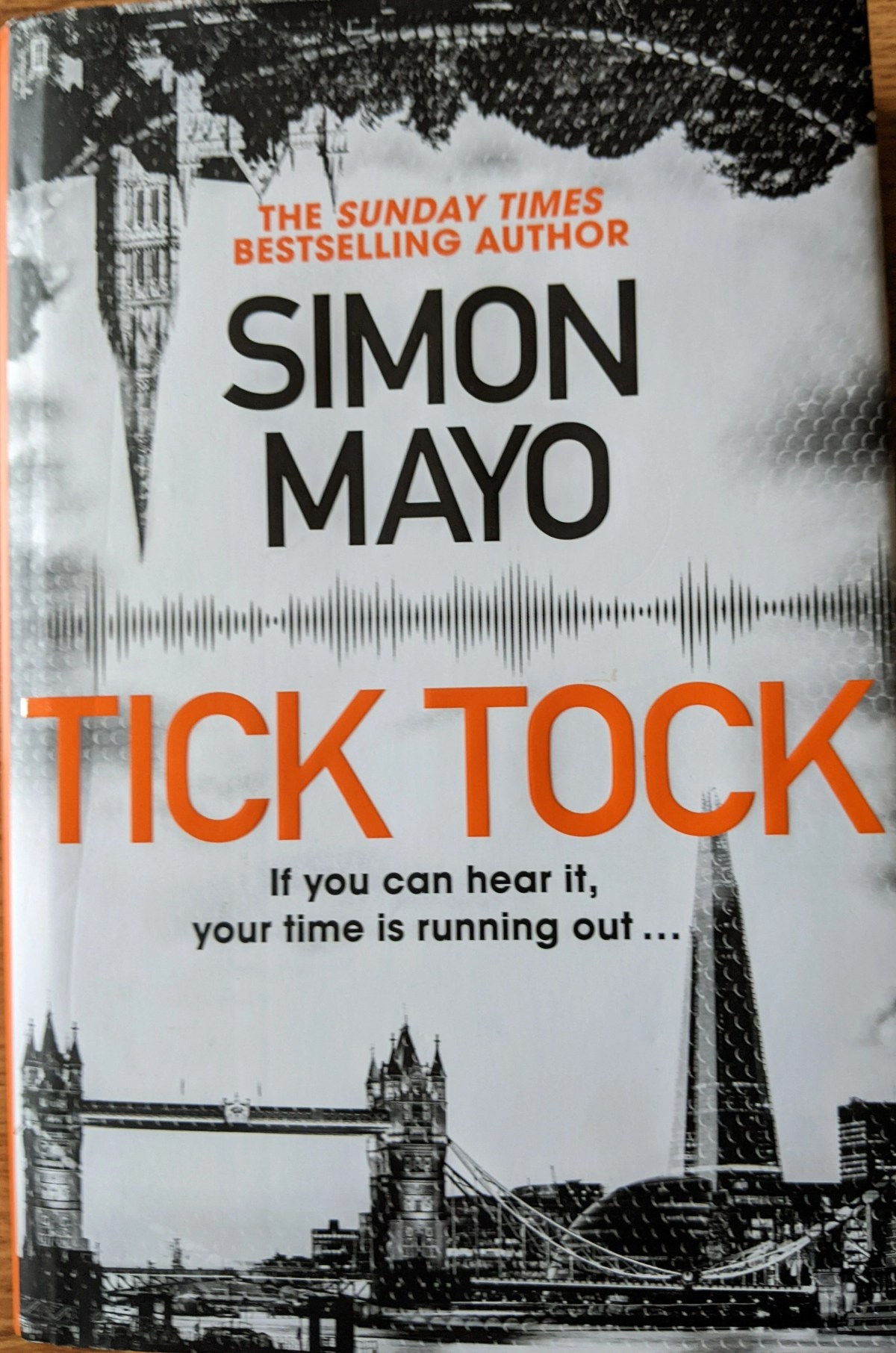
There’s a dedication in the front of this book that reads, ‘It’s another page turner, Mary!’ and it’s not wrong. Put simply, this is just a great read; the kind of novel that you just don’t want to put down.

‘Tick Tock’ is the latest novel from Simon Mayo, best known as a radio DJ in the UK. It’s what I suppose you might call pandemic literature, inspired as it undoubtedly is by what we the kinds of things went through with Coronavirus. This time though, the mystery virus seems to be a rare strain of tinnitus and as such, pretty harmless. But soon and with information being drip fed from various angles, we learn that this is something far more serious and life threatening.

Kit Chaplin is the head of English at a small and fairly exclusive high school in central London. Rose, his daughter goes to the same school and Kit’s presence there is an irritation to say the least and Kit knows it. Lilly, a vaccinologist, is Kit’s partner and her daughter Jess also goes to the school, meaning that there’s yet more workplace awkwardness. Little do they know that soon life at the school will provide a great deal more to think about than whether or not they might bump into each other in a corridor during the change over of lessons. Life as they know it, is about to change in a big way.

‘Tick Tock’ tells a tale that in a way, we all kind of already know. The tale of a pandemic, of ignorance, pain, misinformation and more. And it’s the more that makes this well, more than just a pandemic story. Suddenly, in among the science, there’s also an espionage shaped twist as ‘Tick Tock’ takes us in a direction that we might not have seen coming and it’s a race against time to try to save lives.

I remember reading my first Simon Mayo book, the YA novel ‘Itch’, and for what seemed like hours of reading thinking, ‘Oh, I didn’t see that coming’ as I hung on for dear life. ‘Tick Tock’ has the same thrilling qualities. It’s really well researched too, so as I reader I found myself wanting to read on in order to find out more about the burgeoning pandemic, the possibility of a vaccine and the research behind it. It all adds up to – as I said at the top of the page – a real page turner.

Mayo’s characters are excellently written too and I found myself empathising with English teacher Kit, as someone who does the same job with the same loves and frustrations. Being the father of two teenagers I felt familiar with his home situation too and found myself smiling at every rolled eye and worrying for him when he and Rose were caught up in the hysteria of the pandemic. The stress of the pandemic is obviously all too familiar given our situation a few years back and yet the narrative still feels compelling and original.

The virus moves at a fast pace, as does the narrative and you’ll find yourself feeling desperate to know what’s going to happen next, what fresh twists might be taken and perhaps more importantly, who will make it through. Tick Tock’s cover tells us ‘your time is running out’ and with the somewhat breathless pace of the book, it really does feel that way at times, as you immerse yourself in the increasing sense of panic that is gripping the nation.

‘Tick Tock’ is a brilliant read and another triumph for Mayo. Not only is it an excellent thriller, it’s one to keep you thinking too. So, while you’re trying to figure out who might die, you’re also left with a number of underlying sub plots, wondering how it all fits together. But fit together it does, brilliantly, constantly making you ask questions; the kind of narrative that might just keep you awake at night!

If you love a thriller, give ‘Tick Tock’ a read. However, if you simply enjoy a good yarn, I’d say give it a go too. Complex at times, worrying at others, but a fantastic novel every step of the way.

I give ‘Tick Tock’

Rating: 5 out of 5.

Poetry Blog: ‘Routine’

It’s been a while since I wrote any poetry. Anything complete, that is. There are several pages of notes and drafts in various notebooks and on my phone, as it goes and I definitely need to find time to get some of them finished. I know that there are notes and stuff because I’ve just looked. Every so often when I look I find one that I remember little or nothing about, although they’re usually from some stage of my time at home recovering from heart surgery last year.

Today’s poem is one of them. On first view it looked more or less complete, but once I read it again I made a few changes and additions and came up with what’s below. It’s a poem about the frustration of the every day routine, when the every day routine is slow, dull and painful.

Routine

As the gulls cry above
they seem to mock you,
gliding as they do, freely,
uninterrupted across another slate grey sky
almost laughing at the state you're in.

Beneath there is no flight, no such freedom
as you struggle through the curtained drizzle,
checking your pulse, taking deep breath after deep breath,
careful to slow your steps 
and evermore conscious of how helpless you must look,
knowing that you will collapse like a man at the end of a month long expedition,
somewhat gasping and groaning at your discomfort,
but trying to hide your fatigue 
as you return indoors
where only the slow death march of daytime TV
and snacking await.
The beard, the boredom and the bitterness
that come with early onset uselessness slowly grow,
the ticking of every clock in the place 
the only soundtrack to both your thoughts and your days,
while you sit, restless, clueless about how this all came to pass.

I’ve no idea when this was written. It could have been any of several weeks where I just couldn’t see an end to the weakness and fatigue that I felt. What I do know is that I felt angry. Livid at the fact that while having a pacemaker fitted was undoubtedly essential for me, it came with no real warning. I never would have suspected that the palpitations and dizziness I’d been experiencing on and off for months would have needed anything more than tablets to be sorted out. Maybe that’s why I’m an English teacher and not a cardiologist!

While I’m still a little angry and frustrated, the days of freezing cold, lonely walks are long gone. And while I’m not as healthy as I’d like to be, I’m a lot better than whenever this was written.

I’m gradually coming to terms with the changes that surgery has brought about and slowly recovering, although I think it’s going to be a lot longer before I feel quite myself again. So the poem is reflective of the kind of bleak times that I rarely, if ever seem to have anymore, but it intrigued me when I found it.

Anyway, I hope it made for a decent, interesting read! Feel free to leave a comment.

Book Review: ‘The Wild Silence’ by Raynor Winn

For my entire life I’ve been guilty of falling for stuff because of the way it looks. Pebbles and shells on the beach or rivers we paddled in were frequently brought home because I thought they looked lovely and it felt like life would be enhanced by having them with me. When I was younger I worked in a scrap yard and would pocket coins and other interesting trinkets while sorting through random scrap metal. It felt like treasure at the tender age of 14. As I got older I bought records and books based on their covers.

‘The Wild Silence’ is one such item. It came into my possession because I loved the cover. The blurb made it sound quite interesting to me, but I couldn’t put it down because of the cover. It was from one of those trips to the budget book shop. My guard is always down here and I can spend far too long browsing the shelves and then far too much buying the treasure I’ve gathered.

‘The Wild Silence’ is a memoir that tells the tale of Ray (Raynor Winn) and Moth (her husband) who are fighting to keep their heads above water amidst health issues and homelessness. But this isn’t a story set on urban streets. Instead, Ray and Moth find themselves sheltering in a chapel in deepest Cornwall, having walked the South West Coastal Path while homeless, camping in remote spots nightly.

It’s an interesting juxtaposition; the desperation of their homelessness set against their existence surrounded by the raw beauty of nature. Human pain and bewilderment played out in a rugged yet idyllic setting.

Having lost their home and their livelihood – a Welsh farm – Ray and Moth had been left battling the elements as well as financial ruin. However, ‘The Wild Silence’ finds them somewhat settled in the chapel with at least some sort of future ahead of them. Moth is battling against a debilitating condition, but has began a degree course as he hopes to lecture in the near future. Meanwhile Ray is left in a home that’s not hers, worrying about whether Moth will even make it to his lectures, on edge until he checks in, while trying to avoid the people in the village where she lives.

The book is a tale of a vivid struggle with a quiet, yet quite lovely triumph at its end. Moth and Ray have only each other. In the end, their existence and love is a huge win for the human spirit.

Following on from the best selling memoir ‘The Salt Path’, ‘The Wild Silence’ shows us that there is always a glimmer of light in the darkness. It is beautifully written and I found myself easily picturing the various settings for the novel as well as rooting for Ray and Moth throughout. While ‘The Wild Silence’ can be quite a bleak read at times, it is ultimately uplifting. Ray finds a way to regain her confidence and faith in her fellow man, while Moth simply finds a way through strength and sheer bloody mindedness.

I’d thoroughly recommend ‘The Wild Silence’ although I’d tell you to read ‘The Salt Path’ first! I didn’t, but having heard of the first memoir, I kind of understood what was going on after a little while. Winn writes beautifully which means that we’re willing her and Moth to ‘win’ as we read. When they get their first break it’s a blessed relief and even though their struggles are far from over, we’re left with a sense of hope that is fulifilled by the end of the novel.

I give ‘The Wild Silence’

Rating: 5 out of 5.