Book Review: I Blame Morrissey by Jamie Jones

Music and sport can do funny things to a person. Those of us who take an interest in either or both can become unhinged, erratic, obsessive and just plain odd because of how they make us feel. In fact, if you’re a fan of both, you may well get to a certain age and look back in wonder, unable to fathom out some of your decisions, while simultaneously still believing that they were right all along. People won’t understand you and you won’t understand what there is to understand, but quietly you’ll be fully aware of just what a weirdo you probably are.

Jamie Jones is one such weirdo and ‘I Blame Morrissey’ is his attempt to explain his obsessions with music and to a lesser extent, football.

Jones grew up in the 90s – like me – and was obsessed by music and football – like me. However, while I made some ridiculous decisions while following bands and Newcastle United, I managed to allow life to get in the way and eventually grew into a reasonably well adjusted adult. Sort of. Jamie Jones – and I can’t disguise some kind of jealousy – got more and more obsessive until he was allowing his life to be dictated by song lyrics. And as crazy as that might sound to some of you, it all makes for some incredible stories.

‘I Blame Morrissey’ tells the tale of a young man growing up and trying to navigate the world around him while also dedicating himself to following music and Peterborough United. And for most of the time, music and Peterborough win out, meaning that relationships are doomed because of perceived messages in songs and important dates and occasions missed because Peterborough have a game in some meaningless competition. I mean, we’ve all been there, right? Right?

Jones’s teenage years were dominated by girls, Peterborough United and musicians like Billy Bragg. But like any good music fan his journey takes on various twists and turns, many of them familiar to me and most likely to some of you too. Thus, if you are of a certain age there will be something here for you; a memory to empathise with or the reminder of a song that brings it all flooding back. There are festivals from a time when it was the music that was the most important thing. There are tales of The Charlatans, Morrissey, Ride, the Britpop years, of loves lost and found and of any number of decisions made in the name of whatever the latest obsession happens to be. There’s even some Teenage Fanclub, which obviously resonated with the bloke who writes this blog.

There’s a lot of this book that I feel like I lived myself. A great deal of the rest of it buzzes with a familiarity and a nostalgia that I simply couldn’t get enough of. And for that reason, everything about the book was a joy for me; like stepping back in time.

If you grew up with posters on your bedroom walls that you sometimes talked to, if you ever bought items of clothing because your idols did, if you ever changed your walk or your body language just to be more like your heroes or if you ever endangered a friendship, relationship or even your own life just to go and see a band, then ‘I Blame Morrissey’ will be right up your street!

I give ‘I Blame Morrissey’…

Rating: 5 out of 5.

NUFC: The Magnificent Sevens, Part 2.

In the second of this series I’m having a look at another 5 of my favourite number sevens. As I mentioned last time, I’ve always loved watching wingers and so I thought I’d write a couple of blogs about some of the ones I’ve loved watching most. Mind you, as a disclaimer I have to point out that some of our best number 7s haven’t really been wingers at all!

‘Jinky’ Jimmy Smith. Growing up, I’d hear about someone called ‘Jinky’ a lot. It sounded like a daft name, but my dad would regularly bang on about him. Eventually, as I got old enough to understand and old enough to go to games, I started to listen. Sadly for me, ‘Jinky’ had left by the time I was able to watch him play. His skills lived on though, with tales of his genius passed on by my dad and grandad, as I’m sure they were for many of my generation. From what I could gather, Smith was a bit of a maverick; one of those unpredictable players that a crowd might fall in love with while never truly knowing what they’re going to do next. ‘A box of tricks’ is how my dad described him and if you need a modern reference point, then perhaps Hatem Ben Arfa would have been a similar type of player. Jinky – nicknamed so because of his ability to ‘jink’ past an opponent – was a skillful player. Already a Scotland international when he joined the club, he would become a crowd favourite because of his flair and willingness to take on defenders. Making 179 appearances and scoring 16 goals, Jim became a real crowd favourite until tragedy struck and a series of knee injuries forced him into retirement aged just 29.

Darren Jackson. Darren Jackson will always bring back special memories for me. Partly because I just liked him as a player, but mainly because I happened to look quite like him in my late teens and was genuinely mistaken for him on a couple of occasions. Believe me, having someone stop you in the Metrocentre to ask if you’re a footballer will stay with you for a while! Jackson was signed in 1986 from Meadowbank Thistle for the princely sum of £240,000 and while he was never a world beater, he was definitely a player who seemed to be giving everything he had for the club. Slightly built, but quite skillful, Jackson had the ability to take on full backs and – as John Barnes once memorably rapped – get round the back. As such could usually be relied upon for an assist or a decent attacking performance. He was quite a fiery character too and never let himself be intimidated by some of the old Division 1’s more burly defenders. His career on Tyneside lasted just 3 seasons, taking in 69 appearances and 7 goals and I for one was saddened when he was sold to Dundee United for £200,000 in December 1988.

Tony Green. Younger supporters have possibly never even heard of what is likely to be their grandad’s favourite ever player. In fact, there can’t be that many people left who actually saw him play. But to those who did, the mere mention of Tony Green’s name is likely to light up their eyes and bring a smile to their face. Signed for £150,000 – big money in 1971 – Green only made 39 appearances before his career was ended by a knee injury. He was an integral part of Joe Harvey’s rebuilt United, the star of the show in a team that included the legendary Supermac. Green had it all; searing pace, skill, hard work, an eye for a pass and a will to win. Without having seen him play, perhaps the best thing to do is to leave it to those who did. So here’s what Stan Mortensen, Joe Harvey (his mangers at Blackpool and Newcastle) and Harry Crosby (my old man and a bloke who spent many a year in the Leazes end) had to say about Green. Mortensen – “He was never afraid to take on a man…which allied to his enthusiasm, ability, guts, strength and temperament makes him a great player.” Harvey – “After they made Tony Green they threw away the mould. His skills thrilled me in a way that no one else has ever been able to achieve.” My dad (a man of few words, unless he’s regaling you with tales of Aussie Gold Hunters or something!) -“The best player I ever saw. Simple as that.”

Rob Lee. Legend has it that Kevin Keegan persuaded Rob Lee to join Newcastle rather than Middlesborough by telling him that we were technically closer to London because of the airport. Lee wasn’t keen to move so far from his London roots, but I’m sure he’d agree that the potential for home-sickness didn’t last long. Signed from Charlton for a bargain £700,000, Lee is – in my humble opinion – one of the greatest players Newcastle fans have witnessed in the modern era. He started as a right sided wide player, all power, turn of pace and in possession of a neat line in body swerves and as a result was popular from the start of his time. In later years he’d play more as an attacking central midfielder and wherever he played, powerful, driving forward runs were his hallmark. Staying with the club from 1992-2002, Lee had many highpoints in his Toon career. For me though, three stand out; firstly, his ghost ‘goal’ at Brentford in 1993 when he hit a volley from inside his own half following a clearance only for the ref to blow up for a free kick. Then, there was his hat-trick – all headers if I remember rightly – in our first game back in Europe since 1977. I didn’t get to go to the game and there was no TV coverage, so myself and a mate listened on the radio and when Lee scored after only a minute, we went mental! Finally, Rob gave me one of my favourite memories ever when he scored the equaliser at Wembley in the FA Cup semi-final against Chelsea in 2000. If I close my eyes, I can still see him leap and power that header into the back of the net and although it amounted to nothing as we lost, it’s a cherished memory. After surviving the Ruud Gullit era, Lee was eventually sold to Derby in 2002, when truth be told, he was past his best. For those of a certain age and those that remember Keegan’s Entertainers, Robert Lee will always be a favourite and an adopted Geordie.

Joelinton. Big Joe, J7, Joey…however you know him, it’s safe to say that none of us could have envisaged the player that Joelinton would become! Joelinton Cassio Apolinario de Lira was signed from Hoffenheim for a record fee of £40m and given the number 9 shirt, and sadly didn’t take long to look like a bit of a waste of money. In truth, he was played out of position, but still, the four goals in his first season was definitely not the return we’d hoped for. And while I always hoped there was a player in there somewhere, when he was struggling against Rochdale or blasting the ball into his own face when it would have been much, much easier to score, I didn’t think we’d still have Joelinton today. But thank goodness we do. Big Joe only took the number 7 shirt when Callum Wilson was signed, but it was Eddie Howe’s arrival and not the change of shirt that made the difference. And what a difference it was! We’re all familiar with the Norwich game and the whole transformation into a powerhouse midfielder, so I’ll save the repetition. However, as we prepare for a new season – Joe’s 6th in black and white – I think we’re all hopeful that he can stay injury free and push us back into Europe. The power, the pace, the attitude and the love of the fans – Joelinton’s turnaround has been remarkable really, seeing him become a vital part of the team as well as a Brazilian international too. In fact Joelinton has become so popular that not only does he have his own song, but a couple of years ago he became the face of a new fashion trend as the bloke who’s face we’d wear on Hawaiian shirts! As the song says, ‘He’s Brazilian’ and ‘we think he’s f***ing brilliant’!

So, there you have it. The second part of my Magnificent Sevens piece and my final five favourite players to wear the shirt. I hope you enjoyed reading about them, whether you agreed with me or not!

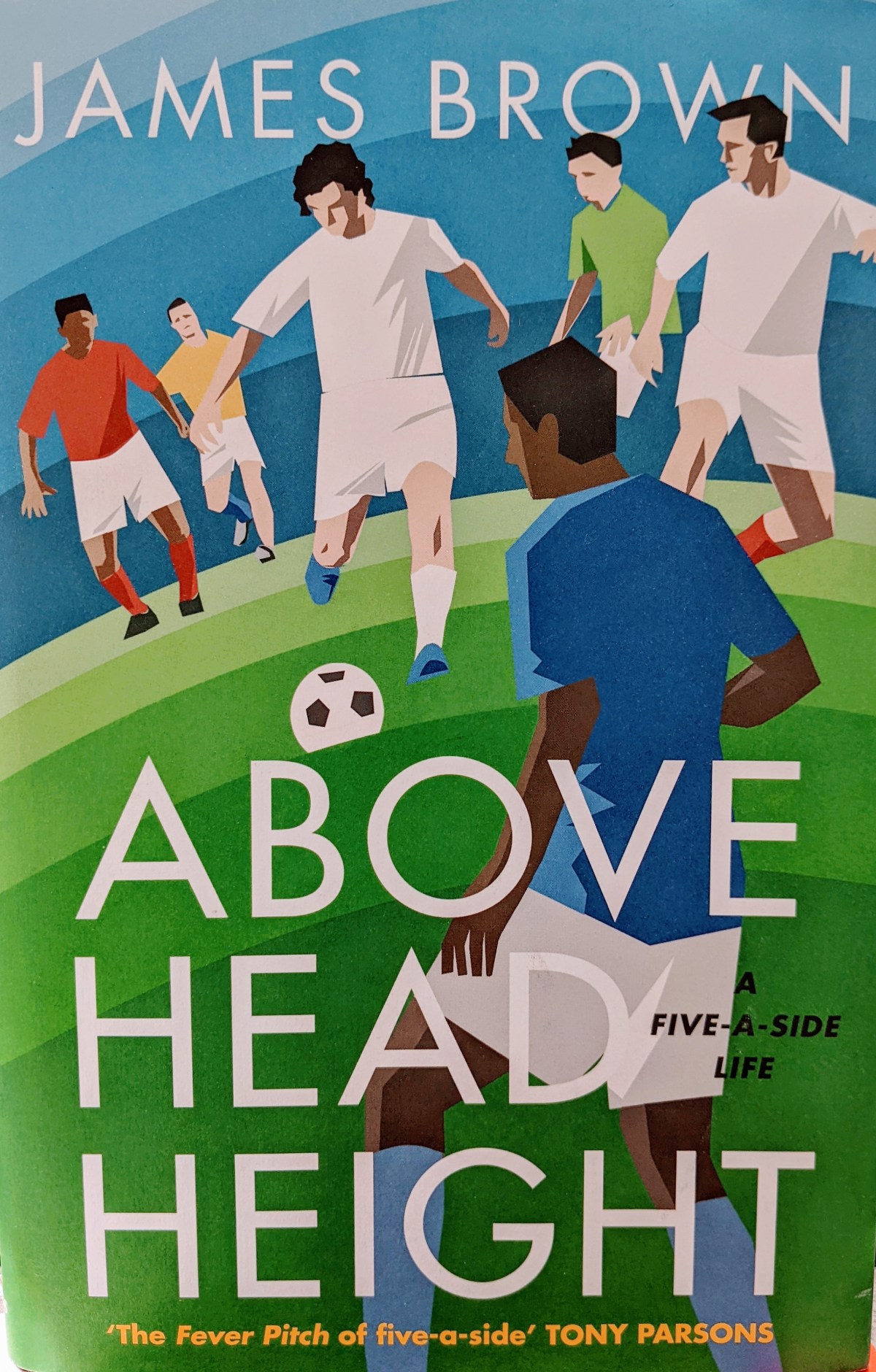
Book Review: ‘Above Head Height’ by James Brown.

Confession time. I had a little bit of a misspent youth. Nothing to panic about. Not committing crimes, not doing a great deal to disrupt others and not going out of my way to be obnoxious. My misspent youth consisted of doing the kinds of things that were important to me for as much as my time as was humanly possible, while neglecting the stuff that seemed boring, but on reflection might have actually done me some good.

My misspent youth largely revolved around football. Naturally, there were girls a bit later too, but I was no Casanova. Mind you, I spent endless hours playing football and I was no Maradona either! But wherever I could and whenever I could, I played football. ‘Above Head Height’ is a book for all of us who have obsessed and continue to obsess about football. ‘Above Head Height’ is what happens when your misspent youth continues through your entire adult life.

If you love football, then ‘Above Head Height’ is a must read. Even if you only have a casual interest in the game it’s still definitely worth a look. Brown – the former editor of the groundbreaking Loaded magazine – takes us through his own personal obsession with football, from days and nights playing any-number-a-side street football right up to his present day situation where he plays football with various social groups about 4 or 5 times a week. It’s an encyclopedic look at the game and why we play it, as well as why we get so obsessed and so for those of you like me and James, it becomes a very interesting read.

Brown’s experience of football as a kid will be familiar to a lot of us and as such, offers a huge slice of nostalgia for simpler football related times. Huge sided, barely organised games in the street, the park or wherever there was space and playing until you were either dragged in by a parent or it was just too dark to see anymore. Sometimes even that wasn’t enough to stop us!

‘Above Head Height’ takes us on Brown’s journey through football in its many guises. It’s a path well trodden for many of us. There are his experiences with school teams, playing with gifted players, playing at college and university, early adult five-a-side leagues and then onto time spent coaching his son’s team (something which a lot of us will have stumbled into inadvertently!).

This is more than just a book about football and a football obsessive. ‘Above Head Height’ starts with the funeral of a fellow player and Brown touching on the fact that, despite having spent years playing with this man, he really didn’t know him. He could pass comment on his playing style and pay tribute to his organisational skills – he was the bloke who organised the league – but what did he really know of the man he’d spent so much time with?

Ultimately, ‘Above Head Height’ is a book about friendship, camaraderie, obsession, health, fitness and the realisation that none of us are getting any younger. Football is just the orange or black and white checkered sun that it all orbits around. Of course, there will be family, careers, births and deaths, but sometimes it will feel like none of it is as serious as our feelings for the beautiful game!

If you remember the Wembley Trophy (or the penny floater if you’re from my neck of the woods), if you’ve ever spent far too long explaining the whys and wherefores of your latest ‘world-class’ goal, if the phrase ‘jumpers for goalposts’ still makes you smile and if you still dream that you might just get the call to play professionally, then ‘Above Head Height’ will be right up your street.

I give ‘Above Head Height’…

Rating: 5 out of 5.

Gallowgate Cult Heroes Number 8: Steve Watson.

At 16 years, 7 months and 9 days old, Steve Watson was our youngest ever debutant. And although he made his debut at home, during a time when I went and watched us play wherever and whenever, I missed it. A big thank you to Happy Shopper cash and carry in Blaydon where I was working at the time, for denying me the afternoon off to go to the match. I missed a bit of NUFC history, but I bet the sweet aisle looked amazing by the end of my shift. So, swings and roundabouts, eh?

A week later Watto would make his full debut – I was there for that one -, starting the home game against Derby, getting Man of The Match and assisting in a 2-0 win. He’d go on to play 24 times in that first season while also playing for 3 different managers as United struggled against relegation to the old third division before saving themselves on the final day.

While primarily playing as a full back, Watson played all over the field for the Toon. He made regular appearances in midfield, but also played up front on occasion too. In fact, on one such occasion after coming on as a sub at Liverpool in a League Cup tie, he grabbed the only goal of the game and still one of the most memorable I’ve ever seen and cemented his place as a cult hero in the eyes of many mags.

As the tie moved towards full time Newcastle broke out of their own box and Peter Beardsley took the ball from midway inside his own half from a headed clearance. Watson spun in behind the two defenders and Beardsley played a through ball that sent him a little right of target, but still heading towards goal. Watson still had a lot to do and little support, but twisting and turning he made his way to the edge of the box before chipping David James for a fantastic solo effort. An inspired moment that possibly no one in the ground would have seen coming and a brilliant goal from a very talented footballer.

Steve had produced an even more outrageous piece of skill years before though. Even as a 16-year-old he had an eye for something different. And so it was that his particular take on throw ins arrived in 1991. Steve had a good throw on him anyway, but little did we know he’d been working on something special; the somersault throw in! He needed a bit of space around the pitch to do it, but on occasion he’d bring out a throw where he would run forwards towards the line before performing a kind of forward flip, ball still in hands, and release it as he got back to a standing position. I’m hard pushed to remember where I saw it first and I can’t recall any particular successes, but it was brave to say the least, from one so young. Entertaining, as well!

Steve played for Newcastle from 1990 until 1998, taking in life in the then 2nd division, but mostly playing in the Premier League. He was a valued member of Kevin Keegan’s Entertainers before playing under Kenny Dalglish too. But then, mere months after a substitute appearance in the 1998 cup final, he was on his way to Aston Villa in a £4m deal.

For me, Watson seemed to suffer because of his versatility. Too often he was kept around to fill in various positions, never quite nailing one down for himself. Injuries didn’t help Steve either, but in all he never quite fulfilled his early promise. He always struck me as a good athlete; quick, agile and strong. He was a good attacking full back and so presumably would have made an excellent wing back in today’s systems. But alas, despite 208 appearances across 8 years at the club it felt like he never really cemented a place in the first team, which given his obvious talent was a real disappointment.

Some Toon fans might be able to draw a parallel between Watson and Elliot Anderson. Both were local lads that excited the fans. Both were skillful and athletic and should have had a bright future at the club, but both ended up leaving to further their careers. In Watson’s case, as the club’s youngest ever debutant, it felt like a real waste. I remember being excited watching his full debut against Derby and it wasn’t long before I was wondering if this was the next player to follow on from the likes of Beardsley and Gazza. Sadly, although an undoubtedly excellent player, Steve didn’t quite hit those heights.

Steve went on to have a long career, playing for Villa, Everton, West Brom and Sheffield Wednesday before retiring in 2009 after a long term injury problem. After that he teamed up with Lee Clark as a coach at Clark’s Huddersfield. Subsequent coaching moves took him to various clubs such as York and Gateshead and Steve is now the manager of Darlington in the National League North.

Another cult hero and another local lad done good!

Poetry Blog: ‘Willow’

It’s the Easter holidays and as I’ve got some time on my hands I decided to sit down and try and write something for the blog. Other commitments have been getting in the way of late and so my blog has been very much neglected.

So, with not a lot in mind to write about, I thought I’d trawl through some notebooks and accompanying scraps of paper in order to see what poetry I have knocking about. It turns out that there are quite a few that have either been started or simply finished and then just left and so, after quite a bit of reading I decided to add this one to the blog. It brings back a lot of memories and I really like it.

Willow

As the spots of rain get heavier
and begin to change the colour of the roads
and pavements around,
you scramble for the familiar shelter
of the giant old weeping willow.

Everyone is out, the house locked up,
but you chose friends, football and
the top of the hill Wembley of a pub car park
over the visit to family,
and now that team mates have chosen bricks and mortar for cover,
solitude in nature is forced upon you.

A mass of leaves and sagging branches provide ample sanctuary,
so you position yourself so not to be seen
from either road or the neighbour's house,
shift your knees up to your chest and enjoy this place
where there is no shouting, no conflict and
no storm of any kind.

The willow tree in question here is the one that we had in the garden of my childhood home. Everyone else regarded it as a nuisance because of its sheer size and mass of leaves that would be shed in autumn and litter the surrounding area, but I loved it.

I’d play in it as a small child, inventing games and characters and swinging on those branches. As I got older it became somewhere to hide and just be on my own, away from what I remember now, rightly or wrongly, as a lot of shouting and anger in our house. Sometimes, as in the poem, it was just a convenient shelter of a different kind as the rain just didn’t seem to get through it. As I got older, I’d often stay at home when my parents went across to see family, but would rarely remember to take a key. These things got forgotten when there was a game of football about to start! And so, I’d end up just sitting under the tree to escape the elements.

In later years, after we had moved out, the tree was cut down. I still kind of miss it to this day.

Poetry Blog – ‘The old tyrant’

This is a relatively new poem, written about one of my grandfathers. I barely knew him, but a while ago I got one of those DNA kits as a Christmas present and as a result started to research my family tree. At the end of it all, not only was I disappointed to have no sign of any Viking ancestry, but I felt I knew my grandfather even less.

It’s always been something that held an interest to me. Both my mam and dad come from big families and so, growing up, we were surrounded by aunties, uncles and cousins whenever there was some kind of ‘family’ occasion. However, for any number of reasons I never felt that I really knew them that well. Being quite a shy kid probably didn’t help.

We lived in a different part of Newcastle to the rest of the family and so didn’t see them on a day to day basis and then as I got older I was busy with friends and different interests. Going away to university didn’t help my cause either; if anything, it made me stick out like a sore thumb! When I finally moved away from the North East entirely, I pretty much drifted away from all but immediate family.

The relationship with my grandparents on both sides was difficult, to say the least. With this grandad, he died when I was very young and there always seemed to be a reluctance on my parents part for them to take us to see our grandparents. If I’m honest, it doesn’t look like they were at all interested in us and I literally can’t remember ever meeting my grandma. However, I do have one extremely vague recollection of my grandad which is where the poem comes from.

'The old tyrant'

If I close my eyes, I still see him
from exactly the same vantage point, every time.
A dot of a man, his appearance betraying every terrifying snippet
I'd ever heard.
Brown shoes, dark trousers, midnight blue raincoat
and a black trilby hat, shadowing his features,
making those eyes even darker, so that it felt like he looked straight through me
as he crept closer, a shining silver coin grasped in bony fingers.
The childcatcher had come, bearing gifts.
Then, with a pat on the head, he was gone.

Everything else is mystery, legend,
even your name uncertain.
"The old tyrant", my mam would say with just a hint of a smile,
"a villain", but maybe an entertainer, singing and dancing
on the West End stage, if that was to be believed,
the cold, hard presence passing your distance
through the generations,
many leads to your life, but never a final destination,
many strings to your bow,
but barely a finger print of recognition left behind,
the untraceable ghost, continuing to haunt
despite the fact that none ever really knew you at all.

When I was very young my parents ran a business. As part of the business we had a shop and a market stall, I think. My dad would be away buying crockery – plates, cups, bowls etc – in Stoke-on-Trent for the business (that’s what we sold…everyone needs stuff to eat off, right?) and my mam would be running the shops. As I was a poorly child (yes, heart nonsense even at that age!) I’d often find myself in the shop.

One day, when both parents were there, my grandad paid us a visit. I was perched on a stool in a corner of the shop, like some gaunt, pale kind of mascot and he came in, spoke to my parents a little bit as far as I can remember, and then made his way across to me.

As the poem says, he just came over, pressed a coin into my little hand and then left. That was the only interaction that I recall. No talking, no affection. He might have smiled, but I can’t remember.

Growing up, I picked up nothing but negativity around him, which comes out in the poem. Apparently, he wasn’t the greatest dad – although times were very different back then – and was very tough on his children, one of them my dad. When it came to seeing his grandchildren, he just didn’t seem to be interested. Well, not in this one anyway! So, I’d hear the types of descriptions that come up in the poem, labelled at him time and again.

When I came to research my family tree, he was just as big a mystery as ever. I’d been told that he was ‘a dancer and singer’ on stage in London by my dad when I was a kid, but there wasn’t much evidence of that. In fact, what he actually did remained a mystery and I uncovered bits of evidence that he had possibly led a bit of a double life a times. I won’t go into it because it’s obviously quite personal, but also because it left me no closer to knowing a great deal about the man!

So there we go; my grandad, man of mystery and little affection or it might seem, any kind of feeling whatsoever!

I hope you enjoyed the poem.

Gallowgate Cult Heroes; Number 3 Imre Varadi

When I first started writing this series, I wondered how far back I’d be able to go. I’m trying to write more about players that I actually saw play, rather than just delving into the history books – and Wikipedia – and providing you with a list of stats. So, in essence I’m restricting myself to going back as far as the late 70s at best and even then, my memory won’t always be reliable.

The third player in the series is one that I only just remember, as well as being one of my first ever black and white heroes.

Imre Varadi was signed, with not a great deal of fanfare from Everton in the summer of 1981. A 22-year-old Londoner, with a Hungarian/Italian background, he was brought in by manager Arthur Cox to help solve what had become a major goalscoring problem. With the previous season’s strikers – the likes of Bobby Shinton, Alan Shoulder, Mick Harford and a young Chris Waddle – struggling to find the net, Varadi faced a challenge. However, he must have felt that he couldn’t really fail, given that the previous season’s top scorer had been Shinton with 7 goals. And so, a memorable, but brief chapter began.

Newcastle were languishing in Division 2 (now the Championship) at the time but in his first season (81/82) Imre scored a commendable 20 goals in 47 appearances. However, it took him a while to actually find the net. When he did eventually did though it was spectacular as he bagged a hat-trick in a 0-4 away win at Cardiff. Suddenly, things were beginning to click into place. In the next game, this time at home to Derby he scored a brace in a 3-0 home win.

Varadi had electric pace, an eye for goal and was more than capable of an eye-catching piece of skill. He was unpredictable and brave, doing the number 9 shirt proud. It was easy to see why a success starved Gallowgate would take to him so quickly. But things were about to change on Tyneside.

In the summer of 1982 Newcastle United grabbed the football world’s attention by signing the England captain Kevin Keegan from Southampton. How we’d managed to sign the twice Ballon D’or winner is anyone’s guess, but we did and he would go on to help change the history of the club. It was the beginning of the end of Varadi though.

The season started well, with Varadi providing the assist for Keegan’s winning goal in the first game of the season at home to QPR. In goalscoring terms though he made a slow start. While strike partner Keegan scored 3 goals in his first three games, Varadi didn’t score until the sixth week of the season.

However, by the end of the season he had scored 22 goals in 43 appearances and was again a roaring success as he finished as top scorer. Keegan himself only made 16 league appearances, scoring 21 goals and was rightly idolised. And this was possibly what would cost Varadi. Newcastle, having finished 5th that season went all out for promotion the next, signing John Ryan for a then club record fee of £250k, David Mills and a 22-year-old called Peter Beardsley in the summer with Imre being sold to Sheffield Wednesday for £180k.

I remember rumours about Varadi’s relationship with Keegan at the time and since then have heard the same type of things mentioned time and again in relation to his departure, but I really wouldn’t know. Whatever the reason, it seemed a strange move to get rid of the top scorer of the previous two seasons. Varadi scored goals and was popular with the fans and yet was still sacrificed to a rival. Mind you, Keegan would do the same himself as manager, years later, with Andy Cole, ending up explaining himself to confused and angry fans on the steps of the Milburn stand.

Imre Varadi was the first number 9 that really captured my imagination. I wasn’t old enough to remember Supermac and there’d been precious little else to grab on to during my fledgling years as a Toon supporter. I remember being enamored by Peter Withe, but even then I was only 6! My other favourite player had been midfielder Micky Burns, but there was nothing that excited me as much as Varadi did when he signed. I knew nothing of him, but that first hat-trick had me hooked! I’d fallen in love with a club that felt like it gave precious little back, but when Varadi got the ball and ran it felt like there was a bit more of a point being there.

With 42 goals in 90 games, Imre Varadi had a decent strike rate and was the kind of striker that excited the fans. But with a young Chris Waddle coming through and Peter Beardsley set to make an amazing impact with Kevin Keegan, maybe letting him go was the correct decision. By the end of his career he’d become very much a journeyman pro, ending up with 17 clubs in all, so perhaps his two years with us was par for the course.

In recent interviews, Varadi has expressed great love for his time with Newcastle and for a couple of years, there were a fair few of us who loved him right back. But cult hero or not, nobody could really compete with King Kev, could they?

Poetry Blog: ‘Summer Rain’

Given the weather conditions as I write, I’m not entirely sure what led me to write a poem about rain in the summer. We’re in the middle of a bit of a heatwave here in the UK, so maybe it was wishful thinking.

It’s felt like a while since I’ve written anything poetic, so it was a relief when a few lines popped into my head one evening after work recently. I scribbled them down on to a scrap bit of paper and did my level best not to lose it over the next week or so. Mainly this involved stuffing said paper into either my work bag or my laptop case and hoping that it wouldn’t escape when I was taking something else out.

Having only written – and saved – an initial 6 lines, I was pleased when I was able to complete it all with a few revisions one night last week. As is quite usual for me, this came over the course of a couple of nights where I couldn’t get to sleep.

Summer Rain

The sudden splodge and spite of furtive rain
sees the summer masterpiece give way,
pushed aside it would seem, by the fingers of a toddler daubing
the contents of their imagination across a canvas
and transforming this little piece of paradise 
into something unrecognisable from what we looked out on seconds before.
Bright colours are dulled as clouds close curtains on the blue sky,
pavements and patios darkened by the rain, 
as leaves on trees and shrubs shudder with each almighty drop.
Suburban streets are temporarily transformed into Venetian canals
as the shower bounces off the parched earth and you find yourself
rapt by the shift that you've witnessed a thousand times before.
"It's like a river!" you hear yourself say, before you can help it
and when it stops, like someone gradually teasing off the tap,
the sun will return, almost before you had realised it was gone,
steam will rise from the tarmac,
and for a brief few moments the grass and the plants
will glisten until the heat takes away the very last of the summer rain

There’s always a sense of relief, I find, when the heat of the summer is broken by rain. We do get heat in Summer in the UK, by the way and right now, in the middle of the hottest spell of weather we’ve encountered for a long time, we could really do with a burst of rain.

At any other time, I’m not a fan of rain. In the Autumn and the Winter I really don’t like it at all as I know that not only is is going to soak me to the skin, but it’s going to make me feel even colder too. However, in the midst of a heatwave, it can be a godsend.

I wrote about it, as I said, because some of the lines for the poem simply popped into my head, but also because of the spectacle of that kind of unexpected rain that we regularly seem to get in the UK on what should just be a sunny day. It often seems to come without any real hint that it would be there and then all of a sudden there are black clouds splurging water all over the place and changing the look of the landscape. The lines about rain flooding the roads are there purely for my benefit and they make me smile. I seem to gravitate towards our front window when this type of rain happens, often grabbing the kids when they were younger so they too could view the spectacle. I don’t know why it fascinates me so much…I mean, things getting wet because it’s raining is about right, isn’t it?

I hope you enjoyed reading and that maybe the poem evoked some memories or feelings for you. It can’t just be me that still gets excited by a summer rain storm!

Poetry Blog: ‘The cold does not embrace you.’

I’ve written about sleep and sleeplessness quite a few times before. It’s a topic that I keep returning to because every once in a while I’ll find my sleep pattern disturbed and often for a few nights in a row I’ll find myself either lying awake and unable to focus on sleep because my mind is racing or just out of bed, sitting downstairs in our house, wide awake.

This is a poem that focuses on the former of those two scenarios, although as a result of my mind racing, I eventually got out of bed and wrote the poem. It was a night where, if I’m honest, I’m not sure whether I was awake or sleeping fitfully and suffering with nightmares. One thing’s for sure; it wasn’t a pleasant night’s sleep and there was a lot that disturbed me. You think that nightmares are things you left behind in childhood, but then get reminded that you’re sadly mistaken!

The cold does not embrace you
yet, for a short time its shiver soothes your skin
like a smooth palm comforting you through illness, fear.
An uneasy dream shifts and your thoughts are strangers
caught in the void between the fevered images of disturbed sleep
and the disquieting thud of your heart as you realise you're awake again.
Without warning, the rough skin of working hands grabs at your jaw,
takes hold, clutches.
A strangers eyes stare out from a familiar face,
gripped by a mood you know all too well,
before one last squeeze,
then the calloused hand, shoves your face away viciously,
like an imperfect toy on a production line, rejected
not good enough to be loved.
You blink to try and wake only to find another face now,
her hot breath invading your nostrils,
her gibberish bringing spittle to your skin,
her disapproval at the runt of the litter writ large
in neon across unloving eyes and twisted expression
informing you again of what feels like their hatred,
before words are put in your mouth and you flounder,
helpless against a place you don't belong,
a jigsaw you don't fit.
Shaking free, you brace yourself, 
turn your collar against the piercing winter and stumble forward,
in search of somewhere warm.
And while these ghosts will always haunt you 
with their chill,
every once in a while the winter sun will warm your skin.

It feels like there are two antagonists in this poem. The first I’m not sure of and it would be unkind to speculate. However, the second is definitely my grandmother, who was someone that I had a fractious relationship with, at best. She was a woman who never seemed to display any warmth whatsoever to me, which as a child was quite perplexing. In company with my many cousins, I remember she’d frequently refer to me as ‘this one’ while everyone else got called by their name. Let’s just say that it was clear I wasn’t her favourite! I can’t say that her treatment of me didn’t bother me, as it did. But as I got old enough to make my own choices, I just decided to avoid being in the same room as her. Even now though, there are occasions when she comes to mind and it’s never pleasant. Hence, the words in the latter half of the poem.

I tried to end the poem on a more positive note, just explaining what I’ve just mentioned, really. Childhood memories will always be there and will always crop up and affect your day. But there’s always a positive to be found.

I hope you enjoyed the poem or at least it had some kind of effect on you as a reader. The memories I’ve written about were incredibly vivid and I hope that feeling is conveyed by what I’ve written. As ever, feel free to leave a comment.

Poetry Blog: ‘Absent Friends’

This is a poem that I wrote around Christmas time and then spent far too much of my time either poorly, relaxing or just eating and drinking to remember to write it up properly for my blog. As a result, it’s a little out of date, but I think the sentiment holds up, whatever the occasion.

It’s a poem about reflecting back and remembering those that we’ve lost, which I suppose we tend to do at important points in the year. We do it all year round, I suppose, but at times like Christmas and birthdays, when you’re maybe at your most relaxed you’re more prone to thinking about how much a particular person is missed or maybe even just how much they themselves would have enjoyed that occasion, it’s a little more pertinent.

Absent Friends

Absent friends sparkle even more at this time of year
and we raise a glass to remember more intensely now
than over the passing months,
more distant now, yet somehow our focus tunes more 
than before and we toast our absent friends,
tears punctuating what is still a celebration,
staining cheeks and mixing incongruously 
alongside cracker borne paper hats and party poppers.
our absent friends are guests once again and we all see
those smiles, hear those voices, cradle each other in arms 
used just hours before to shatter anticipation and tear at wrapping
covering all manner of happy shapes.
Now, a moment hovers longer than a moment, 
sharper than the year before until you can almost see them,
almost touch them, hold them again as they stand in the kitchen,
glass in hand nodding wistfully, gone but only a thought away,
yet agonisingly too distant for one more conversation.
And all we have left is love...

I must admit that when I looked again at the draft of this poem in my notebook, it didn’t make a lot of sense. The start of it, anyway. It was another poem that I’d written in the early hours and given that the first couple of lines didn’t seem to make any sense, perhaps I was more tired than I thought! After reading the rest of the poem a couple of times I was able to re-draft and change those lines in order to give it some clarity. I was tempted to leave it as it was – poetic license and all that – but decided that something that made sense was better than something so confusing. I’d love to know what I meant with the initial first line though!

‘Absent Friends’ is a product of both Christmas and New Year. I think we’re more likely to look back at New Year, but I know that having lost a close family friend relatively recently, our thoughts were with them on both occasions, both this year and last. I suppose it’s natural that we look back at these times. As I said earlier, it’s obvious that when we’re relaxed and happy we might reflect on those that aren’t around anymore and what they would have made of the situation that we happily find ourselves in.

In a different way, we found ourselves explaining to our children about another absent friend this year. The absent friend in question – still alive, but moved overseas – lived in the UK as a student teacher years ago and joined us for Christmas Day as he had no family around. He’s from Australia – hi Andy, if you read this – and so everything he knew and loved was on the other side of the world. As our mate, it was only right that he joined us and it was a fantastic day. We still think of him every year at Christmas and this year it was lovely to re-tell the tale of that particular Christmas Day, even if it left our kids quite perplexed as to why we chose to share our day with anyone else, when we always just have Christmas as a family these days! It was funny to hear their almost outrage at the fact that our guest wasn’t grandma or grandad, uncle or auntie, but Andy!

I hope you’ve enjoyed the poem and that, if it brought any memories back, they were fond ones rather than bad ones. Sometimes, despite the obvious pain that it can cause, it’s just a nice, warm feeling we get when thinking of those absent friends.